
Key takeaways
- Mint, chamomile and lemon balm are the easiest tea herbs to start with
- A small raised bed or a few patio pots is enough for a tea garden
- Steep fresh leaves in water just off the boil for 5-10 minutes
- Hang small bundles somewhere dry, dark and airy to dry herbs for winter
- Some garden plants are poisonous, so only brew herbs you know for certain
Herbal tea from your own garden tastes nothing like a dusty teabag. It’s all about freshness. A sprig of mint picked a minute ago and dropped into hot water smells and tastes wonderful. Growing your own tea herbs is one of the easiest, cheapest and most satisfying things you can do in the garden.
Which herbs make the best tea?
Not every herb makes nice tea. Some taste bitter and others need more heat than we get. These nine grow happily in the UK and make lovely brews.
 Chamomile flowers picked at their best, when the petals start to fold back from the centre.
Mint
The easiest of the lot. Peppermint gives a strong, cooling cup. Spearmint is softer and sweeter. Both spread like mad, so grow mint in a container to keep it in check. One plant gives you plenty of leaves all summer.
Chamomile
German chamomile (Matricaria chamomilla) is the one to grow for tea. Sow it straight into the ground in spring and thin the seedlings to about 15cm apart. Pick the little daisy flowers when the petals start to fold back. It makes a gentle, apple-scented cup that’s lovely before bed.
Lemon balm
A hardy plant that comes back every year with no effort. Its lemony leaves make a soothing tea, hot or iced. Cut it back hard in midsummer for a fresh flush of tender leaves. It seeds itself about freely, so snip off the flowers if you want to keep it tidy.
Lemon verbena
The best lemon flavour of any tea herb. It isn’t fully hardy, so grow it in a sheltered, sunny spot or in a pot you can move under cover before hard frosts. The clean, zingy taste is well worth the extra care.
Fennel
Fennel tea tastes gently of aniseed. Use the feathery leaves, not the bulb. It’s hardy, tall and pretty in a border. Bronze fennel looks striking and tastes the same. Keep cutting it to encourage fresh leaves.
Rosemary
A strong, piney brew that’s lovely on cold days. Rosemary grows happily in UK gardens with very little help. One short sprig per cup is plenty, as more can taste bitter. Try it with honey and a slice of lemon. It’s evergreen, so you can pick it all year.
Lavender
English lavender makes a floral, scented tea. Lavandula angustifolia varieties taste best. Pick the buds just before they open. Go easy: half a teaspoon of dried buds per cup is plenty, or it tastes soapy.
Sage
A warm, slightly peppery cup. Use garden sage (Salvia officinalis) and pick young leaves for the mildest taste. It’s evergreen through most winters and just needs a trim each year.
Thyme
A gentle, earthy tea. Common thyme and lemon thyme both work. Use fresh sprigs for a light cup or dried leaves for something stronger. Thyme loves poor, dry soil and sun, and copes with drought better than any other herb here.
How to grow a tea garden
You don’t need much room. A small raised bed fits all nine herbs, or six to eight pots on a patio or windowsill works for the smaller ones.
Where to grow them
Most tea herbs like sun and soil that drains well. On heavy clay, mix in grit and compost. A raised herb garden gets round drainage problems on any soil.
| Herb | Sun | Soil | Hardy? | Spacing |
|---|---|---|---|---|
| Mint | Sun or part shade | Moist, any type | Yes | Own pot |
| Chamomile | Sun | Light, well-drained | Yes | 15cm |
| Lemon balm | Sun or part shade | Any, copes with clay | Yes | 30cm |
| Lemon verbena | Sun, sheltered | Well-drained | No, protect from frost | 45cm |
| Fennel | Sun | Well-drained | Yes | 30cm |
| Rosemary | Sun | Well-drained, poor is fine | Yes | 60cm |
| Lavender | Sun | Well-drained, chalky is fine | Yes | 30cm |
| Sage | Sun | Well-drained | Yes | 30cm |
| Thyme | Sun | Well-drained, poor is fine | Yes | 20cm |
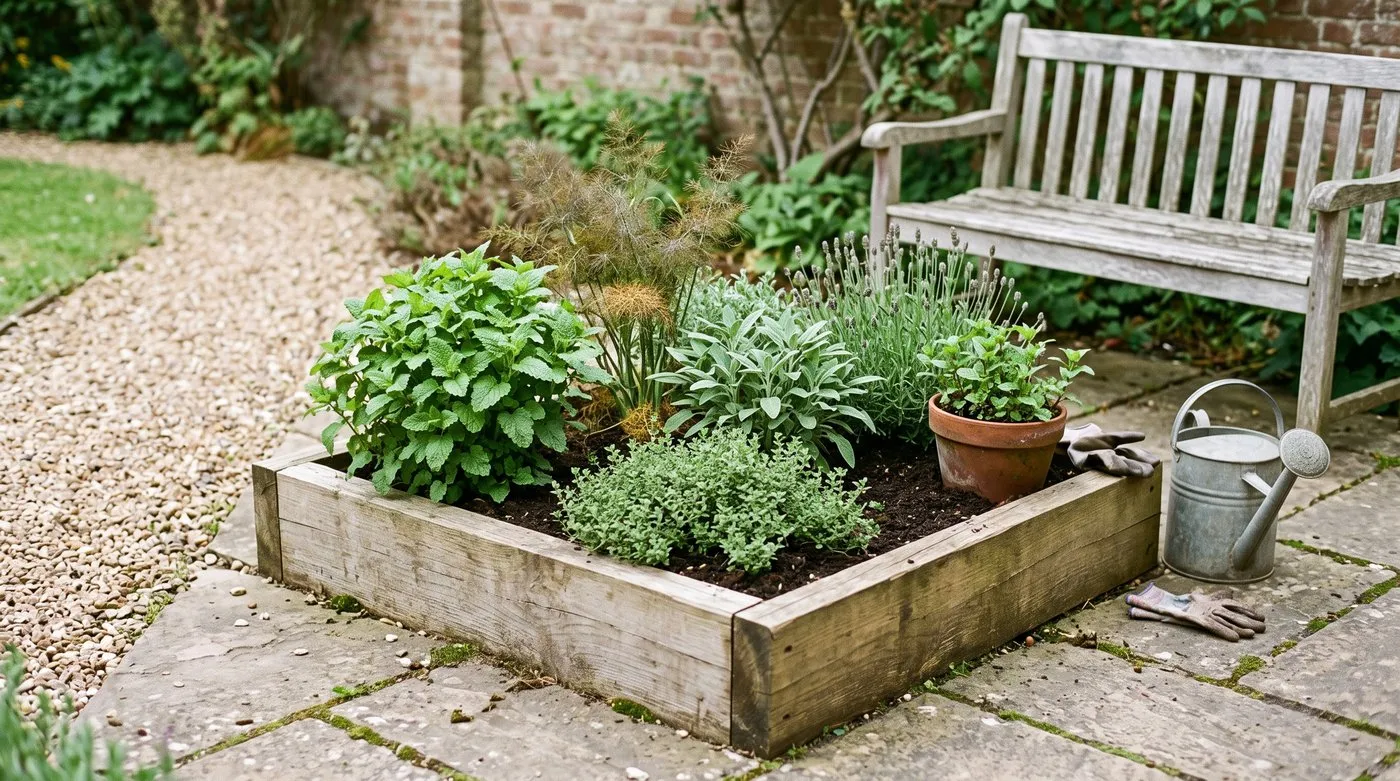
Most tea herbs want sun and good drainage. A small raised bed gets round heavy soil and fits all the favourites.
Planting and care
Spring is the best time to plant. Buy small plants for a quick start, or grow chamomile and fennel from seed. Water new plants well for the first month. After that, most just need a yearly trim and an occasional feed. Our guide to growing herbs has more planting tips.
Mint and lemon balm are the two to keep an eye on. Mint spreads underground and lemon balm seeds itself everywhere. Grow mint in a pot, or sink a bottomless bucket into the soil to hold its roots in, and deadhead lemon balm.
How to pick herbs for tea
Pick in the morning once the dew has dried, when the leaves smell strongest.
Leafy herbs (mint, lemon balm, sage, thyme, rosemary): pinch or snip stems. Take no more than a third of the plant at once. Regular picking makes the plants bushier.
Flower herbs (chamomile, lavender): pick chamomile when the petals start to fold back. Pick lavender just before the buds open, when the colour is deepest.
Most herbs are ready to pick from late spring to autumn. Rosemary, sage and thyme are evergreen, so you can pick a little in winter too.
 Herb bundles drying in a shed. A week or so somewhere dry and dark is usually all they need.
How to dry herbs for tea
Drying gives you tea all winter. There are two easy ways. For more detail, see our guide to drying and storing herbs.
Air drying
Tie small bundles of four to six stems with string or a rubber band. Hang them upside down somewhere dry, dark and airy, such as a shed, spare room or airing cupboard. Steamy kitchens and bathrooms aren’t ideal.
They usually take a few days to a week. When the leaves crumble easily, strip them off the stems and store them in airtight glass jars. Label each jar with the herb and date. They keep their flavour for up to a year.
Oven or dehydrator
In a hurry? Spread the leaves on a baking tray in the oven on its lowest setting with the door ajar, and check them often. A food dehydrator on a low setting works even better. Both take a few hours. The flavour is a touch weaker than slow air drying.
How to brew herbal tea
Fresh and dried herbs both make great tea.
Fresh herb tea
Put a good pinch of fresh leaves in a cup or teapot. That’s about five to eight mint leaves, or a small handful of chamomile flowers. Pour over water just off the boil. Leave it for 5-10 minutes, then strain and enjoy.
Fresh tea is lighter, brighter and smells amazing. The only catch is you can only make it while the herbs are growing.
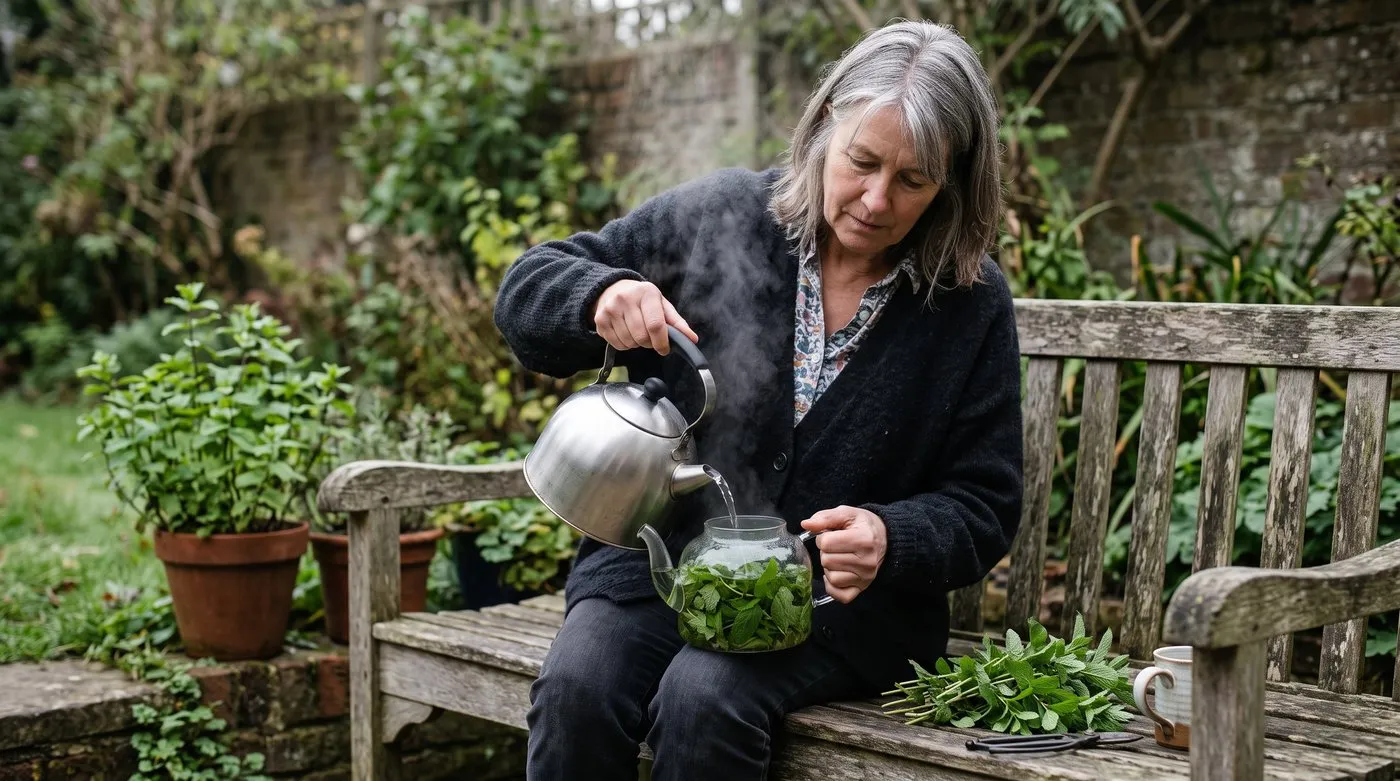
A small handful of fresh leaves and 5-10 minutes of steeping is all it takes. Fresh tea is lighter and brighter than dried.
Dried herb tea
Use about half as much dried herb as fresh, as drying makes the flavour stronger. One teaspoon per cup is a good start. Use a strainer or infuser and steep for 5-10 minutes.
Dried tea is stronger and keeps all year. Fresh in summer and dried in winter gives you the best of both.
Blends to try
Single herbs are nice. Blends are even nicer. Here are five easy mixes to try.
| Blend | What’s in it | What it’s like | When to drink it |
|---|---|---|---|
| Summer calm | Chamomile, lemon balm, lavender | Floral and gentle | Evening |
| Morning lift | Peppermint, rosemary, thyme | Sharp and zingy | Morning |
| Citrus garden | Lemon verbena, lemon balm, fennel | Bright and lemony | Afternoon |
| Winter warmer | Sage, rosemary, thyme, honey | Warm and savoury | Cold evenings |
| Iced garden | Spearmint, lemon balm, cucumber | Cool and refreshing | Hot days |
Start with equal amounts of each herb and adjust to taste. Jot down the ones you like so you can make them again.
 Three garden teas: mint (green), chamomile (golden) and rosemary (pale). Each has its own character.
Plants never to brew
Not everything in the garden is safe to drink. Some common garden plants are poisonous.
Never make tea from:
- Foxglove, which can be deadly
- Lily of the valley
- Monkshood, one of the most poisonous garden plants
- Comfrey, which can damage the liver
- Pennyroyal, which is dangerous, especially in pregnancy
Take care with:
- Large amounts of sage or rosemary if you’re pregnant
- Chamomile if you’re allergic to daisy-family plants such as ragweed
- St John’s wort, which can interfere with prescription medicines
If you’re pregnant or on medication, check with a doctor or pharmacist before drinking herbal teas regularly. And the golden rule: never brew a plant you can’t identify for certain. The RHS herbs pages are a good place to check what you’re growing.
Your tea garden through the year
With a good mix of herbs, you can have tea from the garden every month.
| Month | Fresh to pick | Jobs |
|---|---|---|
| January to February | Rosemary, sage, thyme | Order seeds and plan |
| March to April | First mint and lemon balm shoots | Sow chamomile and fennel |
| May to June | All nine herbs growing | Fresh tea season starts |
| July to August | Your biggest harvest | Dry extra for winter |
| September to October | Fresh leaves after a summer cut | Last batches for drying |
| November to December | Rosemary, sage, thyme | Enjoy your dried stock |
Fresh from the garden for half the year and from the jar for the rest. A small bed and a shelf of jars is all you need.
The nine tea herbs at a glance
| Herb | Flavour | How easy | When to pick |
|---|---|---|---|
| Mint | Cool and fresh | Easy | Late spring to autumn |
| Chamomile | Apple and floral | Easy | Summer |
| Lemon balm | Mild lemon | Easy | Late spring to autumn |
| Lemon verbena | Strong lemon | Medium | Summer |
| Fennel | Sweet aniseed | Easy | Summer to autumn |
| Rosemary | Piney | Easy | All year |
| Lavender | Floral and perfumed | Easy | Summer |
| Sage | Warm and peppery | Easy | All year |
| Thyme | Earthy | Easy | All year |
Only lemon verbena needs extra care, because frost can kill it. The rest cope with a British winter outside.
Get started this weekend
The quickest route to your first home-grown cuppa is a pot of mint from the garden centre. Plant it in a container, water it, and you can start picking straight away. Add some chamomile seed and a lemon balm plant, and by summer you’ll have three herbs ready for daily brews. Once you’ve tasted tea made from leaves you picked a minute ago, it’s hard to go back.
Frequently asked questions
What is the best herb to grow for tea?
Mint is the best place to start. It grows in almost any soil, grows fast and makes a lovely fresh brew. Peppermint and spearmint both work well. Grow it in a pot, as it spreads and can take over a bed.
Can you make tea from fresh garden herbs?
Yes, and fresh herbs make lovely tea. Put a small handful of leaves in a cup or teapot. Pour over water just off the boil and leave for 5-10 minutes, then strain. Dried herbs are stronger, so use less of them.
How do you dry herbs for tea at home?
Hang small bundles upside down somewhere dry, dark and airy. Most herbs dry within a week or so. Keep them out of direct sun, which spoils the flavour. They’re ready when the leaves crumble easily. Store them in airtight jars away from light.
Which garden herbs are not safe for tea?
Never brew foxglove, lily of the valley, comfrey or monkshood. Pennyroyal is also dangerous, especially in pregnancy. Some everyday herbs aren’t suitable in large amounts or in pregnancy. If you’re pregnant or take medicine, check with a doctor or pharmacist first. Only brew a plant you can identify for certain.
How much money do you save growing herbal tea?
It can save you money if you drink herbal tea often. Boxes of herbal teabags add up over a year, while a few herb plants cost little. Mint, lemon balm and chamomile give you lots of cups. Perennial herbs come back every year, and a dried summer harvest sees you through winter.
Can you grow herbal tea herbs in pots?
Yes, most of them grow well in pots. Mint, lemon balm, chamomile and thyme are all happy on a patio, balcony or doorstep. Use peat-free compost, water regularly and feed every few weeks in summer. Give mint a pot of its own so it can’t swamp the others.
Our team produces practical UK gardening guidance from source research, contributor records and established horticultural practice. Editorial standards are overseen by Matt W.


