Key takeaways
- Check every boundary for gaps, as dogs escape under fences as often as over them
- Zone the garden into play, toilet, planting and rest areas to save the lawn
- Choose bark chip or rounded pea gravel for paths and toilet areas, not sharp chippings
- Give your dog shade and fresh water, and test hot paving with the back of your hand
- Protect planting with raised beds and leave out toxic plants like yew, foxglove and lilies
- Avoid cocoa shell mulch, which is poisonous to dogs
A dog-friendly garden lets your dog play, potter and rest safely, while you keep your plants and lawn in one piece. The main jobs are a secure boundary, clear zones, paw-friendly surfaces, shade and water, and planting that’s both tough and non-toxic. You don’t need to strip out everything interesting. A few smart changes make any UK garden work for dogs and people.
This guide covers layout, fencing, surfaces, planting and shade. For plant-by-plant safety advice, see the full guide to plants toxic to dogs.
How to zone a dog-friendly garden
Zoning stops dogs charging through borders and wearing the whole lawn to mud. Split the garden into four simple areas:
- Play zone: an open area of lawn or artificial grass for running and games
- Toilet zone: a corner of bark chip or rounded pea gravel, away from the patio
- Planting zone: raised beds and borders around the edges, protected from feet
- Rest zone: a shady, cool spot near the house with water and a bed
Even a small garden can fit basic zones. A small square of lawn, a bark chip corner, one raised bed and a shady spot by the back door does the job.
Dogs tend to follow the same routes every day. Watch where your dog runs, then put paths there rather than fighting it. The guide to garden path ideas has options that stand up to busy paws.

From above, the zones are easy to see: lawn for play, a gravel corner for the toilet, and raised beds kept to the edges.
Dog-proof fencing and gates
A secure boundary comes first. A dog that gets out is at risk from traffic and getting lost.
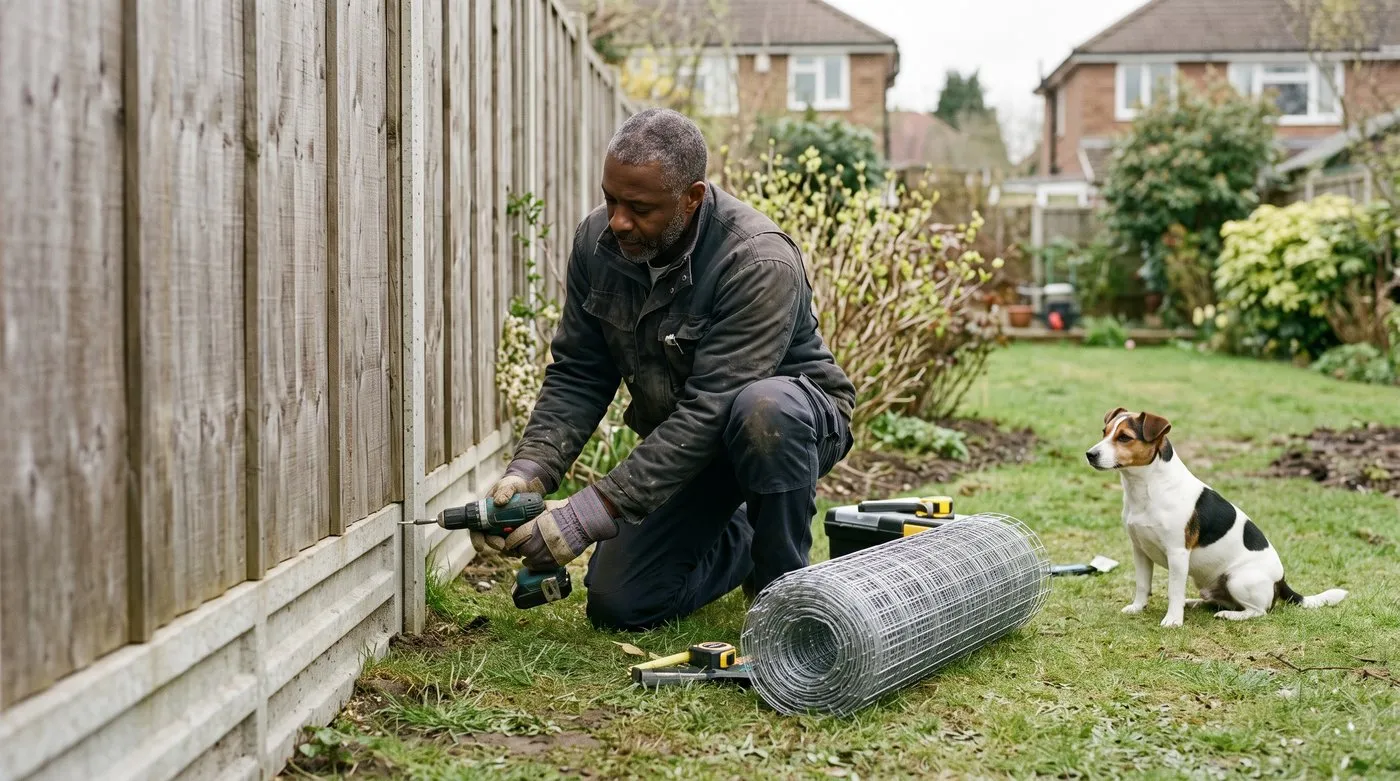
Gravel boards and a strip of wire mesh along the bottom of the fence stop determined diggers. Check the whole run, not just the obvious gaps.
About 1.8m suits most dogs. Small breeds may be fine with less, but strong jumpers and climbers may need more, or an angled topper. Fences over 2m usually need planning permission, so check before going higher.
Dogs escape under fences as often as over them, especially terriers and dachshunds. Secure the base with:
- Gravel boards: concrete or treated timber boards along the bottom of the fence
- Buried mesh: wire mesh buried along the fence line and bent outwards in an L, so digging hits wire
- A concrete strip: the most permanent fix along a fence line
Gates are the most common escape route. Fit a self-closing spring and a bolt high up that a dog can’t nudge. Check the gap underneath is too small to squeeze through.
Gardener’s tip: Walk the whole boundary at dog height once a season. Look for loose panels, gaps behind sheds and holes under hedges.
Paw-friendly surfaces and materials
The right surfaces mean less mud, fewer sore paws and less cleaning. Here’s a quick guide.
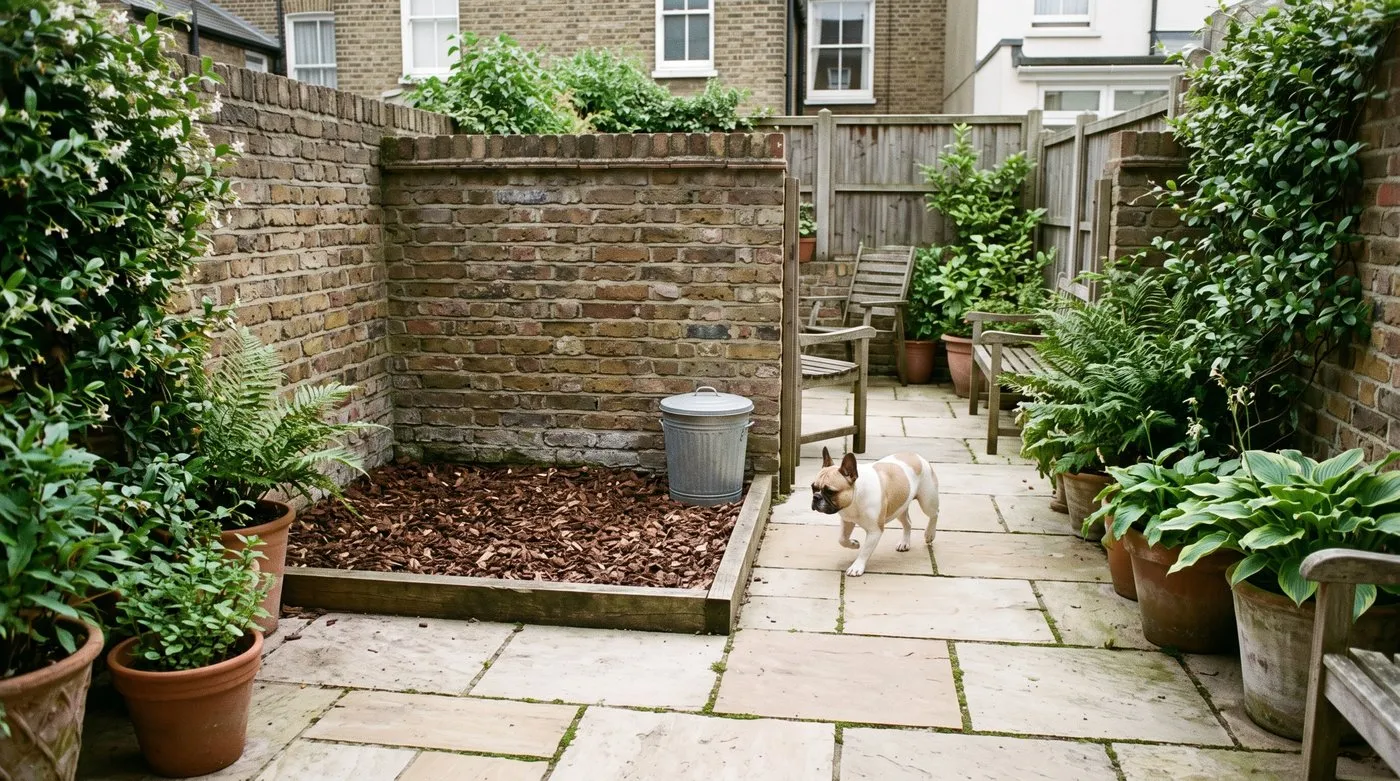
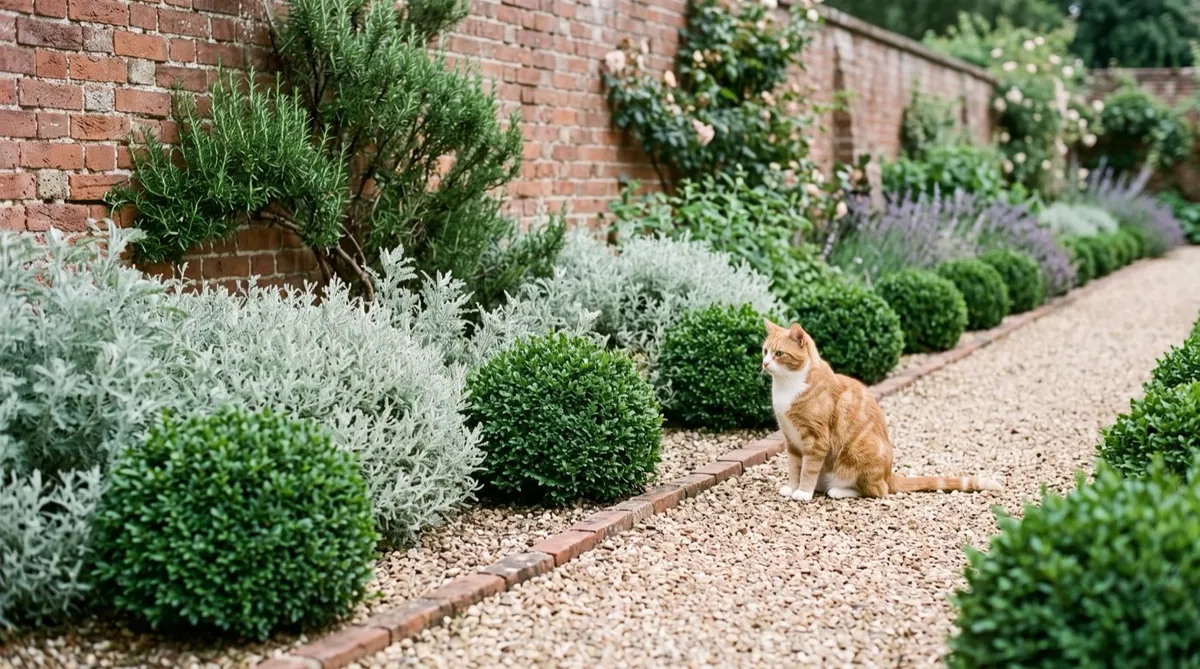
A bark chip corner gives your dog its own toilet spot. Pale paving stays cooler on sunny days too.
| Surface or material | Good for dogs? | Notes |
|---|---|---|
| Lawn | Yes | Soft and cool, but wears in busy spots |
| Bark chip | Yes | Soft, drains well, great for toilet zones |
| Rounded pea gravel | Yes | Drains well, but watch dogs that eat stones |
| Sharp gravel or chippings | No | Can cut pads and lodge between toes |
| Pale paving | Yes | Stays cooler than dark stone in sun |
| Dark paving or slate | Take care | Gets very hot in summer sun |
| Artificial grass | Yes, with care | No mud, but hot in strong sun; rinse often |
| Cocoa shell mulch | No | Poisonous to dogs if eaten |
Test hot surfaces with the back of your hand for a few seconds. If it’s too hot for your hand, it’s too hot for paws.
Bark chip makes the best toilet zone. Lay it thickly over a weed membrane and top it up each year. Use bark sold for gardens, not chippings that might include treated wood.
Artificial grass suits a play area if you’re tired of mud. Choose a type with a drainage backing and rinse it regularly. Keep a real shady spot as well, because it heats up in sun.
Lawns that cope with dogs
A healthy, thick lawn copes far better than a thin one. Sow or re-seed with a hard-wearing mix containing perennial ryegrass, rather than a fine ornamental mix.
Urine patches appear as brown circles, often with a ring of lush green around them. Water the spot well straight after your dog has been, and train them to use the toilet zone. Re-seed bare patches in spring or early autumn.
The lawn care calendar shows the best months to re-seed and feed.
Planting that survives dogs
Protect planting with height and tough plants, and leave out anything toxic.
Raised beds keep paws and noses out of your best plants. Even a low raised edge or a small fence around a border deters many dogs. Put them around the edges and leave the middle open for play. Ideas for shapes and materials are in the guide to raised bed garden design.
Plants to leave out in a dog’s garden include:
- Yew: leaves, bark and seeds are very poisonous
- Foxglove: all parts are poisonous
- Laburnum: the seeds are especially dangerous
- Rhododendron and azalea: can cause serious illness
- Daffodil and other bulbs: dogs dig them up, and bulbs are the most toxic part
- Autumn crocus (Colchicum): highly toxic
- Lilies: deadly to cats, so leave them out if you also have a cat
Mildly toxic plants such as lavender, catmint, hydrangea and alliums can upset a dog’s stomach if eaten. They’re fine for many gardens, but keep them in raised beds if your dog chews plants.
Safer, tough choices include rosemary, sunflowers, snapdragons, calendula, camellia and ornamental grasses such as Miscanthus. The list of pet-safe garden plants has many more.
Warning: If you think your dog has eaten a poisonous plant, call your vet straight away. Take a piece of the plant or a photo with you.

Raised beds keep plants out of the way of paws, and the bark chip path is soft underfoot. Sunflowers, snapdragons and rosemary are safer choices.
Stopping your dog digging
Most dogs dig for fun, to cool down or because they’re bored. Give them a better place to do it.
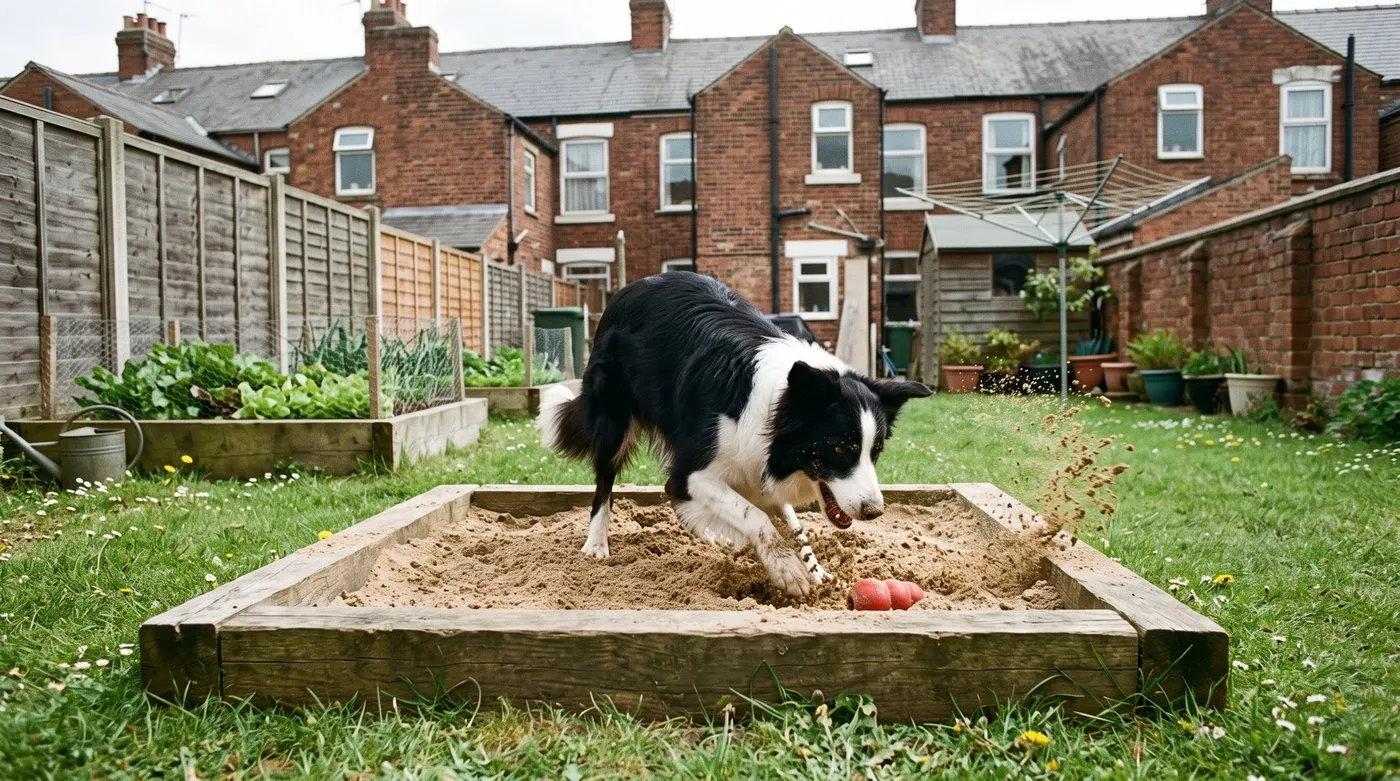
Give a digger somewhere to dig. A sand pit with a few buried toys saves the borders.
- Make a digging pit of sand or loose soil in the play zone, and bury toys in it.
- Lay wire mesh just under the soil surface where they dig most.
- Protect new plants with a low fence until they’re established.
- More walks, play and puzzle toys usually mean less digging.
Shade, shelter and rest areas
Dogs overheat more easily than we do. Flat-faced breeds such as bulldogs, pugs and French bulldogs are especially at risk. Every dog-friendly garden needs shade.
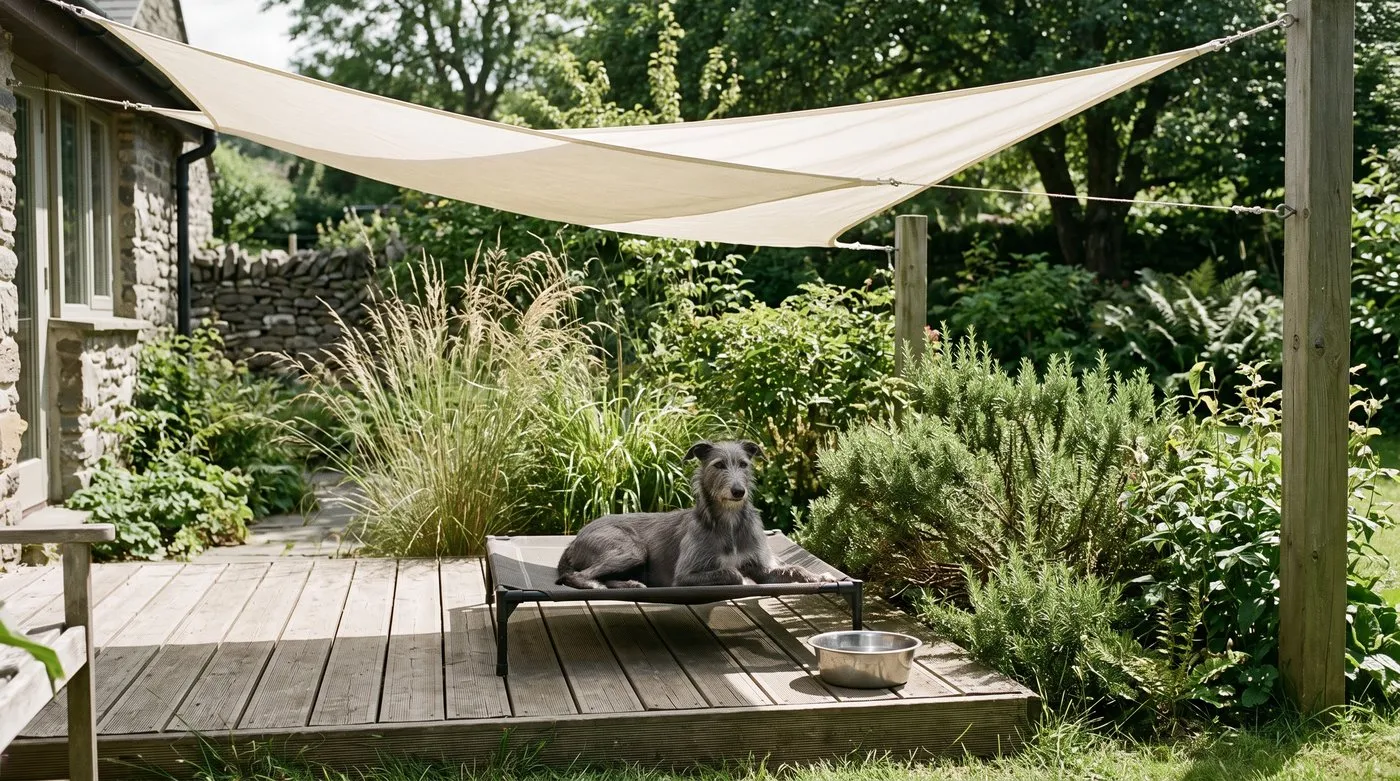
A shady, raised bed and a full water bowl make the perfect summer spot. Flat-faced breeds need shade most of all.
Good shade options:
- A tree: a birch or other light-canopied tree gives dappled shade. Avoid fruiting trees if your dog eats windfalls.
- A shade sail or parasol: quick to put up and works straight away.
- A pergola: add a shade cloth roof, or choose climbers carefully. Wisteria seeds and grapes are both poisonous to dogs.
- A raised dog bed: lifts your dog off hot paving or damp ground.
Put fresh water in the rest zone and refill it daily. On very hot days, keep walks and play for early morning and evening.
Water features for dog-friendly gardens
Dogs love water, but steep-sided ponds are a drowning risk. Choose features with shallow water or none at all.
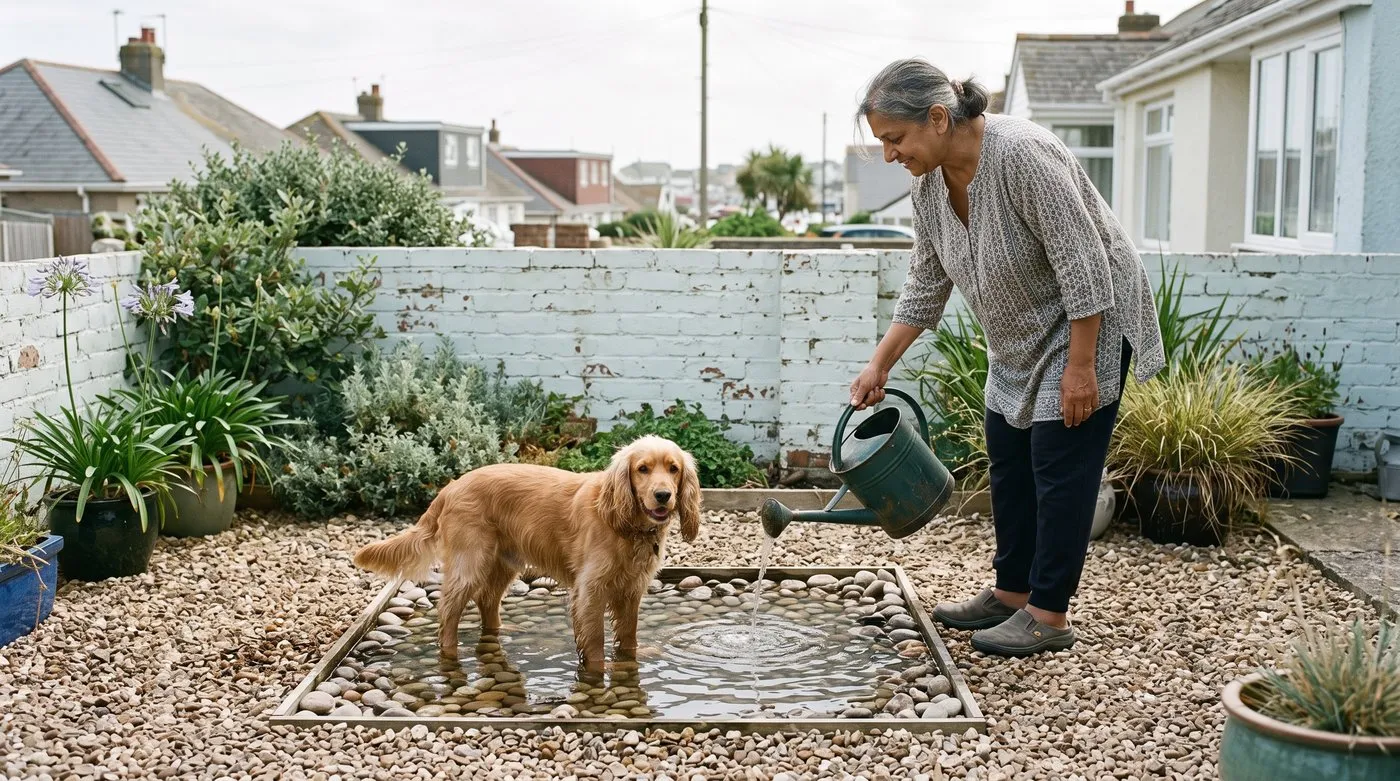
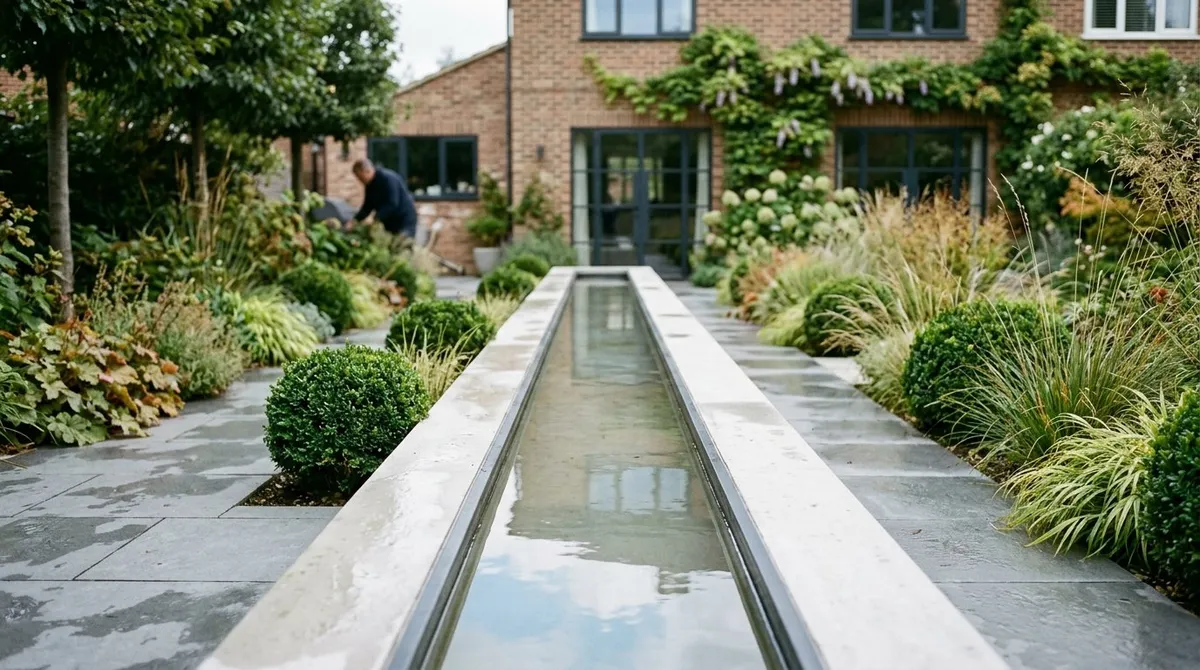
A shallow splash tray lets your dog cool off with no risk of getting stuck. Empty and refill it often.
- Shallow splash tray: a few centimetres of water to wade and cool off in. Empty and refill it often.
- Bubble fountain: water bubbles up through pebbles, with no standing water.
- Shallow rill: a narrow channel of moving water.
If you already have a pond, add a gently sloping beach or ramp so a dog can climb out. Water butts need secure lids.
Practical extras for dog owners
Waste bin: a lidded bin near the toilet zone. Pick up daily. Don’t add dog waste to your compost heap, as it can carry parasites.
Outdoor tap: handy for rinsing muddy paws and filling water bowls.
Toy box: a weatherproof box keeps toys out of the rain.
If you share your garden with cats as well, the guide to a cat-proof garden covers fencing and plants from their side.
Common dog-friendly garden mistakes
Using cocoa shell mulch. It smells of chocolate, dogs eat it, and it’s poisonous. Use bark chip instead.
Missing gaps under fences. A small gap is enough for a small dog. Check the whole boundary, not just the weak bits.
Planting at ground level with no protection. Open borders invite digging and rolling. Use raised beds or low edging.
No shade in summer. A sunny garden with no shade can be dangerous on hot days. Add a tree, sail or parasol.
Sharp gravel. Angular chippings hurt paws. Choose rounded pea gravel or bark chip.
Frequently asked questions
What garden surface is best for dogs?
Lawn, bark chip and rounded pea gravel are all kind to paws. Bark chip suits toilet areas and paths. Avoid sharp chippings, and watch dark paving and artificial grass, which get hot in sun.
How high should a dog-proof fence be?
About 1.8m suits most dogs. Small dogs may manage with less, while big, athletic jumpers may need more. Secure the base with gravel boards or buried mesh so they can’t dig under.
Is artificial grass safe for dogs?
Yes, it’s safe and handy for a muddy play area. Choose one with a drainage backing and rinse it regularly. It gets hot in strong sun, so give your dog a shady spot too.
Which garden plants are poisonous to dogs?
Yew, foxglove, laburnum, rhododendron, azalea and daffodil bulbs are among the most dangerous. Autumn crocus is also highly toxic. Lilies are deadly to cats, so leave them out if you have one.
How do I stop my dog digging up the garden?
Give them a digging pit of sand or loose soil, and bury toys in it. Protect beds with raised edges or low fencing. Bored dogs dig more, so walks and play help too.
How do I stop dog urine patches on the lawn?
Water the spot well straight after your dog has been. Train them to use a bark chip toilet area instead. Re-seed bare patches in spring or autumn with a hard-wearing grass seed.
Can I have a pond in a dog-friendly garden?
Yes, if it has shallow, sloping edges so a dog can climb out. Steep-sided ponds are a drowning risk. Bubble fountains and shallow rills give moving water with no deep water at all.
Now your garden is ready for your dog, read our guide to a dog-proof lawn to keep the grass green as well. For more layout ideas, browse the garden design hub.
Our team produces practical UK gardening guidance from source research, contributor records and established horticultural practice. Editorial standards are overseen by Matt W.