Key takeaways
- Mark the route and walk it both ways before you buy anything
- About 900mm is a good starting width for a main path
- Choose a firm surface where wheelchairs, pushchairs or bins go
- Give gravel a solid edge and slope water away from the house
- Only curve a path when it's going round something real
The best garden paths start with the journey, not the paving. Think about who’ll use the path and what they’ll carry. Then choose the width, surface and drainage to suit that job.
A path to the shed needs room for a wheelbarrow. A path along a border can be narrower and lighter. The path from the back door deserves the firmest, safest surface, because you’ll use it every day of the year.
Start with the route, not the paving
Lay out the path with a hose, string or marker paint. Then walk it both ways before you dig. Carry a watering can or push your wheelbarrow along it.
Look for tight spots around doors, gates, steps and water butts. A path can feel roomy across open lawn but squeezed beside a fence post. And remember, plants will lean over the edges in summer.
A straight path suits a gate, washing line, bin store or shed. It’s quick to walk and uses the least material. Curves work when they go round a tree, lead to a seat or follow a border.
Don’t add a bend just to look relaxed. A pointless curve makes the walk longer and leaves awkward wedges of lawn.
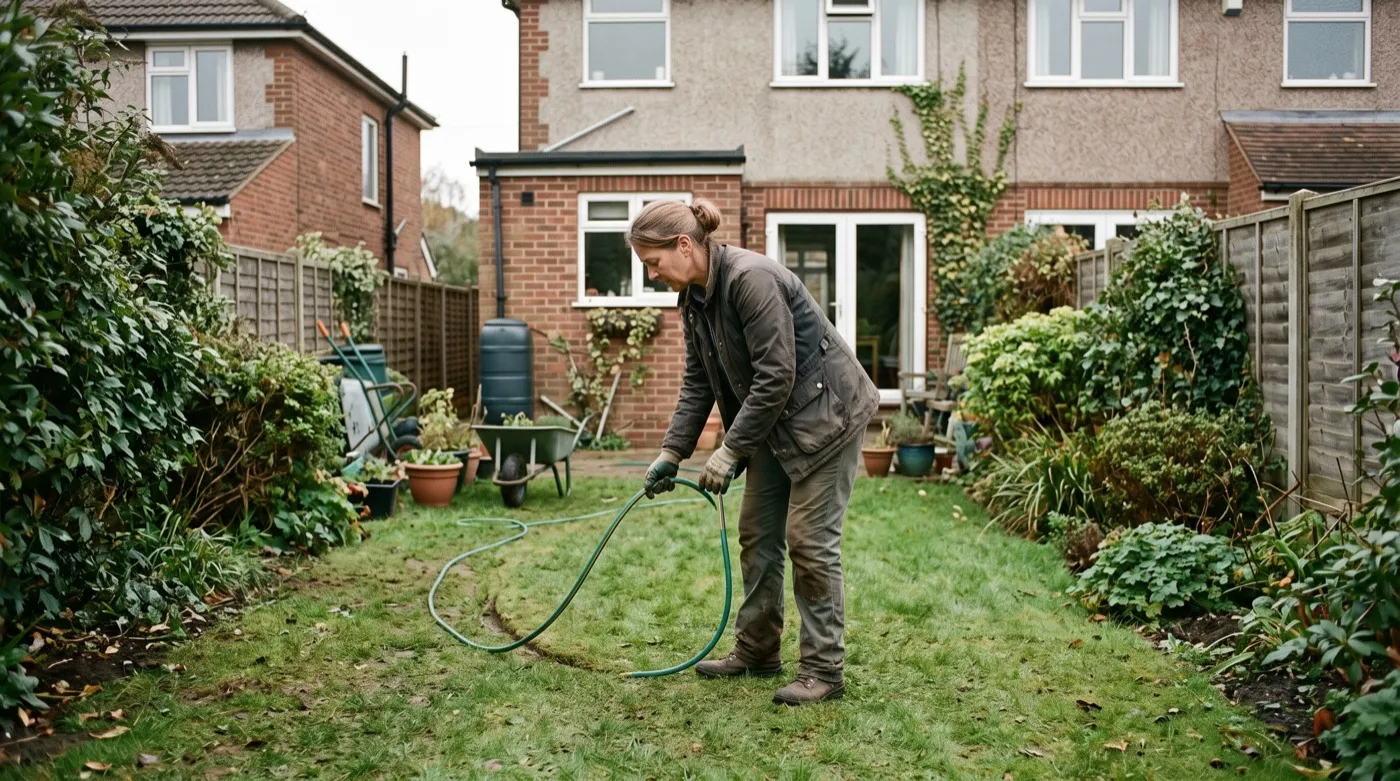
A hose shows the whole curve and is easy to tweak before you lift any turf.
In a small plot, our small garden design ideas can help. A clear route often makes the whole garden feel calmer.
How wide should a garden path be?
About 900mm is a good starting point for a main path used by one person. It usually gives you and a wheelbarrow enough room without swallowing a small garden.
Go wider near doors, gates and seats. Around 1,200mm feels easier when two people need to pass or someone needs to turn. Measure the things you actually use, rather than treating any number as a rule.
Paths between beds can be narrower. Keep them wide enough to kneel, carry tools and reach the plants. Very narrow paths soon vanish under leaning foliage.
If someone uses a wheelchair or mobility scooter, choose a firm, even surface with solid joints. Avoid lips, deep loose gravel and tight turns, and test the real chair on the route.
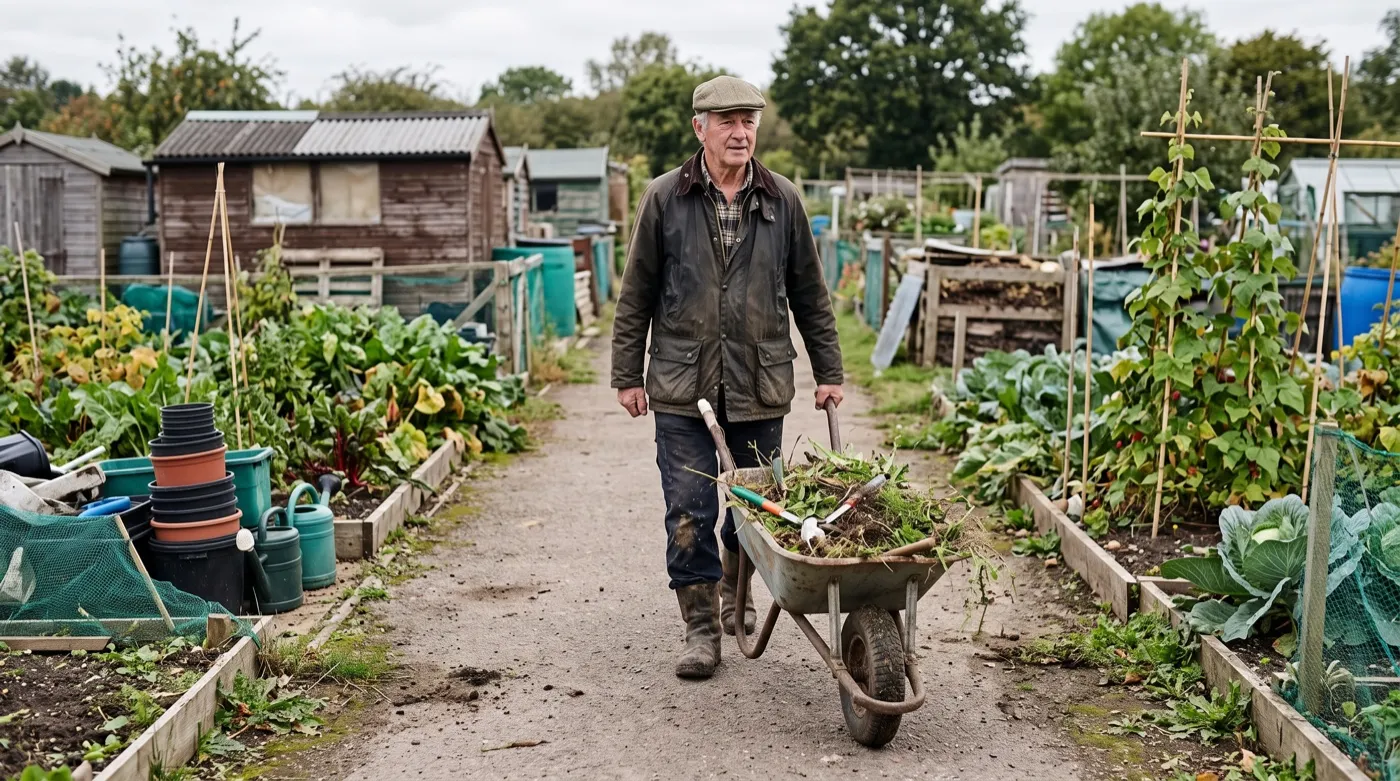
Test the route with the biggest thing that’ll use it regularly.
Which garden path material should you choose?
It depends on who uses the path, your ground, how much upkeep you want and the style of your garden.
| Material | Best for | Good points | Watch out for |
|---|---|---|---|
| Gravel | Relaxed main and side paths | Lets rain through, easy to change | Wanders without a good edge |
| Brick or clay pavers | Cottage and period gardens | Warm colour, firm underfoot | Needs a level, solid base |
| Concrete paving | Busy paths near the house | Firm and easy to sweep | Bad laying shows quickly |
| Natural stone | Long-lasting feature paths | Lovely texture, hard-wearing | Heavy and fiddly to lay |
| Stepping stones | Light routes through planting | Keeps more green showing | Spacing must suit your stride |
| Bark or woodchip | Woodland-style paths | Soft look, easy to top up | Rots down over time |
Gravel paths
Gravel suits relaxed gardens and paths you might change later. Pick small, angular gravel that locks together underfoot. Round pebbles roll about and make wheelbarrows hard work.
The base matters more than the gravel on top. Clear the plants, make a firm, compacted base and fix a secure edge. Keep the gravel layer thin enough to walk on comfortably, but thick enough to hide the base.
Our guide to creating a gravel garden shows how gravel and planting work together.
Brick and clay pavers
Brick brings warm colour and suits narrow paths through borders. Reclaimed bricks vary in thickness and toughness, so make sure they’re right for outdoor paving and not soft indoor bricks.
A simple running pattern looks calm. Herringbone is busier and locks the bricks together well. Set the path a little above the soil so mud doesn’t wash over it.
Paving and natural stone
Paving gives a firm route for bins, pushchairs and wheelchairs. Big slabs mean fewer joints but are heavy to handle. Smaller ones follow curves more easily.
Get a sample and look at it wet before ordering. Polished stone can be slippery, and colours change in the rain.
Stepping stones
Stepping stones suit light routes across gravel, lawn or low plants. Lay them all out and walk them before fixing. An awkward stride gets annoying fast.
Set each one firm and level with the ground around it. Raised edges trip feet and catch the mower. Stepping stones don’t suit anything on wheels.
Garden path edging ideas that stay tidy
Edging keeps gravel in place and stops feet trampling the border. It makes mowing along the path easier too.
Steel or aluminium edging gives a slim, neat line and bends round curves. Set the top low so it’s not a trip hazard, and fix it as often as the maker says.
Brick edging suits traditional gardens and links a gravel path to a brick house. Bed the bricks firmly where feet or wheels cross.
Stone setts make a wide, chunky border. They’re great where a path meets lawn, as they double as a mowing strip.
Treated timber boards are easy for straight, relaxed paths. Support the joins, and expect to replace them one day in damp ground.
See our garden edging ideas for more choices.
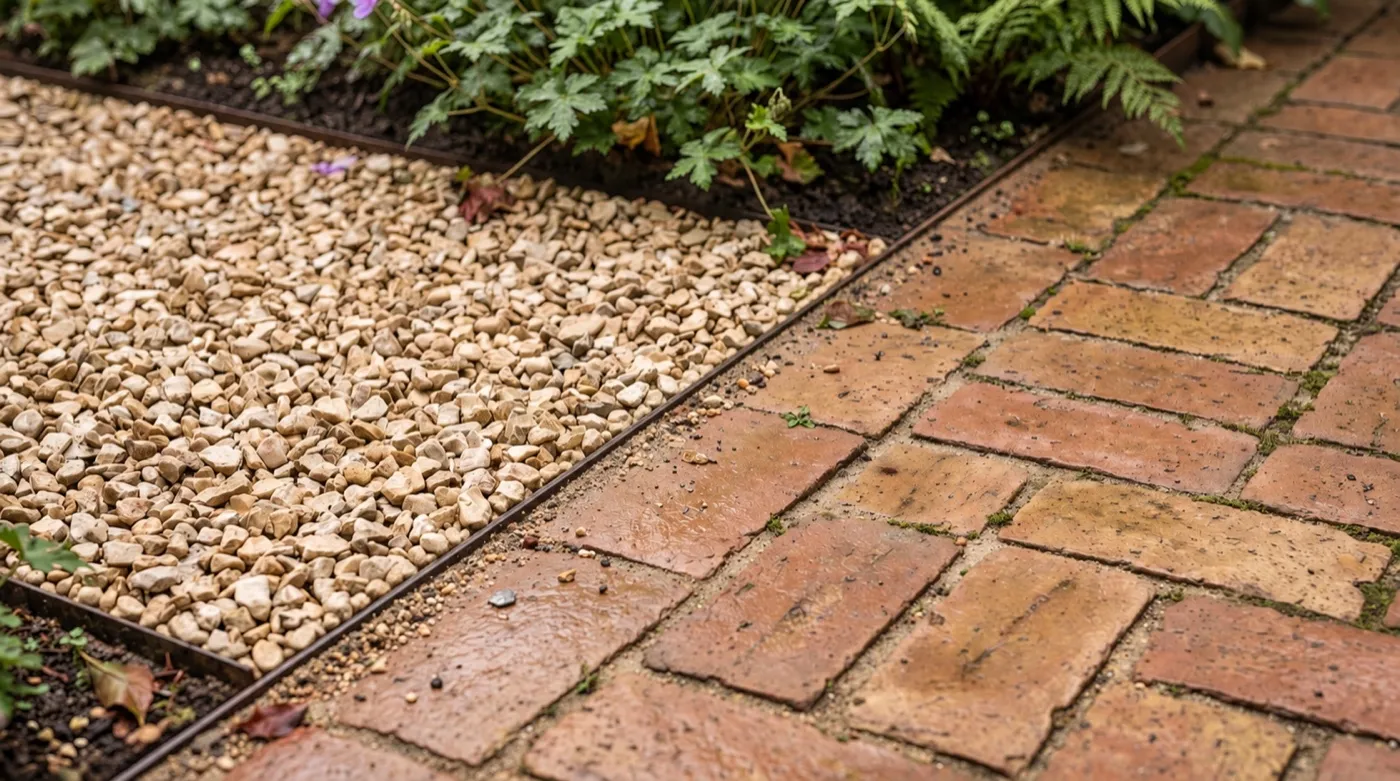
A firm edge keeps the gravel apart from the paving and the plants.
Sort the drainage before you build
Any hard surface changes where the rain goes. Work out where the water will run before you set levels.
Never slope a path towards the house, air bricks or next door. Keep drains and inspection covers easy to reach. If water already puddles, fix that first.
Gravel lets water soak away into the ground. Solid paving can have open joints or drain into a border. The RHS guidance on permeable paving has good front-garden ideas.
In England, paving more than five square metres of a front garden may need planning permission if rain runs off onto the road. The Planning Portal front-garden guidance explains the rules. Scotland, Wales and Northern Ireland have their own, so check locally.
A rain garden can help in a low spot, well away from the house and any pipes. Our rain garden guide shows you how.
How to make a garden path
Good groundwork stops wobbly slabs, puddles and runaway gravel. The base you need depends on your soil, your surface and what will use the path.
- Mark the route. Mark both edges and walk the whole path.
- Check levels and what’s underground. Look for drains, cables, pipes, roots and door thresholds before you dig.
- Clear plants and soft soil. Dig to an even depth without undermining walls or fences nearby.
- Fit the edging. Fix it to the final line and check the width.
- Build the base. Compact the base material in layers, rather than tipping it in loose.
- Lay the surface. Follow the supplier’s instructions for bedding and joints.
- Test it. Pour on some water to find low spots, and walk every joint.
For cars, heavy clay, tree roots or a steep slope, don’t guess. A good contractor can work out the right base for your site.
For big changes of level, read our sloping garden guide before choosing steps or ramps. For a change of level on flat ground, how about a sunken garden?
Handy tip: Lay a small test patch first. Look at it dry, wet and from inside the house.
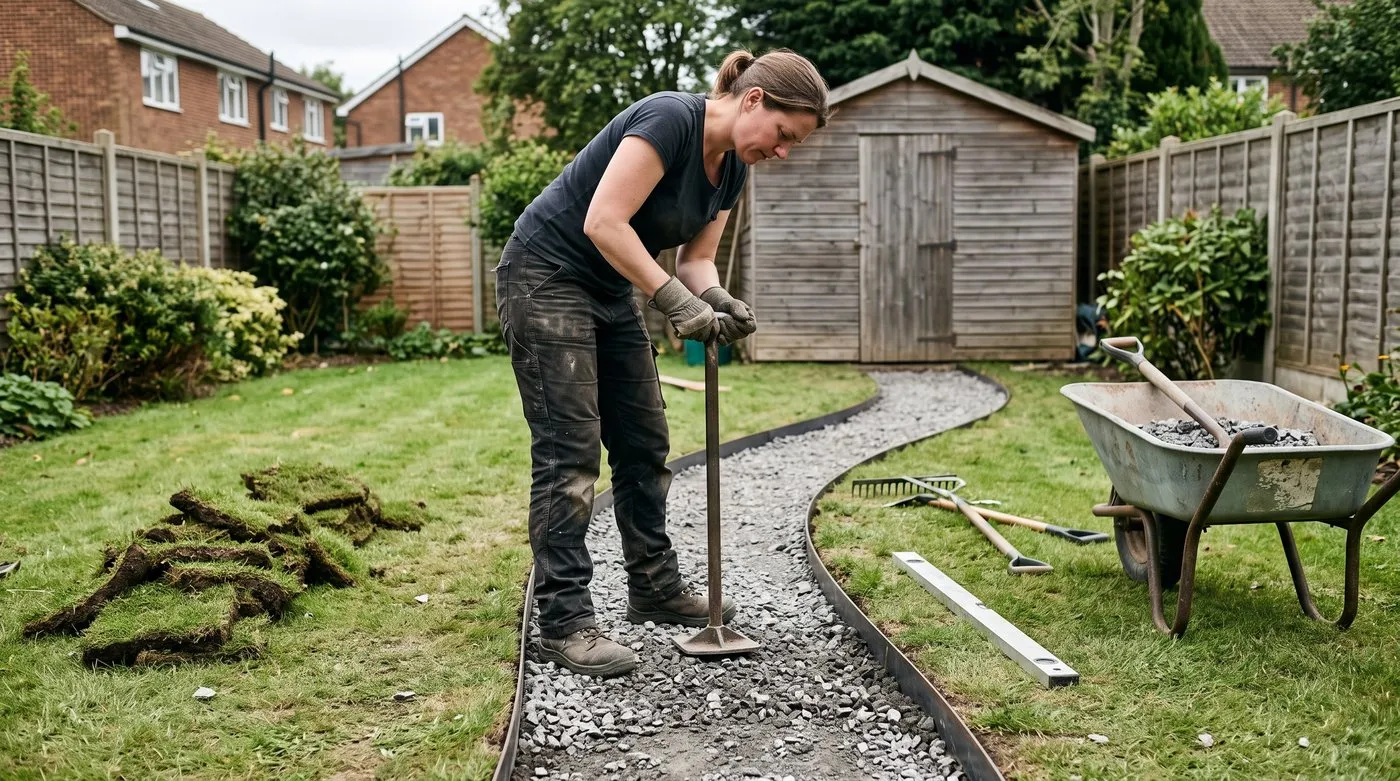
Fix the edging to the final line first, then compact the base in layers rather than tipping it in loose. A firm base stops wobbly slabs and runaway gravel.
Getting the ends of the path right
The ends of a path need as much thought as the middle.
By the back door, keep the path at least 150mm below the damp-proof course, and clear of air bricks. The only exception is a properly designed level threshold with drainage and damp protection. Don’t raise paving against the wall to save digging.
Where paving meets lawn, use a firm edge that holds both. A wide strip of brick or stone takes the mower wheel, saves trimming and stops grass creeping into the gravel.
At a gate, open it fully before you fix the path line. Leave room for hinges and latches, and check the gate won’t sweep gravel out into the road.
Where two materials meet, make it look deliberate. Line up the joints, edges or centre line. A repeated brick or sett can tie two different surfaces together.
Leave a small flat landing before steps, doors and seats. It gives people somewhere steady to pause or put a load down.
Planting beside a garden path
Plants should soften the edges without taking over the path. Plan for their full-grown width, not their size in the pot.
Thyme, Erigeron and small sedums spill nicely over a sunny edge. Lady’s mantle, hardy geraniums and small ferns suit damper or shadier spots. Keep thorny plants, and anything that turns slippery, away from busy paths.
Leave planting pockets with real soil, not rubble or concrete. Water can gather where a deep path base meets a border, so check the edge after heavy rain.
A brick path looks right at home with our cottage garden plan. Repeat one or two plants along the path rather than lining both sides with identical rows.
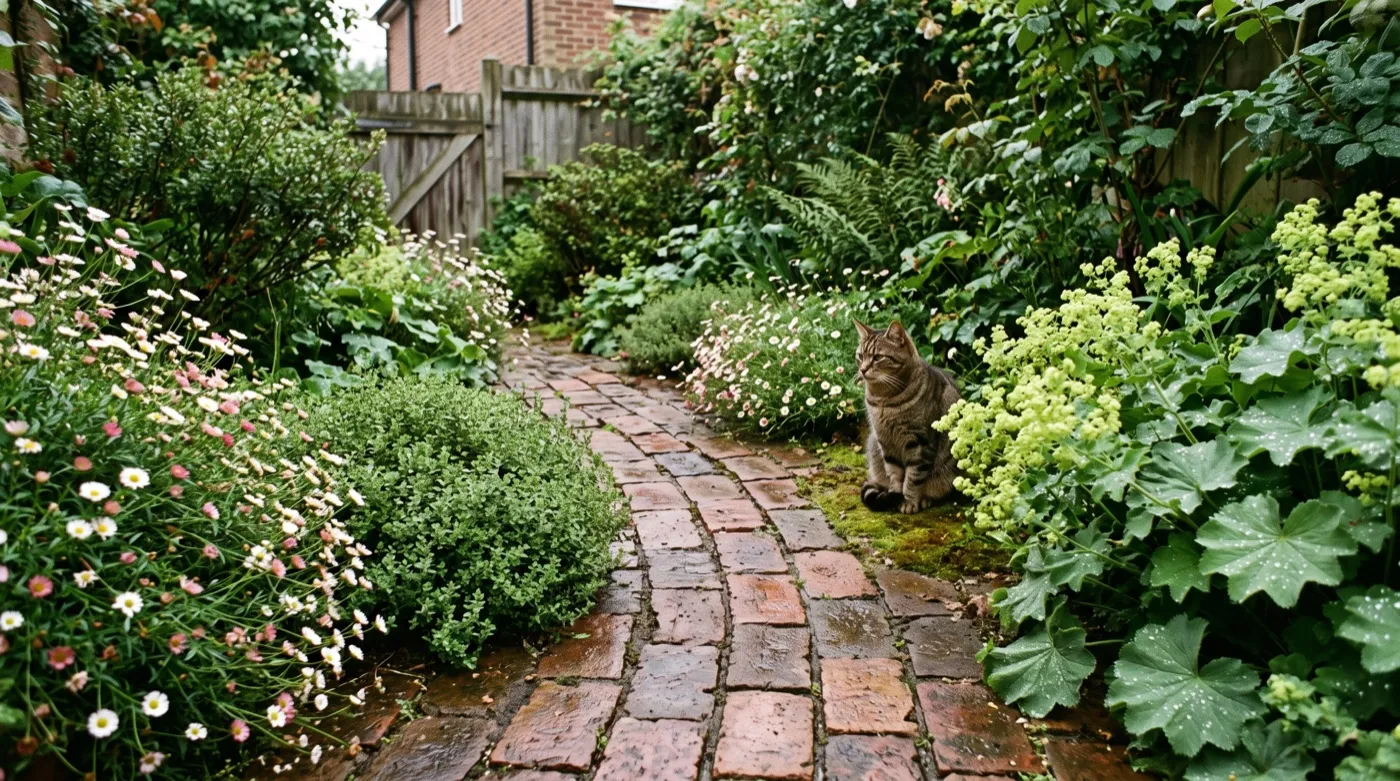
Low plants soften the brick edges and leave the middle of the path clear.
Common garden path mistakes
Choosing the material before the route
The loveliest surface can’t fix a path that misses the shed door or squeezes past the gate. Mark and test the route first.
Expecting the top layer to do the base’s job
Extra gravel or thick mortar won’t fix soft, moving ground. Build the base to suit your soil and what will use the path.
Getting the height wrong
A path set below the border collects soil and water. One set too high becomes a trip hazard and can block a door.
Loose gravel on a steep slope
Feet, rain and wheelbarrows push loose gravel downhill. Use paving, steps or a properly built bound surface instead.
Letting plants close in
New borders look sparse, so it’s tempting to plant too close. Check how wide plants grow and keep big ones back from narrow paths.
Browse more garden design guides or use our garden edging guide to finish your path neatly.
Frequently asked questions
How wide should a garden path be?
Start with about 900mm for a main path used by one person. Allow more where people need to pass or turn, or someone uses a wheelchair or walking frame.
What is the easiest garden path to lay?
A simple gravel path is usually the easiest to do yourself. It still needs digging out, a firm base and a secure edge.
Should a garden path be straight or curved?
Straight for getting somewhere, curved to go round something real. A bend with no reason makes the walk longer and feels awkward.
What edging works with a gravel path?
Steel, aluminium, brick, stone or treated timber all work. Pick an edge that’s deep and firm enough to stop the gravel spreading.
Do I need planning permission for a garden path?
Most back-garden paths don’t need permission, but front-garden drainage rules can apply. Check the rules before laying solid paving at the front.
Our team produces practical UK gardening guidance from source research, contributor records and established horticultural practice. Editorial standards are overseen by Matt W.