Key takeaways
- A rain garden is a shallow planted dip that fills after rain and drains within a day or two
- Keep it at least 5m from the house and downhill from the downpipe, drive or patio feeding it
- Dig about 15-30cm deep with gently sloping sides, and add a gravel layer on clay
- Always fit an overflow so heavy storms can't flood the house or your neighbours
- Choose plants that cope with both soggy and dry spells, wettest-loving in the middle
- Cut back in spring, not autumn, so stems shelter insects over winter
A rain garden is a shallow, planted dip that catches rainwater running off a roof, drive or patio. It fills up after rain, then drains away within a day or two. It looks like a lush border, helps stop puddles and flooding, and gives wildlife a damp, flowery home.
This guide shows you where to put one, how big and deep to dig, what to fill it with and which plants to choose. A rain garden isn’t the same as a bog garden, which stays wet all the time. It’s also not a pond: most of the time, it’s dry.
What is a rain garden and how does it work?
Water from a downpipe, drive or patio flows into a shallow dip filled with free-draining soil and tough plants. The water soaks in slowly instead of rushing straight into the drains. The plants and soil also catch some of the dirt the water picks up on the way.
Because it fills and empties, the plants must cope with being soggy for a day or two and then dry in between. That’s what makes choosing plants a little different from an ordinary border.
Why build a rain garden?
- Fewer puddles and soggy patches. Water from hard surfaces has somewhere to go.
- Less pressure on the drains. In heavy rain, sewers can overflow into rivers. Every bit of roof or drive you take off the drain helps.
- A great wildlife patch. Damp-loving flowers bring in bees, hoverflies and butterflies, and frogs love the cover.
- It looks good. A rain garden is simply a border that happens to soak up water.
If you’d rather store rainwater for watering, our guide to rainwater harvesting covers water butts and tanks. Many people do both: a water butt on the downpipe, with its overflow running into a rain garden.
Where should you put a rain garden?
Downhill from the water source and well away from the house. Water must flow to the rain garden on its own, and it mustn’t soak in near your foundations.
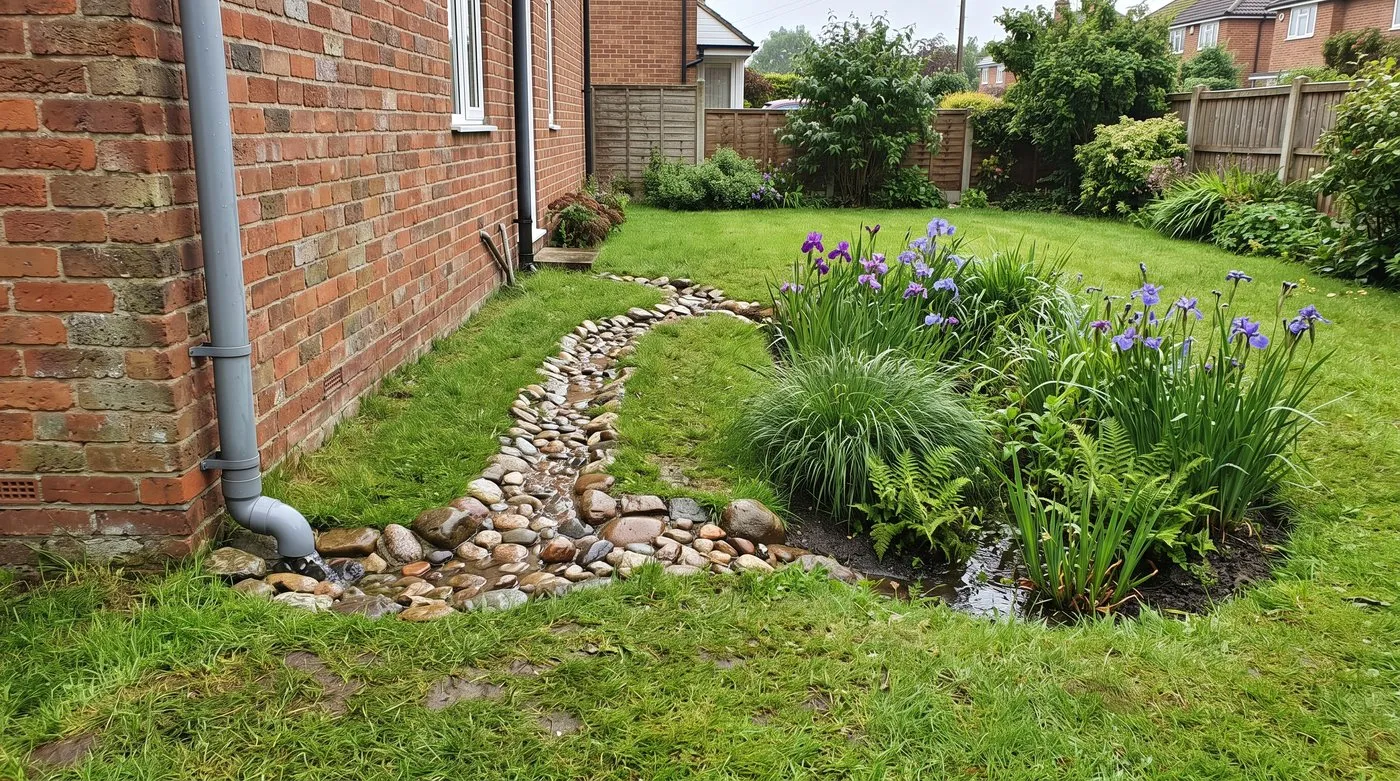
A shallow cobbled channel carries roof water well away from the house and into the rain garden.
- At least 5m from buildings. Soakaways are normally kept at least 5m from a house, and the same caution makes sense here.
- Downhill from the source. Water should flow naturally from the downpipe, drive or patio. On flat ground, dig a shallow channel to lead it there.
- Away from septic tanks, soakaways and drains. Don’t add water where you already have drainage.
- Clear of pipes and cables. Check for underground services before you dig.
- Not in a spot that’s already boggy. If water already sits there for days, it won’t drain any faster with more water. Make a bog garden instead.
- In sun or part shade. Most rain garden plants like a few hours of sun. Avoid deep shade under trees.
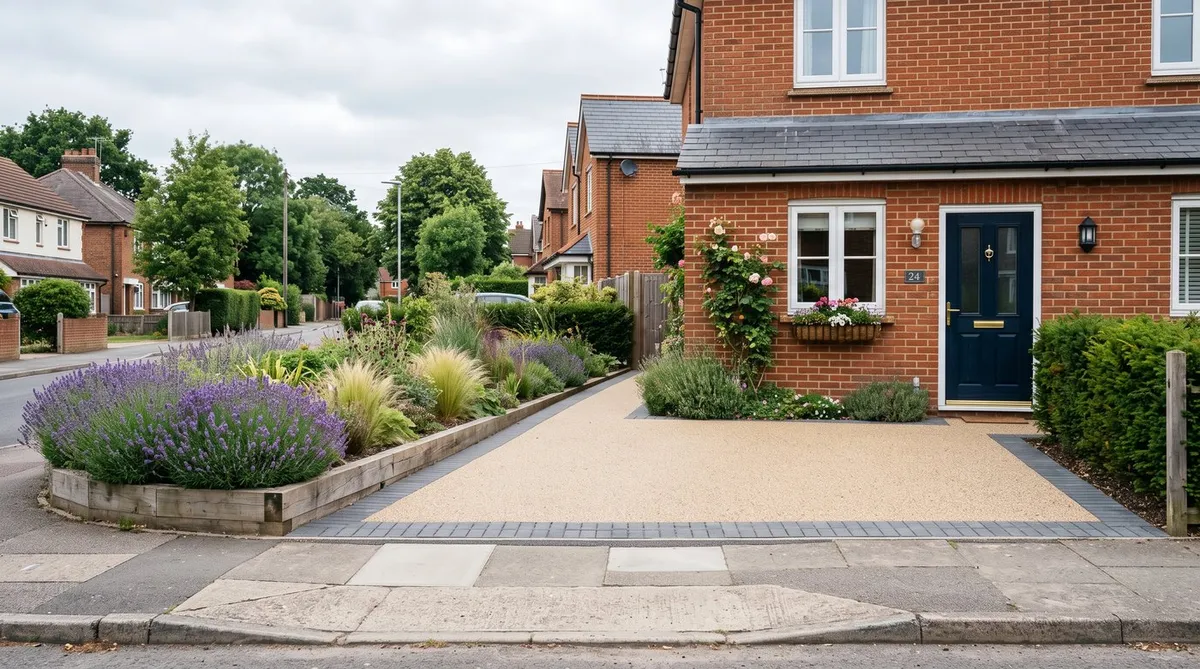
Front gardens are often perfect, because they catch water from the drive and roof. If you’re paving a front garden too, see our guide to permeable paving.
How big and deep should a rain garden be?
There’s no exact formula, but a few rules of thumb help:
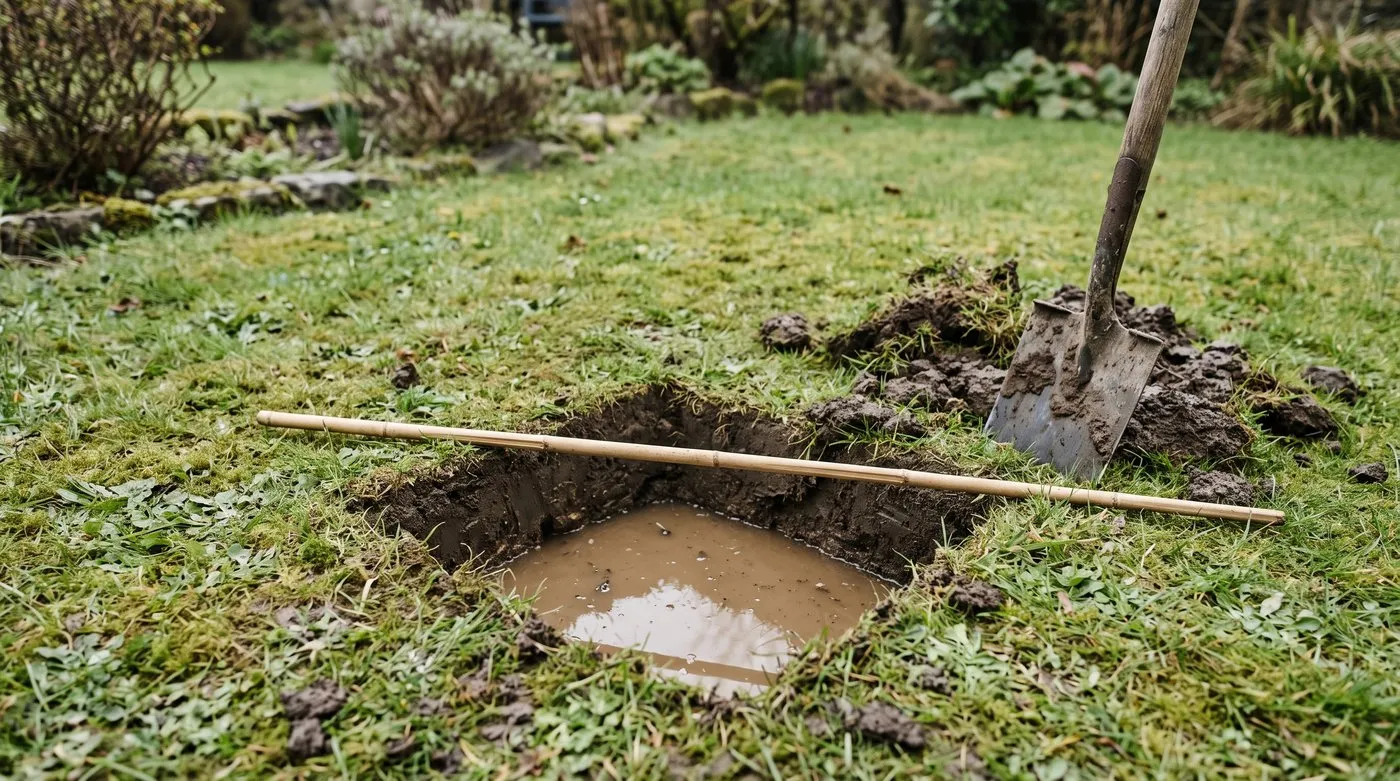
Fill a test hole twice and time how long it takes to drain. It tells you how much gravel and space you need.
- Size it to the area draining into it. A shed or garage roof needs only a small dip. A large driveway or house roof needs a much bigger one.
- Dig about 15-30cm deep. That’s the hollow that fills with water. Keep the sides gently sloping so it looks natural and is safe for children.
- Go bigger and add gravel on clay. Heavy soil soaks water up slowly.
- Always fit an overflow. No rain garden can hold every storm.
A small roof is a good first project. Once you see how it behaves, you can make another for a bigger area.
How to test your drainage
Before you build, dig a hole about 30cm deep and wide where the rain garden will go. Fill it with water and let it drain. Then fill it again and see how long it takes to empty.
- Drains within a few hours: good, free-draining soil. A shallow rain garden will work well.
- Takes most of the day: fine, but add some sharp sand to the mix.
- Still full the next day: heavy clay. Dig deeper, add a gravel layer and make it bigger. Our UK soil types guide helps you work out what you’ve got.
How to build a rain garden step by step
- Mark out the shape. Use string or a hose. Gentle curves look natural.
- Dig the hollow. Dig out 15-30cm, plus extra for any gravel layer on clay. Use the spoil to build a low bank on the downhill side.
- Add gravel on clay. Spread a layer of washed gravel across the base. Line the sides, not the base, with landscape fabric so clay doesn’t wash into the gravel.
- Fill with the soil mix. Use mostly washed sharp sand, with some topsoil and compost, mixed well. Leave the surface lower than the ground around it so water can pool.
- Make the inlet. Lead water in with a shallow channel, a length of pipe from the downpipe or a gravel strip from the patio. Line the spot where water enters with cobbles so it doesn’t wash soil away.
- Fit an overflow. At the far end, set a pipe or gravel channel at the top water level. Send overflow to a drain or soakaway, never towards the house or a neighbour’s garden.
- Plant in zones. Wet-loving plants go in the lowest middle. Tougher, drier plants go on the slopes and edges.
- Mulch with gravel. Bark and woodchip float away when the dip fills. Gravel stays put and helps keep weeds down.

Plant in spring or autumn and water in well. Wet-loving plants go in the lowest part of the dip.
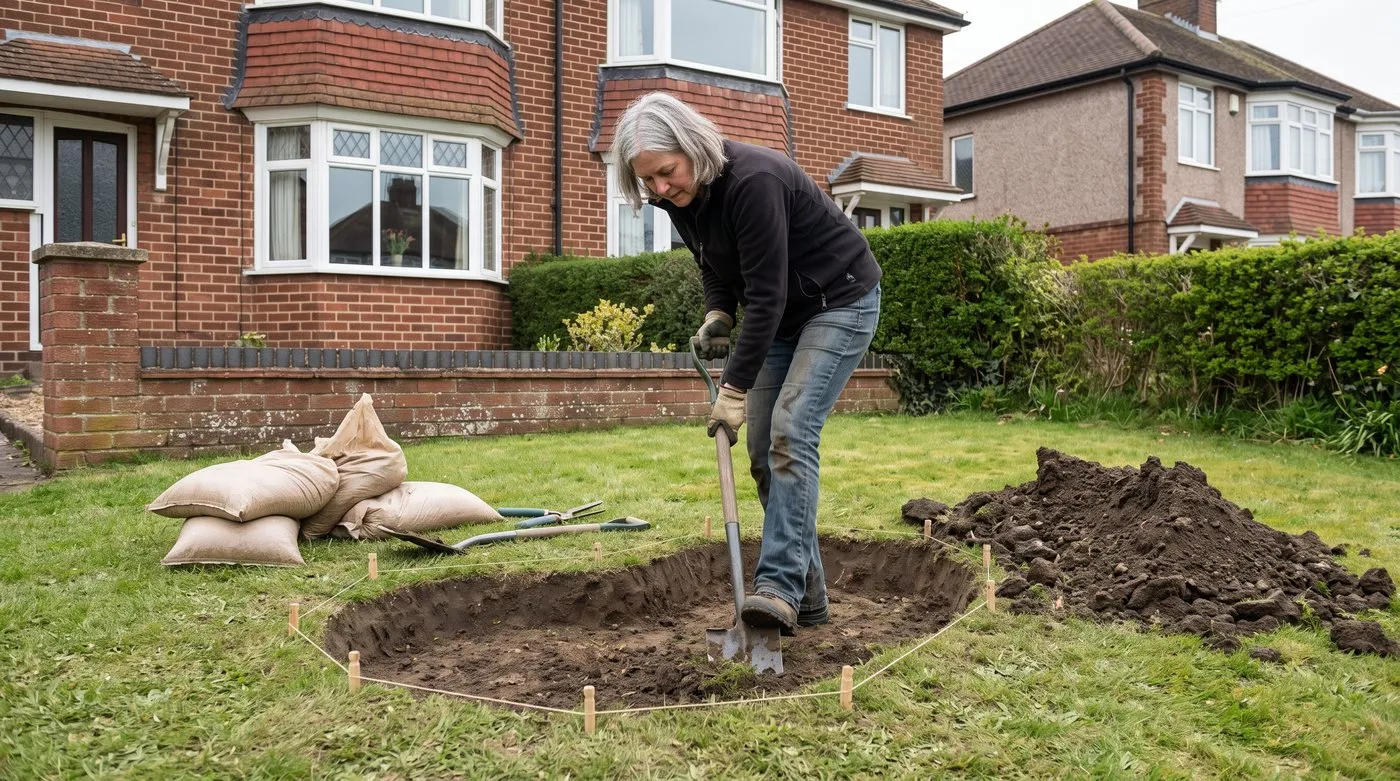
Keep the sides gentle and pile the spoil on the downhill side to make a low bank.
Best plants for a UK rain garden
Choose tough plants that cope with wet feet and dry spells. Many native wetland and meadow plants are ideal, and so are some garden favourites.
Wet middle (sits wet for a day or two)
| Plant | Height | Flowers | When |
|---|---|---|---|
| Purple loosestrife (Lythrum salicaria) | 60-120cm | Magenta spikes | June to September |
| Meadowsweet (Filipendula ulmaria) | 60-120cm | Creamy, scented froth | June to August |
| Yellow flag iris (Iris pseudacorus) | 60-100cm | Bright yellow | May to July |
| Ragged robin (Silene flos-cuculi) | 30-60cm | Pink, frilly | May to July |
| Water mint (Mentha aquatica) | 30-60cm | Lilac | July to September |
| Purple moor grass (Molinia caerulea) | 60-100cm | Airy seedheads | Late summer |
Damp slopes
| Plant | Height | Flowers | When |
|---|---|---|---|
| Hemp agrimony (Eupatorium cannabinum) | 60-150cm | Dusky pink | July to September |
| Greater bird’s-foot trefoil (Lotus pedunculatus) | 30-60cm | Yellow | June to August |
| Bugle (Ajuga reptans) | 10-20cm | Blue spikes | April to June |
| Lady’s mantle (Alchemilla mollis) | 30-50cm | Lime green froth | June to August |
Drier edges
| Plant | Height | Flowers | When |
|---|---|---|---|
| Red campion (Silene dioica) | 30-80cm | Deep pink | May to September |
| Primrose (Primula vulgaris) | 10-15cm | Pale yellow | February to May |
| Betony (Betonica officinalis) | 30-60cm | Purple spikes | June to August |
| Tufted hair grass (Deschampsia cespitosa) | 50-100cm | Airy seedheads | Summer to winter |
Plant in spring or autumn, when roots settle quickly. Small 9cm pots or plugs establish well. Yellow flag iris and water mint spread, so give them room or pull out extra bits each year. For more ideas, see our list of plants for wet, boggy soil.
Can you build a rain garden on clay soil?
Yes. Lots of UK gardens are on clay, and rain gardens work well there with a little extra preparation.
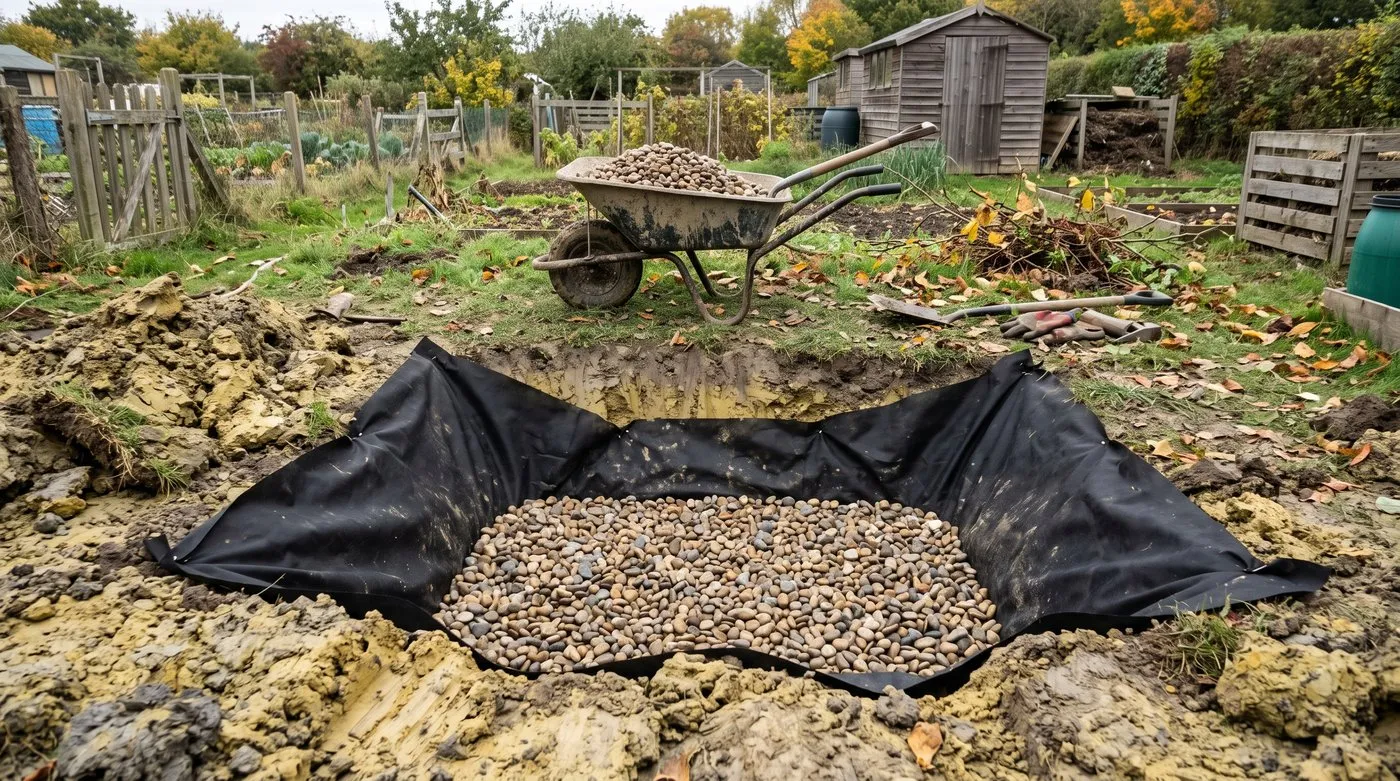
On clay, a gravel layer under the soil mix holds water while the clay slowly soaks it up.
- Dig a bit deeper to fit a layer of washed gravel under the soil mix. The gravel holds water while the clay slowly soaks it up.
- Use washed gravel, not crushed stone with lots of dust, which clogs over time.
- Line the sides, not the base, with landscape fabric, so clay doesn’t wash into the gravel but water can still soak away.
- Make it bigger and shallower than you would on light soil.
Our guide to improving clay soil explains why clay drains so slowly and how to open it up over time.
How to look after a rain garden
Once plants are established, a rain garden needs very little care.
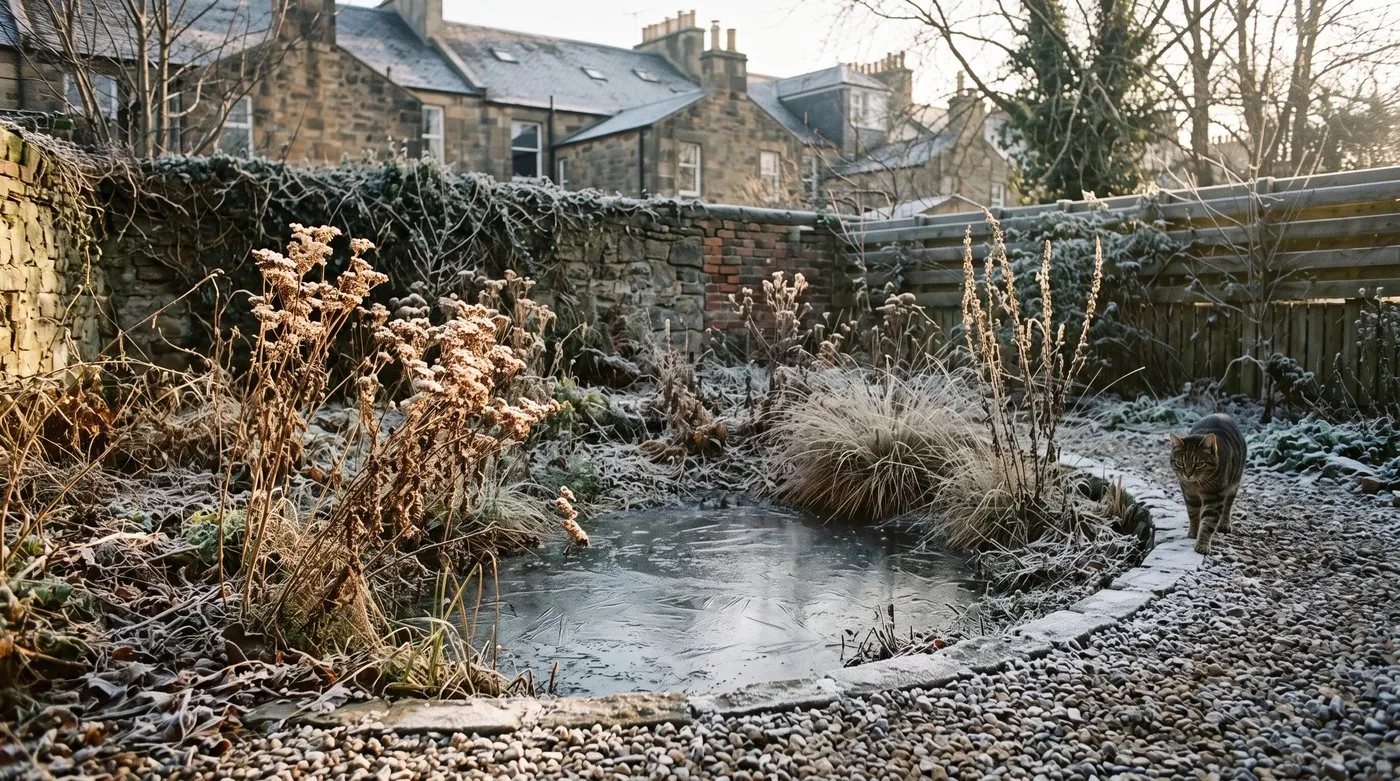
Leave stems and seedheads standing over winter. They shelter insects and look lovely in frost.
| When | Jobs |
|---|---|
| First year | Water new plants in dry spells. Weed regularly until plants knit together |
| Spring | Cut back last year’s dead stems. Divide anything that’s spread too far. Top up gravel. Check the inlet and overflow are clear |
| Summer | Pull weeds. Water only in long droughts once established |
| Autumn | Clear leaves from the inlet and overflow. Leave stems standing |
| Winter | Leave it alone. Standing water for a day or two after storms is normal |
If water regularly sits for more than a couple of days, work in more sharp sand in spring, or make the rain garden bigger.
What wildlife does a rain garden attract?
A rain garden’s mix of wet, damp and dry spots suits lots of creatures. Flowers such as purple loosestrife, meadowsweet and hemp agrimony are busy with bees, hoverflies and butterflies. Frogs and toads shelter in the damp cover, and ground beetles hide under the gravel.
Leave the stems standing over winter and cut back in spring. Hollow stems shelter insects, and seedheads feed birds. For more ideas, see our guide to creating a wildlife garden, or browse the wildlife hub.

Just after a downpour, the dip holds water for a while. Purple loosestrife buzzes with bees all summer.
Common rain garden mistakes
- Building too close to the house. Water can soak towards the foundations. Keep at least 5m away.
- Skipping the drainage test. On heavy clay, a rain garden without gravel can turn into a pond.
- No overflow. A big storm will flood over the edge, maybe towards the house.
- Steep sides. They wash away and look odd. Keep slopes gentle.
- Bark mulch. It floats off when the dip fills. Use gravel instead.
- Cutting everything back in autumn. You remove winter shelter for wildlife.
Now you know how to catch the rain, read our guide on installing a water butt to save some for dry spells too.
Frequently asked questions
Do you need planning permission for a rain garden?
Usually not, as it’s ordinary garden landscaping. Digging a shallow planted dip in your own garden is like making a new border. If you live in a listed building or a conservation area, or you’re changing a front garden next to a road, check with your council first.
How deep should a rain garden be?
About 15-30cm deep, with gently sloping sides. Shallower suits free-draining soil, and deeper suits clay with a gravel layer underneath. Keep it shallow and gentle so it’s safe for children and easy to plant and weed.
What size should a rain garden be?
Big enough to hold a heavy shower from the area draining into it. A small garage or shed roof needs only a small dip, while a whole driveway needs much more. Make it bigger on clay, and always fit an overflow for the storms it can’t hold.
What is the best soil mix for a rain garden?
A free-draining mix of mostly sharp sand with some topsoil and compost. Use washed sharp sand, not soft builder’s sand, which clogs. On light, sandy soil you can often just improve the existing soil with some compost instead.
What plants grow best in a UK rain garden?
Plants that cope with both wet spells and dry spells. Purple loosestrife, meadowsweet, yellow flag iris, ragged robin and water mint suit the wet middle. Hemp agrimony and bugle like the damp slopes. Red campion, primroses and tufted hair grass suit the drier edges.
How long does a rain garden take to drain?
Usually within a day or two after heavy rain. If water regularly sits for more than a couple of days, the soil is too heavy or the base has clogged. Work in more sharp sand, add a gravel layer, or make the rain garden bigger and shallower.
Can you build a rain garden on clay soil?
Yes, but dig a little deeper and add gravel underneath. A layer of washed gravel below the soil mix holds water while the clay slowly soaks it up. Make the rain garden bigger than you would on light soil, and fit an overflow.
Our team produces practical UK gardening guidance from source research, contributor records and established horticultural practice. Editorial standards are overseen by Matt W.