Key takeaways
- Space pleached trees 1.2-2m apart so the panels meet into one screen
- Plant between November and March, when the ground is not frozen or waterlogged
- Stake firmly: the flat panel catches the wind like a sail
- Water well through the first two summers while the roots spread
- Tie new shoots onto the frame through summer and trim the panels twice a year
Pleached trees give you privacy at eye level without filling the whole garden. Each one has a clear, bare stem with a flat panel of branches on top, held above fence height. A row of them screens a neighbour’s window, while the ground below stays free for planting.
Here’s how to choose the right tree, plant it, keep it standing and train it into a neat, flat screen. Most problems come down to support and water in the first couple of years, so that’s where to put your effort.
What are pleached trees and where do they work?
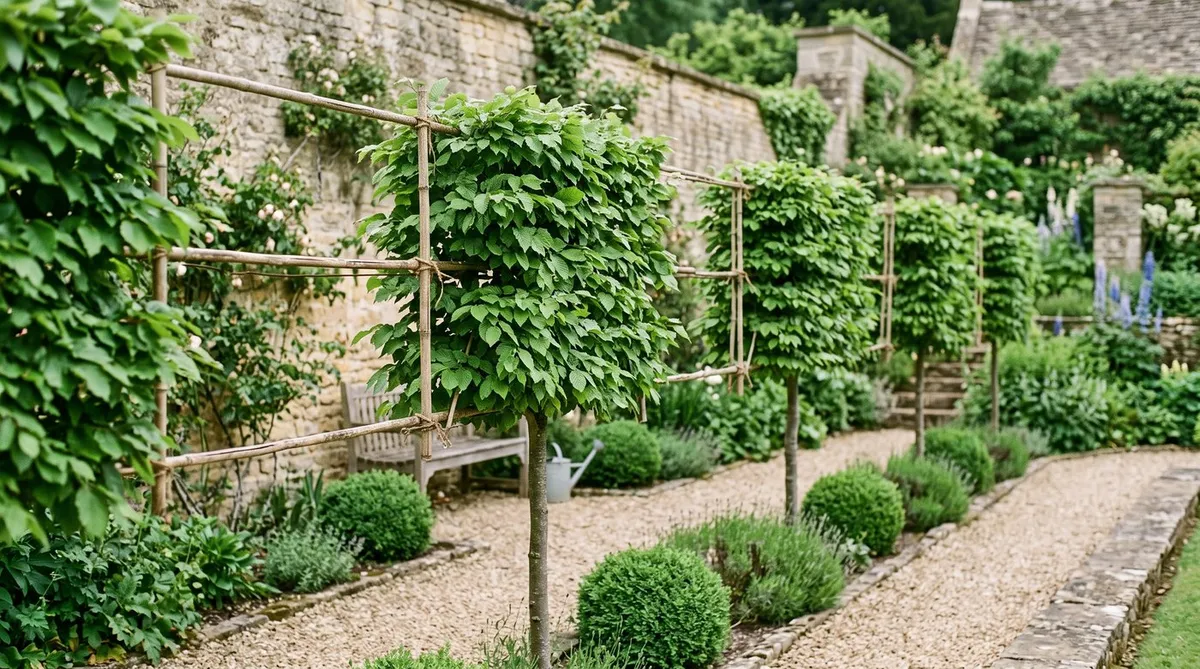
A pleached tree is a hedge on stilts. It has a clear stem, usually about 1.8-2m tall, topped by a flat rectangle of branches trained onto a frame of canes and wire.
Pleached trees suit town gardens, new-build boundaries, driveways and courtyards. They give a crisp, formal line where a loose hedge would sprawl. They’re a good fix when a fence is high enough at ground level but upstairs windows still look in.
Weighing up a pleached screen against a normal hedge? Our guide to privacy screening with hedges or trees compares the options.
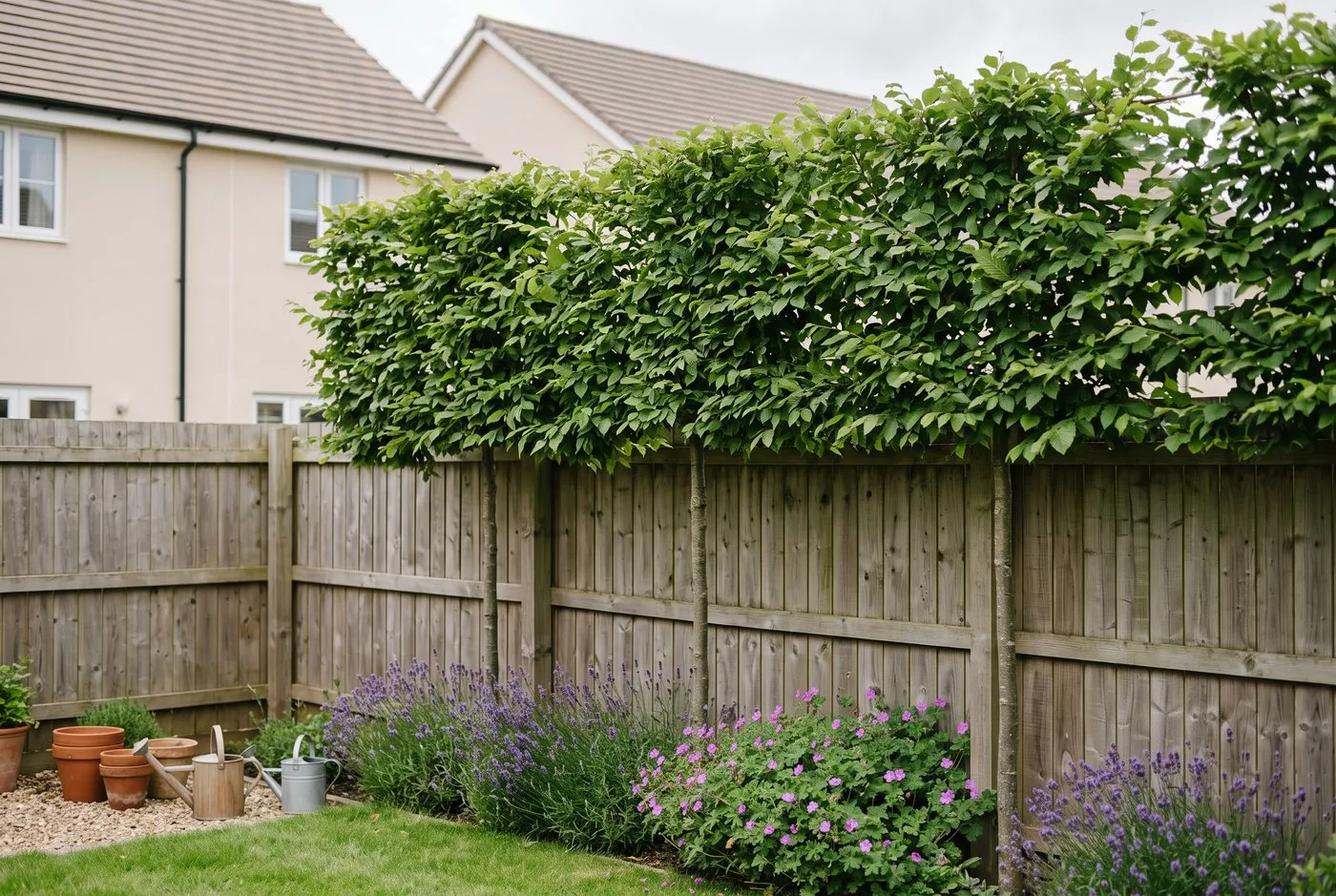
Panels that start above the fence hide the upstairs windows next door. The clear stems leave room for a border underneath.
Which trees are best for pleaching?
Hornbeam is the best all-rounder for most UK gardens. It copes with clay and wind, clips well and often holds dry brown leaves through winter.
| Tree | Winter look | Best for |
|---|---|---|
| Hornbeam (Carpinus betulus) | Often holds brown leaves | Most soils, including clay. Exposed sites |
| Lime (Tilia) | Bare | Fast, traditional screens. Can drip sticky honeydew |
| Beech (Fagus sylvatica) | Often holds copper leaves | Free-draining soil. Dislikes wet clay |
| Holm oak (Quercus ilex) | Evergreen | Year-round screening. Good near the coast |
| Photinia Red Robin | Evergreen, red new leaves | Sheltered spots, colourful screen |
Pick an evergreen if you want privacy in January. Avoid lime over patios and parking spaces, where honeydew from aphids makes surfaces sticky. Our guide to hornbeam hedges explains why it does so well on clay, and our Photinia Red Robin guide covers its care.
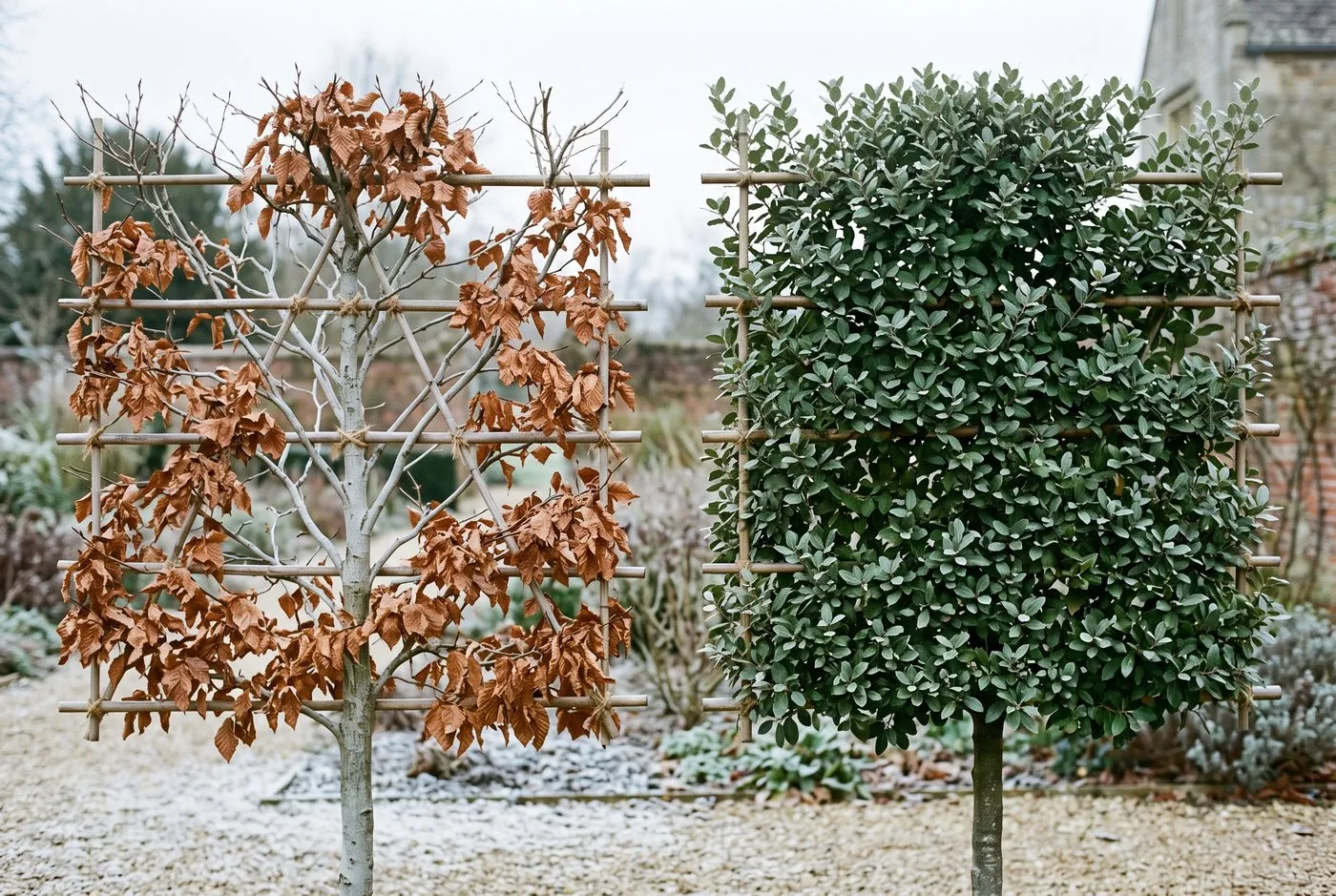
Beech, left, holds its copper leaves in winter. Holm oak, right, stays green all year. Your choice decides how much screening you get in January.
Should you buy pre-pleached trees or train your own?
Pre-pleached trees come from the nursery ready-trained, with a formed panel on a frame. They give you a screen straight away, but they’re a big investment.
Training your own from young feathered trees is far cheaper. You build the frame and tie in the branches yourself. Expect to wait a few years before it looks like a proper screen. The skills are the same as training an espalier fruit tree, just lifted up onto a tall stem.
Gardener’s tip: When buying pre-pleached trees, ask for the clear stem height and the panel size separately, not just the overall height. Buy all your trees matched so the panels line up.
How to plant a pleached tree
Plant between November and March, whenever the ground isn’t frozen or waterlogged. Pot-grown trees can go in at other times if you keep them well watered.
- Mark out the row with a string line. Space trees 1.2-2m apart, so the panels meet. Keep them at least 60cm off the fence.
- Dig a square hole wider than the rootball and no deeper. Fork the base and sides.
- Set the tree so the top of the roots is level with the soil, never buried.
- Line up the stems so every panel sits at the same height.
- Backfill with the soil you dug out, firming in layers. Don’t add compost to the hole, as it lets the tree sink.
- Water in well and mulch with bark or compost, keeping it off the stem.
Bare-root trees follow the same steps. Our bare-root tree planting guide has the details.

Firm the soil in layers as you backfill. A solid start stops the tree rocking once the wind catches the panel.
Staking and supporting a pleached tree
Stake more firmly than you would a normal tree. The flat panel acts like a sail, and every gust tugs at the roots.
Use two stakes just outside the rootball, or a ground-anchor guying kit. On exposed sites, add a guy wire from a ground anchor to the frame. The aim is to stop the roots moving while they spread.
Check ties and stakes every spring. A tie left too tight on a thickening stem cuts into it, and a loose stake can rub the bark. Loosen, re-tie and re-firm each year until the tree is properly rooted. Our guide to staking and supporting garden plants covers ties and stakes in more detail.
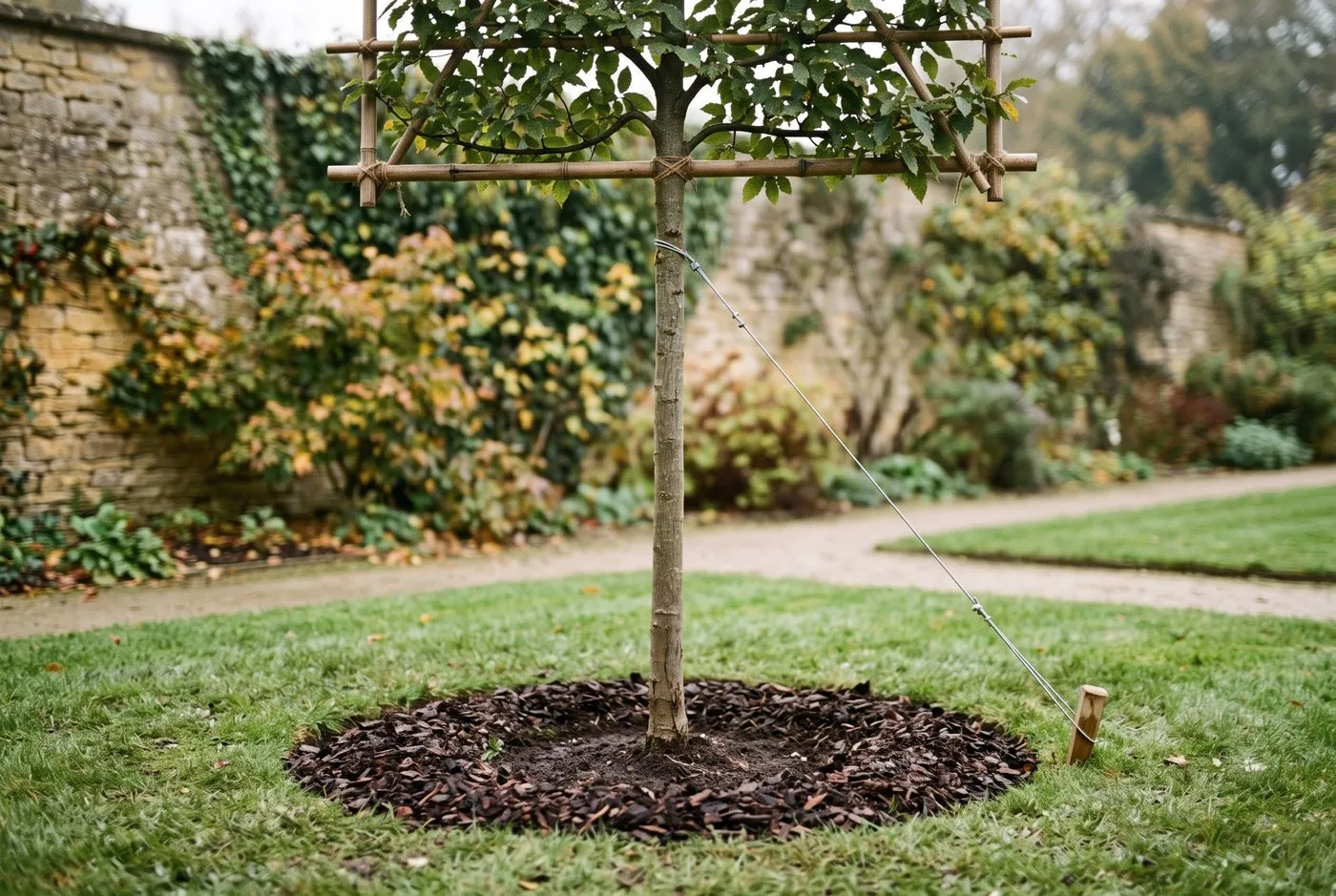
A guy wire from the frame to a ground peg keeps the panel steady in wind. The mulch circle holds in moisture.
Tying in and training the panel
Fill the frame by tying in new shoots through the first few summers. Do it little and often from May to August, while shoots are still soft and bendy.
- Use soft ties or twine, never bare wire against bark.
- Spread branches out along the wires to fill gaps evenly.
- Pinch out shoots growing straight towards or away from you, as they’ll never sit flat.
- Rub off shoots on the clear stem as soon as they appear.
Once the branches are stiff enough to hold their shape, usually after a few years, you can take the frame off. Remove the ties first and watch for a season. In windy spots many people leave the frame on longer.
When and how to prune pleached trees
Prune twice a year. The main trim is in late summer, July or August, once new growth has firmed up. Clip both faces and the top back to the frame line.
The second cut is in winter, while deciduous trees are bare. Take out crossing or badly placed branches and tidy the framework. Avoid pruning in a hard frost.
Evergreen holm oak and Photinia just need a light trim in summer to keep their shape. Before any summer pruning, check the panels carefully for nesting birds. If you find an active nest, wait until the young have flown.
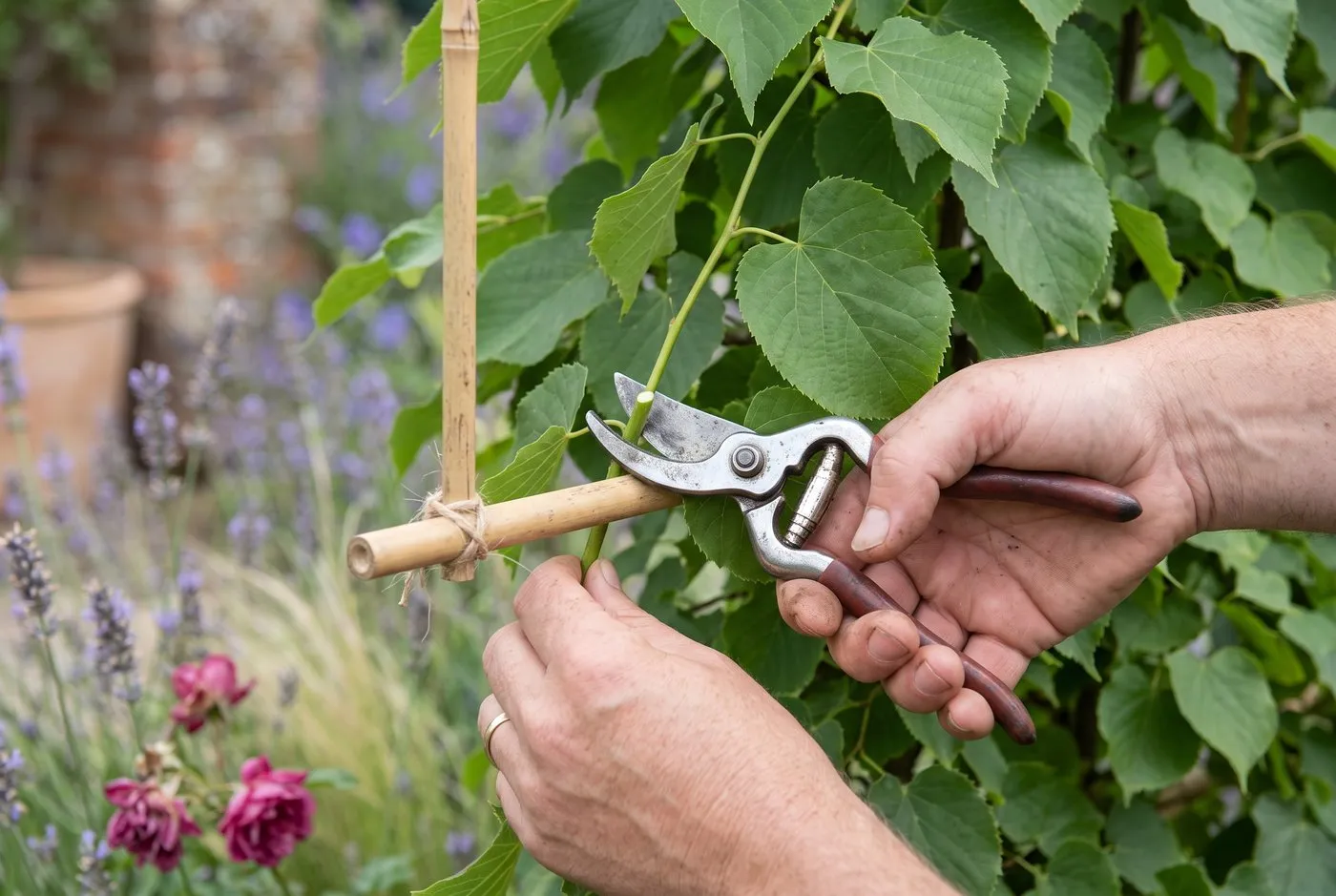
The summer trim cuts shoots back to the frame line, keeping the panel flat and dense.
Watering and feeding a new pleached tree
Most pleached trees that struggle are short of water. A big panel on a young root system dries out fast.
Water deeply, about 20-30 litres per tree once a week in dry spells, for the first two summers. A leaky pipe on a timer makes this easy. Water less often but deeply, so the roots grow down rather than staying near the surface.
Mulch each spring with well-rotted compost or manure, kept off the stem. Avoid heavy, high-nitrogen feeds, which push soft growth that flops out of the frame.
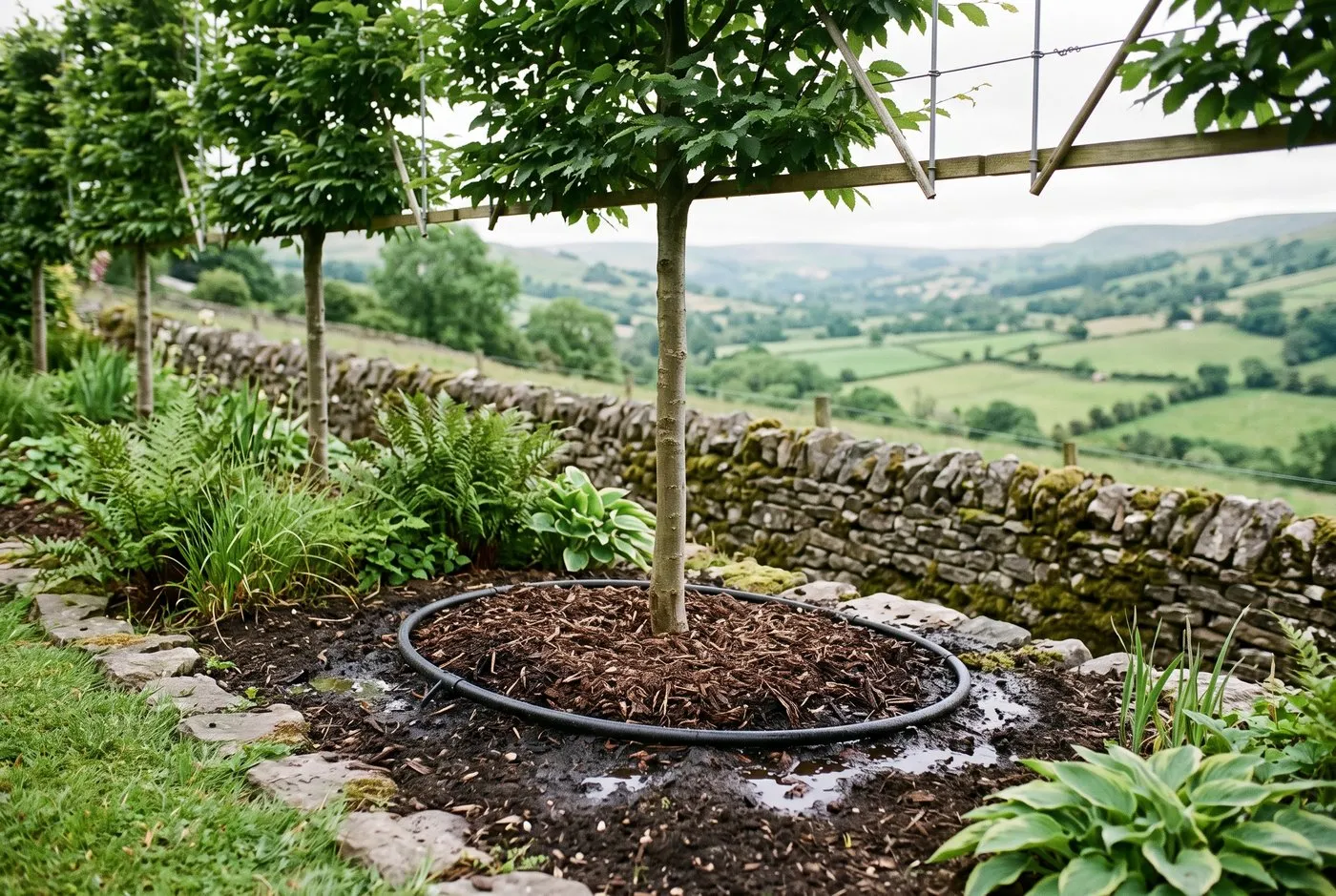
A ring of leaky pipe soaks the whole root area. It’s the easiest way to get a new screen through its first summers.
Pleached tree calendar
| Month | What to do |
|---|---|
| November to March | Plant bare-root and rootballed trees. Stake firmly as you plant |
| December to February | Winter prune: tidy the framework and remove crossing branches |
| March to April | Check and loosen ties. Re-firm stakes after winter winds. Mulch |
| May to August | Tie in new shoots. Rub off shoots on the stems. Water in dry spells |
| July to August | Main summer trim, after checking for nests |
| September to October | Light tidy of evergreens. Prepare for planting |
Common mistakes with pleached trees
- Under-staking. A single short stake isn’t enough for a top-heavy tree. Use two stakes or a guying kit.
- Letting them go thirsty. Water through the first two summers, not just the first.
- Forgetting the ties. Tight ties cut into growing branches. Check them every spring.
- Uneven stems. If the stems are set at different heights, the panels never line up. Level them at planting.
- Taking the frame off too early. Wait until the branches are stiff enough to hold their shape.
Still planning the rest of your boundary? Our roundup of the best trees for privacy helps decide what goes where, and our how-to guides cover more planting and pruning projects.
Frequently asked questions
What are pleached trees?
Trees with a clear stem and a flat, trained panel of branches on top. They work like a hedge on stilts, screening at eye level above a fence. Hornbeam, lime and holm oak are the usual choices.
How far apart do you plant pleached trees?
Plant them 1.2-2m apart, centre to centre. Match the gap to the width of the panels so they meet. Closer spacing gives a solid screen sooner.
When should you prune pleached trees?
Twice a year, in late summer and in winter. Clip the faces back to the frame line in July or August. In winter, while the tree is bare, tidy the framework and take out badly placed branches.
Which trees are best for pleaching?
Hornbeam is the best all-rounder for most UK gardens. Lime and beech are traditional too. For green all year, choose holm oak or Photinia Red Robin.
Do pleached trees lose their leaves in winter?
Deciduous ones do, but hornbeam and beech often hold dry brown leaves. Lime goes completely bare. For a green screen all winter, choose holm oak or Photinia Red Robin.
How long before you can remove the training frame?
Usually after a few years, once the branches are stiff enough to hold their shape. Take the ties off first and watch for a season. Many people leave the frame on longer in windy gardens.
Can you plant pleached trees along a fence for privacy?
Yes, that’s what they do best. Plant at least 60cm off the fence so you can reach both sides of the panel. The clear stems leave room to plant a border underneath.
Our team produces practical UK gardening guidance from source research, contributor records and established horticultural practice. Editorial standards are overseen by Matt W.