Key takeaways
- A hedge gives privacy from ground level up and is usually the cheapest screen per metre
- Trees, especially pleached ones, screen above a fence in a narrow strip of ground
- Evergreens such as yew, Western red cedar and laurel give the best winter privacy
- Clipped beech and hornbeam hold their brown leaves in winter, so they still screen well
- Plant bare-root hedging November to March, and expect three to five years to a 2m screen
- Keep evergreen hedges trimmed, as councils can act on hedges over 2m that block a neighbour's light
For most gardens, a hedge is the better privacy screen. It blocks the view from the ground up, costs least per metre and stays the size you clip it to. Trees win in two cases: when your bed is too narrow for a hedge, or when you need to hide a view above the fence, like a neighbour’s upstairs window.
This guide helps you choose between them, then shows which plants, spacings and timings work best. If you already know you want trees, the guide to the best trees for privacy has the full plant list. For layout ideas such as screens, pergolas and seating, see privacy design for an overlooked garden.
Hedge or trees: how to decide
Ask three questions. How high is the view you need to block? How much ground can you give up? How quickly do you need privacy?
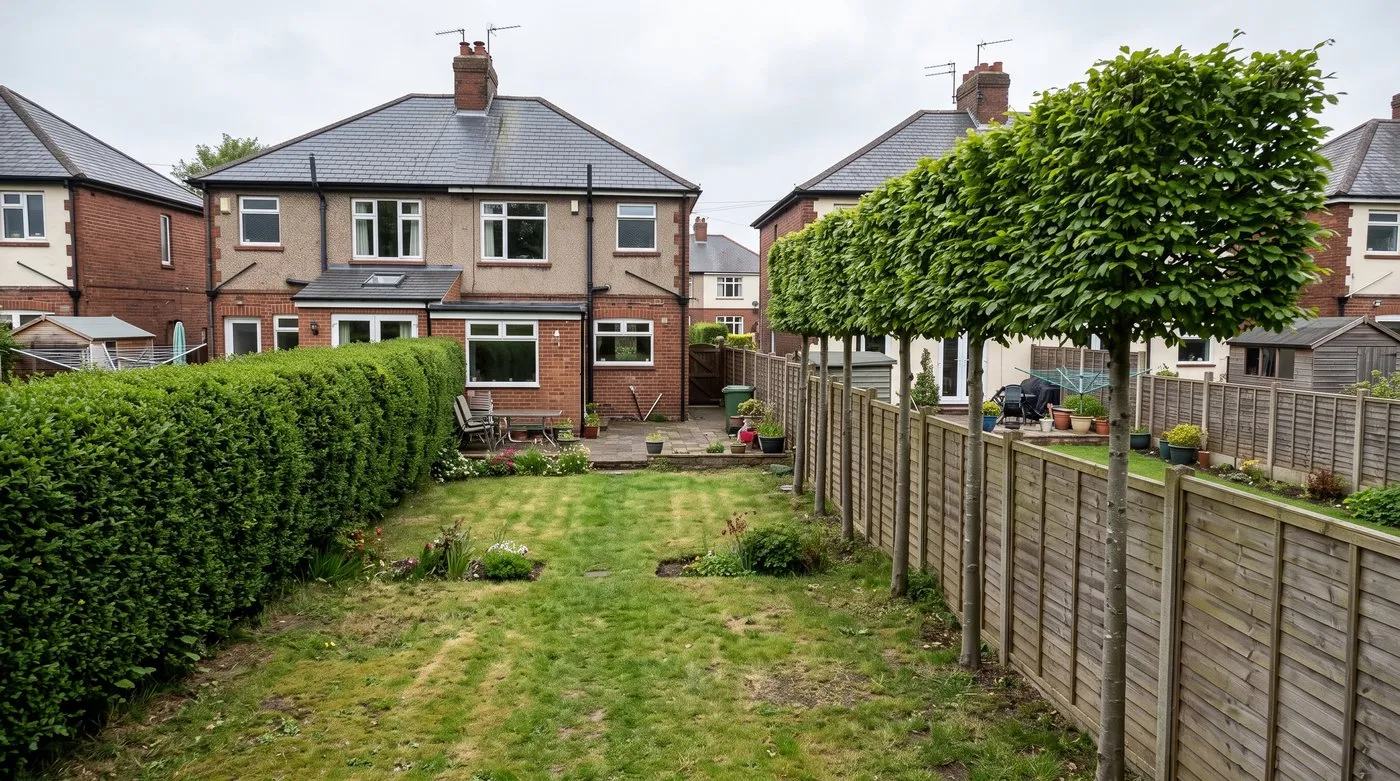
A hedge screens from the ground up, while pleached trees add height above a fence you already have.
| Option | Best for | Ground it takes | Time to screen | Upkeep |
|---|---|---|---|---|
| Clipped evergreen hedge | Privacy from ground level to about 2m | About 60-100cm wide | Three to five years | One or two trims a year |
| Clipped beech or hornbeam hedge | A softer look with winter cover | About 60-100cm wide | Three to five years | One trim a year |
| Pleached trees | Blocking views above a fence | A narrow strip | First season | One or two trims a year |
| Screening trees | Height in a bigger garden | Plenty, they spread | Several years | Light pruning |
| Instant hedging | Privacy straight away | About 60-100cm wide | First season | As for a hedge |
Overlooked at ground level? Go for a hedge. Overlooked from above, with a fence already in place? Pleached trees are usually neater. In a bigger garden, a hedge with a few trees behind covers both.
Which hedges give the best year-round privacy?
Evergreens give the most privacy in winter, when bare branches let you see straight through. These are the reliable choices:
- Yew: dense, dark and very long-lived. Slower than the others, but it regrows from old wood if you need to cut it back hard.
- Western red cedar (Thuja plicata): a softer-looking conifer that’s easier to manage than Leylandii. The Western red cedar hedge guide covers planting and trimming.
- Cherry laurel and Portugal laurel: big glossy leaves and quick growth. Portugal laurel is neater and a little slower.
- Photinia ‘Red Robin’: bright red new shoots after each trim. It can lose its new growth in a hard frost in colder areas. See how to grow photinia Red Robin.
- Privet and holly: privet is cheap and quick, and may drop some leaves in a cold winter. Holly is slow but makes a prickly, burglar-unfriendly barrier.
Beech and hornbeam aren’t evergreen, but when clipped as a hedge they keep many of their brown leaves through winter. That gives decent cover and a softer, more natural look.

A well-clipped conifer hedge blocks the view all year and only needs a trim once or twice a summer.
When are trees a better choice than a hedge?
Trees are better when you need height without width. A 2m hedge eats into a small garden. A row of pleached trees has bare stems up to about 1.8m and a flat, trained canopy above, so it screens over the fence while borders carry on underneath.
Hornbeam, lime and photinia are popular for pleaching. You can buy them ready-trained on frames, so you get privacy in the first season. They’re expensive per metre, and they need firm staking for the first few years. The guide to planting and supporting pleached trees explains how.
Free-growing screening trees, such as holm oak or a multi-stemmed birch, suit bigger gardens. Check the final height and spread first, as a neat potted tree can easily outgrow a small garden.

Pleached trees screen above the fence without taking up border space at ground level.
How long until a new hedge gives privacy?
Expect about three to five years for most hedges to reach 2m and fill out. How fast depends on the plant, the size you buy and how well you water it in the first two summers.
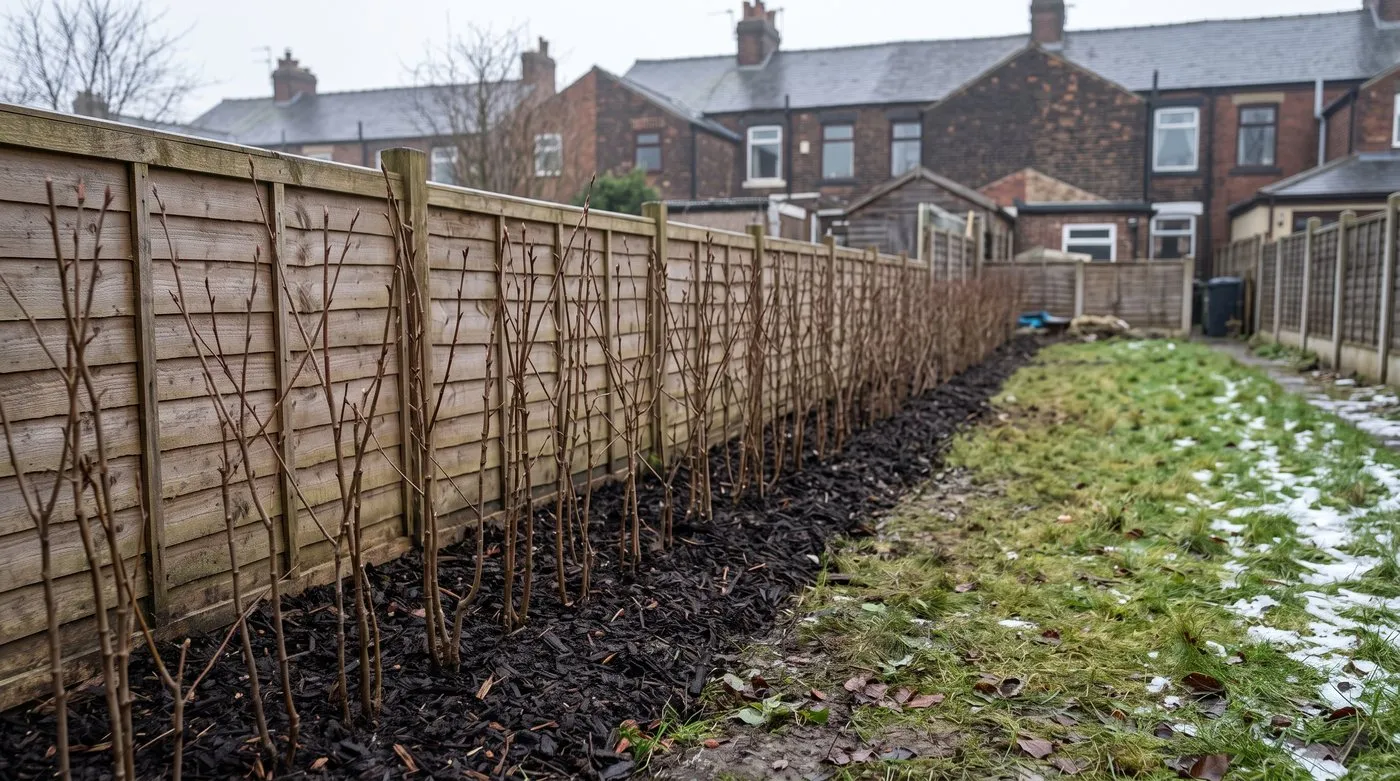
Bare-root whips are the cheapest way to start a hedge. Expect three to five years before they make a proper screen.
Bare-root plants are the cheapest way to buy hedging. They’re sold from November to March and usually establish well. Container-grown plants cost more, but larger sizes give you a head start and can go in at any time if you water them. Instant hedging comes ready-grown in sections or troughs, so you get a finished hedge on day one, at a much higher price.
Laurel and privet get there sooner. Yew and holly are slower but need less trimming later.
Spacing and planting a privacy hedge
Plant bare-root hedging between November and March, when the plants are dormant and the ground isn’t frozen or waterlogged. The hedge planting guide covers digging the trench, planting depth and aftercare.
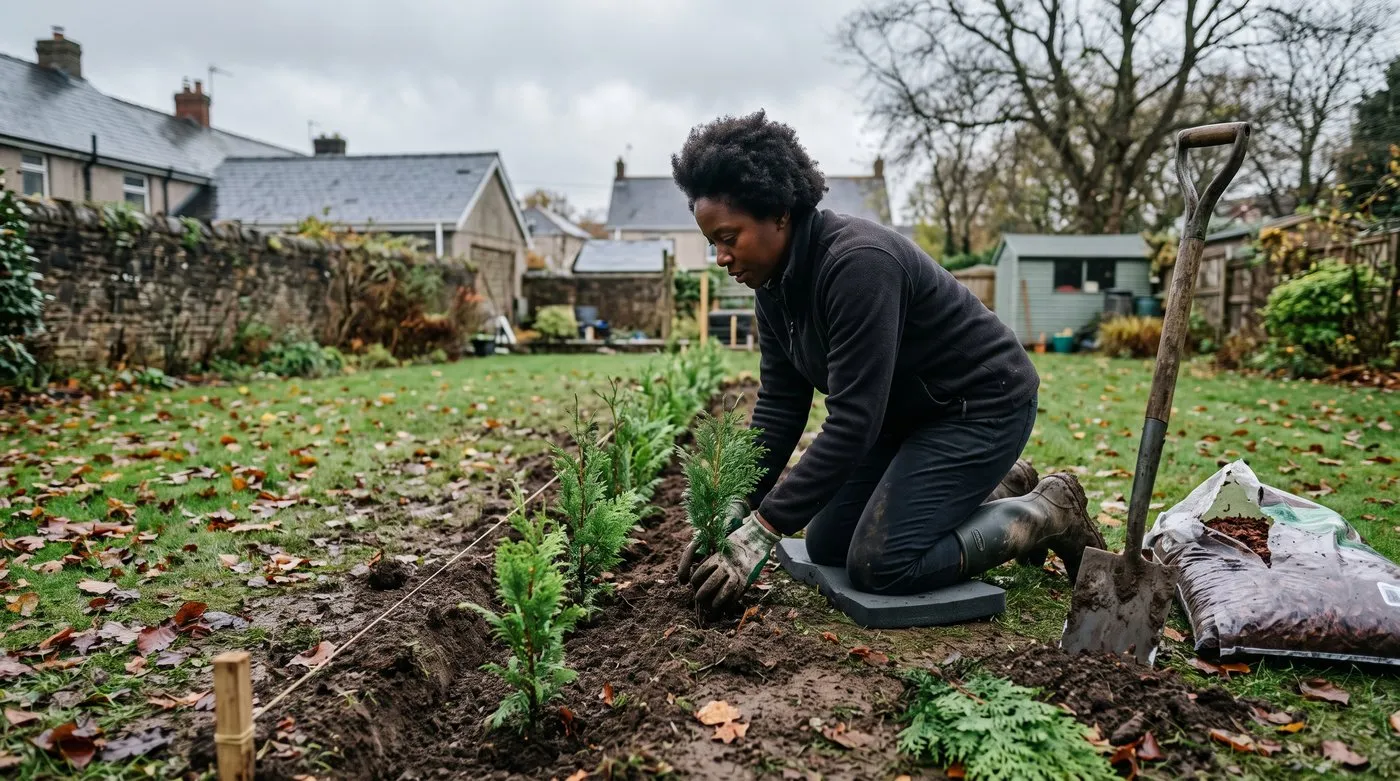
A string line keeps the row straight. Plant 50-60cm in from the boundary so you can trim both sides.
| Plant | Spacing in a single row |
|---|---|
| Privet | About 30cm |
| Beech or hornbeam | About 30-45cm, or a double staggered row |
| Yew | About 50-60cm |
| Western red cedar | About 60cm |
| Laurel or photinia | About 60-90cm |
Water well after planting, then water in dry spells for the first two summers. A mulch of bark or compost along the row keeps moisture in and weeds down. Plant about 50-60cm in from the boundary so you can trim both faces from your own side.
Roots, drains and house foundations
Most trimmed hedges are fine near a house. The risk is mainly on shrinkable clay, found in much of London and the South East. Vigorous, thirsty plants can dry the clay and cause it to shrink.
Keep Leylandii and large trees well away from the house and old clay drains. Keep hedges trimmed, as smaller plants take up less water. Planting near a building on clay? Ask a structural engineer or your insurer first.
High hedges and your neighbours
Hedges don’t need planning permission, but tall ones can cause disputes. In England and Wales, a neighbour can complain to the council about an evergreen or semi-evergreen hedge over 2m that blocks light or access. The council can then order it to be cut down, though never below 2m. Scotland has similar rules.
Your neighbour can also trim back anything that hangs over their side of the boundary. The GOV.UK guide to high hedges, trees and boundaries explains the process.
Warning: It’s an offence to damage or destroy an active bird’s nest at any time. Avoid cutting hedges from March to August, and always check for nests before you trim.

Mixing two evergreens, such as photinia and laurel, gives year-round cover with a splash of colour.
Privacy hedge calendar
| Month | What to do |
|---|---|
| January | Plant bare-root hedging when the ground isn’t frozen |
| February | Last chance for bare-root planting before buds break |
| March | Mulch new hedges. Bird nesting starts, so stop cutting hedges |
| April to June | Water new hedges in dry spells. Pull weeds along the row |
| July | Keep watering young hedges in dry spells. Check before any light trim |
| August | Plan your main trim for when nesting has finished |
| September | Main trim for most evergreen hedges, once nests are empty |
| October | Order bare-root plants. Prepare the planting trench |
| November | Start planting bare-root hedging |
| December | Keep planting in mild spells. Check stakes and ties on pleached trees |
When to trim depends on the plant. The guide to when to cut hedges in the UK has the timings for each type.
Common mistakes with privacy screens
- Choosing Leylandii without thinking ahead. It grows fast and keeps going. It needs regular trimming and won’t regrow if you cut back into bare brown wood.
- Planting too close to the fence. You can’t reach the back to trim it, and it soon hangs over your neighbour’s side.
- Going for a deciduous hedge that isn’t beech or hornbeam. Most other deciduous hedges are see-through in winter, just when privacy matters most.
- Skipping the watering. Most new hedges that fail die from drought in their first summer.
- Picking trees that grow too big. Check the final height and spread, not just how fast it grows.
- Letting it grow too tall. Evergreen hedges over 2m can lead to a council complaint if they block a neighbour’s light.
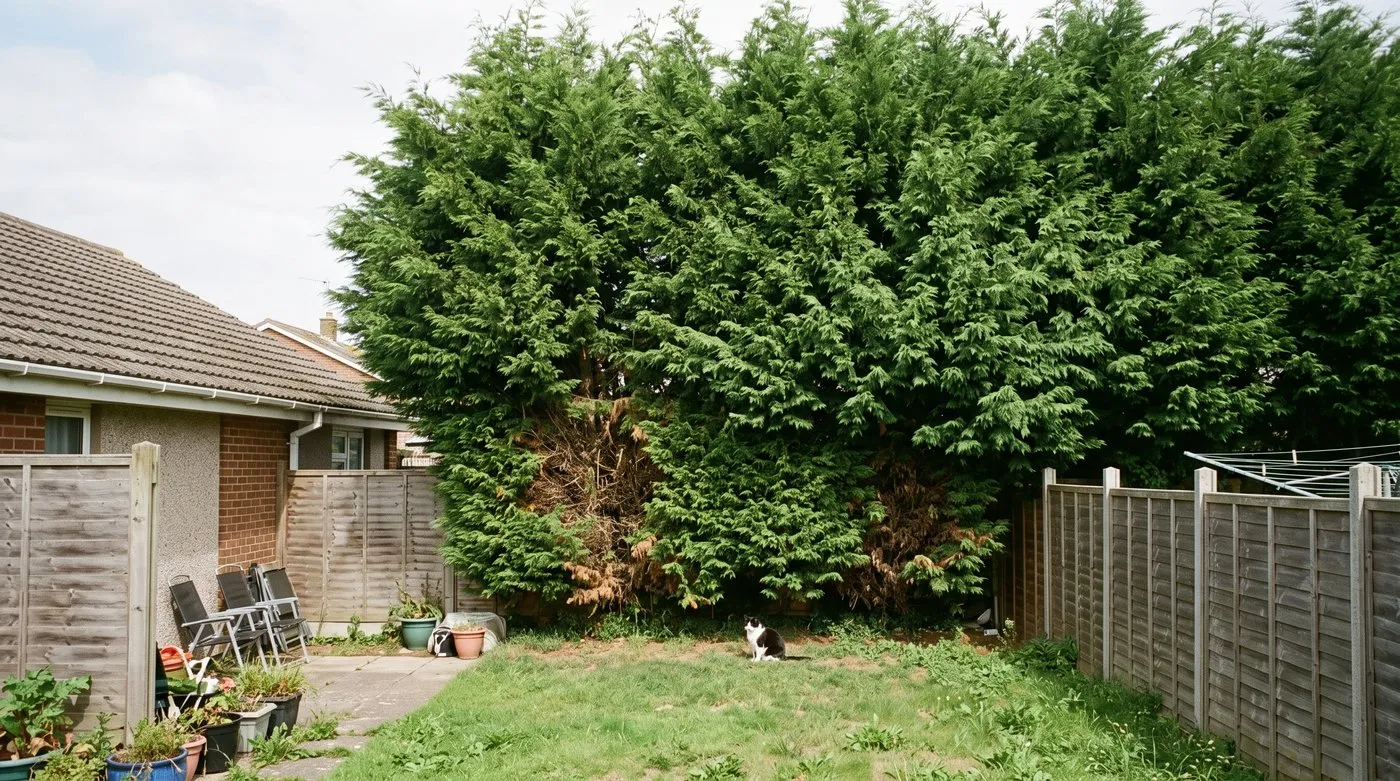
Leylandii grows fast and keeps going. Cut into the brown wood and it won’t grow back.
Now you’ve chosen between a hedge and trees, read the guide to fast-growing hedging plants to find the quickest screen for your boundary. For more ideas, browse our garden design guides.
Frequently asked questions
Is a hedge or trees better for privacy?
A hedge is better for most gardens. It screens from the ground up, costs less and stays a set height and width. Trees win where the bed is narrow or you need to block a view above fence height, such as a neighbour’s upstairs window.
What is the fastest growing privacy hedge in the UK?
Leylandii is the fastest, but it needs frequent trimming. Left alone it soon becomes a very tall tree. Cherry laurel, Western red cedar and privet are quick but easier to live with. For a screen straight away, buy larger container plants or ready-grown instant hedging.
How close to a boundary can I plant a privacy hedge?
Plant about 50-60cm in from the boundary for most hedges. That leaves room to trim both sides from your own garden. Your neighbour is entitled to trim anything that grows over onto their side, so planting a little further in avoids arguments.
Do I need planning permission for a privacy hedge?
No, hedges don’t normally need planning permission. Some new-build estates have covenants or planning conditions about front gardens, so check your deeds. Evergreen hedges over 2m that block a neighbour’s light can be the subject of a high hedge complaint to the council.
Will hedge roots damage my house foundations?
Trimmed hedges rarely cause problems on most soils. The risk is higher on shrinkable clay, where thirsty, vigorous plants can dry out the soil near the house. Keep Leylandii and large trees well away from buildings and drains, and get advice if your house is on clay.
How long does a new hedge take to give privacy?
Most hedges give a 2m screen in three to five years. Larger container plants cut that down. Pleached trees and instant hedging give privacy in the first season, but cost a lot more per metre.
Is pleached hornbeam good for privacy?
Yes, for screening above fence height. Pleached hornbeam has a flat, trained canopy on a clear stem, usually about 1.8m tall. Clipped hornbeam holds many of its brown leaves in winter, so it still gives some cover, though not as much as an evergreen.
Our team produces practical UK gardening guidance from source research, contributor records and established horticultural practice. Editorial standards are overseen by Matt W.