Key takeaways
- Western red cedar grows about 30-45cm a year, roughly half the speed of leylandii
- Plant 'Atrovirens' 60-90cm apart in a single row, bare-root from November to March
- Trim once a year in late August or September, after birds have finished nesting
- It copes with harder cutting back than leylandii, but renovate one side at a time
- Water new hedges in dry spells for the first two summers
- Brown patches in summer are often cypress aphid or drought stress
A western red cedar hedge gives you a dense, glossy green screen without the constant battle of leylandii. It grows at about half the speed, smells of pineapple when you trim it, and copes better if you ever need to cut it back. One trim a year in late summer keeps it smart.
This guide is all about this one hedge: choosing it, planting it, trimming it and keeping it healthy. If you’re still weighing up options, our round-up of fast-growing hedging plants compares the main choices.
Why choose western red cedar over leylandii?
Western red cedar grows fast enough to screen a garden but slowly enough to stay in reach. Leylandii grows so quickly that it often needs two or three cuts a year. Miss a couple of years and the top is out of reach of a stepladder.
The other big difference is what happens when you cut back. Cut leylandii into brown, leafless wood and it stays bare. Western red cedar is more forgiving of a firmer trim, so a hedge that’s got a bit wide is easier to bring back. If you already have a leylandii that’s too big, our guide on what to do when a conifer has grown too big explains the limits.
What does western red cedar look like?
Despite the name, western red cedar isn’t a true cedar. It is Thuja plicata, a big conifer from the wet forests of western North America. In a garden it is clipped into a hedge.
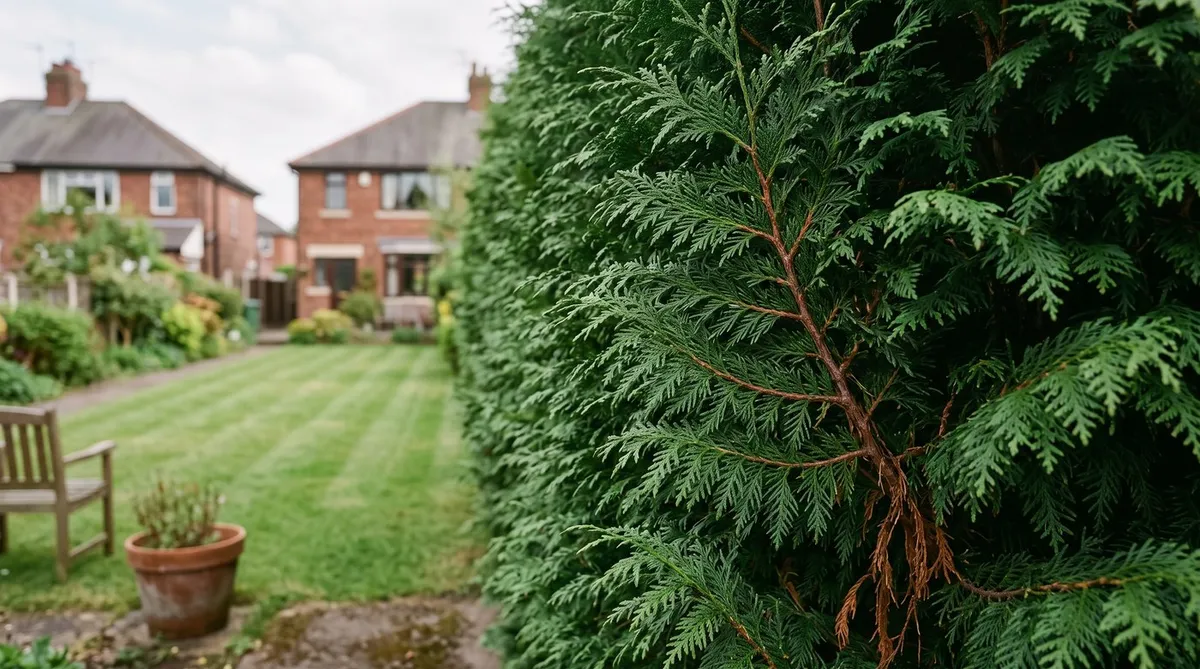
The foliage grows in flat, glossy sprays of tiny scale-like leaves. They’re deep green above with pale markings underneath. Crush a piece and you’ll smell pineapple.
For hedging, choose ‘Atrovirens’. It is darker and denser than seed-raised plants and holds the RHS Award of Garden Merit. It keeps a good green through winter, where plain forms can bronze in cold winds.
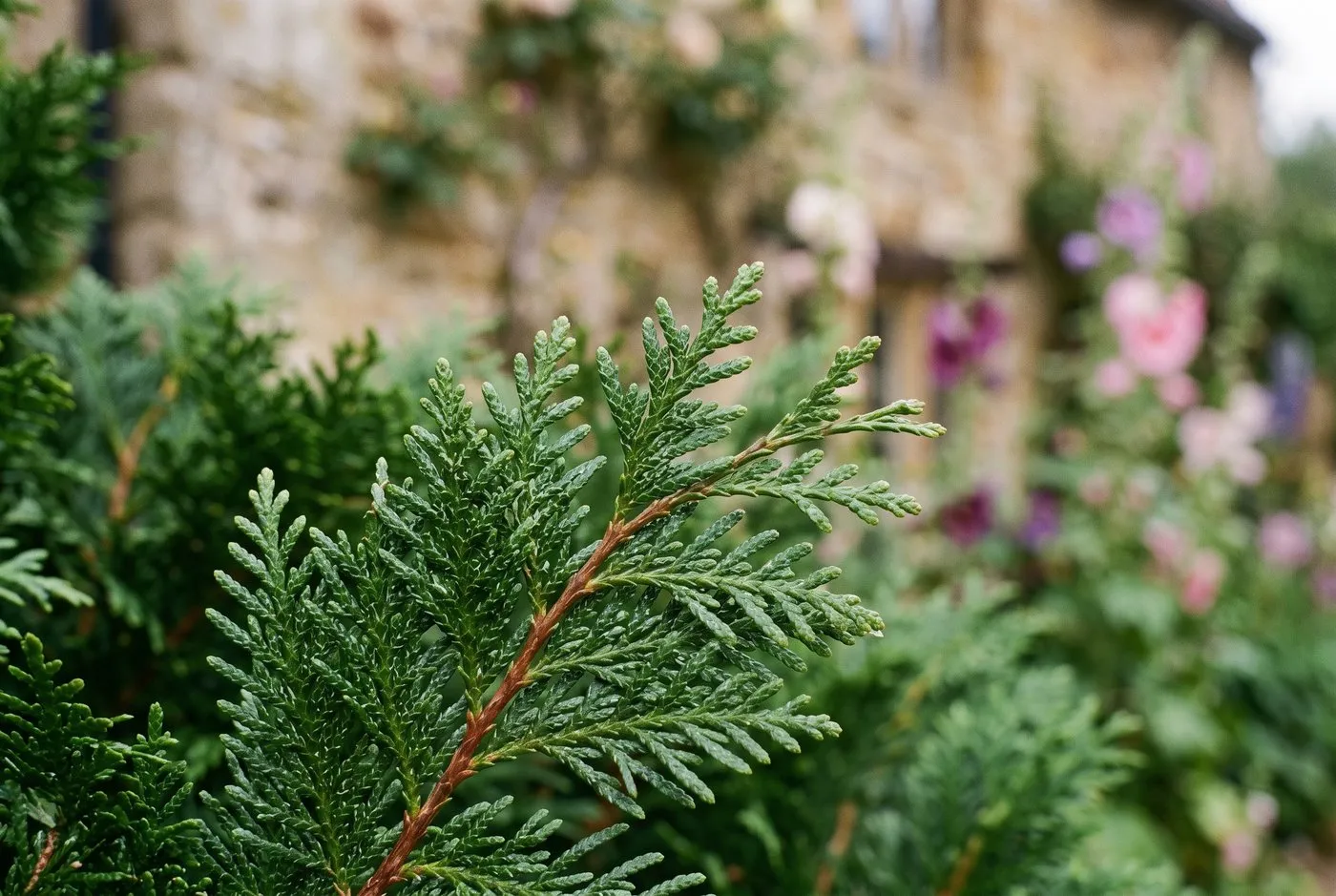
Flat, glossy sprays of tiny scale-like leaves are the giveaway. Crush a bit and you’ll get that pineapple smell.
Western red cedar vs leylandii, yew and laurel
This table compares the evergreen hedges people most often weigh up against each other.
| Hedge plant | Speed | Trims a year | Cut back into old wood? | Best for |
|---|---|---|---|---|
| Western red cedar ‘Atrovirens’ | Medium-fast | 1 | Copes better than most conifers | A quick, glossy screen that stays manageable |
| Yew (Taxus baccata) | Slow | 1 | Yes, regrows well | Formal, long-lived hedges |
| Cherry laurel (Prunus laurocerasus) | Fast | 1-2 | Yes | Big-leaved screens |
| Lawson cypress | Medium-fast | 1-2 | No | Screening, but can’t be renovated |
| Leylandii | Very fast | 2-3 | No | An instant screen, with lots of upkeep |
Yew clips tighter and lives longer but takes years to make a screen. Cherry laurel is quick but coarse and big-leaved; check how fast cherry laurel grows before you choose it. Leylandii and Lawson cypress share the same flaw: cut into bare wood and they don’t green up again.
Pet and child note: Yew and cherry laurel are both poisonous if eaten. Western red cedar foliage is best kept away from pets that chew hedges too.
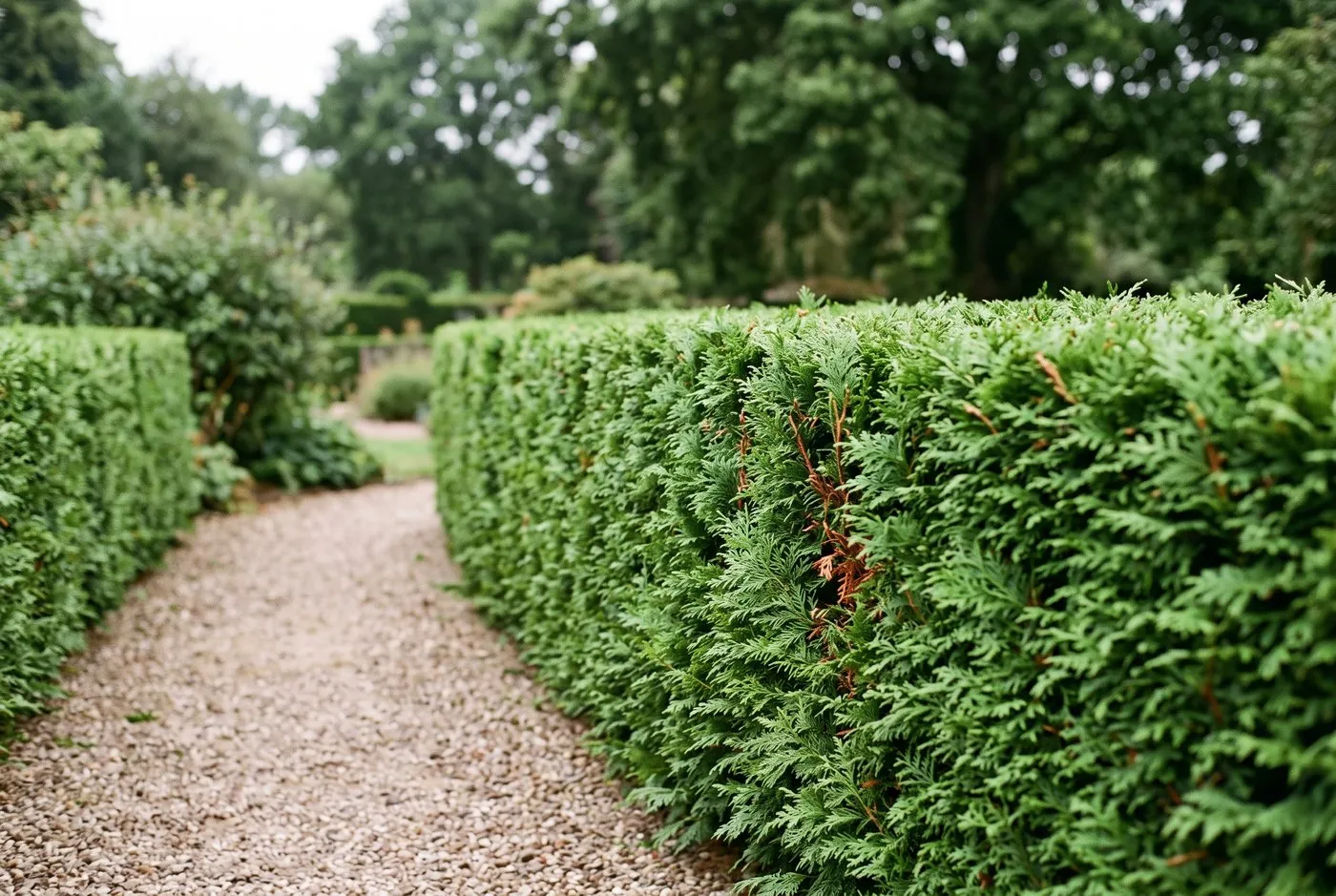
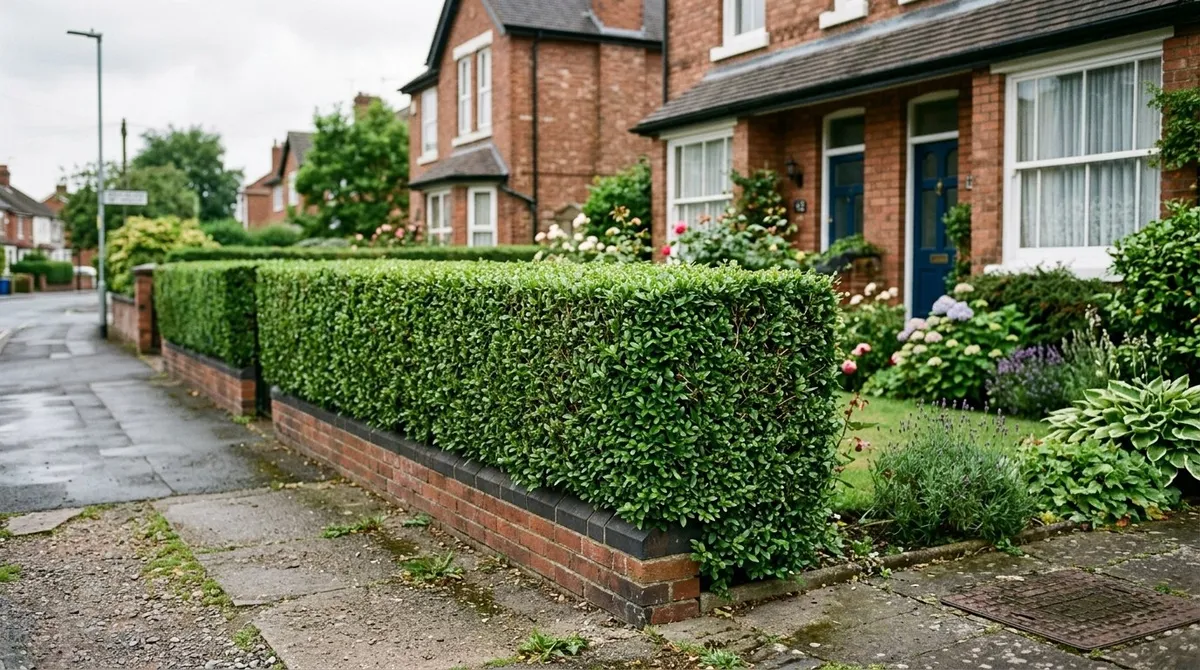
Kept formal, western red cedar clips to a neat, dense face with just one cut a year.
How to plant a western red cedar hedge
Bare-root plants go in from November to March while they’re dormant. They’re the cheapest option and root well. Pot-grown and rootballed plants can go in at other times, ideally autumn or spring. Don’t plant into frozen or waterlogged ground.
- Run a taut line along the boundary. Mark plants 60-90cm apart in a single row.
- Strip turf and weeds from a strip about 60cm wide. Dig a trench a spade deep and loosen the base.
- If the soil is poor, fork well-rotted compost into the whole strip, not just into each hole.
- Set each plant at its old nursery soil mark, never deeper. Spread the roots out.
- Firm with your heel and water each plant in well.
- Mulch 5-8cm deep with bark, keeping it off the stems.
Plant at least 60cm in from the boundary or a path, so you can reach both sides to trim. On heavy ground, our guide to improving clay soil helps stop roots sitting wet. For general hedge aftercare, see the hedge planting guide.
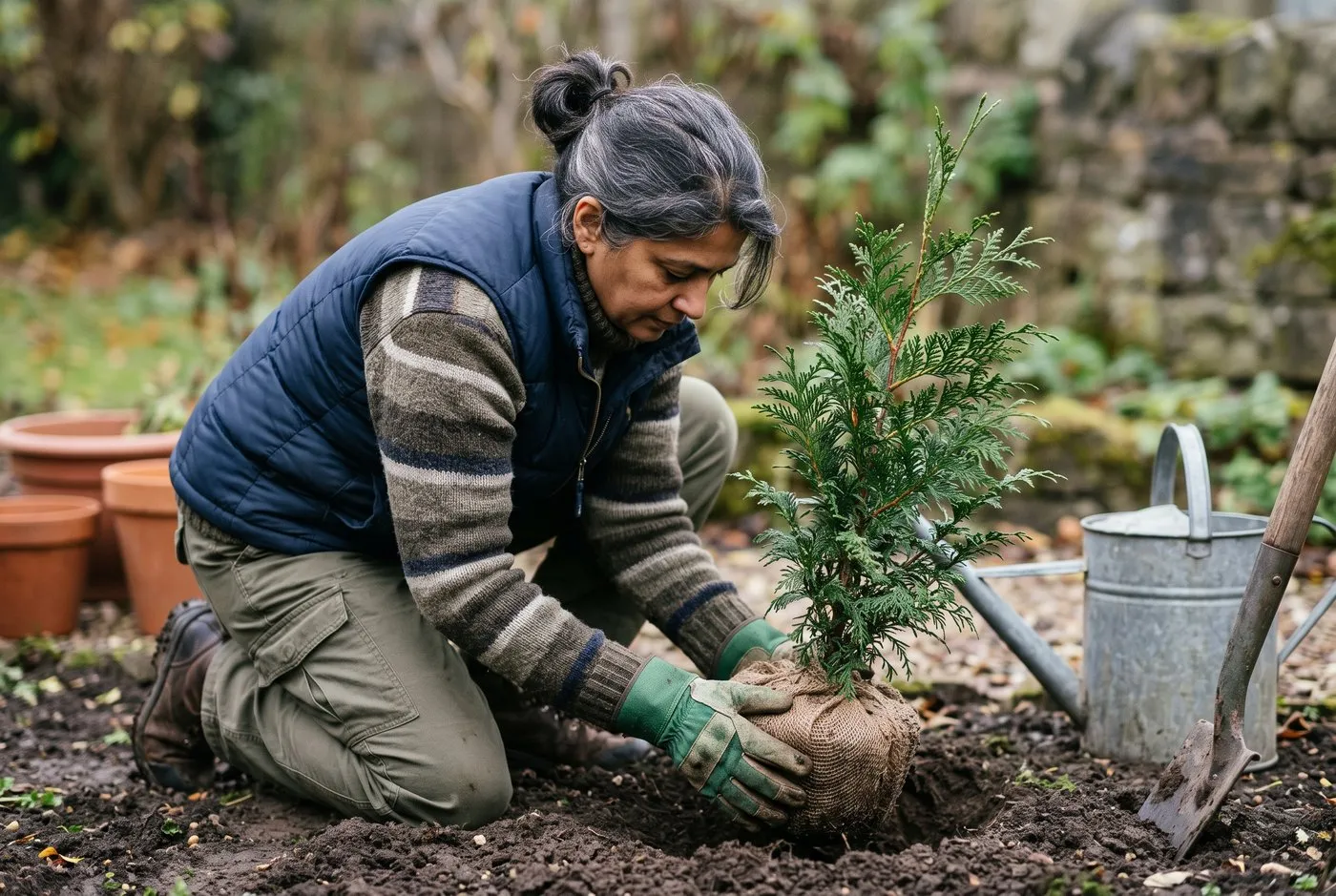
Set a rootballed plant at the same depth it grew in the nursery, no deeper, then firm it in and water well.
How to look after a young hedge
The first two summers decide how well a new hedge does. Water weekly in dry spells, giving each plant a really good soak. New conifers suffer from drought more than anything else.
Expect little top growth in the first year while the roots settle. Growth picks up from year two.
Trim the sides lightly from the first year to make the hedge bushy. Leave the top (the leading shoot) alone until the hedge is close to the height you want. A hedge clipped only on top often goes thin and gappy at the base.
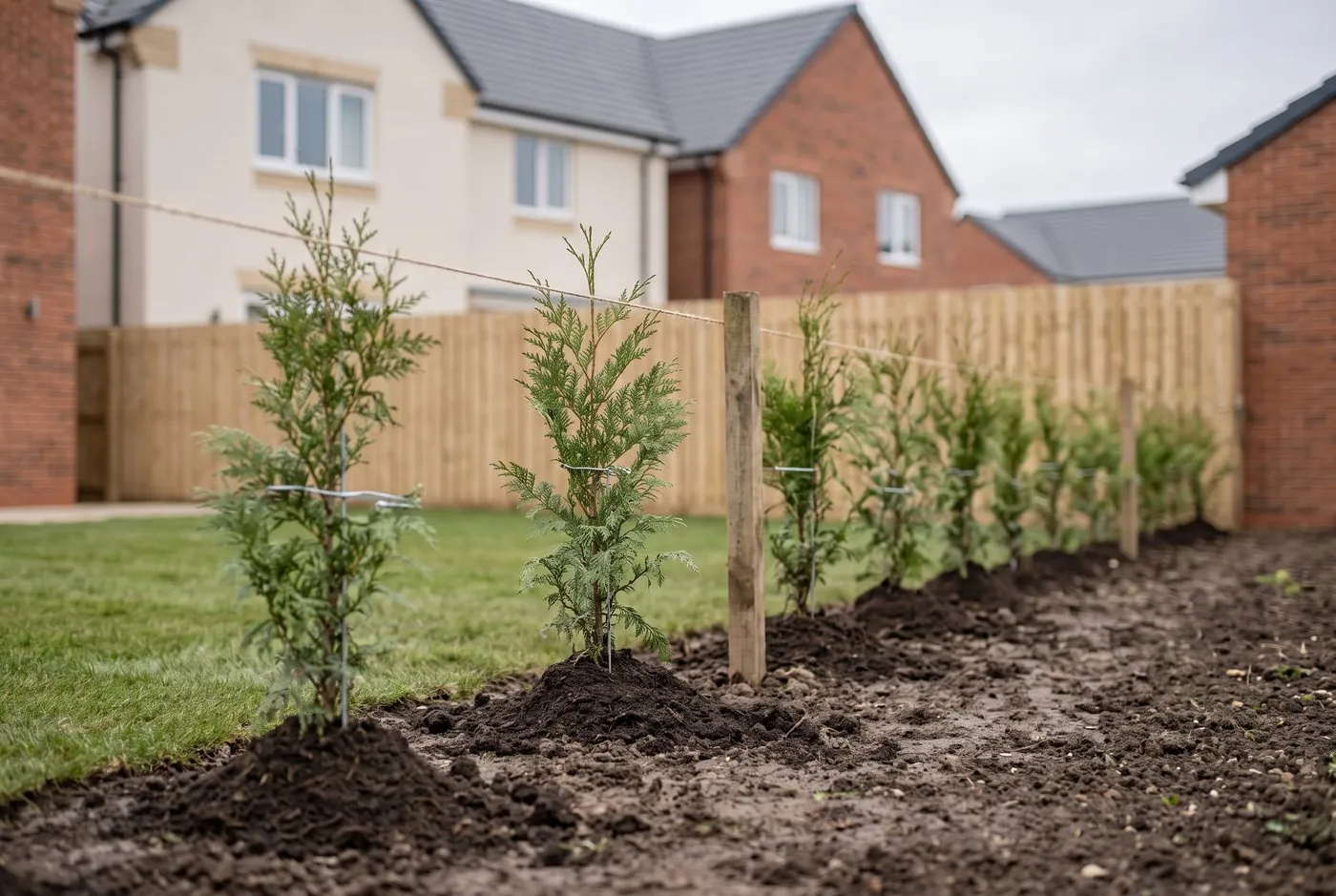
Young plants along a new-build fence. They barely grow up top in year one while the roots get going.
When and how to trim western red cedar
Trim western red cedar once a year in late August or September. By then most birds have finished nesting and the new growth has time to firm up before winter. A light tidy in late winter, before March, is fine if you want a crisp formal finish.
It’s an offence to damage or destroy an active bird nest, so avoid trimming from March to August. If you must cut during that time, check carefully first. Our guide to when to cut hedges in the UK has the details.
Shape the hedge so it’s slightly wider at the base than the top. This lets light reach the bottom and stops the lower growth thinning out. Never let the top overhang the base.
Wear gloves. The sap and foliage can irritate sensitive skin.
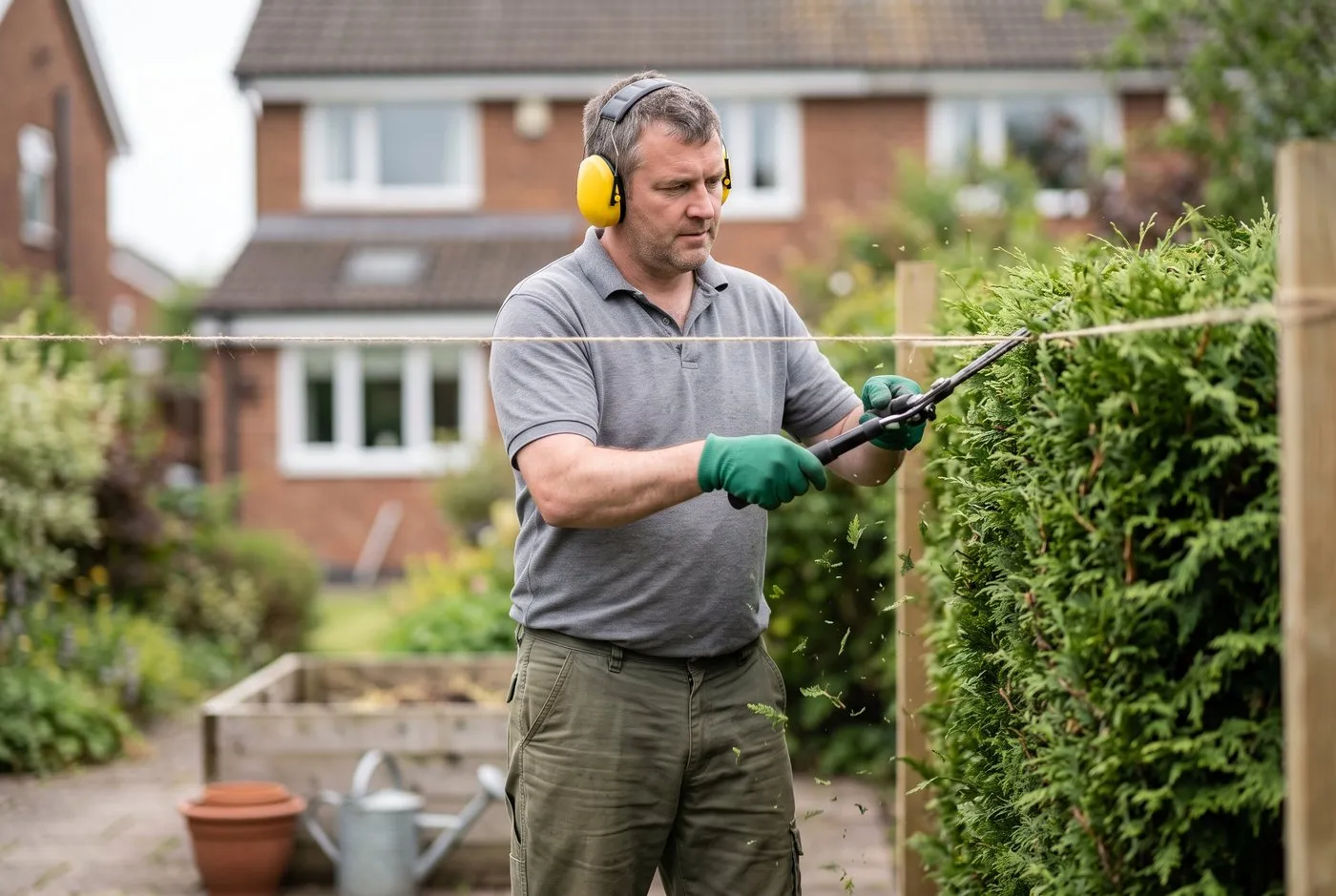
Trimming to a string line keeps the face straight. Leave it a touch wider at the bottom so the base stays green.
Can you renovate an overgrown western red cedar hedge?
Usually, yes, if you take it slowly. Western red cedar copes with being cut back better than leylandii or Lawson cypress. Results still vary, so treat it with care.
- Cut back one side in late summer, then wait a full year before doing the other side.
- Reduce the height in a separate year too.
- Always leave some green foliage on each stem you cut.
- Feed and mulch in spring, and water in dry spells while it recovers.
- Don’t renovate a hedge that’s already stressed by drought or aphids.
Warning: Never strip all the foliage off at once. Even a forgiving conifer can die if every side is cut back hard in the same year.
Month-by-month western red cedar calendar
| Month | What to do |
|---|---|
| January | Dormant. Firm in any new plants lifted by frost. |
| February | Plant bare-root before growth starts. Optional light tidy of formal hedges. |
| March | Plant pot-grown stock. Mulch after rain. Nesting begins, so stop trimming. |
| April | Water new plants in dry spells. Look for cypress aphid on the stems. |
| May | Check for browning and sticky honeydew. Keep young hedges watered. |
| June | Water new hedges weekly in dry spells. No trimming. |
| July | Keep watering young plants. Check for nests if you need to work nearby. |
| August | Main trim from late in the month, once nesting is over. |
| September | Finish trimming. Renovate one side if needed. |
| October | Pot-grown planting. Mulch new plants. |
| November | Start of the bare-root planting season. |
| December | Plant bare-root in mild spells. Avoid trimming in hard frost. |
Why is my western red cedar hedge going brown?
The usual causes are cypress aphid, drought and winter wind. Brown patches often appear in summer, weeks after the aphids have gone, which catches people out.
Cypress aphids are greyish-brown aphids that feed on the stems in spring. Look for them in late spring, with sticky honeydew and sooty mould nearby. Hedges stressed by drought are hit hardest, so water young hedges in dry spells. The RHS advice on conifer aphids explains what to expect.
Some inner browning in autumn is normal, as old foliage inside the hedge drops. Waterlogged soil can cause root rots, so plant on free-draining ground. For more on diagnosing this, see our guide to conifer hedge browning.
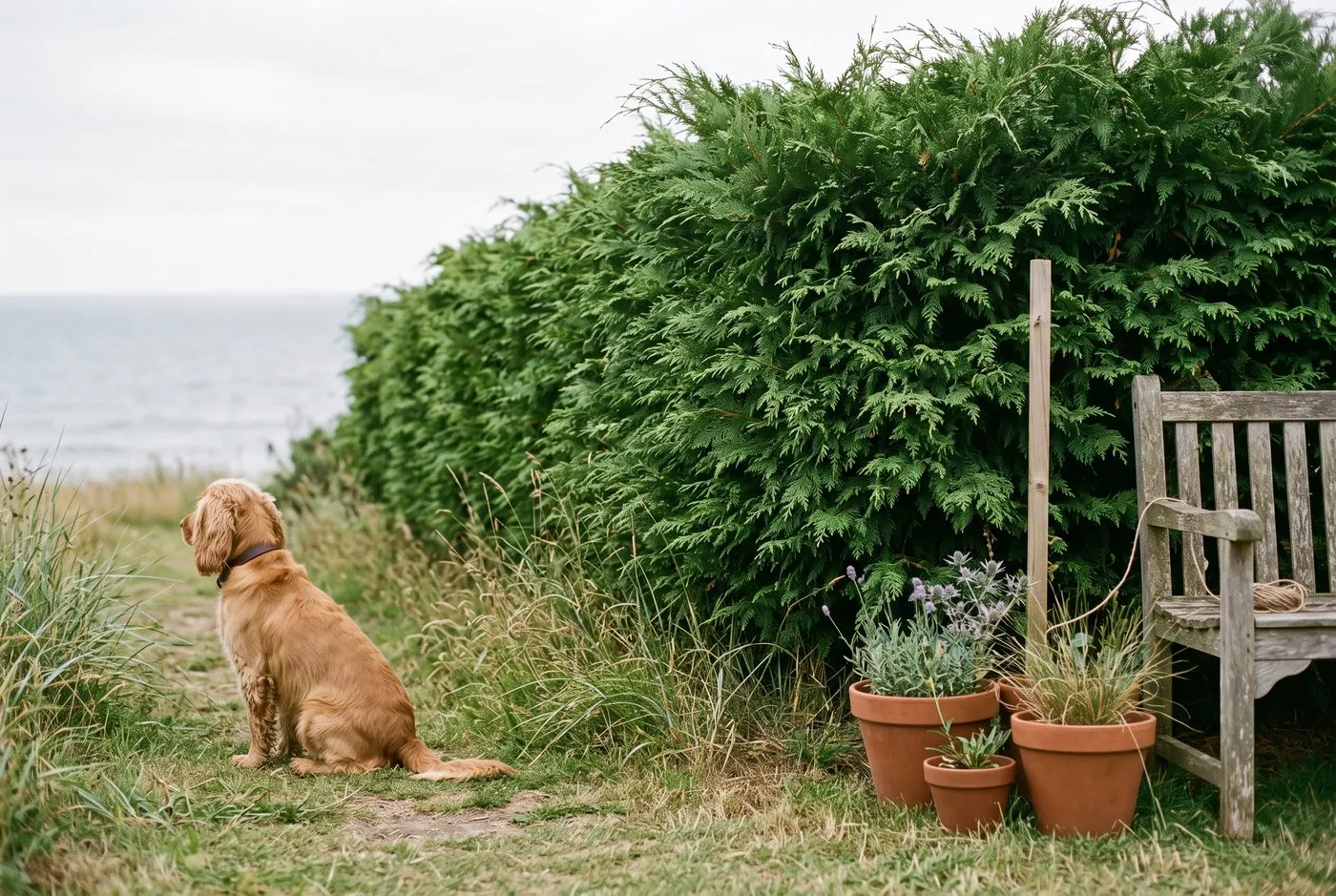
A well-watered, mature hedge stays green from top to bottom. This one gives a seaside garden real shelter from the wind.
Common mistakes with western red cedar
- Trimming it like leylandii. It doesn’t need three cuts a year. One trim in late summer is plenty.
- Planting too deep. Burying the stem rots the base. Plant at the old soil mark.
- Forgetting to water. Dry first summers kill more new hedges than anything else.
- Straight or top-heavy sides. The base gets shaded and goes bare. Keep it slightly wider at the bottom.
- Cutting everything back at once. Renovate one side at a time over two or more years.
- Trimming in the nesting season. Wait until late August, or check very carefully first.
Frequently asked questions
Is western red cedar better than leylandii?
For most gardens, yes. It grows about half as fast, so it needs less trimming and stays in reach. It also copes better with being cut back, while leylandii stays brown if you cut into old bare wood. Leylandii only wins if you want the quickest possible screen.
How fast does a western red cedar hedge grow?
Expect roughly 30-45cm a year once established. That’s slower than leylandii but quicker than yew. Growth is slow in the first year while the roots settle. With watering through the first two summers, young plants make a useful screen within a few years.
How far apart do you plant western red cedar?
Plant 60-90cm apart in a single row. Use 60cm for a quicker, denser screen and 90cm for a taller hedge. A double row is rarely needed. Measure from the centre of one plant to the next.
Can you cut western red cedar back hard?
It copes with harder cutting than most conifers, but go gently. Cut one side back in one year and the other side the next. Always leave some green foliage on each stem. Avoid hard cuts on a hedge stressed by drought or aphids.
When should you trim a western red cedar hedge?
Trim once a year in late August or September. By then most birds have finished nesting. It is an offence to damage an active nest, so avoid cutting from March to August. A light tidy in late winter keeps a formal hedge crisp.
Does western red cedar smell?
Yes, the foliage smells of pineapple when you clip or crush it. Many people love it. Wear gloves when trimming, as the foliage and sap can irritate sensitive skin.
How tall should a western red cedar hedge be?
Between 1.8m and 3m suits most gardens. Around 2m gives good privacy and stays easy to trim. If an evergreen hedge grows over 2m and blocks a neighbour’s light, they can complain to the council under the high hedges rules.
Now your hedge is planted, our year-round pruning calendar helps you fit the trim in with your other garden jobs, or browse more how-to guides.
Our team produces practical UK gardening guidance from source research, contributor records and established horticultural practice. Editorial standards are overseen by Matt W.