
Key takeaways
- Cypress aphid, drought and root rot cause most brown patches in conifer hedges
- Sticky honeydew and black sooty mould inside the hedge point to cypress aphid
- Browning on the sunniest, windiest side after a dry spell is drought scorch
- Whole plants dying on wet ground suggests Phytophthora root rot
- Leylandii and Lawson cypress do not regrow from bare brown wood
- A little inner browning in autumn is normal leaf shedding, not a problem
A browning conifer hedge is worrying because the brown usually stays. Leylandii and Lawson cypress can’t sprout new shoots from bare, brown wood, so a dead patch is there for good. That makes it worth spotting the cause early, before more of the hedge goes the same way.
Most brown patches come from one of three causes: cypress aphid, drought or wind scorch, and root rot. Each leaves a different pattern, and each needs a different fix. This guide helps you work out which one you have, what to do about it, and when it is time to replant. If the real worry is a hedge that has grown too tall, see the guide to a conifer hedge that is too big.
Why brown patches usually don’t grow back
Leylandii and Lawson cypress only grow new shoots from green, living foliage. Once a section turns brown and the foliage drops, there are no buds left in the bare wood to regrow. The patch stays bare.
Green shoots around the edge can slowly grow across a small gap if you tie them in. A big hole won’t fill on its own.
Yew is the main exception. It regrows well from old wood, even after hard cutting. That’s one reason it makes a good replacement hedge.
One thing that is not a problem: conifers shed some old inner foliage each autumn. A little browning deep inside the hedge in September or October is normal.
Is it cypress aphid?
Cypress aphid is a common cause of brown patches in leylandii and Lawson cypress. The aphids are large and grey-brown. They feed on older stems inside the hedge from spring to early summer. The brown patches often show up a few weeks later, sometimes after the aphids have gone.
Signs to look for:
- Brown patches inside and low down in the hedge rather than on the outer tips
- Sticky honeydew on the foliage, or on cars and paths below
- Black sooty mould growing on the honeydew
- Aphids clustered on the stems if you part the foliage in spring
Check inside the hedge from April to June, especially in mild springs. Ladybirds, lacewings and birds all eat aphids, so a wildlife-friendly garden helps. If you want to spray, use an approved insecticide for that use, following the label, and only when aphids are present. The guide to getting rid of aphids has more ideas.

Grey aphids and black sooty mould on brown shoots point to cypress aphid. Check inside the hedge in spring before patches appear.
Is it drought or wind scorch?
Drought scorch browns the most exposed side of the hedge. That is usually the sunniest face, the side facing the wind, or the top. It often appears after a long dry spell or cold, drying winds.
There is no honeydew and no aphids. The cause is simply that the foliage loses water faster than the roots can replace it.
New hedges are most at risk, because their roots are still shallow. Water them deeply once a week in dry spells for their first two or three years. Mulch along the base to keep the soil moist. Established hedges cope better, but a long drought can still scorch them. The hedge planting guide covers spacing and aftercare.

A whole exposed section turning brown after a hot, dry summer is classic drought scorch. Young hedges need watering for their first few years.
Is it Phytophthora root rot?
Phytophthora root rot is the most serious cause, because it kills whole plants. It thrives in wet, badly drained soil.
The pattern is different from aphid or drought damage:
- Whole plants yellow, then brown, then die
- The dead plants are often next to each other where water collects
- The bark at the base may be dark, stained or rotten if you scrape it
- Neighbouring plants can follow over time
There’s no spray that cures it. Dig out dead plants with as much root as you can and bin them. Don’t compost them. Improve drainage before replanting, or choose a hedge that copes better with damp soil.

Whole plants dying where water collects suggests root rot. No spray cures it, so remove dead plants and sort out the drainage.
Which cause is it? A quick comparison
Match the pattern you see to the most likely cause.
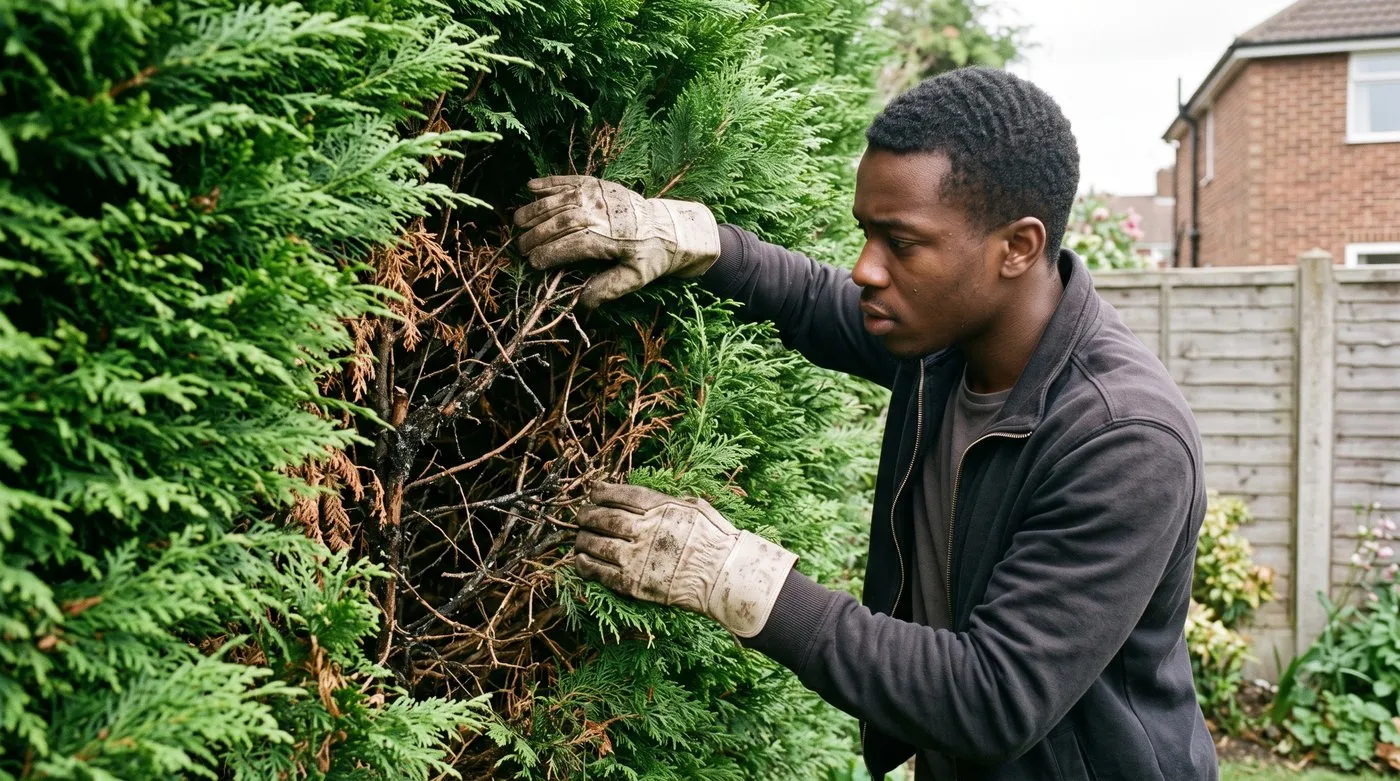
Parting the foliage is the quickest check. Sticky honeydew and sooty mould inside mean aphids, while a clean, dry brown face points to drought.
| What you see | Cypress aphid | Drought or wind scorch | Phytophthora root rot |
|---|---|---|---|
| Where the brown is | Inside and low down | Exposed side or top | Whole plants |
| When it shows | Early to midsummer | After dry spells or cold winds | Any time, on wet ground |
| Sticky honeydew | Yes, often with sooty mould | No | No |
| Do plants die? | Rarely | Rarely | Yes |
| First step | Check for aphids in spring | Water and mulch | Remove dead plants, improve drainage |
How to recover a browning conifer hedge
Once you know the cause and have dealt with it, focus on the green growth that is left.
- Cut out dead wood for tidiness, using loppers or a pruning saw.
- Tie green shoots across small gaps with soft twine. They can slowly cover the bare patch.
- Trim only the green growth in future. Never cut back into brown, bare wood.
- Water and mulch in dry spells, especially on new or stressed hedges.
- Replant large gaps. Plant young plants of the same kind, or swap to yew or another hedge that regrows from old wood.
Before cutting or replanting between March and August, check carefully for nesting birds. Damaging or destroying an active nest is an offence. The guide to when to cut hedges explains the timings. For hedges that cope better with hard pruning, see slow-growing hedging plants.

Big dead sections won’t regrow, so cut them out and replant. Check for nests first if it is spring or summer.
Common mistakes with a browning conifer hedge
- Waiting for it to grow back. Bare leylandii wood stays bare, so deal with the cause early.
- Treating the wrong cause. An insecticide won’t help a thirsty hedge. Check for honeydew first.
- Cutting hard into brown wood. Leylandii won’t refill a hard cut. Trim the green growth little and often.
- Planting on waterlogged ground. Wet soil invites root rot. Improve drainage first.
- Forgetting new hedges in a drought. Young conifers scorch quickly without water.
Frequently asked questions
Why is my conifer hedge going brown?
Usually cypress aphid, drought or root rot. Aphid browns inner foliage in early summer and leaves sticky honeydew. Drought browns the most exposed side. Root rot kills whole plants on wet ground. Part the foliage and look for honeydew and aphids first.
Will a brown conifer hedge grow back?
Usually not where the wood is bare. Leylandii and Lawson cypress cannot sprout from brown, bare wood. Nearby green shoots can slowly grow over small gaps. Yew is the main hedging conifer that regrows from old wood.
How do I tell aphid damage from drought on a conifer?
Look for sticky honeydew and black sooty mould. Cypress aphid browns patches inside and low down in the hedge and leaves a sticky mess. Drought browns the sunniest, windiest face after a dry spell, with no stickiness or insects.
How do I treat conifer aphid?
Check the hedge in spring and act early. Look inside the hedge for large grey-brown aphids from April to June. Encourage ladybirds and other predators. If you want to spray, use an approved insecticide for that use, following the label.
What is Phytophthora in a conifer hedge?
It is a root rot that thrives in wet, badly drained soil. Whole plants yellow, brown and die, often where water collects. The bark at the base may be dark and rotten. No spray cures it, so remove dead plants and improve drainage.
Can I save a conifer hedge with brown patches?
Often, if the plants are still alive. Deal with the cause, water in dry spells and keep trimming only the green growth. Small gaps can slowly fill from the sides. Large dead sections are best cut out and replanted.
If you are thinking of replacing the hedge altogether, read the guide to a western red cedar hedge for a popular alternative to leylandii. For more plant troubles, browse the problems hub.
Our team produces practical UK gardening guidance from source research, contributor records and established horticultural practice. Editorial standards are overseen by Matt W.


