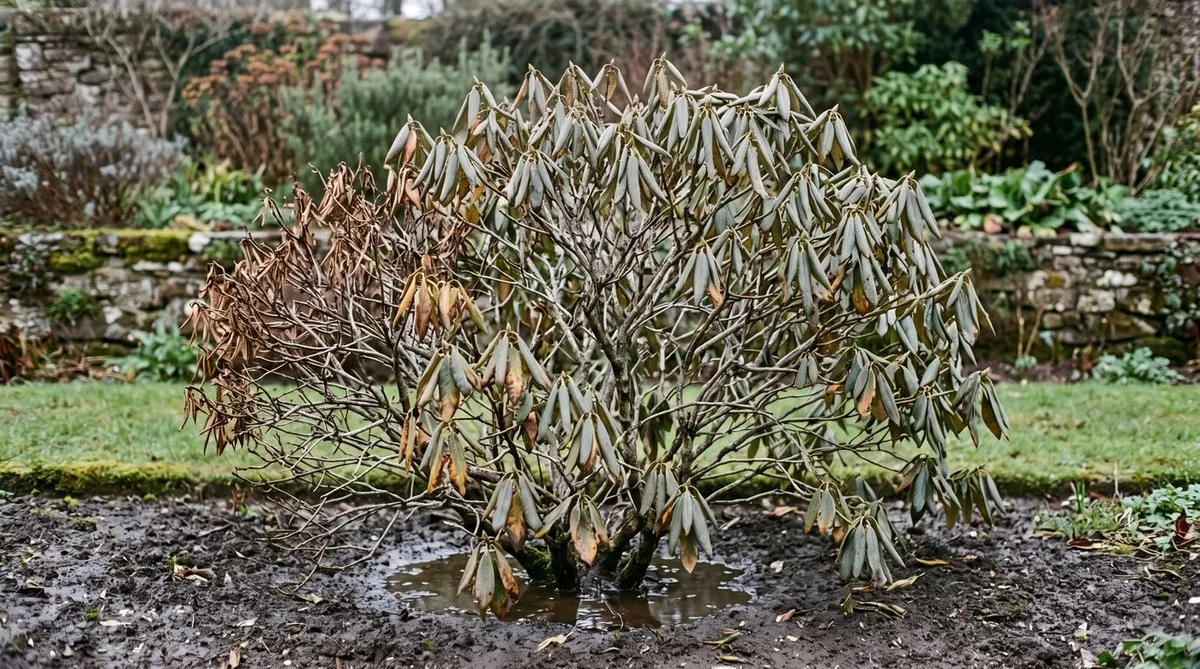
Key takeaways
- Check the roots before you water; drought and waterlogging look alike from a distance
- Browning from the base up on wet clay points to waterlogging and root rot
- Crisp leaf edges on a new hedge in summer usually mean drought
- White sheets under the bark at the base mean honey fungus, which can't be cured
- Frost scorch and shothole look bad but usually aren't fatal
- Laurel regrows from old wood, so a hedge with healthy roots can often be saved
A browning laurel hedge sends most people straight for the hose. That’s often the wrong move. Laurel dies for several different reasons, and two of them need opposite fixes.
This guide helps you read the pattern of browning, check the roots and work out whether your hedge can be saved. It covers cherry laurel (Prunus laurocerasus) and Portuguese laurel (Prunus lusitanica). If your “laurel” has yellow-speckled leaves, that’s spotted laurel, a different shrub covered in the guide to aucuba turning black.
What does the browning pattern tell you?
Where the brown starts tells you most of what you need to know.
- Base up, whole plants, on wet ground: waterlogging or root rot.
- Crisp tips and edges on a new hedge in a dry summer: drought.
- One plant dead suddenly, brown leaves still hanging on: honey fungus.
- All-over brown after a hard winter: frost or cold wind scorch.
- Small round holes in otherwise green leaves: shothole, which is cosmetic.
Then dig a small hole about 20cm deep beside a struggling plant. The soil and roots confirm what’s going on.

Yellowing and browning that starts low down and works upwards points to the roots, not to thirst.
Waterlogging and root rot
This is one of the most common reasons laurel hedges die, especially on heavy clay and in new hedges.
Cherry laurel hates sitting wet. In soil that stays soggy through winter, the fine roots suffocate. Phytophthora root rot, a water-loving disease, then moves in and rots them. The plant yellows, browns from the base and dies back stem by stem.
How to check:
- Dig a 20cm hole beside a failing plant.
- See whether it fills with water or the soil stays sodden.
- Scrape a root with your thumbnail. Healthy roots are pale under the skin; rotted ones are brown.
- Sniff. Rotting roots smell sour and stale, not earthy.
- Look along the hedge. Rot often spreads along the wettest stretch.
There’s no garden spray that cures it. The fix is better drainage. The guide to Phytophthora root rot explains how it spreads and which shrubs it hits.

Rotted roots are dark, soft and sour-smelling. Healthy laurel roots are firm and pale.
Drought and new-hedge stress
New laurel hedges that brown in their first summer are usually thirsty, not rotting. It looks similar from a distance, but the fix is the opposite.
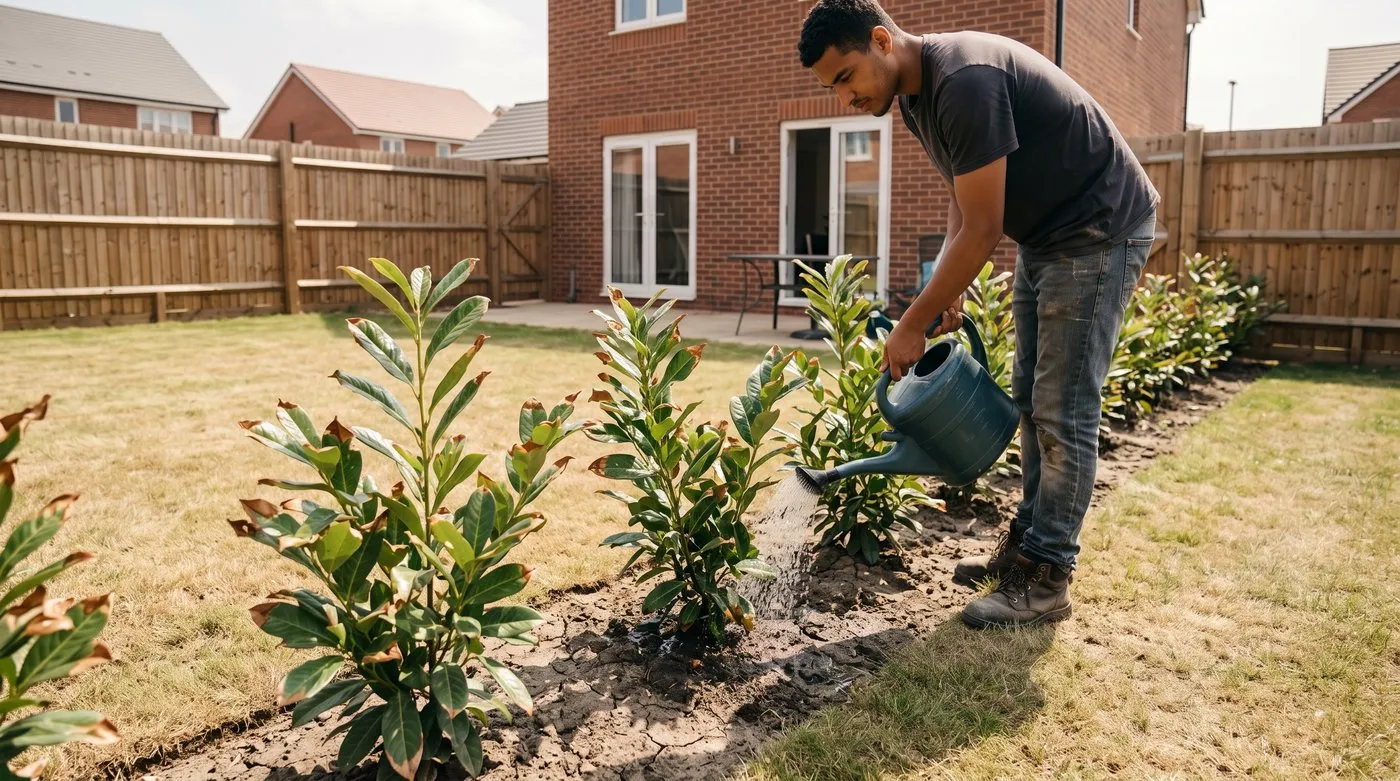
Crisp brown edges on a new hedge in a dry spell usually mean thirst. A long soak at the base soon helps.
Drought crisps the tips and edges of leaves first, often on the sunniest side. Dig down and the soil is dry and dusty, with firm, pale roots. Newly planted hedges have small root systems that can’t keep up in a dry spell.
How to water a new laurel hedge:
- Give each plant a long soak at the base once or twice a week in dry weather, rather than a daily sprinkle.
- Mulch 5-7cm deep with bark or compost to hold moisture in.
- Keep it up for the first two summers.
The hedge planting guide covers spacing and aftercare that prevent most first-year losses.
Honey fungus: the one you can’t fix
Honey fungus kills laurel and can’t be cured, so rule it out early. Often one plant dies quickly while its neighbours look fine, with brown leaves still clinging on.
Signs to look for:
- Creamy-white sheets under the bark at the base of the stem
- A strong mushroom smell when you peel back the bark
- Black, bootlace-like strands in the soil nearby
- Honey-coloured toadstools at the base in autumn
Dig out the dead plant and as much root as you can. Don’t replant laurel in the same spot. The guide on how to deal with honey fungus covers barriers and plants that are rarely affected.
Frost scorch, shothole and other problems that look worse than they are
Frost and cold wind scorch brown the leaves after a hard winter, worst on exposed sides and young hedges. The wood and roots are usually fine. Wait until fresh growth appears in late spring, then clip out the dead tips.
Shothole leaves small round holes in the leaves, as if they’ve been peppered with shot. It’s caused by bacteria or fungi and looks dramatic, but an established hedge shrugs it off.
Powdery mildew and leaf spot give white dusting or brown blotches, mostly on young leaves. Again, a healthy hedge grows through them.
Weedkiller and road salt cause twisted or one-sided browning, often on the side nearest a drive, path or road.

Shothole looks alarming, but it’s cosmetic. New leaves usually come through clean.
Laurel diagnosis at a glance
| What you see | Most likely cause | Can it be saved? |
|---|---|---|
| Browning from the base up, on wet clay | Waterlogging or root rot | Only if roots are still firm |
| Crisp leaf edges on a new hedge in summer | Drought | Yes, with proper watering |
| One plant dead suddenly, leaves still hanging | Honey fungus | No |
| White sheets under bark, black bootlaces in soil | Honey fungus | No |
| All-over brown after a hard winter | Frost or wind scorch | Usually regrows |
| Small round holes in leaves | Shothole | Yes, cosmetic |
| Yellow leaves with green veins on wet ground | Waterlogged roots can’t feed | Yes, fix drainage |
| One-sided browning near a drive or path | Weedkiller or road salt | Depends on the damage |
How to save a struggling laurel hedge
If the roots are firm and the wood under the bark is green, a laurel hedge can usually be saved. It regrows well from old wood.
- Fix the cause. On wet ground, improve drainage before anything else. The guide to improving clay soil shows how.
- Cut back to live wood. Remove every brown, dead stem, back to green wood if needed. Do this in spring.
- Feed and mulch. Give a balanced feed in spring, then mulch 5-7cm deep, keeping it off the stems.
- Water wisely. Soak in dry spells while it regrows, but never on soggy ground.
- Be patient. A hard-cut hedge can look bare in spring and be green again by late summer.
Warning: Check for nesting birds before cutting. Damaging an active nest is an offence at any time, so avoid hard cutting from March to August if birds are using the hedge. The guide to when to cut hedges explains the rules.

Cutting back to bare stems looks brutal, but laurel regrows from old wood once the roots are healthy.
When to replace a laurel hedge, and what with
Replace plants when the main roots have rotted, honey fungus is confirmed, or most of a long run is dead.
Fix the cause first. On wet clay, raise the planting area or improve drainage before replanting, or new laurel will rot in the same spot. Portuguese laurel copes better with chalky and free-draining soil than cherry laurel. On a honey fungus site, choose something rarely affected, such as yew, holly or beech.
For a wildlife-friendly mix instead, see the native hedgerow species guide.

Get the drainage right and laurel makes a dense, glossy hedge from top to bottom.
Common mistakes with a dying laurel hedge
Watering a hedge that’s already waterlogged. It speeds up the rot. Check the soil first.
Replanting laurel in the same wet spot. Without better drainage, the new plants go the same way.
Digging out a frost-scorched hedge. Give it until late spring. It usually reshoots.
Cutting hard in nesting season. Check for birds and leave it until autumn or spring if any are nesting.
Frequently asked questions
Why is my laurel hedge going brown and dying?
Usually a root problem, most often waterlogging or root rot. Browning from the base up on wet clay is the classic sign. Drought, honey fungus and frost cause browning too, so check the roots before doing anything.
Can a dying laurel hedge be saved?
Often, if the roots are still firm and pale. Fix the cause, cut brown stems back to live green wood, then feed and mulch. Laurel regrows well from old wood.
How do I tell drought from waterlogging on laurel?
Dig 20cm down beside a plant and look. Wet, sour soil with dark, soft roots means waterlogging. Dry, dusty soil with firm, pale roots means drought.
What are the white sheets under the bark of my laurel?
That’s honey fungus, a root disease with no cure. The creamy sheets smell of mushrooms, and black bootlace strands often run through the soil nearby. Dig out the plant and as much root as you can.
Does laurel grow back after frost damage?
Usually, yes. Frost browns the leaves but rarely kills the wood or roots. Wait until new growth appears in late spring, then clip out the dead tips.
When can I cut back a struggling laurel hedge?
Spring is best, once the worst frosts are over. Check carefully for nesting birds first. It’s an offence to damage an active nest, so avoid hard cutting from March to August if birds are using the hedge.
Next steps
If a conifer screen nearby is struggling too, read the guide to conifer hedge browning. For other shrubs in trouble, browse all the plant problem guides.
Our team produces practical UK gardening guidance from source research, contributor records and established horticultural practice. Editorial standards are overseen by Matt W.