Key takeaways
- Black aucuba leaves usually mean stress, not a disease you can spray
- Soggy winter soil, summer drought, late frost and sun scorch are the main causes
- Frost only blackens soft new shoots; the tough old leaves stay green
- Gold-spotted varieties scorch in hot sun and dry soil, so grow them in shade
- Cut damaged stems back to green wood in April; aucuba regrows well from old wood
- Brown staining under the bark at the base can mean phytophthora root rot
Black leaves on an aucuba (spotted laurel) are usually a sign of stress, not disease. Soggy winter soil, summer drought, late frost and strong sun are the usual culprits. Find the cause, fix it and cut back in April, and the plant almost always recovers.
Aucuba is one of the toughest evergreens for a shady garden, so blackening comes as a shock. Don’t reach for a fungicide. Work through the checks below instead.
Why is my aucuba turning black?
Aucuba blackening is mostly caused by the roots struggling, or by weather damage to the leaves. Four causes cover nearly every case. Root rot is a rarer, more serious fifth.
Timing and which leaves are affected tell you which one you have:
| Cause | When it shows | Which leaves | What it looks like | Fix |
|---|---|---|---|---|
| Soggy winter soil | Late winter to spring | Older, lower leaves first | Black from the tips inwards, soil wet underfoot | Improve drainage |
| Summer drought | Hot, dry spells | Outer and newest leaves | Black, crisp edges, leaves curl and drop | Water deeply, mulch |
| Late frost | After a cold night in spring | Only soft new shoots | Young tips go black and limp overnight | Trim once frosts are over |
| Sun scorch | Sunny, dry summers | Gold-spotted leaves in sun | Brown-black burnt patches on yellow areas | Move into shade |
Then push a finger into the soil. Wet and cold means drainage. Bone dry means water. This quick check stops you watering a drowning plant.
Soggy winter soil
Wet soil in winter is one of the most common reasons aucubas turn black. Aucuba grows in most soils, but not ones that stay soaking wet.
On heavy clay that stays saturated for months, the roots sit in cold, airless water and start to die. The plant can’t take up water properly, so the leaves blacken from the tips. The lower, older leaves usually go first.
To fix it, dig plenty of organic matter such as well-rotted compost or bark into the ground around the plant, keeping clear of the main roots. If the whole area floods, plant on a low mound or move the shrub somewhere better drained. Our guide on how to improve clay soil explains more.
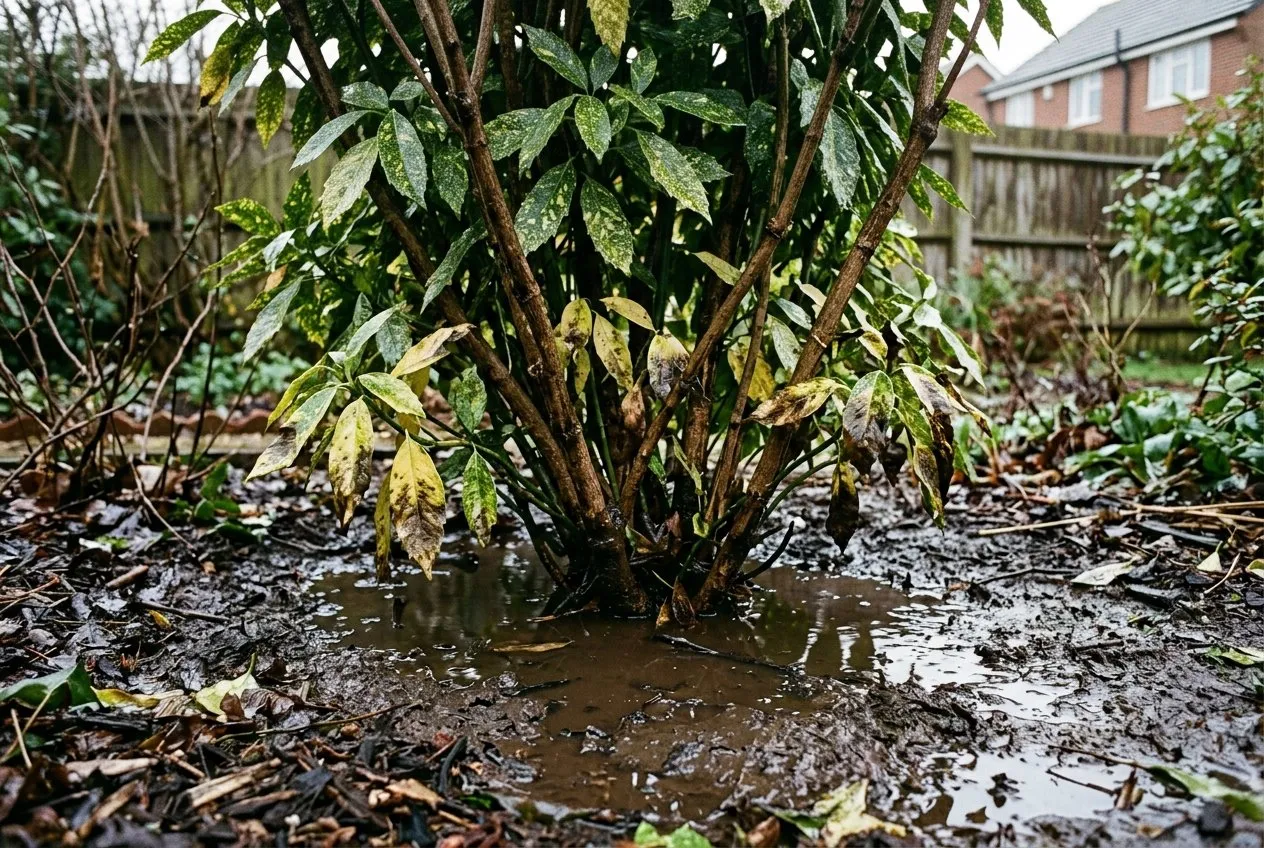
Standing water around the base in winter starves the roots of air. Blackening on the lower leaves soon follows.
Summer drought
Drought blackens aucuba from the outside in. The newest, outermost leaves go black and crisp at the edges, curl, then drop.
It often hits plants against a house wall or under eaves, where rain rarely reaches. Shrubs planted in the last couple of years are vulnerable too, before their roots spread. So is any aucuba competing with a big tree or hedge.
Water deeply once a week in dry spells, a full can or two at the base rather than a daily splash. Mulch with 5-7cm of bark or leaf mould over damp soil in spring to hold the moisture in. Aucuba copes well in dry shade once established, but young plants need help in their first summers.
Late frost on new shoots
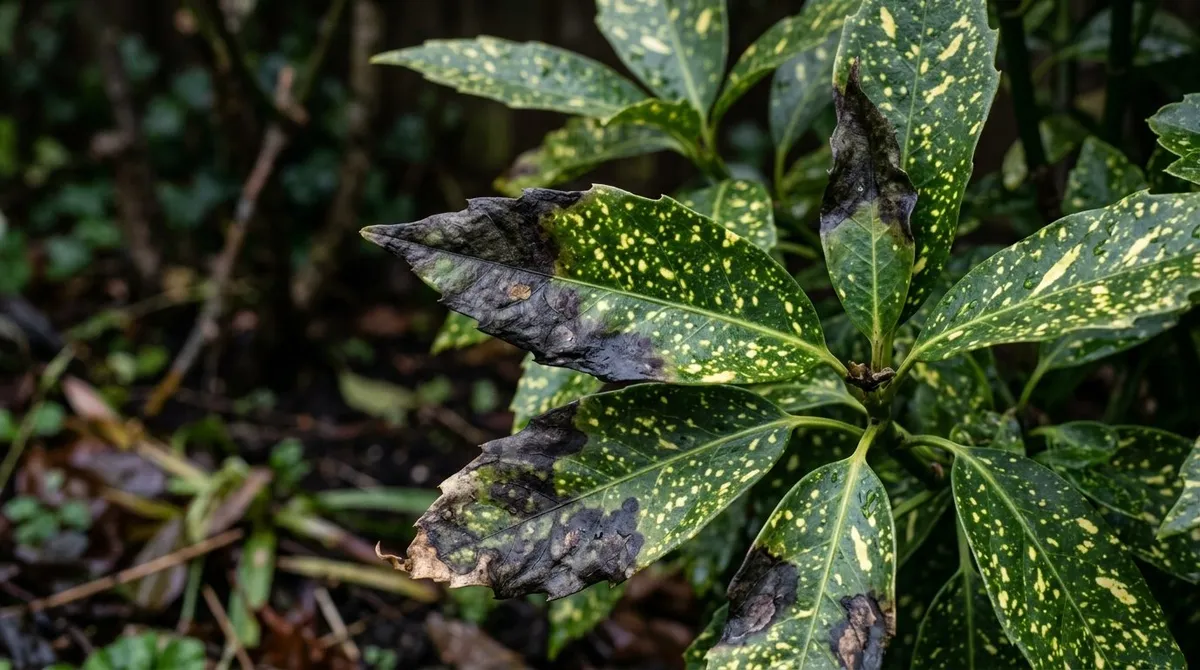
Late frost only blackens the soft new growth. After a cold night in April or May, the young shoots go black and limp, while the leathery older leaves stay green. That contrast is the giveaway.
Aucuba is hardy through normal UK winters. It is a frost after the plant starts growing in spring that catches it. Plants in frost pockets and freshly pruned shrubs pushing soft growth are hit most.
Wait until the frosts are over, then trim the black tips back to healthy buds. New shoots soon follow. On cold, clear spring nights, a layer of fleece protects young plants. Our guide on protecting plants from frost covers the details.
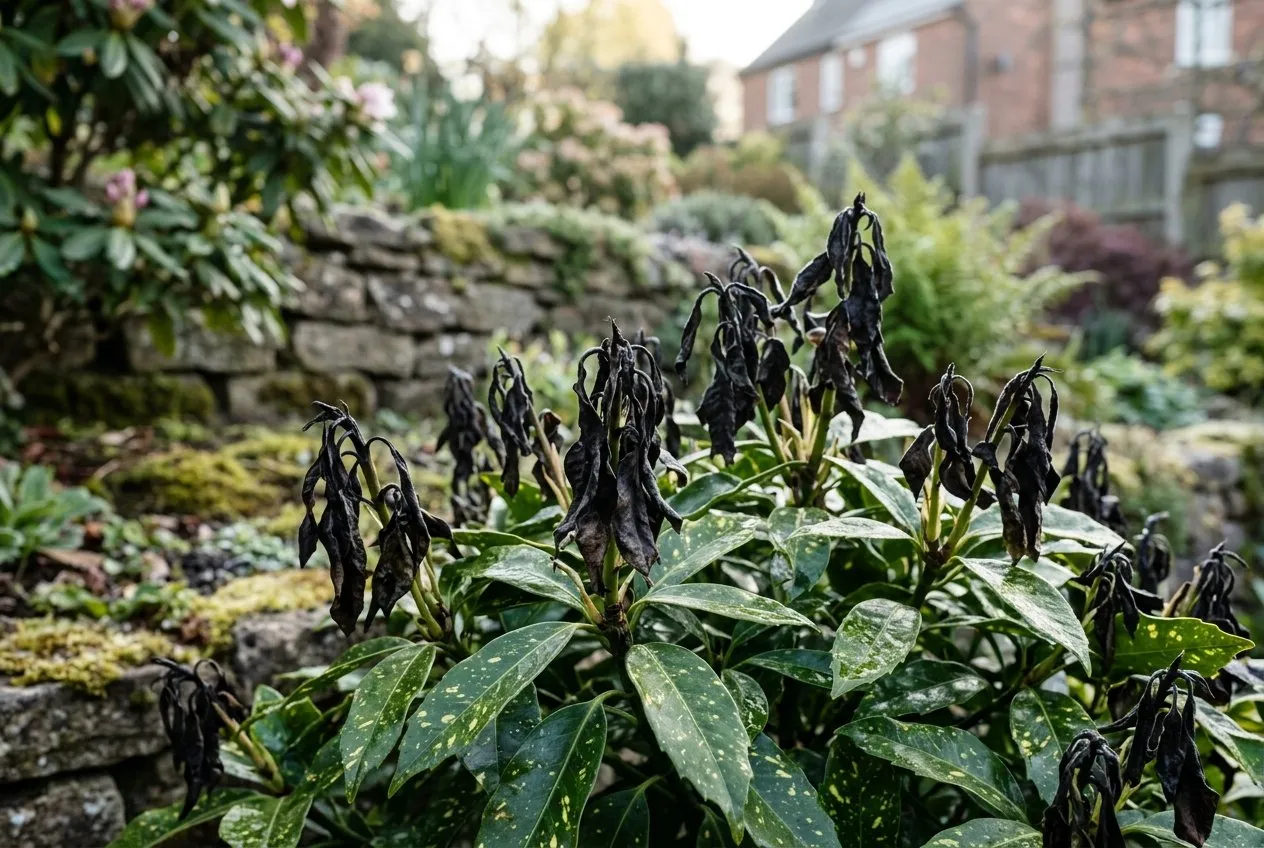
Black, limp new shoots above healthy older leaves are classic late-frost damage. It looks dramatic but the plant soon regrows.
Warning: Don’t hard-prune aucuba in autumn or early winter. It brings on soft growth that the first frost blackens. Save hard pruning for April.
Sun scorch on gold-spotted aucuba
Gold-spotted varieties such as ‘Crotonifolia’ and ‘Gold Dust’ scorch in strong sun and dry soil. Plain green aucubas cope with sun far better.
The pale yellow patches burn first, leaving brown-black marks, worst on the sunny side and in dry summers. It’s a matter of position, not disease. A gold-spotted aucuba against a hot south-facing wall is in the wrong place.
Move it into partial or full shade in autumn or early spring, when aucuba moves well. If you can’t move it, mulch well and water in every dry spell. For other plants that like the gloom, see our list of the best shrubs for shade.
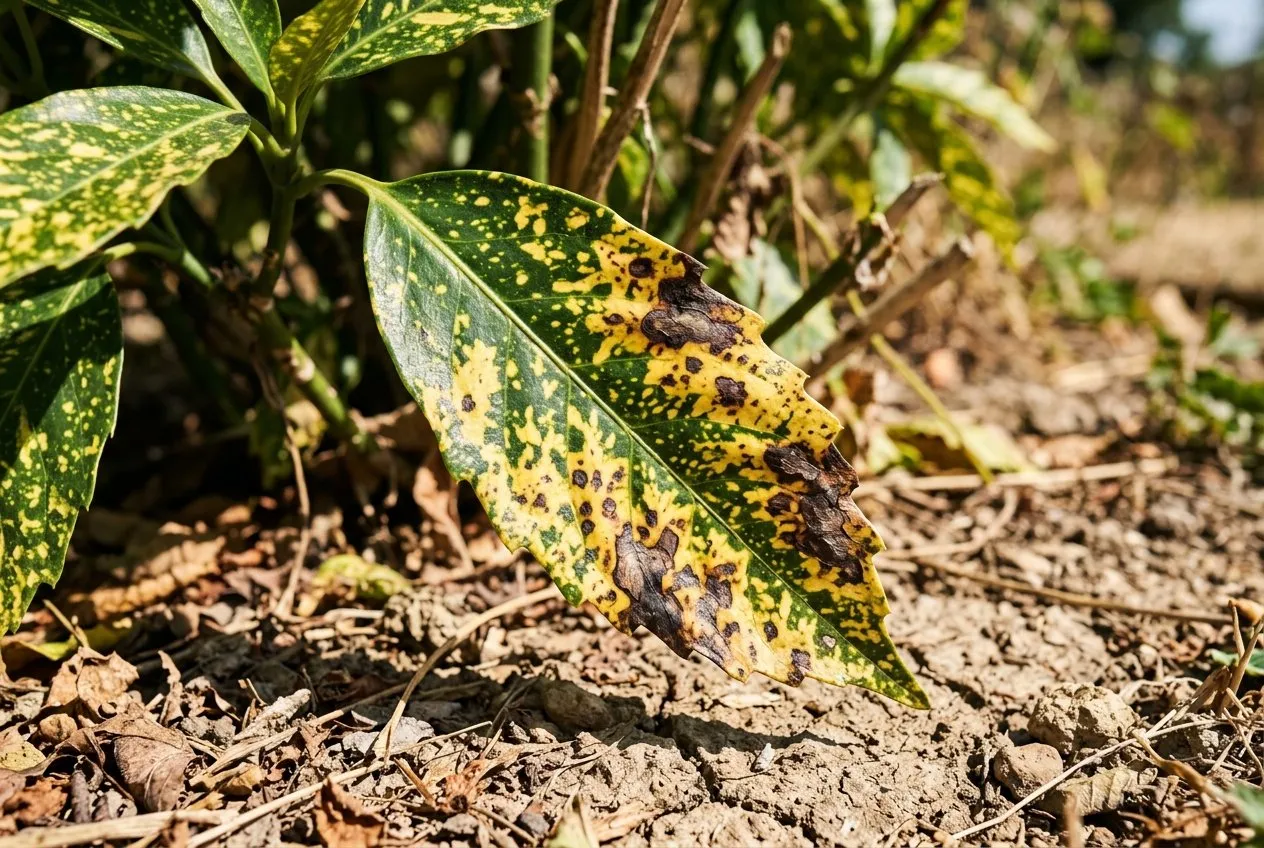
Burnt patches on the yellow parts of the leaf point to sun scorch. A move into shade sorts it out.
Could it be phytophthora root rot?
Root rot is less common but more serious. Phytophthora is a soil-borne organism that rots roots and the base of the stem, usually in wet, poorly drained ground.
It shows as wilting, yellowing or blackening leaves and whole branches dying back, often on one side first. Because it thrives in wet soil, it can look like waterlogging.
To check, scrape a little bark away from a stem near soil level. Healthy wood is green or cream underneath. Brown or red-brown staining, and roots that are dark, soft and snap easily, point to root rot.
There’s no chemical cure for gardeners. Badly affected plants are best dug out with as much root as possible and binned, not composted. Don’t replant a similar shrub in the same spot. Our guide to phytophthora root rot covers what to do next.
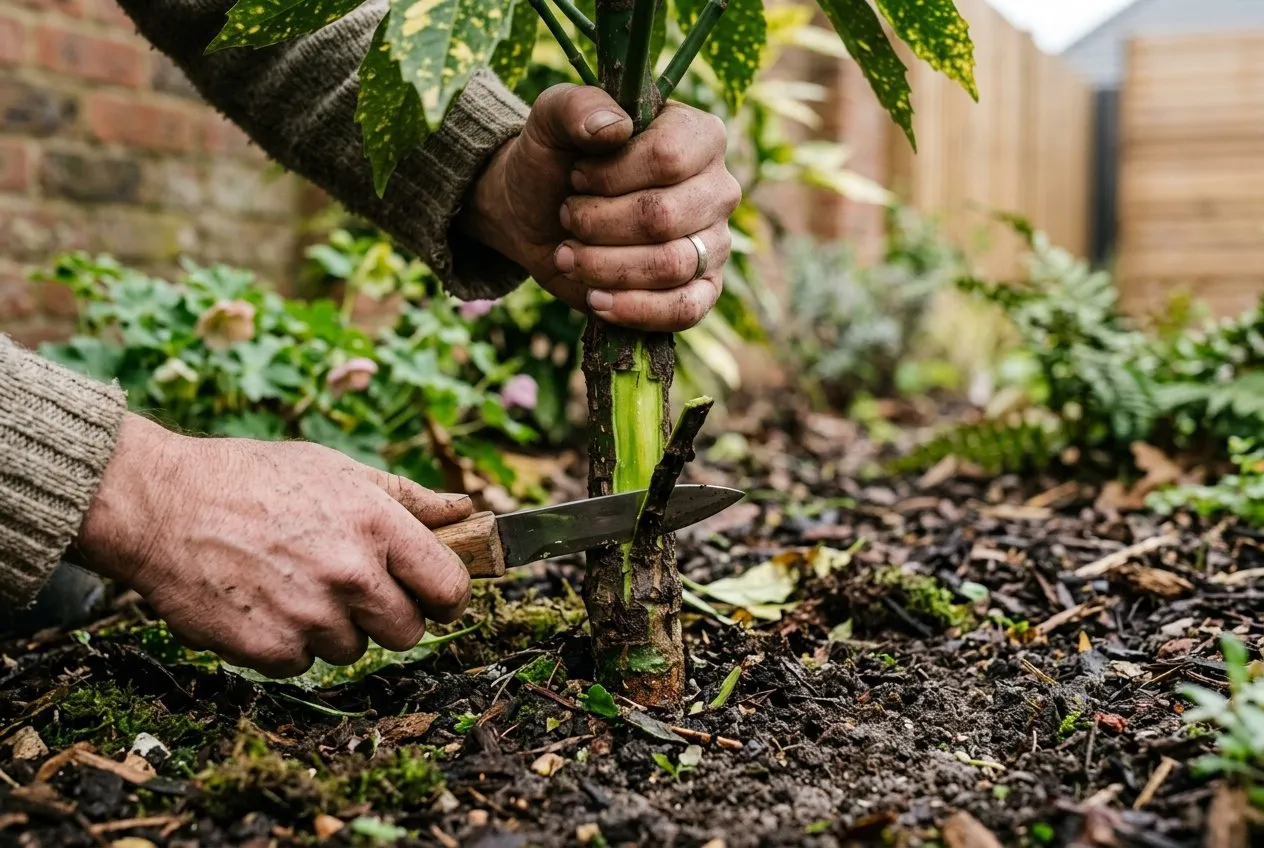
Scrape a little bark at the base. Green wood like this means the roots are fine. Brown staining suggests root rot.
How to cut back a blackened aucuba
Aucuba is very forgiving of hard pruning. It regrows readily from old wood, so a badly blackened plant can usually be saved.
- Wait until April, once hard frosts have passed.
- Work stem by stem. Cut each black or dead stem back until the cut face is green, not brown.
- Go hard if you need to. On a badly hit plant, you can cut the whole shrub down to stumps about 30-40cm tall.
- Use clean, sharp tools. Cut just above a bud or leaf joint.
- Mulch and water in dry spells while new shoots grow.
It looks brutal, but fresh shoots usually appear from the stumps within weeks to months.
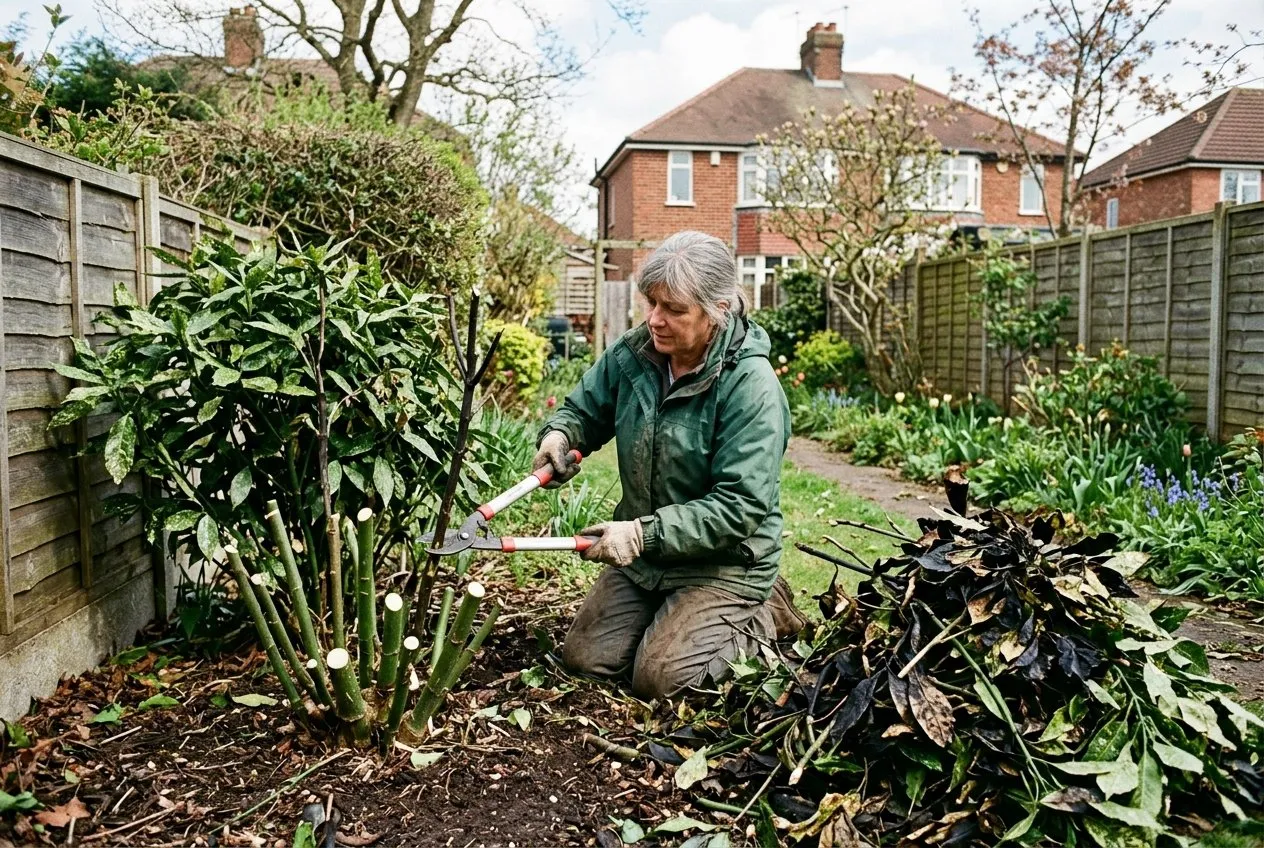
Cut each damaged stem back until you see green wood. On a badly hit plant, you can take everything down to low stumps.
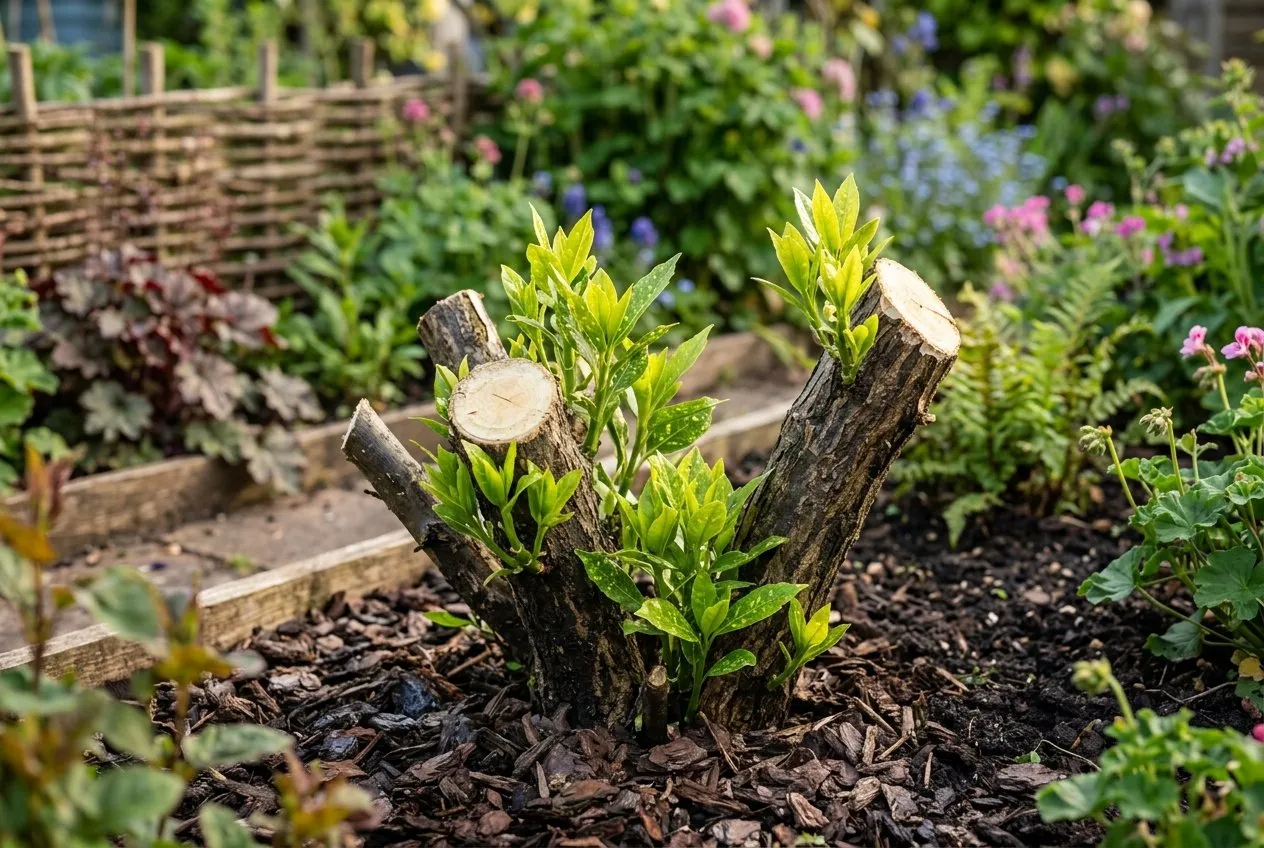
New shoots from bare stumps by early summer. Aucuba’s knack of regrowing from old wood is why most blackened plants recover.
Aucuba rescue calendar
| Month | What to do |
|---|---|
| January and February | Leave the plant alone. Check for water pooling around the base |
| March | Improve drainage around the plant. Mulch, keeping it off the stems |
| April | Main cut-back to green wood, once frosts have passed |
| May | Watch for new shoots. Fleece soft growth on cold nights |
| June to August | Water deeply in dry spells. Check gold-spotted forms for scorch |
| September and October | Move scorched or badly placed plants into shade. Mulch damp soil |
| November and December | No hard pruning. Make sure roots aren’t sitting in water |
Common mistakes with blackened aucuba
- Spraying a fungicide. Blackening is rarely a fungal disease, so it won’t help.
- Pruning in autumn. It triggers soft growth that frost blackens. Wait for April.
- Watering a waterlogged plant. Check the soil first. If it’s wet, more water makes things worse.
- Leaving a gold-spotted aucuba in full sun. Shade, not extra water, is the real fix for scorch.
- Digging out a plant too soon. Unless the base shows brown root-rot staining, cut it back and give it a season.
If other evergreens nearby are struggling too, the site may be the problem. Our guide to a dying laurel hedge works through the same wet-soil and drought checks. You’ll find more plant troubles in our garden problems hub.
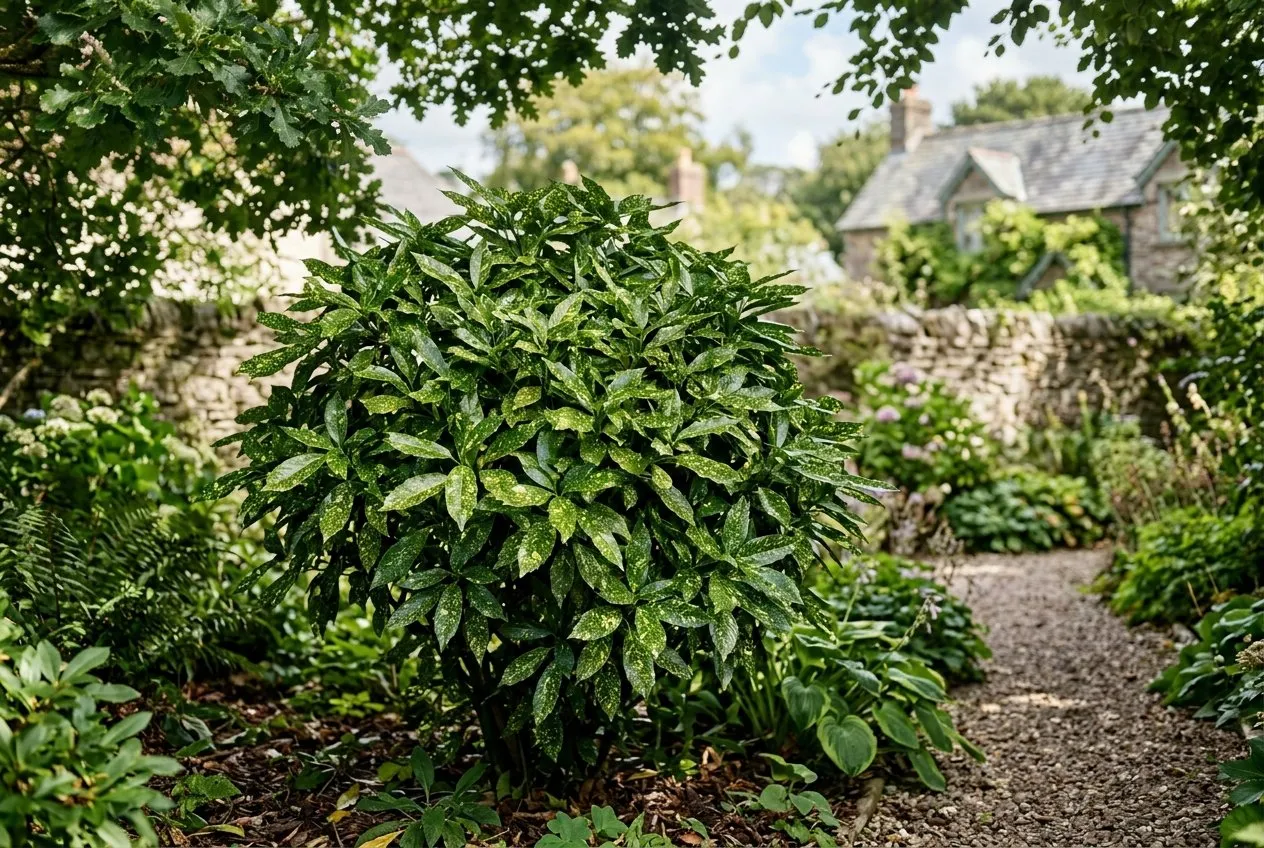
In partial shade with soil that drains well, a gold-spotted aucuba stays glossy and free of black patches.
Frequently asked questions
Why is my aucuba turning black?
Usually because of stress, not disease. Soggy winter soil is a common cause, along with summer drought, late frost on new shoots and sun scorch on gold-spotted varieties. There is usually nothing to spray.
Will a blackened aucuba recover?
Yes, in most cases it does. Aucuba regrows well from old wood. Cut the damaged stems back to green wood in April, fix the cause, and fresh shoots usually follow within the season.
Should I cut off black aucuba leaves?
Yes, but wait until April. Then cut each damaged stem back to green, living wood. Cutting in autumn or winter brings on soft growth that frost blackens again.
Does frost turn aucuba black?
Yes, late frost blackens soft new shoots. The tough old leaves are rarely harmed. The damage looks dramatic but isn’t serious. Trim the black tips off once frosts are over.
Why are my aucuba leaves scorched and black in the sun?
Gold-spotted varieties scorch in hot sun and dry soil. The pale yellow patches burn first. Move the plant into shade in autumn or early spring, mulch it and water in dry spells.
How do I know if my aucuba has root rot?
Scrape the bark at the base of a stem. Healthy wood underneath is green or cream. Brown or red-brown staining, with dark, soft roots, points to phytophthora root rot.
How do I stop my aucuba blackening again?
Get the drainage and position right. Open up heavy clay with organic matter, keep gold-spotted forms in shade, and water during droughts, especially in the first couple of years.
Now you know why your aucuba turned black, read our guide to the best plants for clay soil if wet winter ground is the problem in your garden.
Our team produces practical UK gardening guidance from source research, contributor records and established horticultural practice. Editorial standards are overseen by Matt W.