Key takeaways
- Greater plantain has broad, oval leaves with strong ribs, flat to the ground in a rosette
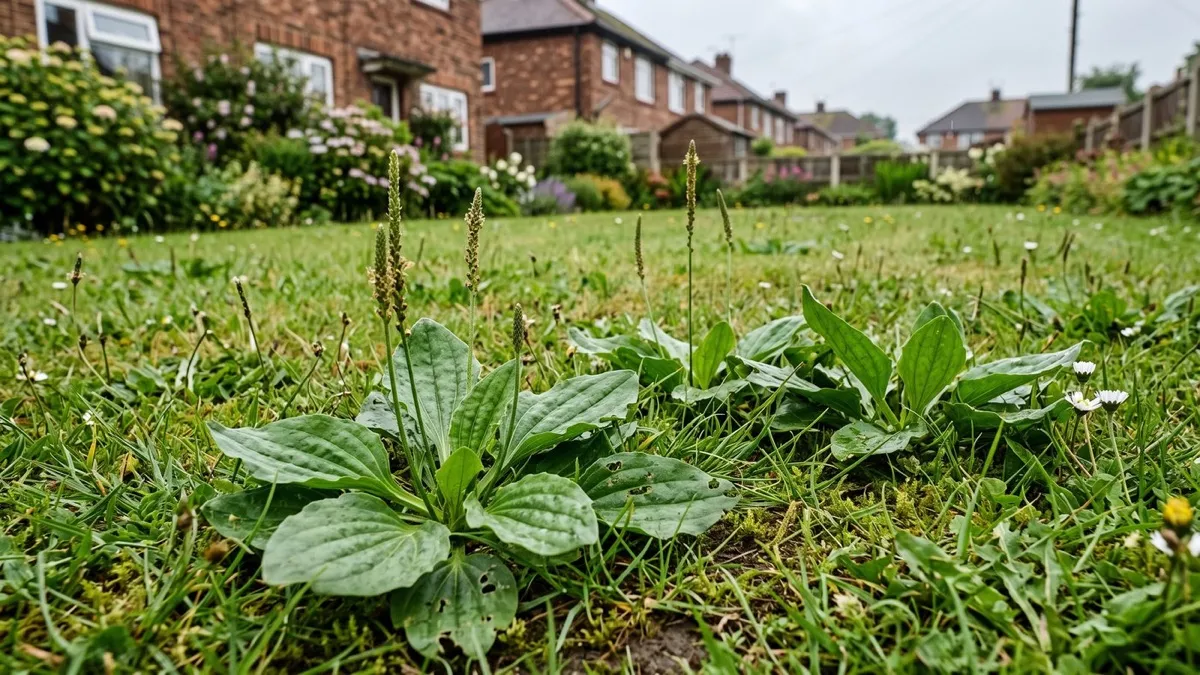
- It shows up where lawns are trodden and compacted, often along a regular route
- Mowing won't kill it, because the crown sits at or below soil level
- Lever out the whole crown with a daisy grubber when the soil is moist
- Hollow-tine, top-dress and overseed worn patches in September
- Stepping stones or a new route stop the same strip compacting again
Greater plantain in your lawn is mostly a message about the soil underneath. Greater plantain (Plantago major) is a native weed with broad, ribbed leaves in a flat rosette. It loves trodden, compacted ground where the grass has gone thin. Dig out the crowns, then sort out the worn turf, and it struggles to come back.
One or two plants are a quick job with a daisy grubber. A line of them along the route to the shed is a different story. That needs the plants out, the soil opened up and the foot traffic moved. This guide helps you work out which you’ve got and what to do. For a wider look at other weeds in grass, see the lawn weeds identification guide.
How to identify greater plantain
Greater plantain has broad, oval or spoon-shaped leaves in a rosette. Strong, almost parallel ribs run from the base to the tip of each leaf. On a mown lawn the rosette often lies flat to the ground. In longer grass the leaves stand up a bit more.
From late spring to late summer, thin bare stalks rise from the middle. Each carries a long, narrow spike packed with tiny greenish flowers, which later turn to seed. Plants grow back from the same crown each year.
If several rosette weeds share the same patch, the visual guide to common garden weeds helps you tell them apart.
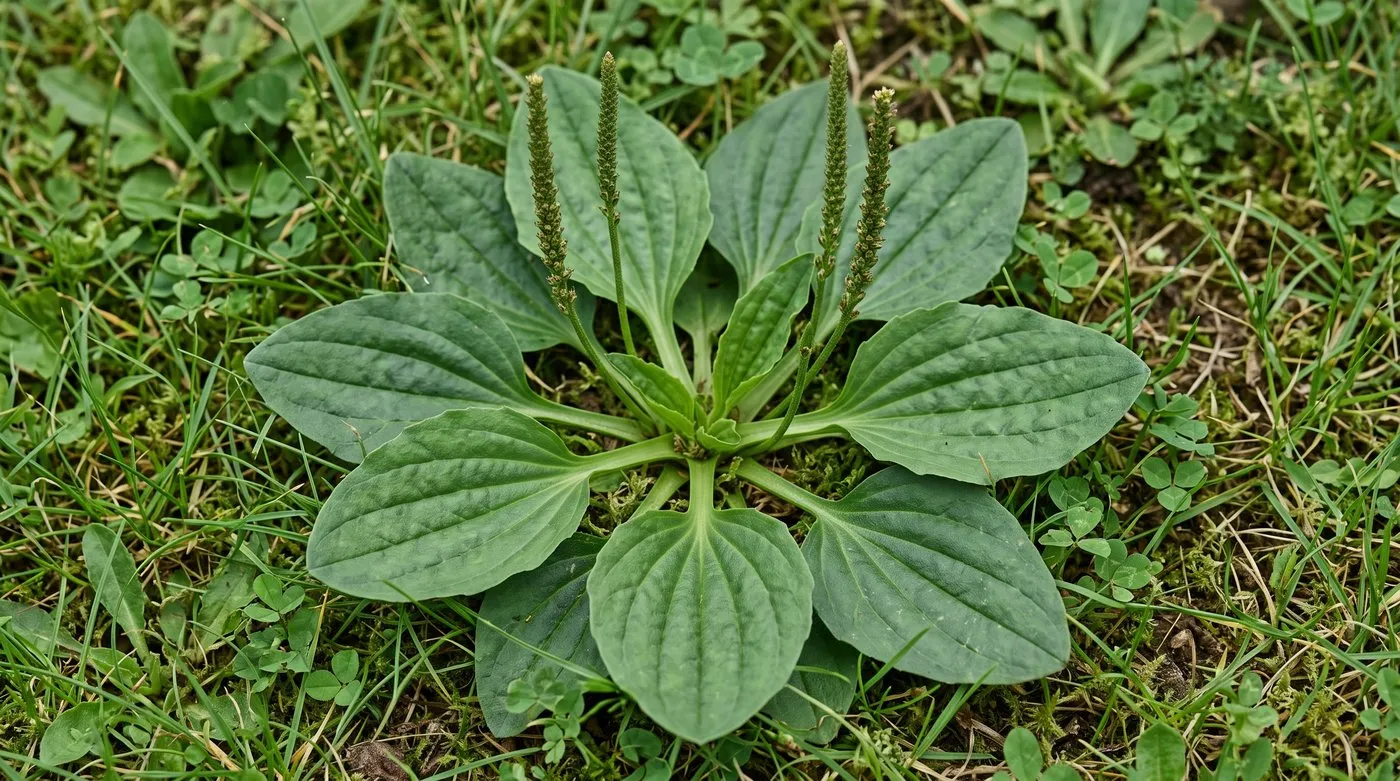
Those broad leaves with the strong ribs are the giveaway. Once you’ve spotted one, you’ll see them everywhere on worn grass.
Greater plantain or ribwort plantain?
The quickest difference is the leaf. Greater plantain has broad, oval leaves. Ribwort plantain (Plantago lanceolata) has narrow, lance-shaped leaves and a short, dark, bullet-shaped flower head on a long stalk.
| Feature | Greater plantain | Ribwort plantain |
|---|---|---|
| Leaf shape | Broad, oval or spoon-shaped | Narrow and lance-shaped |
| Leaf position | Often flat to the soil | Usually more upright |
| Flower head | Long, narrow greenish spike | Short, dark, bullet-shaped head |
| Where you’ll see it | Paths and trodden patches | Dry or close-cut grass |
Mowing can make both look smaller and odder, so check a few whole plants. The good news is that the fix is much the same for both: dig them out and help the grass thicken up.
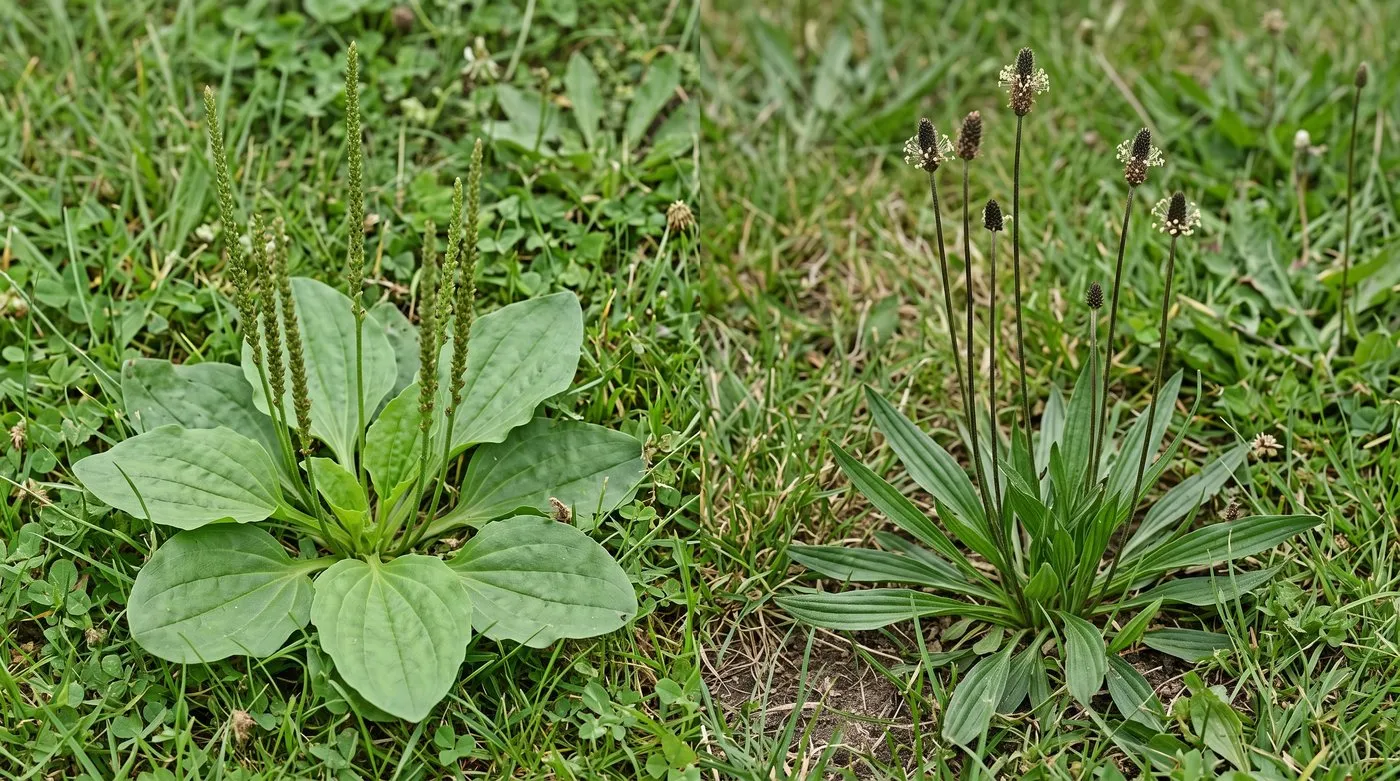
Broad leaves and long spikes on the left, narrow leaves and short dark heads on the right. Same family, same fix.
Why greater plantain survives mowing and wear
The crown sits at or below soil level, so the mower skims straight over it. Cutting removes the flower stalks but leaves the plant alive.
Plantain is also very good at coping with feet. Constant walking squashes the soil and squeezes out the air. Grass roots struggle in that, so the turf thins. Plantain doesn’t mind, and its seeds land on the bare gaps. Wet seeds turn sticky and hitch a ride on shoes and paws, which spreads them along the same routes.
That’s why you so often find a stripe of plantain on the way to the back gate or where the dog runs. The guide to a dog-proof lawn has ideas for steering four-legged traffic.
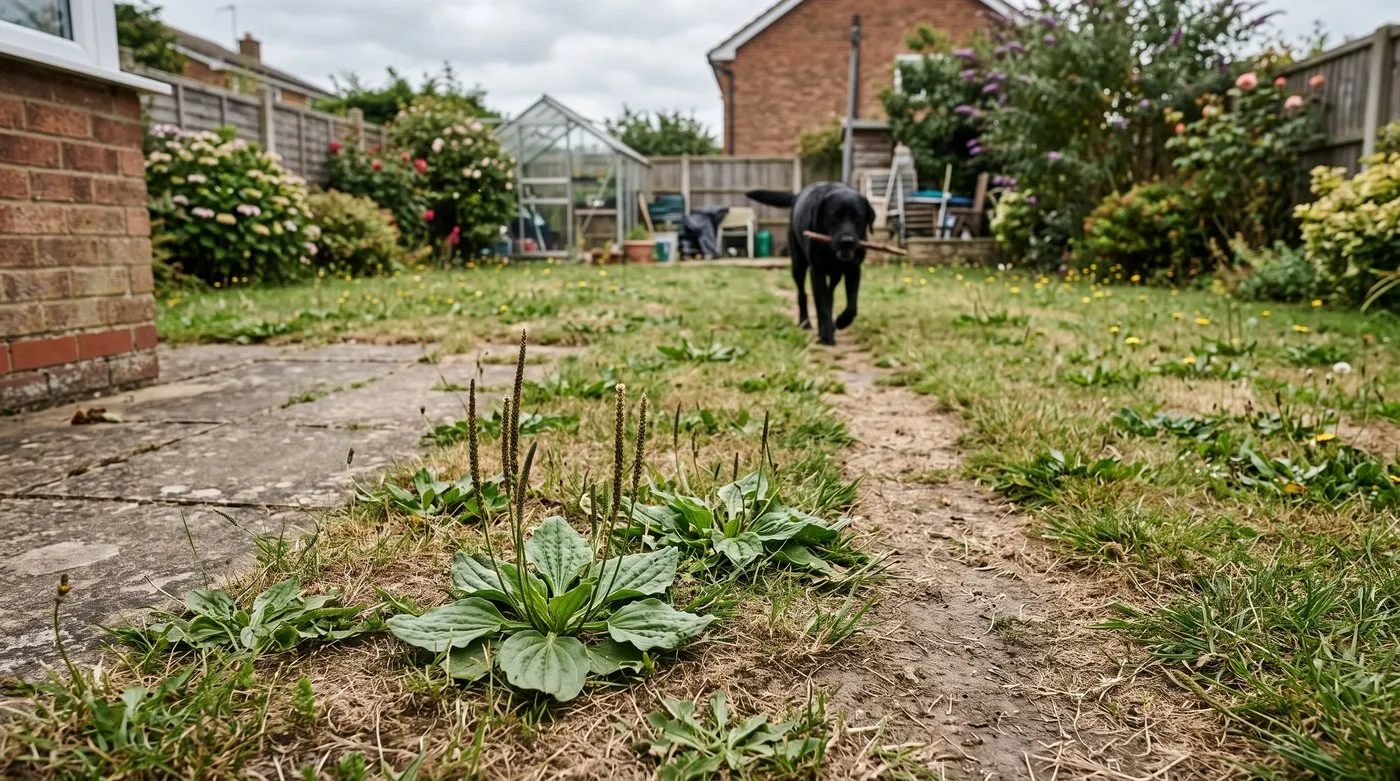
A well-trodden route is plantain’s favourite spot. Move the traffic and the grass gets a chance to fight back.
A quick fork test for compaction
Push a garden fork into the worn patch, then into healthy grass nearby, using the same effort. If the fork goes in noticeably less far on the worn patch, the soil there is compacted. Do it when the soil is moist, and try a few spots in each, as stones and roots can stop a fork.
Then look at how many plants you’ve got:
- One or two rosettes: just dig them out.
- A line along a route: dig them out and change the route.
- A broad patch with thin grass: dig out the worst, then aerate and overseed the whole area.
This isn’t a lab test, just a handy comparison of two bits of the same lawn. It tells you whether you’re fixing a plant, a path or a whole patch.
How to dig out greater plantain
Lever out the whole crown with a daisy grubber or narrow hand fork when the soil is moist but not soggy. After rain is ideal.
- Push the tool in beside the crown, not through the middle.
- Lever the handle back slowly until the crown lifts out with its roots.
- Fill the hole with topsoil and firm it level with the lawn.
- Sprinkle a pinch of lawn seed on top and rake it in lightly.
- Keep the spot damp until the grass comes through.
Pulling the leaves off isn’t enough, because the crown will just grow new ones. Snip off any flower spikes you can’t deal with yet, so they don’t drop seed. The guide to fixing a patchy lawn covers seed choice and aftercare for bigger holes.
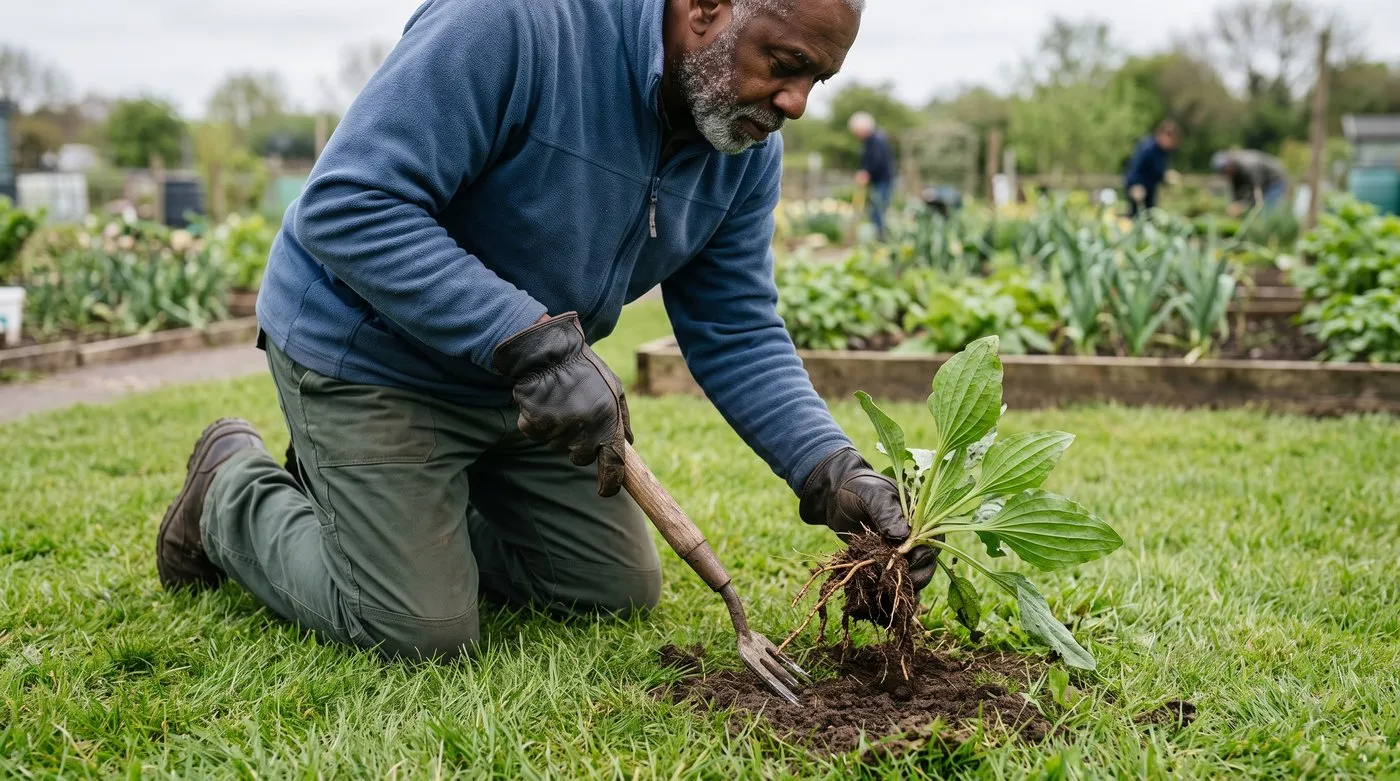
Get the tool in beside the crown and lever gently. The whole crown and its roots should come out in one piece.
How to repair a lawn full of plantain
Hollow-tine aerating, top-dressing and overseeding in early autumn is the lasting fix for a compacted patch. September is the best month, as the soil is warm and the grass has time to settle before winter.
Hollow tines pull out little plugs of soil, leaving open channels for air and water. Solid tines are fine for routine care, but on heavily trodden ground hollow tines do a better job. Mow first, aerate the whole worn area, then let the cores dry and sweep them up. The guide to scarifying and aerating a lawn explains the tools.
Brush a sandy loam top-dressing into the holes. Avoid builders’ sand. Then overseed any thin areas with a hard-wearing seed mix if children or pets use the lawn. Keep everyone off while the new grass gets going. The top-dressing guide explains which mix suits your soil.
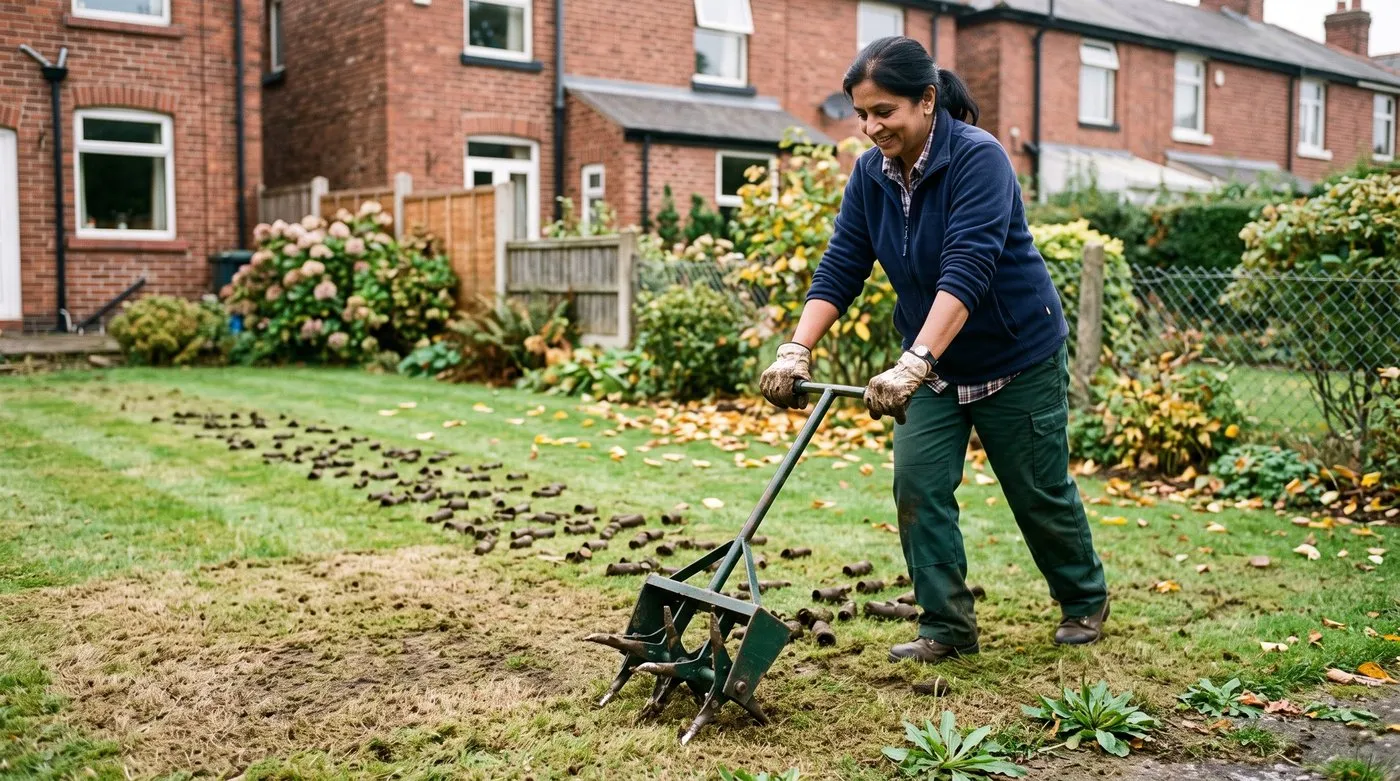
Work across the whole worn area, not just around each weed. Those little soil cores are the compaction coming out.
The cores themselves tell a story. Short, dense cores with few grass roots confirm the soil is squashed. Crumbly cores with roots all through them mean the soil is in better shape. If water sits in the holes, look into drainage as well.
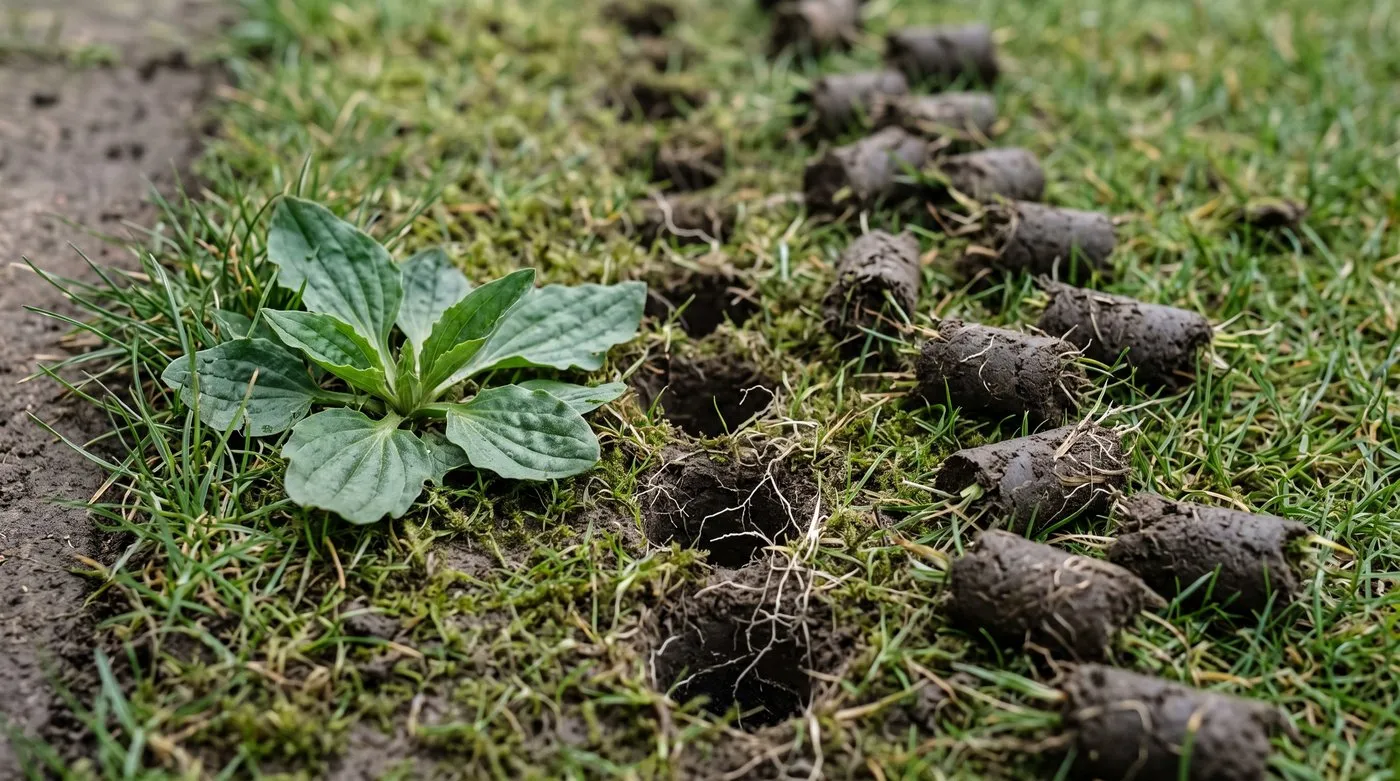
Dense cores with few roots point to compaction. Compare a few from the worn patch with some from healthy grass.
Finally, change the traffic. Add stepping stones, widen the route or move where people walk. If the lawn is also a path, this is often the only fix that lasts.
Should you use weedkiller on plantain?
Usually there’s no need. Digging out and repairing the turf deals with plantain and its cause. Weedkiller kills the plants but leaves the compacted soil, so new seedlings soon move back in.
If you have a large area and digging isn’t practical, use an approved lawn weedkiller whose label lists plantains. Follow the label exactly, including the timing and how long to keep children and pets off. The HSE guide to garden pesticides explains what is allowed. Don’t follow the home-made recipes you’ll see online, as they aren’t legal to use as weedkillers in the UK.
| Method | What it does | Watch out for |
|---|---|---|
| Dig out the crown | Removes the plant for good | Leaves the soil as it was |
| Aerate and overseed | Fixes compaction and fills gaps | Needs mild, damp weather |
| Move foot traffic | Stops it happening again | May need stepping stones |
| Snip flower spikes | Stops seed spreading | Crown keeps growing |
| Approved lawn weedkiller | Kills listed weeds | Doesn’t fix the soil |
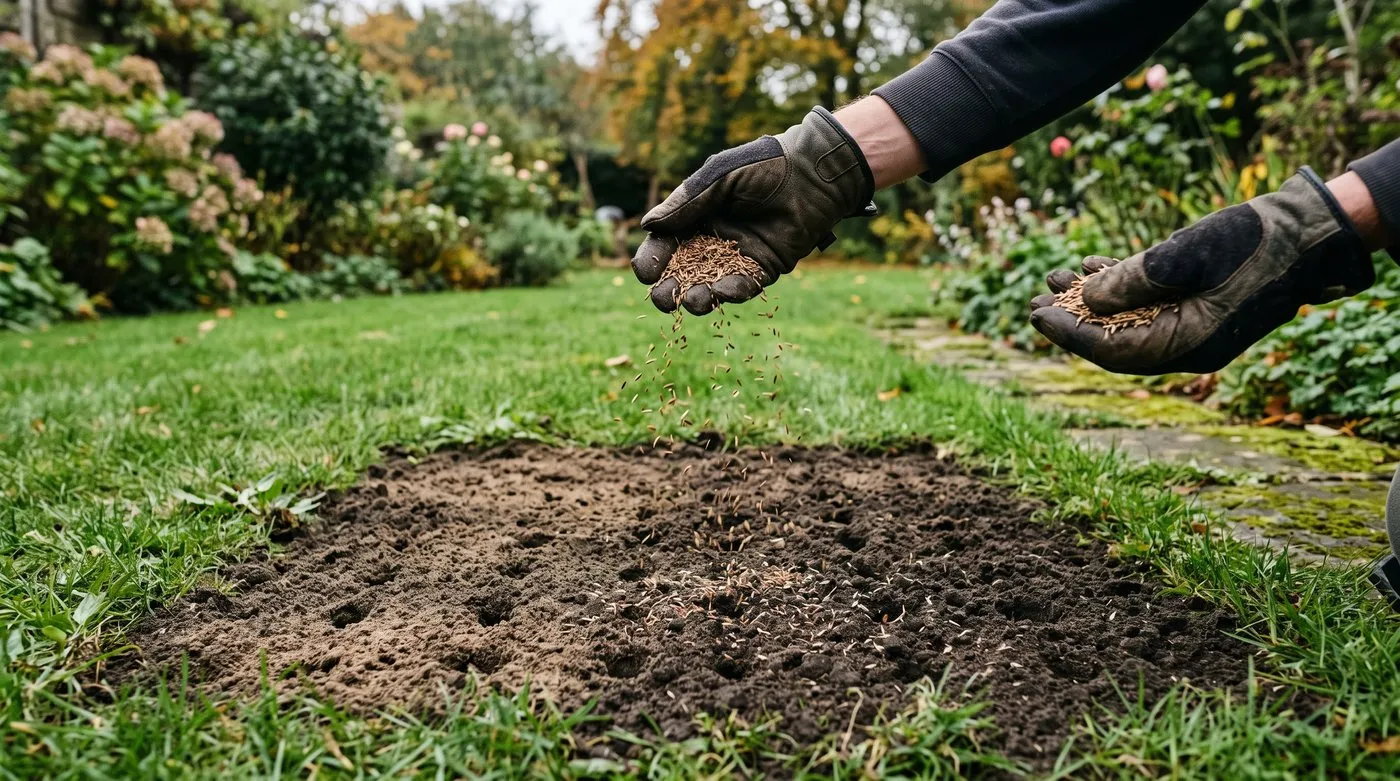
Fill bare patches with fresh seed straight away. Thick grass is the best weed control there is.
When to tackle plantain through the year
| Month | Lawn task |
|---|---|
| January to February | Keep off frozen or waterlogged grass. Plan stepping stones for worn routes |
| March to April | Dig out rosettes once the soil is workable. Fill holes and overseed when it warms up |
| May to June | Snip flower spikes before they seed. Keep digging out new plants |
| July to August | Note the worst patches. Hold off on big repairs in dry weather |
| September | Hollow-tine, top-dress and overseed worn areas |
| October | Finish repairs while the grass is still growing. Keep traffic off new seed |
| November to December | Clear fallen leaves. Use boards if you must cross soft turf |
Common mistakes with greater plantain
- Relying on mowing. It takes off the spikes but leaves the crown alive.
- Pulling off the leaves. The crown just grows new ones. Get the whole thing out.
- Leaving the hole bare. Open soil is an invitation for new weed seed. Fill and seed it.
- Aerating but not moving the route. Daily feet squash the repaired strip again within weeks.
- Reaching for weedkiller first. It treats the symptom, not the compacted soil.
Frequently asked questions
How do I identify greater plantain?
Look for broad, ribbed leaves in a flat rosette with long, thin flower spikes. The leaves are oval or spoon-shaped, with several strong veins running from base to tip. Ribwort plantain is the narrow-leaved cousin with short, dark flower heads.
Why does greater plantain grow in my lawn?
It thrives on trodden, compacted ground where grass has thinned. Grass roots struggle in squashed soil, while plantain copes happily. That’s why it often follows a path to the shed, gate or washing line.
How do I remove greater plantain from a lawn?
Lever out the whole crown with a daisy grubber when the soil is moist. Fill the hole with topsoil, sprinkle on grass seed and keep it damp. If there are lots of plants, aerate and overseed the whole patch in autumn.
Does mowing kill greater plantain?
No, the crown sits too low for the mower blades. Mowing takes off the flower spikes but the rosette carries on growing. Digging out the crown and thickening the grass are what work.
Should I use weedkiller on greater plantain?
Only if digging out isn’t practical, and only an approved lawn weedkiller. Choose one whose label lists plantains and follow the label exactly, including keeping children and pets off. It won’t fix the compaction, so the plantain may return.
Is greater plantain bad for my lawn?
Not in itself, but it’s a sign the turf is struggling. A few plants do little harm. A patch of them usually means the soil is compacted and the grass needs help.
Browse more lawn care guides for the rest of the year’s jobs. Once the plantain is out, read our guide to preventing weeds without chemicals to keep the next wave away.
Our team produces practical UK gardening guidance from source research, contributor records and established horticultural practice. Editorial standards are overseen by Matt W.