Key takeaways
- Wet, heavy soil and root rot are the most common reasons a ceanothus dies
- Scratch the bark first. Green underneath is alive, brown is dead
- Evergreen types scorch brown in frost and cold wind, deciduous types are tougher
- Evergreen ceanothus won't regrow from bare old wood, so only trim into leafy growth
- Ceanothus is short-lived, so an old plant fading after a decade or so may simply be worn out
Most ceanothus die because their roots sat in wet soil over winter. Frost, cold wind, a hard prune and old age account for most of the rest. The good news is that each cause leaves a different pattern, so a few minutes of looking usually tells you what happened.
Start with the bark test below, then match what you find to the causes. If you are planting a new one, our guide on how to grow ceanothus covers the best varieties and spots.
Start with the bark-scratch test
Scrape a little bark off a stem with your thumbnail. Green underneath means alive. Brown or grey and dry means that part is dead.
Work from the tips down towards the base. Where green turns to brown shows how far the dieback has gone.
- Brown tips, green lower down: usually frost, cold wind or a pruning problem. The plant can often be saved.
- Brown from the base up: usually the roots have failed, through root rot or honey fungus. Recovery is unlikely.
- One dead patch on a healthy plant: often a hard cut into old wood, or a single damaged branch.

Dead and living branches from the same plant. Scratching each stem shows exactly where the green stops.
Is wet soil killing your ceanothus?
Very likely, if your soil is heavy clay or stays wet in winter. Ceanothus needs free-draining ground. In waterlogged soil the roots run short of air and rot, and Phytophthora root rot often follows.
The signs are dull, wilting leaves across whole branches at once, rather than a crisp brown edge. Scrape back the soil and the roots look dark and soft instead of pale and firm. Collapse often comes in late winter or spring after a wet spell.
There is no cure for rotted roots. Remove the plant and improve the drainage before replanting. Our guide to Phytophthora root rot explains how it spreads and which shrubs to avoid on that spot.

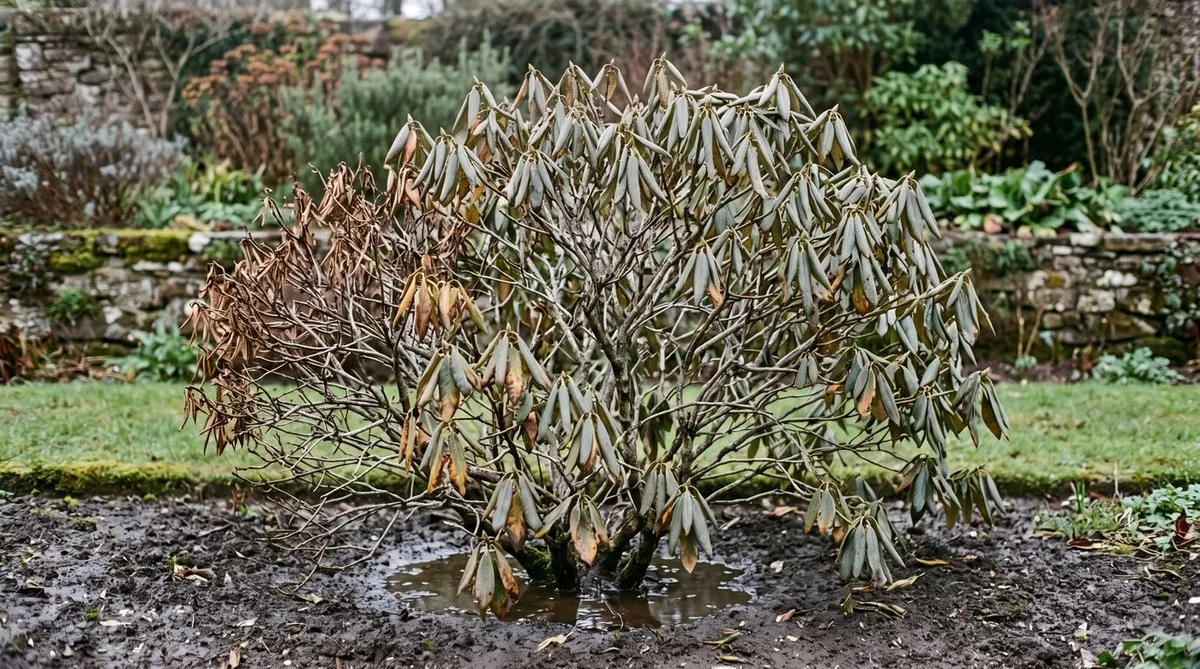
Standing water round the base in winter is bad news for ceanothus. Roots that sit wet for weeks soon rot.
Frost and cold-wind scorch on evergreen types
Evergreen ceanothus are the most at risk. They keep their leaves all winter, and cold, drying wind pulls water out faster than frozen roots can replace it. Leaves brown from the edges and go papery, worst on the side facing the wind.
Frost blackens soft shoot tips. A light frost only damages the newest growth. A hard winter can kill whole stems, especially on young plants or those out in the open.
Wait until late spring before cutting anything. Plenty of scorched plants push out new leaves by early summer. Then trim back to the first healthy, leafy growth. In a cold, exposed garden, a sheltered sunny wall helps, or choose a deciduous type such as ‘Gloire de Versailles’.

Frost and wind scorch brown the leaves from the edges in. Give it until late spring before you reach for the secateurs.
Why cutting into old wood kills evergreen ceanothus
Evergreen ceanothus rarely reshoots from bare, leafless stems. Cut back hard into old wood and that section usually stays dead. This is how a well-meant tidy-up leaves a big bare gap, or finishes off a plant.
Trim evergreen types lightly, just after flowering, usually in early to midsummer. Shorten the flowered shoots, always cutting into green growth with leaves on it. Never expose the woody framework.
Deciduous types flower on new growth and are different. Cut last year’s shoots back to a few buds in spring. Our guide on how to prune shrubs explains the difference between the two groups.

A cut like this into bare, leafless wood is the one to avoid on an evergreen ceanothus. Keep your cuts in the leafy growth.
Moving, honey fungus and yellow leaves
Moving an established plant often kills it. Ceanothus hates root disturbance, and a lifted plant tends to wilt and fail within a year. Plant it where it can stay. Our guide to moving a shrub safely helps with shrubs that cope better.
Honey fungus causes wilting and dieback from the base. Look for honey-coloured toadstools at the foot in autumn, white fungal sheets under the bark with a mushroomy smell, and black bootlace-like strands in the soil. There is no cure, so dig out the plant and as much root as you can. See how to deal with honey fungus before you replant.
Yellow leaves with green veins point to chlorosis on shallow chalk. The plant can’t take up enough iron in very limy soil. It weakens the plant rather than killing it outright. Our guide to chlorosis and yellow leaves explains the fixes.
Match the symptom to the cause
Run the bark test first, then use this table.
| What you see | Likely cause | What to do |
|---|---|---|
| Whole branches wilt and brown at once, base up | Wet soil, root rot | Remove, improve drainage, replant |
| Leaves brown from the edges, worst on the windy side | Cold-wind scorch | Wait for regrowth, add shelter |
| Soft tips blackened after a freeze | Frost | Trim to green growth in late spring |
| Dead gap after a hard prune | Cut into old wood | Only trim into leafy growth |
| Wilts within a year of moving | Root disturbance | Avoid moving mature plants |
| Toadstools or black strands at the base | Honey fungus | Dig out plant and roots |
| Yellow leaves, green veins | Chalk chlorosis | Feed with sequestered iron, mulch |
| Slow decline on an old plant | Old age | Take cuttings and replace |
Is your ceanothus just old?
It might be. Ceanothus is a short-lived shrub, and many start to look tired and woody after ten years or so. Fewer flowers, bare lower stems and patchy dieback with no clear cause all point that way.
There is no way to rejuvenate an old evergreen one by hard pruning. Take semi-ripe cuttings in mid to late summer so you have a young plant ready. Our semi-ripe cuttings guide shows how.

This is what you’re aiming for: a sunny, sheltered wall and free-draining soil.
How to stop the next one dying
- Plant in spring, so roots settle before their first winter.
- Pick free-draining soil. On clay, plant on a slight mound or in a raised bed so the base sits above the wet. Don’t dig a deep hole and fill it with grit, as it collects water.
- Give it shelter. A sunny wall or fence suits evergreen types best.
- Water only in the first summer. Established plants rarely need it.
- Prune lightly and only into leafy growth.
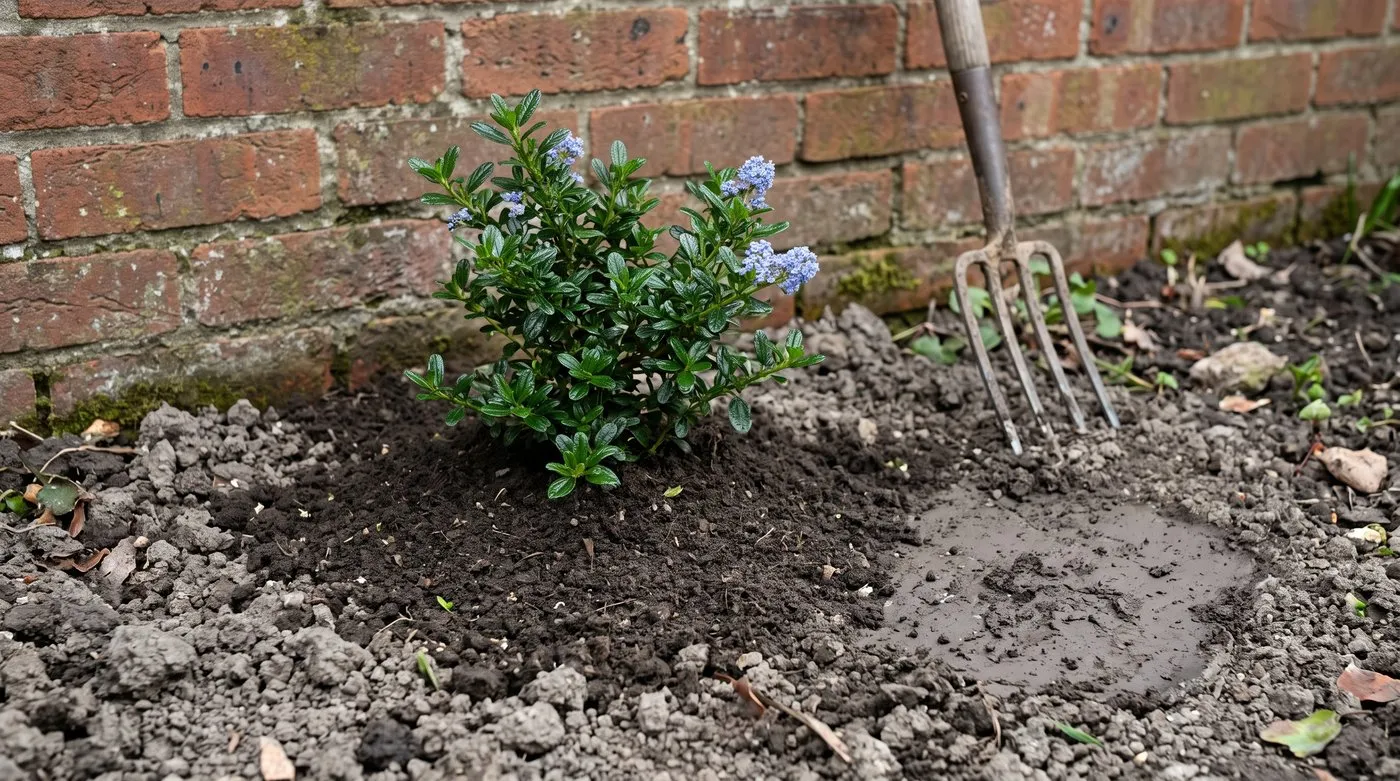
On heavy clay, planting slightly proud on a low mound keeps the base of the plant out of winter wet.
The RHS ceanothus growing guide has more on varieties and pruning.
Common mistakes that kill ceanothus
Planting in a hole on heavy clay. The hole acts like a sump and the roots sit in water. Plant slightly proud of the surrounding soil instead.
Hard pruning an evergreen. Bare old wood rarely regrows. Little and often, straight after flowering, keeps it in shape.
Cutting back frost damage too soon. Wait until late spring to see what reshoots.
Moving a mature plant. It rarely survives. Take cuttings and start again in the new spot.
Choosing an evergreen for a cold, windy plot. A deciduous type or a sheltered wall gives it a much better chance.
Frequently asked questions
Why do ceanothus die so suddenly?
Wet soil and root rot are the usual cause of sudden collapse. Whole branches brown and wilt at once, often after a wet winter on heavy ground. Check the drainage and scratch the bark before deciding anything else.
Can a dying ceanothus be saved?
Sometimes, if only part of the plant is affected. Scratch each branch and cut dead wood back to green, leafy growth. A plant that is brown from the base up has usually lost its roots and won’t recover.
Will ceanothus grow back after cutting into old wood?
No, evergreen ceanothus rarely regrows from bare old wood. A hard cut usually leaves a permanent dead gap. Trim lightly into leafy growth just after flowering. Deciduous types are the exception and are cut back each spring.
Does ceanothus die from frost?
A hard winter can kill evergreen ceanothus, especially young or exposed plants. Leaves brown from the edges and soft tips blacken. Light damage grows out by summer, so wait before cutting back. Deciduous types cope with cold better.
Why are ceanothus leaves turning yellow?
Yellow leaves with green veins usually mean chlorosis on shallow chalk. The plant can’t take up enough iron in very limy soil. Yellowing with wilting is different and points to wet roots.
How long do ceanothus plants live?
Ceanothus is a short-lived shrub, often fading after ten years or so. Cold, wet sites shorten that. Take semi-ripe cuttings in summer so you have a replacement ready.
If a hedge is struggling too, our guide to why a laurel hedge is dying works through the same checks for laurel. Browse more shrub troubles in the problems hub.
Our team produces practical UK gardening guidance from source research, contributor records and established horticultural practice. Editorial standards are overseen by Matt W.