Key takeaways
- Bud drop usually means dry roots in late summer, months before the buds fall
- Yellow leaves with green veins mean the soil or water is too limy
- Brown flowers are frost or rain damage, not disease
- Crispy brown leaf edges come from cold wind or morning sun on frosted leaves
- Black sticky leaves mean sooty mould on scale insect honeydew
- A whole plant wilting points to the roots, such as waterlogging, root rot or vine weevil
A camellia that looks like it’s dying usually isn’t. Most problems come down to water, soil or position, and each one shows up as a clear symptom. Name the symptom, find the cause and you can usually put it right.
This guide works through the common camellia problems one by one. Start with the table, then jump to the section that matches your plant. For growing advice from scratch, see the guide to growing camellias.
Camellia symptoms and what they mean
| Symptom | Likely cause | Quick fix |
|---|---|---|
| Buds drop before opening | Dry roots in late summer | Water weekly July to September |
| Flowers turn brown | Frost or rain | Plant away from early morning sun |
| Yellow leaves, green veins | Limy soil or tap water | Rainwater, sequestered iron, ericaceous mulch |
| Crispy brown leaf edges | Cold wind or sun on frosted leaves | Shelter from wind and early sun |
| Black sticky leaves | Scale insects and sooty mould | Deal with the scale |
| Whole plant wilting | Waterlogging, root rot or vine weevil | Check the roots |
Why are my camellia buds dropping?
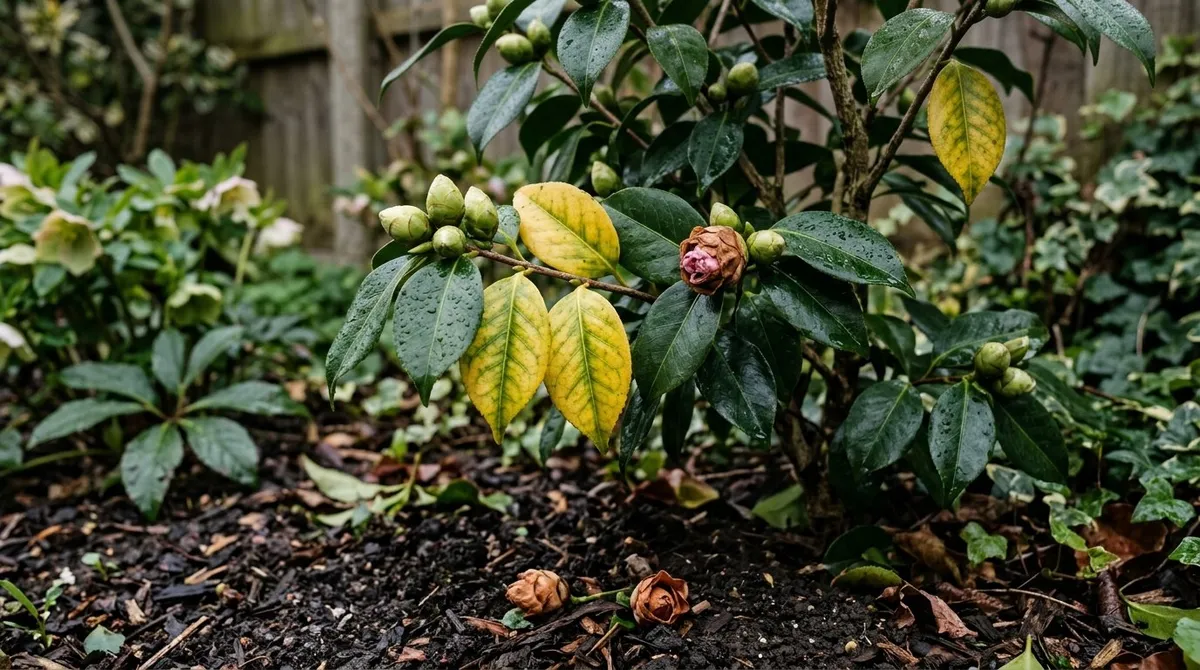
Bud drop is the most common camellia complaint. The buds swell, turn brown and fall over winter, before they open. It looks alarming, but the plant itself is usually fine.
The cause happens months earlier. Camellias form next year’s flower buds from July to September. If the roots dry out then, the buds form but can’t hold on. A dry August often shows up as bud drop the following winter.
The fix is late summer watering. Give the roots a good soak once a week in dry spells from July to September. Rainwater is best. Mulch with ericaceous compost or bark to hold in moisture.
Camellias in pots drop buds far more often than those in the ground. A pot can dry out in a day in hot weather, so check it often and water before it gets dry. Very hard frosts can also make buds drop.
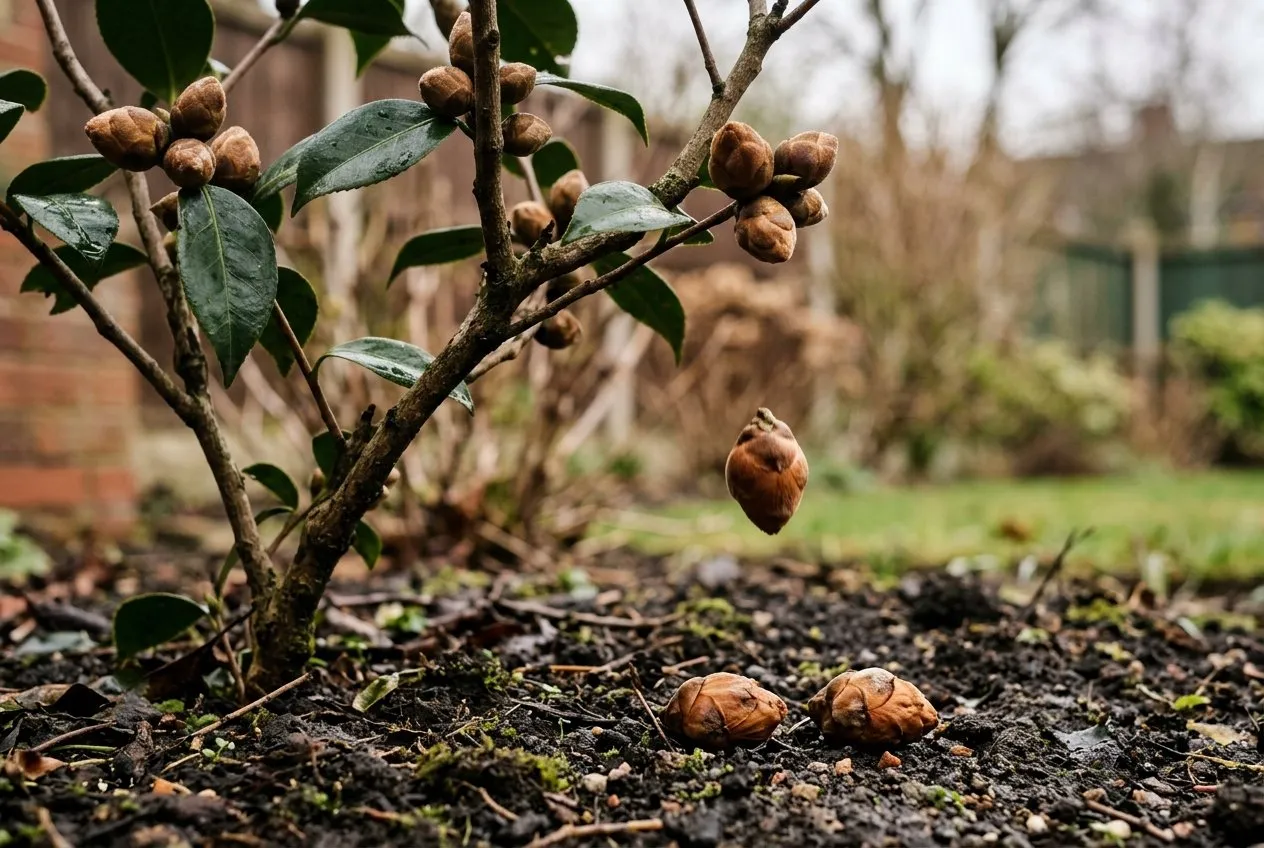
Brown buds dropping in late winter usually trace back to a dry spell the summer before, when the buds were forming.
Why are my camellia flowers turning brown?
Brown flowers are almost always weather damage, not disease.
Frost browns open flowers overnight. The damage is worse when early morning sun thaws the frozen petals fast. Early-flowering camellias get caught most, as frosts are still common in February and March.
Heavy rain can brown and rot flowers too, especially pale and white ones. Their petals mark easily and hold water.
The fix is position. Plant camellias where they don’t get the first sun of the day, such as a west- or north-facing spot. Shelter from cold winds helps too. Pick off browned flowers to tidy the plant. Next year’s flowers aren’t affected. The guide to protecting plants from frost has tips on fleece for cold nights.
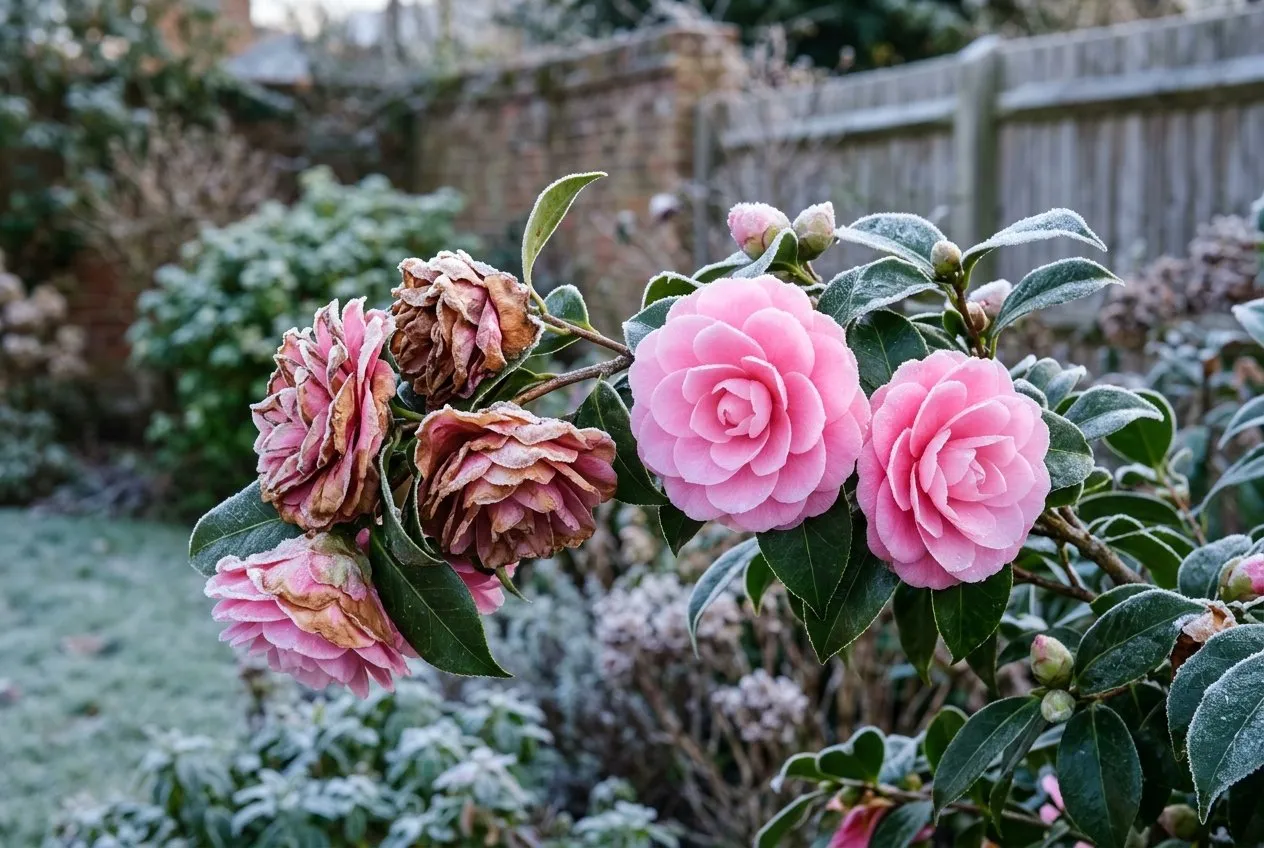
Frost-browned flowers next to healthy ones on the same plant. Out of early sun, flowers thaw slowly and usually escape this damage.
Why are my camellia leaves turning yellow?
Yellow leaves with green veins mean the plant can’t take up iron. This is called lime-induced chlorosis. It happens when the soil is chalky or limy, or when the plant is watered with hard tap water.
Camellias are acid-loving plants. In limy conditions, iron gets locked away in the soil. The leaves yellow while the veins stay green.
To fix it:
- Water with rainwater from a water butt, not hard tap water
- Feed with sequestered iron in spring, following the pack
- Mulch each spring with ericaceous compost
- On chalky soil, grow camellias in large pots of ericaceous compost instead
Plain yellowing of a few older leaves, with no green veins, is often just old leaves dropping naturally. Yellowing all over can mean hungry or waterlogged roots. The guide to making soil more acidic explains how to lower pH in borders.
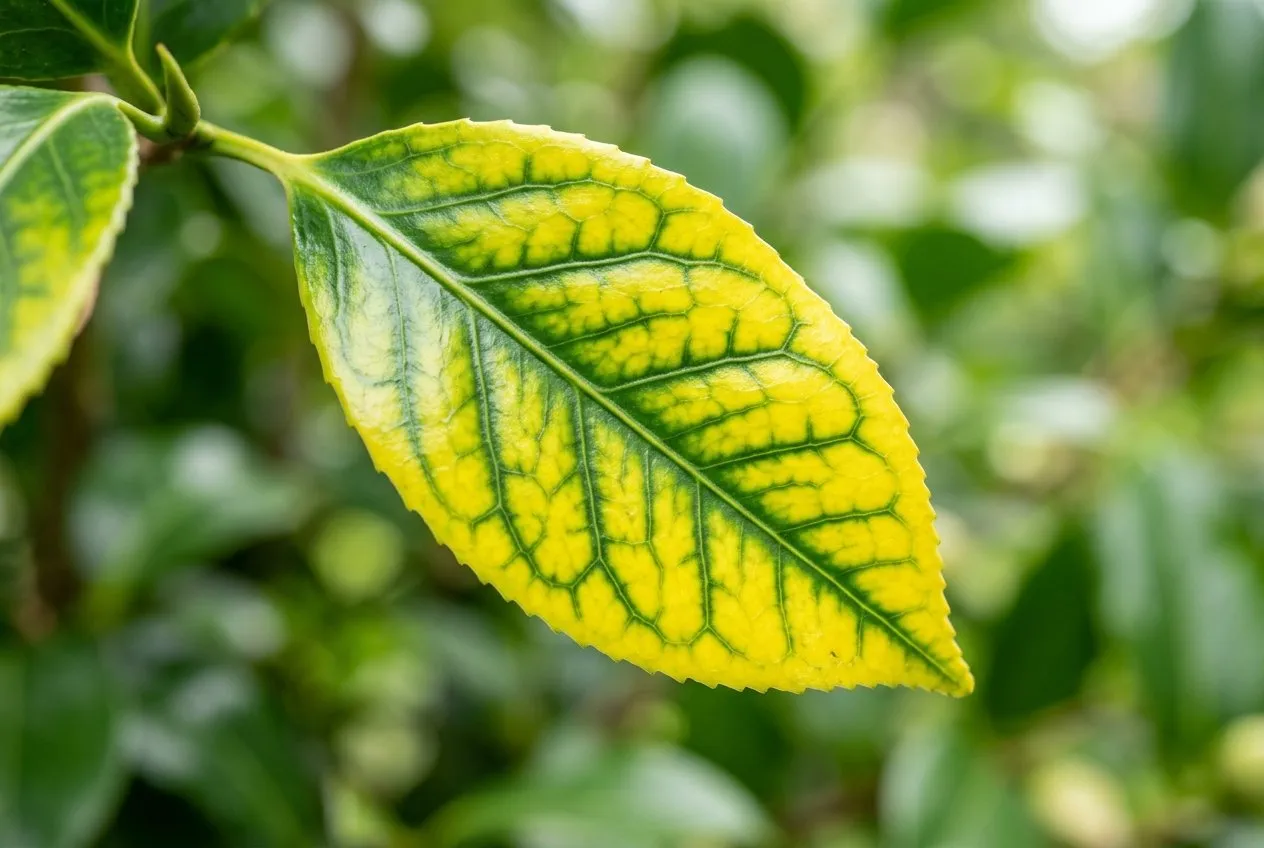
Yellow leaf, green veins: the classic sign of limy soil or hard water. New leaves come through greener once the plant gets rainwater and iron.
Why do camellia leaves go brown at the edges?
Crispy brown leaf edges are leaf scorch. It’s caused by the weather, not a pest or disease.
Cold, drying winds in winter pull water out of the leaves faster than frozen roots can replace it. The edges brown on the windy side of the plant. Early sun on frosted leaves does similar damage, on the side facing the morning sun. Hot, dry summers can also scorch plants in full sun or with dry roots.
The fix is shelter. A wall, fence or hedge that blocks cold wind helps, and so does a spot away from early sun. Scorched leaves won’t turn green again. Trim off the worst in spring, and new growth replaces them.
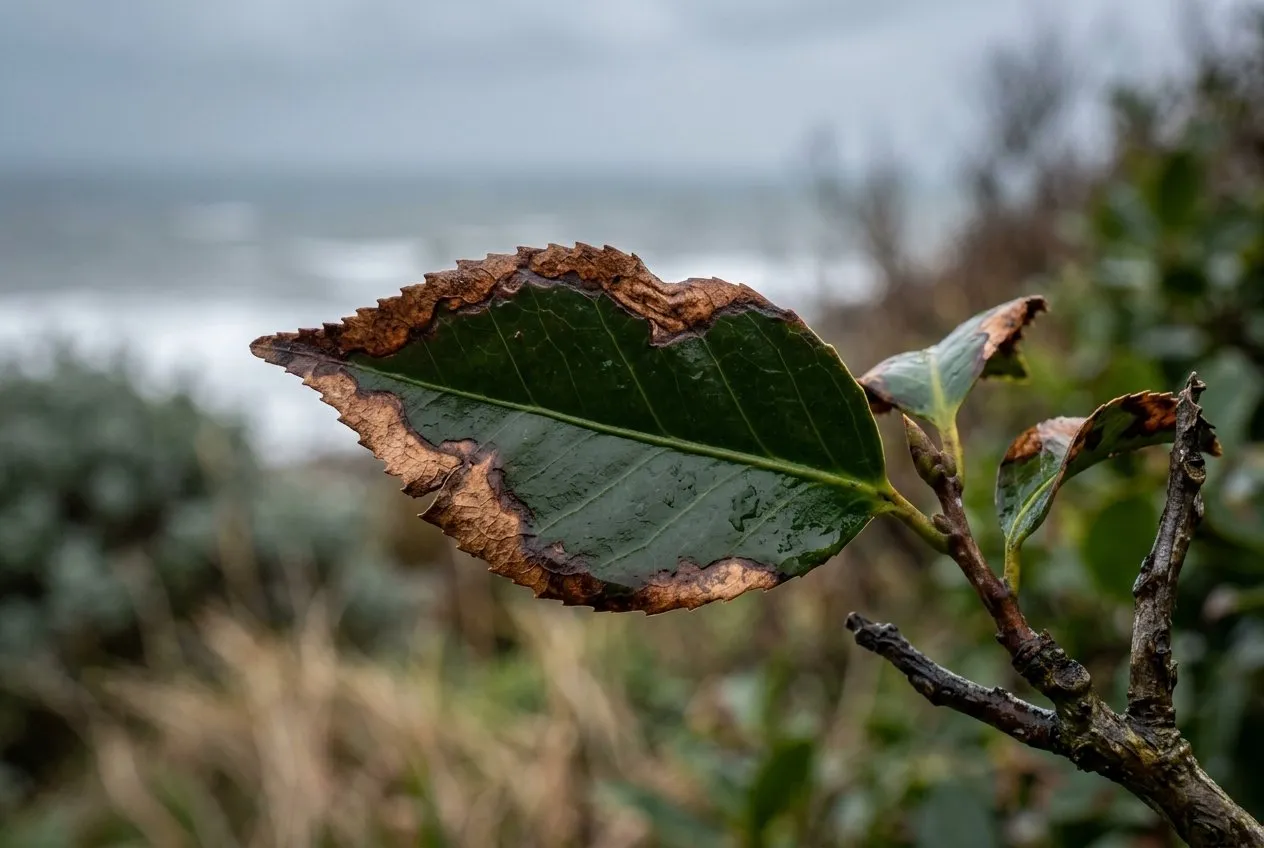
Brown edges on the windward side point to wind scorch. A bit of shelter makes a big difference on exposed sites.
Why are my camellia leaves black and sticky?
Black, sticky leaves mean sooty mould. It’s a harmless black fungus that grows on honeydew, the sugary drips from scale insects feeding above.
Turn the leaves over and check the stems. Scale insects look like small brown or yellowish bumps stuck to the leaf undersides. In early summer, the common camellia scale also leaves white, waxy egg masses under the leaves.
To deal with it:
- Wipe or scrape off scale with a damp cloth or soft brush
- Encourage ladybirds and other predators
- If needed, use an approved insecticide labelled for scale on ornamentals, following the label
Once the scale is gone, rain gradually washes the mould away. The scale insect guide has more detail on timing.
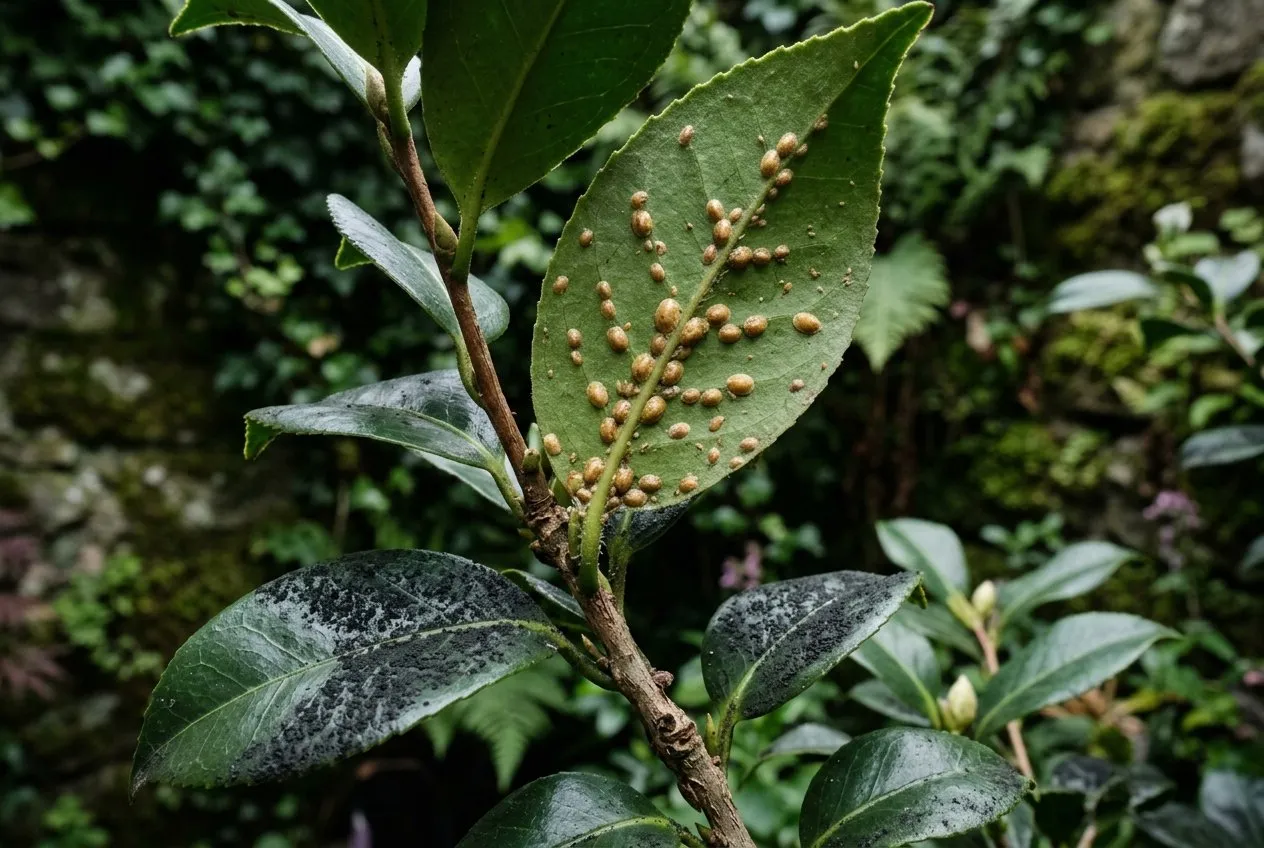
Scale insects under the upper leaf, sooty mould on the leaves below. Deal with the scale and the black film gradually washes off.
Whole camellia wilting or dying? Check the roots
If the whole plant wilts, browns or drops leaves, the problem is likely at the roots.
Waterlogging. Camellias like moist but well-drained soil. In heavy clay or a pot with blocked drainage holes, roots drown and the plant yellows and wilts. Improve drainage or move it to a raised spot or a pot.
Phytophthora root rot. This disease rots roots in wet soil. Roots turn dark and soft, and the plant declines from the base up. There’s no cure. The Phytophthora root rot guide explains what to do.
Vine weevil. In pots, the white C-shaped grubs eat the roots, and the plant can wilt suddenly. Notches in leaf edges show adults have been feeding. The vine weevil guide covers nematodes and other controls.
Planted too deep. Camellias set deeper than they grew in the pot can sulk and decline. Keep the top of the root ball level with the soil.
Common camellia mistakes
Forgetting to water in late summer. That’s when next year’s buds form.
Using hard tap water. Over time it makes the soil too limy. Use rainwater.
Planting in early morning sun. Frosted flowers and leaves thaw too quickly and brown.
Planting in chalky soil. Grow camellias in pots of ericaceous compost instead.
Letting pots sit in water. Raise them on pot feet so they drain freely.
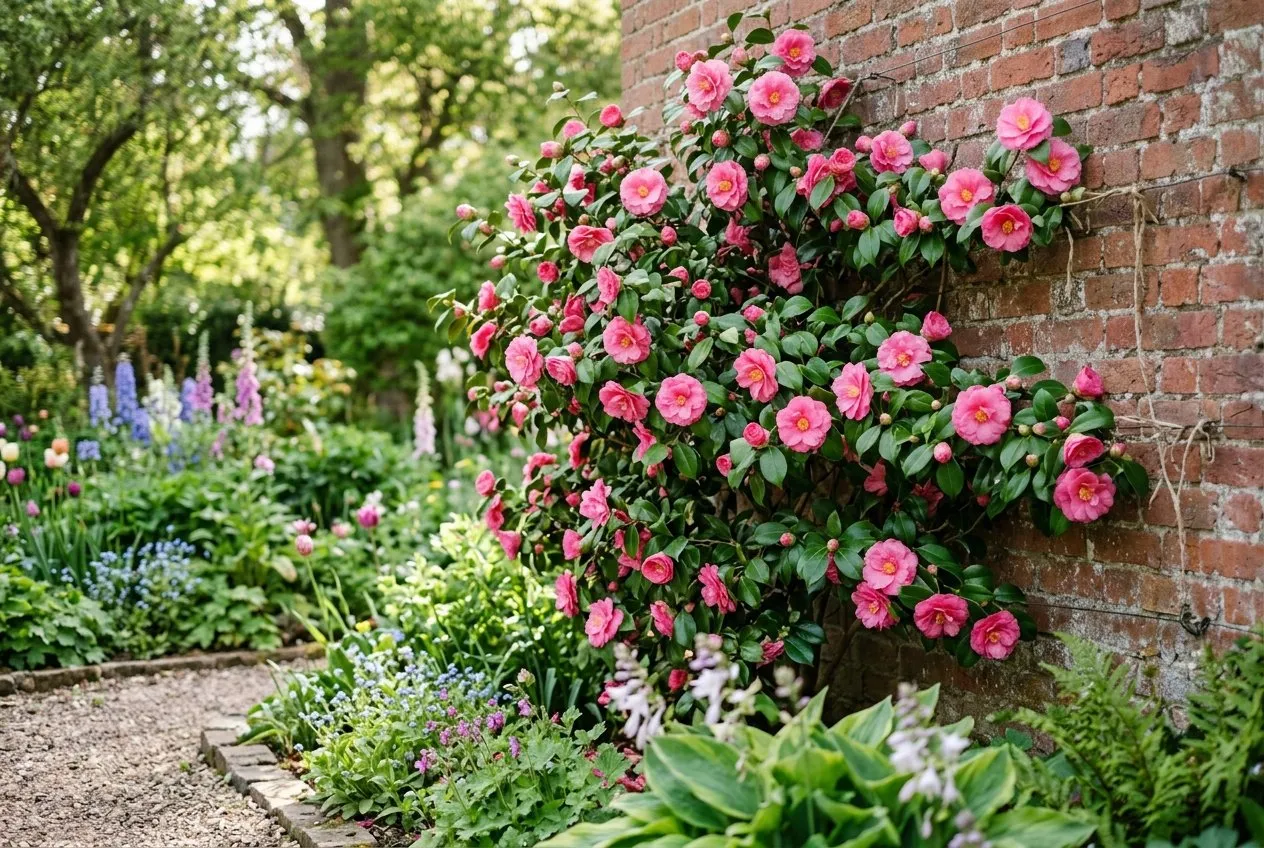
Acid soil, rainwater, late summer watering and a sheltered spot. Get those right and a camellia will give you years of flowers like these.
Frequently asked questions
Why are my camellia buds dropping before they open?
Usually because the roots dried out in late summer. Camellias form next year’s buds in July to September. If the soil dries out then, the buds often drop over winter. Water deeply once a week through late summer, especially plants in pots.
Why has my camellia got yellow leaves with green veins?
The soil or water is too limy for it. Camellias need acid soil to take up iron. Hard tap water and chalky soil lock it away. Water with rainwater, feed with sequestered iron in spring and mulch with ericaceous compost.
Why did my camellia flowers turn brown?
Frost or rain damage, not disease. Frost browns open flowers overnight, especially when early sun thaws them fast. Heavy rain can also brown and rot pale flowers. The plant itself is fine, so just pick off the damaged blooms.
Can a dying camellia be saved?
Usually yes, once you fix the cause. Bud drop, yellow leaves, scorch and scale are all fixable, and the plant recovers over a season or two. Root rot and honey fungus are harder, so check the roots if the whole plant is wilting.
Why are my camellia leaves black and sticky?
Sooty mould growing on scale insect honeydew. Scale insects suck sap and drip sticky honeydew onto the leaves below, and black mould grows on it. Check leaf undersides for small brown bumps or white waxy egg masses.
Why is my camellia in a pot dying?
Usually drought, waterlogging or vine weevil. Pots dry out fast in summer, but also flood if the drainage holes block. Vine weevil grubs eat the roots of potted camellias. Check the compost and roots if the plant wilts suddenly.
Once your camellia is back on track, read what to do with camellias after flowering to set up next year’s display, or browse the problems hub for other shrub troubles.
Our team produces practical UK gardening guidance from source research, contributor records and established horticultural practice. Editorial standards are overseen by Matt W.