Key takeaways
- Pick off faded flowers, especially on japonica types that hold on to them
- Prune lightly straight after flowering, never in summer, autumn or winter
- Feed with an ericaceous fertiliser and mulch with bark or leaf mould
- Water steadily from June to August, when next year's flower buds form
- Dry roots in summer are the usual cause of bud drop the next spring
After a camellia flowers, deadhead it, prune lightly if needed, then feed and mulch. Most important of all, keep it watered through summer. That’s when next year’s flower buds form, so the care you give now decides how well it flowers next spring.
Camellias flower from late winter into spring, roughly February to May in UK gardens. This guide takes you through the aftercare jobs in order. For choosing and planting camellias, see the main guide to growing camellias.
Deadhead the faded flowers
Deadheading means picking off faded flowers. Whether you need to depends on the type.
Many Camellia japonica varieties hold on to their dead brown flowers, which look untidy. Camellia × williamsii types drop their old flowers cleanly, so they need little help.
Deadheading also helps prevent camellia petal blight, a fungus that turns flowers brown and lingers in fallen petals. Pick off spent flowers and clear fallen ones from under the plant. Put them in the bin rather than on the compost heap. Just twist or pinch off each faded flower.

Twist off the brown, faded flowers. Clearing fallen petals too helps keep petal blight away.
When and how to prune camellias
Camellias need little pruning. If you do prune, do it straight after flowering and at no other time. Next year’s flower buds start forming in early summer. Prune later and you cut them off.
Most camellias only need light work:
- Cut out any dead, damaged or crossing branches.
- Shorten the odd straggly shoot to keep a balanced shape.
- Cut just above a leaf or bud.
A camellia that has grown too big or bare at the base can be cut back hard after flowering. It usually sprouts again from old wood, but it may not flower for a year or two. The guide to pruning shrubs covers the basic cuts.

Keep pruning light and do it as soon as flowering ends. Cut just above a leaf.
Feed and mulch after flowering
Camellias are acid-loving plants. Feed them with an ericaceous fertiliser, made for lime-hating plants, not a general feed. Feed as flowering finishes and follow the pack for how often. Stop feeding by midsummer, so you don’t push soft growth late in the year.
Then mulch around the plant with composted bark, pine needles or leaf mould. Keep the mulch just clear of the stems. It keeps the shallow roots cool and moist through summer.

A layer of bark or leaf mould keeps the shallow roots cool and moist through summer.
Water through summer for next year’s flowers
This is the most important camellia job, and the one most often missed. Camellias form their flower buds from June to August. If the roots dry out then, the plant often drops those buds the next spring. People blame the cold March weather, but the real cause was a dry summer.
Water deeply once or twice a week in dry spells rather than a little every day. Take extra care with camellias in pots, against walls or under the eaves, where rain rarely reaches. Keep watering into autumn if the weather stays dry, as the buds are still developing.
Use rainwater where you can, especially if you live in a hard water area. Hard tap water can slowly make the soil less acidic. The guide to installing a water butt shows how to collect it.
Warning: Don’t rely on rain for camellias in pots or against a house wall. These spots stay dry even in wet weather, and a dry spell in July can cost you next spring’s flowers.
Why are my camellia leaves turning yellow?
Yellow leaves with green veins usually mean lime-induced chlorosis. The plant can’t take up iron because the soil is too alkaline, often from chalky soil or hard tap water.
Water with rainwater, mulch with acidic material and give a sequestered iron feed. New leaves should come through green. If the whole plant is struggling, the guide to why camellias die helps you find the cause.

Yellow leaves with green veins are a sign of too much lime. Rainwater and an iron feed usually sort it out.
Camellia types and their aftercare
| Type | Flowers | Deadheading | Notes |
|---|---|---|---|
| Camellia japonica | Late winter to spring | Often needed | The most popular, with many double forms |
| Camellia × williamsii | Late winter to spring | Little, drops flowers cleanly | Tough and free-flowering |
| Camellia sasanqua | Autumn to early winter | Little | Prune in spring, after flowering |
All types follow the same core routine: deadhead if needed, prune only after flowering, feed with ericaceous fertiliser and water through summer.
Camellias in pots
Potted camellias dry out much faster than those in the ground. Use an ericaceous compost, such as a loam-based John Innes ericaceous mix. Check the compost often in summer and water before it dries out.
Each spring, scrape off the top few centimetres of old compost and replace it with fresh. Move the plant into a slightly bigger pot every two or three years, just after flowering. A potted camellia that suddenly flowers poorly is often just pot-bound and hungry.
Camellias do best in part shade, out of early morning sun. Morning sun on frosted buds and flowers can brown them.
Camellia aftercare calendar
| Month | Job |
|---|---|
| February to April | Flowering. Pick off faded flowers and clear fallen petals |
| March to May | Prune lightly, straight after flowering |
| April to May | Feed with ericaceous fertiliser and mulch |
| June to August | Water deeply in dry spells. Next year’s buds are forming |
| September to October | Keep watering if it stays dry |
| November to January | Shelter pots from hard frost. Buds are fat and ready |
Common camellia aftercare mistakes
- Pruning at the wrong time. Pruning in summer, autumn or winter removes next year’s buds.
- Letting the roots dry out in summer. This is the main cause of bud drop.
- Using a general or lime-rich feed. Camellias need ericaceous feed.
- Watering with hard tap water every time. Over time it can cause yellow leaves. Use rainwater where possible.
- Leaving fallen petals. They can carry petal blight. Clear and bin them.
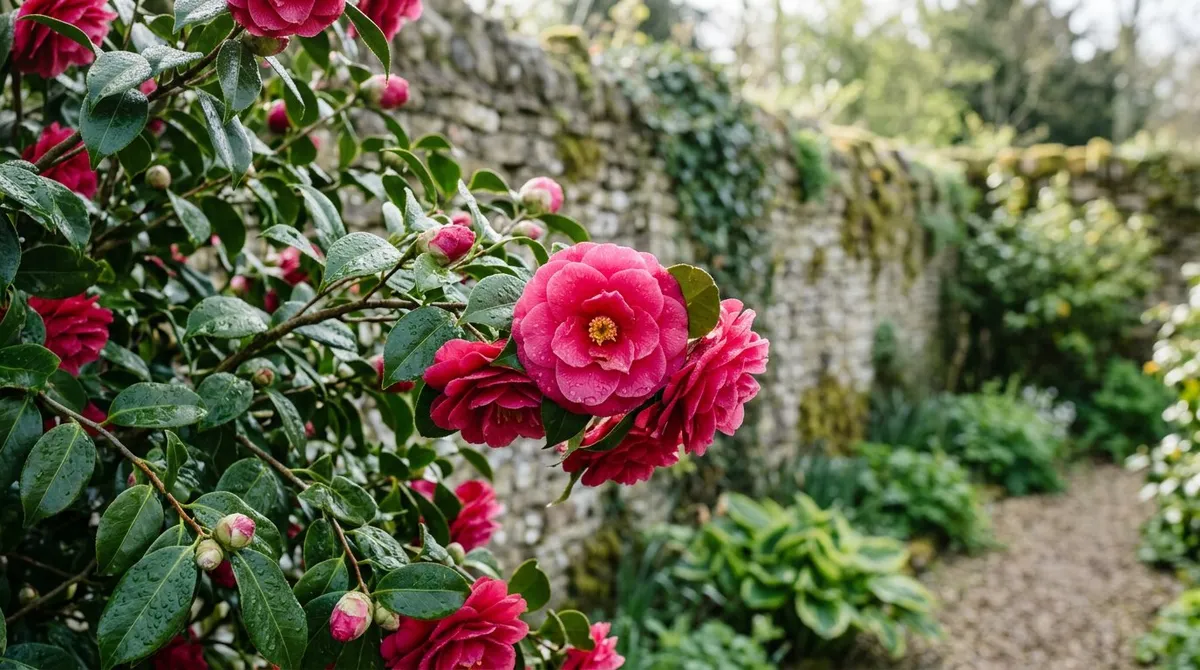
Get the summer watering right and your reward is a camellia covered in flowers next spring.

This is what good summer care gives you: a camellia smothered in flowers with every bud open.
Other spring shrubs need similar care after flowering, and the guide to magnolias after flowering is a good next read. Lilacs are pruned at the same point, as the guide to pruning lilac after flowering explains. For companions that also love acid soil, see growing rhododendrons, or browse more shrubs on the plants hub.
Frequently asked questions
What do you do with camellias after they flower?
Deadhead them, prune lightly if needed, then feed and mulch. Use an ericaceous fertiliser for acid-loving plants. Then keep the plant well watered through summer, because that is when next year’s flower buds form.
Should you deadhead camellias?
Yes, if your camellia holds on to its dead flowers. Many japonica types do. Picking off the brown blooms keeps the plant tidy and helps prevent petal blight. Williamsii types drop their flowers cleanly and need little deadheading.
When should you prune a camellia?
Prune straight after flowering, usually between March and May. Next year’s flower buds form in summer. If you prune later than early summer, you cut those buds off and lose the next spring’s flowers.
Why is my camellia dropping its buds?
Usually because the roots dried out the summer before. Camellias form their buds from June to August and need steady moisture then. A dry spell often makes the buds drop the next spring. Hard frost on the buds can cause it too.
What fertiliser is best for camellias?
Use an ericaceous fertiliser made for acid-loving plants. Feed after flowering and follow the pack for timing and amounts. Avoid lime-rich feeds. A mulch of composted bark or leaf mould keeps the roots cool and moist.
Why are my camellia leaves turning yellow?
Yellow leaves with green veins usually mean the plant can’t take up iron. This happens in chalky soil or with hard tap water. Water with rainwater, mulch with acidic material and use a sequestered iron feed.
Our team produces practical UK gardening guidance from source research, contributor records and established horticultural practice. Editorial standards are overseen by Matt W.