Key takeaways
- Prune lilac in June, as soon as the flowers fade
- Cut each faded flower head back to the next pair of leaves
- Don't prune in autumn or winter, or you cut off next year's flowers
- Revive an old lilac by removing a third of the oldest stems each June for three years
- Pull off suckers on grafted lilacs, but leave them on own-root plants if you like a thicket
Prune lilac in June, as soon as the flowers fade. That’s the one rule that matters. Lilac makes next year’s flower buds on the stems that grow this summer, so a winter tidy or an autumn trim cuts off next spring’s flowers.
Here’s how to deadhead, shape the shrub, revive an old leggy one, and avoid the mistakes that leave a lilac with no flowers.
Why timing matters so much
Lilac sets its flower buds in July and August, on the stems that grew that summer. The buds sit quietly through winter and open the next May. Cut them off and there are no flowers.
So aim to prune within a couple of weeks of the last flowers fading, usually mid-June. Leave it much later than the end of June and you start cutting into next year’s buds.
Lots of other shrubs follow the same prune-after-flowering rule. See our guide to shrubs to prune in summer.
How to deadhead faded flowers
Deadheading is the main yearly job on a healthy lilac. It tidies the shrub and stops it putting energy into seeds.
- Wait until the flowers have turned brown.
- Grab a pair of clean, sharp secateurs.
- Follow the stem down from the faded flower to the first pair of healthy leaves.
- Cut just above that pair of leaves.
- Repeat on every faded flower head.
Don’t cut further down into older wood. The buds just above those top leaves are next year’s flowers. The clippings can go straight on the compost heap.
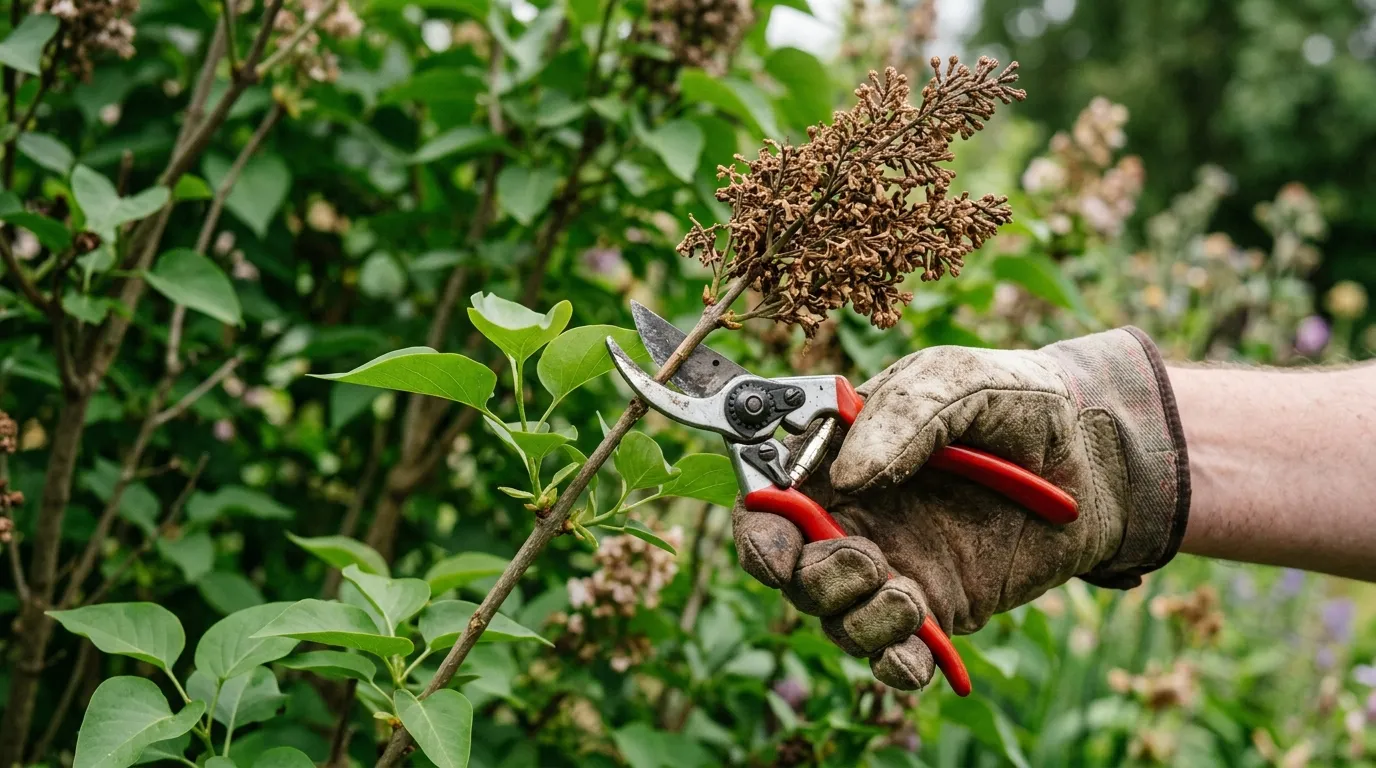 Cut just above the next pair of healthy leaves. The buds there will carry next year’s flowers.
Light shaping at the same time
While you’re deadheading, do any light shaping. Keep it gentle:
- Crossing stems: Take out one of any two stems that rub together.
- Dead or damaged wood: Cut back to healthy, live wood.
- Wayward stems: Shorten stems poking into a path back to a side branch facing a better way.
Resist trimming every stem. Each cut is one less flower next May. Once it has a nice shape, lilac is happiest left alone.
Reviving an old, leggy lilac
An old lilac that’s been left for years often ends up with bare lower stems and flowers only at the very top. Luckily, you can bring it back.
Spread the work over three Junes:
- Year one: Pick out a third of the main stems, choosing the oldest and thickest. Cut them down to about 10cm above the ground with a pruning saw or loppers. New shoots soon appear from the base.
- Year two: Cut the next third of old stems down in the same way.
- Year three: Cut the last third of old stems down.
- After that: Go back to simple deadheading each June.
Why not do it all at once? Leaving some of the old shrub in place keeps it growing strongly while the new shoots get going, and you still get some flowers each year. For more on the cuts themselves, see our guide to pruning shrubs.
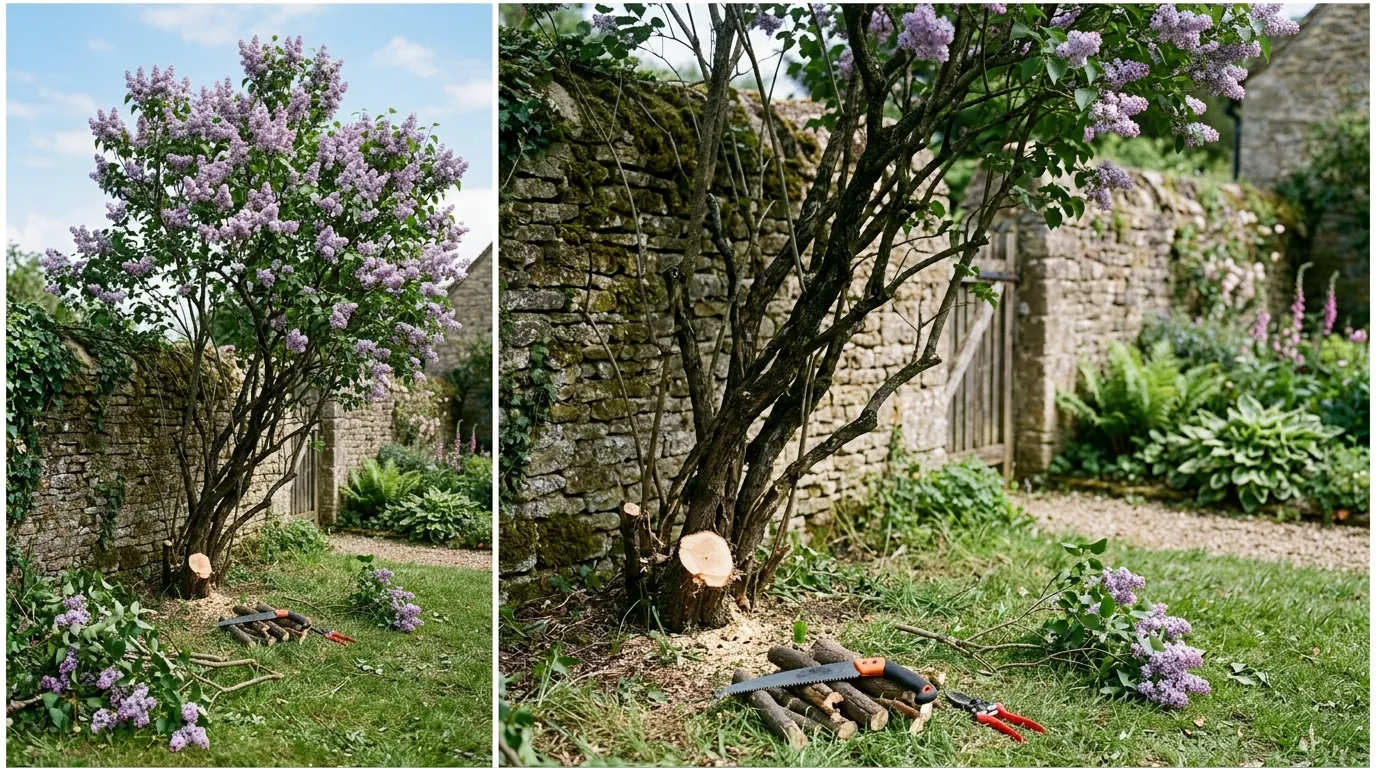 Year one of reviving an old lilac. The oldest stems come down to near the ground and fresh shoots follow.
Dealing with suckers
Suckers are new stems that pop up from the roots, sometimes a little way from the shrub. What to do depends on how your lilac was grown.
- Grafted lilacs (most named varieties from garden centres): Suckers from below the graft come from the rootstock, not your chosen variety. Left alone, they can crowd it out. Remove them in June, cutting or pulling them off as close to the root as you can.
- Own-root lilacs (many older garden plants): Suckers are the same plant. Leave them if you like a bushy thicket, or remove them for a tidier shrub.
Not sure which you have? A swollen knot at the base near soil level usually means it’s grafted. A smooth stem running into the ground suggests it’s on its own roots. Our shrub pruning guide covers suckers on other shrubs too.
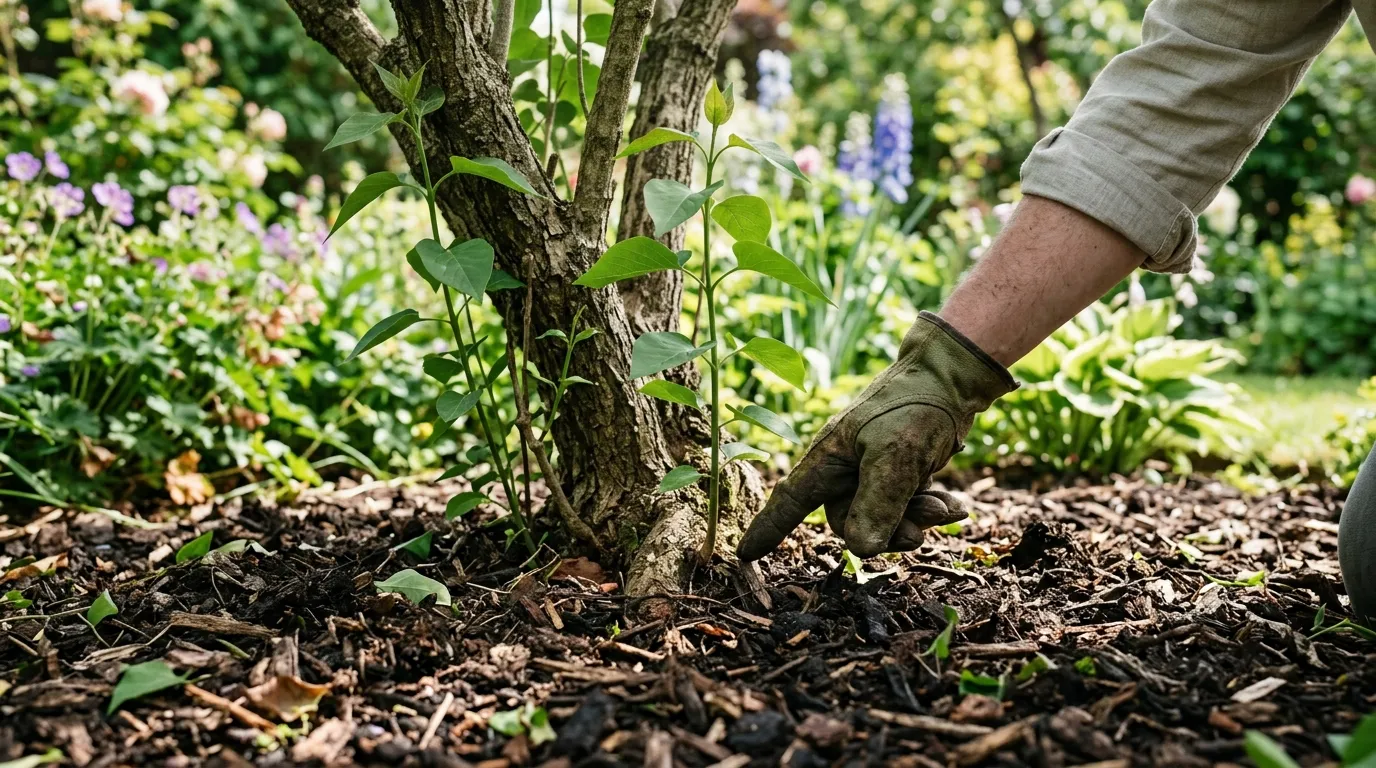 Suckers at the base of a lilac. Young, soft ones are easy to pull away with a gloved hand.
The big mistake: pruning in autumn or winter
By September, next year’s flower buds are already sitting at the stem tips. A winter prune simply snips them off.
If you’ve inherited a lilac that has been pruned every winter, here’s the fix:
- Stop pruning for a whole year. Let it flower if it can and grow freely over summer.
- The next June, deadhead and shape lightly, nothing more.
- Within two or three years it should be flowering well again.
Hydrangeas trip people up in a similar way. See how to prune hydrangeas in the UK.
Lovely lilacs for UK gardens
| Variety | Flower colour | Size | Good for |
|---|---|---|---|
| Madame Lemoine | White, double | Large | Bigger gardens |
| Charles Joly | Deep magenta, double | Large | Bold colour |
| Sensation | Purple edged with white | Medium | A real eye-catcher |
| Beauty of Moscow | Pink buds opening white | Medium | Cottage gardens |
| Katherine Havemeyer | Lavender-purple, double | Large | Strong scent |
| Palibin (S. meyeri) | Pale lilac | Small | Small gardens and pots |
| Superba (S. x persica) | Pink-lilac | Small to medium | Mixed borders |
| Esther Staley | Pink | Medium | Later flowers in June |
| Charisma | Pink | Medium | Colder northern gardens |
Short on space? Palibin stays small and is happy in a big pot. Madame Lemoine is a classic white, and Beauty of Moscow gives a pretty two-tone look.
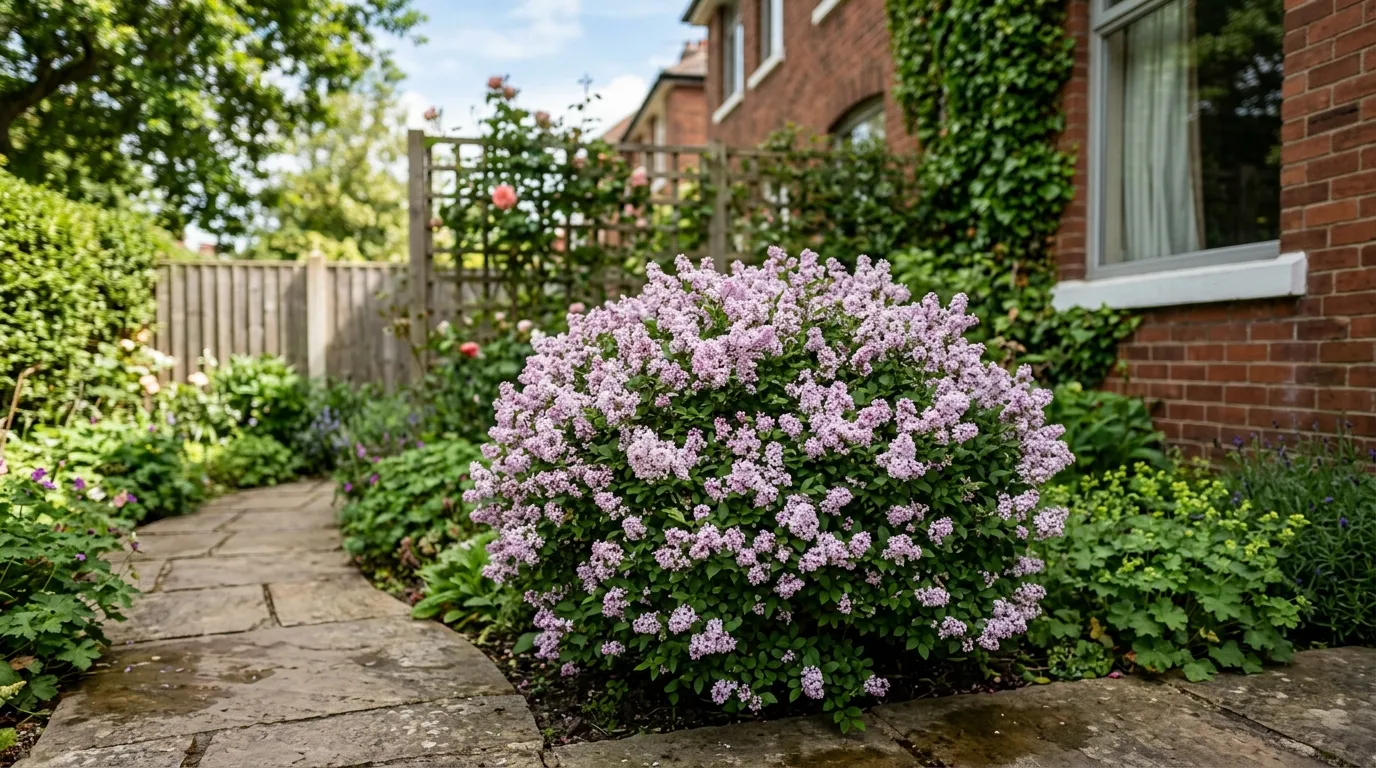
Lilac through the year
| Month | What to do |
|---|---|
| January to February | Leave it alone. No pruning. |
| March | Spread a layer of well-rotted manure around the base. |
| April to May | Buds open and it flowers. Enjoy it. |
| June | Deadhead, shape lightly, take out old stems on tired shrubs, remove suckers. Aim to finish by the end of the month. |
| July to August | No pruning. Next year’s buds are forming. Water well in dry spells. |
| September to December | No pruning. Mulch around the base in autumn and check for storm damage. |
Common mistakes to avoid
- Pruning in autumn or winter. You cut off next year’s flowers. Prune in June only.
- Cutting the whole shrub down at once. Spread big cuts over three years.
- Deadheading too deep. Cut just above the next pair of leaves, not halfway down the stem.
- Leaving suckers on grafted plants. They can crowd out the variety you bought.
- Too much rich feed. High-nitrogen feeds give lots of leaves and fewer flowers. Well-rotted manure is plenty.
- Too much shade. Lilac flowers best in a sunny spot. In shade it grows tall and thin with few flowers.
The RHS lilac growing guide also suggests removing old wood bit by bit after flowering rather than cutting the whole shrub down.
Frequently asked questions
When should I prune lilac in the UK?
Prune lilac in June, as soon as the flowers fade. Lilac flowers on stems that grew the summer before. Pruning in autumn or winter cuts off the buds for next spring. Try to finish by the end of June.
How do you deadhead lilac after flowering?
Snip each faded flower head back to the next pair of healthy leaves. Use clean, sharp secateurs. The buds just above those leaves grow into next year’s flowering shoots.
Can you cut lilac back hard?
Yes, but it’s kinder to spread it over three years. Each June, cut a third of the oldest stems down near the ground. After three years you have a fresh, bushy shrub. Cutting the whole thing down at once can weaken it and costs you flowers for a couple of years.
Why has my lilac stopped flowering?
Usually it has been pruned at the wrong time of year. Autumn or winter pruning removes the flower buds. Prune only in June from now on and it should flower again within a couple of seasons. Too much shade or soggy soil can also stop it flowering.
Should I remove lilac suckers?
Yes on grafted lilacs, as the suckers come from the rootstock. On a lilac growing on its own roots, you can leave them if you want a thicket. Remove suckers as close to the root as you can.
Can you grow lilac in a pot?
Yes, if you choose a small one like Syringa meyeri ‘Palibin’. Use a large pot of John Innes No 3 compost. Common lilac gets too big for a pot long term. Water pots regularly from spring to autumn.
Next steps
Now your lilac is sorted, have a look at our guide to shrubs to prune in summer for other shrubs that follow the same prune-after-flowering rule.
Our team produces practical UK gardening guidance from source research, contributor records and established horticultural practice. Editorial standards are overseen by Matt W.