Key takeaways
- Summer prune wisteria in late July or August
- Cut new whippy shoots back to about six leaves, roughly 15cm
- The short stubs become next year's flower spurs
- Tie in any shoots you need to fill gaps or extend the plant
- Follow up with a winter prune to 2-3 buds in January or February
After flowering, wisteria needs a quick summer trim to set up next year’s flowers. In late July or August, cut the long whippy shoots back to about six leaves. The plant then puts its energy into flower buds instead of yet more leaves. This guide shows you when and how, and how the summer cut pairs with a winter prune.
In short: prune in summer to shape next year’s display, cut to six leaves, and prune again in winter for the best results.
Why summer pruning gives you more flowers
Wisteria flowers on short, stubby spurs along its main stems. Left alone, it throws out masses of long, leafy shoots and sets far fewer flowers.
How it works:
- Long shoots mean lots of leaves and few flowers
- Short stubs turn into flower spurs
- The summer prune turns long shoots into short stubs
- The plant then forms flower buds on those stubs
- The winter prune tidies the stubs up further
A wisteria pruned in summer and winter usually flowers much more than one pruned only once, and far more than one never pruned at all.
Our wisteria growing guide covers planting, support and care all year. For the follow-up cut, see our guide to the winter wisteria prune.
When to summer prune wisteria
Late July to August is the time. It’s a little later as you go north.
| Region | Summer prune window |
|---|---|
| Southern England | Late July to mid August |
| Midlands | Early to mid August |
| Northern England | Mid to late August |
| Scotland | Late August to early September |
Wait until flowering has finished and the plant has put on its big summer flush of long shoots. That’s your cue.
How to do the summer prune
Each whippy shoot gets one simple cut.
Here’s how:
- Find each new whippy shoot growing from the main stems
- Count six leaves up from the base of the shoot
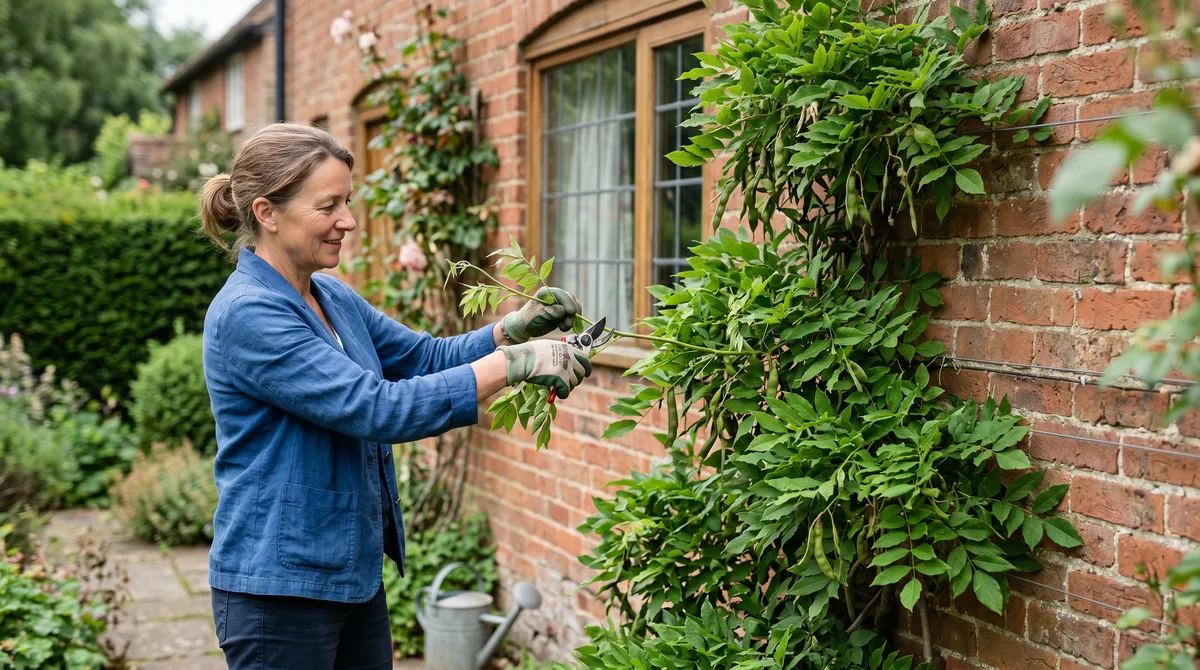
- Cut just above the sixth leaf, roughly 15cm from the main stem
- Pop the trimmings on the compost heap
- Work your way across the whole plant
What you’ll need:
- Sharp bypass secateurs
- A stepladder for high growth
- A long-arm pruner for shoots you can’t reach
- Sturdy gloves
Counting leaves: start from where the new shoot joins the older stem. Each wisteria leaf is a long stalk with lots of small leaflets, so count the whole stalks, not the leaflets. Cut just above the sixth one. That stub becomes a flower spur over autumn and winter.
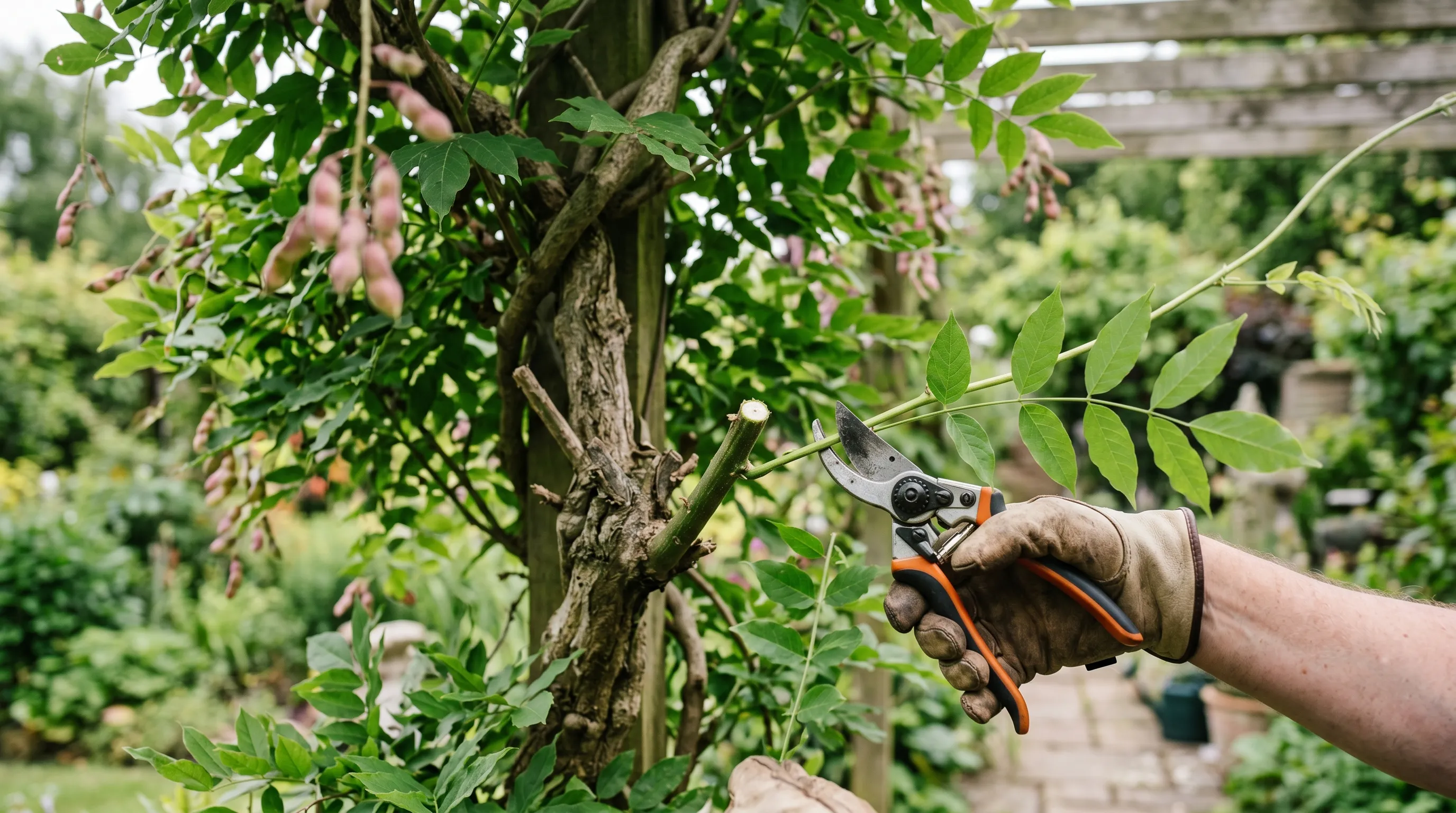 Cut just above the sixth leaf, leaving a stub about 15cm long. That stub will carry next year’s flowers.
Tying in shoots to grow the framework
Not every shoot needs cutting. If you want the wisteria to cover more wall or pergola, tie in a few shoots instead.
Here’s how:
- Look for gaps in the main framework
- Choose a whippy shoot growing the right way
- Tie it to your wires or trellis with soft twine
- Train it as close to horizontal as you can, as sideways stems flower better
- Let it keep growing for the rest of the season
- Trim it lightly in winter
Once a wisteria has filled its space, you’ll only need to tie in the odd shoot. Everything else gets the six-leaf cut.
Looking after wisteria after the summer prune
Water in dry spells. Keep watering through August and September if it’s dry, especially wisteria against a wall, where rain struggles to reach the roots. The plant is busy forming next year’s flower buds.
Feed with potash, not nitrogen. The main feed is in spring. Use a rose feed or a high-potash fertiliser, following the pack. Avoid high-nitrogen feeds, as they give lots of leaves and few flowers. Our fertiliser guide explains the options.
 Sprinkle rose feed around the base, rake it in lightly and water well.
Common wisteria summer pruning mistakes
Pruning too soon. Let flowering finish and the summer shoots grow out first. Late July to August is about right.
Cutting too short. Cut much below six leaves in summer and you may lose spurs. Save the harder cut to 2-3 buds for winter.
Skipping summer altogether. A winter prune on its own helps, but doing both gives the best flowers.
Using a high-nitrogen feed. It gives leaves, not flowers. Stick to rose or potash feed.
Cutting every shoot. Keep a few to tie in if you want the plant to grow bigger.
Our wisteria growing guide covers training from scratch, and our wisteria pruning guide covers the January cut.
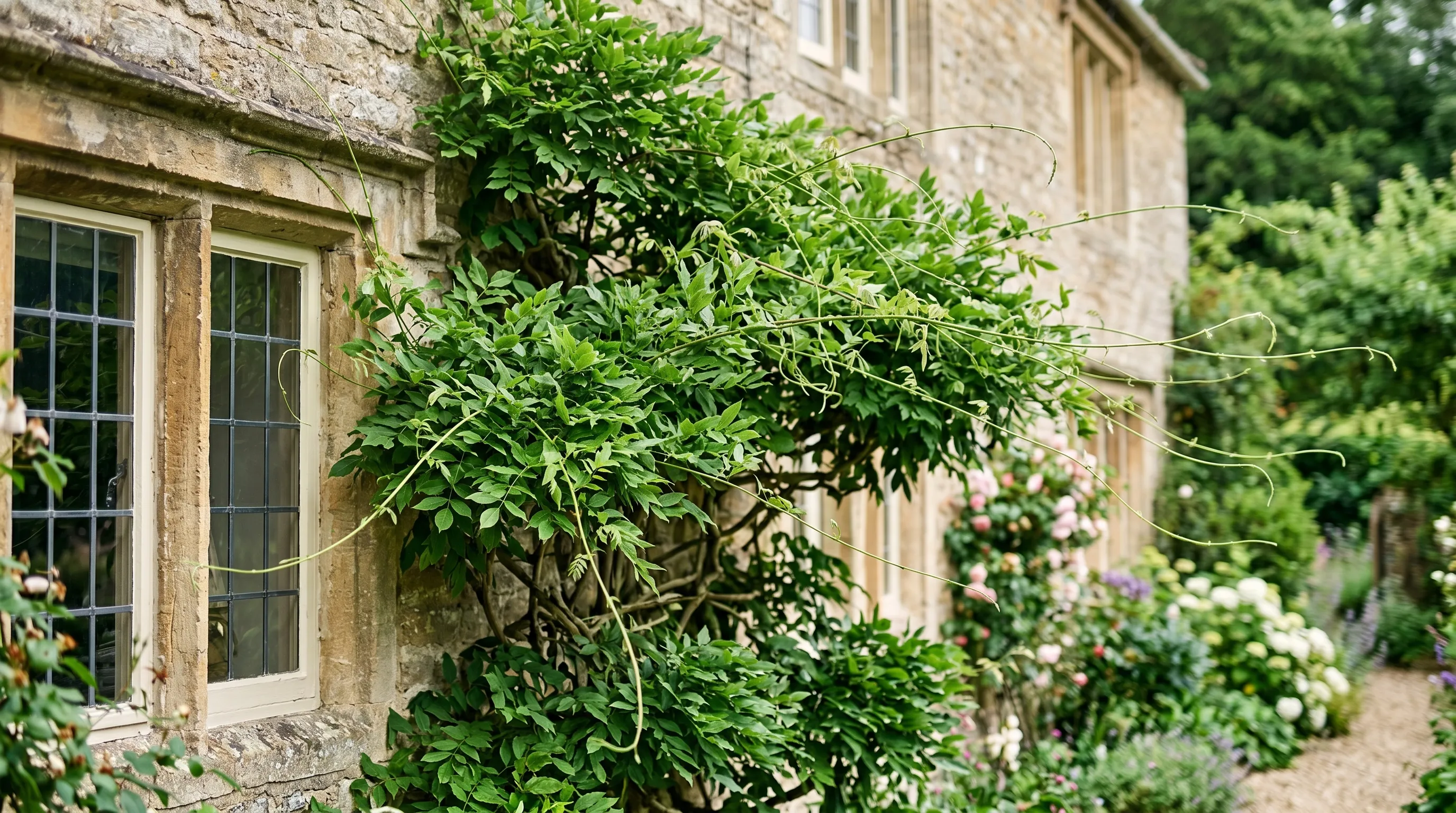 Before: a wisteria in early August, with long whippy shoots going everywhere.
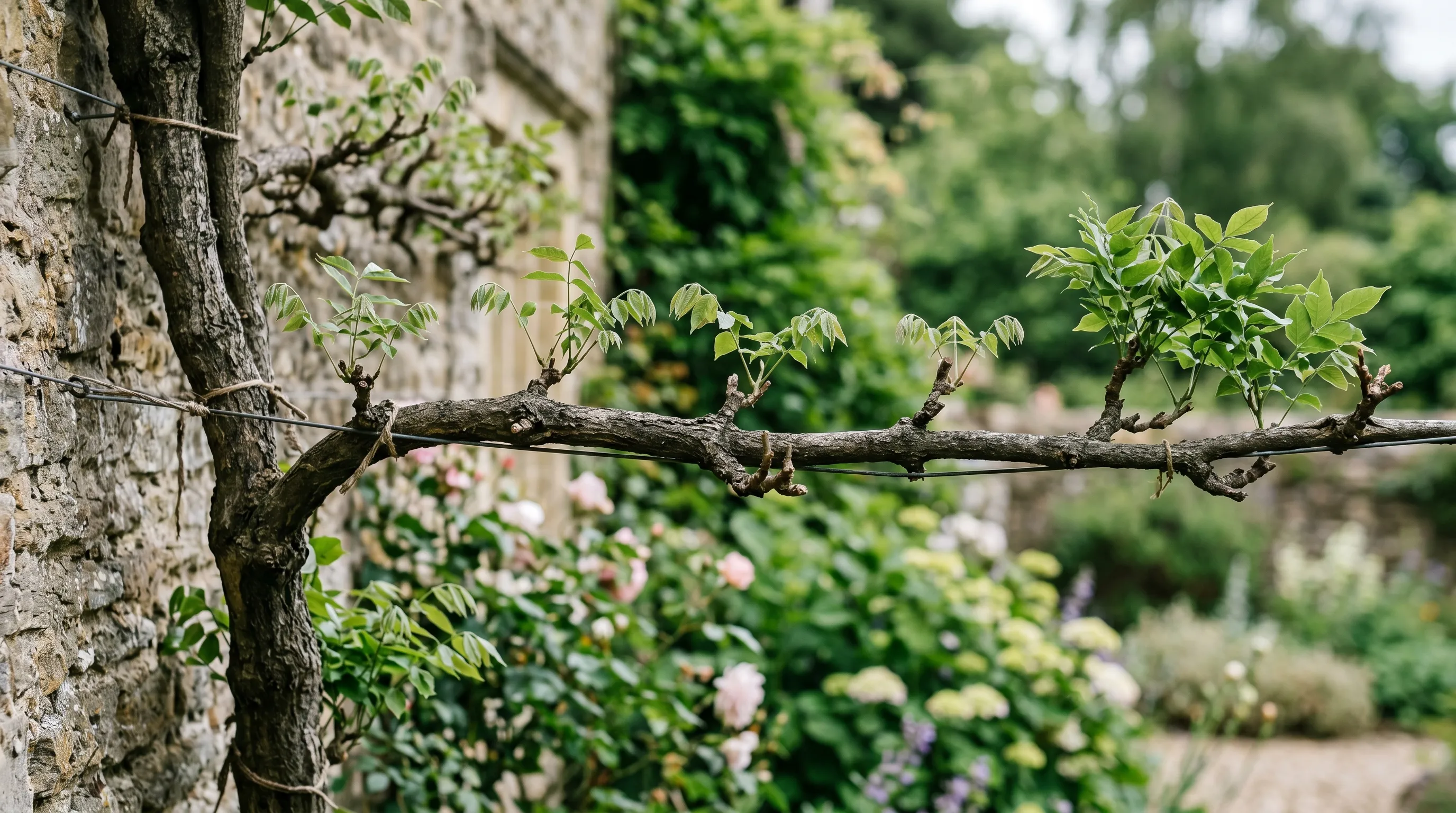 After: neat six-leaf stubs along the framework. These become next year’s flower spurs.
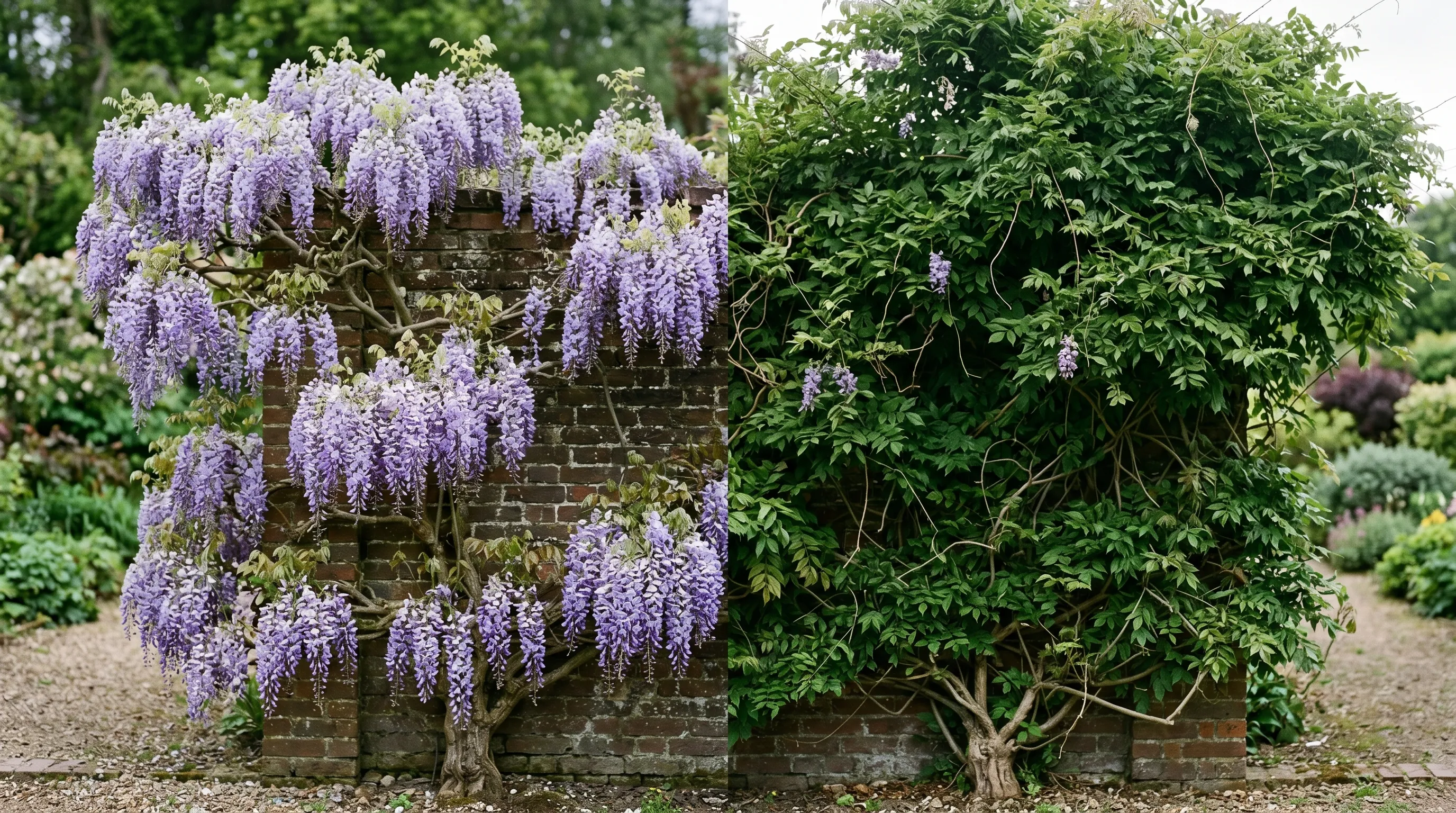
Wisteria calendar month by month
| Month | Wisteria job |
|---|---|
| January | Winter prune, cutting stubs back to 2-3 buds |
| February | Finish the winter prune. Check supports and ties |
| March | Feed with rose or potash feed |
| April | Watch the buds swell |
| May | Flowering time for most varieties |
| June | Snip off faded flowers |
| July | Let the summer shoots grow |
| August | Main summer prune |
| September | Tie in any shoots you’re keeping |
| October | Light tidy |
| November | Leaves drop as the plant goes dormant |
| December | Plan next year’s training |
Frequently asked questions
When should I prune wisteria after flowering?
Late July to August is the time. Cut this year’s long whippy shoots back to about six leaves, roughly 15cm from the main stems. This helps the plant form flower buds for next year. Follow up with a winter prune in January or February.
How do I prune a wisteria in summer?
Cut each long new shoot back to six leaves. Find the whippy shoots growing from the main stems and count six leaves up from the base. Cut just above the sixth with sharp secateurs. The short stub then turns into a flower spur.
Will my wisteria flower if I don’t prune?
Yes, but much less. Left alone, wisteria makes lots of leafy shoots and fewer flowers. Pruned plants usually flower far more. A summer prune plus a winter prune is the way to get the best show.
Should I feed wisteria after flowering?
Feed mainly in spring, with a rose or high-potash feed. Follow the amount on the pack. Avoid high-nitrogen feeds, as they give lush leaves and few flowers. In summer, focus on watering in dry spells.
What is the difference between summer and winter wisteria pruning?
Summer pruning shortens shoots, and winter pruning shortens them again. In July or August, cut new growth back to six leaves. In January or February, cut those same stubs back to 2-3 buds. Both together give the best flowers.
Now plan the rest of your wisteria year
Summer pruning is one of two cuts a year. Our guide to the winter prune covers the January job. Our wisteria growing guide covers planting, training and support. For another summer-flowering favourite, try our hydrangea guide. And for feeding everything else in the garden, see our best fertilisers UK guide.
Our team produces practical UK gardening guidance from source research, contributor records and established horticultural practice. Editorial standards are overseen by Matt W.