
Key takeaways
- No need to deadhead; petals drop on their own and seed pods can stay
- Mulch with 5-7cm of leaf mould or composted bark in spring, kept clear of the trunk
- Next year's flower buds form in summer, so water young trees through dry spells
- Prune deciduous magnolias lightly in July or August, and only if needed
- Most established magnolias need little or no feeding
- Check stems and leaf undersides for scale insects in summer
After flowering, a magnolia needs very little from you. Let the petals fall, mulch the roots, water young trees through dry summers and keep pruning light. That’s it. The key thing to know is that next year’s flower buds form in summer, so how the tree fares in July and August shapes the display you see next spring.
This guide is about the months after flowering for deciduous magnolias, such as Magnolia × soulangeana and Magnolia stellata. Choosing a spot and planting are covered in the separate magnolia growing guide, linked at the end.
Should you deadhead a magnolia?
No. Magnolias don’t need deadheading. The petals drop on their own within a week or two, and the tree comes into leaf behind them.
Cutting off faded flowers just makes lots of small wounds, which can let in disease such as coral spot. If a brown flower hangs on and bothers you, gently twist it off by hand.
Leave the seed pods too. On many magnolias they ripen to knobbly red or pink pods in autumn, with bright seeds that birds enjoy.

Faded flowers like this will drop on their own. There’s no need to cut them off.
Mulching a magnolia after flowering
A spring mulch is the most useful job you can do. It keeps the soil moist through summer and slowly feeds the shallow roots.
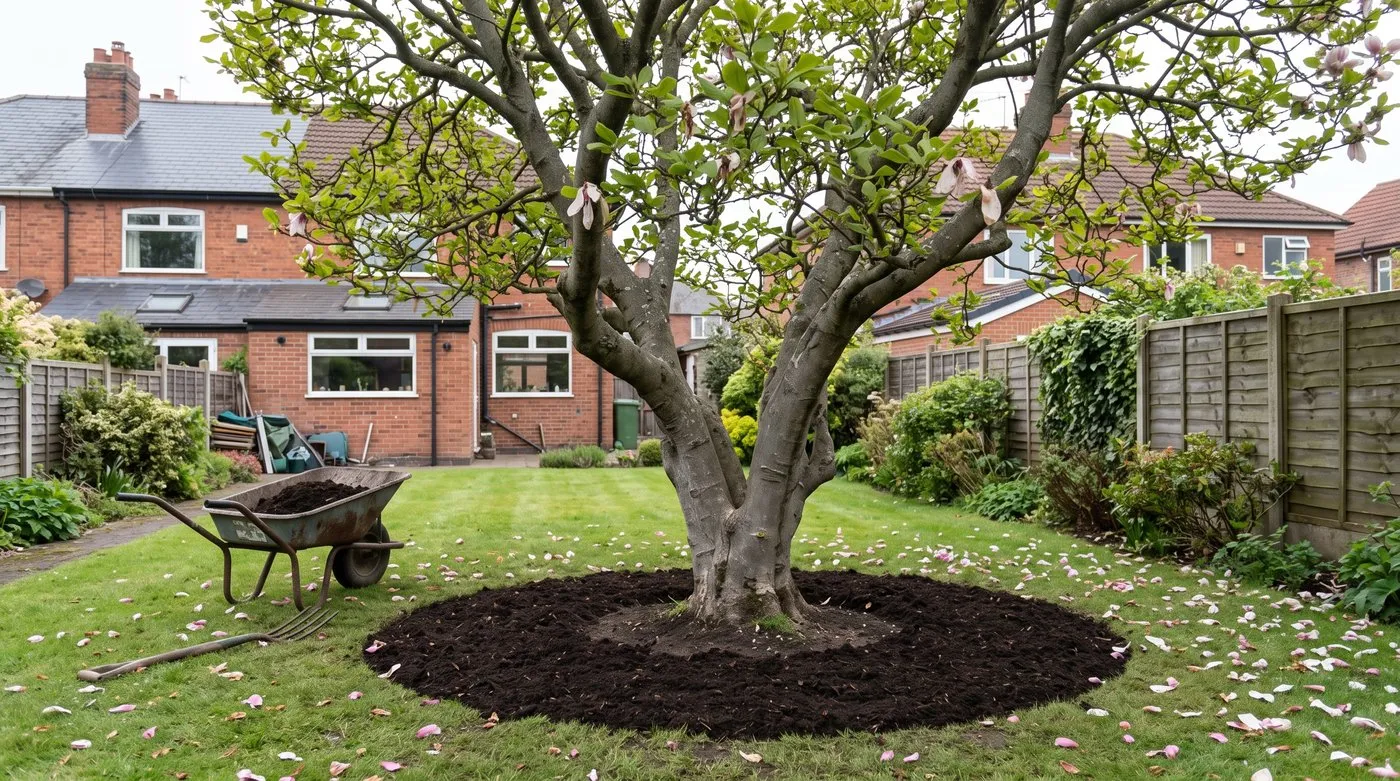
Spread the mulch out under the branches but leave a gap around the trunk, like a doughnut rather than a volcano.
- What: leaf mould or composted bark. Both suit magnolias, which prefer neutral to acid soil. Skip mushroom compost, which is often chalky.
- When: spring, while the soil is still moist after rain.
- How much: 5-7cm deep, spread over the root area out to the edge of the branches.
- Where not: keep it a hand’s width clear of the trunk, so the bark stays dry.
Think doughnut, not volcano. A pile of mulch against the trunk keeps the bark damp and can cause rot. The guide to what mulch is and how to use it explains more, and you can make your own leaf mould from autumn leaves.
Watering a magnolia in summer
Magnolias make next year’s flower buds in summer, roughly from July to August. A tree short of water then may make fewer buds. Magnolia roots are fairly shallow, so they dry out quickly in a hot spell.
- Young trees (the first few years after planting) need a thorough soak every week or so in dry weather.
- Established trees cope better, but benefit from a deep soak during long droughts, especially by a hot wall or fence.
- Water slowly over the whole root area so it soaks in, rather than splashing a little at the base.
A mulch on top helps hold the water in.

A slow, thorough soak in a dry spell helps a young magnolia set plenty of buds for next spring.
Do magnolias need feeding after flowering?
Usually not. An established magnolia with a yearly mulch rarely needs extra feed. Too much nitrogen gives lots of leafy shoots and fewer flowers.
If a tree looks weak or pale, sprinkle a general shrub fertiliser, or one for acid-loving plants, over the root area in spring. Follow the rate on the pack and water it in. Avoid lawn feeds, which are high in nitrogen.
When and how to prune a magnolia
Most magnolias need very little pruning. They grow into a lovely natural shape on their own. If you do need to prune, do it in July or August, when the tree is in full leaf and cuts heal quickly. Pruning in late winter and early spring can make cuts bleed sap.
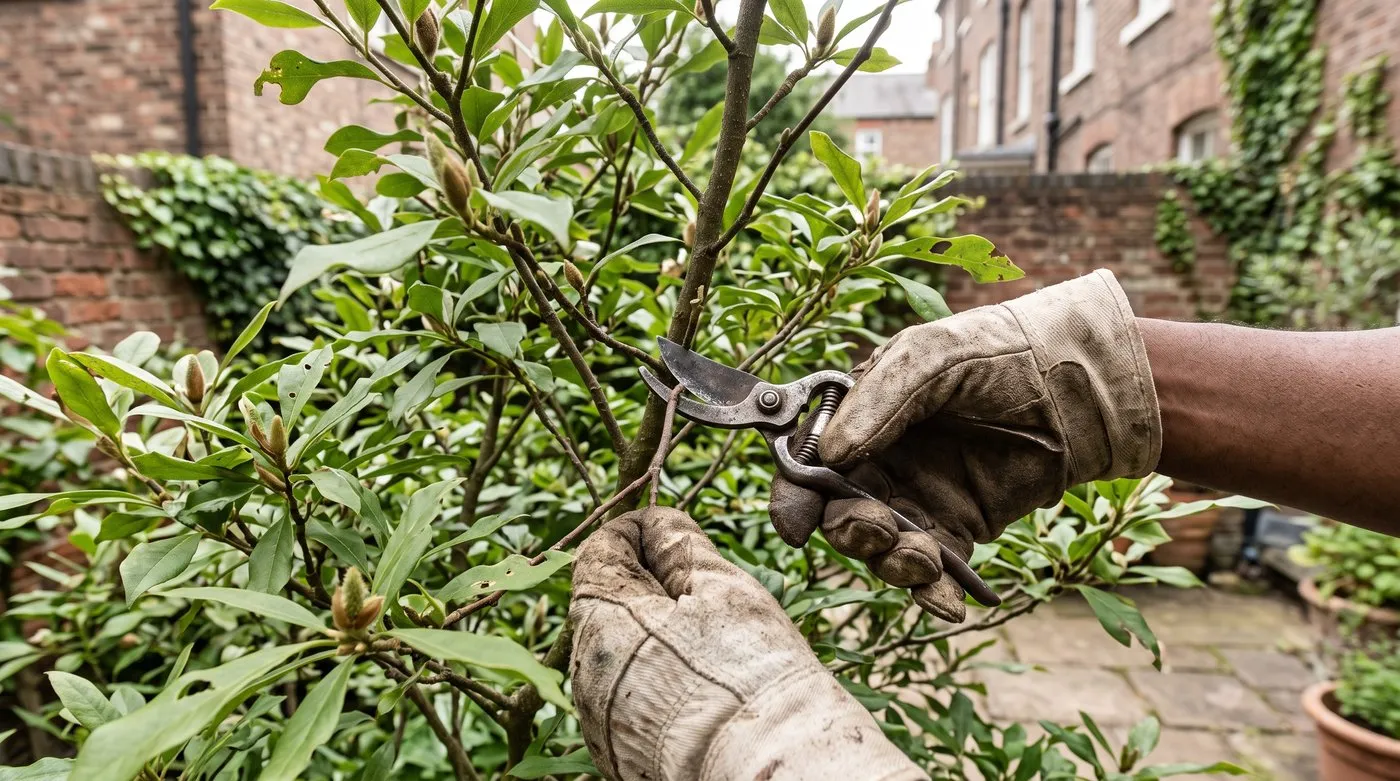
Summer pruning means small, tidy cuts only. Take out crossing or dead twigs and leave the rest alone.
What to remove:
- Dead or damaged twigs
- Branches that cross and rub
- A low branch that gets in the way of a path
How to cut:
- Use clean, sharp secateurs for thin stems and a pruning saw for thicker ones.
- Cut just outside the slight swelling where a branch joins a bigger one. Don’t cut flush.
- Keep cuts small and take off only a little each year. Magnolias don’t respond well to hard pruning.
If a big branch really needs to come off, spread the work over a few summers. July is also a good time for other summer-pruned shrubs, covered in the guide to shrubs to prune in summer. Evergreen Magnolia grandiflora flowers in summer and has a different routine, so check the growing guide before pruning it.
How next year’s magnolia flowers are made
Magnolia flower buds aren’t made in spring. They form the summer before, while the tree looks like it’s just sitting in leaf.
By late summer you’ll see fat, furry, silvery buds at the tips of short shoots. These are next spring’s flowers. They sit tight through winter and open in March, April or May, depending on the type.
So the summer after flowering really matters. Drought, hard pruning or a bad pest attack then can all mean fewer flowers next year.

Those furry buds in late summer are next spring’s flowers, already made and waiting.
Magnolia care after flowering: month by month
| Month | What to do |
|---|---|
| April to May | Flowers fade. Let petals fall. Mulch the root area, clear of the trunk |
| June | Water young trees in dry spells. Check for scale insects |
| July | Flower buds start forming. Keep watering in dry weather. Light pruning if needed |
| August | Buds swell and turn furry. Last chance for light pruning |
| September | Leave seed pods. Ease off watering as the weather cools |
| October to November | Leaves fall. Good time to plant new magnolias |
Common pests and problems on magnolias
Scale insects are the pest you’re most likely to see. They look like small brown or grey bumps on stems and leaf undersides. They suck sap and leave sticky honeydew, which can turn black with sooty mould. Scrape small numbers off with a thumbnail or a soft brush. Ladybirds and tiny parasitic wasps help keep them down, so go easy on sprays. For bad infestations, use an approved product labelled for scale on ornamentals, following the label. The guide to scale insects has more detail.
Coral spot shows as small coral-pink pustules on dead twigs. Cut affected twigs back to healthy wood and bin or burn them. Pruning in summer, when wounds heal fast, helps prevent it.
Frost can brown open flowers on early types like M. stellata. It spoils the show but doesn’t harm the tree.

Brown bumps along the leaf veins are scale insects. Compare with a clean leaf to spot them early.
Common mistakes after a magnolia flowers
- Deadheading. It isn’t needed and makes extra wounds.
- Pruning in spring or winter. Wait until July or August.
- Pruning hard. Magnolias are best left mostly alone. Small cuts only.
- Piling mulch against the trunk. Keep a gap so the bark stays dry.
- Forgetting summer watering. Dry young trees make fewer buds.
Other spring flowerers have their own after-flowering jobs. See the guides to wisteria after flowering, pruning lilac after flowering and what to do with camellias after flowering. You’ll find more shrub and tree guides in the plants section.
Now your magnolia is set up for next spring, read the guide on how to grow magnolia for the best spot, soil and varieties.
Frequently asked questions
Should I deadhead my magnolia after flowering?
No, magnolias don’t need deadheading. The petals drop on their own, and cutting off faded flowers just makes extra wounds. Leave any seed pods to ripen; they look striking in autumn.
When should I prune a magnolia in the UK?
Prune deciduous magnolias lightly in July or August. The tree is in full leaf then and cuts heal quickly. Avoid winter and early spring, when cuts can bleed sap. Most magnolias need very little pruning.
What is the best mulch for a magnolia?
Leaf mould or composted bark, 5-7cm deep. Spread it over the root area in spring while the soil is moist, and keep it a hand’s width away from the trunk.
Why did my magnolia not flower this year?
Often it was too dry the summer before. Flower buds form in summer, so drought can mean fewer flowers next spring. Frost on opening buds, hard pruning and young age are other common causes.
How do I feed a magnolia after flowering?
Most established magnolias need little or no feed. A yearly mulch of leaf mould or bark is usually enough. If growth is weak, sprinkle a general shrub fertiliser over the root area in spring, following the pack.
Should I water my magnolia in summer?
Yes, water young magnolias in dry spells. Give a thorough soak over the whole root area every week or so in drought. Established trees cope better but still benefit from a soak in long dry summers.
What are the brown bumps on my magnolia?
Brown bumps on stems or leaf undersides are usually scale insects. They suck sap and leave sticky honeydew, which can turn black with sooty mould. Scrape off small numbers by hand.
Our team produces practical UK gardening guidance from source research, contributor records and established horticultural practice. Editorial standards are overseen by Matt W.


