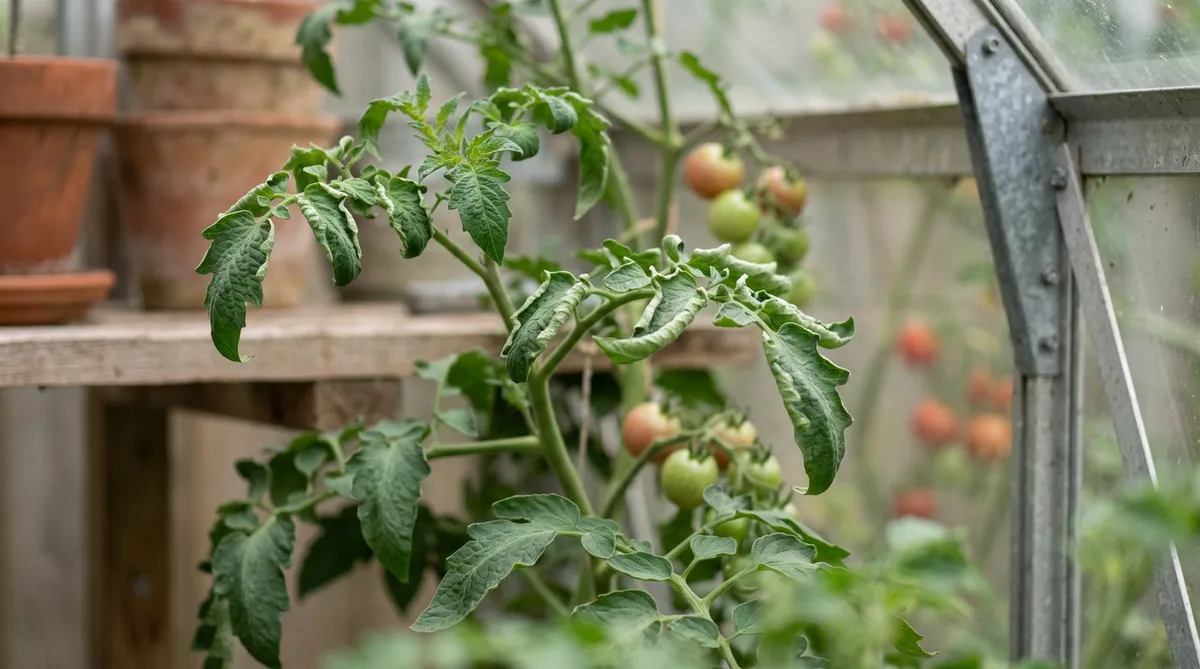
Key takeaways
- Note which leaves yellowed first and whether the veins stayed green
- Yellow new leaves with green veins usually mean iron, locked up by limy soil
- Yellow old leaves with green veins point to magnesium, common on tomatoes
- Even yellowing of older leaves usually means a shortage of nitrogen
- Sequestered iron is a quick fix; rainwater and acid mulch keep acid lovers green
- Soggy soil causes yellow leaves too, so check drainage before feeding
Yellow leaves are a symptom, not a diagnosis. Chlorosis just means leaves have lost their green colour, and four or five different problems can cause it. The good news is that the pattern of yellowing tells you which one you’re dealing with.
Look at two things: which leaves went yellow first, and whether the veins stayed green. Get those right and you can pick the fix that works, rather than guessing with a general feed.

Yellow tissue with sharp green veins on a camellia leaf. On new growth like this, iron is the usual cause.
How to read yellow leaves
Answer these questions in order:
- Are the newest leaves yellow, with green veins? That usually means iron. It’s the most common cause on shrubs.
- Are the oldest leaves yellow, with green veins? That points to magnesium.
- Are the oldest leaves fading evenly, veins and all? That suggests nitrogen.
- Is the soil soggy, or do roots look dark and mushy? Waterlogging or root rot can mimic any of these.
- Are new leaves yellow in patches, with small dead spots? That can be manganese, which behaves much like iron.
Leaf age matters because some nutrients move around the plant and some don’t. Magnesium and nitrogen can be moved, so a short plant raids its old leaves to feed new ones. Iron and manganese stay put, so it’s the new leaves that go short.

Start with which leaves yellowed first, then look at the veins. Two questions get you to the likely cause.
Yellow leaves at a glance
| What you see | Likely cause | Quick fix | Lasting fix |
|---|---|---|---|
| New leaves yellow, veins green | Iron | Sequestered iron | Lower pH, rainwater, acid mulch |
| New leaves patchy yellow, small spots | Manganese | Sequestered feed with trace elements | Lower pH |
| Old leaves yellow, veins green | Magnesium | Epsom salts leaf spray | Balanced feeding, less potash |
| Old leaves yellow all over | Nitrogen | Liquid feed | Compost and a general fertiliser |
| Yellowing with wilting in wet soil | Waterlogging | Stop watering | Improve drainage |
Why iron chlorosis is rarely a lack of iron
Most UK soils hold plenty of iron. The problem is that roots can’t get at it. Two things lock it up.
Limy soil. Above about pH 7, iron turns into forms roots can’t absorb. Acid-loving plants such as rhododendrons, camellias, pieris, azaleas and blueberries suffer most on chalky or limy ground. Our guide to soil pH explains how to test yours.
Waterlogged soil. Roots need air to take up nutrients. In soggy winter soil or compacted clay they stop working, and leaves yellow even on acid ground.
Hard tap water makes things worse over time, because it carries lime that slowly raises the pH. Rainwater suits acid lovers much better.
Warning: Never add lime around acid-loving plants. It raises the pH and makes the yellowing worse.
How to fix each type of chlorosis
Iron
Water sequestered iron (also sold as chelated iron) around the roots, following the pack. It stays available even in limy soil, so new leaves green up within a few weeks. Leaves that are already badly yellow may not fully recover.
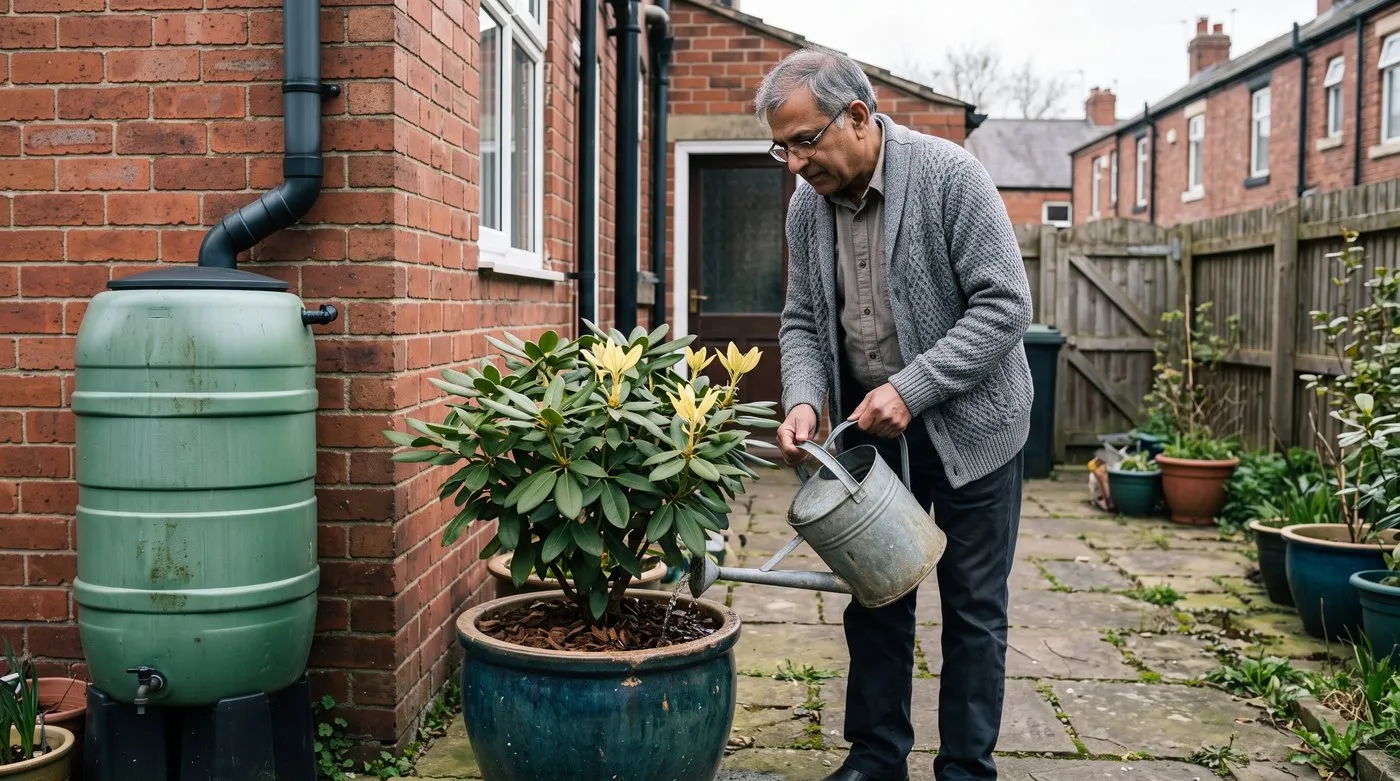
Rainwater from a butt is free of lime, so it helps acid lovers like rhododendrons hold on to their green.
For a lasting fix, keep the soil acidic. Mulch each spring with an ericaceous mulch such as composted bark, and water with rainwater. Sulphur chips lower the pH slowly over months. In pots, use ericaceous compost. Our guide on how to make soil more acidic covers the options. On very chalky soil, growing acid lovers in pots is often easier.
Magnesium
Spray the leaves with Epsom salts (magnesium sulphate) at about 20g per litre of water. It’s common on tomatoes, especially after lots of high-potash feed, because potassium competes with magnesium at the roots. On sandy soils that wash out quickly, a general feed containing magnesium helps. Our guide to calcium, sulphur and magnesium explains more.
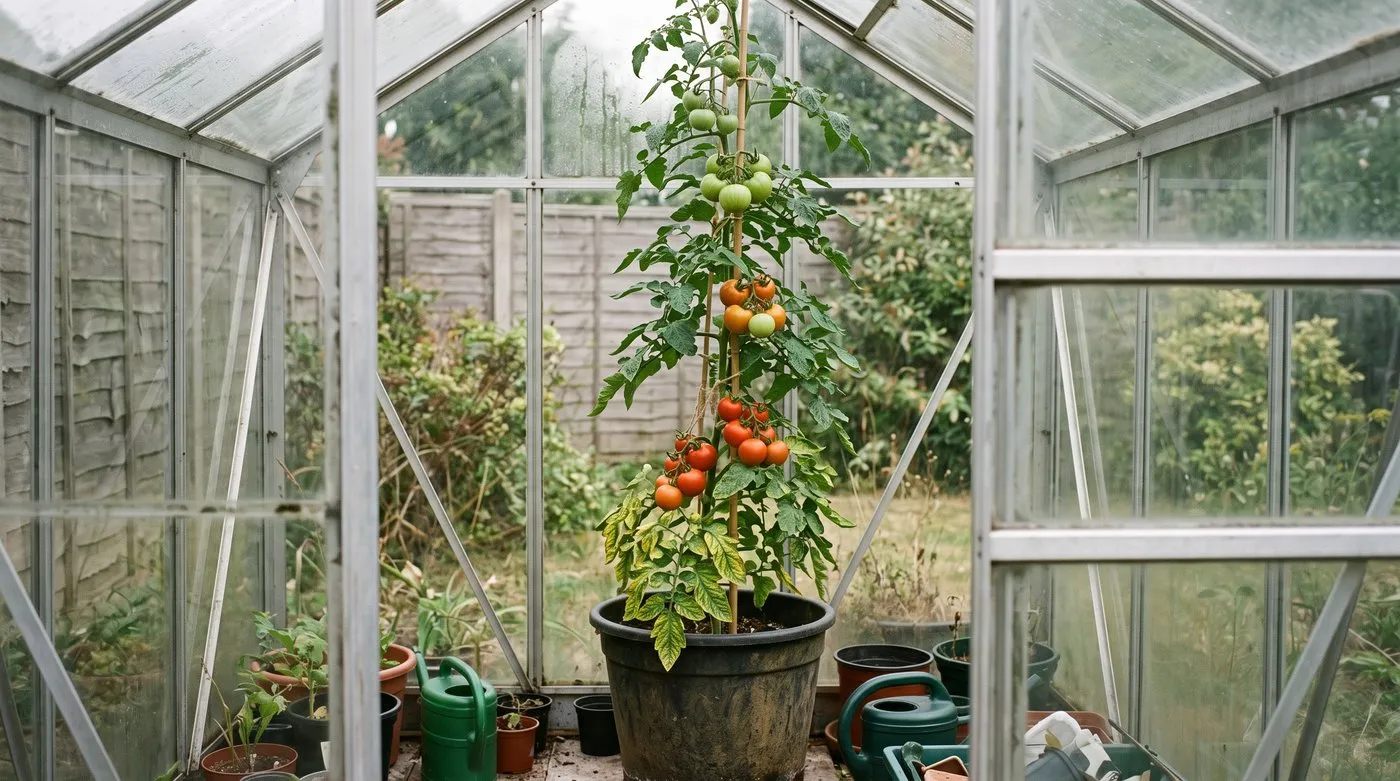
Magnesium shortage starts on the oldest, lowest leaves of tomatoes, while the new growth at the top stays green.
Nitrogen
Even yellowing of older leaves, with slow, pale growth, usually means the plant is short of nitrogen. It’s common in hungry pots, on poor sandy soil and on veg beds that haven’t had compost. Give a balanced liquid feed for a quick boost. For the longer term, add garden compost or well-rotted manure and a general fertiliser in spring.
Waterlogging
No feed works while roots are sitting in water. Stop watering, check pots have drainage holes, and improve heavy soil with organic matter. Our soil drainage and structure guide shows how.
Chlorosis calendar for acid-loving plants
| Month | What to do |
|---|---|
| February | Test soil pH while beds are bare |
| March | Mulch acid lovers with ericaceous mulch before new growth |
| April | Give sequestered iron to any plant that yellowed last year |
| May to July | Water acid lovers with rainwater. Watch new leaves |
| May to September | Check tomatoes for yellow lower leaves. Spray Epsom salts if needed |
| September | Repeat sequestered iron on bad cases if the pack allows |
| October to November | Add sulphur chips if your soil is limy. Check drainage |
How to stop yellow leaves coming back
Most chlorosis comes from the wrong conditions, not a missing bag of feed. Grow acid lovers in acid soil, or in pots of ericaceous compost. Our list of plants for chalky soil is a good place to start if your ground is limy.
Then keep the conditions right: rainwater for acid lovers, a yearly acid mulch and soil that drains. The RHS guide to iron and manganese deficiency has more detail if you want it.

Rainwater from a water butt and a bark mulch help keep camellias deep green on less-than-perfect soil.
Common mistakes with yellow leaves
Feeding before checking the pattern. A general feed won’t fix limy soil or wet roots. Read the leaves first.
Liming near acid lovers. It locks up even more iron and deepens the yellowing.
Using Epsom salts for iron problems. They only supply magnesium. Check whether new or old leaves went yellow first.
Watering acid lovers with hard tap water. It slowly raises the pH. Use rainwater wherever you can.
Treating once and stopping. Sequestered iron greens the plant, but the cause is still there. Pair it with mulch and rainwater.
Frequently asked questions
What does chlorosis look like on a plant?
Leaves turn pale or bright yellow, often with the veins still green. In bad cases the leaf goes almost cream and the edges brown. Which leaves are affected tells you the likely cause.
Why are leaves yellow but the veins still green?
That pattern points to iron or magnesium. Iron shortage shows on the newest leaves first. Magnesium shows on the oldest leaves first, because the plant moves it to new growth.
How do I fix iron chlorosis quickly?
Water on sequestered iron, following the pack. New leaves should green up within a few weeks. It’s a rescue, not a cure, so also lower the pH with acid mulch and rainwater.
Do Epsom salts cure yellow leaves?
Only when magnesium is the cause. Spray the leaves with Epsom salts at about 20g per litre of water. It does nothing for iron, nitrogen or waterlogging, so check the pattern first.
Why do rhododendrons and camellias get yellow leaves?
Usually their soil is too limy. Roots can’t take up iron in alkaline soil, and hard tap water makes it worse over time. Use ericaceous compost, acid mulch and rainwater.
Can overwatering cause yellow leaves?
Yes, waterlogged roots can’t take up nutrients properly. The leaves yellow even with plenty of food in the soil. Improve drainage and let the soil dry a little between waterings.
More leaf and plant troubles are in the problems hub. If a camellia is looking worse than yellow, read our guide on why a camellia is dying.
Our team produces practical UK gardening guidance from source research, contributor records and established horticultural practice. Editorial standards are overseen by Matt W.