
Key takeaways
- Overwatering is the most common reason Monstera leaves turn yellow
- Water only when the top 2-5cm of compost feels dry, and never leave it sitting in water
- Soft, brown, smelly roots mean root rot: cut them off and repot in fresh, free-draining mix
- One yellow leaf at the bottom of a healthy plant is usually just old age
- Bright, indirect light and a warm spot away from draughts keep leaves green
- Feed monthly in spring and summer only, and stop over winter
A yellow leaf on your Monstera is a message, and most of the time it says “too much water”. The good news is that yellowing is easy to read once you know what to look for, and most plants recover well. This guide helps you spot the cause, fix it and stop it happening again.
Start by reading the leaf
Look at the yellow leaf and feel the compost before you change anything.
- Soft, limp yellow leaves and wet, heavy compost point to overwatering.
- Crisp, yellow, drooping leaves and bone-dry compost point to underwatering.
- Older, lower leaves fading first while new ones stay green suggest the plant is hungry.
- Pale leaves, long stems and small new leaves with few holes mean it needs more light.
- Yellowing on the side nearest a cold window in winter points to draughts.
One yellow leaf at the very bottom of an otherwise glossy plant is usually just old age. Monstera drops its oldest leaves as it grows. Snip it off and carry on.

A yellow leaf beside a healthy one. The way it has yellowed tells you which cause to check first.
Quick diagnosis table
| What you see | Likely cause | Fix |
|---|---|---|
| Soft yellow leaves, soggy compost, musty smell | Overwatering, root rot | Stop watering, check roots, repot if rotten |
| Crispy yellow leaves, dry compost, drooping | Underwatering | Soak the rootball, then water when the top dries |
| Wet compost despite careful watering | Poor drainage | Repot into chunky mix in a pot with holes |
| Older lower leaves yellow, slow growth | Hungry plant | Feed monthly in spring and summer |
| Pale leaves, leggy stems, small new leaves | Low light | Move closer to a bright window |
| One bottom leaf yellow, rest healthy | Old age | Remove the leaf, nothing else needed |
| Yellowing near a window in winter | Cold draught | Move it somewhere warmer |
Overwatering and root rot
Overwatering is the number one cause. The leaves go soft and yellow, the compost stays wet for days, and there may be a musty smell. The plant can droop, which looks like thirst, so people water again and make it worse.
Soggy compost has no air in it, so the roots can’t breathe and begin to rot. Healthy roots are firm and white to pale tan. Rotten roots are brown, soft and mushy, and often smell.
- Stop watering straight away.
- Slide the plant out of its pot and look at the roots.
- Cut off every brown, mushy root with clean scissors.
- Repot into fresh, dry, free-draining mix in a clean pot with drainage holes.
- Wait a few days before watering lightly.
Watch out: Never leave a Monstera sitting in a saucer of water or a pot with no drainage hole. Tip out any water that collects after watering.

Ease the plant out to look at the roots. Firm, pale roots are healthy; brown, mushy ones need cutting off.
Soggy compost also attracts tiny black flies. The guide to fungus gnats in houseplants explains how to clear them.
How to water a Monstera properly
Water only when the top 2-5cm of compost is dry. Push a finger in up to the second knuckle. If it feels damp, wait. If it feels dry, water. A wooden chopstick pushed to the bottom of the pot works too: damp compost sticks to it.
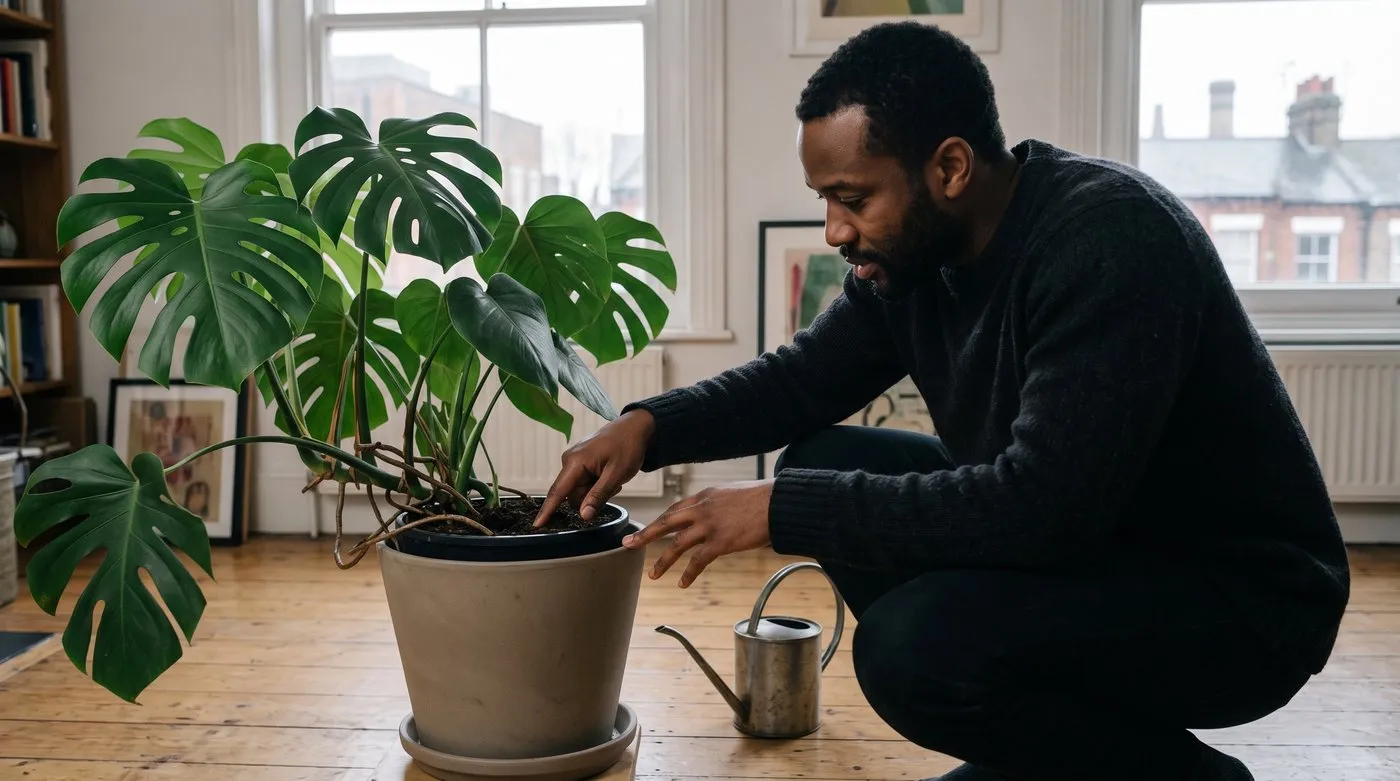
The finger test takes two seconds. If the top few centimetres still feel damp, put the watering can down and wait.
When you do water, water well. Pour until water runs out of the drainage holes, let it drain, then empty the saucer. A good soak now and then beats little splashes every day.
As a rough guide, that might be every week or so in summer and every two to three weeks in winter. Your home, pot and plant size all change this, so always check first. Room-temperature water is kinder than very cold water straight from the tap.
Light, warmth and draughts
Monstera likes bright, indirect light. Too little light gives pale, yellowing leaves, long stems and small new leaves with few holes. Strong midday sun through glass can scorch the leaves.
A spot near an east or west-facing window is ideal. A south-facing window works behind a sheer curtain. UK winters are dark, so moving the plant closer to the window from November to February often stops the yellowing on its own. The guide to low-light houseplants has ideas if your room is simply too dim.
It grows best at around 18-27°C. Cold draughts from single-glazed windows, outside doors and chilly hallways turn leaves yellow fast, so keep it away from frosty glass. Don’t put it right above a hot radiator either, as the dry heat crisps the leaves.

Bright light filtered through a sheer curtain gives strong growth without scorched leaves.
Feeding a hungry Monstera
If watering and light are right but the oldest leaves yellow first, the plant may be hungry. It moves nutrients from old leaves to feed new growth, so the old ones fade.
Feed every four weeks from spring to late summer with a balanced liquid houseplant feed, at the strength on the label. Stop in autumn and winter, when growth slows. Too much feed builds up in the compost and can brown the leaf tips. If you see a white crust on the compost, run plenty of plain water through the pot and pause feeding for a while. The guide on how to feed houseplants has a year-round plan.
Repotting into fresh, free-draining mix
Repot when the roots have rotted or the plant has filled its pot. Choose a pot only a little bigger than the old one, and always with drainage holes. A pot that is far too big holds lots of wet compost around small roots, which invites rot.
Monstera likes a chunky, free-draining mix. A simple blend is two parts peat-free houseplant compost to one part orchid bark and one part perlite. A moss pole gives the stems something to climb, which helps the plant grow bigger leaves with more holes. If roots are circling the pot or poking out of the bottom, see the guide to fixing root-bound houseplants.
Good to know: Monstera sap can irritate skin, and the plant is toxic to cats and dogs if chewed. Wear gloves when cutting it, and keep trimmings away from pets.

Bark and perlite keep the mix open so water drains and roots can breathe. The moss pole gives the stems support.
Dry air and brown, crispy edges
Yellowing with brown, crispy edges often comes from dry air, especially with the heating on in winter. Grouping plants together or standing the pot on a tray of damp pebbles helps. Wiping the leaves with a damp cloth every few weeks keeps dust off so they get more light, and it’s a good moment to spot problems early.
If the leaves look pale and yellow between green veins, the guide to chlorosis and yellow leaves explains what is going on.

A quick wipe keeps the leaves clean and is the perfect time to check for new yellowing or pests.
Monstera care through the year
| Season | Watering | Feeding | Position |
|---|---|---|---|
| Spring | Water more as growth restarts, check first | Start monthly feeding | Bright, indirect light |
| Summer | Roughly weekly, check first | Feed every four weeks | Filter harsh midday sun |
| Autumn | Water less as days shorten | Stop feeding by early autumn | Move closer to the window |
| Winter | Let it dry more between waterings | No feeding | Brightest warm spot, away from draughts and radiators |
Common mistakes
- Watering on a fixed day. Needs change with season and room. Check the compost first.
- Watering a droopy plant without checking. Root rot makes plants droop too.
- Using a pot with no drainage hole. Water pools at the bottom and rots the roots.
- Feeding in winter. The plant can’t use it, and it builds up in the compost.
- Panicking over one old leaf. Snip it off and leave the plant alone.
More indoor plant help is on the houseplants hub.
Now your Monstera is back on track, read the full guide to growing Monstera in the UK for long-term care, support and propagation.
Frequently asked questions
Why is my Monstera turning yellow?
Overwatering is the most common cause. Soft yellow leaves and soggy compost point to waterlogged roots. Check the compost and roots before watering again. Low light, cold draughts and hunger can also yellow the leaves.
Should I cut yellow leaves off my Monstera?
Yes, once a leaf is mostly yellow, cut it off. Use clean scissors and cut close to the main stem. Fix the cause too, or more leaves will follow.
Can a yellow Monstera leaf turn green again?
No, a yellow leaf won’t turn green again. New leaves will come through healthy once you sort out the watering, light or feeding. Focus on the cause, not the old leaf.
How often should I water a Monstera in the UK?
Roughly weekly to fortnightly in summer, and less often in winter. Always check first and water only when the top 2-5cm of compost is dry. Central heating dries the surface quickly while the middle stays wet, so test rather than follow a calendar.
Does overwatering turn Monstera leaves yellow?
Yes, overwatering is the leading cause of yellow Monstera leaves. Soggy compost starves the roots of air and they start to rot. Let the compost dry out and check the roots for brown, mushy rot.
Why are my Monstera leaves yellow with brown spots?
Usually too much water and the start of root rot. Check the roots and cut away any that are brown and mushy, then repot. Crispy brown edges, rather than spots, point to dry air or very dry compost.
What temperature does a Monstera need in winter?
Keep it warm, ideally around 18°C or more and not much below 13°C. Move it away from cold windows and doors on frosty nights. Don’t park it right above a hot radiator either.
Our team produces practical UK gardening guidance from source research, contributor records and established horticultural practice. Editorial standards are overseen by Matt W.


