Key takeaways
- Soft yellow leaves that drop easily mean too much water
- Wrinkled, papery leaves mean the plant is too dry
- Let the compost dry out fully, then water about every 10-14 days in summer and 3-4 weeks in winter
- Long, bare vines with gaps between leaves mean it needs more light
- Keep it above 12°C and away from cold glass, doors and hot radiators
- Cut bare vines back to about 10cm and root the trimmings to fill the pot
A string of hearts dropping leaves is nearly always fixable. Most of the time the plant is getting too much water. Less often it is too dry, too dark, too cold or has pests.
This guide helps you work out which one you’re dealing with in a couple of minutes, then fix it. For everyday care from scratch, see the string of hearts growing guide.
How to tell why your string of hearts is dropping leaves
Feel a falling leaf first. A soft, squashy, yellow leaf means too much water. A wrinkled, papery leaf means too little. They need opposite fixes, so it’s worth checking before you do anything.
| What you see | Likely cause | What to do |
|---|---|---|
| Soft yellow leaves, soggy compost | Too much water, root rot | Stop watering, check roots, repot in gritty mix |
| Wrinkled, shrivelled leaves | Too dry | Soak well, then water when dry |
| Long vines, big gaps, pale leaves | Too little light | Move within 1m of a bright window |
| Sudden leaf drop in winter | Cold draught | Move away from cold glass and doors |
| White fluff, sticky leaves | Mealybugs or aphids | Isolate, wipe off, treat if needed |
| An odd old leaf yellows near the soil | Natural ageing | Nothing, it’s normal |
Start at the top. Overwatering is by far the most likely cause, so rule it out first.
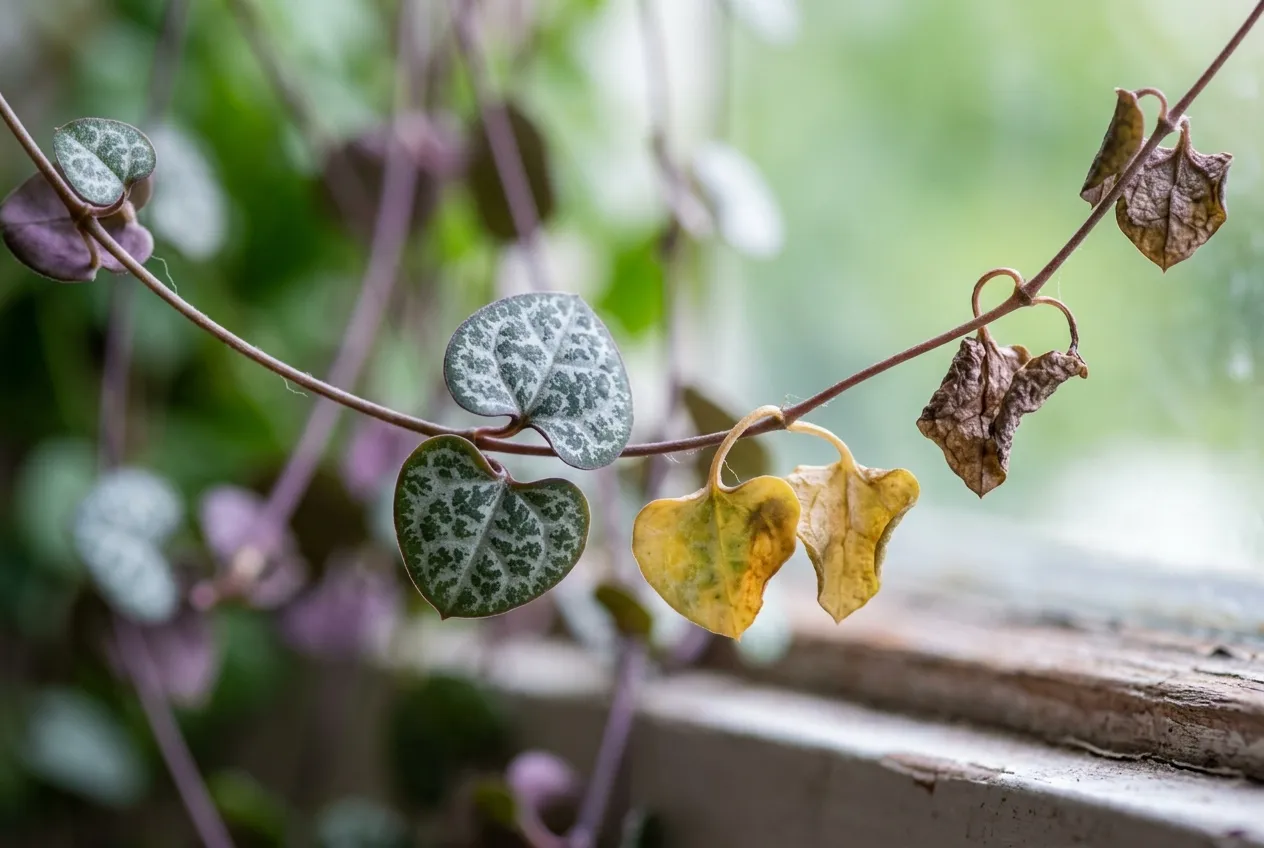
Healthy leaves are firm and marbled. Yellow ones point to too much water, and brown, crinkled ones to old damage or drought.
Overwatering and root rot
Too much water is the top cause of leaf drop. A string of hearts is a succulent. It stores water in its leaves and in small round tubers along the vines, so it copes with dry spells far better than wet compost. Soggy compost starves the roots of air, and they start to rot.
Signs to look for:
- Leaves turn yellow and see-through, feel soft and drop at a touch.
- The compost stays dark and wet for more than a week.
- The pot smells sour or musty.
Stop watering and ease the plant out of its pot. Healthy roots are pale and firm. Rotten ones are brown and mushy. Trim off any rotten roots and repot into fresh gritty compost, such as cactus compost or houseplant compost mixed with grit or perlite. Wait about a week before watering again. The houseplant repotting guide walks through the steps.
Warning: Never leave a string of hearts sitting in a saucer of water or in a pot with no drainage hole. Tip away any extra water after watering.
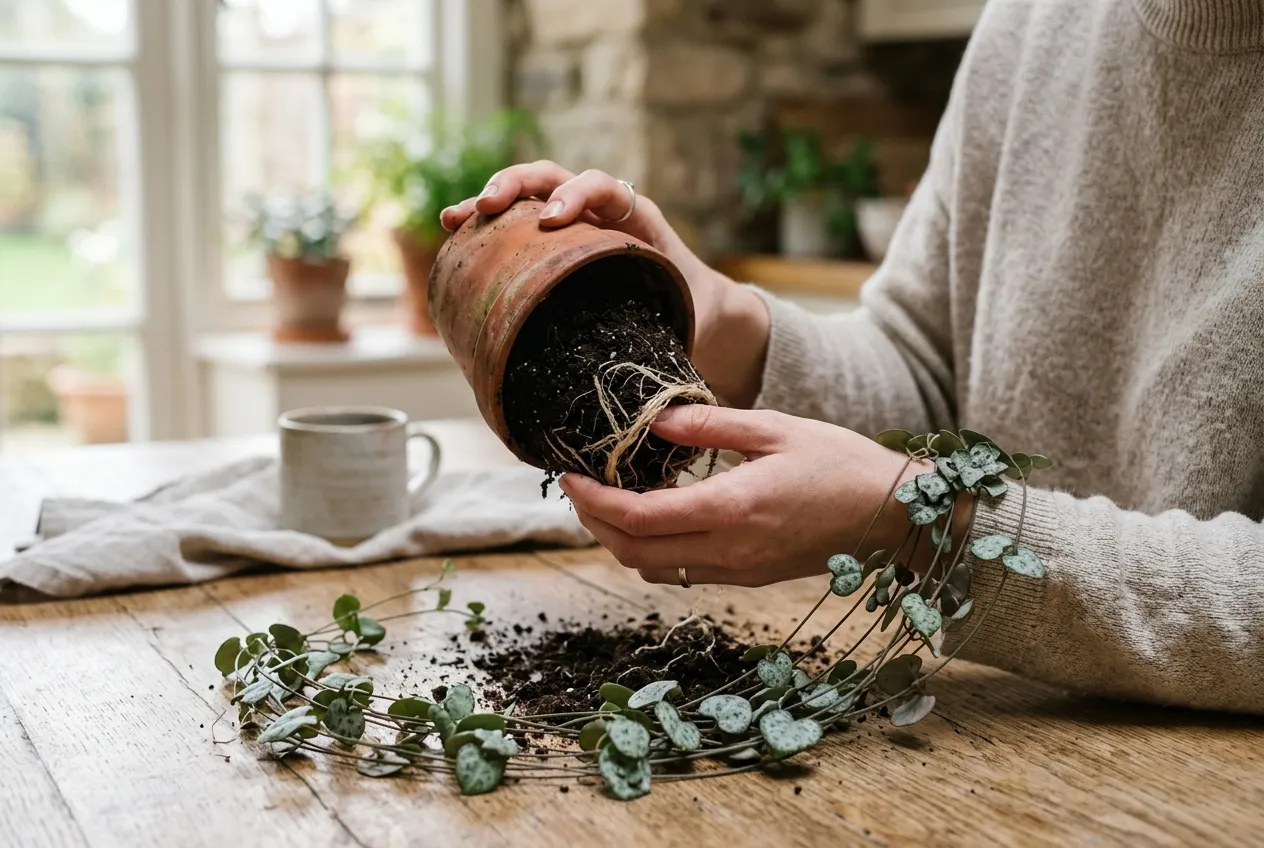
Tipping the plant out is the quickest way to check for rot. Pale, firm roots are fine; brown, mushy ones need trimming off.
Shrivelled leaves from underwatering
Wrinkled, papery leaves mean the plant has run dry. Its leaf stores have emptied, so they pucker and curl before dropping. This often happens when a small pot sits above a radiator, or when the plant is treated like a cactus and forgotten.
Water it well until water runs out of the drainage hole, then let it drain fully. The leaves should firm up again within two or three days. After that, water whenever the compost has dried out right through. A thirsty plant is much easier to save than a waterlogged one.
Leggy vines and too little light
Long vines with wide gaps between small, pale leaves mean the plant needs more light. It stretches towards the brightest spot it can find, and older leaves fall off along the way.
Give it bright, indirect light within 1m of an east or west window. A south window is fine with a sheer curtain to soften strong midday sun. North-facing rooms rarely give enough light for full growth.
Winter makes this worse, because UK days are short and dull. Move the plant to your brightest window from November to February, or add a small grow light. The LED grow lights guide explains what to look for.
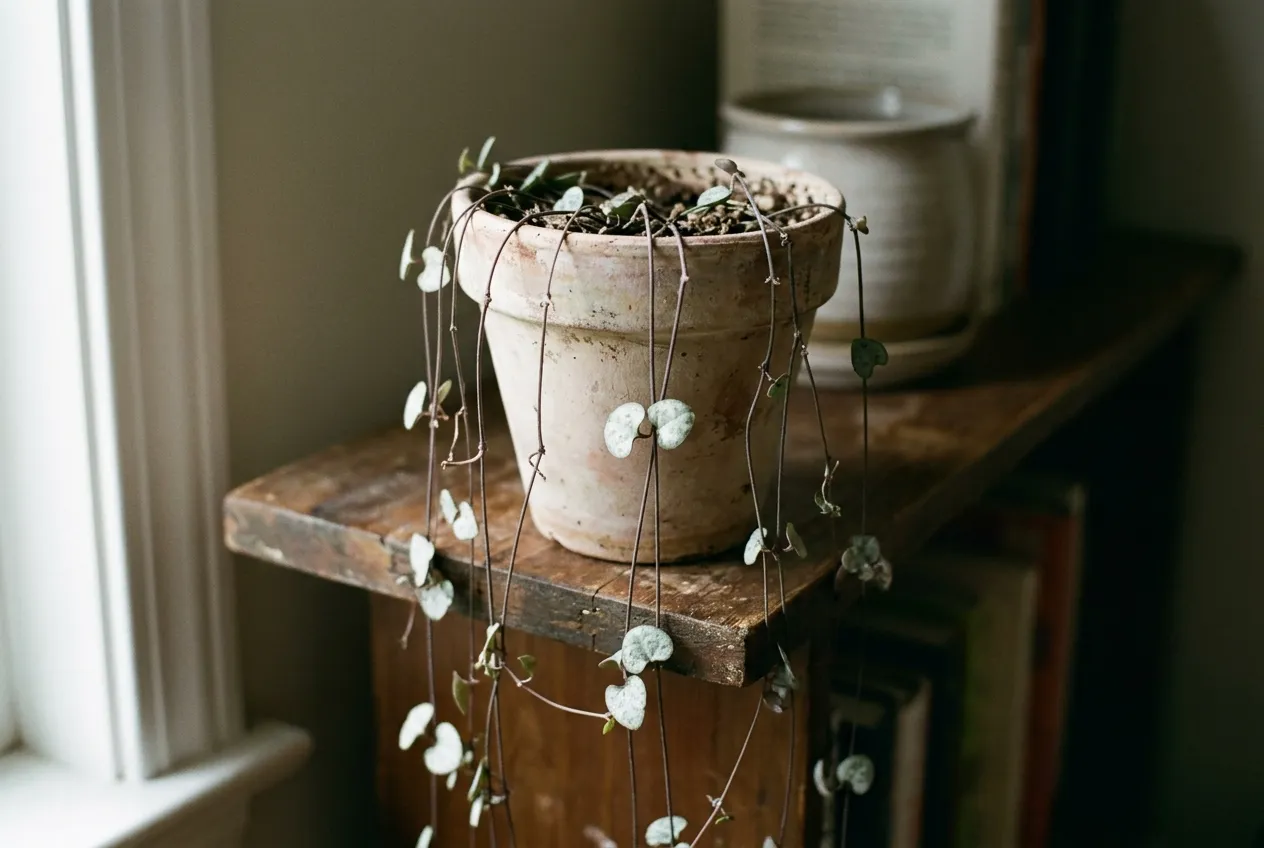
Sparse vines with lots of bare stem mean the plant has been short of light. A brighter spot and a trim bring it back.
Cold draughts and sudden leaf drop
Cold can make a string of hearts drop lots of leaves at once. It comes from southern Africa and is happiest at 15-26°C. Below about 12°C it suffers.
Common winter culprits are easy to miss:
- A pot pressed against cold single glazing on a frosty night.
- A draught from an outside door, letterbox or unheated porch.
- Being shut between the curtain and the window after dark.
Move the pot into the room before you close the curtains. Avoid the other extreme too: a spot right above a hot radiator dries the compost and scorches the vines.
Mealybugs, aphids and other pests
Mealybugs look like tiny bits of white cotton wool tucked into leaf joints. Aphids are small green or black insects on soft new tips. Both suck sap, so leaves yellow, twist and drop. Sticky leaves or a sticky shelf underneath are a big clue.

Mealybugs hide in the leaf joints. A damp cotton bud lifts them off before they spread.
Move the plant away from your other houseplants. Pick or wipe off mealybugs with a damp cotton bud, and rinse aphids off under a gentle tap. Check again every week for a few weeks, as new ones hatch. If they keep coming back, use a houseplant bug spray approved for the job, following the label. The mealybug guide has more on spotting and clearing them.
Don’t bother misting a string of hearts. It doesn’t need extra humidity, and damp leaves and soggy compost do more harm than good.
Is it normal for a string of hearts to lose leaves?
Yes, a few. A healthy plant sheds the odd old leaf, usually low down near the compost. One or two a month, with the rest of the plant firm and full, is nothing to worry about.
A problem looks different. Lots of leaves fall quickly, or the dropping comes with soft yellowing, shrivelling, stickiness or a cold snap.
To check a bare-looking plant is alive, scratch a vine gently with a fingernail. Green underneath means it’s alive. Plump round tubers along the stems are a good sign too. Brown, hollow, brittle vines are dead and can be trimmed away.
How to bring back a bare string of hearts
Bare stretches of vine rarely grow new leaves along their length. Instead, you encourage new growth from the base and fill the pot with rooted trimmings.
- In spring or summer, cut the longest bare vines back to about 10cm from the compost.
- Lay the trimmings flat on top of fresh gritty compost in the same pot.
- Press the leaf joints lightly into the surface.
- Keep the compost barely moist and the pot in bright, indirect light.
Each leaf joint can root within a few weeks and send up new vines. Within a season, a thin plant can look full again.

Pressing trimmings into gritty compost in the same pot is the quickest way to thicken up a thin plant.
How to water a string of hearts through the year
Let the compost dry out fully, then water well and tip away the excess. Water less as UK light fades in autumn and winter, when the plant barely grows.
| Season | How often to water | Other care |
|---|---|---|
| Spring (March-May) | Every 10-14 days once dry | Move to a bright window, feed monthly |
| Summer (June-August) | Every 7-14 days once dry | Shade from harsh midday sun |
| Autumn (September-November) | Every 2-3 weeks once dry | Stop feeding by late October |
| Winter (December-February) | Every 3-4 weeks, keep on the dry side | Keep above 12°C, away from draughts |
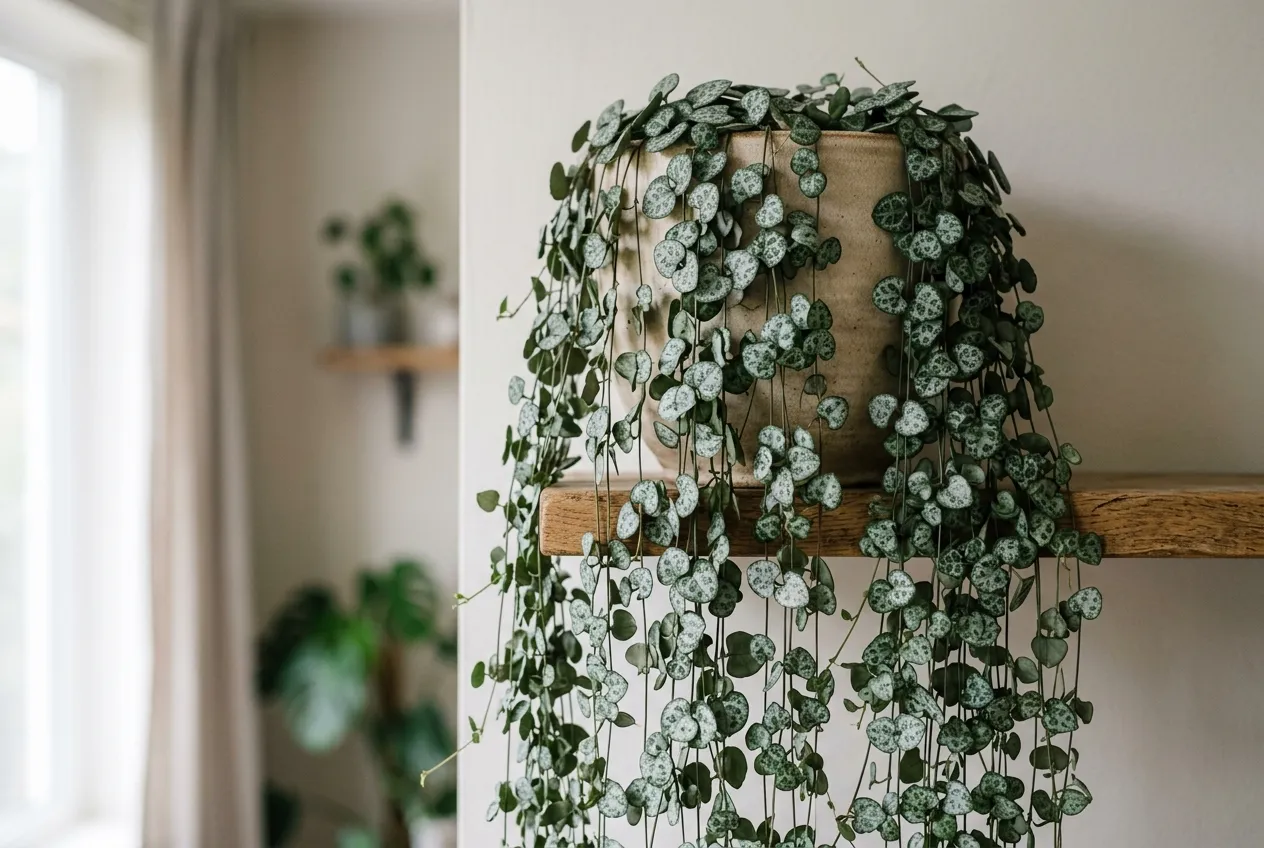
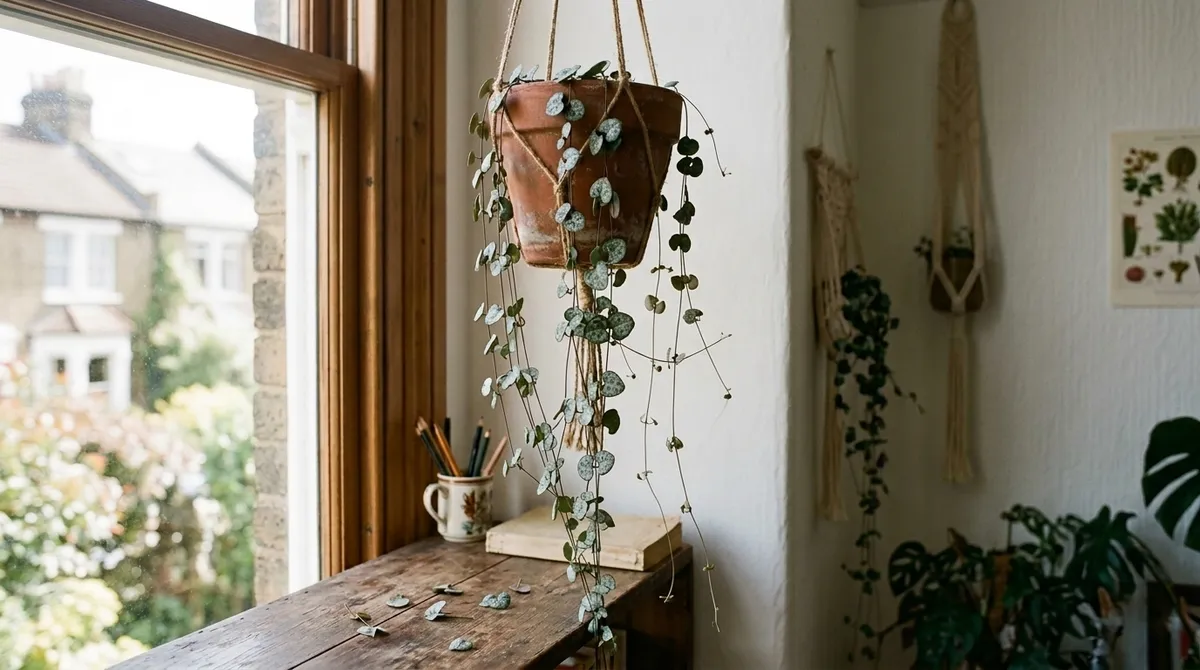
Get the water and light right and you get this: long, full vines packed with silvery hearts.
Common mistakes that cause leaf drop
- Watering on a fixed day. It needs far more water in July than in December. Check the compost is dry first.
- Using a pot with no hole. Water can’t escape, so the roots rot. Use a pot with a drainage hole.
- Picking a spot for looks. A dim shelf leads to leggy, bare vines. Light comes first.
- Leaving it on a cold windowsill. Winter draughts cause sudden leaf drop.
- Missing pests. A quick look into the leaf joints each week catches mealybugs early.
Frequently asked questions
Why is my string of hearts losing leaves?
Overwatering is the most common cause. Soft, yellowing leaves that drop easily point to soggy compost and rotting roots. Let the compost dry out fully between waterings, water much less in winter, and check the roots are firm and pale.
Why is my string of hearts shrivelling?
Shrivelled, wrinkled leaves usually mean it is too dry. The plant stores water in its leaves, so they pucker when it runs out. Give it a good soak, let it drain, and the leaves should plump up in a few days.
How often should I water a string of hearts in the UK?
About every 10-14 days in summer and every 3-4 weeks in winter. Always let the compost dry out completely first. Push a finger in to check before you water.
Why is my string of hearts leggy with gaps between leaves?
It isn’t getting enough light. The vines stretch towards the brightest spot they can find. Move it within 1m of an east or west window, and trim the longest vines to encourage bushier growth.
Can a bare string of hearts vine grow leaves again?
Rarely along the bare part, but the plant can regrow. Cut bare vines back to about 10cm. New shoots grow from the cut stems and the little round tubers. Root the trimmings on top of the compost to fill the pot.
What temperature does a string of hearts need?
Ideally 15-26°C, and not below about 12°C. Cold draughts from windows and doors can cause sudden leaf drop. Keep it off cold windowsills in winter and away from hot radiators.
Is my string of hearts dead or dormant?
Check the vines and tubers. If the stems are green and firm and the round tubers are plump, it is alive. Scratch a stem gently. Green underneath means it can regrow. Brown, hollow, brittle vines are dead.
Looking for more trailing plants or succulent care? Try the best hanging houseplants, browse the houseplants hub, or read our guide to caring for succulents indoors for the next step.
Our team produces practical UK gardening guidance from source research, contributor records and established horticultural practice. Editorial standards are overseen by Matt W.