Key takeaways
- Give it bright light; too little makes long, bare gaps between the leaves
- Water only when the leaves feel slightly soft, and less often in winter
- Use a gritty, free-draining mix in a pot with drainage holes
- Overwatering, not drought, is what usually kills it
- Keep it above about 10°C; it can't live outdoors in a UK winter
- Cuttings root easily in water, on damp compost, or from the little beads on the stems
String of hearts is one of the easiest trailing houseplants you can grow. Put it in bright light, water it only when the leaves feel a little soft, and it will soon drape long strands of tiny heart-shaped leaves over a shelf. Most problems come from too much water or too little light.
This guide covers light, watering, compost, the common problems and three easy ways to make free plants. For other trailing plants to hang alongside it, see the guide to the best hanging houseplants.
What is string of hearts?
String of hearts (Ceropegia woodii) is a trailing, semi-succulent plant from southern Africa. Its leaves are small, heart-shaped and marbled with silver on dark green, often purple underneath. The thin stems are purple too, and they can trail well over a metre.
The leaves are slightly fleshy because they store water. That’s why the plant copes with being forgotten far better than with fussing. Mature plants sometimes produce small, tube-shaped, pinkish-purple flowers.
How much light does string of hearts need?
Give it bright light, and as much as you can. This is what makes the biggest difference to how it looks.
In good light the leaves sit close together and the silver marbling is crisp. In poor light the stems stretch, the gaps between leaves grow, and the colour fades. That stretched look is called leggy growth, and the old stems won’t tighten up again.
A bright windowsill is ideal. An east or west-facing window works well. A south-facing sill suits it too, but in a hot summer it may need shading from the strongest midday sun.

On a bright sill the leaves sit close together and the silver marbling stays bold. This is what plenty of light looks like.
How to water string of hearts
Water it like a succulent, not like a leafy houseplant. The leaves tell you when it’s time.
| What you see | What it means | What to do |
|---|---|---|
| Plump, firm leaves | Plenty of water stored | Wait |
| Slightly soft, faintly wrinkled leaves | Ready for a drink | Water well and let it drain |
| Yellow leaves, soft mushy stems | Overwatered, rot starting | Stop watering, take cuttings, repot into dry mix |
| Lots of shrivelled, crispy leaves | Too dry for too long | Water well; it soon recovers |
When you water, soak the compost until water runs out of the drainage holes, then empty the saucer. Never leave the pot standing in water. In winter, when growth slows, it needs much less.
The best compost and pot for string of hearts
Use a gritty, free-draining mix in a pot with drainage holes. Cactus compost works well, or mix two parts peat-free houseplant compost with one part grit or perlite.
It has small roots and is happy in a snug pot. Repot every two or three years, in spring, when it fills its pot. The guide to repotting houseplants shows how.
Feed lightly from spring to late summer, about once a month, with a half-strength houseplant or cactus feed. Don’t feed in winter. The houseplant feeding guide has more detail.

A gritty mix lets water drain away fast, so the roots never sit wet. That’s the secret to keeping it healthy.
Where to keep string of hearts
Keep it above about 10°C. Normal room temperatures suit it all year round, so a bright windowsill is its natural home.
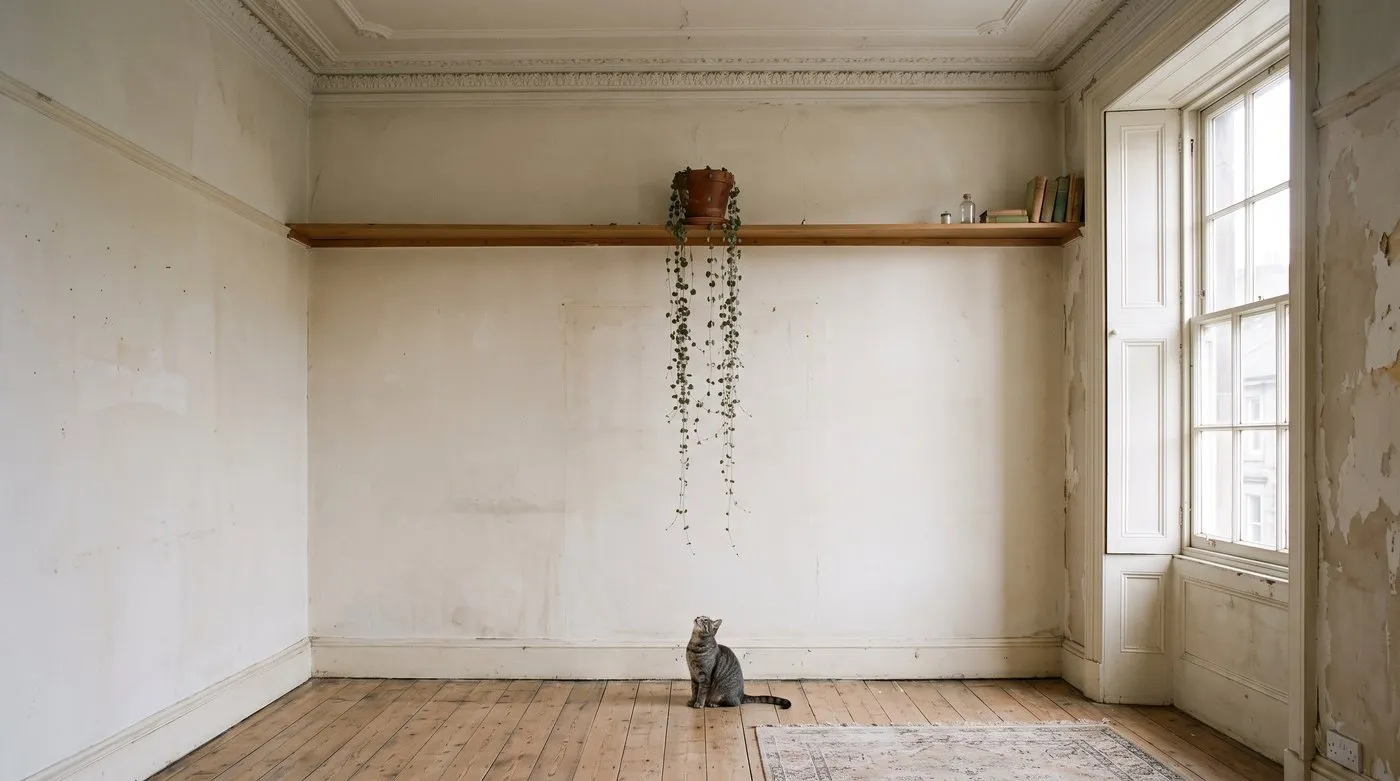
A high shelf near a bright window gives it light and keeps the tempting strands out of a cat’s reach.
It can go outside for the warmest summer weeks, somewhere bright and sheltered. Bring it back in before the nights turn cold. It is not frost hardy.
Grow it on a high shelf or in a hanging pot so the strands can trail. If you keep it in a hanging planter, make sure it still gets plenty of light.
Common string of hearts problems
Almost every problem comes back to water or light.
Mushy, brown, collapsing stems. This is rot from overwatering or a soggy mix. Stop watering. Cut back to firm stems, root the healthy pieces and throw away the soft parts. Repot into a gritty mix.
Yellowing leaves. Usually too much water, especially in winter. Let the mix dry out more between waterings.
Leggy growth and fading marbling. Too little light. Move it somewhere brighter, then trim the bare stems and root the tips.
Mealybug. White, cottony blobs in the leaf joints. Wipe them off with a damp cotton bud and check every week until they’re gone. For a bad outbreak, use a houseplant pest product approved for the job, following the label.
Fungus gnats. Tiny flies from compost that stays too wet. Letting the mix dry out helps. See the guide to fungus gnats in houseplants.

A soft, brown stem at the base means rot. Cut back to firm growth and root the healthy tips, and the plant can usually be saved.
How to propagate string of hearts
String of hearts is very easy to propagate. Here are three ways, from the most foolproof:
- In water. Cut a 10-15cm piece of stem, strip the bottom leaves and stand the bare end in a jar of water on a bright sill. Roots usually appear within a few weeks. Pot it up into gritty mix once the roots are a couple of centimetres long.
- On compost. Cut short pieces of stem, each with a pair of leaves and ideally a bead. Lay them on damp, gritty mix and press them in lightly. They root where they touch the compost.
- Strands on a pot. Lay a long strand, still attached to the parent, across a pot of damp mix. Roots form where the stem touches. Cut the new plant free once it is growing.
The beads on the stems are aerial tubers. They store water and root very easily, so pieces with a bead are a good bet. The guide to propagating houseplants covers other methods.

These little beads store water and root readily. Lay one on damp compost and it will grow into a new plant.
Common mistakes with string of hearts
- Watering on a schedule. Check the leaves instead.
- Ordinary compost and no drainage. The roots sit wet and rot. Use a gritty mix and a pot with holes.
- A dark corner. It goes leggy. Give it your brightest spot.
- Feeding in winter. It isn’t growing, so it doesn’t need it.
- Leaving it out in autumn. Bring it in before nights turn cold.
Frequently asked questions
How often should I water string of hearts?
Water when the leaves feel slightly soft, not on a fixed schedule. In summer that might be every week or two. In winter it needs much less. Let the mix dry out well between waterings, and empty the saucer afterwards.
Why is my string of hearts leggy with big gaps between leaves?
It isn’t getting enough light. The stems stretch towards the window, leaving long bare gaps. Move it to your brightest spot. New growth will be more compact, though old gappy stems won’t tighten up, so trim them and root the tips.
What are the little beads on the stems?
They are aerial tubers, small swellings that store water. They form along the stems of healthy plants. Lay a bead on damp compost and it will root into a new plant. You can also just leave them be.
Can string of hearts live outside in the UK?
Not through winter, as it isn’t frost hardy. It can go outside in a bright, sheltered spot during the warmest summer weeks. Bring it back in before nights turn chilly. For most of the year it is a windowsill or conservatory plant.
Why are my string of hearts stems going mushy and brown?
That’s rot, almost always from overwatering or a soggy mix. Stop watering. Cut back to firm, healthy stems and root the good pieces as cuttings. Repot into a gritty mix in a pot with drainage holes, and let it dry out well between waterings.
Is string of hearts safe for cats and dogs?
It is generally listed as non-toxic to cats and dogs. Even so, cats love batting long strands, which can damage the plant. Hang it high or stand it on a shelf out of reach.
Love easy, forgiving plants? Read the guide to caring for succulents indoors, which follows the same watering rules, or browse more houseplant guides.
Our team produces practical UK gardening guidance from source research, contributor records and established horticultural practice. Editorial standards are overseen by Matt W.