Key takeaways
- Upward rolling on firm, green lower leaves is usually harmless leaf roll
- Heat, cold nights, uneven watering and heavy pruning are the usual triggers
- Downward cupping with narrow, fern-like new growth suggests weedkiller-tainted manure
- Yellow-green mottling and puckered leaves can mean a virus, which has no cure
- In a greenhouse, open up early and shade the glass in high summer
- Leave rolled leaves on the plant; they still feed it and shade the fruit
Tomato leaves curling is usually nothing to worry about. Most of the time it’s leaf roll, a harmless reaction to heat or stress, and the plant carries on cropping. Now and then, though, curled leaves point to something more serious, like weedkiller in the manure or a virus.
The quickest way to tell is to check which way the leaves curl and which leaves are affected. This guide walks you through it.
Which way are your tomato leaves curling?
Direction is the best first clue. Upward curling, where the edges roll in and up, is almost always harmless. Downward cupping, where the leaf curls under like a claw, needs a closer look.
Ask yourself three questions:
- Up or down? Up points to leaf roll or watering. Down points to weedkiller, a virus or pests.
- Old or new leaves? Old lower leaves first means leaf roll or watering. New top growth first means weedkiller, a virus or mites.
- Normal shape or twisted? A rolled but normal-looking leaf is fine. A narrow, fern-like, twisted leaf is a warning sign.
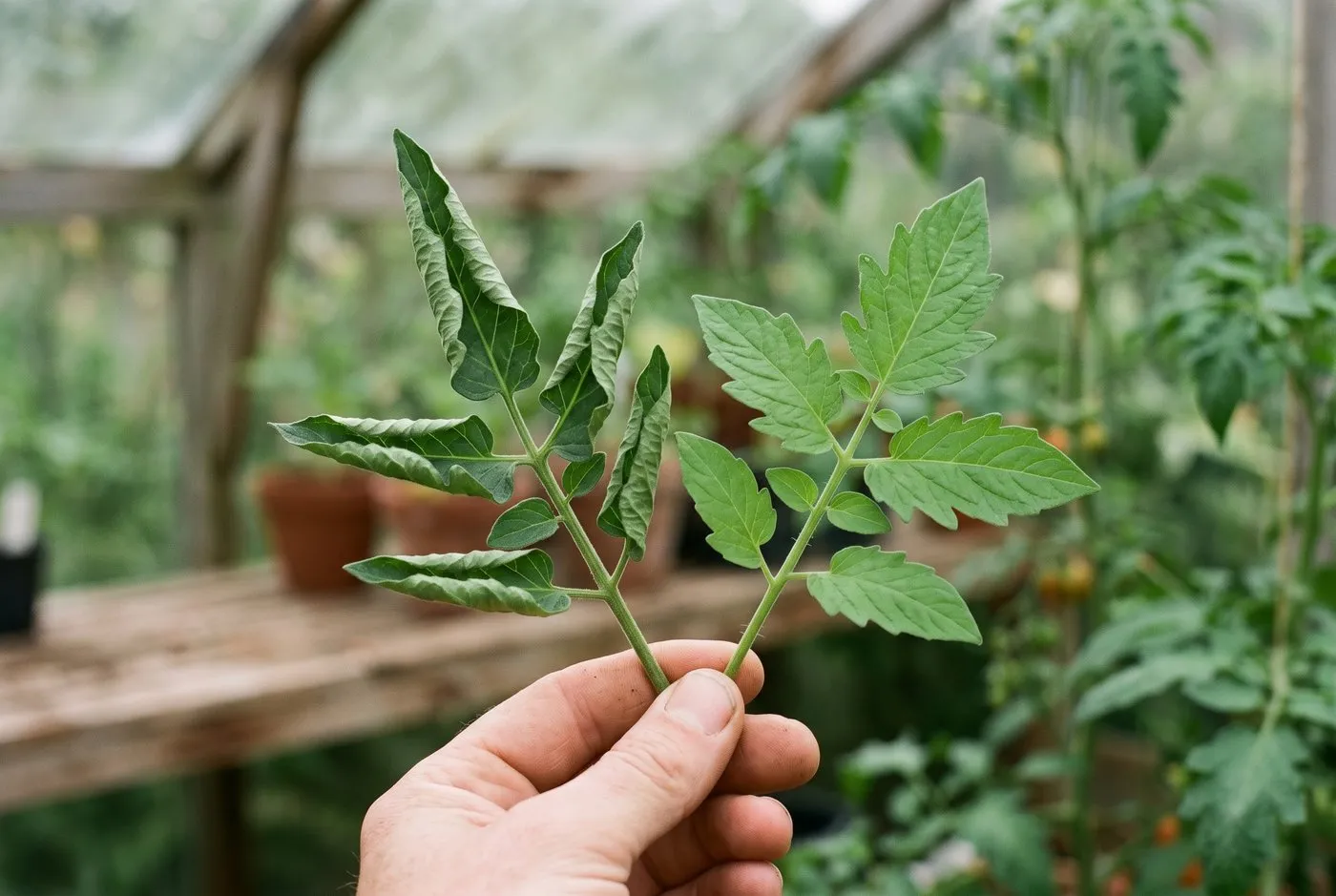
A rolled leaf (left) next to a flat one (right). Both are green and firm, which is typical of harmless leaf roll.
Leaf roll: the harmless upward curl
Leaf roll is the most common reason tomato leaves curl in UK gardens. It isn’t a disease. The plant rolls its leaves to save water when it’s stressed.
How to spot it:
- The lower, older leaves roll first, curling up and inwards along their length.
- They feel firm and leathery, not limp.
- They stay a healthy green.
- The plant keeps flowering and the fruit ripens as normal.
The usual triggers are a hot day followed by a cold night, removing lots of sideshoots or leaves at once, and uneven watering. Some vigorous cordon varieties roll more readily than others. None of this harms the crop, so there’s nothing to treat. The beginner’s guide to growing tomatoes covers the steady watering and feeding routine that keeps it to a minimum.
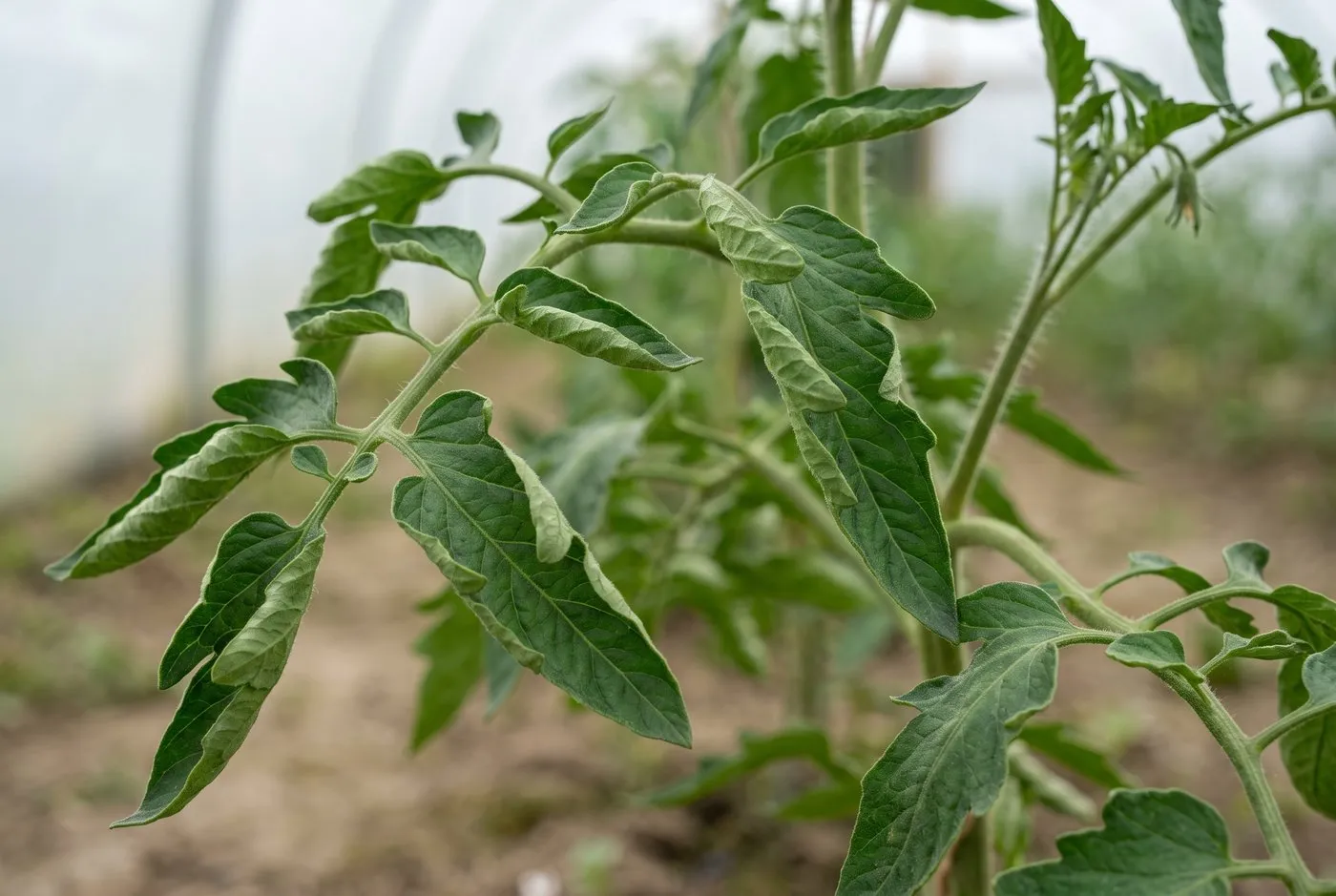
Classic leaf roll: lower leaves rolled up but still green and firm. The plant is healthy and needs nothing.
Tomato leaf curl causes at a glance
| Cause | Curl direction | Clue | What to do |
|---|---|---|---|
| Leaf roll | Up, lower leaves | Firm and green, fruit fine | Nothing; water steadily |
| Watering stress | Up, or wilting | Soggy or bone-dry compost | Water evenly |
| Greenhouse heat | Up, whole plant | Very hot greenhouse | Ventilate and shade |
| Weedkiller in manure | Down | Narrow, fern-like new growth | Stop using the manure |
| Virus | Down, puckered | Yellow-green mottling, stunting | Remove and bin the plant |
| Aphids or broad mite | Down, top leaves | Distorted tips, pests or bronzing | Deal with the pest |
Start at the top. If leaves roll up and the fruit looks fine, it’s leaf roll and you can stop there. For other tomato problems, the common tomato diseases guide has more help.
Overwatering, underwatering and curling leaves
Both too much and too little water can curl leaves. Check the compost before you reach for the can.
Too dry: leaves curl and look dull, and the edges go crisp and brown. The compost is dusty and shrinks from the sides of the pot. Grow bags dry out fast in July.
Too wet: leaves curl too, but the lower ones turn yellow, the compost stays wet and smells sour, and roots can rot. Water sitting in the saucer for hours is a giveaway.
Push a finger a few centimetres into the compost. Only water if it feels dry at that depth. Little and often suits grow bags and pots in hot weather, keeping the compost evenly moist rather than swinging from dry to soaked.
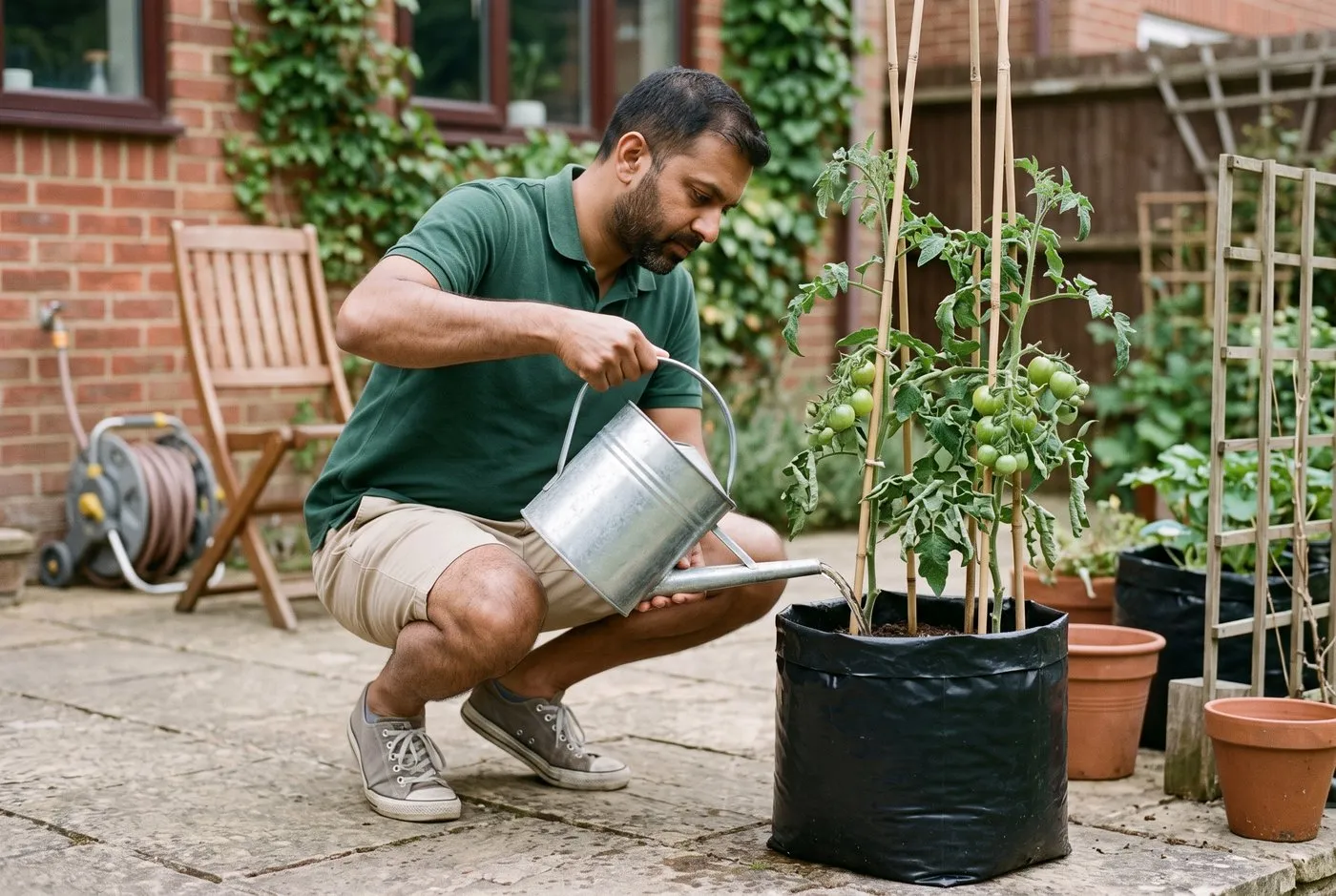
Grow bags hold little compost and dry out quickly, so water little and often through July and August.
How greenhouse heat curls tomato leaves
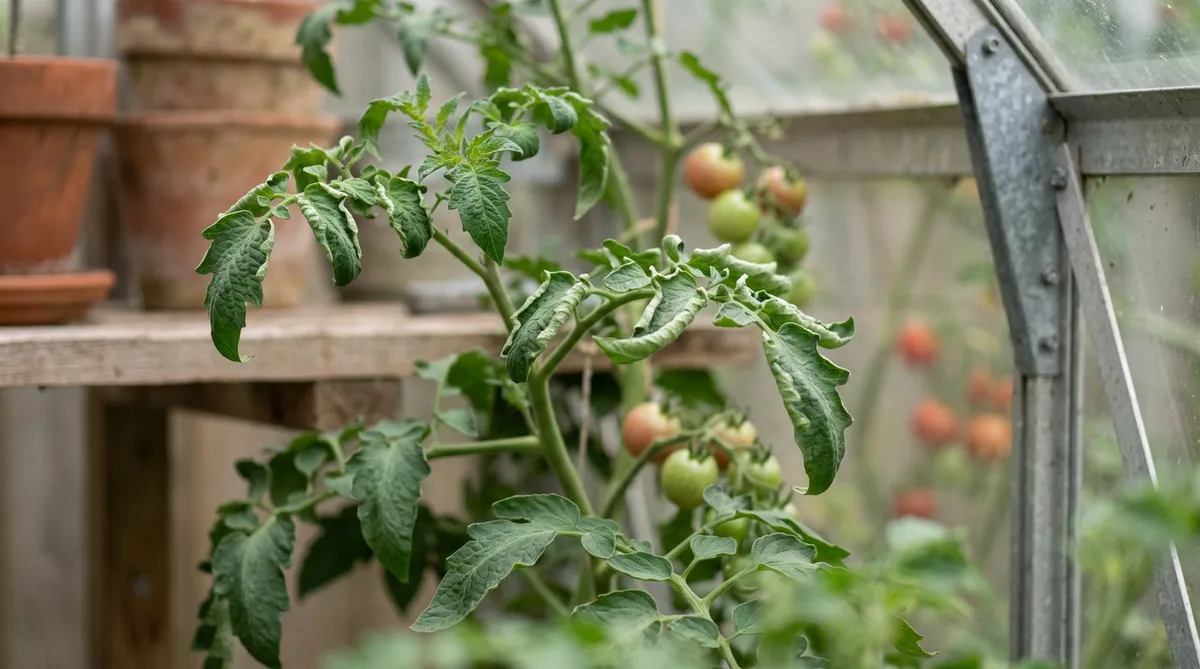
Under glass or plastic, heat is the usual cause. A closed greenhouse can get far hotter than the air outside on a sunny day. Tomatoes respond by rolling their leaves, and this time it can spread right up the plant. Very high temperatures can also stop flowers setting fruit.
To keep things cooler:
- Open doors and vents in the morning, before the temperature passes about 25°C. Automatic vent openers help if you’re out all day.
- Shade the glass with shade paint or netting from late June.
- Damp down the floor on hot mornings to cool the air.
The greenhouse ventilation and humidity guide has more detail. Once it’s cooler, rolling usually eases within a day or two.
Gardener’s tip: Hang a max-min thermometer at plant height, not up by the roof. It shows the temperature your tomatoes actually feel.

Check the curl direction and feel the leaf. Firm, rolled leaves all over the plant usually mean the greenhouse is getting too hot.
Weedkiller in manure or compost
This is the cause that ruins crops, and it’s easy to miss. Aminopyralid and similar weedkillers are used on grassland. They pass through grazing animals, survive composting and turn up in manure. Even a tiny amount damages tomatoes.
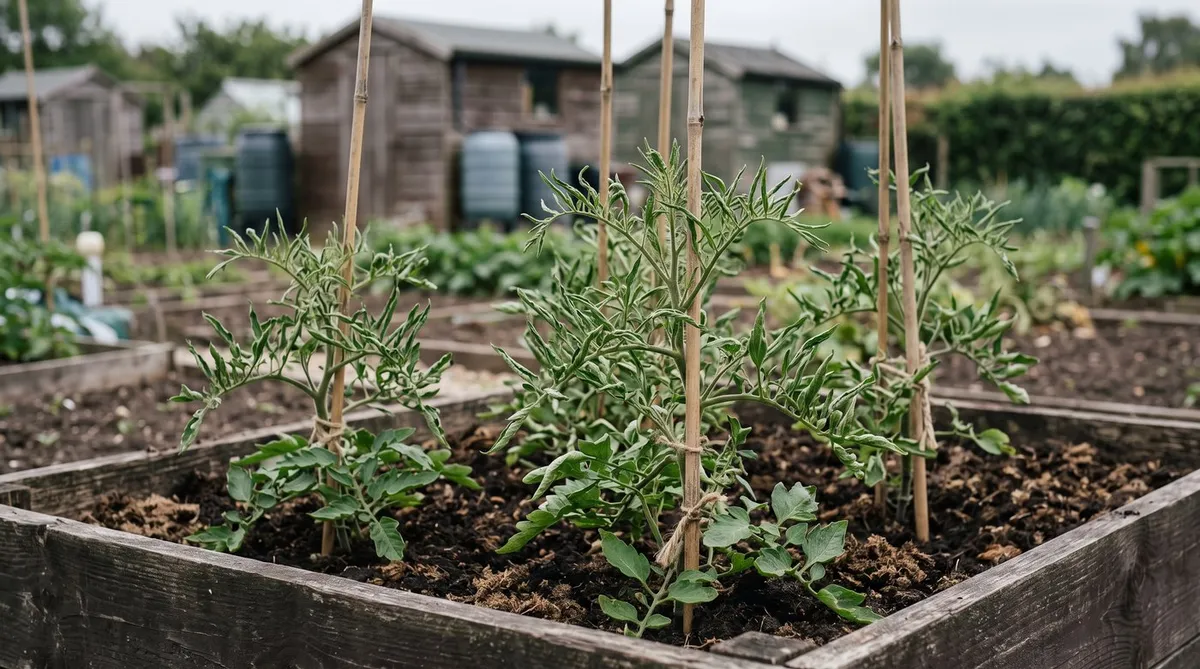
The signs look nothing like leaf roll. Leaves cup downwards, and new growth turns narrow, twisted and fern-like, often bunched in a fan shape. Potatoes, beans and peas are just as sensitive, so if several crops distort at once, suspect contamination. Affected plants don’t recover.
What to do:
- Stop using the suspect manure or compost straight away.
- Don’t compost affected plants.
- Test manure before using it. Sow a few broad beans in it and a few in fresh compost, then compare the seedlings after a few weeks. Cupped, twisted leaves mean contamination.
The aminopyralid guide explains how to test manure and what to do with a contaminated batch.
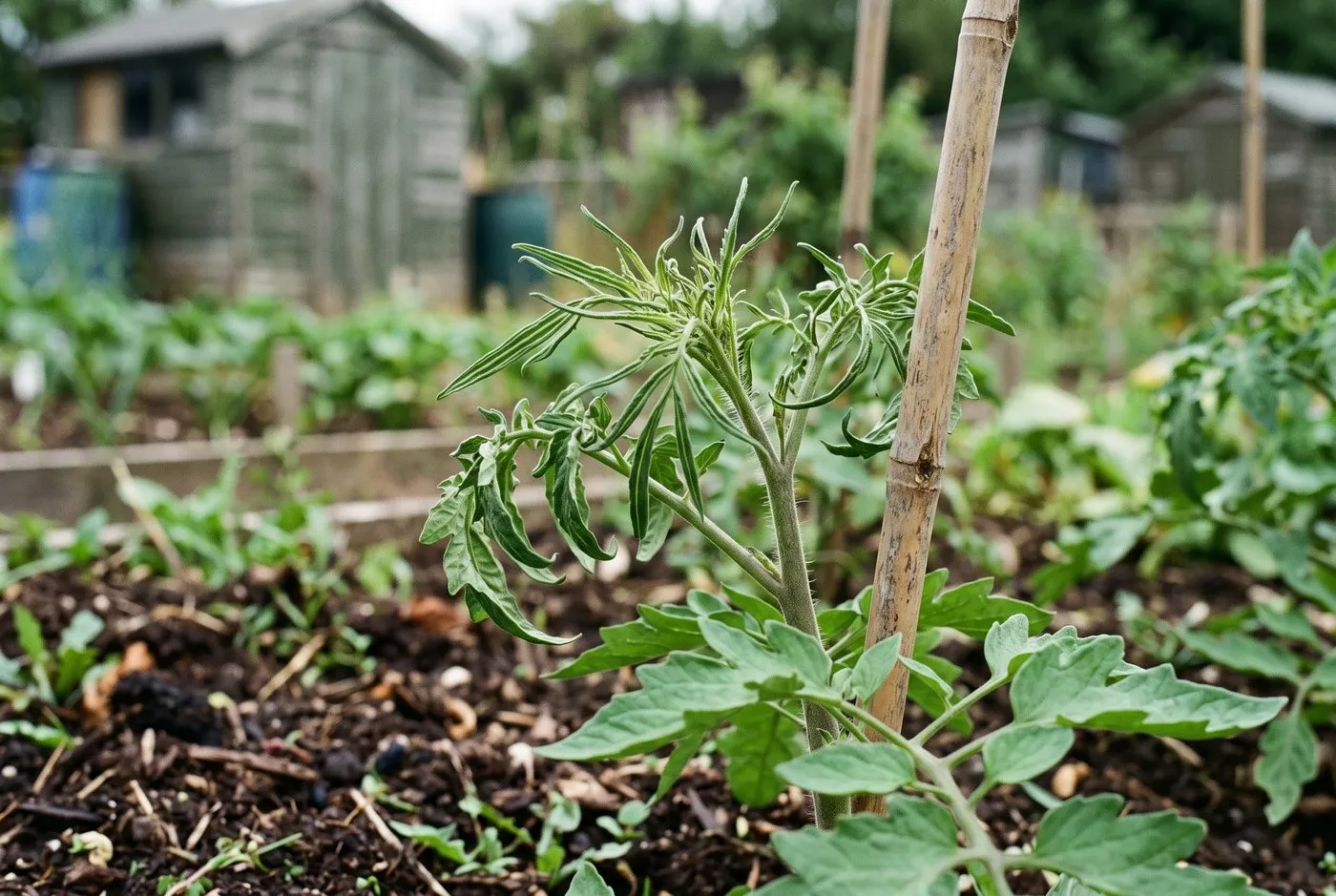
Weedkiller damage: the new shoots are narrow, twisted and fern-like. This plant won’t recover.
When curling leaves mean a virus
Viruses are fairly uncommon in garden tomatoes, but there’s no cure. Mosaic viruses, including tomato mosaic and cucumber mosaic virus, are the ones you’re most likely to meet.
Look for:
- Yellow-green mottling in a patchy mosaic.
- Leaves that pucker, twist and curl.
- Stunted plants and small or uneven fruit.
Remove and bin affected plants. Don’t compost them. Wash your hands and tools afterwards, as some viruses spread on hands and tools, including after handling tobacco. Keep aphids and whitefly down, as they spread some viruses. The cucumber mosaic virus guide has more on this group.
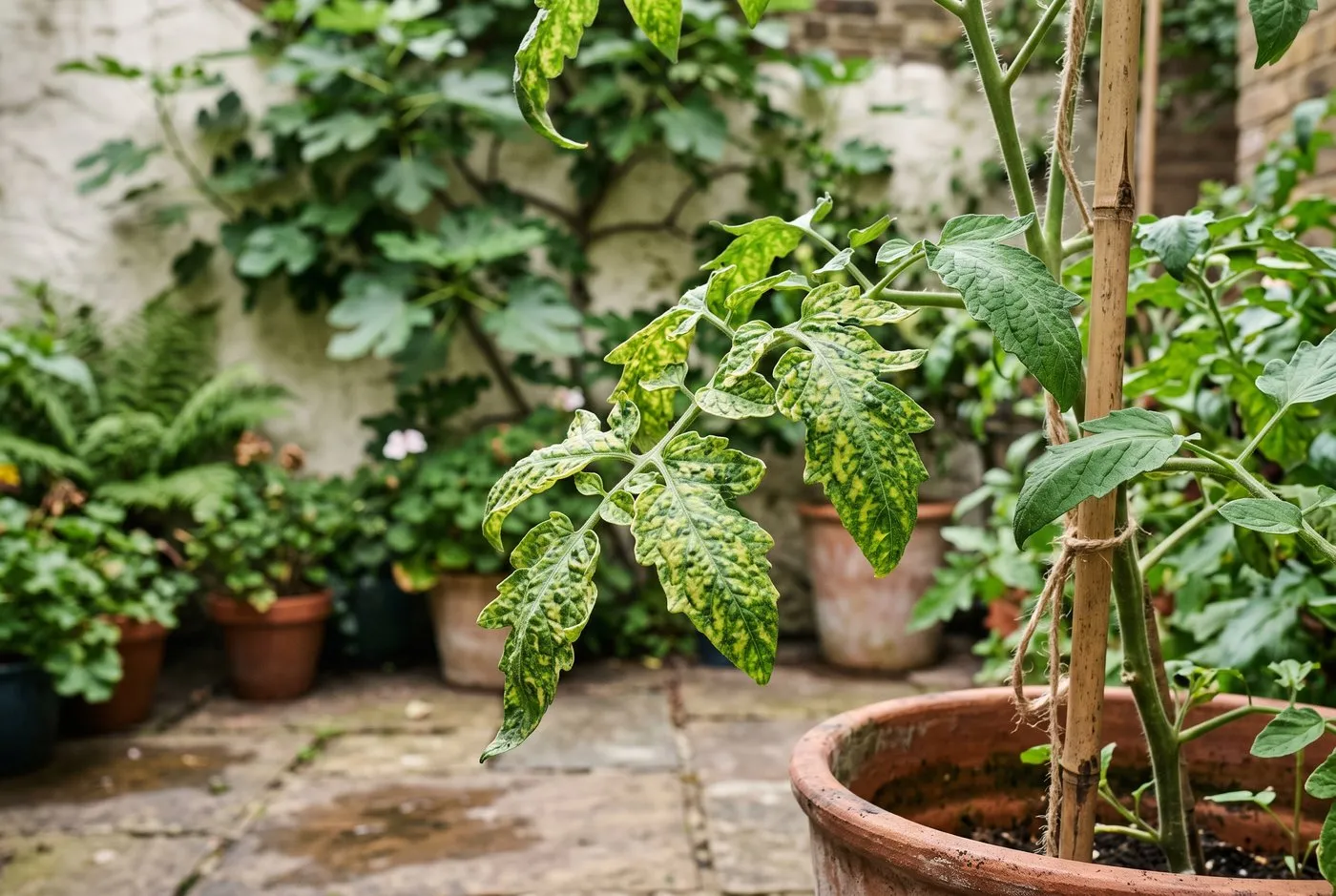
Virus mottling: patchy yellow and green with puckered leaves. The colour is wrong, which leaf roll never causes.
Aphids and broad mite on tomato leaves
Pests are the least common cause, but two are worth knowing.
Aphids cluster on soft tips and leaf undersides. Heavy colonies make young leaves pucker and curl. You’ll see the insects, plus sticky honeydew. Squash or hose them off, and let ladybirds and lacewing larvae help. The aphid guide covers more ways to deal with them. If a spray is really needed, use an approved product and follow the label.
Broad mite is too small to see. It attacks the growing tip, so the youngest leaves curl down, turn bronze and go brittle. Pinch out and bin affected tips. Predatory mites are sold as a biological control for greenhouses.
Common mistakes with curled tomato leaves
- Panicking over leaf roll. Upward roll on firm, green lower leaves is normal. Check the fruit before doing anything.
- Pulling off rolled leaves. They still feed the plant and shade the fruit from sunscald.
- Drowning a hot plant. A plant rolling in midday heat isn’t always thirsty. Feel the compost first.
- Ignoring fern-like new growth. Narrow, twisted shoots point to weedkiller in the manure. Act quickly and test your supply.
- Spraying for leaf roll. Sprays and tonics do nothing for heat or watering stress. Fix the conditions instead.
Tomato leaf curl calendar
| Month | Risk and what to do |
|---|---|
| January-February | Buy fresh compost. Test any manure with a broad bean check |
| March-April | Keep seedlings warm. Avoid chilling them on cold nights |
| May | Plant out under cover. Watch for warm-day, cold-night swings |
| June | Start ventilating greenhouses on warm days. Shade from late June |
| July-August | Peak risk. Shade, ventilate and water evenly |
| September | Cooler nights ease leaf roll. Keep watering steady |
| October | Clear plants. Don’t compost any with twisted growth or mottling |
| November-December | Clean the greenhouse, pots and tools |
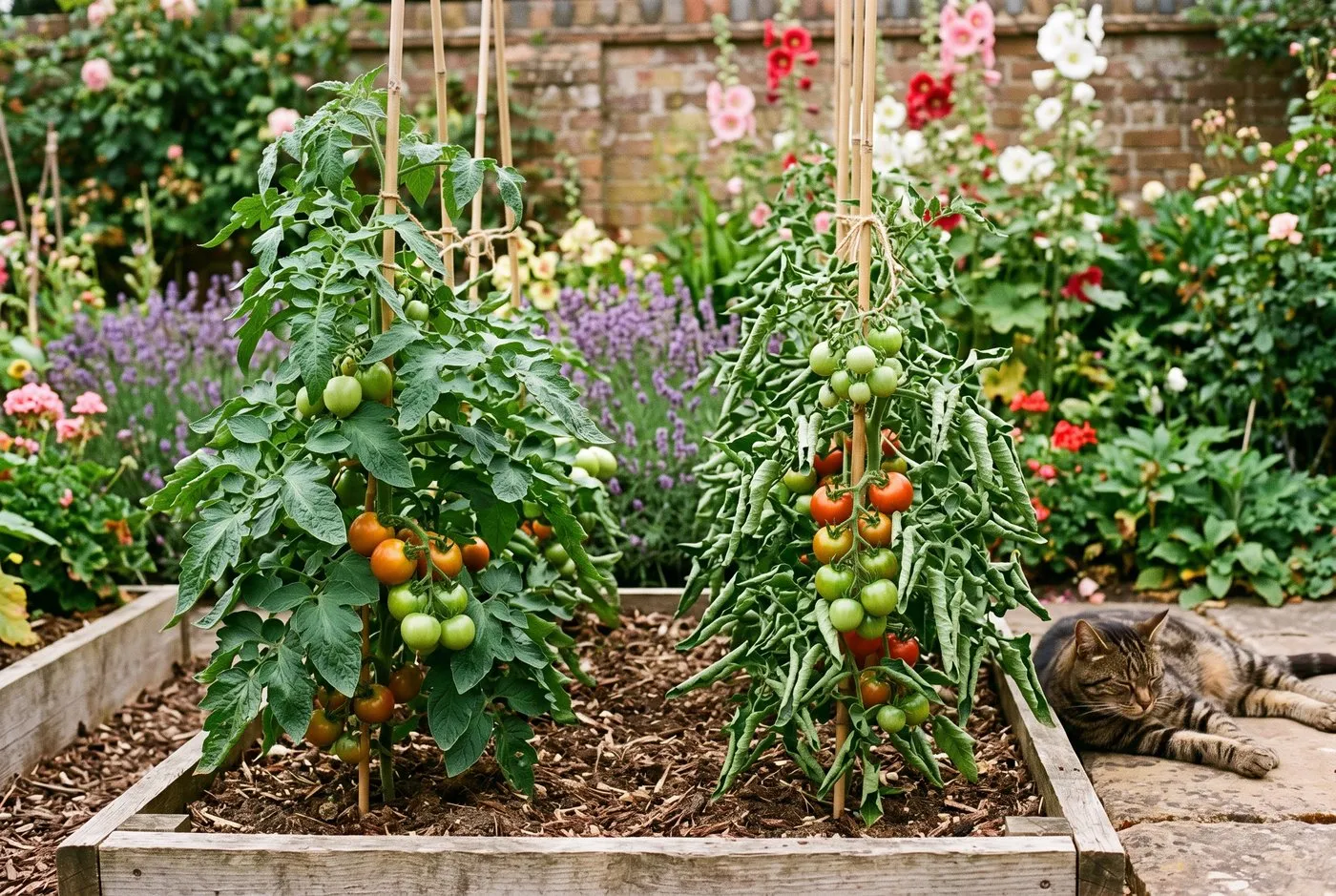
Flat leaves (left) and rolled leaves (right) on plants both carrying good trusses. Leaf roll on its own doesn’t stop a crop.
Frequently asked questions
Why are my tomato leaves curling up?
It is usually harmless leaf roll caused by heat or temperature swings. The lower leaves roll first, feel firm and stay green, and the fruit is fine. No treatment is needed. Keep watering steady and ventilate on warm days.
Should I remove curled tomato leaves?
No, leave rolled leaves on the plant. They still feed it and shade the fruit. Only remove leaves that are yellow, spotted or clearly diseased.
Do curled tomato leaves affect the fruit?
Harmless leaf roll does not affect the crop. Curling caused by a virus, weedkiller or a bad pest attack is different and can ruin it. Work out the cause before you worry.
What does aminopyralid damage look like on tomatoes?
Leaves cup downwards and new growth goes narrow, twisted and fern-like. It comes from manure or compost containing this weedkiller. The plants won’t recover. Stop using the suspect manure and grow next year’s tomatoes in fresh compost.
Can overwatering cause tomato leaves to curl?
Yes, and so can underwatering. Overwatered plants have soggy compost and yellowing lower leaves. Dry plants wilt and get crisp leaf edges. Feel the compost a few centimetres down before you decide which it is.
Is tomato leaf curl a virus?
Sometimes, but viruses mottle and pucker leaves rather than rolling them neatly. Look for yellow-green mosaic patches, twisted growth and stunting. There is no cure, so remove and bin affected plants.
How do I stop tomato leaves curling in a greenhouse?
Ventilate early, shade the glass and water steadily. Open doors and vents in the morning before it gets hot. Use shade paint or netting in high summer and damp down the floor on hot days.
For more veg troubles, see the problems hub. Uneven watering also cracks fruit, so read our guide to tomatoes splitting on the vine next.
Our team produces practical UK gardening guidance from source research, contributor records and established horticultural practice. Editorial standards are overseen by Matt W.