Key takeaways
- Look for blotchy yellow and green leaves, puckered growth and lumpy fruit
- There's no cure, so pull up infected plants and bin them, not compost them
- Aphids spread it in moments, so sprays alone won't stop it
- Grow resistant varieties like cucumber 'Marketmore 76' or courgette 'Defender'
- Keep weeds down, as the virus hides in weeds like chickweed over winter
- Wash hands and clean tools after handling sick plants
If your cucumbers, courgettes or tomatoes have blotchy yellow-green leaves and twisted, puckered growth, cucumber mosaic virus (CMV) is a likely culprit. It’s one of the most common plant viruses in British gardens, and sadly there’s no cure.
The good news is you can stop it spreading and make it far less likely next year. Here’s how to spot it, what to do with infected plants and how to keep it out.
What is cucumber mosaic virus?
Cucumber mosaic virus is a plant virus that’s spread mainly by aphids. Despite the name, it attacks far more than cucumbers. It infects a huge range of veg, flowers and weeds, which is why it’s so hard to get rid of.
It’s found right across the UK, and our warm summers suit the aphids that carry it.
How to identify cucumber mosaic virus
The giveaway is a mosaic pattern on the leaves. You’ll see irregular patches of light green, dark green and yellow, like a patchwork. That’s different from a lack of nutrients, which usually turns leaves an even yellow.
Here’s what to look for on common plants:
| Plant | Leaves | Fruit and growth |
|---|---|---|
| Cucumber | Yellow-green mottling, edges cupped downwards | Warty, pale fruit |
| Courgette and marrow | Strong yellow mottling, blistered | Small, lumpy, discoloured fruit |
| Tomato | Very narrow, thread-like leaves, mottling | Small plants, fewer fruit |
| Pepper | Mottling and curling | Stunted plants, marked fruit |
| Lettuce | Yellowing and stunting | Hearts fail to form |
| Spinach | Bright yellow mottling, twisted leaves | Runs to seed early |
| Dahlia | Mottling and stunting | Fewer, distorted flowers |
| Delphinium | Mottling | Stunted flower spikes |
Other signs:
- Twisted leaves: puckered and curled, often cupped downwards at the edges
- Fern-like tomato leaves: narrowed to thin strands
- Stunted new growth: young shoots and tips are hit first
- Shoestring leaves: very narrow, strap-like leaves on badly affected plants
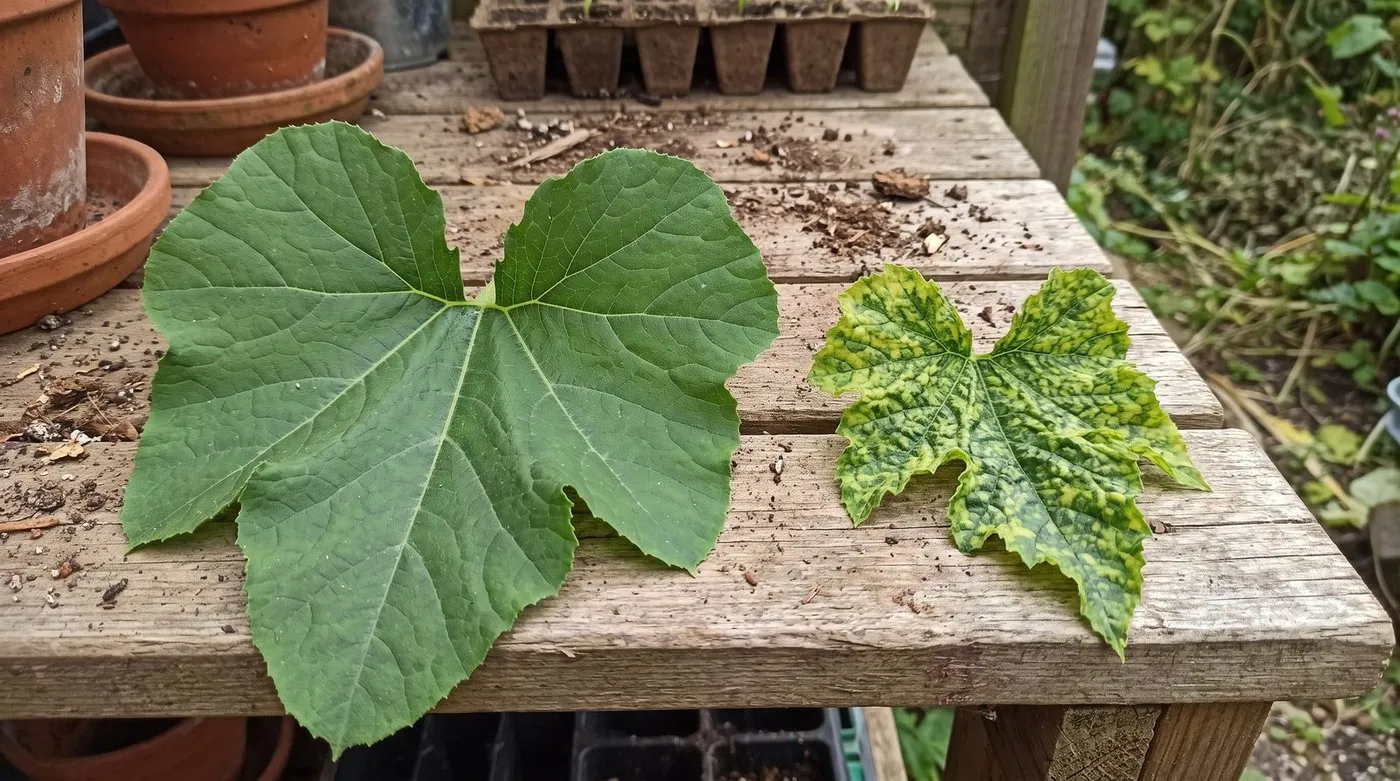 Left: a healthy, evenly green cucumber leaf. Right: an infected leaf with the typical yellow-green mottling and puckering.
How cucumber mosaic virus spreads
Aphids are the main carriers. Many kinds of aphid can carry CMV, and they’re busy in British gardens from spring to autumn.
An aphid picks up the virus on its mouthparts with a quick taste of an infected plant, then passes it on with its next quick taste. It all happens in moments. That’s why aphid control on its own doesn’t stop CMV: by the time a spray works, the aphid has already passed the virus on.
 Aphids on the underside of a cucumber leaf. They pass the virus on so fast that sprays can’t keep up.
Other ways it spreads:
- Hands and tools: sap on your fingers, secateurs or knives can carry the virus from a sick plant to a healthy one. Wash your hands and clean your tools between plants.
- Weeds: this is the one people forget. Weeds such as chickweed and groundsel can carry the virus through winter. Aphids feed on them in spring, then fly to your crops.
Which plants does cucumber mosaic virus affect?
CMV infects more kinds of plant than almost any other virus. These are the main ones in UK gardens:
Vegetables:
- Cucumber, courgette, marrow, squash, pumpkin and melon
- Tomato, pepper and aubergine
- Lettuce, spinach, celery and endive
- Beans and peas
- Beetroot, and occasionally carrots
Flowers:
- Dahlia, delphinium, petunia, primula and aquilegia
- Lily, gladiolus and narcissus
- Pelargonium and busy lizzie
Weeds that can carry it:
- Chickweed, fat hen, shepherd’s purse, groundsel, bindweed and white clover
If you grow cucumbers next to courgettes or tomatoes, one infected plant can soon spread it around the plot when aphids are busy in early summer.
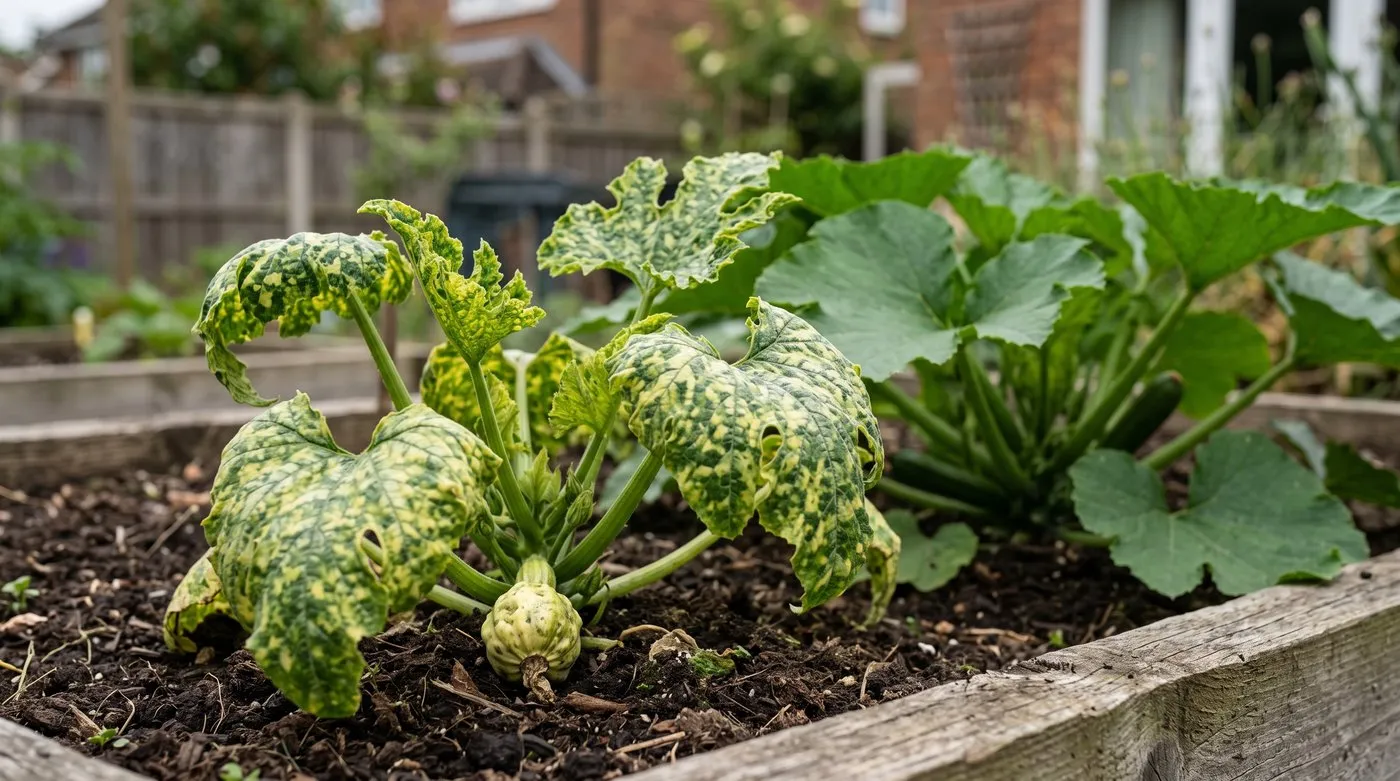
On courgettes, look for strong yellow mottling, blistered leaves and small lumpy fruit. Bag the plant and bin it before aphids spread it.
Treatment hierarchy for cucumber mosaic virus
There’s no spray that cures a plant virus, so “treatment” means stopping it spreading. In order:
- Remove infected plants as soon as you spot them
- Clean hands and tools so you don’t spread it yourself
- Clear weeds in and around the plot
- Grow resistant varieties next time
- Keep aphids off young plants with barriers
How to remove and dispose of infected plants
Act as soon as you see symptoms. The longer a sick plant stays, the more chance aphids have to carry the virus to its neighbours.
Step by step:
- Wear disposable gloves, or wash your hands well afterwards.
- Pop a bin bag over the plant before you pull it, to catch any aphids that fall off.
- Pull up the whole plant, roots and all.
- Seal the bag straight away.
- Put it in your household waste bin. Don’t put infected plants on the compost heap.
- Clean your tools with hot soapy water or a garden disinfectant.
- Wash your hands before touching any other plants.
Keep a close eye on nearby plants for the next few weeks, as symptoms can take a while to show.
Resistant cultivars for UK gardens
Growing resistant varieties is the best way to prevent CMV. Look for “CMV” or “virus resistant” on the seed packet.
Two easy-to-find choices:
- Cucumber ‘Marketmore 76’, an outdoor ridge cucumber with good CMV resistance
- Courgette ‘Defender’ F1, a reliable bush courgette bred to resist CMV
Resistant doesn’t mean immune. In a bad aphid year, a resistant plant can still pick up the virus, but it usually shows milder symptoms and keeps cropping.
 Check your plants every week from May, including under the leaves. Catching it early stops it spreading.
Prevention methods that work
Tackle all three routes at once: aphids, weeds and your own hands. No single method is enough on its own.
Aphid barrier methods
Covering young plants keeps aphids off them in their first few weeks, when they’re most at risk.
Fine insect mesh, fine enough to keep aphids out, works well when the edges are buried or weighed down. Drape it over hoops. The catch for courgettes and outdoor cucumbers is that bees can’t get in, so you’ll need to hand-pollinate: dab pollen from a male flower onto a female flower with a small paintbrush in the morning.
Reflective silver mulch laid around young plants can put aphids off landing. It works best early on, before the leaves grow big enough to cover it.
Weed reservoir management
Keep chickweed, fat hen, shepherd’s purse and groundsel down in and around your veg plot. They can carry the virus through winter and give aphids their first meal in spring.
Hand-pull or hoe weeds and take them away, rather than leaving them to regrow.
Hygiene and mechanical prevention
- Wash your hands between handling different groups of plants
- Clean your tools after working on sick plants
- Buy fresh seed from a good supplier, and don’t save seed from plants that had the virus
- Leave plants alone when they’re wet, as the virus spreads more easily through sap
Our guide to companion planting suggests French marigolds and nasturtiums among your veg. They may help a little, but only alongside the steps above.
The CMV lifecycle in UK gardens
Knowing how the virus gets through the year shows why spring is the time to act.
Winter: the virus hides in living weeds like chickweed, which stays green through mild British winters.
Spring: aphids hatch and feed on those weeds, picking up the virus. Before long, winged aphids fly off to find new plants.
Early summer: winged aphids land on your young veg and pass the virus on. Symptoms show up a week or few later.
Midsummer: aphids breed fast in warm weather and move from plant to plant, spreading the virus around the plot.
Autumn: as crops are cleared, aphids go back to the weeds, and the virus waits there for next year.
| Season | What’s happening | What to do |
|---|---|---|
| November to March | Virus hiding in weeds | Clear weeds before spring |
| April to May | Aphids getting going | Put up mesh or lay mulch around young plants |
| May to June | Virus reaching your crops | Check weekly, remove sick plants quickly |
| June to August | Fast spread in warm weather | Keep barriers on and keep weeding |
| September to October | Aphids heading back to weeds | Clear old crops and late weeds |
The big mistake is only reacting once you see symptoms in summer. By then aphids have usually spread it around. The best time to act is March to early May: clear weeds, get barriers ready and sow resistant varieties.
Common mistakes when dealing with cucumber mosaic virus
Relying on sprays. Insecticides can cut aphid numbers, but aphids pass the virus on too fast for sprays to stop it. They also harm the ladybirds and hoverflies that eat aphids.
Composting infected plants. A garden compost heap won’t reliably kill the virus. Put infected plants in your household waste instead.
Forgetting the weeds outside the plot. It’s easy to weed between the crops and ignore the path edges, hedge bottoms and corners. That’s exactly where chickweed and groundsel hang on through winter.
Saving seed from infected plants. Buy fresh seed each year rather than saving it from a plot that had CMV.
Crops to grow after a CMV outbreak
The virus doesn’t hang about in the soil on its own, so once you’ve cleared infected plants and weeds you can replant the space.
Quick crops for the rest of the season:
- Pak choi, rocket and radishes
- Turnips and spring onions
- A green manure like phacelia, buckwheat or mustard to cover the soil
Next year: move your cucumbers, courgettes and tomatoes to a different part of the plot as part of your crop rotation. Choose resistant varieties and start weeding in March.
Biological pest control, such as tiny parasitic wasps that attack aphids, can help keep aphid numbers down in a greenhouse. They work best in greenhouse growing, where fewer new aphids fly in from outside.
Cucumber mosaic virus in greenhouses
A greenhouse keeps a lot of aphids out, but once the virus gets in, the warm, crowded conditions help it spread.
Good points:
- Walls and roof keep many aphids out
- Warmth suits natural aphid predators all season
- It’s easier to keep things clean
Not so good:
- Warm, humid air helps aphids breed fast
- Plants are packed close together
- Open vents let aphids in unless they’re screened
Greenhouse tips:
- Cover vents and doors with fine insect mesh. This is the most useful single step.
- Release parasitic wasps that attack aphids, from spring onwards.
- Hang yellow sticky traps to see how many aphids are about.
- Clean the greenhouse between seasons with a garden disinfectant, including benches, pots and staging.
- Weed in and around the greenhouse. Even a few chickweed plants in the gravel can carry the virus.
The RHS guide to cucumber mosaic virus has more on symptoms and which plants are affected.

Mesh over vents and doors is the most useful single step under glass. Keep the gravel floor free of chickweed too.
Frequently asked questions
What does cucumber mosaic virus look like on plants?
Blotchy yellow and green patches on the leaves. Young leaves are often puckered, curled and cupped downwards. Fruit can be lumpy, warty and pale. On tomatoes, the leaves can narrow to thin, fern-like strands.
Can I save a plant infected with cucumber mosaic virus?
No, sadly there’s no cure. No spray works against plant viruses. Pull up the whole plant, roots and all, bag it and put it in your household waste. Don’t compost it.
How do aphids spread cucumber mosaic virus?
They pick it up and pass it on in moments. An aphid gets the virus on its mouthparts from a quick taste of an infected leaf. It then passes it on with its next quick taste of a healthy plant. Because it’s so fast, sprays can’t stop it.
Which cucumber varieties are resistant to CMV?
‘Marketmore 76’ is a good, easy-to-find choice. Check seed packets for “CMV resistant” for other options. Resistant plants can still catch the virus in a bad aphid year, but they usually stay healthier and keep cropping.
Does cucumber mosaic virus stay in the soil?
No, it doesn’t survive in soil on its own. It lives on in living plants, especially weeds like chickweed, fat hen and shepherd’s purse. Clearing weeds in and around your plot matters most.
Can cucumber mosaic virus spread to tomatoes and peppers?
Yes, it infects a huge range of plants. That includes tomatoes, peppers, lettuce, spinach, celery, beans and many flowers like dahlias, delphiniums and petunias. Tomato leaves can turn thin and fern-like. Peppers get stunted and mottled.
What is the best way to prevent cucumber mosaic virus in a UK garden?
Combine resistant varieties, weeding and good hygiene. Grow varieties like cucumber ‘Marketmore 76’ or courgette ‘Defender’. Keep weeds down in and around the plot. Cover young plants with fine mesh, and wash your hands and tools after handling sick plants.
Our team produces practical UK gardening guidance from source research, contributor records and established horticultural practice. Editorial standards are overseen by Matt W.