Key takeaways
- Pale oval patches, then grey-purple fuzz and floppy leaf tips, mean downy mildew
- It spreads fast on the wind in cool, wet, still weather, mostly June to August
- There is no fungicide for home gardeners, so prevention is the whole game
- Pull and bin the first affected plants straight away, not on the compost heap
- Wide spacing, clean sets, rotation and Santero F1 cut the risk
- Affected bulbs rarely store well, so eat them first
Onion downy mildew is the disease behind those pale, grey-purple, floppy onion leaves in a wet summer. It loves cool, damp, still weather and can sweep through a bed in a few weeks. There is no spray for home gardeners. The good news is that spacing, clean sets, rotation and a resistant variety cut the risk a lot.
It is caused by a fungus-like water mould called Peronospora destructor. It mostly attacks onions and shallots. This guide covers how to recognise it, what to do when you spot it, how to save the bulbs, and how to stop it next year. For other onion problems, see the guide to onion diseases and how to tell them apart.
How to identify onion downy mildew
The first sign is pale, oval patches on the leaves, usually the older outer ones. They look lighter green or yellowish, and at first you might blame the wind or hungry soil.
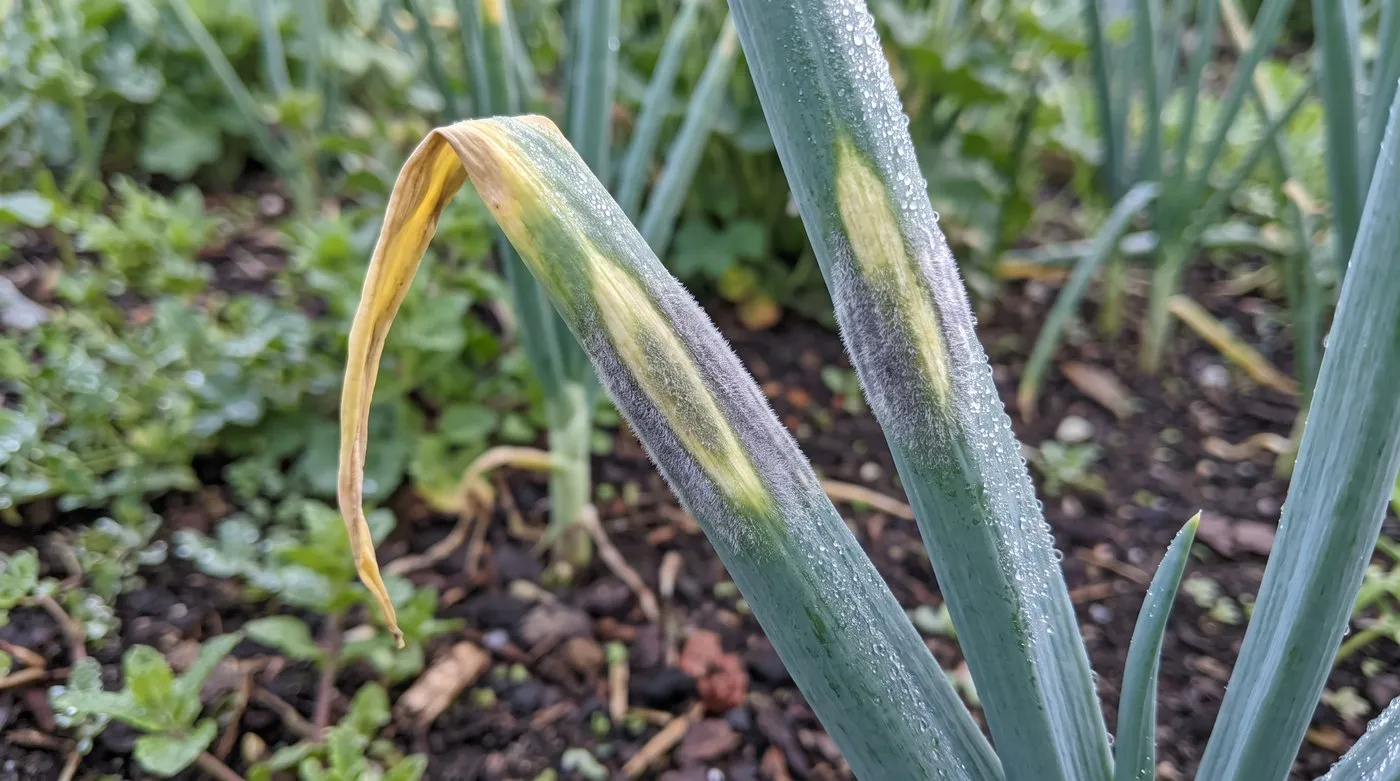
Pale oval patches with a grey-purple fuzz are the giveaway. Look first thing in the morning, when the fuzz shows best.
A few days later, a grey-purple fuzz grows over the patches. This is the spore layer. Look in the early morning, when the air is damp and the fuzz is easiest to see. By a warm afternoon it may have faded.
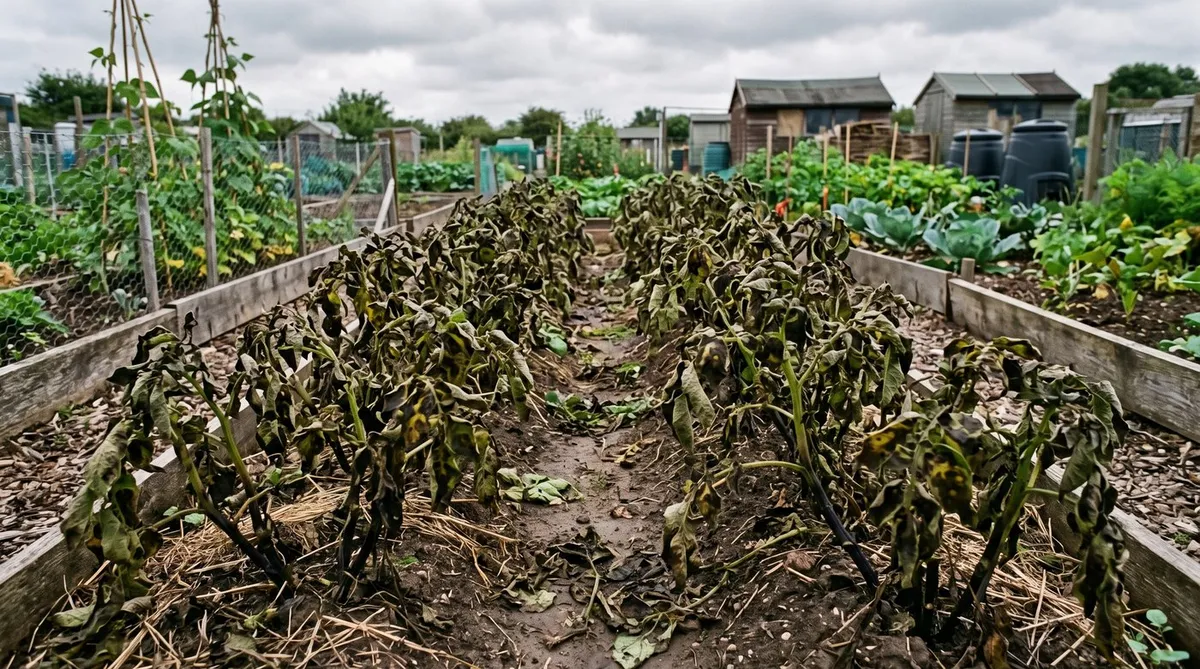
Next, the leaf tips turn yellow, then brown, and collapse and fold over. Badly hit plants look as if they’ve been scalded. The bulbs stop swelling, so you end up with small onions.
Outbreaks often start in the wettest, most sheltered part of a bed, where leaves stay damp longest. From there it spreads outwards.
When does onion downy mildew strike?
It strikes in cool, wet, still weather, mostly from June to August. Long spells when the leaves stay wet overnight and into the morning are what it needs. Dry, sunny summers keep it down.
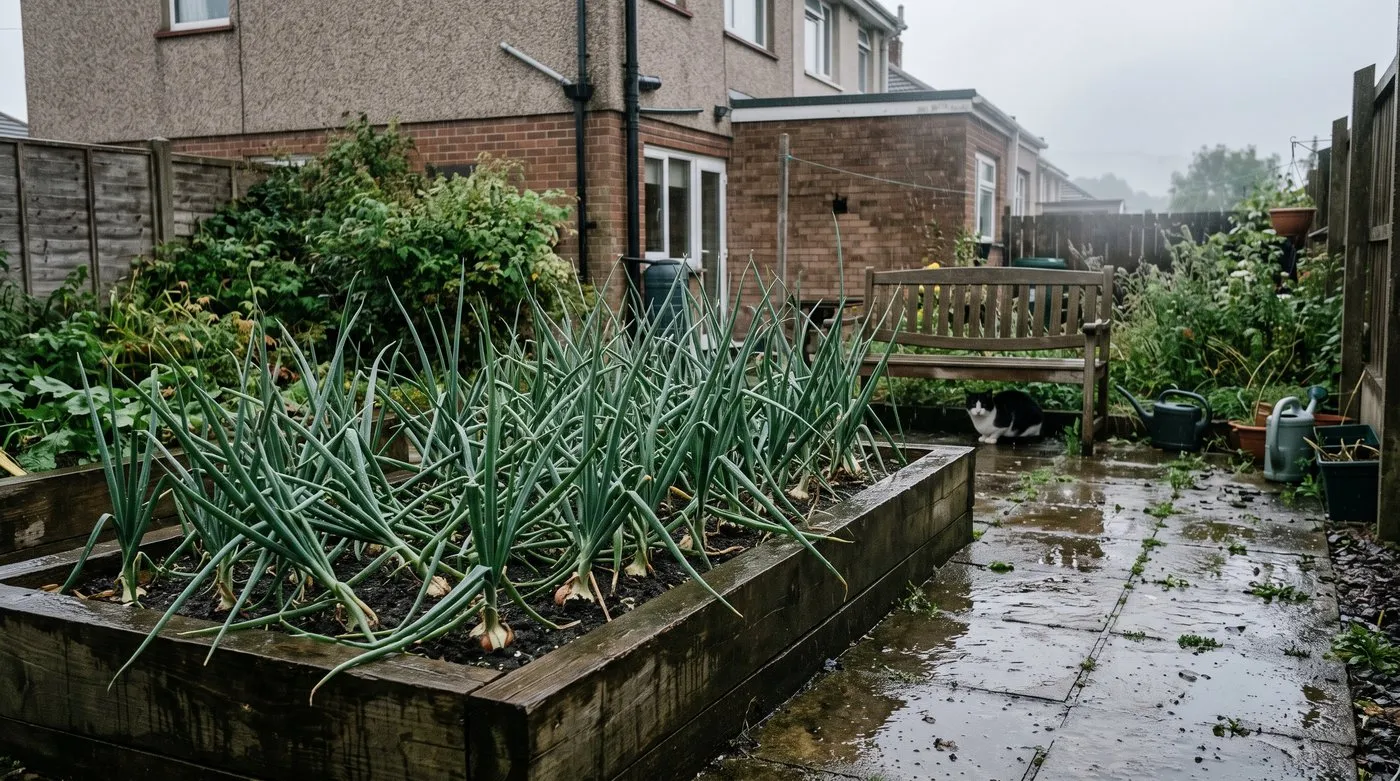
Days like this, cool, still and wet, are exactly when downy mildew takes off.
Wetter western and northern areas tend to see it more often than the drier east. Sheltered, damp spots and low-lying plots are riskier too.
Here’s what to do through the year:
| Month | What to do |
|---|---|
| January to February | Plan where onions will go, away from last year’s onion bed |
| March to April | Buy firm, healthy sets. Plant with good spacing in an open, sunny spot |
| May | Weed well so air can move between plants. Start checking leaves weekly |
| June to August | Danger time. Check after wet spells and pull out any affected plants at once |
| August to September | Lift and dry bulbs. Sort out any with soft necks to eat first |
| October to November | Clear and bin every scrap of old onion leaf from the bed |
| December | Order a resistant variety such as Santero F1 for next year |
How does onion downy mildew spread?
It spreads in two ways. Spores blow on the wind from sick plants to healthy ones during the summer. It can also carry over in infected sets, bulbs and old leaves, ready to start again the next year.
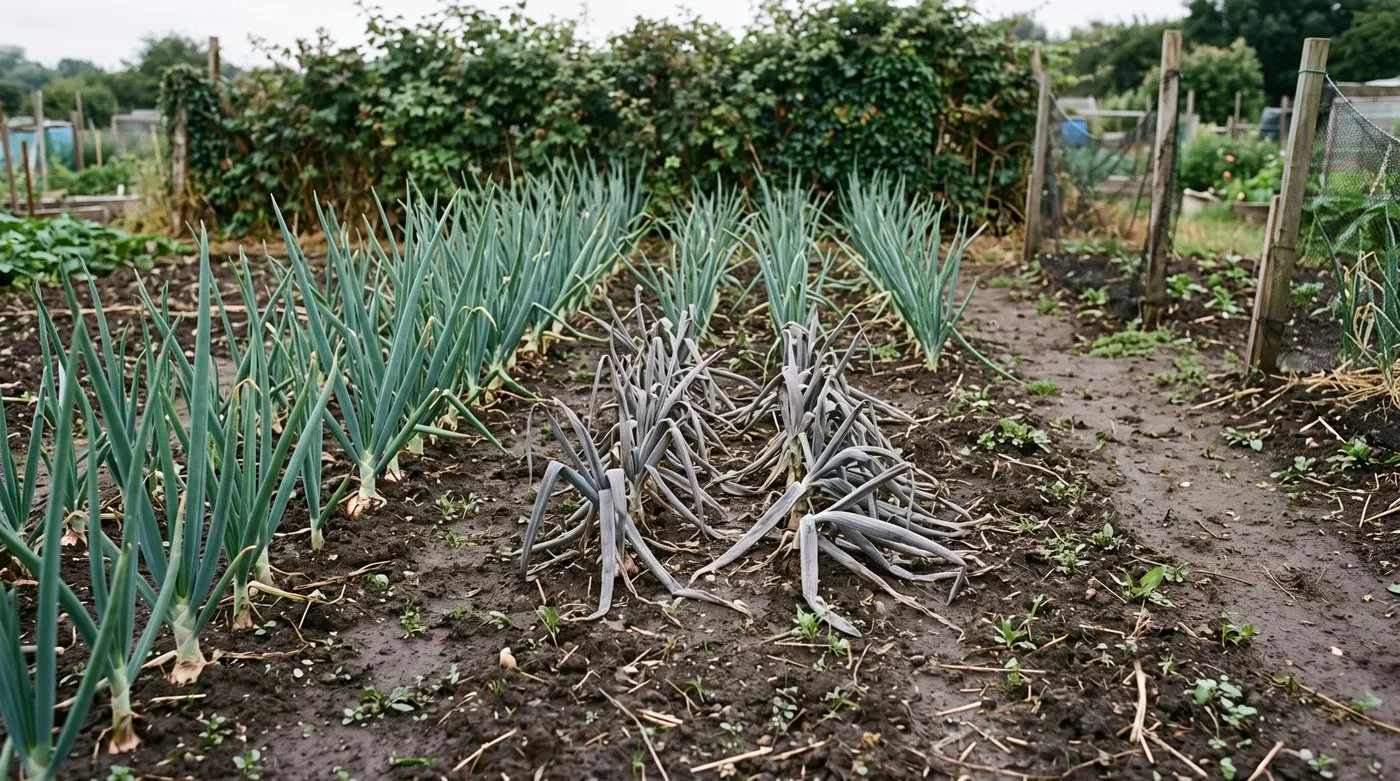
Outbreaks often start in one damp patch and spread outwards, so check the whole bed after wet spells.
The first sick plant in a bed often grew from an infected set, or from a self-sown onion or old bulb left from last year. Once that plant starts making spores, the wind does the rest. Spores can also blow in from neighbouring plots, which is why one tidy bed can still catch it.
Resting spores can also survive in the soil in old, rotted leaves. That’s why clearing debris and moving onions to a fresh bed each year both help.
What to do when you spot downy mildew
Pull out the first affected plants straight away, bulb and all. Bag them and put them in the general waste bin, not the compost heap. Every day a sporing plant stays in the bed, it showers spores onto its neighbours.
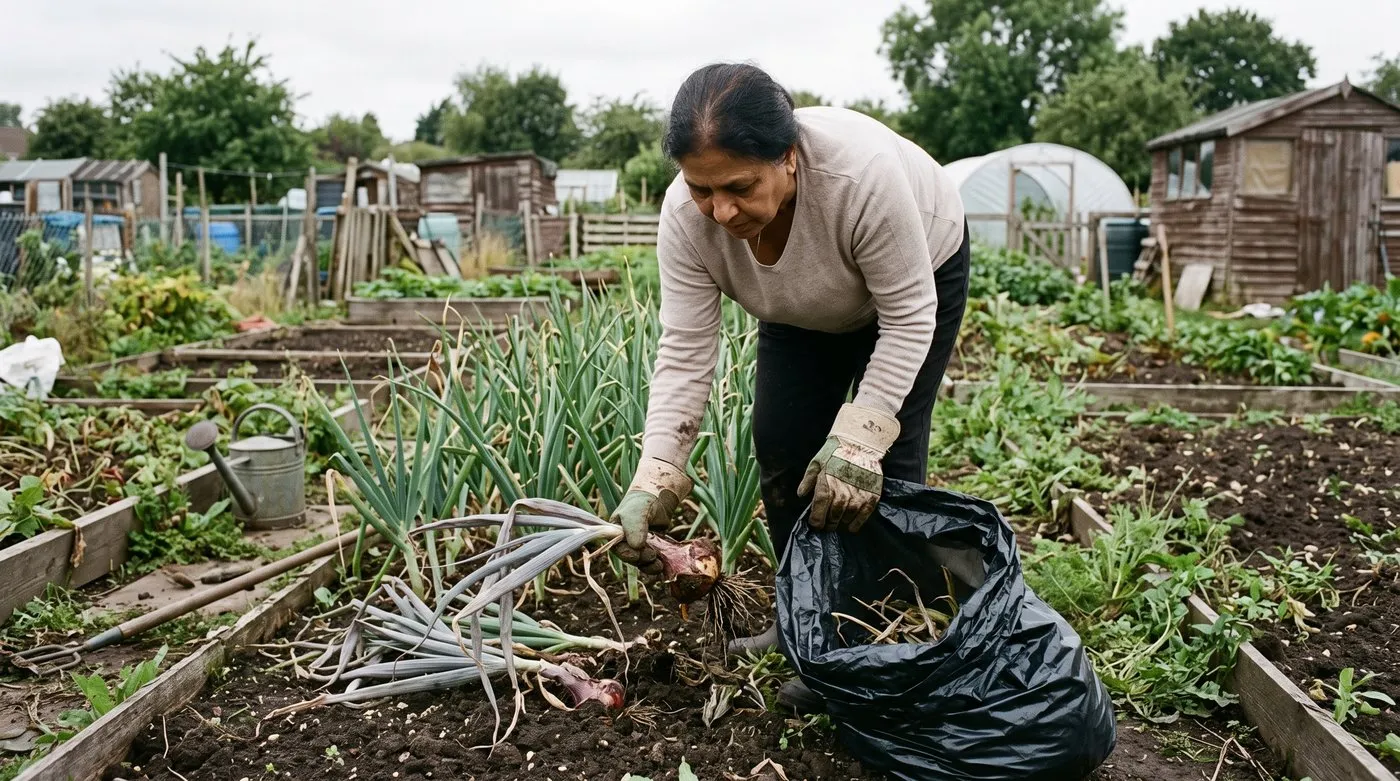
Pull the first sick plants out whole and bag them. It’s the single best way to slow the spread.
There is no fungicide for home gardeners to treat onion downy mildew, so don’t waste money on sprays. Instead:
- Thin crowded rows so air moves between plants and leaves dry faster.
- Water the soil, not the leaves, and do it in the morning.
- Weed between rows to stop damp air hanging around the plants.
- Lift the crop early if the leaves are collapsing and the bulbs have stopped swelling. A small, sound onion is better than a rotten one.
Clear all old leaves and stems at the end of the season and bin them.
How to prevent onion downy mildew next year
Stack the odds in your favour with a few simple habits:
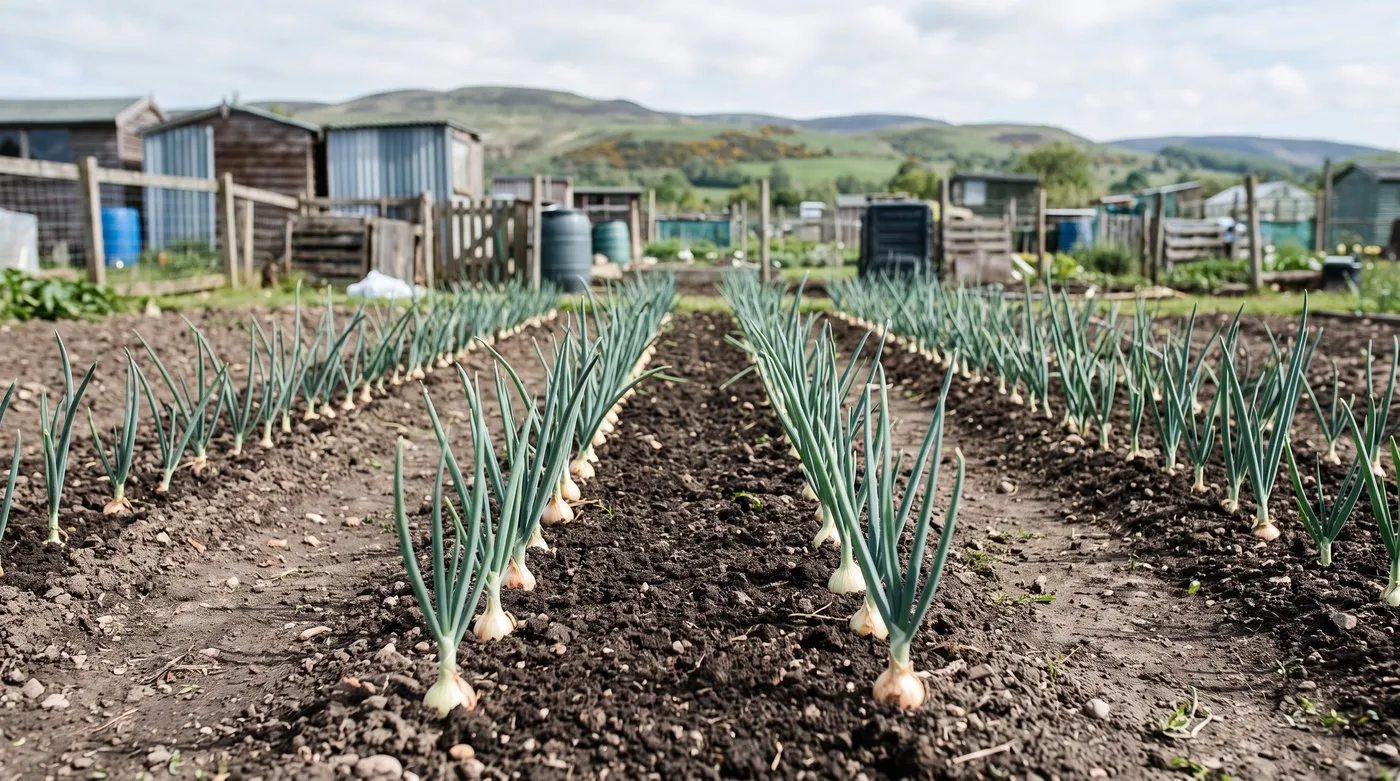
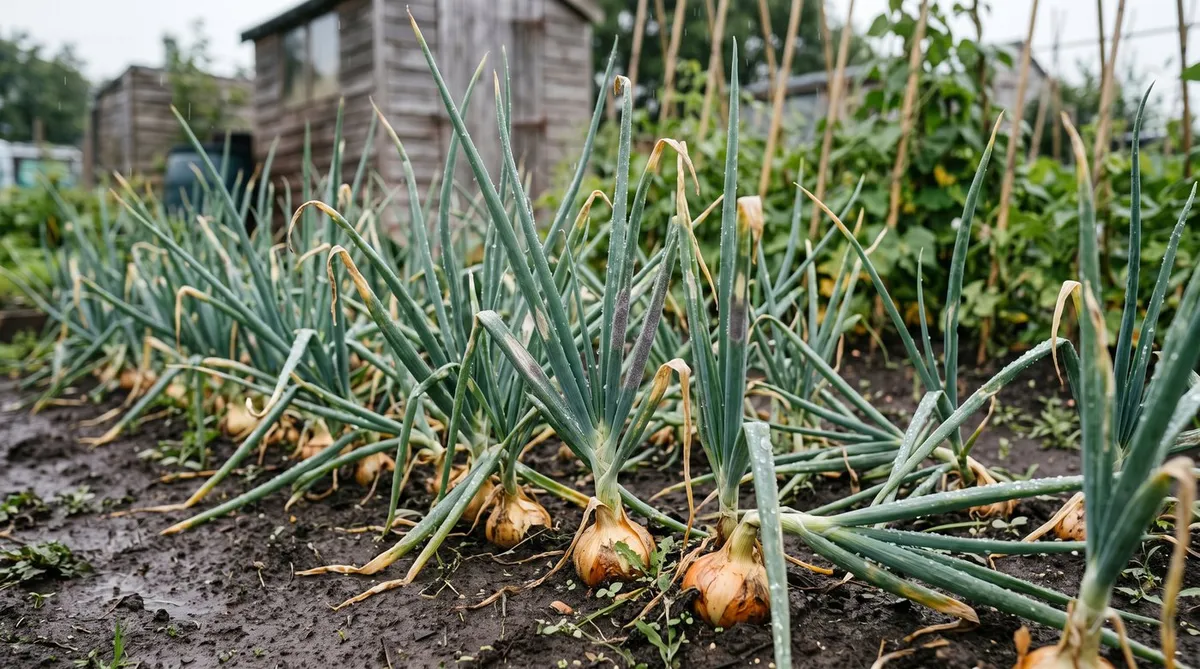
Space and sun help leaves dry quickly, which gives downy mildew far fewer chances.
- Plant clean sets. Buy from a reliable supplier and throw out any that are soft, mouldy or brown at the base.
- Give plants space. Plant sets about 10cm apart in rows 25-30cm apart, in an open, sunny spot with good airflow.
- Rotate. Don’t grow onions or shallots in the same bed more often than once every three or four years. A crop rotation plan makes this easy.
- Choose a resistant variety. Santero F1 is bred to resist onion downy mildew. It is not immune, but it holds up much better in a wet year.
- Clear up. Remove self-sown onions, old bulbs and every bit of onion debris.
Some growers also plant autumn onion sets, which are ready to lift in early summer. They can be cleared before the wettest weeks of late summer. The guide to autumn onion sets covers varieties and timings. For more on choosing varieties, see the UK onion varieties compared.
Can you store onions that had downy mildew?
Not for long. The disease weakens the neck of the bulb, where the leaves meet it. A weak neck doesn’t dry and seal properly, so rots get in during storage.
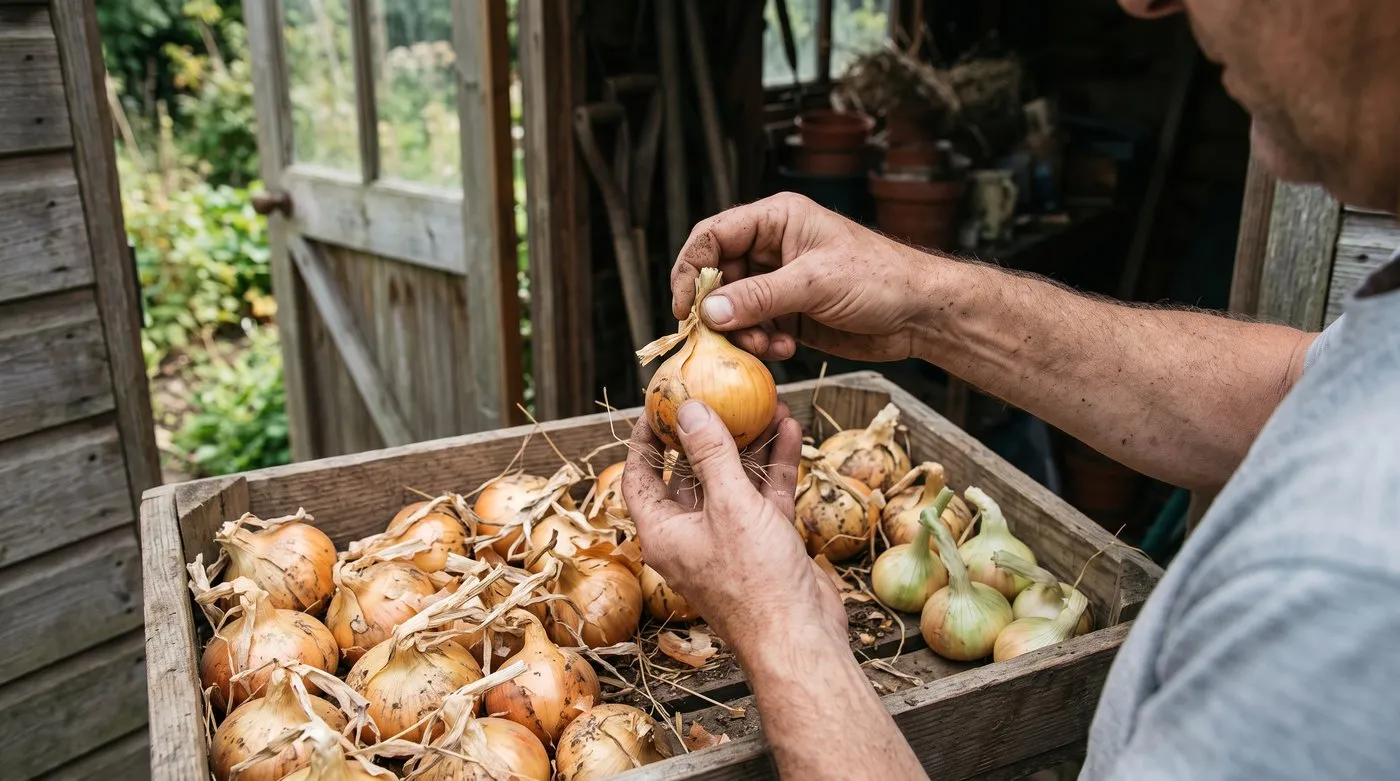
Give each neck a gentle squeeze. Soft ones go in the kitchen now, firm ones go into store.
At harvest, squeeze the neck of each bulb gently. A sound bulb has a firm, dry neck. A soft or spongy neck means that bulb should be eaten first, not stored.
Dry the sound bulbs somewhere warm, dry and airy until the skins rustle and the necks are papery. The guide to drying and curing onions explains how. Check stored onions every couple of weeks and use any that soften.
Onions with downy mildew are safe to eat. Just peel off any soft or discoloured layers.
Downy mildew or another onion problem?
Downy mildew kills leaves from the tips down, with grey-purple fuzz. Other onion troubles look different:
| Problem | What you see | Where it starts |
|---|---|---|
| Downy mildew | Pale oval patches, grey-purple fuzz, tips collapse | Leaves, from the tips down |
| White rot | Yellowing leaves, fluffy white mould and black specks at the base | Bulb and roots in the soil |
| Rust | Raised orange-brown spots | Leaves, scattered spots |
| Neck rot | Grey mould and softening at the neck | In storage, not in the bed |
| Onion fly | Plants wilt and fall over, maggots in the bulb | Bulb, below ground |
White rot is the one to fear most, because it stays in the soil for many years. The allium white rot guide explains how to spot it. Rust is much more common on leeks and garlic and rarely kills plants. Downy mildew on cabbages and other brassicas is a different disease, covered in the brassica downy mildew guide.
Common mistakes with onion downy mildew
Leaving sick plants in the bed. They keep making spores. Pull and bin the first ones you see.
Putting infected leaves on the compost heap. Home heaps rarely get hot enough to kill the disease. Bin them instead.
Planting too close. Crowded onions stay damp and spread it fast. Give each set room.
Storing every bulb together. Bulbs with soft necks rot and can spoil the rest. Sort them at harvest.
Growing onions in the same bed year after year. Old debris in the soil can start the next outbreak.
Frequently asked questions
What does onion downy mildew look like?
Pale, oval patches on the leaves, then grey-purple fuzz on them. The leaf tips then yellow, collapse and fold over. Badly hit plants look as if they’ve been scalded, and the bulbs stay small.
Can I eat onions with downy mildew?
Yes, the bulbs are safe to eat. Peel off any soft or discoloured outer layers. They often don’t keep well, so use them first rather than storing them for winter.
Are there onion varieties resistant to downy mildew?
Yes, Santero F1 is bred to resist onion downy mildew. It isn’t immune, but it stays healthier in a wet year. Good spacing and rotation still matter.
Can I spray onions for downy mildew in the UK?
No, there is no fungicide for home gardeners to use on it. Rely on clean sets, wide spacing, rotation, resistant varieties and pulling out sick plants early.
Does crop rotation prevent onion downy mildew?
It helps, but it can’t stop it on its own. Rotation keeps onions away from old infected debris in the soil. Spores still blow in on the wind from nearby plots.
Should I remove onion plants with downy mildew?
Yes, pull out the first affected plants straight away. Bag them and put them in the general waste bin, not the compost heap. Removing them early slows the spread to the rest of the bed.
Does onion downy mildew affect leeks and garlic?
It is mainly a problem on onions and shallots. Leeks and garlic are rarely badly affected. Rust is a much more common leaf problem on leeks and garlic.
Find more crop troubles in the problems hub. For a healthy crop from the start, read the guide to growing onions in the UK.
Our team produces practical UK gardening guidance from source research, contributor records and established horticultural practice. Editorial standards are overseen by Matt W.