Key takeaways
- Yellow, angular patches on top of the leaf with grey fuzz underneath mean downy mildew
- Cool, damp spring and autumn weather is when it strikes hardest
- Seedlings in crowded trays and rocket under cover are most at risk
- Space plants out, ventilate and water at the base in the morning
- Pick off infected leaves and bin them, not the compost heap
- Lightly affected cabbages and cauliflowers are safe to eat once outer leaves are removed
Brassica downy mildew is a common disease of cabbages, cauliflowers, kale, rocket and their relatives in UK gardens. It loves the cool, damp weather of spring and autumn, and it spreads fastest in crowded seed trays. Young seedlings can be killed outright, while older plants usually just lose outer leaves.
The fix is mostly about fresh air and dry leaves. This guide shows you how to recognise it, what makes it worse, and how to keep seedlings and crops healthy. If you’re not sure which brassica problem you have, the brassica diseases identification guide compares the main ones side by side.
How to identify brassica downy mildew
Look for yellow, angular patches on the upper surface of the leaf. The patches are boxed in by the leaf veins, so they look like little irregular tiles.
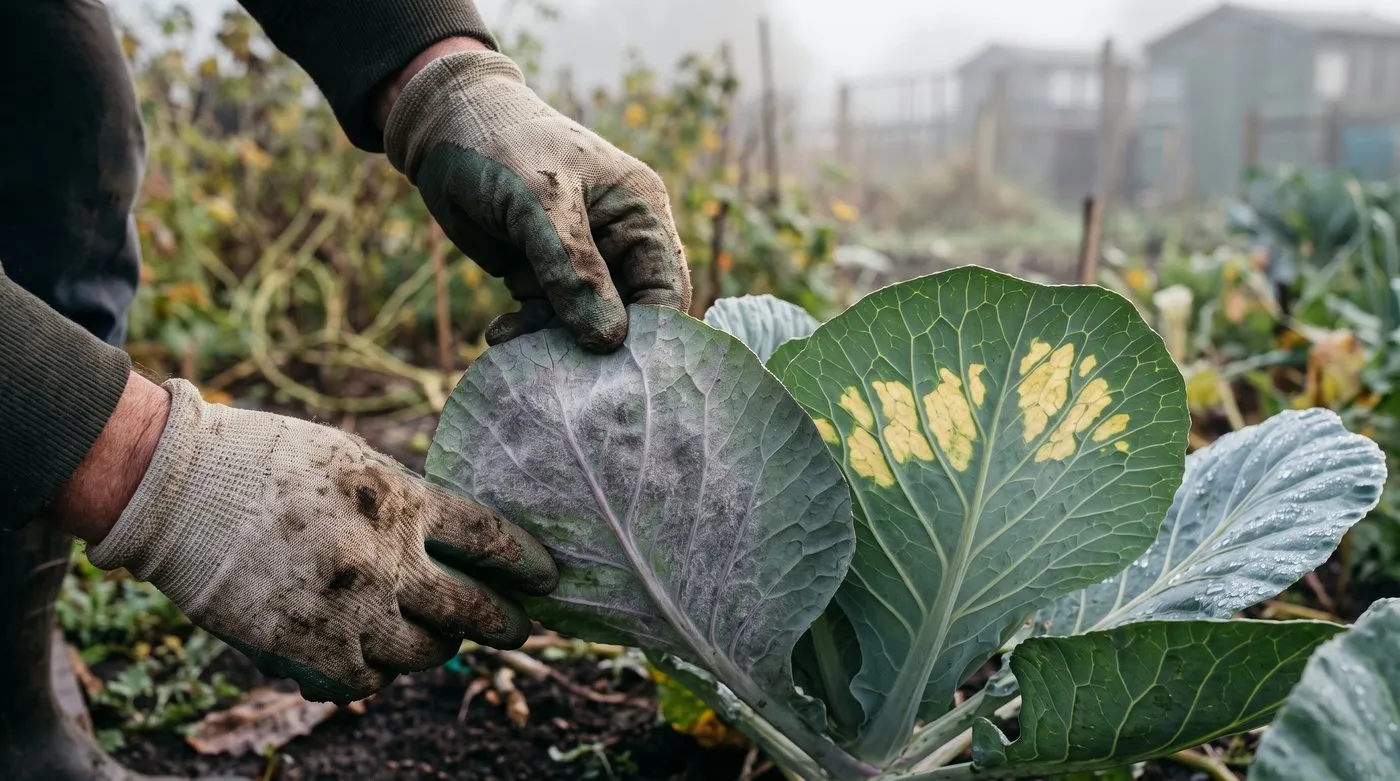
Always turn the leaf over. Grey fuzz sitting right under a yellow patch is the giveaway for downy mildew.
Turn the leaf over. Directly under each patch you’ll see white to grey-purple fuzz, especially after a damp night. That fuzz is where the spores form.
- Seedlings: the seed leaves and first true leaves turn yellow or purplish, then shrivel and collapse
- Older plants: outer leaves are hit first, with patches that turn brown and papery as they age
- Badly affected plants: growth slows and heads, hearts and curds stay small
Downy mildew on brassicas is a different strain from the ones on onions and lettuce. Each sticks to its own crop family, so it won’t jump from your cabbages to your lettuces. If your onions have it too, the onion downy mildew guide covers that crop.
Downy mildew or something else?
Downy mildew is easy to confuse with a few other leaf problems. Check where the growth sits and what shape the marks are.
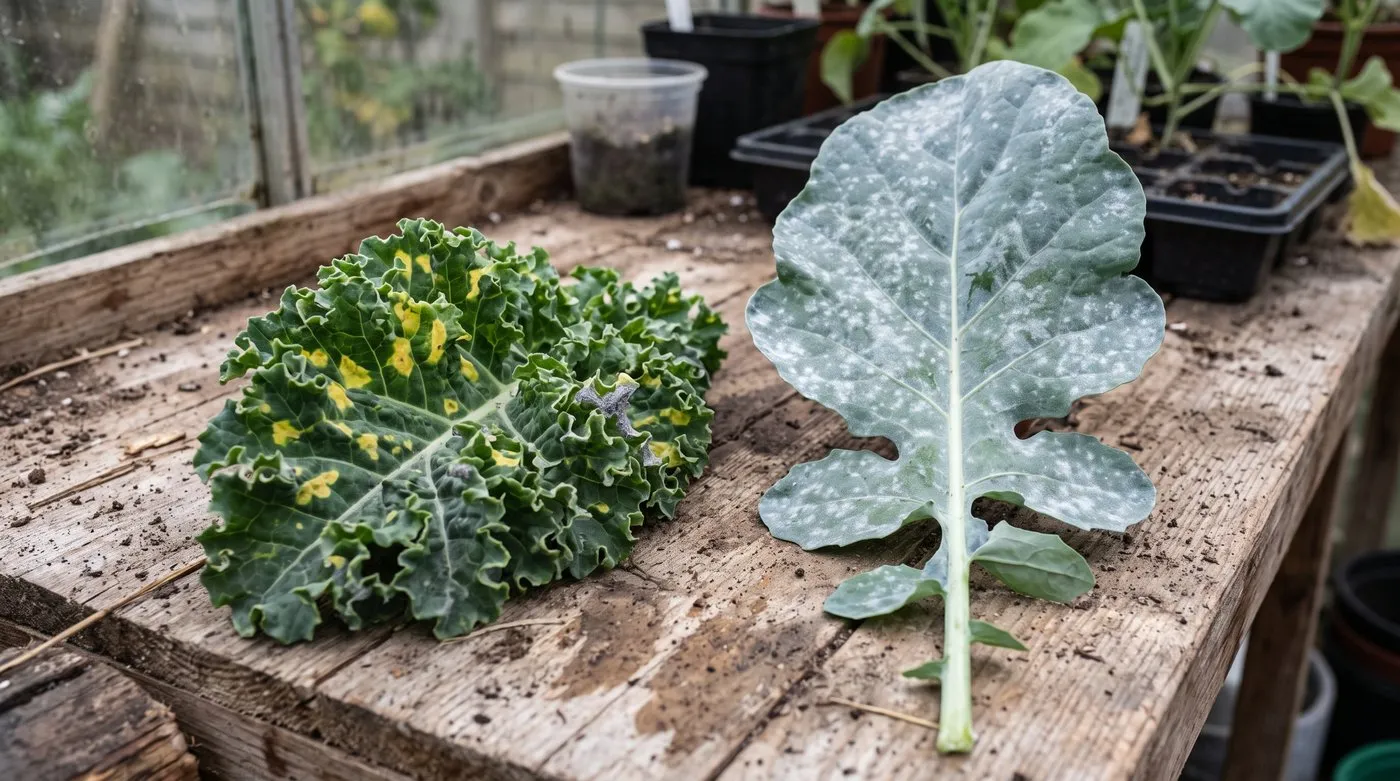
Downy mildew marks the top and fuzzes underneath. Powdery mildew sits on top like a dusting of flour.
| Problem | What you see | Where | Weather it likes |
|---|---|---|---|
| Downy mildew | Yellow angular patches, grey fuzz below | Patch on top, fuzz underneath | Cool and damp |
| Powdery mildew | White dusty coating | Top of the leaf | Warm and dry |
| White blister | Raised, shiny white blisters | Underside of the leaf | Cool and damp |
| Ring spot | Round grey-brown spots with rings | Both sides of older leaves | Damp autumns |
| Club root | Wilting, swollen roots | Roots | Wet, acid soil |
Powdery mildew is almost the opposite of downy mildew, so the powdery mildew guide needs a different approach. Wilting plants with good-looking leaves may have club root instead, so lift one and check the roots.
Why brassica downy mildew strikes
Downy mildew needs wet leaves and cool, humid air. In the UK that usually means March to May and September to November.
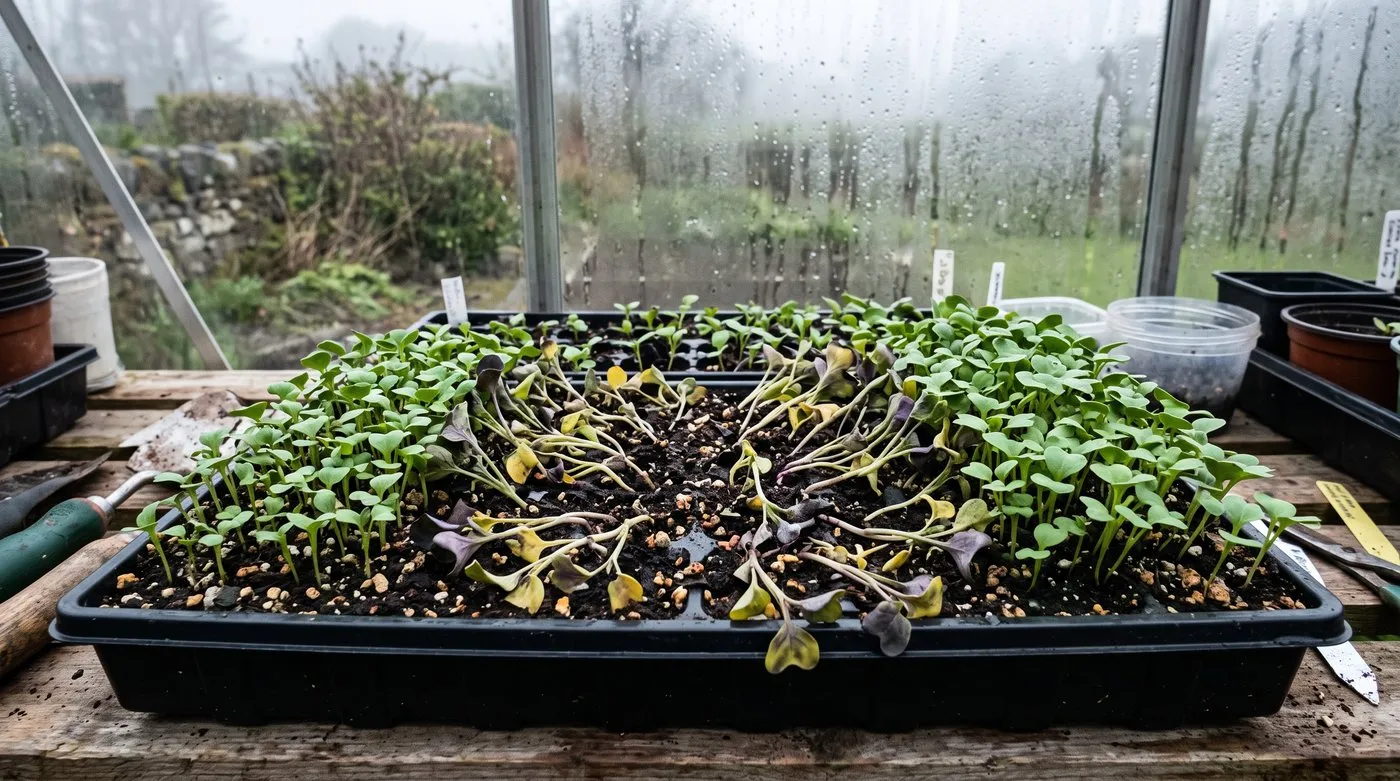
Packed trays and damp, still air are exactly what downy mildew likes. Sow thinly and prick out early.
Spores blow in on the wind or splash up from old infected debris. They land on a wet leaf and get in within hours if it stays damp. Morning dew that dries slowly, overhead watering and still, muggy air under glass all help it along.
Crowding makes everything worse. Packed seed trays and close-planted rows trap moisture around the leaves, and spores pass easily from plant to plant. Warm, dry summer weather usually slows it right down.
Which brassicas are most at risk?
Seedlings are the most vulnerable, especially when crowded in trays under glass. They can go from healthy to collapsed within days.
Among older plants, cauliflower and calabrese are often hit, as their big, dense leaves hold moisture. Rocket is very prone, especially autumn sowings under cover. Picking it over and over keeps exposing soft new growth. Sow small batches every few weeks and keep it well ventilated. The guide to growing rocket has more on sowing and spacing.
Kale and purple sprouting broccoli tend to cope better, as their open growth lets air move through.
How to prevent brassica downy mildew
Prevention is all about keeping leaves dry and air moving. These steps make the biggest difference.
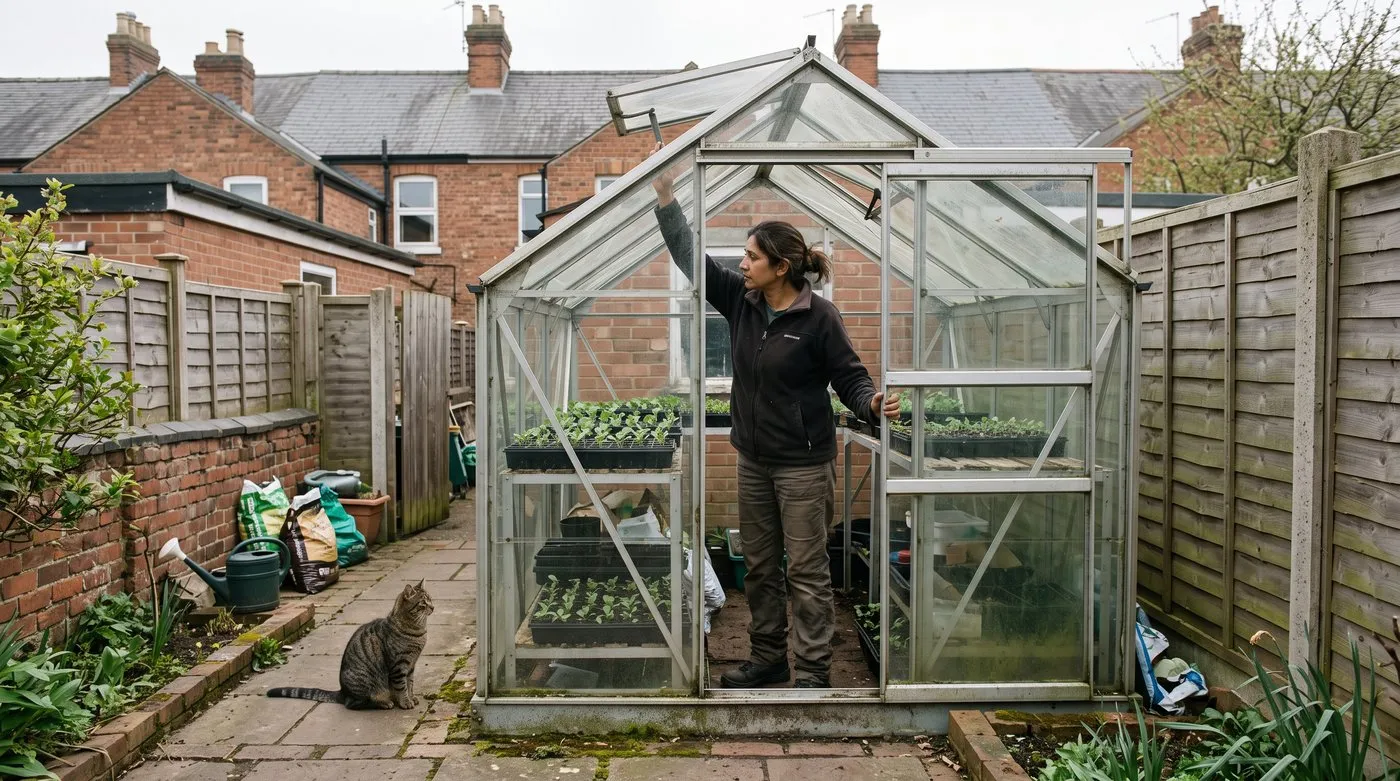
Opening vents on mild spring days keeps the air moving, so leaves dry quickly and spores struggle to take hold.
Give seedlings room. Sow thinly and prick out or pot on before trays get crowded. Space trays apart on the bench.
Water at the base, in the morning. Water the soil, not the leaves, so foliage stays dry. Morning watering lets any splashes dry during the day. For seed trays, stand them in a shallow tray of water so the leaves stay dry altogether.
Ventilate under glass. Open greenhouse vents and cold frame lids on mild days, even in spring. The guide to greenhouse ventilation and humidity explains how to keep air moving without chilling plants.
Space plants properly. Plant out at the spacings on the seed packet. Don’t cram an extra row in.
Clear old plants. Pull up brassica stumps after harvest and remove fallen leaves, which is where the disease hangs on. Move brassicas to a new bed each year as part of your crop rotation.
Use clean trays and fresh compost. Wash trays between sowings and don’t reuse compost from brassica seedlings.
Gardener’s tip: If you spot it in a seed tray, act the same day. Move the healthy seedlings away, bin the affected ones and open the vents.
What to do if you find downy mildew
Act fast to slow the spread. Pick off infected leaves as soon as you see them and bin them. Don’t compost them.
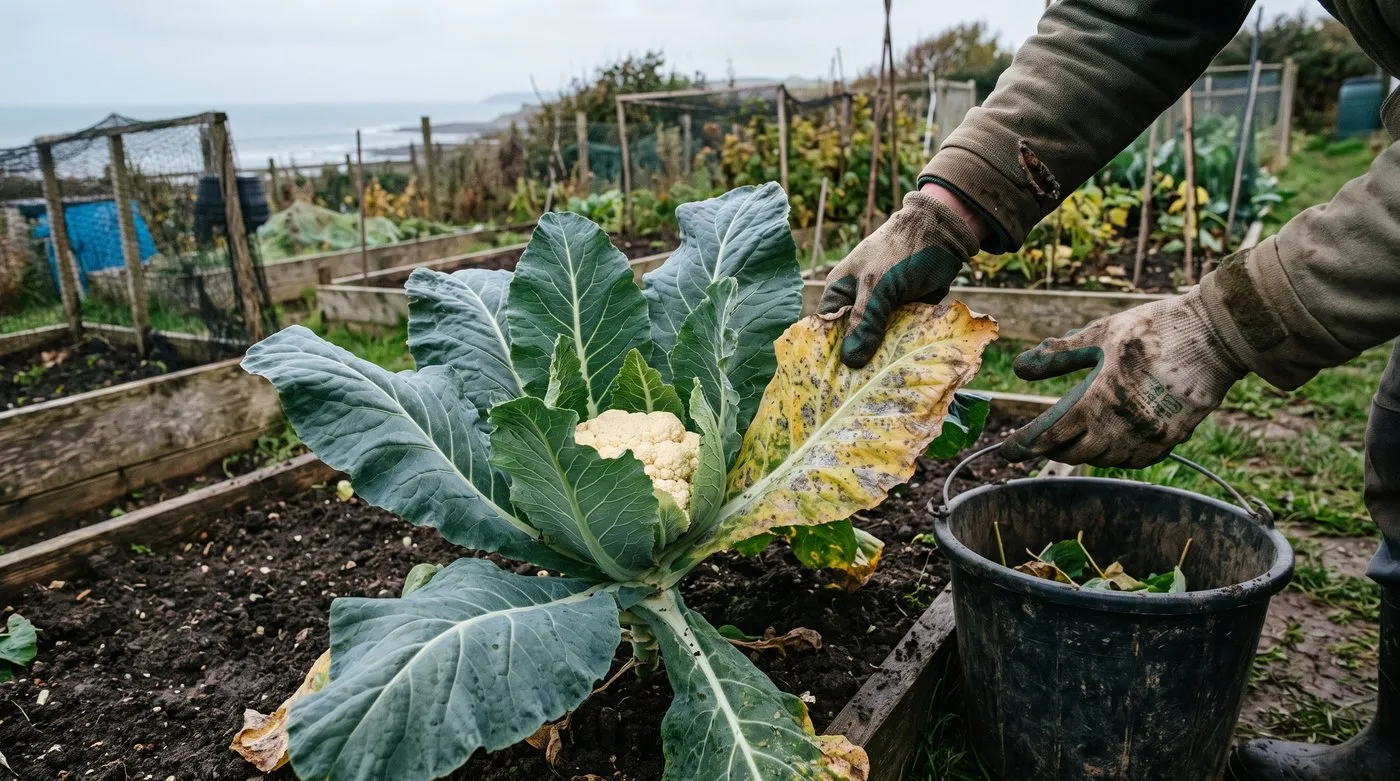
Pick off marked outer leaves and bin them. The curd or heart inside is usually perfectly fine to eat.
Take out the worst-hit plants entirely. One badly infected plant keeps showering spores on its neighbours. Under glass, open vents and doors and spread trays out. Stop watering over the leaves.
On mature plants outdoors, the disease often fades in warm, dry weather. Keep removing marked leaves and watch again when autumn returns.
Skip home-made sprays such as milk or bicarbonate of soda mixes. They aren’t approved for use on crops, and good airflow works better anyway.
Common mistakes with brassica downy mildew
Sowing too thickly. Crowded trays are the classic starting point. Sow thinly and prick out early.
Watering over the leaves in the evening. Leaves stay wet all night, which is perfect for spores. Water the soil in the morning instead.
Keeping the greenhouse shut. Closed-up glass on a damp spring day is a mildew factory. Open up whenever it’s mild.
Composting infected leaves. This brings the disease back next year. Bin them.
Leaving old stumps standing. Overwintering stumps carry disease into the new season. Clear them after harvest.
Brassica downy mildew calendar
| Month | What to do |
|---|---|
| February to March | Sow thinly. Space trays out and ventilate on mild days |
| April to May | Peak risk for seedlings. Check leaf undersides weekly. Bottom water |
| June to August | Risk usually lower. Water at the base and keep weeds down |
| September to November | Second risk period. Pick off marked outer leaves and ventilate covered crops |
| December to January | Clear old stumps and fallen leaves. Wash seed trays |
Frequently asked questions
What does brassica downy mildew look like?
Yellow, angular patches on top of the leaves with grey fuzz underneath. The patches are boxed in by the leaf veins. On seedlings, the first leaves turn yellow or purplish and can collapse. On older plants, the outer leaves are hit first.
Is brassica downy mildew the same as powdery mildew?
No, they are different diseases with opposite habits. Downy mildew grows under the leaf in cool, damp weather. Powdery mildew sits on top of the leaf as a white dusty coating and likes warm, dry spells.
Can I eat brassicas affected by downy mildew?
Yes, lightly affected crops are safe to eat. Strip off the marked outer leaves until you reach clean ones. Cabbage hearts and broccoli heads under damaged outer leaves are usually fine. Badly hit seedlings are best binned.
When is downy mildew worst on brassicas in the UK?
In cool, damp spells, mainly spring and autumn. Crowded seedlings under glass in early spring are most at risk. Autumn crops standing in damp, still air can be hit again. Warm, dry summer weather usually slows it down.
Does crop rotation prevent brassica downy mildew?
It helps, but it can’t stop spores blowing in. The disease survives in old brassica debris, so moving brassicas to a new bed each year and clearing old plants reduces the risk. Spacing, ventilation and base watering matter more.
Should I spray brassicas for downy mildew?
No, good growing conditions do the job better. Improve airflow, water at the base, space plants out and remove infected leaves. Never use home-made sprays such as milk or bicarbonate of soda mixes, as they aren’t approved for use on crops.
Healthy seedlings are the best start. Read the guide to sowing seeds indoors for tray, compost and spacing tips, or browse more fixes in the problems hub.
Our team produces practical UK gardening guidance from source research, contributor records and established horticultural practice. Editorial standards are overseen by Matt W.