Key takeaways
- Pale yellow, angular patches on top of leaves with white fluff underneath mean downy mildew
- It loves cool, damp weather, so spring and autumn crops are most at risk
- Space plants 25-30cm apart and water at the base, not over the leaves
- Pick off infected leaves straight away and bin them, not compost them
- Resistant varieties help, but new strains can still get through
- Lettuce with a little downy mildew is fine to eat once you remove the bad leaves
Lettuce downy mildew is the most common lettuce problem in UK gardens. It loves the cool, damp weather we get in spring and autumn, and in a muggy spell it can spoil a bed of salad surprisingly fast. Most lettuce growers meet it sooner or later.
It’s caused by a water mould called Bremia lactucae, which behaves a bit like a fungus. There’s no spray for home gardeners, but simple changes to how you space, water and pick your lettuce make a big difference. This guide shows you how to spot it and keep it away. For choosing what to grow each season, see our guide to the best lettuce varieties.
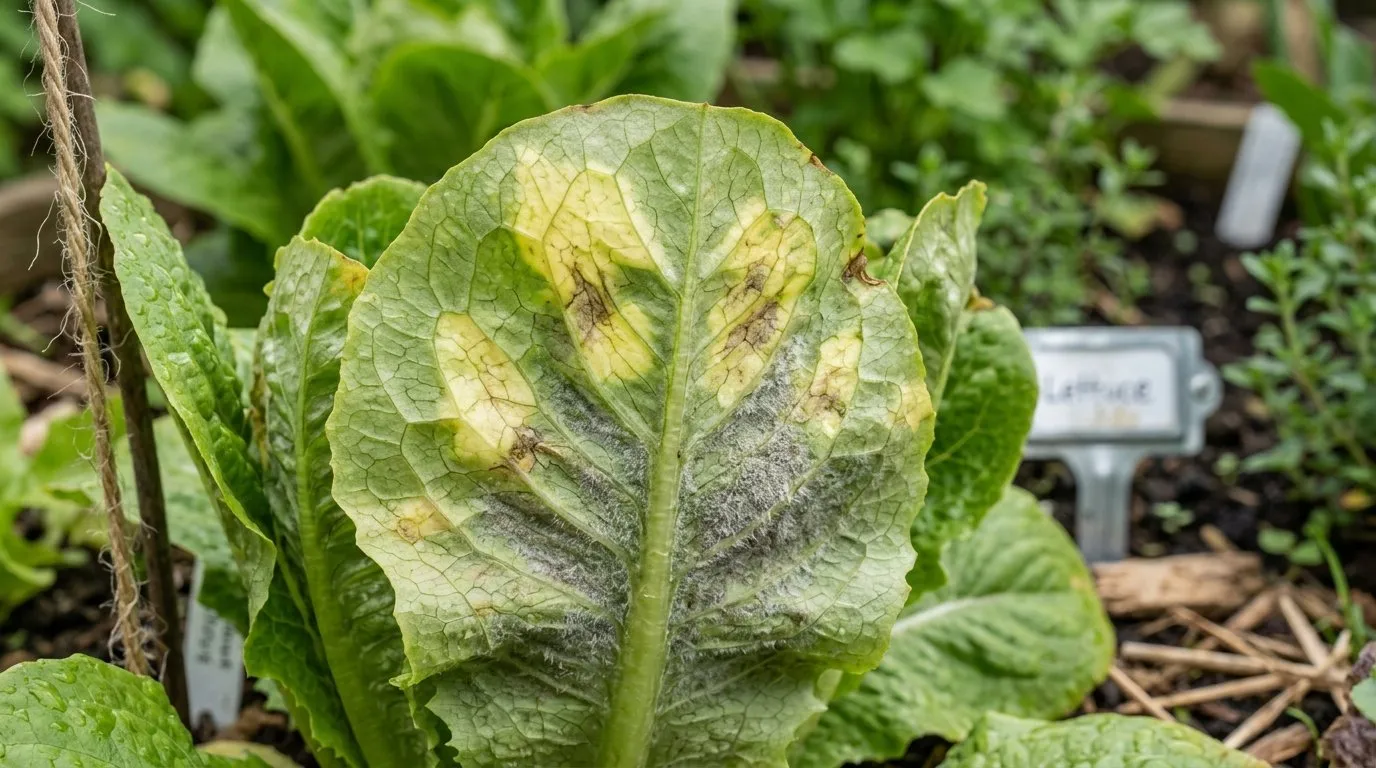
What does lettuce downy mildew look like?
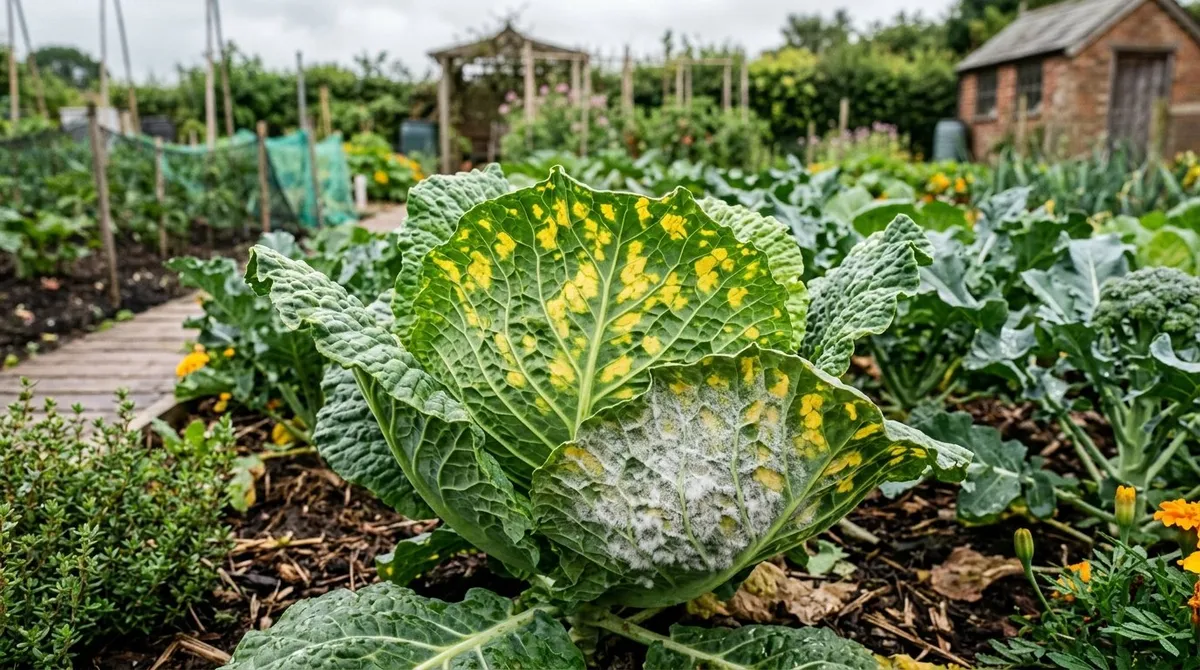
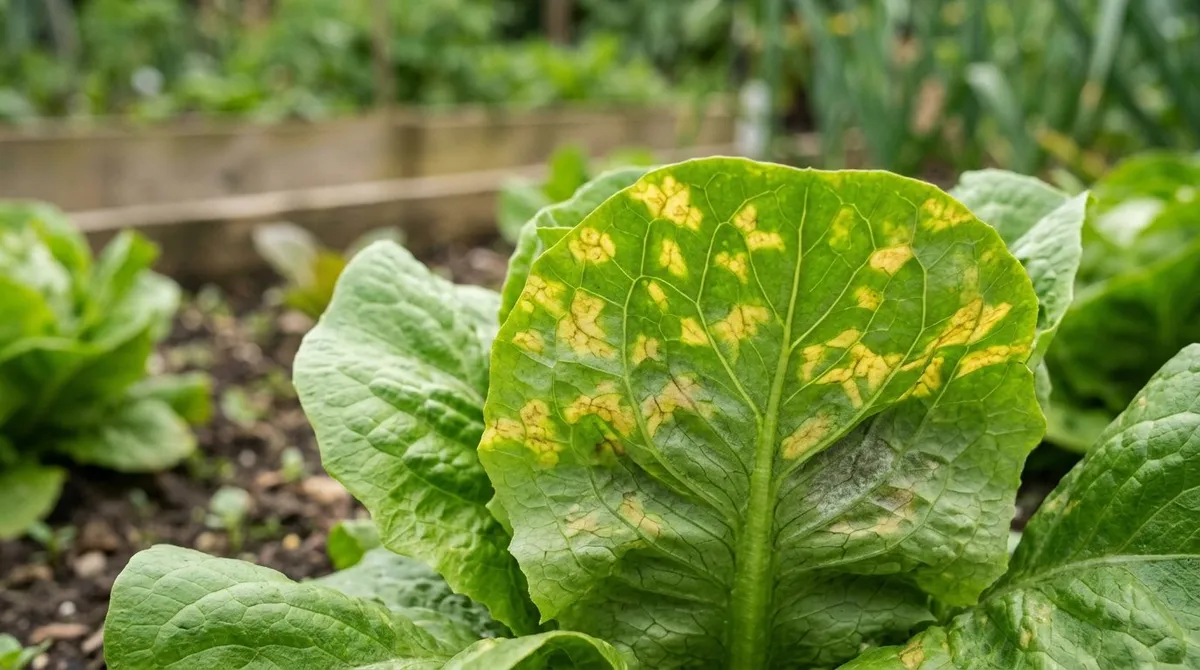
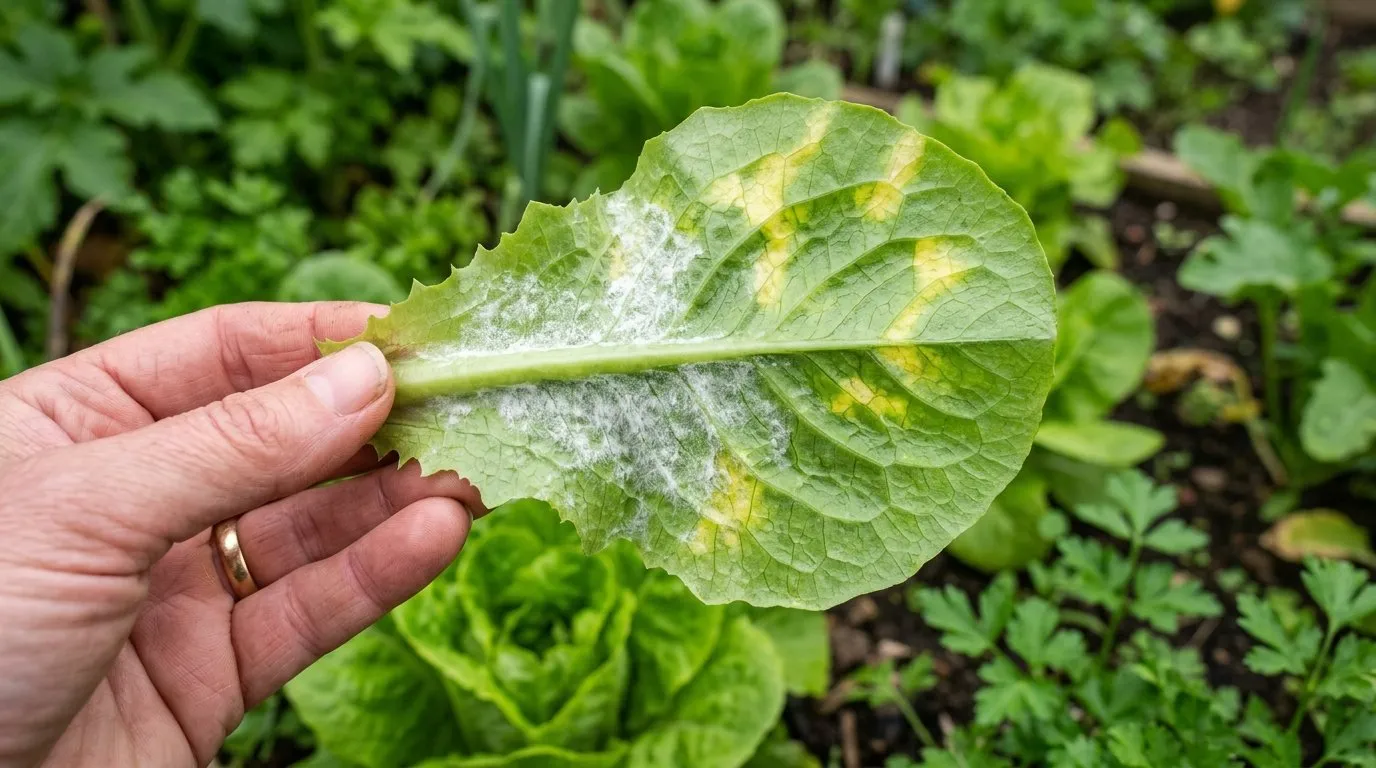
Pale yellow, angular patches on top of the leaves are the big giveaway. The patches are boxed in by the leaf veins, so they look squarish rather than round. That’s the easiest way to tell downy mildew from other lettuce problems.
Turn the leaf over and you’ll see white or greyish fluff underneath each yellow patch. That fluff is where the spores are made. It’s easiest to see in the morning, when the air is dampest.
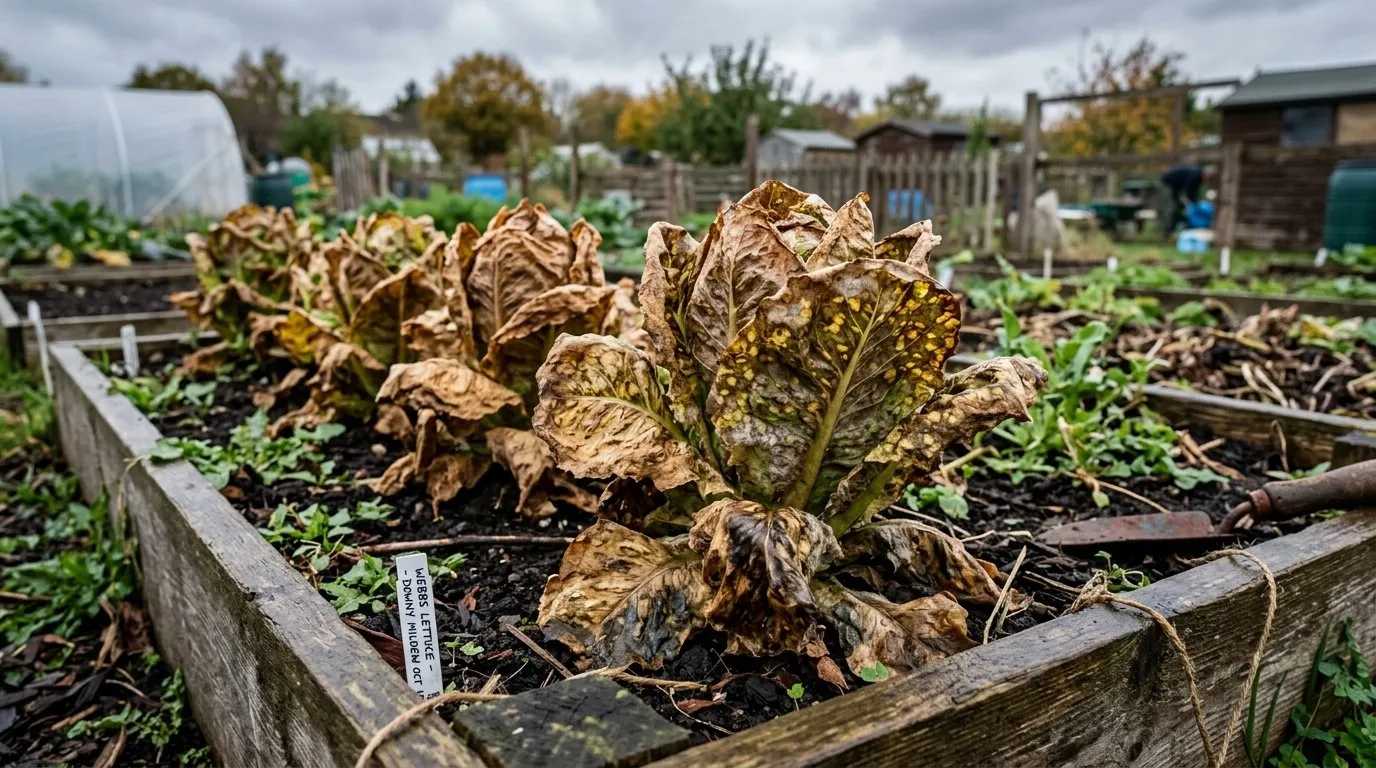
On bigger plants, the outer leaves show it first, and it works inwards if the weather stays damp. Old patches turn brown and papery, and badly hit leaves curl down and look tatty. Sometimes bacteria move into the damaged leaves and cause a slimy rot.
| Sign | Where | What it looks like |
|---|---|---|
| Angular yellow patches | Top of leaf | Squarish, boxed in by veins |
| White fluff | Underside of leaf | Easiest to see in the morning |
| Yellowing seed leaves | Seedlings | Can wilt and collapse fast |
| Brown papery patches | Older infections | Dead leaf where yellow patches were |
| Slimy rot | Bad cases | Bacteria moving in after the mildew |
What causes lettuce downy mildew?
A water mould called Bremia lactucae. It isn’t a true fungus, though it looks and acts a lot like one.
It spreads in two main ways. Spores form in the white fluff under infected leaves. They’re released in the morning and blown to nearby plants, where they infect leaves that stay wet for a few hours. One infected leaf can release a huge number of spores.
It can also survive in old infected leaves that end up in the soil, ready to cause trouble the next time you grow lettuce there. That’s why crop rotation helps, though it can’t stop spores blowing in.
Buy seed from good suppliers, as infected seed can bring the disease into your garden. Wild lettuces growing nearby can carry it too.
The race system: why resistance wears off
What makes this disease tricky is that it comes in lots of different strains, called races. Seed catalogues often list which races a variety resists, using “Bl” codes.
A variety bred to resist the strains around today works well until a new strain turns up that can get past its defences. Plant breeders are always playing catch-up. And the strains common in the UK aren’t always the same as those elsewhere in Europe.
For home gardeners, the lesson is simple: don’t rely on resistant varieties alone. Use them alongside good growing habits.
How to prevent downy mildew on lettuce
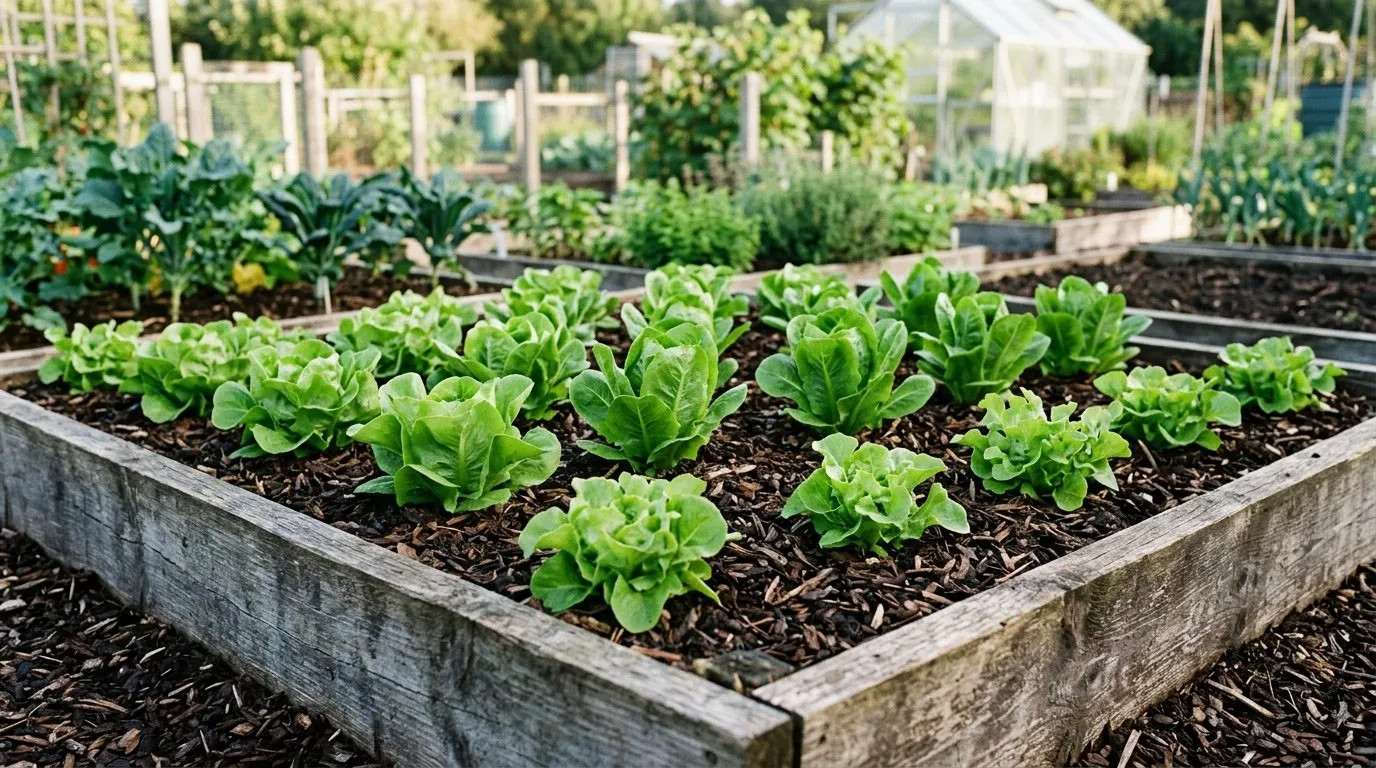
Space plants 25-30cm apart, water at the base and keep the air moving. Home gardeners in the UK can’t buy a spray for lettuce downy mildew, so these habits are your best defence.
Water at the base: Watering over the top leaves the leaves wet, which is just what the spores need. Use a seep hose, or water carefully at the base of each plant. In a cold frame or greenhouse, water trays from below or use capillary matting. Water in the morning, not the evening, so leaves don’t stay wet overnight.
Let the air in: Lettuce in greenhouses and cold frames is most at risk because damp air gets trapped. Open vents and doors whenever it’s mild enough. Even propping a cold frame lid open a little on mild days helps keep the air moving.
Pick off infected leaves straight away: As soon as you spot those angular yellow patches, remove the leaves and put them in the household bin, not the compost. Each one is full of spores, so getting them out early can stop it spreading along the row.
Sow little and often: Instead of planting a whole bed at once, sow small batches every two or three weeks. If downy mildew hits one batch, the next may well escape. It also spreads your harvest out nicely, which fits well with our winter salad guide.
Can you eat lettuce with downy mildew?
Yes, if it’s only mildly affected. The disease only attacks lettuce and its close relatives and doesn’t affect people. Peel off and bin the affected outer leaves until you reach clean, healthy ones, then wash as usual.
Throw away any leaves that look discoloured or wilted, or smell musty. The heart of a cos or butterhead is often fine even when the outer leaves look rough.
If the damaged parts have gone slimy, dark or smelly, bacteria have moved in. Don’t eat that lettuce. Bin the whole head.
For home growers, being able to peel away the outer leaves means downy mildew is usually a nuisance rather than a disaster, as long as you catch it early.
Resistant lettuce varieties for UK gardens
Upright cos and open loose-leaf lettuces usually cope better than butterheads and icebergs, but no lettuce is completely immune. New strains keep appearing, so resistance doesn’t last forever.
When you buy seed, look for downy mildew resistance on the packet or in the catalogue. The more races a variety resists, the better its chances. Even so, a new strain can still catch it out.
| Lettuce type | How badly it’s affected | Why |
|---|---|---|
| Butterhead | Badly | Dense heads hold on to moisture |
| Cos (romaine) | Less badly | Upright shape lets air through |
| Iceberg (crisphead) | Badly | Tight heads hide infection until it’s bad |
| Loose-leaf | Less badly | Open leaves dry quickly |
| Little Gem | Medium | Small and quick, often picked before trouble starts |
| Batavia | Medium | Thicker leaves |
Some gardeners find red loose-leaf types are a little less affected than green ones, but bred-in resistance matters far more than colour.
Little Gems are worth a special mention. They’re small and quick to grow, so you can often pick them before an outbreak takes hold. Sowing a few every three weeks is a great way to keep clean lettuce coming through a damp British autumn.
The RHS lettuce downy mildew guidance is a good place to check for up-to-date advice.
Growing conditions that reduce downy mildew
Downy mildew needs cool, still, damp air. Take away any one of those and it struggles. Keep leaves dry, keep air moving and make the most of warmer weather.
Temperature: The disease is happiest when it’s cool. In warm weather it slows right down, which is why summer lettuce usually has far less trouble than spring and autumn crops.
Wet leaves: Spores need leaves to stay wet for a few hours to get in. Dew that dries off by mid-morning is less risky than fog or drizzle that keeps leaves wet all day. Grow lettuce where it gets morning sun so the dew dries early, and avoid spots in the shade of north-facing walls or trees.
Airflow: Sheltered, closed-in spots trap damp air. Pick an open spot where the breeze can get through. Under cover, use vents or a fan to keep air moving. Companion planting with taller crops can give lettuce a little welcome shade in summer, but don’t let thick planting block the breeze.
| Condition | Higher risk | Lower risk |
|---|---|---|
| Weather | Cool and damp | Warm and dry |
| Leaves | Wet for hours | Dry quickly |
| Watering | Over the top | At the base |
| Position | Sheltered, shady, north-facing | Open, sunny, morning sun |
| Spacing | Crowded | 25-30cm apart |
| Soil | Heavy and wet | Raised beds, free-draining |
| Season | March-May, September-November | June-August |
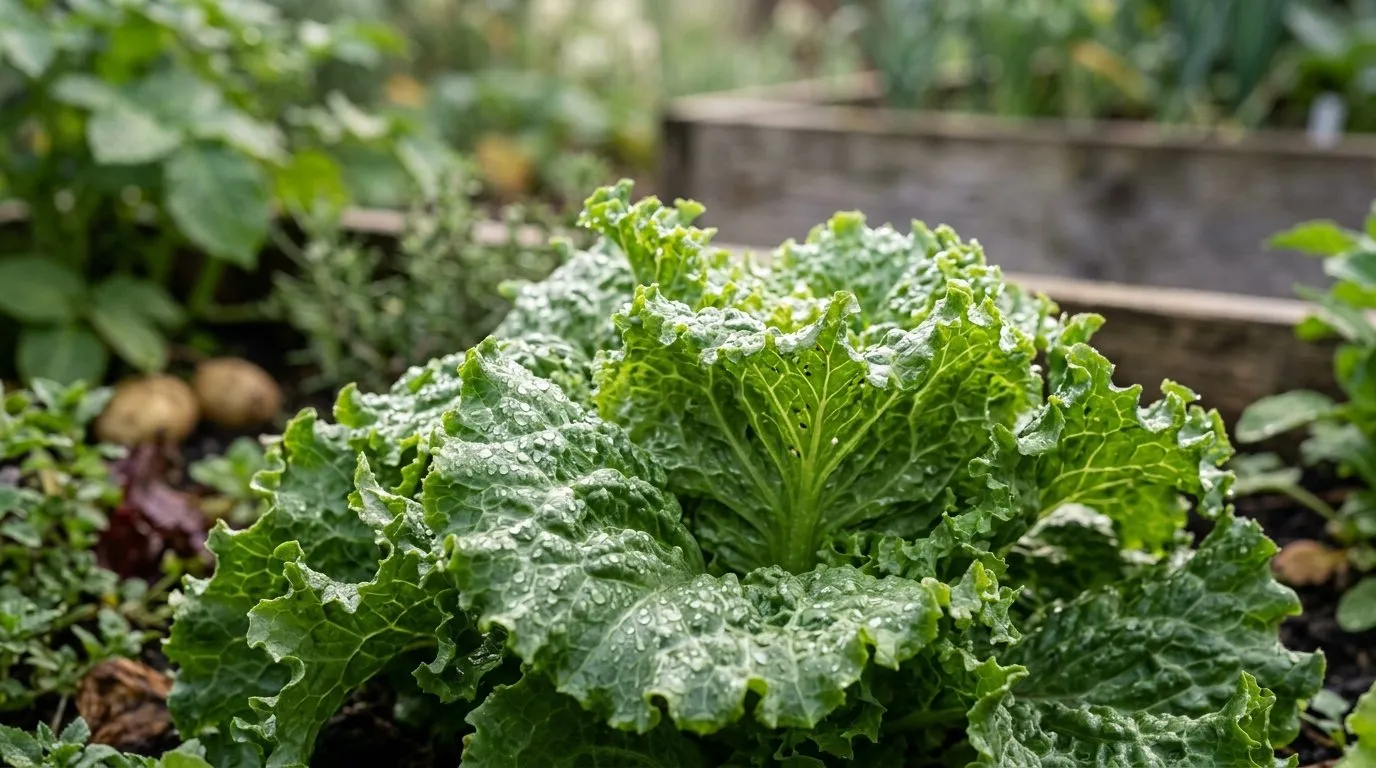 Morning dew on lettuce. Leaves that stay wet in cool weather are what downy mildew needs, so good airflow and watering at the base really help.
Downy mildew on other salad crops
Lettuce downy mildew only attacks lettuce, but other salad crops have their own kinds. The one on your lettuce can’t jump to your spinach. The catch is that the same cool, damp weather suits them all.
Spinach downy mildew makes similar yellow patches and is a growing problem in autumn crops. Like lettuce, spinach has resistant varieties, and they face the same race against new strains.
Rocket is a brassica, so it can get brassica downy mildew. It’s very common in autumn rocket grown under cover, and repeated picking weakens the plants further. Sow small batches and pull out affected plants rather than carrying on picking.
Onion downy mildew doesn’t affect salad crops, but it often turns up at the same time as lettuce downy mildew because both love the same weather. If you spot it on your onions, check your lettuce too.
For every kind of downy mildew in the vegetable garden, the answer is the same: plenty of airflow, no watering over the top, generous spacing and quick removal of infected leaves.
Under glass it’s trickier, so see our tips for greenhouse growers. Lettuce, spinach and rocket under cover in spring and autumn are all at higher risk. Open up whenever you can, even if it makes things a little cooler inside.
Frequently asked questions
What does lettuce downy mildew look like?
Pale yellow, angular patches on top of the leaves. The patches are boxed in by the leaf veins. Turn the leaf over and you’ll see white or greyish fluff right underneath them. Seedlings can yellow and wilt fast. Older patches turn brown and papery.
Is lettuce downy mildew caused by a fungus?
Not quite. It’s caused by a water mould, a fungus-like organism called Bremia lactucae. It needs wet leaves to infect, which is why damp weather sets it off. Home gardeners can’t buy a spray for it, so good growing habits are the way to beat it.
Can you eat lettuce with downy mildew?
Yes, if it’s only mildly affected. Peel off and bin the affected outer leaves until you reach clean, healthy ones, then wash as normal. The disease only affects lettuce and close relatives. Throw away any leaves that look or smell bad.
Why do resistant lettuce varieties still get downy mildew?
Because the disease keeps changing. New strains appear that can get past the resistance bred into a variety. A lettuce that shrugged it off a few years ago may not now. That’s why it pays to combine resistant varieties with good spacing, watering and airflow.
When is lettuce downy mildew worst in the UK?
In spring and autumn, when it’s cool and damp. March to May and September to November are the riskiest times. Lettuce under cover in late autumn and early spring is especially at risk, because damp air gets trapped around the leaves.
Does crop rotation prevent lettuce downy mildew?
It helps, but it won’t stop it on its own. The disease can survive in old leaves in the soil, so growing lettuce somewhere new each year is sensible. But spores also blow in on the wind from nearby gardens, so you still need good airflow and careful watering.
What is the best spacing for lettuce to prevent downy mildew?
About 25-30cm between plants. That lets air move around the leaves so they dry quickly after dew or rain. It’s one of the best things you can do to keep downy mildew away.
Our team produces practical UK gardening guidance from source research, contributor records and established horticultural practice. Editorial standards are overseen by Matt W.