Key takeaways
- Yellowing on one side of the plant first is the classic sign
- Slice the lower stem lengthways: brown streaks inside point to wilt
- There's no cure, so bag and bin sick plants, roots and all
- Never put infected plants on the home compost heap
- Next year, choose varieties with F on the label or use grafted plants
- The fungus lingers in soil for years, so move tomatoes or use fresh compost
Fusarium wilt usually starts with one yellow leaf while the rest of the plant looks fine. Within a week or so, a whole side of the plant has gone yellow and floppy. Sadly there’s no cure, but you can stop it spreading and grow a great crop again next year.
If your tomatoes have brown patches rather than yellowing, our guide to tomato blight prevention and treatment covers the other big tomato problem in the UK.
What Fusarium wilt is
Fusarium wilt is a fungus that lives in the soil. It gets into tomato roots, then blocks the tubes that carry water up the stem. The plant wilts and dies of thirst, even in wet soil.
The tomato type only attacks tomatoes, so your other crops are safe from it. The bad news is that it can wait in the soil for years without a tomato to feed on.
It spreads in a few simple ways:
- Infected soil, which is the main one
- Old roots, stems and leaves left in the bed
- Dirty tools, gloves and hands
- Water running from one bed to the next
It loves warm soil, so it usually shows up in greenhouses from early summer to early autumn.
How to identify Fusarium wilt
These five signs point to Fusarium.
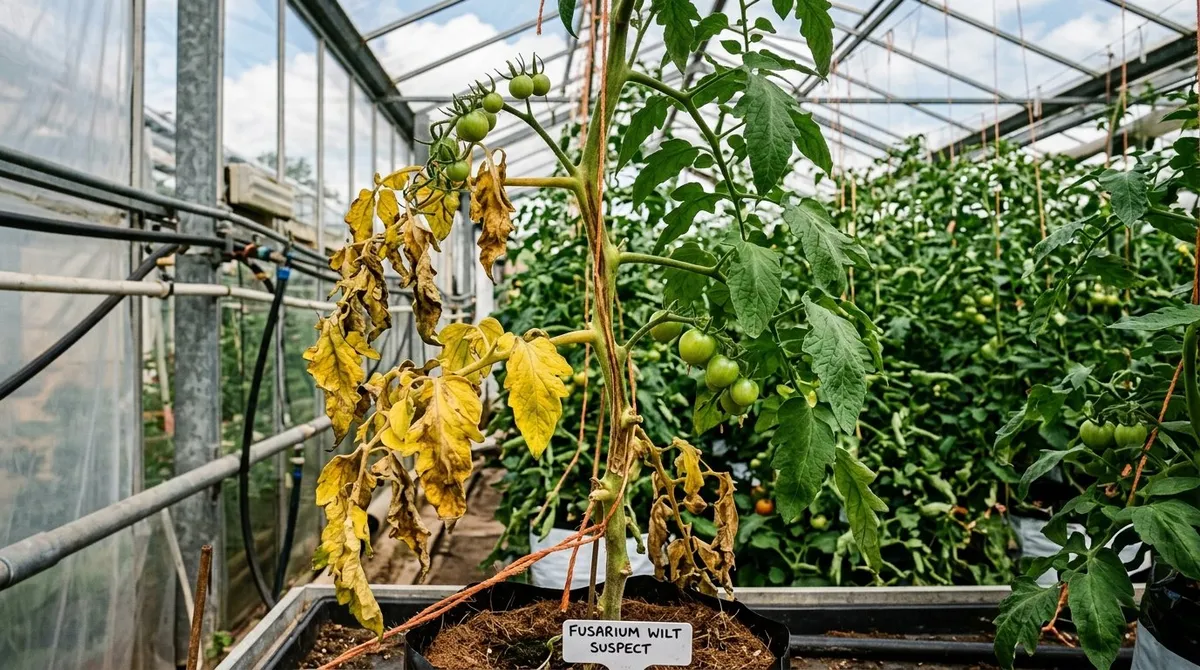
1. Yellowing on one side. One branch, or one half of the plant, turns yellow while the rest stays green. This is the big giveaway.
2. It starts low and moves up. The bottom leaves go first. The top of the plant stays green for a while longer.
3. Wilting that doesn’t bounce back. Early on, the plant flops in the midday heat and perks up overnight. After a week or so it stays floppy, even on a cool morning.
4. Brown streaks inside the stem. Slice the stem lengthways, just below the lowest yellow leaf. A healthy stem is pale green inside. A sick one has brown streaks just under the skin. This is the best check you can do at home.
5. Poor fruit. Late on, fruit stays small, splits or drops off.
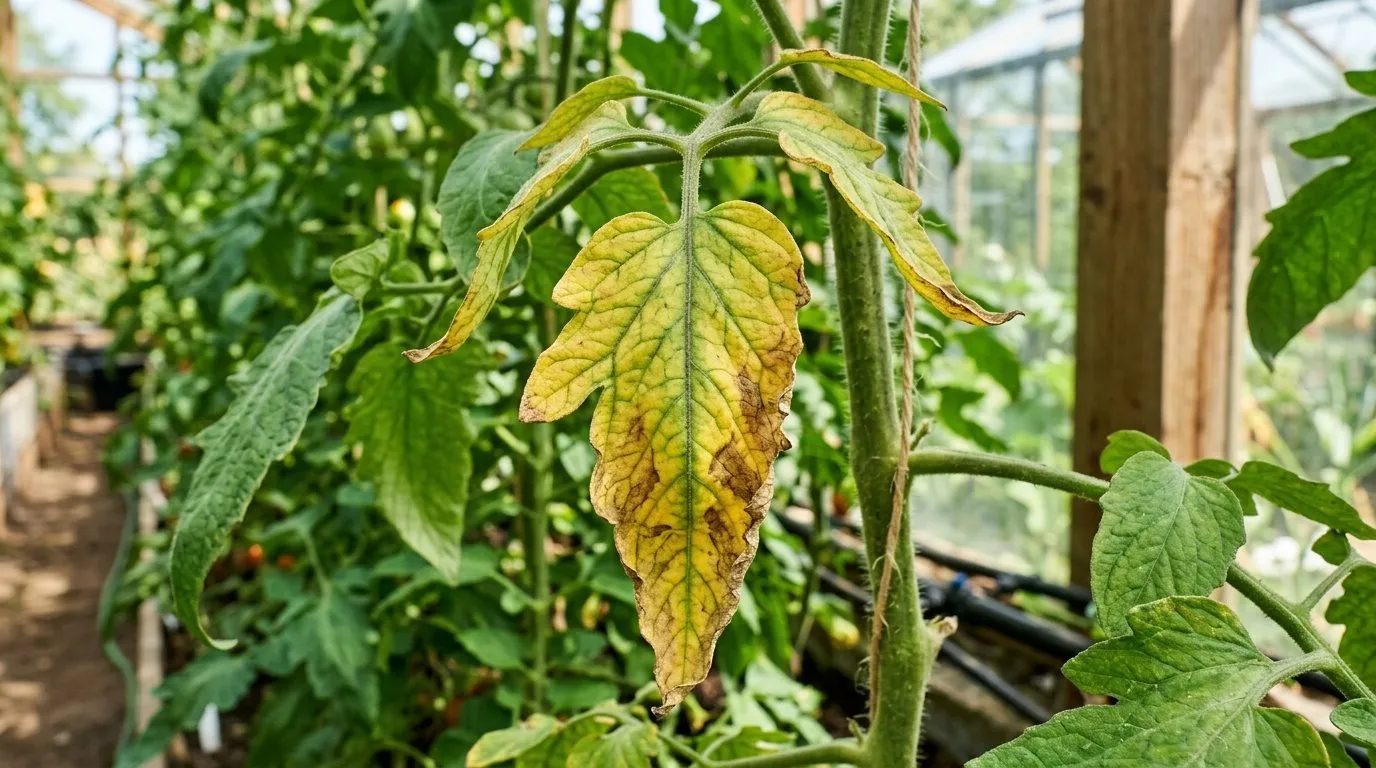 Yellowing starts at the leaf edge and works inwards, often on one side of the plant before the other.
Telling Fusarium from look-alikes
A few other problems look similar at first glance. Here’s how to tell them apart.
| Problem | What you see | Inside the stem |
|---|---|---|
| Fusarium wilt | One side yellows first, wilting doesn’t recover | Brown streaks |
| Verticillium wilt | Yellowing on both sides, usually slower | Brown streaks |
| Magnesium shortage | Yellow between the veins of older leaves | Healthy green |
| Thirst | Whole plant droops at once | Healthy green, perks up after a drink |
| Blight | Brown patches on leaves and stems | Healthy green |
If the stem shows brown streaks, it’s one of the two wilts. You deal with both the same way, so there’s no need to know exactly which one you have.
If you’d like a firm answer, RHS members can send a sample to the RHS advice service.
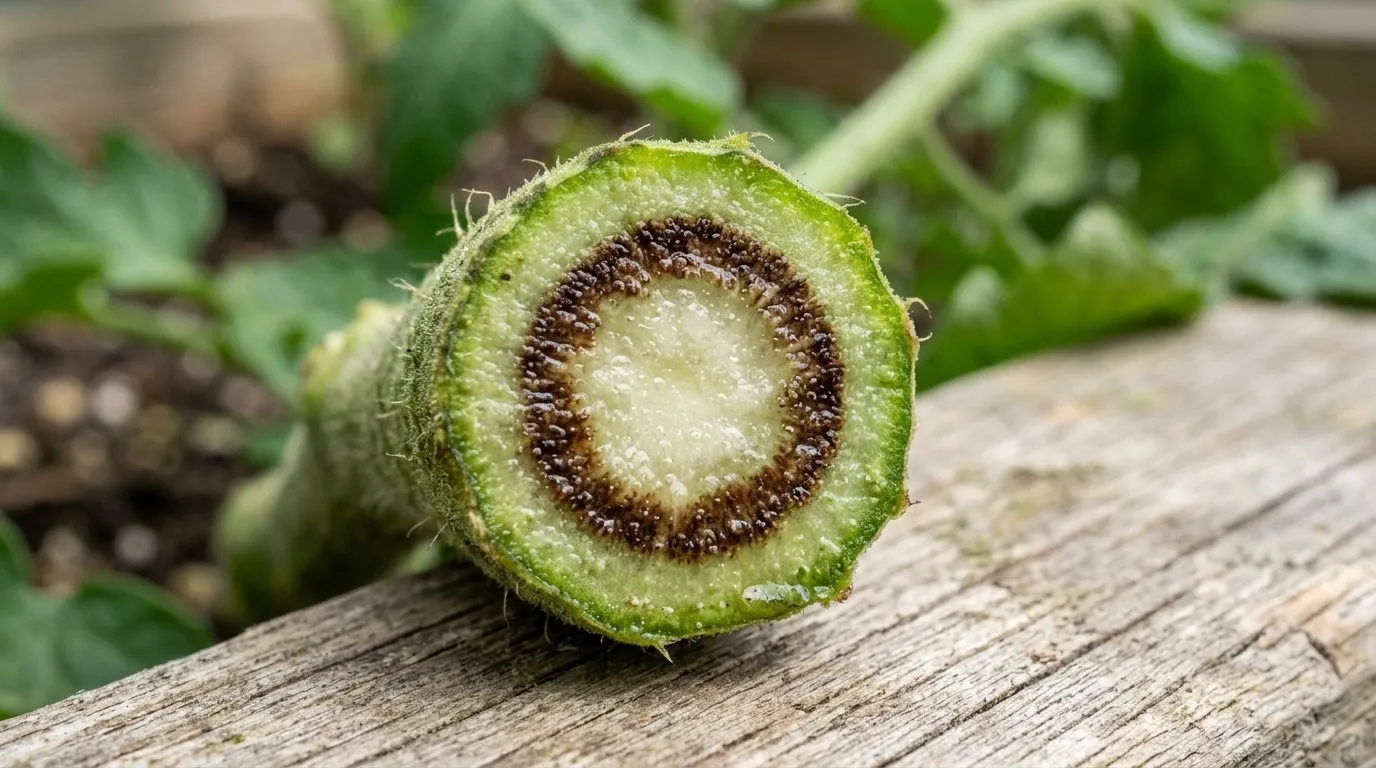 The quick check. A healthy stem is pale green inside. Brown streaks under the skin mean wilt.
What to do when you find it
Act quickly. The longer a sick plant stays in the ground, the more fungus ends up in the soil.
Step 1: Bag the whole plant. Roots, the soil stuck to them and any fallen leaves too. Tie the bag up tightly.
Step 2: Put it in the household bin. Never on the home compost heap, which doesn’t get hot enough to kill the fungus.
Step 3: Clean your tools and hands. Wash secateurs, trowels and gloves, then wipe tools with a household disinfectant.
Step 4: Label the bed. Note the year, so you remember not to plant ordinary tomatoes there for a while.
Step 5: Keep an eye on the neighbours. Check nearby plants every few days for the next month.
Step 6: Plan for next year. Pick one of the options below.
The most common mistake is leaving a sick plant in, hoping it’ll pull through. It won’t, and it puts the plants next to it at risk.
Three ways to grow tomatoes again in affected soil
You don’t have to give up on tomatoes. Here are three ways to get a good crop next year.
Option 1: Grafted plants on resistant rootstock
This is the most reliable fix. A grafted plant is your chosen variety joined onto tough roots that resist the fungus.
Beaufort and Maxifort are the usual rootstocks. They make strong plants, so feed and water them well. Look for grafted plants from seed companies and garden centres in spring. They cost a bit more than ordinary plants, but they’re cheap insurance if your greenhouse has had wilt.
Option 2: Soil rotation
If you have another bed, simply grow tomatoes there for a few years.
- Keep ordinary tomatoes out of the affected bed for several years
- Grow onions, garlic, leeks, cabbage family crops or beans there instead
- Grow tomatoes in a clean bed, or in pots of fresh compost
In a single greenhouse with no other space, rotation is hard on its own. Pots, grow bags or grafted plants make it easier.
Option 3: Soil replacement
This is the most work, but it gives you a fresh start.
- Dig out the top 30cm of soil from the bed
- Refill with fresh topsoil mixed half and half with well-rotted compost
It suits a small greenhouse where you can’t rotate and can’t get grafted plants.
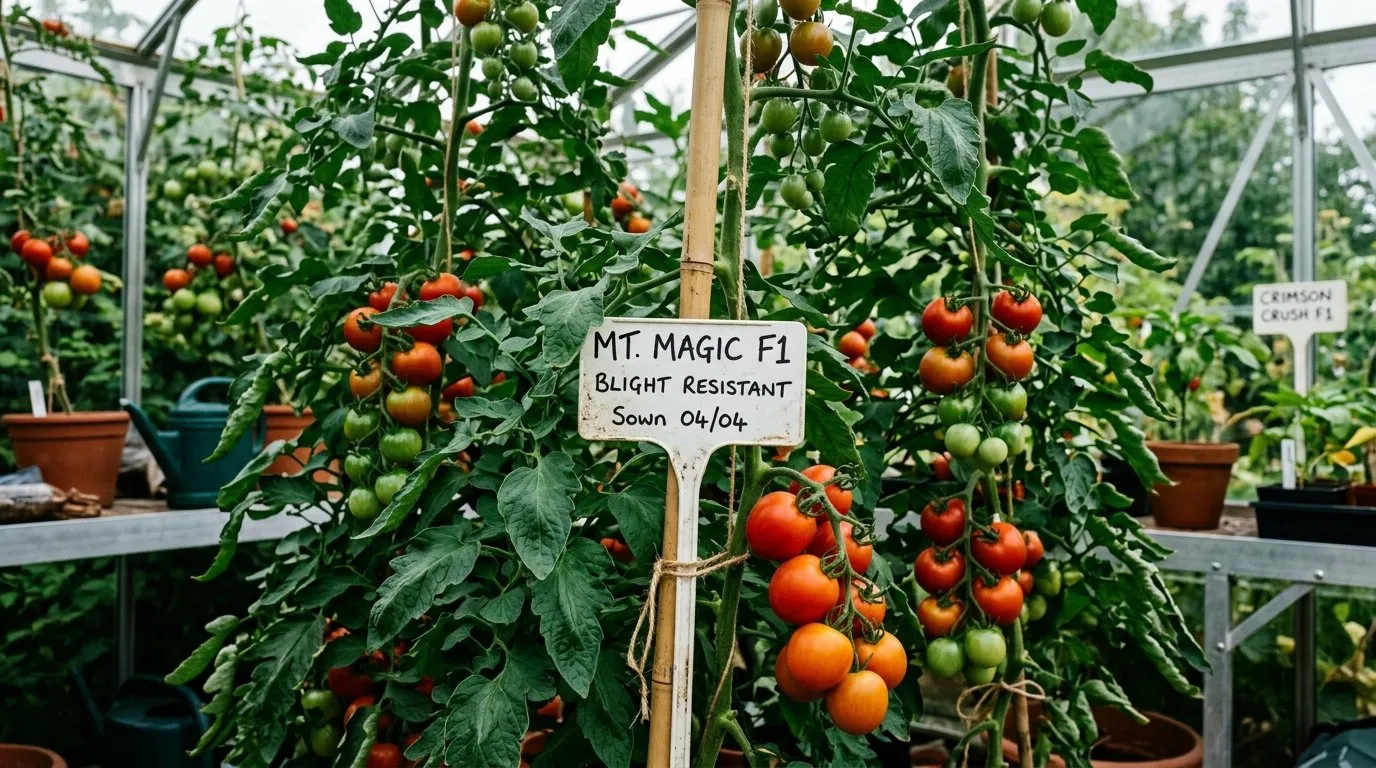 F1 hybrids with F in their resistance code shrug off Fusarium. For a heritage favourite in affected soil, choose a grafted plant.
Resistant varieties: read the letter codes
Seed packets and catalogues use short letter codes to show which diseases a variety resists. For Fusarium, look for F.
| Code | Resists |
|---|---|
| F | Fusarium wilt |
| V | Verticillium wilt |
| N | Root-knot eelworms |
| T or ToMV | Tomato mosaic virus |
So a tomato labelled “VFN” resists Verticillium, Fusarium and eelworms. Some catalogues show more detail about which strains are covered, but any F is a good start.
Good UK choices: ‘Shirley’ F1 and ‘Ferline’ F1 both carry Fusarium resistance. Always check the code in the catalogue, as it varies between varieties and suppliers.
Heritage varieties such as Brandywine, Black Krim and Cherokee Purple rarely have resistance. Grafted plants are the way to grow them in affected soil.
For more ideas, see our guide to the best greenhouse tomato varieties.
Prevention: keeping Fusarium out
If you’ve never had Fusarium, a few good habits help keep it that way.
Buy healthy plants. Skip any with yellow lower leaves or a tired look.
Clean your tools. If you work on other plots or allotments, clean your secateurs and trowel before using them at home.
Move your tomatoes around. Try not to grow them in the same soil year after year. This helps keep all sorts of soil problems from building up.
Clear up at the end of the season. Old roots and stems are a hiding place for disease.
Our crop rotation planner makes it easy to plan where everything goes.
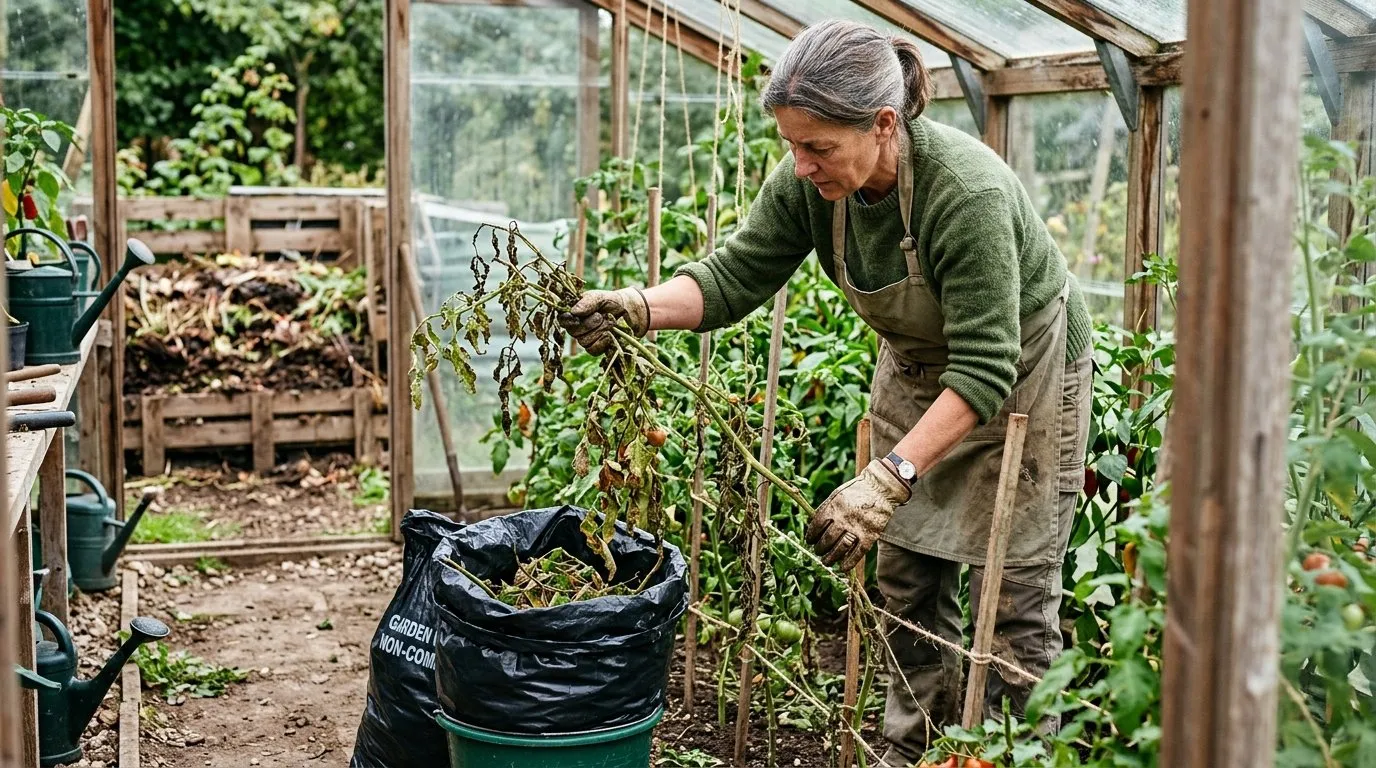 Bag the whole plant, roots and all, and put it in the household bin. Then clean your tools.
Soil treatment options
There’s no simple soil treatment that gets rid of Fusarium. A couple of things may help a little alongside the options above, but don’t rely on them alone.
Covering the soil in summer. Clear plastic laid over a bare, damp bed in a hot, sunny spell warms the top of the soil. This can knock back some of the fungus near the surface, but it won’t reach deeper down.
Adding plenty of compost. Healthy, well-fed soil full of organic matter is good for your plants in general.
Grafted plants, resistant varieties and fresh compost are still your best bets.
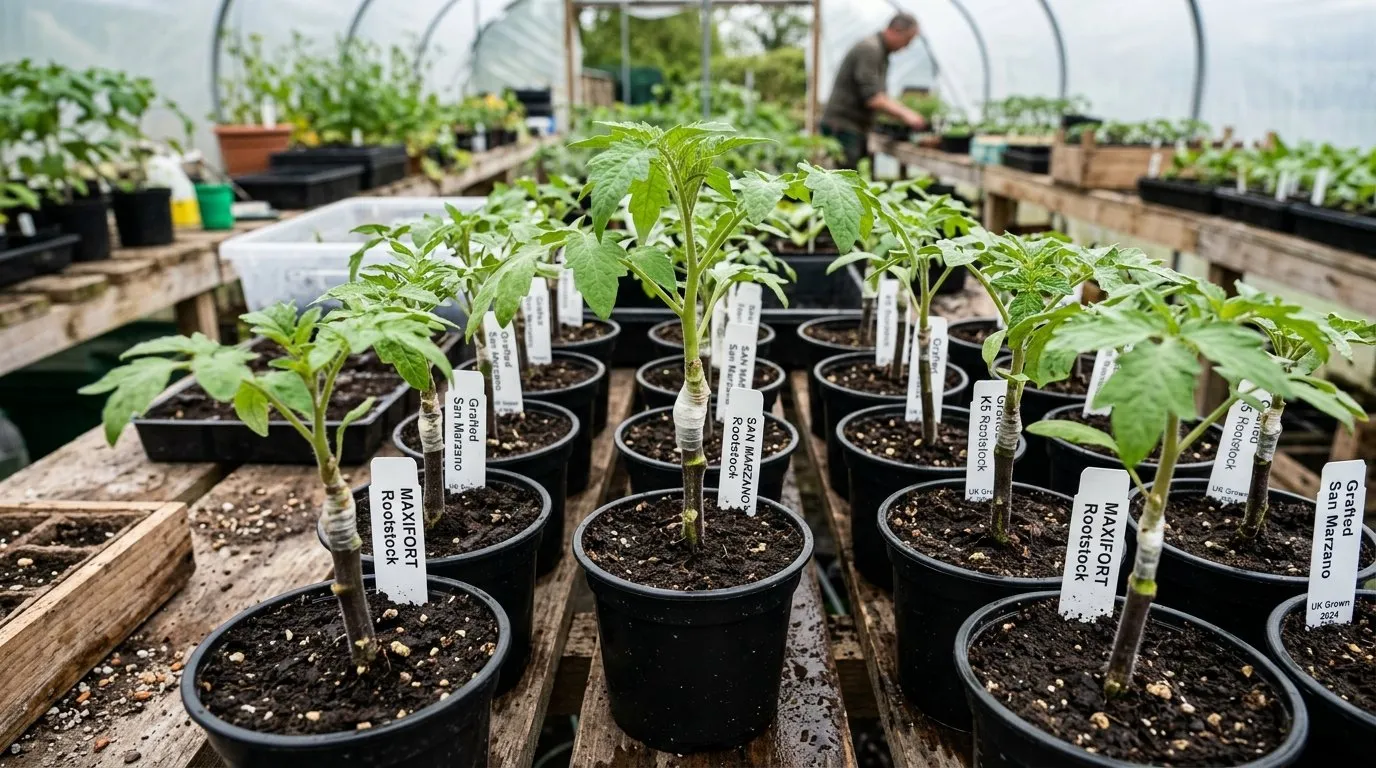 A grafted tomato. The join shows where the tough rootstock meets the variety you want to grow.
Your year after an outbreak
Here’s how the next 12 months might look.
First week: Check the stem. Bag and bin sick plants. Clean tools. Label the bed.
Next few weeks: Keep checking nearby plants and remove any more that show signs. Keep healthy plants well fed and watered.
Autumn: Clear the bed completely, roots and all. Bag and bin the waste.
Winter: Order grafted plants or resistant F1 seeds. Decide where your tomatoes will go.
Spring: Plant into a clean bed, fresh compost, or use grafted plants. Watch closely in July and August when the soil is warmest.
Following years: Keep using resistant or grafted plants in that bed, and keep moving crops around.
Quick checklist
If you think you’ve got Fusarium wilt:
- Slice a stem lengthways and look for brown streaks
- Bag and bin the whole plant, roots and all
- Clean the tools you used
- Check nearby plants for the next few weeks
- Label the bed so you remember
- Plan for grafted or resistant plants next year
- Clear the bed fully at the end of the season
The RHS tomato problems page is handy for checking other symptoms. Our companion planting guide has more ideas for a healthy veg patch.
Frequently asked questions
What does Fusarium wilt look like on tomatoes?
Yellow, wilting leaves on one side of the plant first. It usually starts low down and creeps upwards. At first the plant flops in the heat and perks up overnight, then it stops recovering. Slice the lower stem lengthways and you’ll see brown streaks inside.
How is Fusarium wilt different from Verticillium wilt?
They look almost the same, and you treat them the same way. Both cause yellowing, wilting and brown streaks inside the stem. Fusarium likes warmer soil and tends to move faster. Only a plant clinic test can tell them apart for sure, but resistant varieties, grafted plants and fresh compost help with both.
Can I cure a tomato plant with Fusarium wilt?
No, sadly an infected plant can’t be saved. Pull it out promptly, roots and all, so less fungus ends up in the soil. Bag it and put it in the household bin, not the compost heap. Then clean your tools and keep an eye on nearby plants.
Can I grow tomatoes again in soil that had Fusarium wilt?
Yes, just not ordinary tomatoes in that soil for several years. The fungus hangs on in soil for a long time. Grow tomatoes in a different bed, or in pots and grow bags of fresh compost. Grafted plants on resistant roots are another good option.
Which UK tomato varieties resist Fusarium wilt?
Look for the letter F in the resistance code on the seed packet. Modern F1 hybrids such as ‘Shirley’ and ‘Ferline’ carry Fusarium resistance. Heritage varieties rarely do. If you want a heritage tomato in affected soil, choose a grafted plant on a resistant rootstock.
Related articles
Our team produces practical UK gardening guidance from source research, contributor records and established horticultural practice. Editorial standards are overseen by Matt W.