Key takeaways
- Blight is the biggest danger outdoors, usually from July to September
- Leaf mould loves stuffy greenhouses, so open the vents every day
- Blossom end rot comes from uneven watering, not a lack of calcium in the soil
- Blight-resistant varieties like 'Crimson Crush' hold out much longer
- Remove leaves below the first truss so air can move round the base
- Water at the base and keep leaves dry
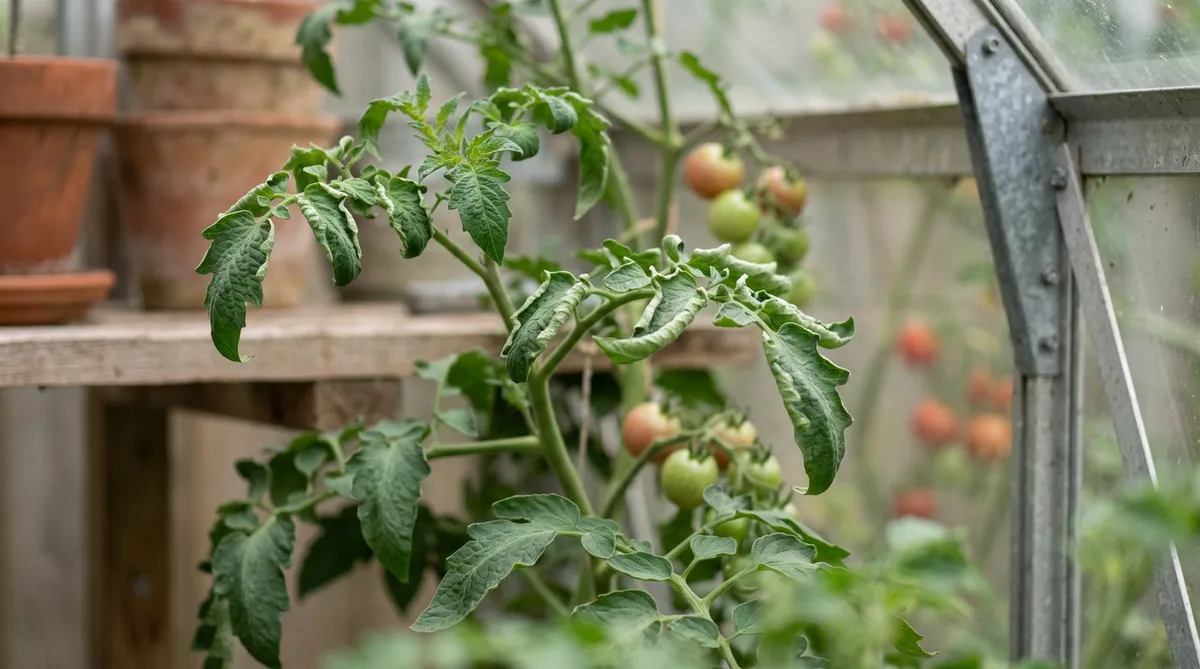
Tomatoes can be hit by a few diseases, from blight sweeping through outdoor plants to leaf mould creeping through a stuffy greenhouse. The first step to saving your crop is knowing what you’re looking at. Growing under cover? Our guide to tomato diseases in polytunnels covers damp-air problems in more depth.
Why are UK tomatoes so prone to disease?
Our damp weather suits the fungi that attack tomatoes. Outdoors, blight is a risk from July. Under glass, trapped humidity brings on leaf mould and grey mould.
Greenhouse and outdoor tomatoes tend to have different problems. Greenhouse plants get leaf mould, ghost spot and blossom end rot from uneven watering. Outdoor plants face blight, septoria and early blight, which spread on wind and rain.
Weather matters too. Blight strikes in warm, wet, muggy spells. Leaf mould loves warm, humid greenhouses. Fusarium wilt is worst when the soil gets hot, which happens in greenhouses by early summer.
Late blight
Blight is the most destructive tomato disease in the UK and can kill a whole crop in about a week. It’s the same disease that hits potatoes, and it’s the biggest threat to outdoor tomatoes from July to September.
 Blight gives dark, wet-looking patches on leaves and brown rot on the fruit. Once it starts, it moves fast.
Symptoms
Brown patches appear on leaves, starting at the tips and edges. In damp weather you’ll see white fuzz underneath. Stems get dark brown-black marks. Fruit gets a firm brown rot, often starting at the top. Then the whole plant collapses.
Cause and spread
Blight spores blow in on the wind and land on wet leaves. In warm, damp weather they multiply very fast. Potatoes that sprout from tubers missed at harvest are a big source.
Treatment and prevention
There’s no cure once you see it. Remove and bag all affected material straight away. Copper sprays like Bordeaux mixture are no longer sold to home gardeners, so prevention is what counts. Blight-resistant varieties like ‘Crimson Crush’, ‘Ferline’ and ‘Mountain Magic’ last weeks longer. Growing under glass or in a polytunnel keeps leaves dry and avoids most blight.
Early blight
Early blight makes target-like ring spots on lower leaves from midsummer. It’s slower than late blight but weakens plants over the season.
Symptoms and treatment
Look for dark brown spots with rings, like a target, on older lower leaves first. Affected leaves yellow and drop, and it works its way up the plant over a few weeks.
Pick off affected lower leaves early. Space plants 45-60cm apart. Mulch the soil to stop rain splashing spores up. Grow tomatoes in a fresh spot each year, as the spores linger in old plant bits.
Leaf mould
Leaf mould is the most common disease in greenhouses where the air isn’t kept moving. It creeps in quietly before you notice.
Symptoms
Yellow patches appear on top of the leaves. Turn the leaf over and you’ll see fuzzy brown-grey or olive patches. Lower leaves go first. Bad attacks make leaves curl, dry up and drop. The fruit itself is rarely touched, but losing leaves means a smaller crop.
 Leaf mould loves a humid greenhouse. Fuzzy brown-grey patches under the leaves are the giveaway.
The ventilation factor
Open the vents and door every day. Remove leaves below the first truss so air can move round the base. Water at the roots, never over the top. Some varieties have leaf mould resistance, so check seed packets.
Blossom end rot
Blossom end rot isn’t a disease. It’s caused by uneven watering. The dark, sunken patch at the bottom of the fruit isn’t an infection.
 Blossom end rot leaves a dark, sunken patch at the bottom of the fruit. Uneven watering is the cause, not a lack of calcium in the soil.
When the compost keeps drying out, calcium can’t reach the growing fruit. Plants in pots and growing bags get it most. The fix is steady watering. In hot weather, pots and bags may need watering twice a day. Calcium sprays don’t help. Our blossom end rot prevention guide has more detail.
Septoria leaf spot
Septoria gives small round spots with grey middles and dark edges on lower leaves. It usually turns up after heavy rain or watering over the leaves in June and July.
Look for tiny black dots in the middle of each spot. That’s how you tell it from other leaf spots. It lives over winter on old plant bits. Pick off affected leaves, let air move round the plants and water at the base. It rarely kills plants but does weaken them.
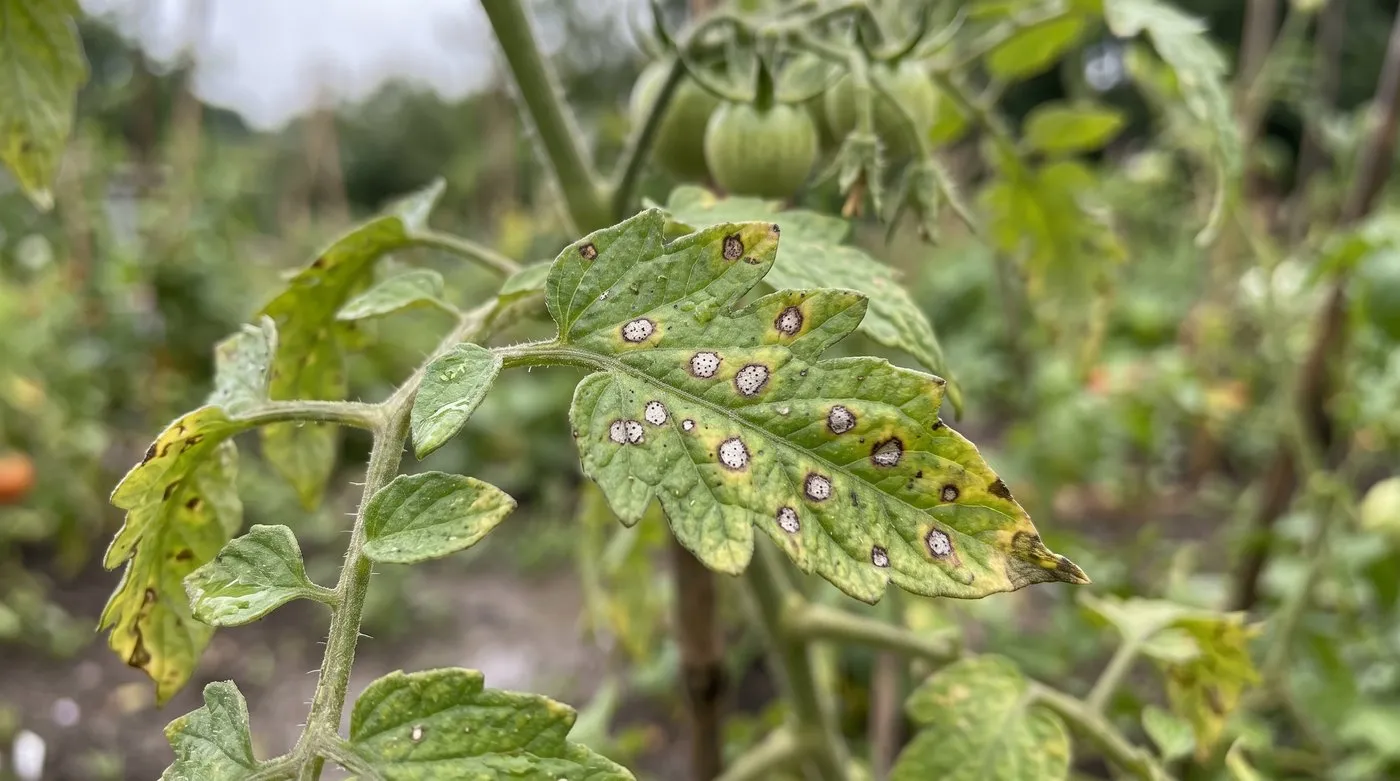
Look for tiny black dots in the grey centre of each spot. Pick off affected lower leaves and water at the base.
Fusarium wilt
Fusarium wilt makes tomato plants wilt on one side when the soil gets hot. It blocks the plant’s water pipes. Cut a wilted stem and you’ll see brown streaks inside.
Early on, plants wilt in the day and perk up overnight. Lower leaves yellow and drop. There’s no cure. Remove the plant and the soil round it. It stays in the soil for years, so grow resistant varieties (look for “F” on the seed packet) and use fresh compost in pots each year.
Verticillium wilt
Verticillium wilt gives V-shaped yellow patches on lower leaves. It looks a lot like fusarium but prefers cooler weather, and the streaks inside the stem are paler. It also lingers in the soil for years. There’s no cure, so grow varieties marked “V” on the packet and move tomatoes to a fresh spot each year.
Tomato mosaic virus
Mosaic virus makes leaves mottled light and dark green, with twisted, fern-like growth. It spreads on hands, tools and even clothes, and survives on dry surfaces for a long time. Fruit ripens unevenly with yellow blotches.
There’s no cure. Pull up and bin affected plants. Wash your hands well with soap before touching healthy plants, and clean your tools. Many modern varieties have strong resistance, so check the packet, and buy seed from a good supplier.
Bacterial canker
Bacterial canker causes wilting, brown leaf edges and small raised spots with white rings on the fruit. Stems get dark sores.
It spreads on infected seed, old seed trays and tools, and gets in through wounds. There’s no cure. Remove and bin affected plants, trays and canes. Don’t save seed from affected plants, and give the greenhouse a thorough clean before next season.
Ghost spot
Ghost spot is small pale rings on the fruit, caused by grey mould spores landing on it. It’s just cosmetic. The spots don’t rot and the fruit is fine to eat.
It’s most common in spring and autumn, when nights are cool and the air is damp. Open the vents, remove dead leaves and avoid splashing water on the fruit. Think of it as a sign the greenhouse is too damp.
Magnesium deficiency
Magnesium shortage turns leaves yellow between the veins, while the veins stay green. It’s a feeding problem, not a disease, but it’s easy to mistake for a virus or early leaf mould.
It starts on lower leaves and moves up. Heavy cropping, lots of high-potash feed and acid soil make it more likely. Spray the leaves with Epsom salts, 20g per litre of water, every two weeks once fruit starts forming.
Prevention strategies that actually work
Four simple habits stop most tomato problems, under glass and outdoors.
Ventilation and airflow
Open greenhouse vents and doors every day from May to September. Automatic vent openers are a great help if you’re out a lot. Space plants 45-60cm apart and remove leaves below the first truss. Fresh air is the best defence against leaf mould, grey mould and ghost spot.
Watering discipline
Water at the base, never over the leaves. Water regularly. Pots and bags may need it twice a day in summer, while plants in the ground need it less often. Uneven watering brings on blossom end rot, and wet leaves invite fungi.
Hygiene and rotation
Clear away all old plants at the end of the season. Give the greenhouse glass, staging and canes a good clean in autumn. Clean your secateurs between plants. Move outdoor tomatoes to a fresh spot each year, and use fresh compost in pots.
Resistant varieties
Check seed packets for resistance to blight, leaf mould, wilt and mosaic virus. For outdoor growing, a blight-resistant variety like ‘Crimson Crush’ makes a big difference in a wet summer.
Tomato disease comparison table
| Problem | What you’ll see | What to do | How to prevent it | How serious |
|---|---|---|---|---|
| Late blight | Brown leaf patches, white fuzz below, fruit rot | Remove affected parts, no cure | Grow under cover, resistant varieties | Very |
| Early blight | Target spots on lower leaves | Remove affected leaves | Rotate, mulch, space plants | Medium |
| Leaf mould | Yellow patches, brown fuzz below | Open vents, remove leaves | Fresh air, spacing, resistant varieties | Quite |
| Blossom end rot | Dark sunken patch at fruit base | Water regularly | Never let compost dry out | Medium |
| Septoria leaf spot | Small grey-centred spots | Remove lower leaves | Water at the base, rotate | Medium |
| Fusarium wilt | Wilting on one side, brown streaks inside stem | No cure, remove plant | ”F” varieties, fresh compost | Quite |
| Verticillium wilt | V-shaped yellow patches | No cure, remove plant | ”V” varieties, rotate | Medium |
| Tomato mosaic virus | Mottled leaves, twisted growth | No cure, remove plant | Resistant varieties, clean hands and tools | Quite |
| Bacterial canker | Wilting, spotted fruit | No cure, remove everything | Good seed, clean tools and greenhouse | Very |
| Ghost spot | Pale rings on fruit | Open vents, remove dead leaves | Space plants, keep air moving | Mild |
| Magnesium deficiency | Yellow between green veins | Epsom salts spray | Balanced feeding | Mild |
Frequently asked questions
What is the most common tomato disease in the UK?
Blight is the most damaging, especially outdoors in warm, wet summers. It can flatten a crop within days. In greenhouses, leaf mould and grey mould are more common, as they love damp, stuffy air.
Can I save a tomato plant with blight?
No, sadly there’s no cure. Remove affected leaves and stems straight away to slow it down. If the plant is badly hit, pull it up. Pick any healthy-looking fruit and ripen it indoors, though some may still rot.
Why do my greenhouse tomatoes get yellow leaves?
It’s usually magnesium shortage, leaf mould or uneven watering. Magnesium shortage turns leaves yellow between green veins. Leaf mould gives yellow patches on top with brownish fuzz underneath, so check the underside first. Older lower leaves also yellow naturally as plants age.
Is blossom end rot caused by a disease?
No, it’s caused by uneven watering. The young fruit runs short of calcium when the compost keeps drying out, even if there’s plenty in the soil. Sprays won’t fix it. Water regularly, especially plants in pots and growing bags, and never let the compost dry out.
Should I remove tomato leaves affected by disease?
Yes, take them off promptly to slow the spread. Use clean secateurs and bag the leaves up for council green waste rather than a cool compost heap. Let air move round the plants and keep the leaves dry when watering.
Which tomato varieties resist blight in the UK?
‘Crimson Crush’, ‘Ferline’, ‘Mountain Magic’ and ‘Lizzano’ are good choices. ‘Crimson Crush’ is often rated the most reliable. No variety is completely immune, but resistant ones hold out much longer in wet summers. Growing under cover helps too.
When should I spray tomatoes to prevent disease?
Usually you don’t, as home gardeners have very few spray options. Watch for blight warnings in warm, muggy spells from midsummer. Grow resistant varieties, water at the base and keep leaves dry. Open greenhouse vents every day. If you do use a product, make sure it’s approved and follow the label.
Further reading
- Best greenhouse tomato varieties UK
- Best tomato varieties for UK gardens
- Greenhouse pest control guide
Corky bumps on leaves aren’t a disease. They’re a watering problem called oedema.
For blight warnings, see the RHS tomato blight advice and Garden Organic Blight Watch.
Our team produces practical UK gardening guidance from source research, contributor records and established horticultural practice. Editorial standards are overseen by Matt W.