Key takeaways
- Brown spots with rings like a target, on the lowest leaves, are the telltale sign
- Early blight creeps slowly up from the bottom, while late blight strikes fast anywhere
- It survives on old plant debris and splashes up from the soil onto lower leaves
- No spray cures it, so leaf removal, mulch and airflow do the work
- Strip the lowest leaves and mulch the soil to stop splash-up
- Clear every scrap of tomato debris at the end of the season
Tomato early blight is a common disease of greenhouse and outdoor tomatoes in the UK. It’s caused by a fungus, Alternaria solani. It leaves target-like spots on the lowest leaves, then slowly creeps up the plant over several weeks.
Unlike late blight, which can wipe out plants in days, early blight is a slow burner. It rarely kills a plant, but it strips the leaves bit by bit. That leaves fruit open to sunscald and means a smaller crop. The good news is that a few simple habits keep it in check.
What does early blight look like on tomatoes?
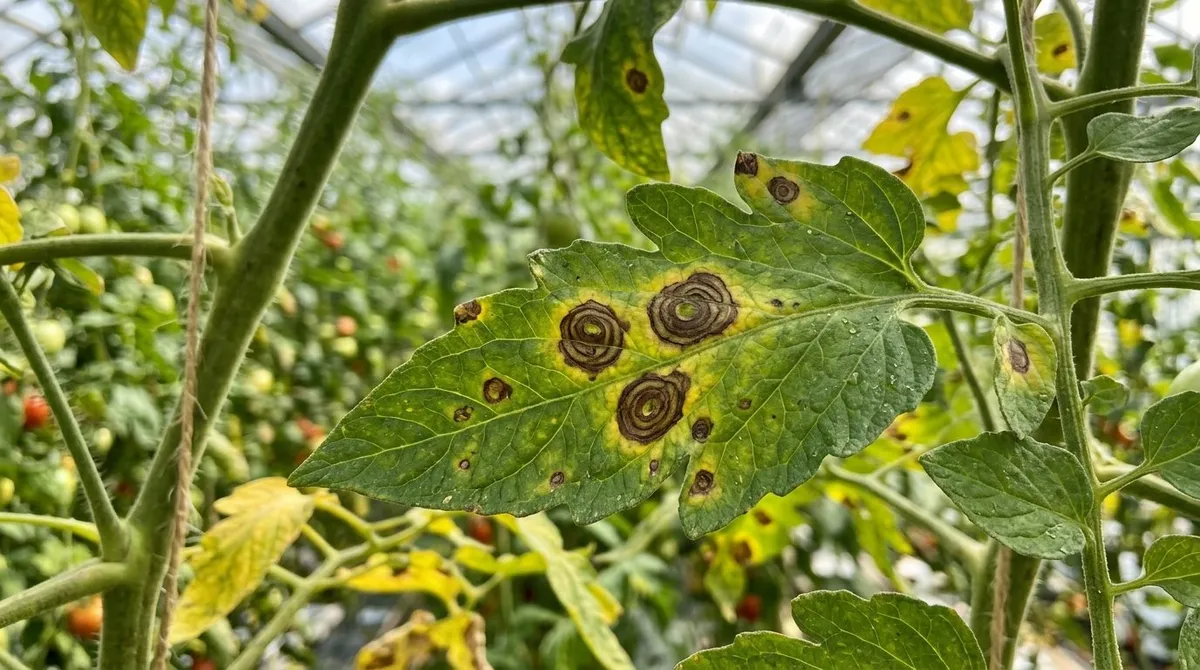
Look for dark brown spots with rings inside them on the oldest, lowest leaves. They look like little targets or bullseyes, and that’s the giveaway. No other common tomato problem looks quite like this.
On the lower leaves
The first signs show on the bottom few leaves, usually from midsummer. Small dark spots appear and grow over a week or so, forming rings inside.
The leaf around each spot turns yellow. Spots join up, the leaf dries out and drops, and the problem moves on up the plant.
On the stems
Dark, sunken, stretched patches can form on stems near the soil. These usually come after the leaves are affected. Bad stem patches can ring the stem and make the plant wilt above them.
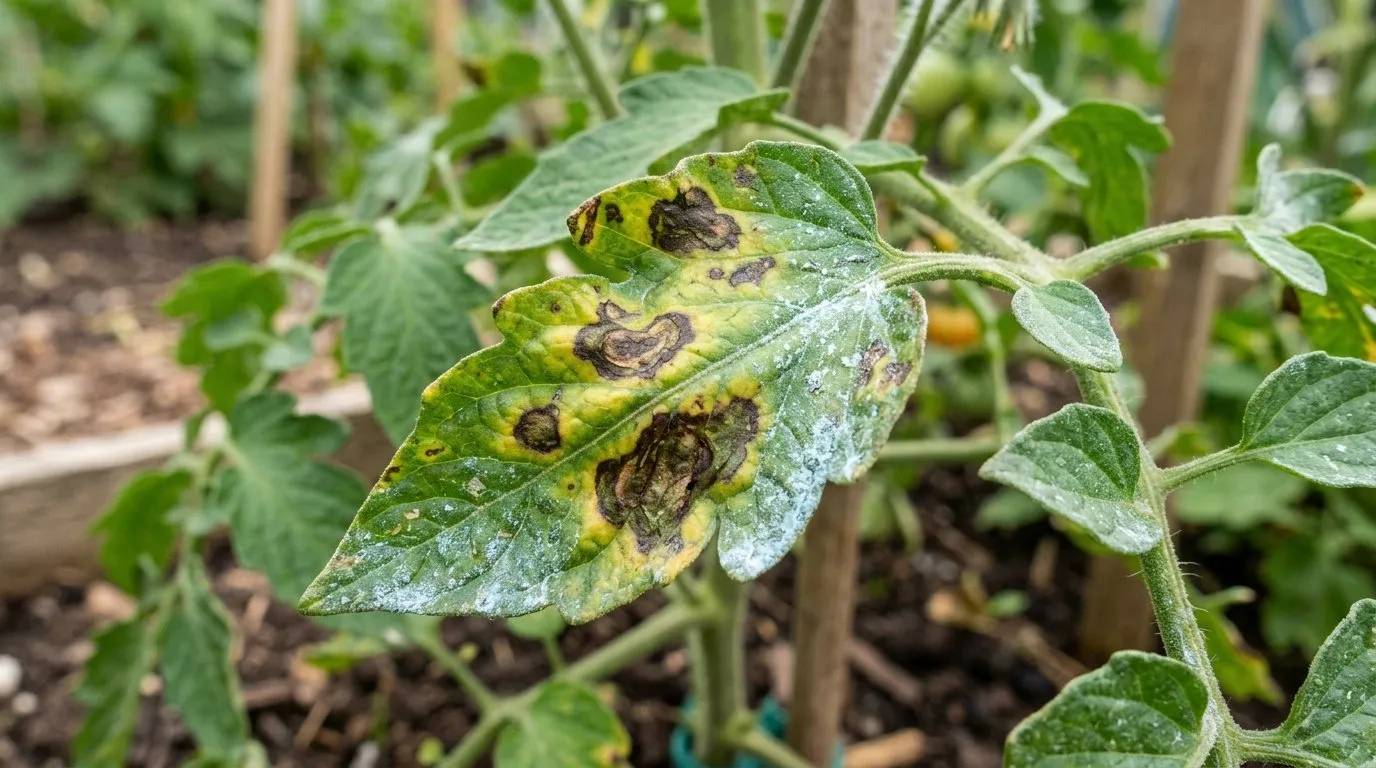 The bullseye rings inside each brown spot are the sign of early blight. Always check the lowest leaves first.
On the fruit
Fruit gets dark, leathery, sunken patches near the stalk. Green fruit is more at risk than ripe fruit. It’s most likely when overhead watering wets the fruit, or when water drips down from spotty leaves.
Early blight or late blight?
They look different, behave differently and need different handling. Here’s how to tell them apart.
| Early blight | Late blight | |
|---|---|---|
| Spots | Brown with rings, like a target | Dark, wet-looking, no rings |
| Mould underneath | None | White fuzzy mould |
| Where it starts | The lowest, oldest leaves | Anywhere on the plant |
| How fast | Slow, over weeks | Very fast, over days |
| Weather | Warm, with wet and dry spells | Mild and very humid |
| Fruit | Sunken patches near the stalk | Firm brown patches anywhere |
| Kills the plant? | Rarely | Often, within about a week |
| Survives winter in | Old plant debris | Potato tubers left in the ground |
For more on the fast-moving kind, see our late blight guide for potatoes and tomatoes.
What causes early blight on tomatoes?
The fungus survives the winter on old plant debris left on the soil. Fallen leaves, old stems and dropped fruit all carry it. When rain or watering splashes the soil the next year, spores land on the lowest leaves. That splash is the main way it gets in.
How it spreads
- Winter: the fungus waits in old debris on or near the soil.
- Splash: water hitting the soil throws spores up onto the lowest leaves. Wind can carry them further.
- Infection: spores on wet leaves get in and start to grow.
- Spots appear: a few days later, brown spots with rings form.
- More spread: the spots make new spores, which splash or blow onto higher leaves. Each wet spell pushes it further up.
What makes it worse
Warm weather with wet and dry spells suits early blight best. Damp mornings and warm afternoons in a greenhouse or polytunnel in July and August are ideal for it.
Stressed, hungry or very heavily cropping plants are more likely to suffer. Keep plants well fed and watered so they stay strong.
Our guide to common tomato diseases shows how early blight compares with fusarium wilt, septoria leaf spot and other problems.
How to treat early blight on tomato plants
Nothing cures the spots once you see them. Instead, remove the affected leaves and protect the healthy ones. Good habits do most of the work.
Remove spotty leaves straight away
Cut off every leaf with brown spots or rings. Clean your secateurs between plants so you don’t spread spores. Bag the leaves and put them in the household bin, not the compost heap.
Cut leaves off cleanly where they join the stem, rather than tearing them.
What about sprays?
Copper fungicides, including Bordeaux mixture, are no longer allowed for home gardeners in the UK. Older advice to spray them, or mix your own, is out of date. Home-made sprays like bicarbonate of soda mixes aren’t allowed as pesticides either.
So the main treatment is removing affected leaves, mulching, watering at the base and keeping air moving. If you want to use a spray, only use one authorised for tomatoes. Apply it to healthy leaves before the spots spread, and follow the label exactly.
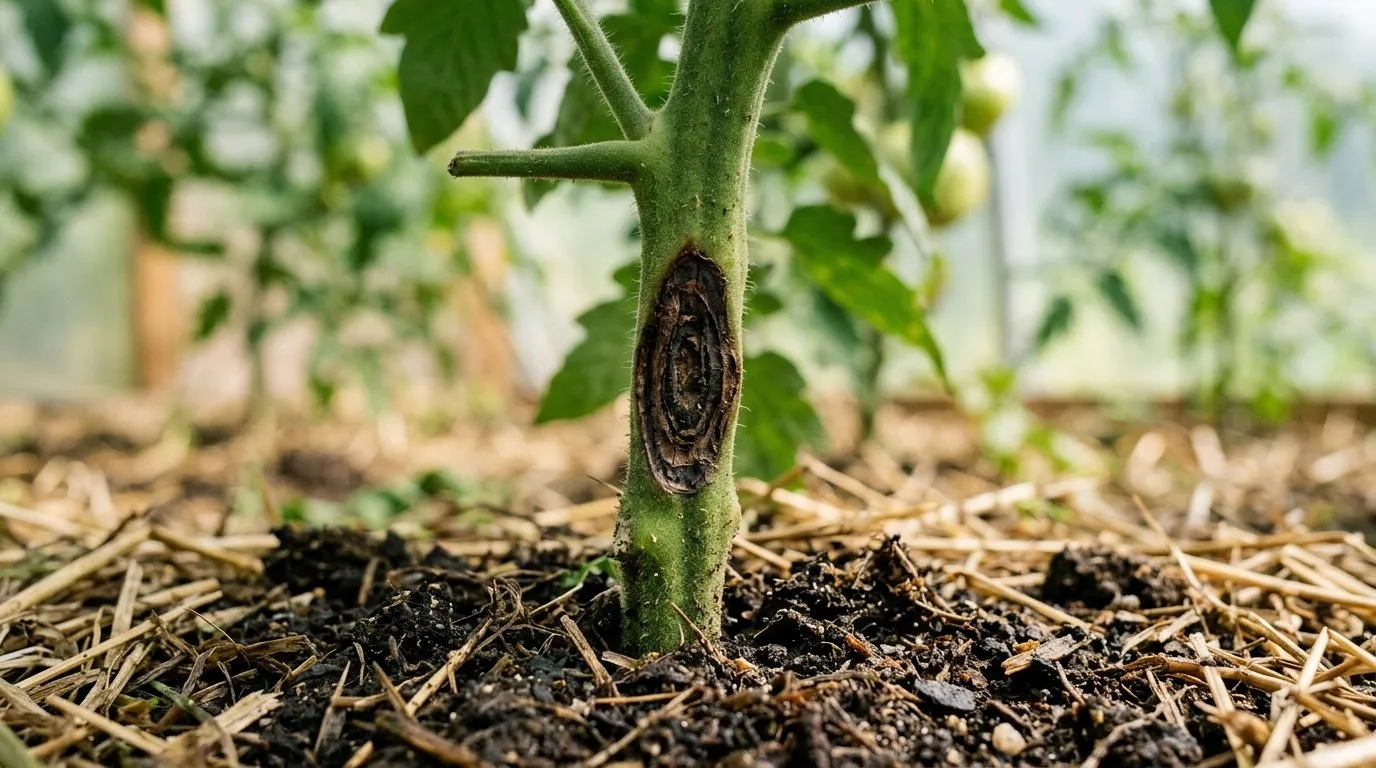 A dark, sunken patch on the stem near the soil. Stem patches usually follow once the lower leaves are affected.
Preventing early blight in your greenhouse
Prevention works far better than treatment. These six habits all stop spores splashing up from the soil onto the leaves.
1. Mulch the soil
Put down a mulch, such as straw, straight after planting and before the first watering. Spread it well out around each plant so no bare soil is left to splash.
2. Strip the lowest leaves
Once the first truss has set fruit, take off all the leaves below it. These are the ones nearest the soil and most likely to catch splashed spores. Keep removing the lowest leaves as the plant grows.
This also lets air move around the base of the plant, so the leaves dry faster. Our vegetable pest and disease guide has more ways to keep crops healthy.
3. Water the base, never the leaves
Watering over the top is a common cause of early blight in home greenhouses. It wets the leaves and splashes spores up from the soil. Use a seep hose, drip system or water straight into the pots. If you use a hose, point it at the soil.
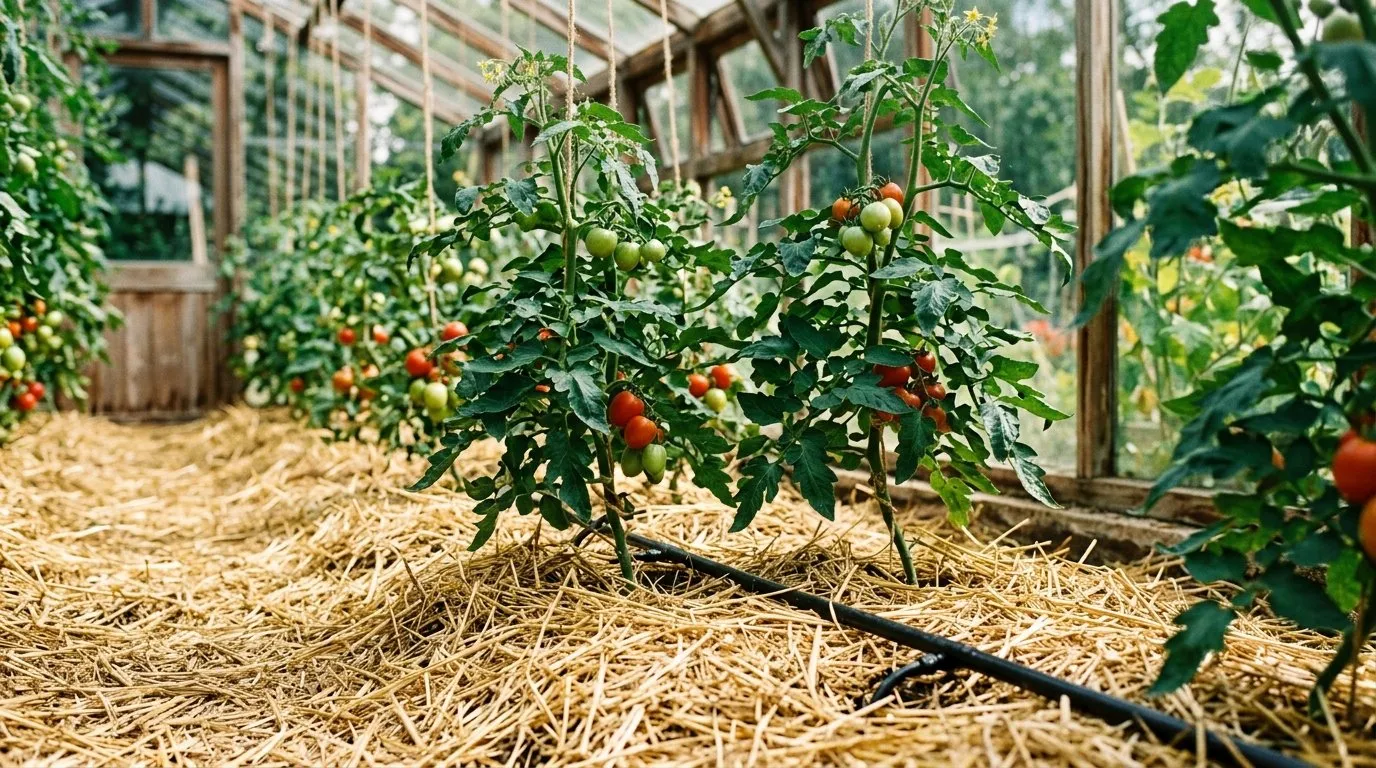 Straw mulch around tomato plants stops water splashing spores up onto the lower leaves.
4. Give plants space
Crowded plants stay damp. Space cordon tomatoes at least 45cm apart. Pinch out sideshoots regularly to keep plants open and airy. Leaves then dry quickly after watering.
5. Clear up in autumn
At the end of the season, remove every scrap of tomato plant from the greenhouse. Fallen leaves, stem bases and dropped fruit all carry the fungus through winter. Sweep the soil clean and bag up the debris for the bin.
6. Move your tomatoes around
Try not to grow tomatoes in the same greenhouse border every year. If you only have one greenhouse, grow them in fresh compost in big pots or grow bags instead. That breaks the cycle completely.
For general growing tips, see our guide to growing tomatoes in the UK.
Which tomato varieties resist early blight?
No variety is immune, but some are bred to cope better. They get fewer spots, and the disease moves more slowly.
| Variety | Type | Good to know |
|---|---|---|
| Mountain Magic F1 | Cordon, small plum | Bred to tolerate early and late blight |
| Iron Lady F1 | Cordon, medium | Bred to resist early blight, late blight and septoria leaf spot |
| Defiant PhR F1 | Bush, medium | Bred to tolerate early and late blight |
| Crimson Crush F1 | Cordon, large | Mainly bred for late blight resistance |
Popular varieties like Gardener’s Delight, Moneymaker, Black Russian and Costoluto Fiorentino have little resistance. In a bad year they can lose a lot of leaves by August.
Our guides to the best tomato varieties and the best blight-resistant tomato varieties have more ideas. A tougher variety plus the good habits above gives you the best protection.
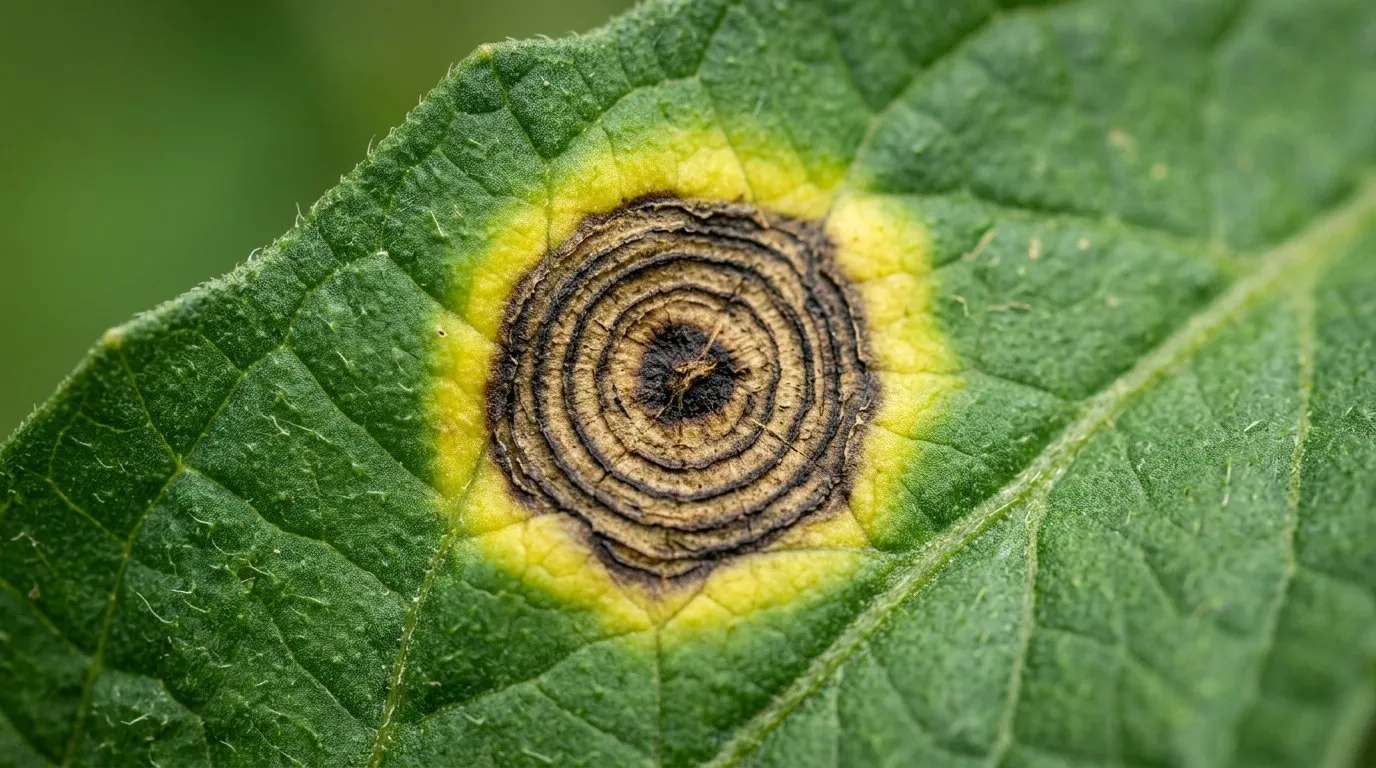 A close look at the target-like rings inside an early blight spot.
When to remove affected plants
Only pull up a plant once it has lost most of its leaves. Until then, it can still ripen its fruit if you keep removing spotty leaves and let air in.
A simple guide
| How many leaves lost | What to do |
|---|---|
| A few | Remove spotty leaves, mulch and keep growing |
| Up to half | Remove spotty leaves, open things up, water carefully |
| More than half | Remove damaged leaves and let the existing fruit ripen |
| Nearly all | Pull the plant up. Ripen any colouring fruit indoors |
Fruit on a bare plant can get sunscald, which shows as pale, papery patches. If you’re pulling the plant, pick any fruit that has started to colour and ripen it on a warm windowsill.
Early blight doesn’t live in the roots like fusarium wilt, so it doesn’t poison the soil for years. But the fungus can last a season or two on fallen debris, so clear up well.
End-of-season tidy-up
After the last pick, remove all tomato plants, diseased or not. Cut them at the base and bag the leaves. Sweep up fallen leaves and fruit. Then give the frame, glass and staging a wash with a greenhouse disinfectant.
Our companion planting guide has ideas for mixing up your planting.
The Garden Organic pests and diseases advice has more chemical-free ideas.
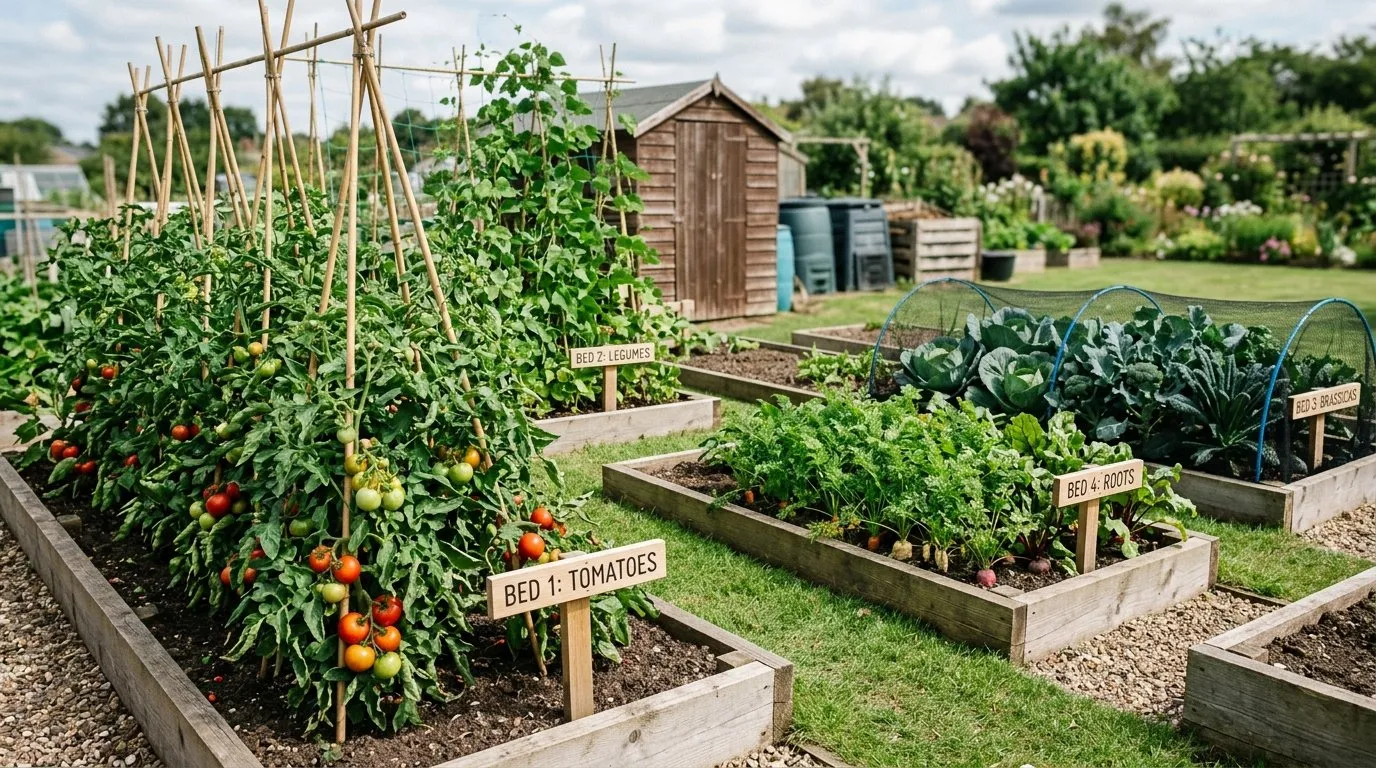 Moving tomatoes to a new bed each year keeps them away from soil where old debris may carry early blight.
Frequently asked questions
What does early blight look like on tomatoes?
Dark brown spots with rings inside, like a target, on the lowest leaves. The leaf around each spot turns yellow, then the leaf dries and drops. It creeps slowly up the plant over weeks. Stems can get dark sunken patches near the soil, and fruit gets leathery patches near the stalk.
Is early blight the same as late blight on tomatoes?
No, they’re caused by different organisms. Early blight is a fungus that makes ringed spots and moves slowly up from the bottom. Late blight causes dark, wet-looking patches anywhere, with white mould underneath. Late blight can kill a plant in days, while early blight rarely kills it.
Can I eat tomatoes from a plant with early blight?
Yes, fruit without any spots is fine to eat. Throw away fruit with dark, sunken patches near the stalk. Check each tomato as you pick it and give them a wash.
Does early blight survive in the soil over winter?
It survives on old plant debris left on the soil. Fallen leaves, bits of stem and old fruit carry it into the next season. Clearing all tomato debris in autumn breaks the cycle.
Will copper fungicide cure early blight?
No, nothing cures the spots once they appear. Copper fungicides like Bordeaux mixture aren’t allowed for UK home gardeners anyway. Remove affected leaves, mulch the soil and water at the base. If you want a spray, only use an authorised one and follow the label.
Which tomato varieties resist early blight?
Mountain Magic, Iron Lady and Defiant PhR are bred to cope well. No variety is fully immune. Popular varieties like Gardener’s Delight and Moneymaker have little resistance.
Should I remove leaves with early blight?
Yes, remove spotty leaves straight away and put them in the bin. Don’t compost them. Clean your secateurs between plants. Taking off the lowest leaves below the first truss also helps stop the disease splashing up from the soil.
Our team produces practical UK gardening guidance from source research, contributor records and established horticultural practice. Editorial standards are overseen by Matt W.