Key takeaways
- Brown spots with yellow edges on the lower leaves from July are the first sign
- The roots are still safe to eat, but badly affected plants give smaller carrots
- Rotate carrots round the plot and clear old tops away after harvest
- Thin seedlings and water at the base to keep the leaves dry
- Early sowings often miss the worst of it
- Copper sprays are no longer allowed for home gardeners, so prevention is the answer
Carrot leaf blight turns carrot tops brown in late summer and can leave you with small roots. It’s caused by a fungus called Alternaria dauci, and it loves warm, wet British summers. You can’t cure it once it’s in, but some simple habits keep it in check: fresh seed, rotation, good spacing, dry leaves and picking off spotty foliage early.
What is carrot leaf blight?
Carrot leaf blight is a fungus that attacks carrot leaves and leaf stalks. It doesn’t infect the roots directly. But when the leaves die, the plant can’t feed itself well, so the roots stop growing and stay small.
It’s a different problem from black rot, which attacks the top of the root below the soil. Leaf blight is the one you’ll spot first. The RHS Alternaria leaf spot page has more pictures if you want to compare.
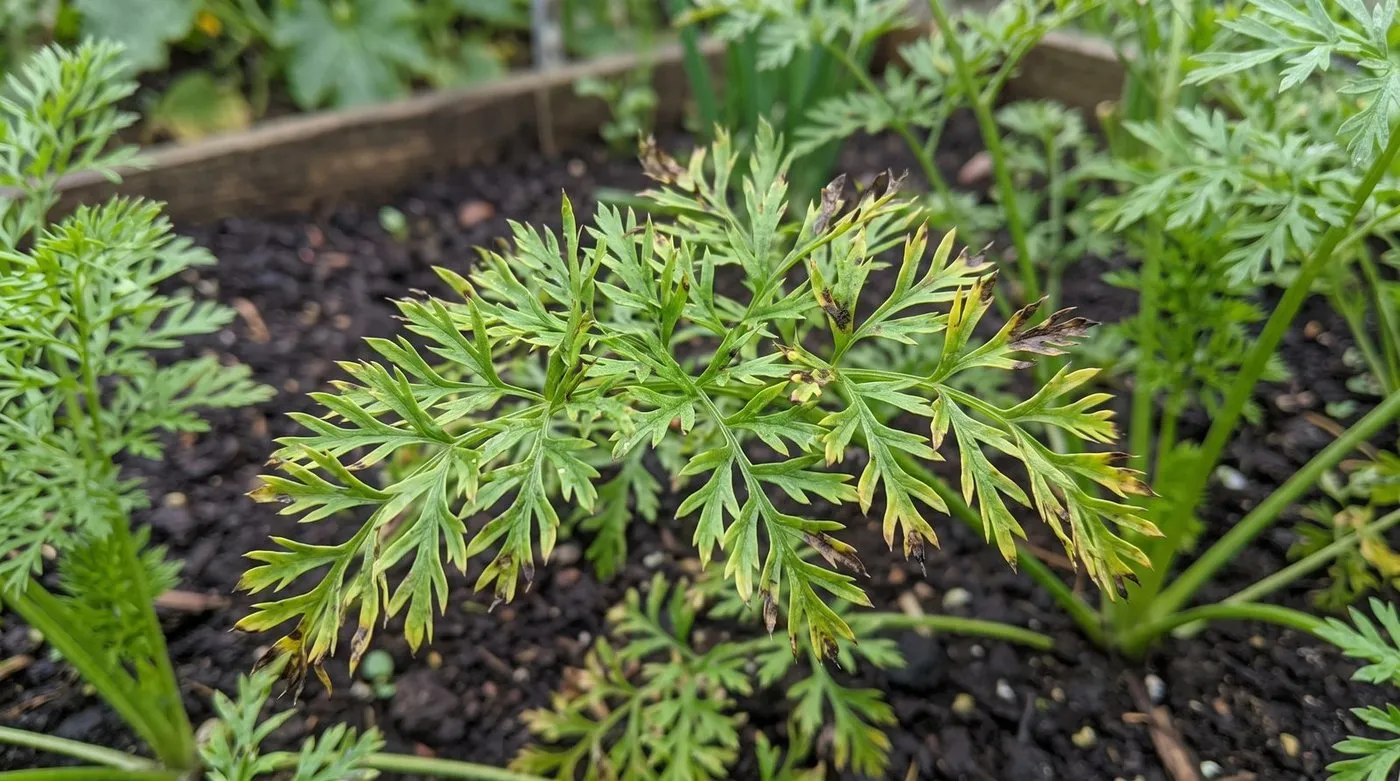 Dark brown spots on carrot leaves, the first sign of leaf blight.
How to identify carrot leaf blight
Spot it early and you can slow it down. It follows a pattern that’s easy to learn.
Early symptoms (July)
It starts on the older, lower leaves near the soil. Look for:
- Small dark brown or black spots on the edges and tips of the leaves
- Yellow rings around the spots, easiest to see against the light
- Spots joining up into bigger brown patches
- Leaves curling as the damaged bits dry out
The lower leaves go first because the air is dampest near the ground, and rain splashes spores up from the soil.
Advanced symptoms (August-September)
If you leave it, it climbs up through the plant:
- Whole leaflets turn brown and papery
- Leaf stalks get dark streaks
- The plant loses most of its top, leaving short blackened stubs
- The tops snap off when you try to pull the carrot, so use a fork
The roots carry on growing slowly, but they’ll be smaller than you hoped.
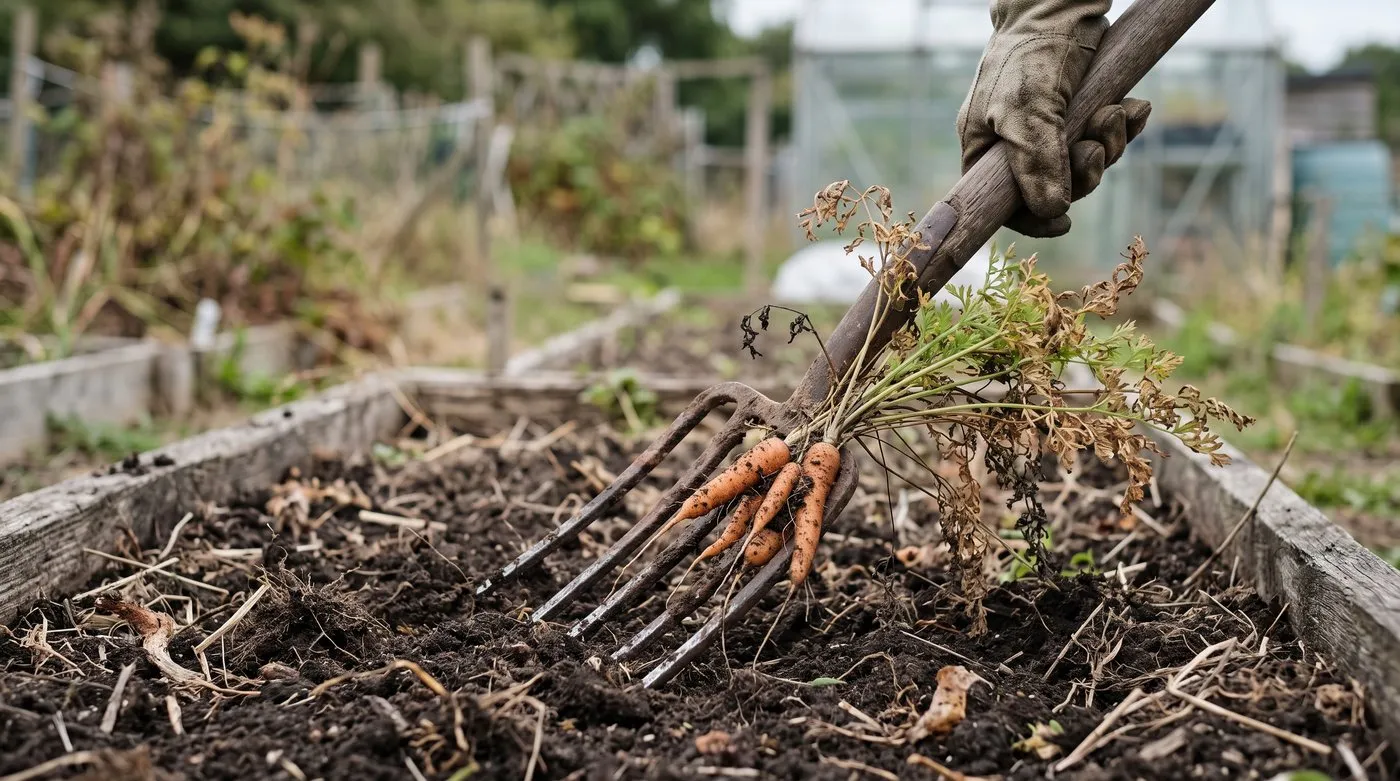
Once the tops blacken they snap off when pulled, so lift with a fork. The roots are fine to eat, just smaller.
Conditions that trigger outbreaks
| Factor | What helps the blight | What you can do |
|---|---|---|
| Weather | Warm, showery spells | Keep checking through summer |
| Wet leaves | Leaves that stay damp for hours | Water at the base, in the morning |
| Crowding | Damp air trapped between plants | Thin seedlings and weed regularly |
| Plant age | Older leaves get it first | Sow early so plants are ahead |
Not carrot fly? Carrot fly maggots tunnel into the roots. Blight spots the leaves but leaves the roots clean. Pull one carrot to check.
How the blight spreads
You don’t need the science, just the main points. The fungus spends winter on old carrot tops left in the soil, and it can arrive on seed. In early summer it makes spores that land on the leaves. Once one plant has spots, rain splash, wind and your own hands spread it along the row.
That’s why prevention matters. By the time you see spots, it has already been busy for a week or two. So get your good habits in place before July.
 Healthy carrot tops on the left, blighted ones on the right.
How to prevent carrot leaf blight
These habits work best together. None of them is a magic fix on its own.
Use clean, treated seed
Seed can carry the fungus into a garden that’s never had it.
- Buy fresh seed from a reputable supplier
- Never save seed from a crop that had blight
Practise three-year crop rotation
Old carrot tops in the soil are the other way blight comes back.
- Don’t grow carrots in the same bed two years running
- Leave at least three years before carrots go back in the same spot
- Keep parsley, parsnips, celery and celeriac in the same group as carrots
- Clear away old tops after harvest instead of digging them in
Our crop rotation planner shows how to set up a simple four-bed plan.
Space plants for airflow
Crowded carrots stay damp, and damp leaves are what the blight wants.
- Thin carrots to 3-5cm apart in the row
- Leave rows 15-20cm apart
- Pull weeds so air can move
- Water the soil, not the leaves, with a watering can or seep hose
Sow at the right time
Early sowings often get established before blight peaks in August.
| Sowing time | Harvest | Blight risk |
|---|---|---|
| March (under cloches) | June-July | Low |
| April | July-August | Low to medium |
| May | August-September | Medium |
| June-July | September-November | High |
Grow resistant varieties
A tougher variety is the easiest win. No carrot is immune, but some keep green leaves for longer.
| Variety | Type | Blight tolerance | Good to know |
|---|---|---|---|
| Bolero | Nantes | Good | Stores well |
| Maestro | Nantes | Good | Reliable all-rounder |
| Nantes 2 | Nantes | Poor | Classic flavour, but blight-prone |
| Autumn King | Autumn King | Poor | Big maincrop for storing |
 Well-spaced rows let air move between the plants, so the leaves dry quickly.
How to treat carrot leaf blight
Once you see spots, the aim is to slow it down and keep as many healthy leaves as you can.
Why copper sprays are no longer an option
Older guides suggest Bordeaux mixture or other copper sprays. These are no longer allowed for home gardeners in the UK. Don’t make your own or use up old stock.
Remove affected foliage
Taking off spotty leaves early cuts down the spores in the bed.
- Snip off leaves that are mostly brown
- Wipe your scissors between plants
- Put the leaves in the council green waste bin, not your compost
- Clearing the lower leaves helps air move around the base too
Supplementary products
If good habits aren’t enough, check the HSE list of approved products for anything currently allowed on carrots, and follow the label exactly. Home-made bicarbonate mixes aren’t allowed as fungicides, so give them a miss.
Treatment effectiveness comparison
| What to do | When it helps | How much effort |
|---|---|---|
| Tougher varieties | Every year | Easy, once you’ve bought the seed |
| Rotation | Every year | Easy with a plan |
| Clean seed | Every year | Easy |
| Picking off spotty leaves | Once spots appear | A few minutes a week |
Root cause: why carrot leaf blight keeps coming back
If blight turns up every year, one of three things is usually going on.
Infected seed introduction
Seed is the usual way blight first arrives. Once it’s in, it carries on in old carrot tops, so buy fresh seed from a good supplier.
Inadequate crop debris removal
Digging old carrot tops into the soil keeps the fungus right where your next crop might go. Pull up the old tops after harvest and bin them, or burn them.
Too-short rotation cycles
Two years between carrot crops isn’t quite enough. Aim for three. If space is tight, grow carrots in deep pots with fresh compost each year.
Our companion planting guide has more ideas for planning what goes where.
Common mistakes when dealing with carrot leaf blight
Mistake 1: Confusing blight with nutrient deficiency
Hungry carrots go yellow all over the leaf. Blight gives distinct dark spots. Feeding a blighted crop with lots of nitrogen just makes soft new leaves that catch it more easily.
Mistake 2: Watering from above
A sprinkler keeps the leaves wet, which is exactly what the blight wants. Water the soil instead.
Mistake 3: Ignoring early symptoms
A few spots on the bottom leaves look harmless. Pick them off now and you may stop them spreading along the row.
Mistake 4: Composting affected foliage
Garden compost heaps don’t usually get hot enough to kill the fungus. Use the green waste bin instead.
Mistake 5: Growing the same variety every year
If an old favourite gets blight every year, try a tougher variety. It’s an easy switch.
Month-by-month carrot blight prevention calendar
| Month | Action |
|---|---|
| January-February | Order fresh seed of a blight-tolerant variety |
| March | Sow early carrots under cloches, or in pots of fresh compost |
| April | Sow your main crop. Thin to 3-5cm once seedlings are big enough to handle |
| May | Keep beds weeded. Water at the base |
| June | Thin any crowded rows. Keep the leaves dry |
| July | Check the lower leaves every week. Pick off spotty ones |
| August | Peak blight month. Keep picking off spotty leaves and lift early carrots |
| September | Lift maincrop before the tops get too bad. Clear away old tops |
| October | Clear the beds. Bag old tops for the green waste |
| November-December | Plan next year’s rotation, keeping carrot relatives together |
Understanding related carrot diseases
Not every carrot problem is leaf blight. Here’s a quick guide to the others.
| Problem | What you see | What to do |
|---|---|---|
| Leaf blight | Brown leaf spots with yellow edges | Rotation, picking off leaves, tougher varieties |
| Black rot | Black sunken patches at the top of the root | Clean seed, rotation |
| Cavity spot | Small sunken pits on the roots | Improve drainage, try raised beds |
| Sclerotinia rot | White fluffy mould on stored carrots | Store cool, dry and airy |
| Violet root rot | Purple web over the roots | Long rotation, keep parsnips out too |
| Carrot motley dwarf | Red or yellow leaves, stunted plants | Deal with aphids, pull affected plants |
For more veg troubles, our vegetable pests and diseases guide covers all the common crops. The garden plant diseases guide explains the main types of disease in plain words.
If you think aphids are spreading a virus, see our aphid control guide. Natural helpers such as nematodes and lacewings can help keep aphids down too.
For sowing times and harvesting tips, read our guide on how to grow carrots in the UK. And for a gentle approach to pests across the whole plot, try our organic pest control guide.
Frequently asked questions
What causes carrot leaf blight?
A fungus called Alternaria dauci. Its spores land on wet leaves and get in when the weather is warm. It survives the winter on old carrot tops left in the soil and can come in on seed. Warm, showery summers give it the best chance.
Can you eat carrots affected by leaf blight?
Yes, the roots are safe to eat. The blight attacks the leaves, not the carrot itself. Plants with lots of brown leaves can’t feed themselves well, so the roots may be smaller. Lift them once the tops get bad and enjoy them.
How do I tell carrot leaf blight from carrot fly damage?
Check the roots as well as the leaves. Blight leaves dark spots on the foliage while the roots look clean. Carrot fly maggots tunnel into the roots, leaving rusty-brown channels, and the leaves may turn reddish and wilt. If the tops have brown spots but the roots are clean, it’s probably blight.
Does carrot leaf blight spread to other vegetables?
Only to close relatives of carrots. Parsley, parsnips, celery and celeriac are in the same family and can be affected. Tomatoes, potatoes, beans and cabbages are safe. Keep all of these carrot cousins together in your rotation.
When does carrot leaf blight appear in the UK?
Usually from July onwards. It likes warm weather and leaves that stay wet for hours. Carrots sown in March and April often get going before it arrives. Sowings from June onwards tend to get hit hardest.
Is there a fungicide spray for carrot leaf blight?
No, there’s nothing home gardeners can spray to cure it. Copper sprays such as Bordeaux mixture are no longer allowed for home use in the UK. Rely on clean seed, rotation, good spacing and picking off spotty leaves. Check the HSE approved list before using any fungicide.
What are the most blight-resistant carrot varieties?
Look for varieties sold as blight tolerant, such as Bolero or Maestro. They keep their leaves green for longer than older types. No carrot is fully immune, so combine them with good spacing and rotation.
Our team produces practical UK gardening guidance from source research, contributor records and established horticultural practice. Editorial standards are overseen by Matt W.