Key takeaways
- Leek rust shows as raised orange pustules that rub off as powder
- It usually appears from midsummer and is worse in damp, crowded beds
- Too much nitrogen and too little potassium make it worse
- There is no fungicide for home growers, so prevention does the work
- Tolerant varieties such as Apollo and Bandit rust less, but none are immune
- Rusty leeks are safe to eat once the marked outer leaves are trimmed
Leek rust is the orange dust that turns up on leek leaves most summers. It looks alarming, but it rarely kills the crop, and the leeks are still good to eat. The trick is to slow it down so the plants keep growing well into winter.
This guide shows you how to recognise leek rust, why it appears, how to keep it in check without sprays and which varieties to grow.
What leek rust looks like
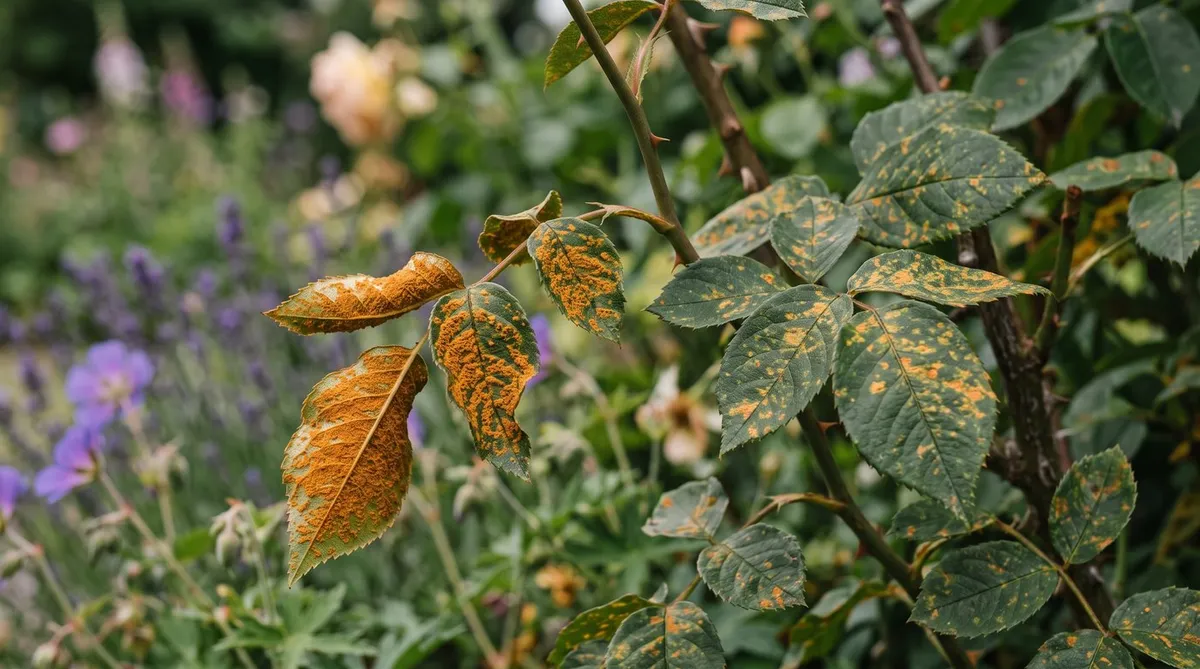
Leek rust shows as bright orange, slightly raised spots on both sides of the leaf. They start as tiny flecks, then swell into oval pustules a few millimetres long. A pale yellow halo often surrounds each one.
Rub a spot with your finger. Rust smudges off as an orange powder, because the pustules are full of spores. No other common leek problem does that.
Other leek troubles look quite different:
- Leek moth leaves pale, papery patches and tunnels with caterpillars inside. See the leek moth guide.
- Allium leaf miner leaves neat rows of white dots and brown pupae in the stem.
- Downy mildew shows as grey-violet fuzz, not orange dust.
- White tip bleaches the leaf tips pale.

Up close, each pustule is packed with orange spores. Rub one and it leaves a dusty smear on your finger.
Why leek rust appears in summer
Leek rust likes mild, damp weather. It usually shows from midsummer and can carry on into late autumn. A muggy August lets it run. A dry spell slows it down.
A few things make it worse:
- Wet leaves. Spores need moisture on the leaf to get in.
- Crowding. Close rows trap damp air around the foliage.
- Too much nitrogen. Rich feeds push soft, leafy growth that rust loves.
- Too little potassium. Potassium helps leaves toughen up.
Spores blow on the wind and splash in rain, so one rusty plant soon affects the row. The fungus survives on living alliums, so leeks left standing over winter can carry it into next year.

Tight rows like this stay damp after rain. Giving each leek about 15cm of space lets the leaves dry faster.
How to stop leek rust without sprays
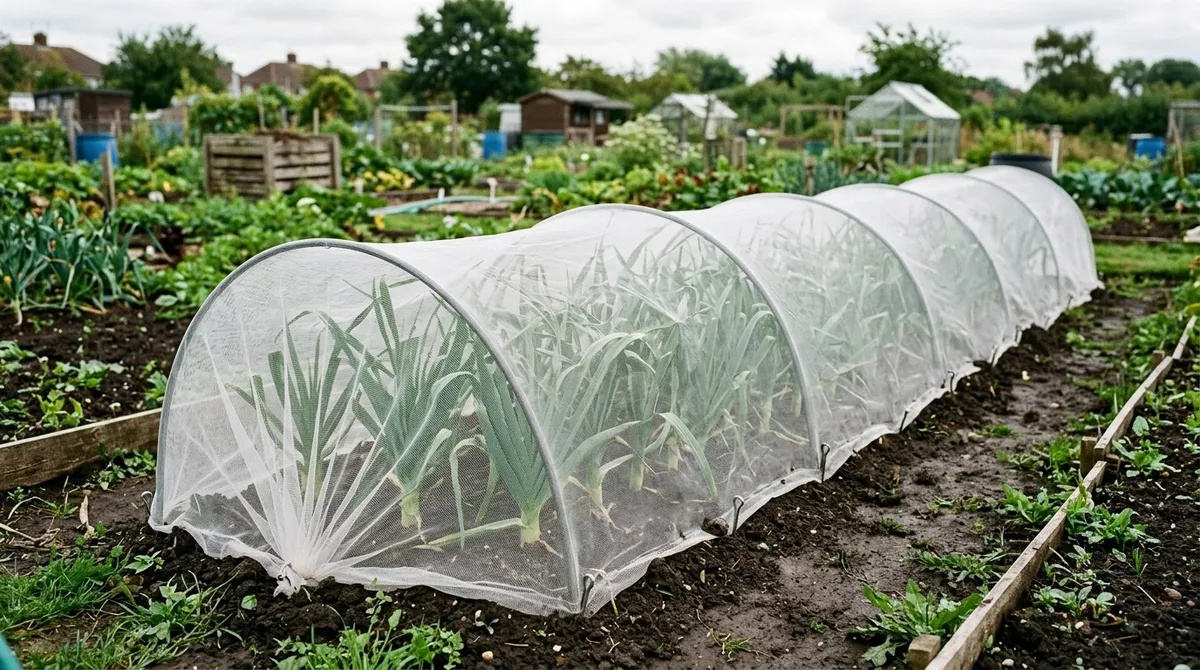
There is no fungicide for home growers to use on leek rust. The good news is that a few simple habits keep it under control.
| What to do | Why it helps |
|---|---|
| Space leeks 15cm apart in rows 30cm apart | Air moves through and leaves dry quickly |
| Water the soil, not the leaves | Dry leaves stop spores getting in |
| Water in the morning if you must wet the foliage | Leaves dry before nightfall |
| Avoid high-nitrogen feeds in summer | Less soft, rust-prone growth |
| Use a high-potash feed if growth is lush | Firmer leaves |
| Strip off badly rusted leaves | Fewer spores to spread |
| Grow leeks in a new bed each year | Less disease carried over |
Put stripped leaves in the green waste bin rather than the compost heap. Clear old leeks once you have harvested them, and pull up any self-sown alliums. Leaving a few rusty stragglers in over winter hands the fungus to next year’s crop.
For sowing, planting and feeding from start to finish, read the guide to growing leeks in the UK.

Aim the spout at the soil, not the leaves. Dry foliage gives rust spores far less of a chance.
Leek varieties that resist rust
Picking a tolerant variety is the easiest win. Modern varieties have been bred to cope better with rust than many older ones.
| Variety | Rust tolerance | Good to know |
|---|---|---|
| Apollo F1 | Good | Long white shaft, autumn to winter harvest |
| Bandit | Good | Dark blue-green leaves, very hardy, late winter harvest |
| Oarsman F1 | Good | Stands well in the ground |
Gardener’s tip: No leek is rust-proof. Even tolerant varieties show some spots in a damp year, so keep up the spacing and sensible feeding.

Hardy blue-green leeks like these stand happily through winter frost, with clean leaves after the rust season ends.
Can you still eat rusty leeks?
Yes, rusty leeks are safe to eat. Rust lives on the green leaves, not the white shaft you cook. Peel away the marked outer leaves and the leek underneath is fine.
Heavy rust can make leaves die back early, so the leeks may end up thinner. They are still good to eat, just smaller. Chives are the exception: you eat the leaves, so badly rusted chives are best cut back to the base to regrow.

Strip off the rusty outer leaves and the white shaft underneath is clean and ready for the pot.
Leek rust through the year
| Month | What to do |
|---|---|
| February to April | Sow leeks in modules or a seedbed, choosing a tolerant variety |
| May to June | Plant out 15cm apart in a bed that didn’t grow alliums last year |
| July | Watch for the first orange spots, hold back on nitrogen |
| August to September | Strip badly rusted leaves, keep foliage dry |
| October to December | Harvest as needed, rust slows in the cold |
| Late winter | Clear any leftover leeks and self-sown alliums |
Moving alliums to a fresh bed each year fits neatly into a rotation. The crop rotation planner shows how.
Common leek rust mistakes
- Feeding high nitrogen in summer. It pushes soft leaves. Switch to a high-potash feed if you feed at all.
- Watering over the leaves in the evening. Wet leaves overnight suit the spores perfectly.
- Planting too close. Crowding keeps the foliage damp.
- Leaving old leeks in the ground. Rusty stragglers carry the fungus into next year.
- Putting rusty leaves on the compost heap. Use the green waste bin instead.
Rust shows up on many other plants too. The rust disease guide covers roses, beans and more, and the onion and allium diseases guide covers rots and mildews on the same crops. The plant problems hub has the rest. For more detail, see the RHS page on leek rust.
Now you can keep rust in check, read the guide to allium leaf miner so the other big leek pest doesn’t catch you out.
Frequently asked questions
Can you eat leeks with rust?
Yes, rusty leeks are safe to eat. The rust sits on the green leaves, not the white shaft. Peel away the worst marked leaves and cook the rest as normal. Heavy rust can mean thinner leeks, but not unsafe ones.
What kills leek rust?
There is no fungicide for home growers to use on leek rust. Control it with good spacing, sensible feeding, tolerant varieties and clearing old plants. Remove the worst affected leaves to slow the spread.
Should I remove leaves with rust?
Yes, strip off the worst rusted leaves. Put them in the green waste bin rather than the compost heap. Leave healthy green leaves in place so the plant keeps growing.
Which leek varieties resist rust?
Apollo, Bandit and Oarsman are sold for their rust tolerance. None of them are immune. In a damp year they may still show some spots, but usually far fewer.
Does leek rust spread to onions and garlic?
The same family of rust fungi can affect garlic, chives and onions too. Leeks and garlic usually suffer most. Treat all alliums as one group when you plan the plot.
Will leek rust come back next year?
It can, because the fungus survives on living allium plants. Clear old leeks once harvested and pull up self-sown alliums. Grow next year’s leeks in a different bed.
Our team produces practical UK gardening guidance from source research, contributor records and established horticultural practice. Editorial standards are overseen by Matt W.