
Key takeaways
- White powdery leaves from midsummer are powdery mildew, which rarely stops cropping
- Mottled yellow-green leaves and warty fruit mean cucumber mosaic virus, so remove the plant
- Small fruit that yellow and rot from the tip are often poorly pollinated, not diseased
- Grey fuzzy mould on fruit is grey mould, worst in wet, cool weather
- Raise ripening squash off wet soil on a tile or straw to stop rot
- Space plants about 90cm apart and water at the base to prevent most problems
Courgettes and squash are some of the easiest, most generous crops you can grow. When something goes wrong, it usually shows up as white leaves, mottling or rotting fruit. Most problems are easy to spot and many are not as serious as they look.
This guide works from the symptom you can see to the likely cause, then tells you what to do. Some problems, like powdery mildew, you can live with. One, cucumber mosaic virus, means the plant has to go. Others turn out not to be diseases at all. For growing basics, see the guide to growing courgettes.
What’s wrong with my courgette plant?
Start with what you can see. This table matches the most common signs to the likely cause.
| What you see | Likely cause | What to do |
|---|---|---|
| White powder on leaves, from midsummer | Powdery mildew | Remove worst leaves, water roots |
| Mottled yellow-green leaves, warty fruit | Cucumber mosaic virus | Remove and bin the plant |
| Small fruit yellowing and shrivelling from the tip | Poor pollination | Wait, or hand-pollinate |
| Grey fuzzy mould on fruit or stems | Grey mould | Remove affected parts, improve air |
| Soft rot where fruit sits on wet soil | Fruit rot | Lift fruit onto a tile or straw |
| Slimy, smelly collapse after damage | Bacterial soft rot | Remove affected fruit or plant |
What does powdery mildew look like on courgettes?
Powdery mildew shows as white, powdery patches on the leaves. It usually starts from midsummer as small round spots, then spreads until whole leaves look dusted with flour. Old leaves yellow and go crisp. The plant normally keeps cropping, just a little less.
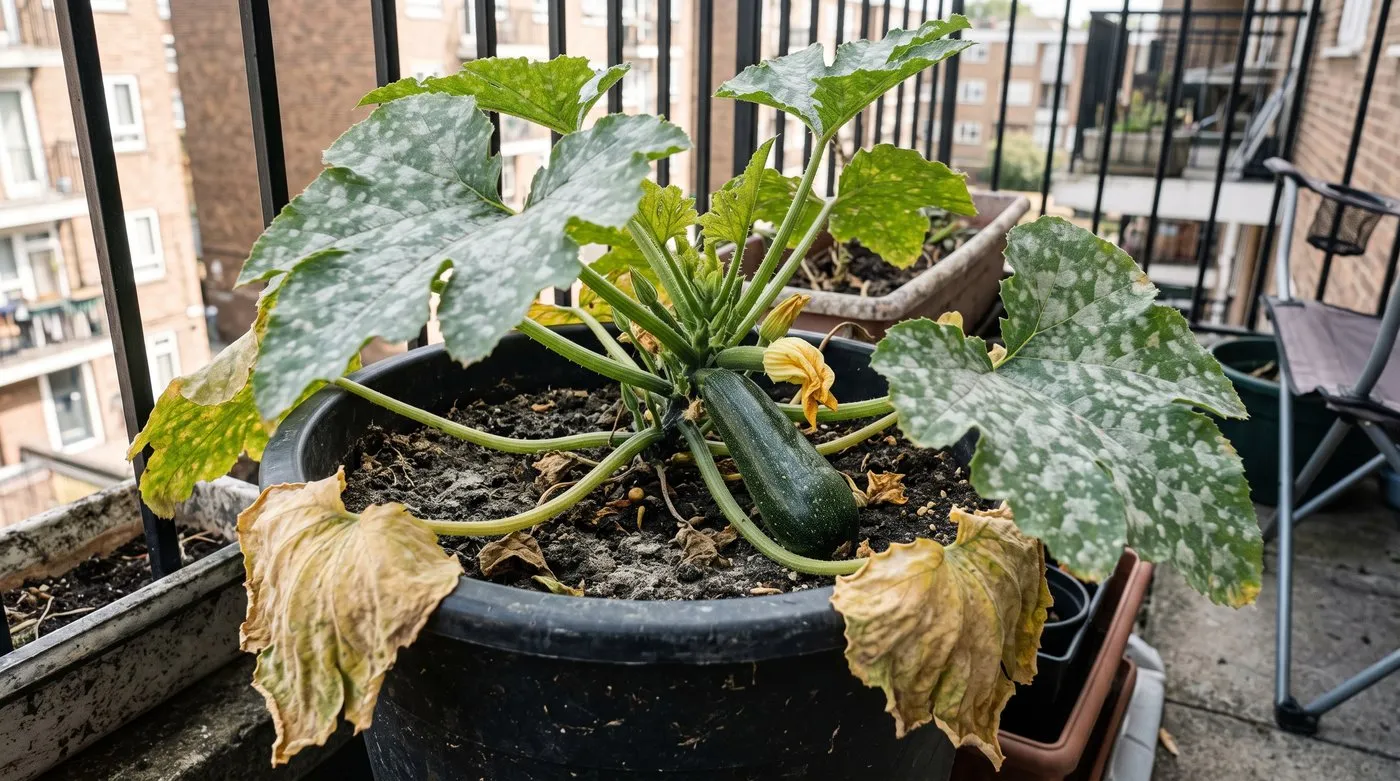
Powdery mildew looks dramatic, but the plant often keeps cropping. Keeping the compost moist slows it down.
Mildew is worst when the roots are dry and the air around the leaves is still. That’s why it often appears in late summer and on plants in pots.
To slow it down:
- Water deeply at the base in dry spells, and mulch to keep the soil moist
- Space plants about 90cm apart so air can move between them
- Cut off the worst-affected leaves with a clean knife
- Avoid splashing water over the leaves
If you want to spray, only use an approved product for that use, following the label. Home-made sprays are not legal to use as fungicides. The guide to powdery mildew treatment covers it on other plants too.
Is it cucumber mosaic virus?
Cucumber mosaic virus (CMV) gives leaves a yellow and green mottled pattern. They often pucker and stay small. The whole plant looks stunted. Fruit can be small, pale, pitted or warty.
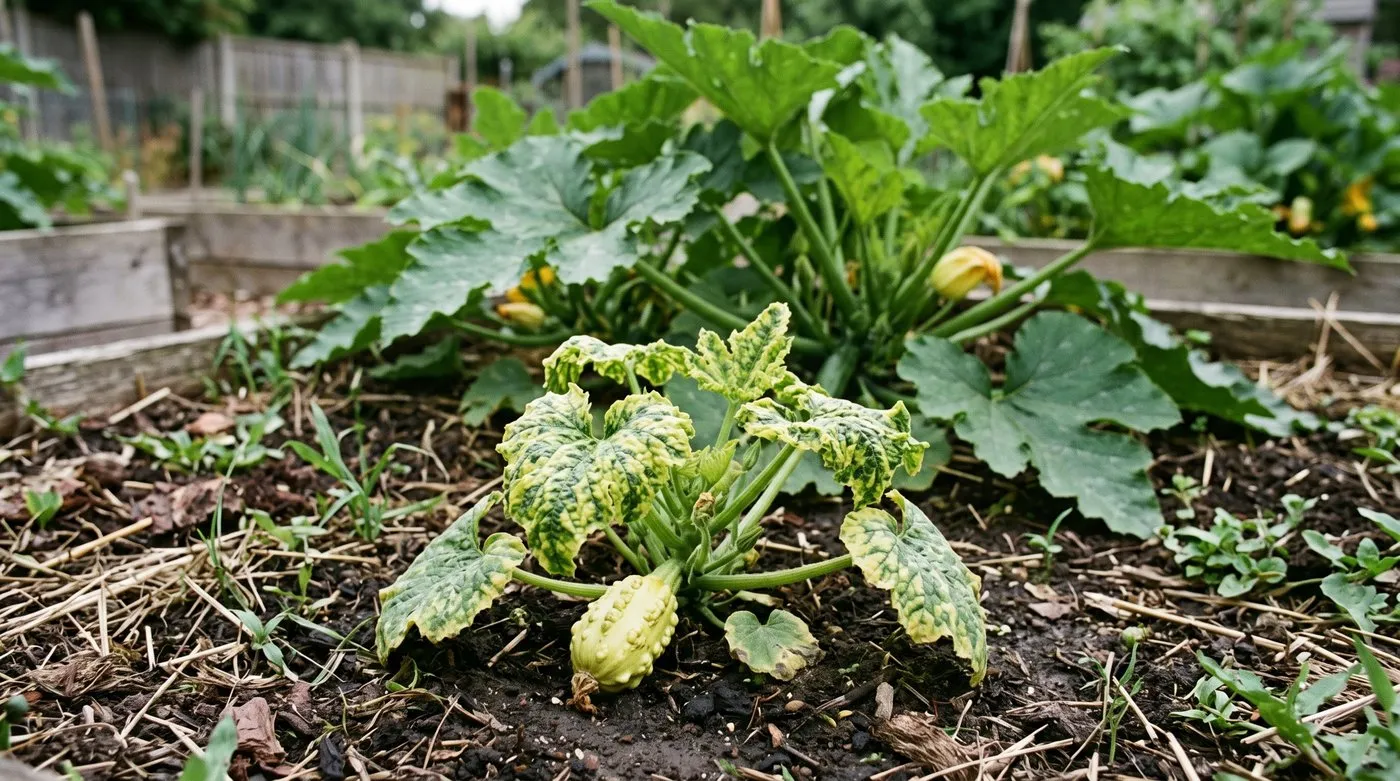
Mottled, puckered leaves and warty fruit point to cucumber mosaic virus. Pull the plant out and bin it.
There is no cure. Aphids carry the virus from plant to plant as they feed, and it can also survive in weeds such as chickweed.
What to do:
- Pull out infected plants, roots and all.
- Bag and bin them. Don’t compost them.
- Wash your hands before handling healthy plants.
- Keep an eye out for aphids on the rest and encourage ladybirds and hoverflies.
- Clear weeds around the veg patch.
Next year, try a variety sold as CMV-resistant, such as courgette ‘Defender’. The full guide to cucumber mosaic virus has more detail.
Why are my baby courgettes rotting from the tip?
Small courgettes that turn yellow, go soft and shrivel from the tip are usually poorly pollinated. They are not diseased. This is common early in the season, when the plant makes female flowers before many male ones. It also happens in cold, wet weather when few bees are about.

Early in the season, a little hand-pollinating helps baby courgettes swell instead of shrivelling.
Give it time, as most plants settle down as summer warms up. You can also pollinate by hand. Pick a male flower (thin stalk, no baby fruit behind it). Peel back the petals and brush the pollen onto the centre of an open female flower. The guide to hand pollination shows how.
Remove shrivelled fruit so they don’t rot and spread mould to the rest.
What causes grey mould on courgettes?
Grey mould is a fungus that rots fruit, flowers and damaged stems in cool, damp weather. It often starts at the tip of a young courgette, where the old flower stays soggy. The rot turns soft and brown, then grows grey, fuzzy mould.
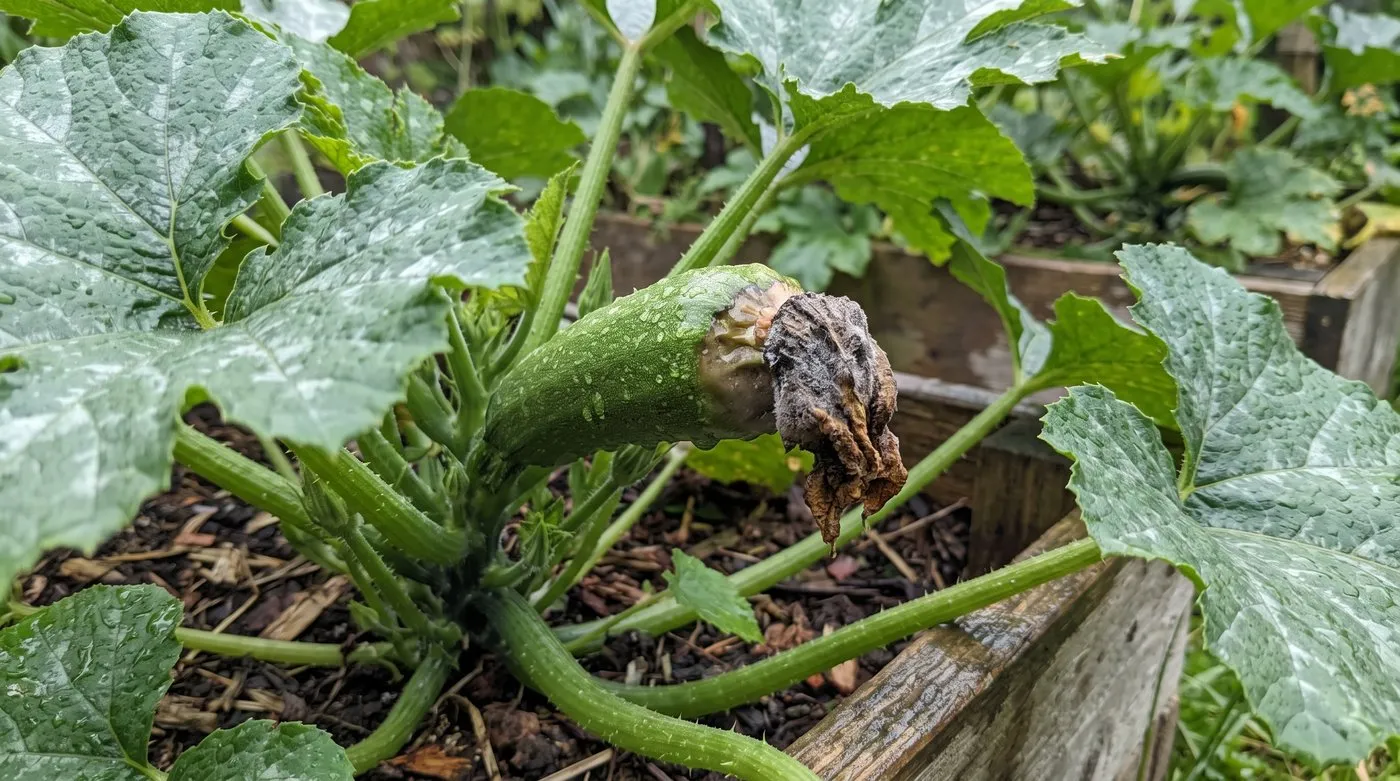
Rot often starts in the soggy old flower. Pick off dead flowers and any rotting fruit to stop it spreading.
It can also get into stems through wounds where leaves have snapped.
To keep it in check:
- Pick off soggy, dead flowers from the ends of young fruit
- Remove any mouldy fruit straight away
- Pick courgettes young and often
- Give plants space and water the soil, not the leaves
- Cut off damaged leaves cleanly rather than tearing them
Why is my squash rotting on the ground?
Squash and pumpkins left to ripen on wet soil can rot where they touch the ground. A soft, wet patch appears underneath and spreads quickly. Autumn rain makes it worse.
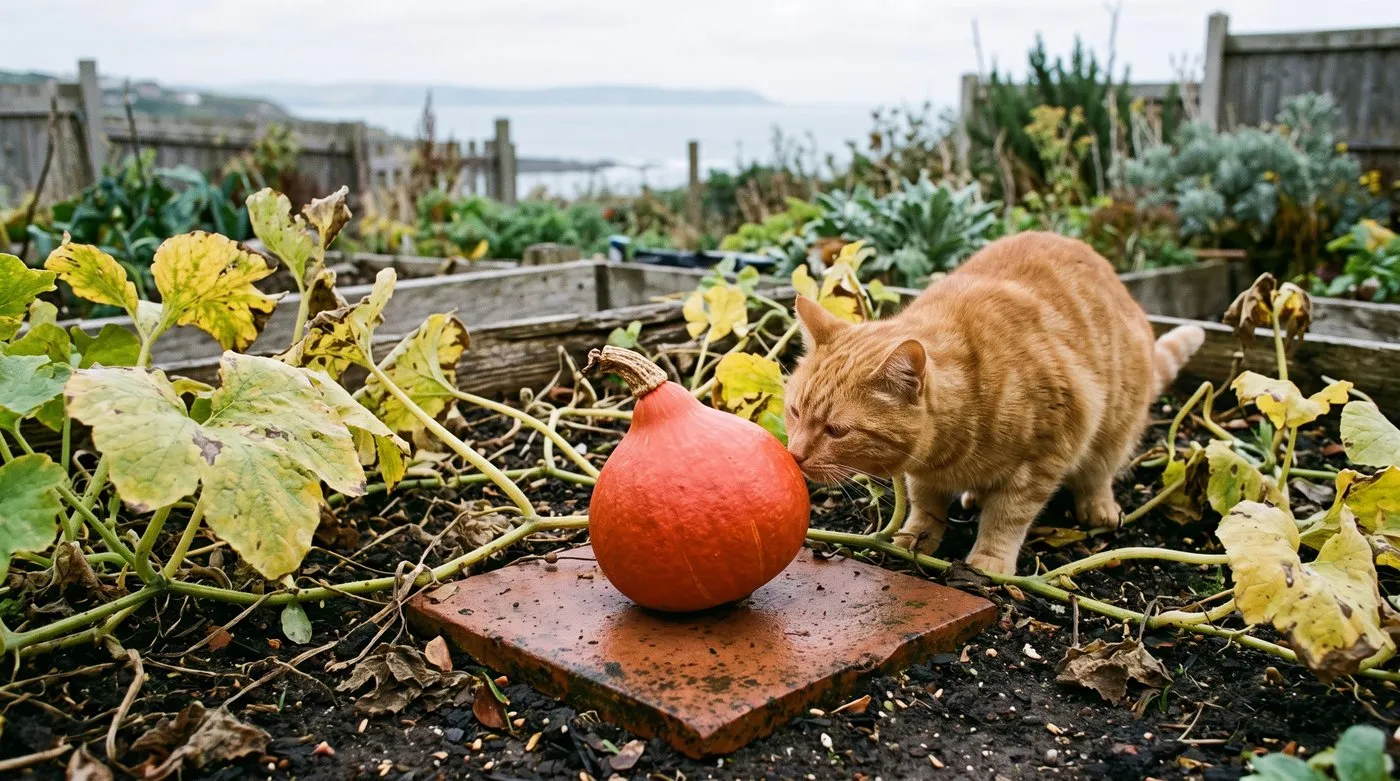
A tile or slate under each squash keeps it off wet soil and stops it rotting underneath as it ripens.
The fix is simple. Slip a tile, slate, piece of wood or a thick pad of straw under each fruit. This keeps it dry and lets air get underneath. Turn the fruit gently now and then so it ripens evenly. The guide to growing pumpkins and squash covers ripening and harvest.
What is bacterial soft rot on squash?
Bacterial soft rot turns fruit or stems soft, slimy and smelly. It almost always follows damage, such as slug bites, frost, hail or rough handling.
Remove and bin affected fruit straight away. Don’t leave rotting fruit on the soil. Cut courgettes off with a sharp knife rather than twisting them. Keep slugs down around young plants, and the guide to getting rid of slugs has ideas.
Is it blossom end rot?
Blossom end rot is a dry, dark, sunken patch at the flower end of the fruit. It is not a disease. It happens when uneven watering stops calcium reaching the developing fruit. It is more common in tomatoes and peppers than courgettes.
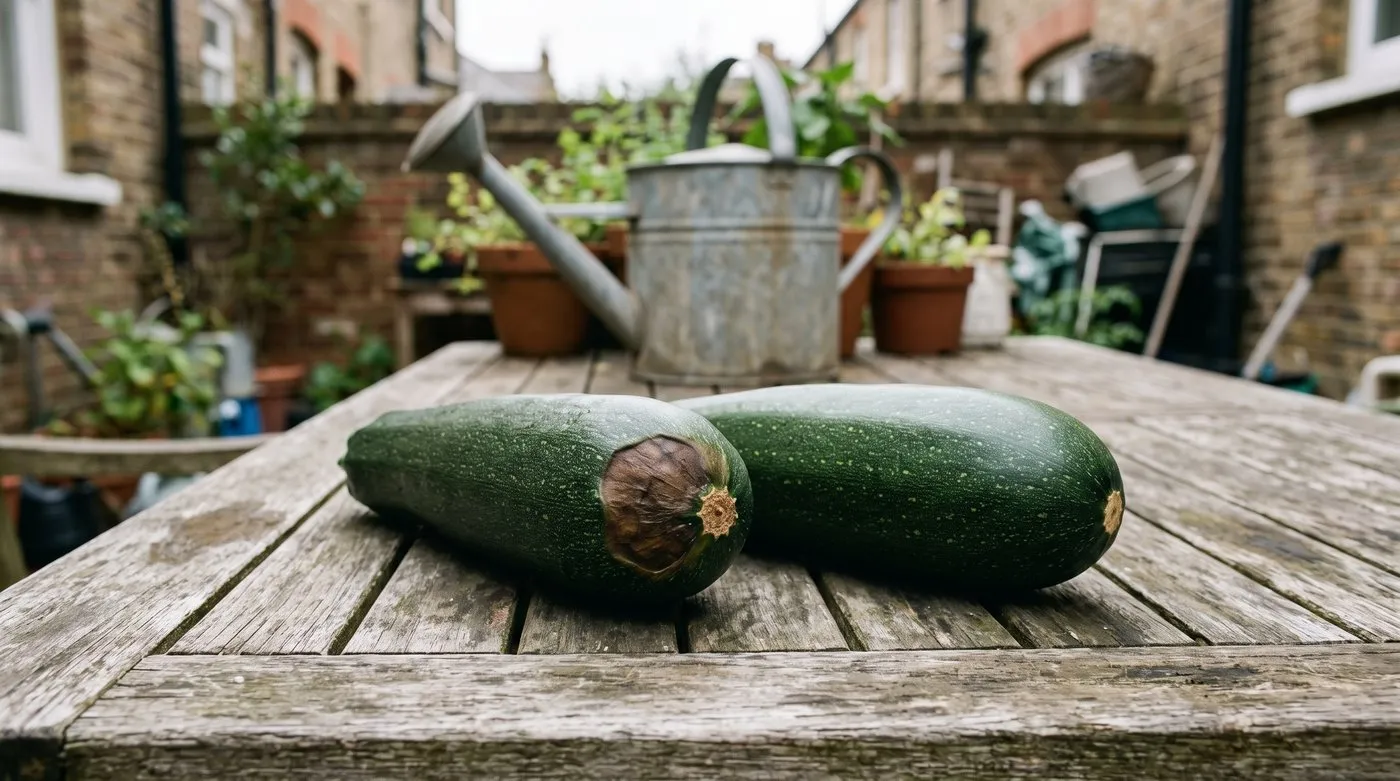
A dry, sunken patch at the flower end is blossom end rot. Steady watering is the fix, not extra calcium.
Water deeply and regularly in dry spells, and mulch to keep the soil evenly moist. Adding lime or calcium rarely helps, as the real fix is steady watering. The guide to blossom end rot explains more.
When should I pull out a diseased squash plant?
Pull out a plant if it has cucumber mosaic virus, or if rot has spread right round the main stem. Neither will recover.
Powdery mildew alone is not a reason to remove a plant. Pick off the worst leaves and it will usually keep cropping until the first frost. Grey mould on a few fruit isn’t either. Remove the mouldy bits and carry on.
Common mistakes with courgette and squash problems
- Planting too close together. Crowded plants stay damp and still, which suits mildew and mould.
- Letting pots and beds dry out. Dry roots make powdery mildew much worse.
- Watering over the leaves in the evening. Wet leaves overnight invite grey mould.
- Composting virus-infected plants. Bin them instead.
- Panicking about early rotten fruit. It’s usually just poor pollination.
Frequently asked questions
Why do my courgette leaves have white powder on them?
The white powder is powdery mildew, a common fungal disease. It usually appears from midsummer, especially when roots are dry. Pick off the worst leaves, water the soil regularly and give plants space. Most plants keep cropping until autumn.
Why are my courgette leaves mottled and yellow?
Mottled yellow and green leaves usually mean cucumber mosaic virus. Growth is stunted and fruit may be small, pitted or warty. There is no cure, and aphids spread it. Pull out and bin infected plants so the virus doesn’t reach your others.
Why are my courgettes rotting on the plant?
Usually poor pollination or grey mould. Small fruit that yellow and shrivel from the tip were often not pollinated, which is common early in the season. Fruit with grey, fuzzy mould has grey mould. Pick off affected fruit and remove soggy old flowers.
What causes black ends on courgettes?
Black ends are usually rot, often grey mould starting from the old flower. A dry, dark, sunken patch at the tip can be blossom end rot, linked to uneven watering. Pick off affected fruit and water deeply and regularly in dry spells.
Should I remove courgette plants with mosaic virus?
Yes, pull them out and bin them. The virus cannot be cured, and aphids carry it to nearby plants. Don’t compost the plant, and wash your hands before touching healthy ones.
How do I prevent powdery mildew on squash?
Keep the roots moist and the air moving. Mulch and water deeply at the base in dry spells. Space plants about 90cm apart and remove old, yellowing lower leaves. If you want to spray, use an approved product for that use, following the label.
Can I eat squash from a plant with powdery mildew?
Yes, the fruit is safe to eat. Mildew lives on the leaves, not inside the fruit. Badly affected plants may give smaller fruit, so pick them as they ripen.
Got a glut once your plants recover? Read the guide on using up a garden glut for ideas. For more veg troubles, browse the problems hub.
Our team produces practical UK gardening guidance from source research, contributor records and established horticultural practice. Editorial standards are overseen by Matt W.


