Key takeaways
- Hand pollinate where bees can't reach, like greenhouses, or in cold, wet weather when they can't fly
- Tap or vibrate greenhouse tomato trusses every couple of days while they flower
- Female courgette and squash flowers have a tiny fruit behind the petals; males don't
- Pollinate cucurbits in the morning, as the flowers close later in the day
- Brush early peach and apricot blossom with a soft paintbrush on dry days
- Never pollinate all-female greenhouse cucumbers, as pollinated fruit turns bitter
Hand pollination is a simple way to get more fruit when bees can’t help. Greenhouse tomatoes that drop their flowers, baby courgettes that go yellow and shrivel, and early peaches that blossom well but set little can all be helped by a few minutes’ work.
This guide covers tomatoes, courgettes and squash, melons, cucumbers and early fruit trees. You only need your fingers, a soft paintbrush and perhaps an old electric toothbrush.
When does hand pollination help?
Hand pollination helps when pollinators can’t reach the flowers or can’t fly. Bees rarely work inside greenhouses and polytunnels, and the still air there doesn’t shake tomato flowers either. In cold, wet springs, bees stay at home just when early fruit blossom opens.
Outdoors in normal weather, most crops pollinate themselves or get plenty of help from insects. There, hand pollination is a backup, not a routine. Planting flowers that feed pollinators all year is the best long-term help, and our list of bee-friendly plants has lots of ideas.
How to hand pollinate tomatoes
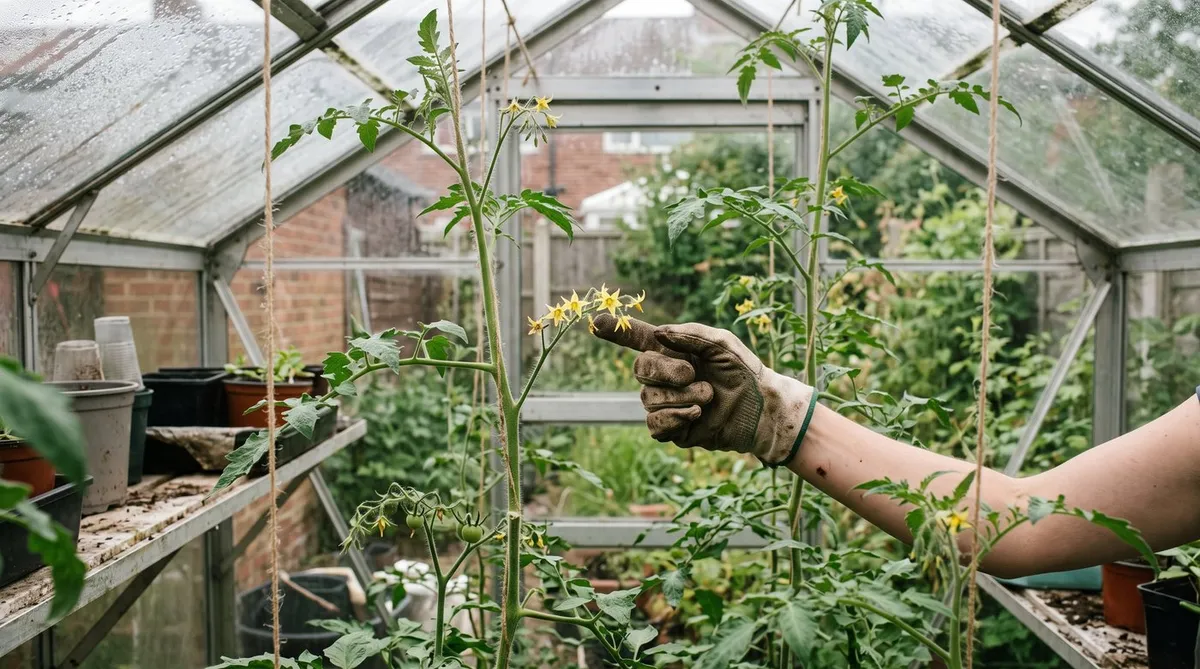
Tomato flowers pollinate themselves, but the pollen has to be shaken loose inside each flower. Outdoors the wind and bumblebees do this. In a still greenhouse you need to give them a helping hand.
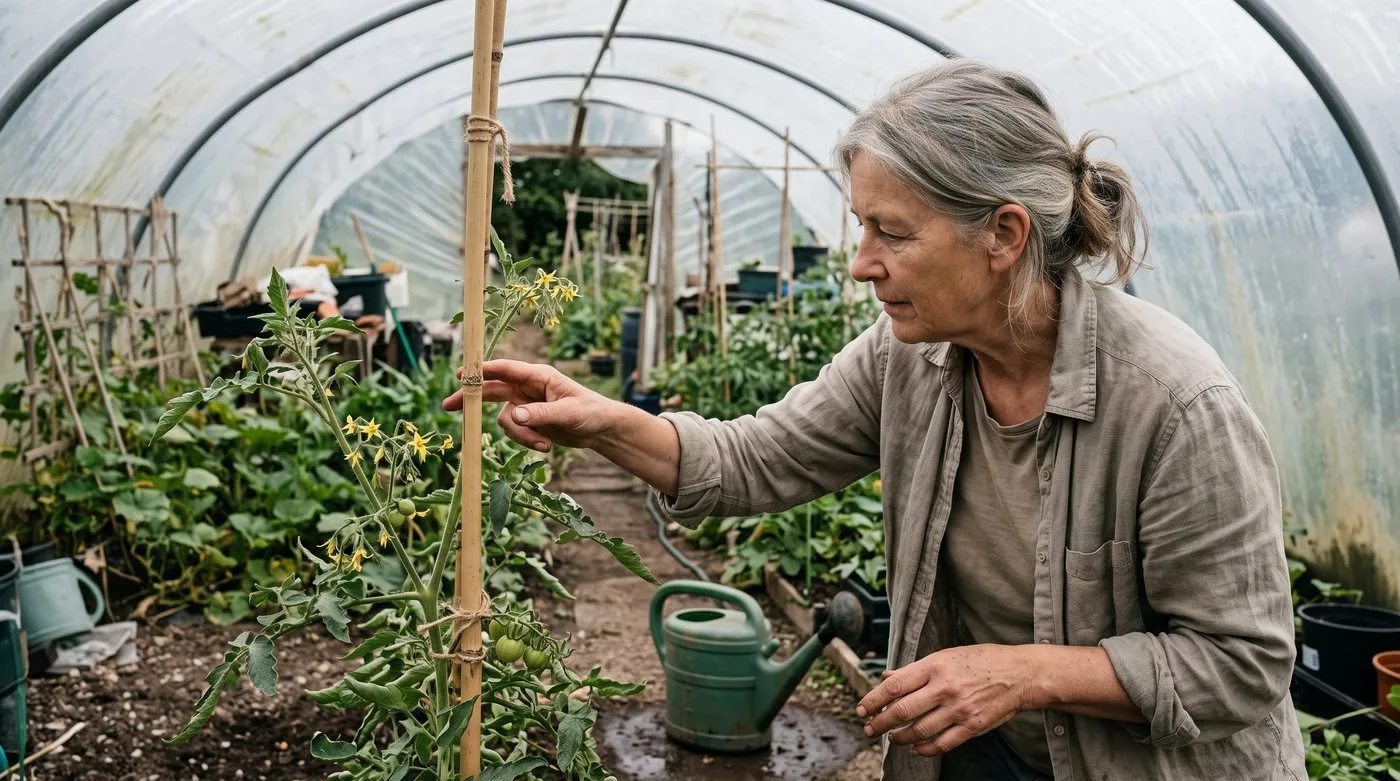
Tapping the cane on a warm morning does the job of the wind and the bees under cover.
- Wait for a warm, dry morning when the trusses are in flower.
- Tap the cane or string holding each plant, or flick each flowering truss gently with a finger.
- For a more thorough job, hold the back of an electric toothbrush against the truss stem for a second or two.
- Repeat every couple of days while the plants are flowering.
Tomatoes set fruit best in warm, slightly humid conditions. On hot, dry days, damping down the greenhouse floor or lightly misting the flowers helps. Very hot greenhouses can stop fruit setting, so keep vents and doors open in summer. Our beginner’s guide to growing tomatoes covers the rest of the routine.
How to hand pollinate courgettes and squash
Courgettes, squash, pumpkins and marrows have separate male and female flowers on the same plant. Pollen has to move from a male to a female. If it doesn’t, the baby fruit turns yellow and shrivels.
Spot the difference first. A female flower has a tiny fruit just behind the petals. A male flower sits on a thin, plain stalk.

The female flower on the right has a baby courgette behind it. The male on the left sits on a plain stalk.
Then:
- In the morning, pick a freshly opened male flower.
- Peel or snip off its petals to show the pollen-covered centre.
- Gently dab the pollen all over the centre of an open female flower.
- One male flower can usually do two or three females.
The early flowers on young plants are often all male, so don’t worry if they drop. Females follow. For more on growing them, see our guide to growing courgettes.

Pick an open male flower, take off the petals and dab its pollen into the female flowers. A soft paintbrush works too.
Melons and cucumbers under glass
Melons in a greenhouse need hand pollinating. Use a soft paintbrush or a male flower to move pollen into the female flowers, which have a tiny melon behind them. Try to pollinate several females on the same day so the fruits grow evenly, then thin to a few per plant. Our guide to growing melons in a greenhouse explains how many to keep.
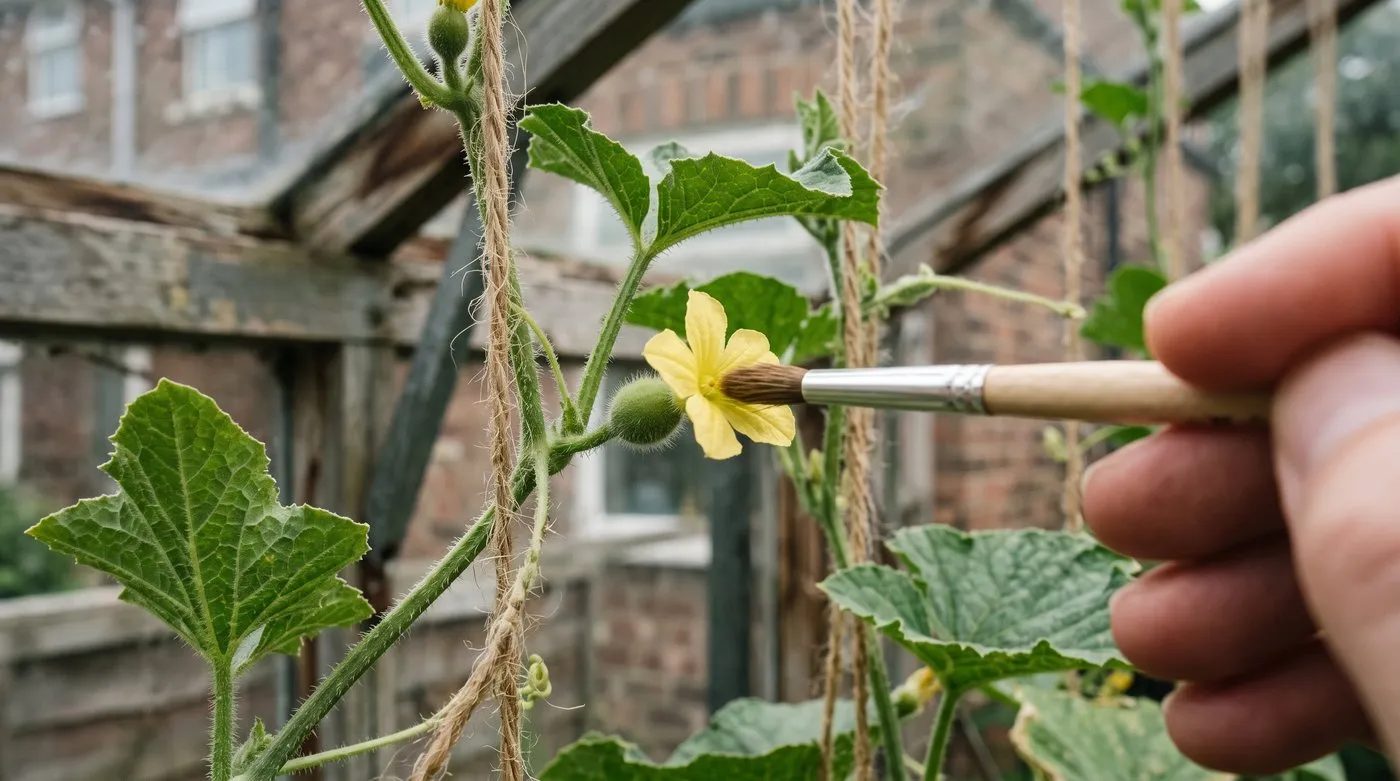
Female melon flowers have a tiny fuzzy fruit behind them. Pollinate several on the same day so they swell evenly.
Cucumbers are different. Many greenhouse varieties are all-female and set fruit without pollination. If they do get pollinated, the fruit can turn bitter and misshapen. So don’t pollinate them. On older greenhouse varieties that make male flowers, pick the males off.
Outdoor ridge cucumbers, such as ‘Marketmore’, have male and female flowers and are pollinated by insects. You can hand pollinate them like courgettes if fruit isn’t setting. Check your seed packet if you’re not sure which type you have, and see our guide to growing cucumbers.
How to hand pollinate peaches and other fruit trees
Peaches, nectarines and apricots flower very early, often in February or March, when few insects are flying. Most varieties are self-fertile, so they can pollinate themselves, but they still need pollen moved within and between flowers.
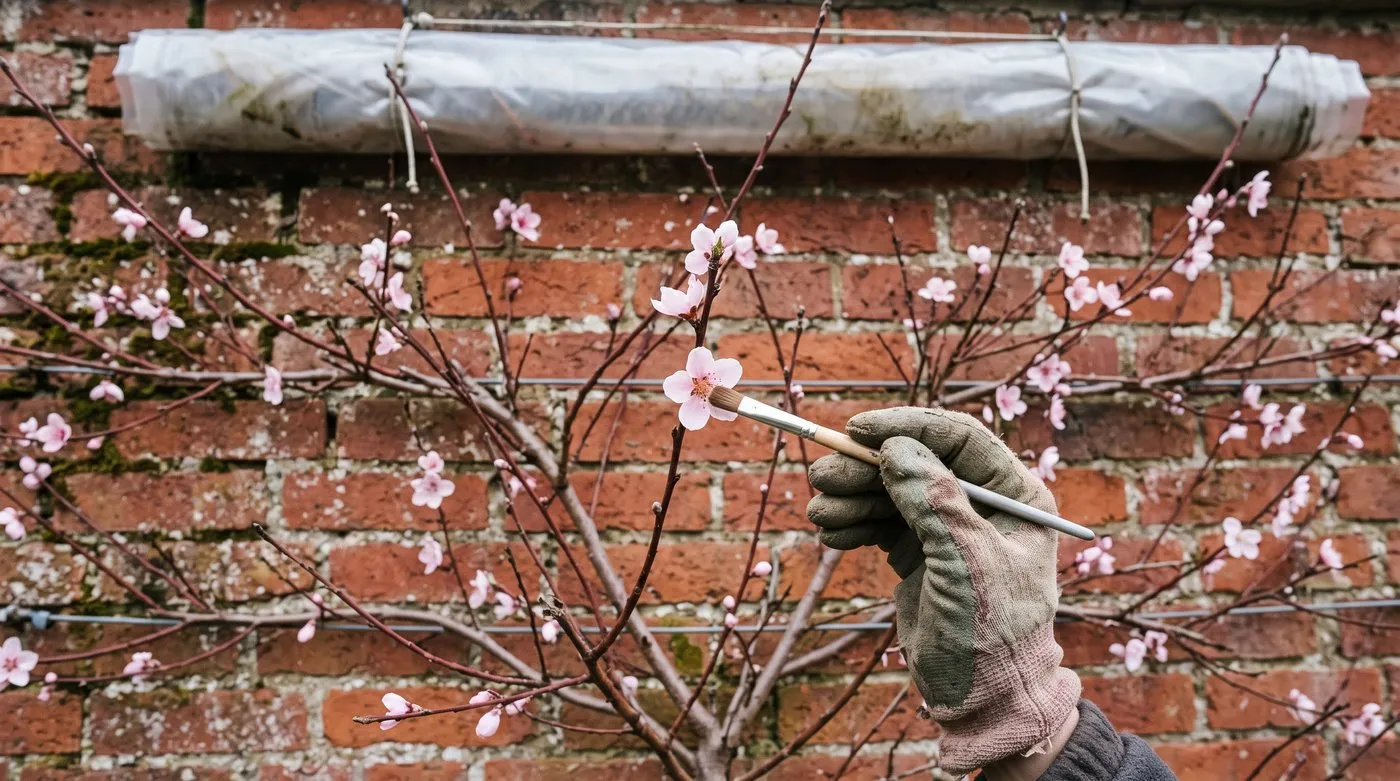
Peach blossom opens before many insects are about. A soft brush every couple of days on dry days does their job.
Use a soft paintbrush. On a dry day, around the middle of the day, gently brush the centre of each open flower, moving from blossom to blossom. Do this every couple of days while the tree is in flower. It’s especially useful on fan-trained trees on a wall or under cover, where you’ve kept the rain off to prevent peach leaf curl.
Our guide to growing peach trees covers the rest of their care.
Cherries, plums and pears flower later. Bees usually manage them, but small trained trees in a cold, wet spring can benefit from the same brush treatment. Some varieties need a pollination partner nearby, so check before you plant. Our guide to cherry pollination groups explains how partners work.
What about sweetcorn and strawberries?
Sweetcorn is pollinated by the wind. Pollen falls from the tassels at the top onto the silks below. Grow it in a block, not a single row, so the pollen lands where it’s needed. On a still day, gently tapping the tops of the plants helps.
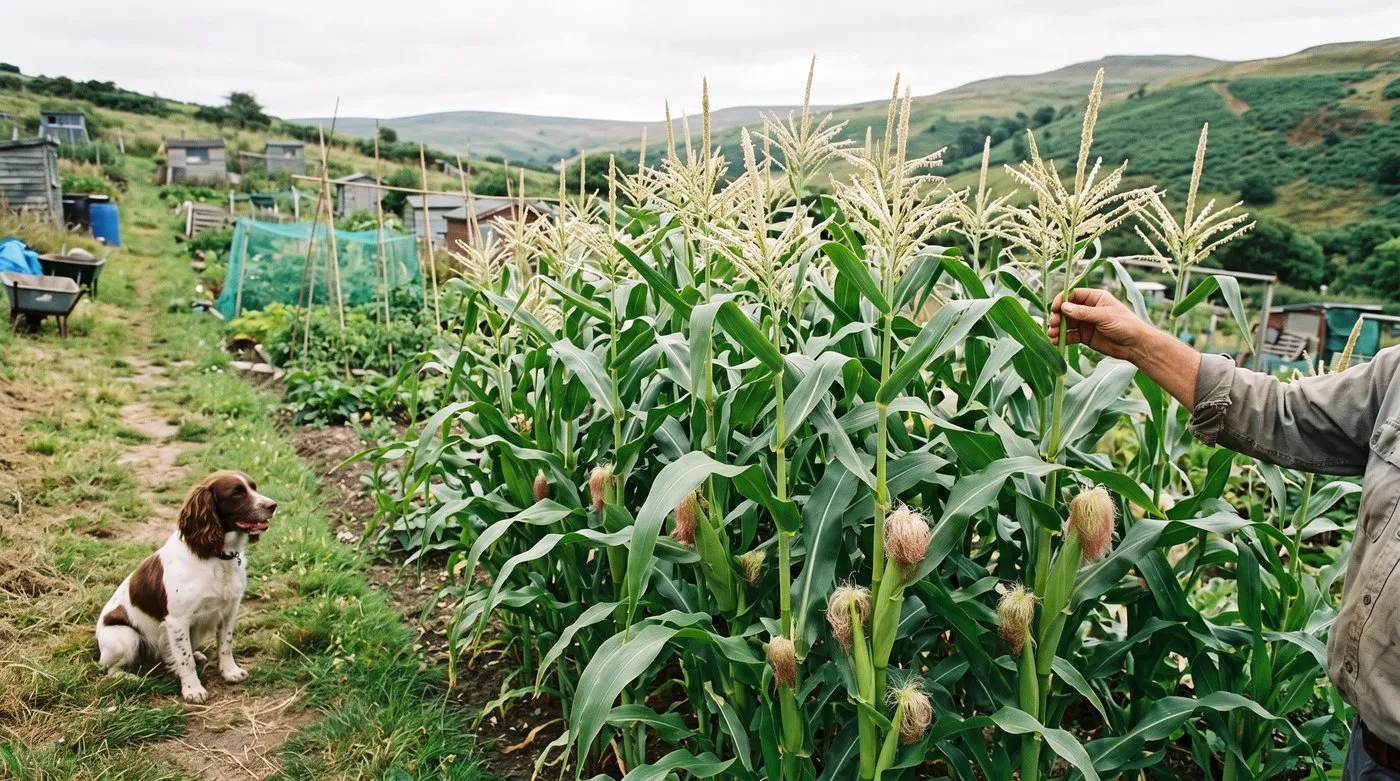
Growing sweetcorn in a block means the pollen falling from the tassels lands on the silks below.
Strawberries grown early under cover can give misshapen fruit if pollination is poor. A light brush over the open flowers with a soft paintbrush helps.
Hand pollination calendar
| Month | Crop | What to do |
|---|---|---|
| February to March | Peach, nectarine, apricot | Brush the blossom every couple of days on dry days |
| April | Cherry, plum, pear (small trained trees) | Brush in cold, wet weather if bees are scarce |
| May to June | Greenhouse tomatoes | Start tapping the first trusses |
| June to August | Courgettes, squash, melons | Pollinate females in the morning if fruit isn’t setting |
| June to September | Greenhouse tomatoes | Tap flowering trusses every couple of days |
| July to August | Sweetcorn | Tap the tops of the plants on still days |
| October to January | All | Nothing to pollinate |
Common hand pollination mistakes
- Pollinating all-female cucumbers. It can make the fruit bitter. Leave them alone.
- Using an old male flower. Pollen is best from a freshly opened flower. Pick a new one each morning.
- Working in the rain. Wet pollen clumps and doesn’t transfer well. Wait for a dry spell.
- Stopping too soon. Fruit trees open their flowers over a week or two. Keep brushing until the last ones open.
- Forgetting the real fix. If greenhouse tomatoes drop flowers, check it isn’t too hot or too dry as well.
Frequently asked questions
When should I hand pollinate tomatoes in a UK greenhouse?
On warm, dry mornings while the trusses are flowering. Tap the supporting cane or gently vibrate each flowering truss every couple of days. Misting the flowers or damping down on hot days can help fruit set too.
How do I tell male from female courgette flowers?
Female flowers have a tiny courgette behind the petals. Male flowers sit on a thin, plain stalk with a pollen-covered centre. Only females turn into fruit.
Do I need to hand pollinate tomatoes outdoors?
Usually not. Outdoors, wind and insects shake the flowers enough to pollinate them. Hand pollination mainly helps tomatoes in greenhouses and polytunnels, where the air is still.
What is the best tool for tomato pollination?
Your finger is enough, but a vibrating tool works well. Tap the truss or its cane, or hold an electric toothbrush against the truss stem for a second or two. The vibration shakes pollen loose inside each flower.
Can I use a paintbrush to pollinate fruit trees?
Yes, a soft paintbrush is the usual tool. Gently brush the centre of each open flower, moving from blossom to blossom. It’s most useful on early peaches, nectarines and apricots under cover or on a wall.
Why are my courgette flowers dropping without fruit?
The first flowers are often all male, and they drop naturally. Females follow soon after. If tiny courgettes go yellow and shrivel, they weren’t pollinated, so hand pollinate the next ones.
What time of day is best for hand pollination?
Morning, once the flowers are fully open. Courgette, squash and melon flowers close later in the day. Tomatoes pollinate best on warm, dry days, so mid-morning in a warmed-up greenhouse is ideal.
Once your crops are setting, read our fan-training guide for fruit trees to get early peaches and apricots growing on a warm wall, or browse more growing guides.
Our team produces practical UK gardening guidance from source research, contributor records and established horticultural practice. Editorial standards are overseen by Matt W.