
Key takeaways
- Peregrine is a great all-round peach for UK gardens, with lovely flavour
- Avalon Pride resists peach leaf curl, so it's handy in wet areas
- A fan-trained tree on a sunny south-facing wall is the most reliable way to grow peaches here
- Keep rain off the tree from December to May to stop peach leaf curl
- Peaches flower in February when few insects are about, so pollinate them with a soft brush
- Compact varieties like Bonanza fruit well in big pots on a sunny patio
Peach trees are one of the most rewarding fruit trees you can grow in the UK. A sun-warm peach picked ripe from your own tree tastes nothing like a shop-bought one. Home-grown fruit ripens fully on the branch, while imported peaches are picked hard and ripen on the way.
Peaches do have three challenges: they flower early, they love warmth, and they get peach leaf curl. Happily, all three are easy to fix. A sunny wall gives warmth, a soft brush sorts out pollination, and a simple rain shelter stops leaf curl. For the basics of fruit growing, read our guide to growing fruit trees. Nectarine trees have the same needs and respond to the same care.
Which peach varieties grow best in the UK?
The right variety makes a big difference with peaches. Here are some good choices for British gardens.
| Variety | Flesh | Flavour | Ripens | Leaf curl | Good for |
|---|---|---|---|---|---|
| Peregrine | White | Excellent | Mid-August | Needs a rain shelter | Best all-round flavour |
| Rochester | Yellow | Good, sweet | Early August | Needs a rain shelter | Reliable crops |
| Red Haven | Yellow | Very good | Early | Some resistance | An earlier crop |
| Avalon Pride | Yellow | Good | Mid-August | Resistant | Areas where leaf curl is a pest |
| Duke of York | White | Excellent | Early | Needs a rain shelter | Early fruit, fine flavour |
| Garden Lady | Yellow | Good | August | Some resistance | Pots, small spaces |
Peregrine is the classic UK peach and holds the RHS Award of Garden Merit. It has white flesh, a red blush and a rich flavour. The RHS peach growing guide is a handy extra read.
Avalon Pride is the one to try if you’re fed up with leaf curl. It resists the disease well and crops without a rain shelter. The flavour isn’t quite as good as Peregrine, but it’s a lot less fuss, which makes it great for busy gardeners or wet areas.
Rochester is a reliable yellow-fleshed peach that ripens a little before Peregrine. Choose it if you’d rather have a dependable crop than the very best flavour.
How do you fan-train a peach against a wall?
A fan against a sunny wall is the best way to grow peaches in the UK. The wall gives warmth and shelter, and it’s easy to fix a rain shelter above it. The same method works for apricot trees on a warm wall.
The wall: South or south-west facing, at least 3 metres wide and 2.5 metres tall. Fix horizontal wires 15cm apart using vine eyes, with the lowest one 40cm off the ground.
Starting a fan: The easiest start is a part-trained fan from a fruit nursery. A young single-stemmed tree is cheaper but takes an extra year. Cut it back to 60cm in February and keep two strong side shoots. Tie these to canes at 45 degrees. The next year, choose three or four shoots from each arm and spread them out to fill the wall.
Rootstock matters. The rootstock sets how big the tree grows. St Julien A suits a 4m wall. Pixy gives a smaller tree for a 3m wall or a big pot.
The key thing to remember is that peaches fruit on shoots that grew the year before. So each year you grow new shoots and remove ones that have already fruited. Our guide to training fruit trees as espaliers explains the basics of training fruit on a wall.
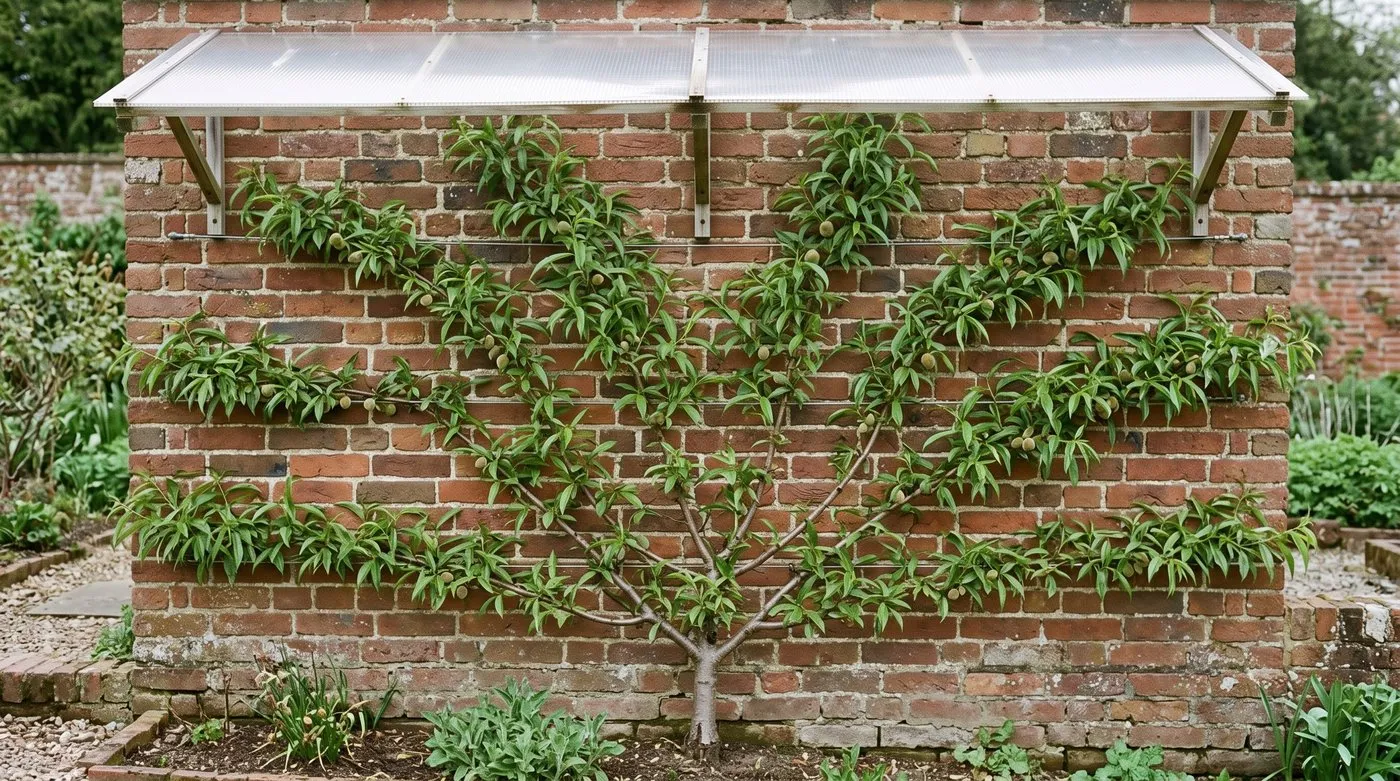
A fan on a sunny wall gets the warmth peaches love. It also makes it easy to fix a rain shelter above to keep leaf curl away.
How do you prevent peach leaf curl?
Peach leaf curl is a fungus that makes new spring leaves pucker, blister and turn red. It weakens the tree and cuts the crop. It’s the biggest problem for UK peach growers.
A rain shelter is the best answer. The fungus spreads in winter and spring rain. Keep the tree dry from December to late May and it can’t get in.
Here’s how to make one:
- Fix a wooden batten or metal bracket to the wall above the top wire.
- Attach clear polycarbonate sheets or thick clear plastic, sloping out and down.
- Make sure it reaches at least 30cm past the tree on each side.
- Leave the front open so air can move. Don’t box the tree in.
- Take it down in late May once the new leaves have fully opened and toughened.
What about sprays? Copper sprays, including Bordeaux mixture, are no longer approved for home gardeners in the UK. Stick to a rain shelter, clear up fallen leaves, and think about a resistant variety like ‘Avalon Pride’.
If leaf curl strikes: Pick off the affected leaves as soon as you see them. Water and feed the tree well. It usually grows a fresh set of healthy leaves by June. A strong tree gets over one bad year, but two in a row will weaken it.
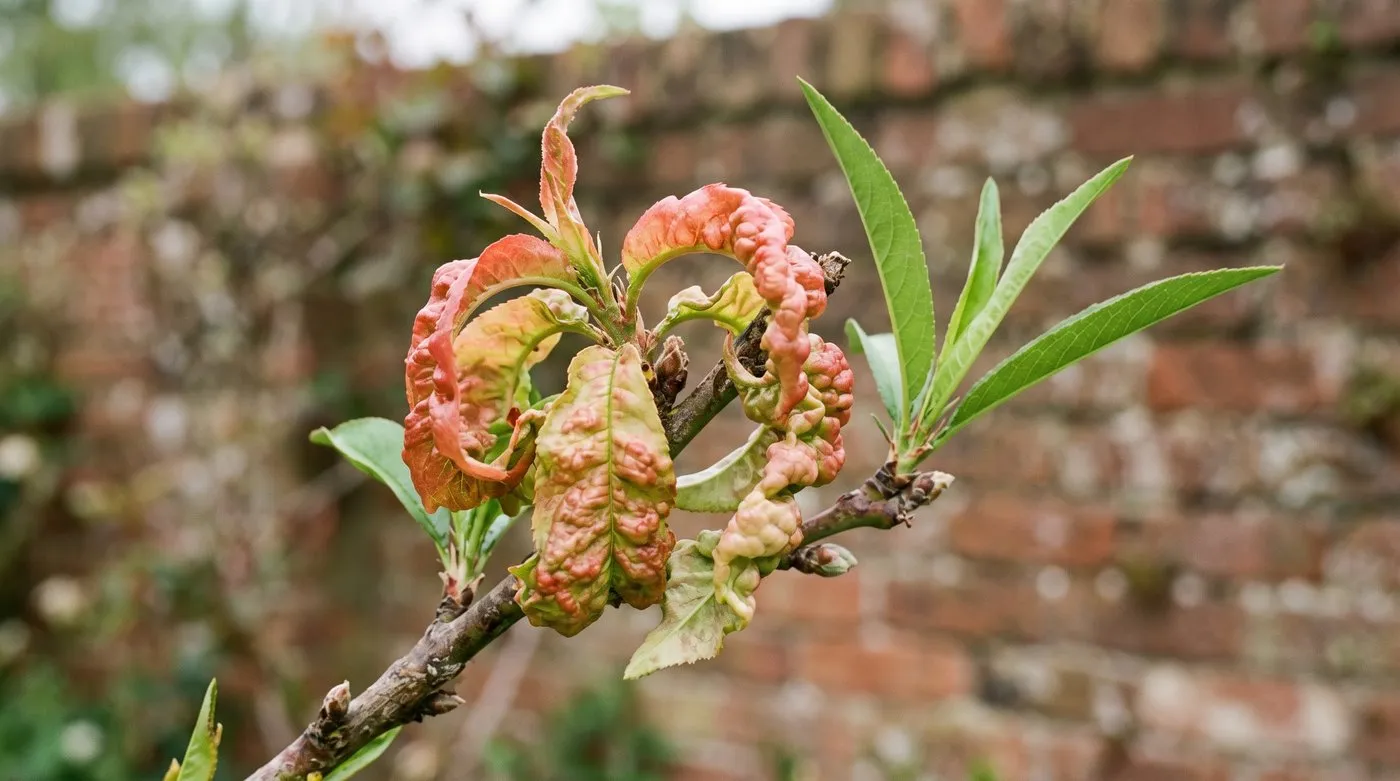
Puckered, red, blistered leaves in spring are peach leaf curl. Pick them off as soon as you see them, and the tree usually grows healthy new leaves by June.
How do you hand-pollinate peach flowers?
Peaches flower in February and early March, when it’s too cold for most insects. Without your help, few fruits set.
How to do it: Use a soft paintbrush, a make-up brush or a ball of cotton wool on a stick. Gently brush the centre of each open flower, moving pollen from one to the next. Work around the tree so you don’t miss any. Late morning on a dry day is best, when the pollen is dry and powdery.
Do it every other day while the flowers are open. Don’t worry about overdoing it, as you’ll thin the fruit later anyway.
Thinning the fruit: In May and early June, when the little fruits are walnut-sized, thin them to one every 15-20cm along the branch. You’ll get fewer peaches, but they’ll be bigger and tastier. Skip this and you’ll get lots of small, bland fruit that may split.
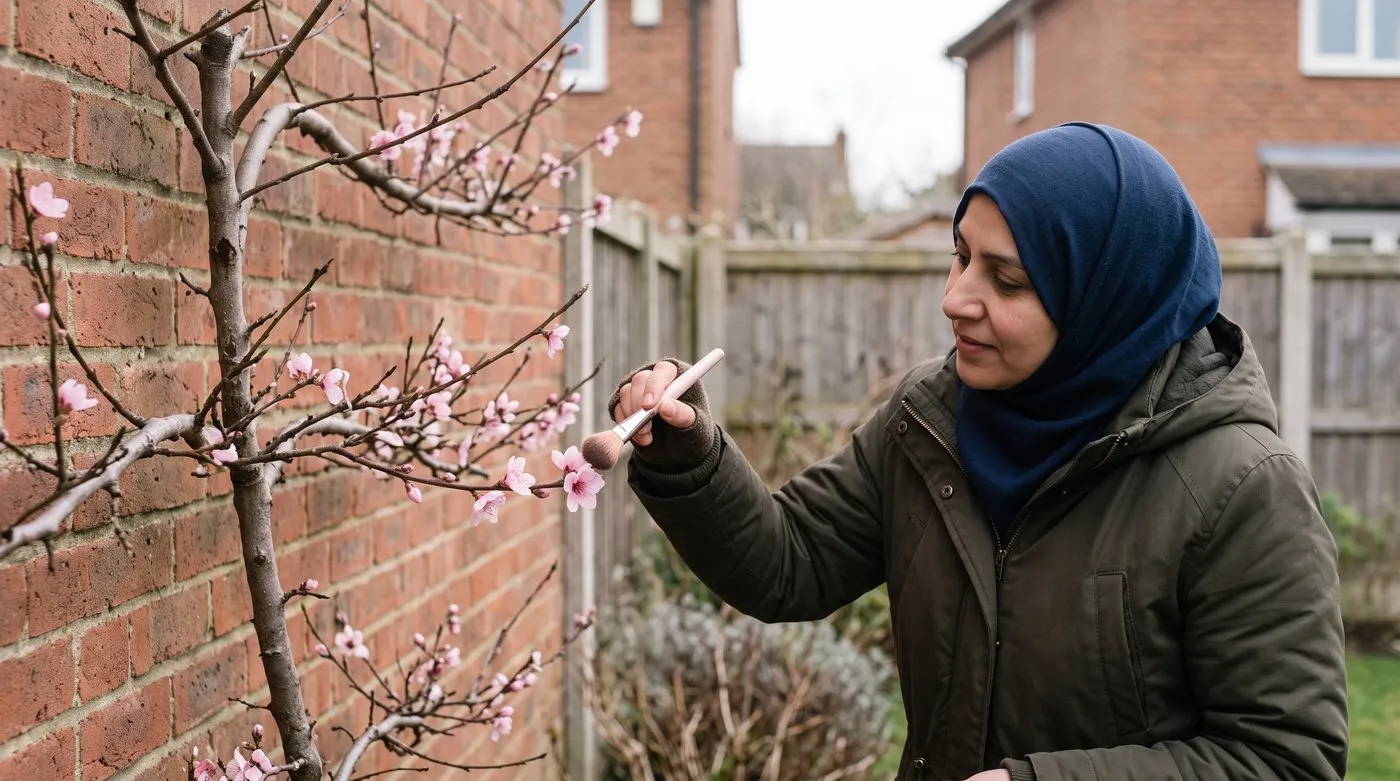
Peaches flower before most insects are about, so a soft brush does their job. A dry late morning, every other day while the flowers are open, works well.
Can you grow peach trees in containers?
Yes. A pot is great if you don’t have a sunny wall or are short on space. Compact varieties grow well in big pots and still give full-sized fruit.
Good varieties for pots: Bonanza and Garden Lady. Both are naturally compact, fruit in August and don’t need a partner tree.
Setting up the pot:
- Pot: At least 50 litres, with drainage holes. A half-barrel or big terracotta pot works well.
- Compost: John Innes No. 3 with some perlite mixed in. Multipurpose compost on its own dries out too fast and is too light to keep the pot steady.
- Spot: Full sun. Keep it against a south-facing wall in winter.
- Watering: Daily in summer. Potted peaches dry out fast, and uneven watering is the usual reason fruit drops.
- Feeding: Tomato feed every two weeks from March to August. Top up with fresh compost each spring.
Repot every three years into a slightly bigger pot, or trim the roots and replant in the same pot with fresh compost. Our fruit in pots guide has more tips.
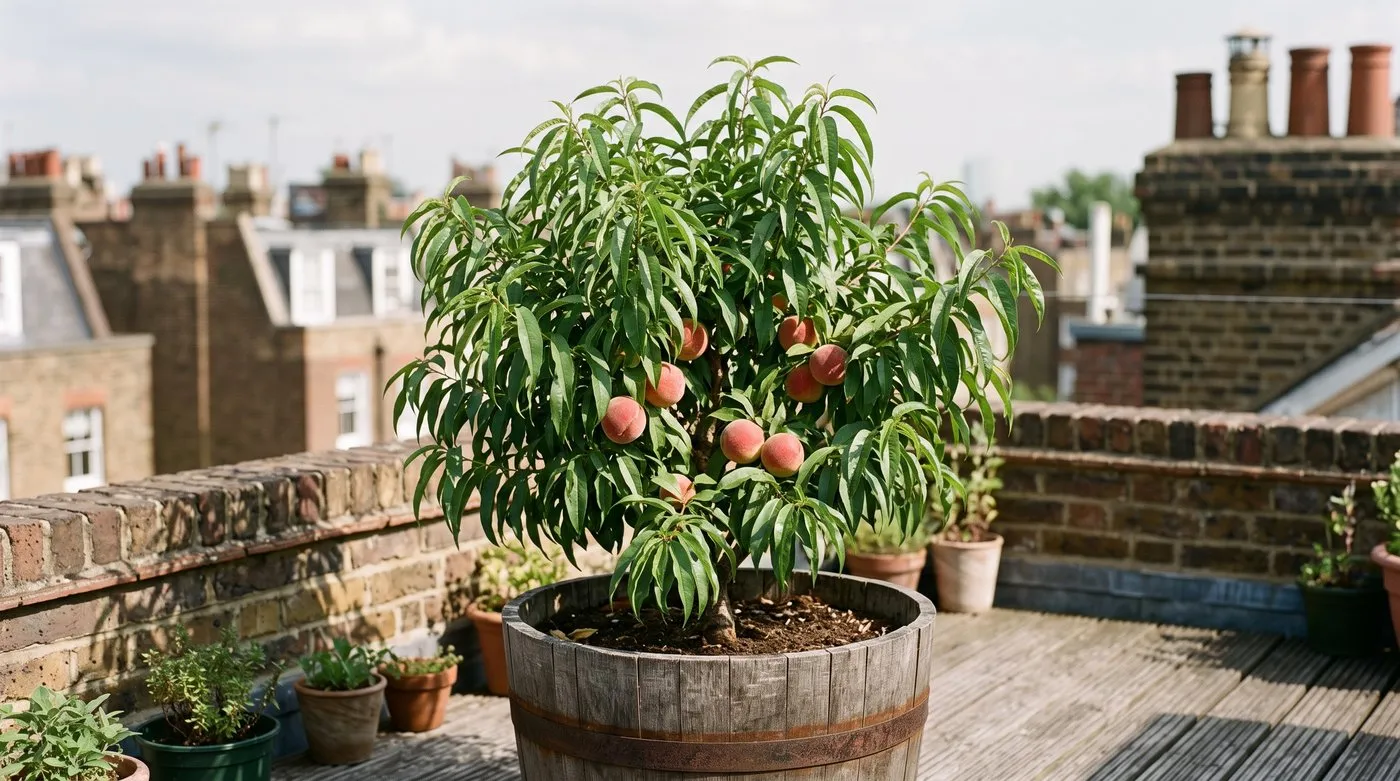
Compact varieties give full-sized fruit in a big pot. Water daily in summer, as uneven watering is the usual reason fruit drops.
How do you prune fan-trained peach trees?
Peaches are pruned differently from apples and pears. They fruit on shoots that grew last summer, so pruning is all about swapping old fruited shoots for new ones.
In spring (April):
- Remove shoots growing straight towards the wall or straight out from it.
- Keep one new shoot near the base of each fruiting shoot and tie it in flat against the wall.
- Let one shoot grow on from the tip of each branch.
- Rub out the rest to stop it getting crowded.
After picking (August to September):
- Cut each shoot that has fruited back to the new shoot you chose in spring.
- Tie the new shoot into its place.
- That shoot will carry next year’s fruit.
Never prune in winter. Cuts made in cold, wet weather let in bacterial canker and silver leaf. Prune only while the tree is growing, when cuts heal fast. Our guide to pruning fruit trees covers the basics for all trained fruit.
When and how do you harvest UK peaches?
Peaches ripen from late July to early September, depending on the variety and where you live. Each tree crops over two or three weeks.
How to tell they’re ripe:
- The background colour turns from green to yellow or cream.
- The fruit gives a little when gently pressed near the stalk.
- It comes away with a gentle twist. If you have to tug, leave it.
- You can smell them when you stand by the tree.
Pick every two or three days. Fruit in the sun ripens first, and fruit lower down and inside the tree ripens last.
Handle with care. Peaches bruise easily and don’t keep long, so eat or use them within two or three days. To keep some for later, make jam, freeze slices or bottle them in light syrup.
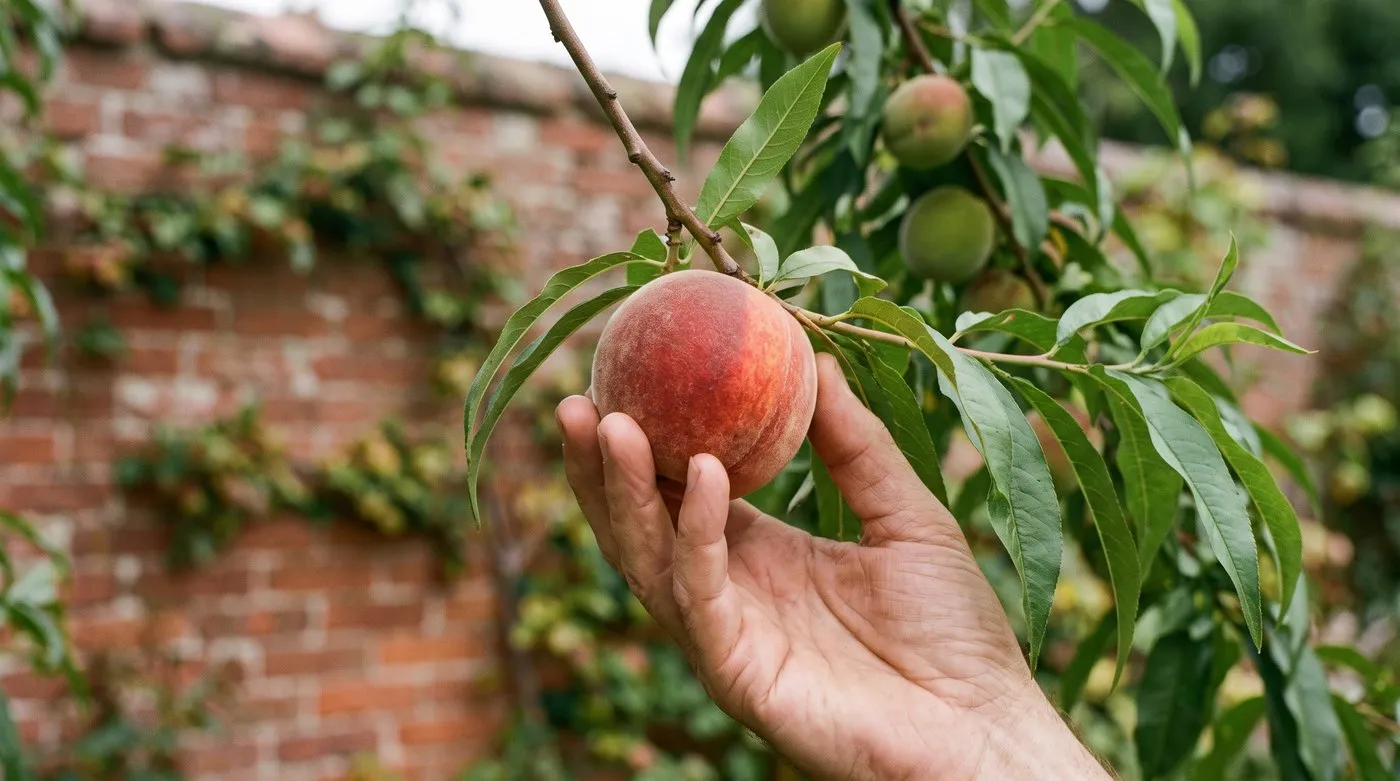
Look for the background colour turning from green to cream or yellow. A ripe peach comes away with a gentle twist, so if you have to tug, leave it another day.
What pests and diseases affect UK peach trees?
Besides leaf curl, keep an eye out for these.
Bacterial canker: Sunken, oozing patches on branches. Cut out affected wood in summer, in dry weather, with clean tools. Our canker guide has more detail.
Silver leaf: A fungus that gets in through winter pruning cuts. Leaves on affected branches turn silvery. Cut back to healthy wood in summer, and never prune stone fruit in winter.
Aphids: Greenfly on new growth in spring. Wash them off with a jet of water or leave them for the ladybirds and hoverflies. They rarely do serious harm outdoors. Home-made soap sprays aren’t approved as pesticides in the UK, so if you really need a spray, use an approved product exactly as the label says.
Brown rot: Brown patches on ripening fruit, with white spots. Remove affected fruit straight away and bin it rather than composting. Good airflow and picking promptly help.
Birds: Bullfinches strip flower buds in late winter, so net the tree from January to March. Blackbirds and starlings peck ripening fruit, so net again in summer.
Frequently asked questions
Can you grow peach trees outdoors in the UK?
Yes, especially against a warm, sunny wall. Fan-train the tree against a south or south-west facing wall for warmth and shelter. Free-standing trees only crop reliably in the warmest parts of southern England. In the Midlands and further north, a wall is a must.
What is the best peach tree for UK gardens?
Peregrine is a great all-round choice. It gives large, red-flushed fruit with white flesh and a lovely flavour, and crops well in most of England and Wales. Where leaf curl is a constant problem, try Avalon Pride, which resists it. Rochester is another reliable pick, with yellow flesh and a slightly earlier crop.
How do you prevent peach leaf curl?
Keep rain off the tree from December to May. Leaf curl spreads in rain splash in winter and early spring, so a simple shelter stops it. Use clear polycarbonate or plastic sheeting angled out from the wall. Take it down in late May once the new leaves have toughened up. No copper sprays are approved for home gardeners in the UK, so a shelter and tidying fallen leaves are your best bet.
Do peach trees need hand pollination in the UK?
Yes, it makes a big difference. Peaches flower in February and March when few insects are about. On warm, dry days, use a soft paintbrush or cotton wool to move pollen from flower to flower. Work your way around the tree, and repeat every other day while the flowers are open.
Can you grow peach trees in pots in the UK?
Yes, compact varieties grow well in big pots. Choose a naturally small variety such as Bonanza or Garden Lady. Use a pot of at least 50 litres filled with John Innes No. 3. Water daily in summer and give a tomato feed every two weeks from March to August. Move the pot against a south-facing wall in winter and cover it with fleece in hard frosts.
When do peach trees fruit in the UK?
From late July to early September, depending on variety. Peregrine ripens in mid-August in southern England and a little later in the Midlands. Rochester is about a week earlier. A ripe peach gives slightly when gently pressed and comes away with a gentle twist. Pick every two or three days, as they don’t all ripen at once.
How do you prune a fan-trained peach tree?
Prune twice, in spring and after picking. In April, remove shoots growing straight towards or away from the wall, and tie in a new shoot near the base of each fruiting shoot. After picking, cut each fruited shoot back to that new shoot. Peaches fruit on last year’s wood, so you’re always growing next year’s crop.
Our team produces practical UK gardening guidance from source research, contributor records and established horticultural practice. Editorial standards are overseen by Matt W.


