
Key takeaways
- Grow apricots against a warm south or south-west facing wall
- Tomcot is a reliable choice, while Moorpark has the best flavour on a warm wall
- Cover the early blossom with fleece on frosty nights in February and March
- Pollinate by hand with a soft brush, as few insects are about that early
- Avoid winter pruning, which lets in silver leaf disease
- A dwarf tree in a pot can be moved under cover when frost threatens
Apricots are the most adventurous fruit tree you can grow outside in the UK. They flower earlier than any other fruit tree and need a bit more warmth and care. The reward is amazing: a sun-warmed apricot straight off your own wall tastes richer and sweeter than anything from the shops.
The big challenge is simple: early flowers meet late frosts. Modern varieties and a few easy tricks make it very doable. For the basics of fruit growing, start with our guide to growing fruit trees.
Which apricot varieties grow best in the UK?
Choosing the right variety makes a huge difference. The wrong one in a cold garden will flower, get frosted and never fruit.
| Variety | Flavour | Fruit size | Ripens | Disease resistance | Best for |
|---|---|---|---|---|---|
| Moorpark | Excellent | Large | Late August | Fair | Your warmest wall |
| Tomcot | Very good | Medium-large | Late July | Good | Most UK gardens |
| Flavourcot | Good, sweet | Medium | Early August | Good | All-rounder |
| Alfred | Good | Medium | Late July | Fair | Smaller spaces |
| New Large Early | Very good | Large | Mid-July | Poor | Warm southern gardens |
| Goldcot | Good, firm | Medium | Early August | Good | Jam and cooking |
Moorpark is an old favourite with outstanding flavour: big, deep orange fruit with a red blush, juicy and fragrant. It’s less forgiving of cold, wet springs, so give it your best sunny wall.
Flavourcot is a happy middle ground: tastier than many, and reliable. A sensible pick if your garden is on the cooler side.
Why do apricots need a south-facing wall?
Apricots come from places with cold winters and hot summers. A sunny wall makes up for our cooler, damper weather.
A wall helps in three ways. It bounces warmth onto the tree by day, which helps the fruit ripen. It gives off stored warmth at night, softening the chill while the tree is in flower. And it shelters the blossom from cold winds.
What you need: a brick or stone wall facing south or south-west, at least 3m wide and 2.5m tall. Fix horizontal wires about 15cm apart using vine eyes.
A south-west wall is fine, if a little less productive. West-facing walls are borderline, and east or north-facing walls won’t work.
No suitable wall? An unheated greenhouse or polytunnel works well too. Our greenhouse growing guide has ideas for what else to grow under glass.
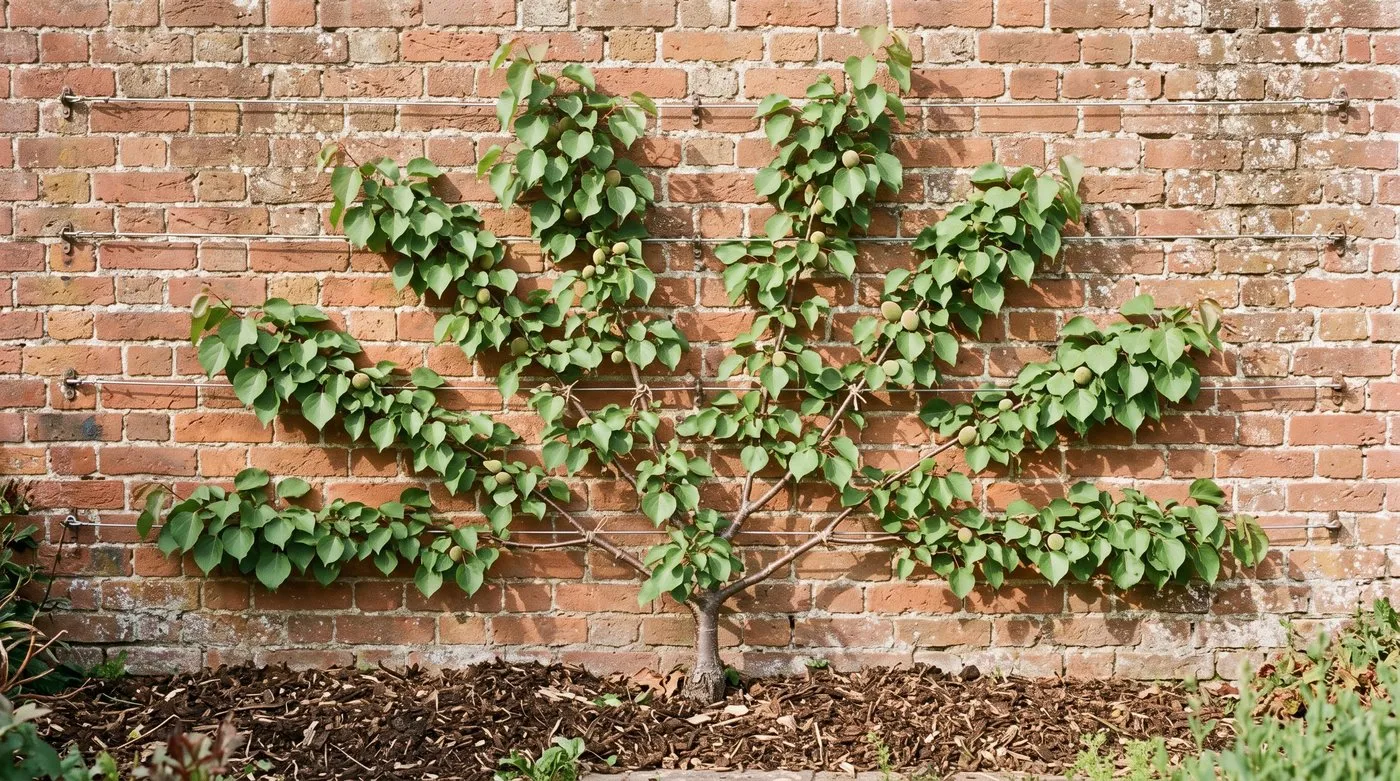
A sunny brick wall soaks up warmth by day and gives it back at night. That extra heat is what helps apricots ripen in a British summer.
How to fan-train an apricot tree
A fan makes the most of the wall and gets sun to every branch. It’s much like training peach trees.
Year one: Plant a young single-stemmed tree in November. In early spring, as the buds open, cut it back to about 60cm. In summer, choose two strong side shoots and tie them to canes at 45 degrees. Remove the rest.
Year two: In early spring, as buds open, shorten each arm by about a third to an upward-facing bud. In summer, pick three or four shoots from each arm and tie them in to fill the wall. You should have six to eight ribs by late summer.
Year three: Keep filling in the fan. Fruiting spurs start to form along the ribs. You may get a few fruit, but only let a handful develop so the tree can concentrate on growing.
Established fans: In summer, remove shoots growing straight towards or away from the wall. Tie in replacement shoots and thin crowded growth to keep the middle open.
Rootstocks: St. Julien A is the usual choice and fills a wall about 4m wide. Torinel is more dwarfing and suits smaller walls or big pots. Pixy is smaller still, for pots.
How to protect apricot blossom from frost
This is the most important job for any UK apricot grower. Apricots can flower from mid-February, and frost easily kills open flowers and tiny fruitlets.
Fleece is the easiest answer. On evenings when frost is forecast, drape a double layer of horticultural fleece over the tree and weigh or clip down the edges. Take it off each morning so insects can reach the flowers and air can move.
Watch the forecast from mid-February to late March. Frost is most likely on clear, still nights. Cloudy or windy nights are usually safe.
Other options:
- Move trees in pots into an unheated greenhouse or porch while they flower.
- Build a simple clear shelter over a wall-trained tree.
One unprotected frost during full bloom can lose you the whole year’s crop, especially in colder parts of the country.

On clear, still nights from mid-February, drape fleece over the blossom. Take it off in the morning so insects can reach the flowers.
How to hand-pollinate apricot flowers
Apricots are self-fertile, so one tree can fruit on its own. But they flower so early that few insects are about to move the pollen. A little hand pollination makes a big difference.
How: Use a soft artist’s paintbrush or a ball of cotton wool on a stick. On dry, mild, sunny days, gently dab the middle of each open flower, moving from flower to flower. Work your way across the fan. You’ll see fine yellow pollen on the brush.
Repeat every other day while the tree is in flower, usually two to three weeks.
A well-pollinated tree sets more fruit than it can ripen. In May, thin the fruitlets to about 8-10cm apart for bigger, tastier apricots. Our guide to growing cherry trees covers pollination for other stone fruit.

Few insects are about when apricots flower, so a soft brush does the job instead. Go from flower to flower every other dry, mild day.
How to prune apricot trees in the UK
The golden rule: don’t prune in winter. Silver leaf disease gets in through cuts made in autumn and winter. Do shaping cuts on young trees in early spring as buds open, and routine pruning in summer.
Summer pruning (June-August):
- Remove dead, damaged or diseased wood first.
- Cut out branches growing straight towards or away from the wall.
- Remove branches that cross and rub.
- Shorten new side shoots to about six leaves to encourage fruiting spurs.
- After picking, cut fruited shoots back to the replacement shoot you chose earlier.
- Thin crowded growth to keep the middle of the fan open.
Spurs: Apricots fruit on short, knobbly spurs and on last year’s shoots. Over the years spurs can get crowded, so thin out the weakest.
Prune in dry weather so cuts dry quickly. Our fruit tree pruning guide covers the general principles.
Growing apricot trees in containers
Pots are a great choice if you don’t have a sunny wall, have a small garden, or live somewhere cold and want to move the tree under cover.
Rootstock: Torinel gives a tree of about 2-2.5m in a 50-80 litre pot. Pixy gives a smaller tree for a 40-50 litre pot. St. Julien A is too vigorous for a pot long-term.
Setting up:
- Pot size: at least 50 litres, ideally 80 for a mature tree, with drainage holes and pot feet.
- Compost: John Innes No. 3, with some grit or perlite mixed in.
- Position: full sun, ideally against a south-facing wall. Wheels or a pot trolley make moving easy.
Looking after it:
- Water: every day in summer, twice in a heatwave. Uneven watering makes fruit drop.
- Feed: tomato food every two weeks from March to August, plus a slow-release general feed in March.
- Repotting: every three or four years, move into a slightly bigger pot with fresh compost.
- Winter: stand it against a sunny wall and cover with fleece in hard frosts. Don’t bring it into a heated room.
The big win with a pot is that you can move it. Pop it under a porch or into an unheated greenhouse while it flowers, then back into full sun once the fruit has set.
When to harvest UK apricots
UK apricots ripen from mid-July to late August, depending on the variety and where you live. Tomcot is usually ready in late July, Moorpark in late August.
Signs they’re ripe:
- The skin turns from green to deep orange or orange-red.
- The fruit gives a little when gently squeezed.
- It comes away from the branch with a gentle twist.
- It smells sweet and fragrant.
Picking tips: Check every couple of days, as fruit ripens at different times. Cup each apricot in your palm rather than pinching it. Lay picked fruit in a single layer so it doesn’t bruise.
Using your crop: Eat fresh apricots within a few days. They also make lovely jam, can be dried in halves, or stoned and frozen for later.
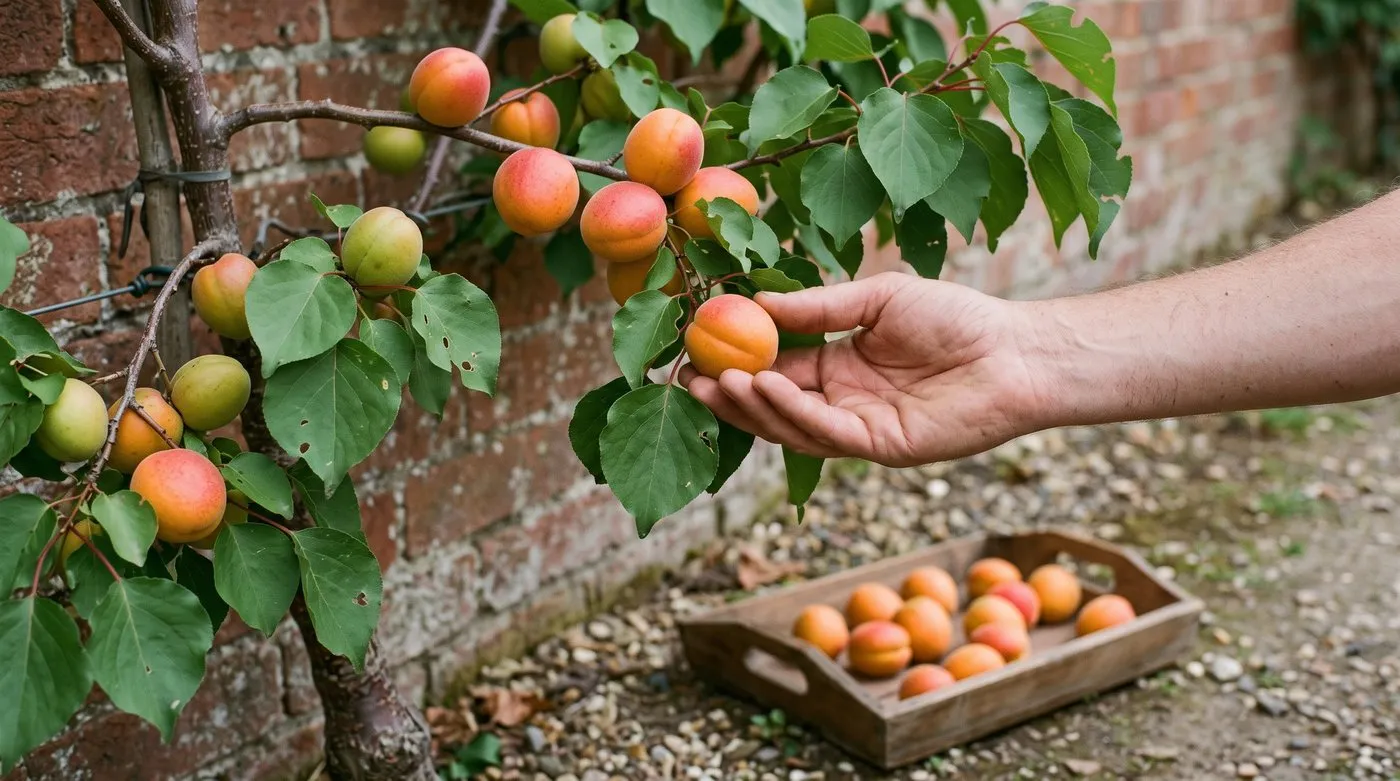
Ripe apricots are deep orange, smell sweet and come away with a gentle twist. Cup them in your palm and lay them in a single layer so they don’t bruise.
Common apricot problems
Apricots share most of their problems with other stone fruit, with frost as the extra worry.
Silver leaf: The most serious disease. Leaves get a silvery sheen and branches die back. It gets in through cuts made in autumn and winter, so prune only in spring and summer. Cut affected branches back to healthy wood with no brown stain inside.
Bacterial canker: Sunken, oozing patches on the bark, common in wet weather. Remove badly affected branches in summer, prune only in dry weather and keep tools clean. Our canker guide explains how to spot and deal with it.
Brown rot: Brown patches that spread fast on ripening fruit in wet weather. Remove affected fruit straight away and clear up any that fall. Good airflow through the fan helps.
Aphids: Greenfly cluster on new shoots in spring. Squash them, wash them off with a jet of water, and welcome ladybirds and hoverflies. If things get out of hand, use an authorised bug spray exactly as the label says. Home-made soap sprays aren’t authorised pesticides in the UK.
Birds: Bullfinches eat flower buds in winter. Net the tree from January to March if they’re a problem.
Frequently asked questions
Can you grow apricots in the UK?
Yes, especially against a warm, sunny wall. Fan-training on a south-facing wall gives apricots the warmth and shelter they need, and they do well in much of England and Wales. Modern varieties like Tomcot are more reliable than older ones. In colder northern gardens, a greenhouse or polytunnel gives more dependable crops.
What is the best apricot tree for UK gardens?
Tomcot is a great, reliable choice. It gives good crops of tasty orange-red fruit and copes well with the UK climate. Moorpark has the best flavour but needs your warmest wall. Flavourcot sits nicely between the two.
Why do apricot trees not fruit in the UK?
Usually frost has killed the early blossom. Apricots flower from February, when frosty nights are still common, and one hard frost on open flowers can wipe out the crop. Poor pollination is the other big reason, as few insects fly that early. Fleece on frosty nights and hand pollination sort out both.
How do you protect apricot blossom from frost?
Drape a double layer of fleece over the tree on frosty nights. Take it off each morning so insects can reach the flowers and air can move. Or grow the tree in a cold greenhouse or polytunnel. Keep an eye on the forecast from mid-February to late March.
When do you prune apricot trees?
In spring and summer, never in winter. Winter cuts let in silver leaf disease. Do shaping cuts on young trees in early spring as the buds open, and routine pruning in summer. Remove dead, damaged or crossing branches first, and keep the middle of the fan open.
Can you grow apricot trees in pots?
Yes, on a dwarfing rootstock like Torinel. Use a pot of at least 50 litres filled with John Innes No. 3. Water often in summer and feed every two weeks with tomato food from March to August. The big bonus is that you can move the pot under cover when frost threatens the blossom.
How long do apricot trees take to fruit?
Usually three or four years after planting. Fan-trained trees on St. Julien A often start cropping in year three. Trees in pots on dwarfing rootstocks may fruit a little sooner but give smaller crops. Once settled, a well-cared-for tree crops for many years.
Our team produces practical UK gardening guidance from source research, contributor records and established horticultural practice. Editorial standards are overseen by Matt W.


