
Key takeaways
- Almonds can crop in the UK, best on a warm south-facing wall in the south
- Blossom opens in late February or March, so frost and rain cover is key
- 'Robijn', 'Ingrid' and 'Mandaline' are later-flowering choices sold for UK gardens
- Hand-pollinate with a soft brush, as few bees fly when almonds bloom
- A polythene cover from midwinter to mid-May keeps peach leaf curl away
- Prune in spring or summer, never in winter
Yes, you can grow almonds in the UK, and the trees themselves are perfectly hardy. Getting a crop of nuts is the tricky part. Almonds blossom in late February or March, when frost, rain and a lack of bees can all spoil the flowers.
With a warm wall, a simple rain and frost cover and a paintbrush for hand-pollinating, it’s a fun project, especially in southern England. This guide covers varieties, planting, pollination, peach leaf curl, pruning and harvesting. For other nuts to try, see our guide to growing nut trees in the UK.
Why are almonds tricky to crop in the UK?
Almond trees grow happily here. The challenge is all about the blossom.
- Early flowering. Almonds open in late February or March, earlier than peaches and apples.
- Frost. A frosty night on open flowers can wipe out the crop.
- Few bees. Honeybees stay in on cold days. Bumblebees cope with cooler weather, but there are few about so early.
- Rain. Wet weather during flowering hampers pollination.
- Peach leaf curl. This fungus attacks new leaves in cool, wet springs.
| Problem | Fix |
|---|---|
| Early blossom | A sheltered, sunny wall away from frost pockets |
| Frost | Fleece or a polythene cover on cold nights |
| Too few bees | Hand-pollinate with a soft brush |
| Spring rain | A clear cover over the tree while it flowers |
| Peach leaf curl | Keep the tree dry from midwinter to mid-May |

Almond blossom arrives early, when bees are scarce. A warm brick wall helps both the flowers and the few bees that are about.
The best almond varieties for UK gardens
Choose a later-flowering variety sold for cooler climates. Varieties grown in Spain and California, such as ‘Marcona’ and ‘Nonpareil’, flower too early for most UK gardens.
‘Robijn’ is the most widely sold almond for UK gardens. It flowers relatively late, has pink blossom and sweet nuts, and is described as having some resistance to peach leaf curl.
‘Ingrid’ is another sweet almond sold for UK and northern European gardens.
‘Mandaline’ is a late-flowering French variety, which gives it a better chance of missing the frosts.
These are usually sold as self-fertile, so one tree can crop. A second variety nearby may still help the nuts set. Buy from a specialist fruit or nut nursery and check it’s a sweet almond, as bitter almonds aren’t for eating raw.
Where and how to plant an almond tree
A south or south-west-facing wall is the best spot. The brick stores warmth, shelters the blossom and gives you something to fan-train against. Free-standing trees are fine as ornamental blossom trees, but they crop less reliably. If you have more wall to fill, apricot trees love the same warm spot.
- Avoid frost pockets. Cold air sinks into dips and valley bottoms. A slope or a wall is better.
- Shelter from cold winds. North and east winds damage blossom and keep bees away.
- Free-draining soil. Almonds hate wet roots. On heavy clay, plant on a slight mound and improve a wide area of soil rather than just the hole.
- Space: a fan needs a wall about 4m wide. A free-standing tree needs plenty more room.
Plant bare-root trees between November and March, while dormant. Pot-grown trees can go in at other times if you keep them watered. Don’t add compost or fertiliser to the planting hole. Stake free-standing trees for the first couple of years.
Our guide to fan training fruit trees shows how to build the framework step by step.

A fan on a sunny wall is the best shape for UK almonds. Tie new shoots to the wires as they grow.
How to hand-pollinate almond blossom
Hand-pollinating makes up for the lack of bees in early spring. It only takes a few minutes per tree.
- Use a soft paintbrush or a fluffy make-up brush.
- Pick a dry, mild day, ideally around midday when the flowers are fully open.
- Gently dab the centre of each open flower, moving from flower to flower to spread the pollen.
- If you have two varieties, work back and forth between them.
- Repeat every day or two while the tree is in flower.
Even in a warm spring with bees about, a little hand-pollinating helps.

Dab the open flowers with a soft brush on dry, mild days. It’s a pleasant job on an early spring afternoon.
How to stop peach leaf curl on almonds
Peach leaf curl is the biggest disease problem for UK almonds. The fungus is spread by rain onto opening buds. Infected leaves pucker, blister and turn red, then fall. The tree grows a second set of leaves but loses vigour and crops less.
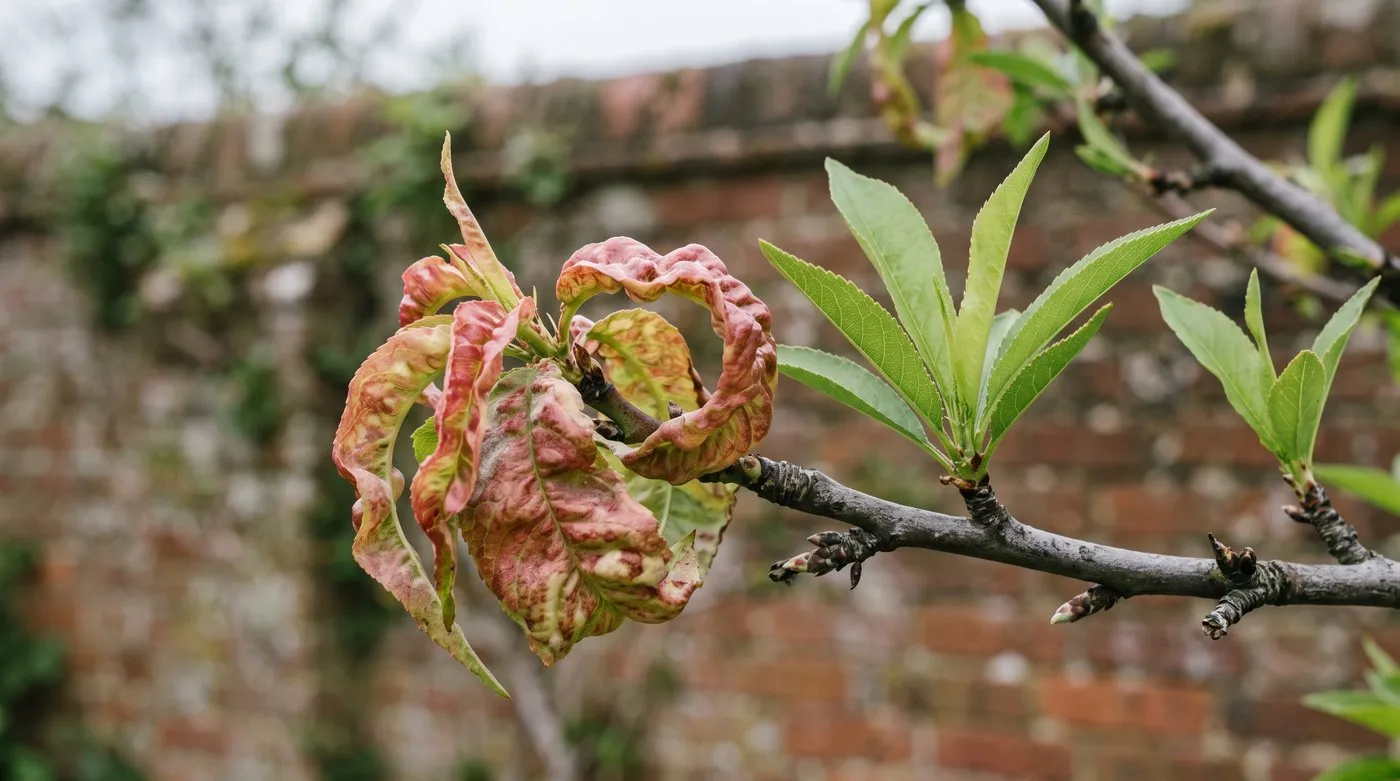
Puffy, red, blistered leaves are peach leaf curl. Pick them off and bin them as soon as you spot them.
Keep the tree dry. The fungus needs rain to reach the buds. A clear polythene cover over a wall-trained tree, from midwinter until about mid-May, stops most infection. It also keeps rain and frost off the blossom.
How to make a cover: fix a simple timber frame to the wall and stretch clear polythene over it. Leave the ends open for air and so pollinating insects can still get in.
Pick off blistered leaves as soon as you see them and put them in the bin, not the compost. There’s no copper fungicide authorised for home gardeners in the UK, so cover and good hygiene are your main tools.
Our guide to preventing peach leaf curl covers the disease in more detail.

A simple clear cover keeps rain off the buds from midwinter to mid-May, protecting against leaf curl and frost.
How to prune and train an almond tree
Prune in spring or summer, never in winter. Like plums and cherries, almonds can catch silver leaf and bacterial canker through winter pruning cuts.
- Spring: as buds break, remove dead, damaged and crossing branches.
- Summer: shorten side shoots on fans to keep the tree neat and encourage fruiting wood.
- Fans: start with two arms on either side of the centre, then build out more ribs over the next few years, tying them to horizontal wires.
- Height: keep wall-trained trees to a height you can cover and reach easily.
Almonds fruit on the previous year’s shoots and on short spurs, so don’t cut off all of last year’s growth.
When and how to harvest almonds
Almonds are ready in late summer or autumn. The green, furry outer hull dries and splits open, showing the hard shell inside.
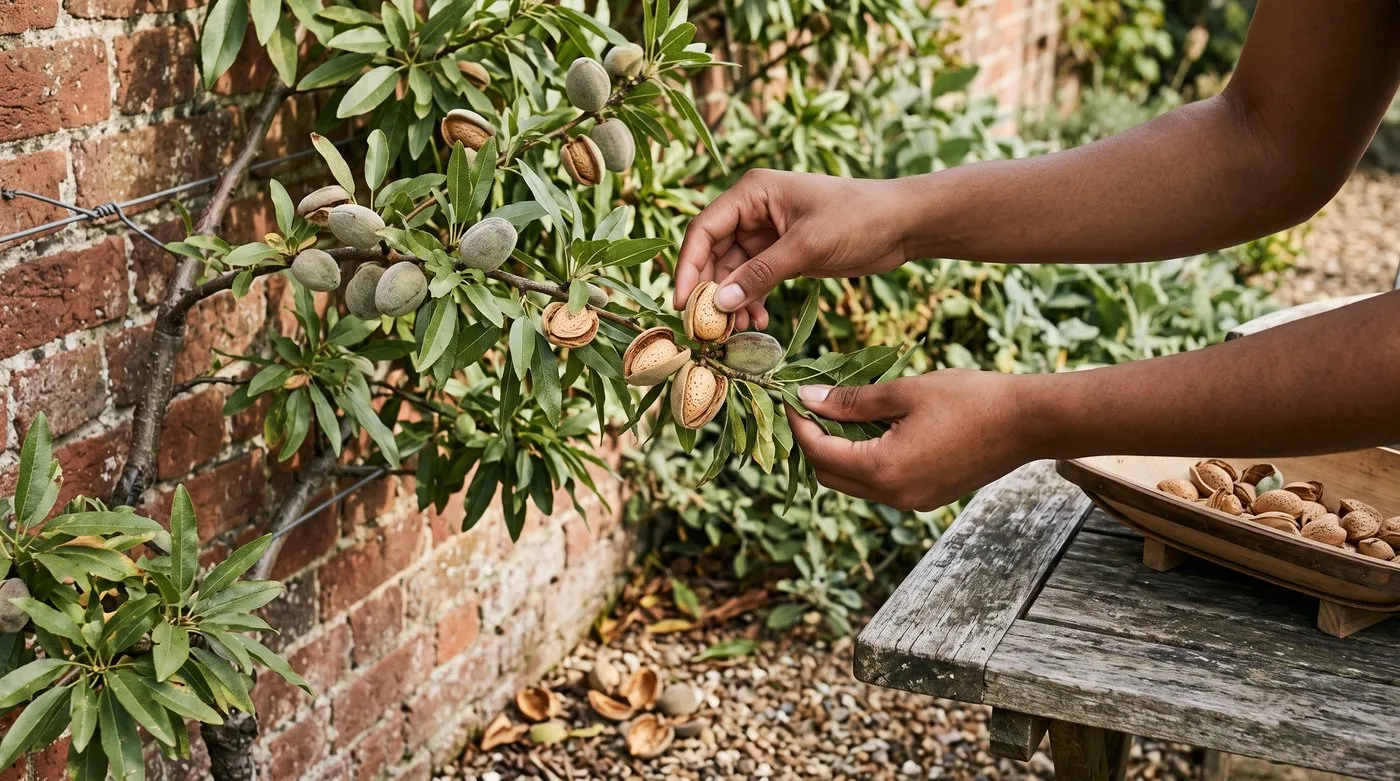
When the furry hulls split open, the almonds are ready. Pull the hulls off straight away and dry the nuts.
- Pick when most hulls have split. You may need two or three picks, as they ripen unevenly.
- Pull off the hulls straight away, as they hold damp and encourage mould.
- Dry the nuts in their shells somewhere warm and airy for a week or so.
- Crack them as you need them, or shell them and keep the kernels in an airtight jar.
Kernels keep for months somewhere cool, and longer in the freezer. Squirrels love almonds too, so pick promptly.
Almond growing calendar
| Month | Job |
|---|---|
| November to March | Plant bare-root trees |
| January | Put up the polythene cover before buds swell |
| February to March | Hand-pollinate open flowers. Fleece on frosty nights |
| April | Prune out dead or damaged wood as buds break |
| Mid-May | Remove the cover. Pick off any curled leaves |
| June to July | Tie in new shoots on fans. Water in dry spells |
| August to October | Harvest as hulls split. Summer-prune after picking |
Common almond growing mistakes
Planting in a frost pocket. Cold air collects in dips and kills the blossom every year. Plant on a slope or against a wall.
Choosing an early variety. ‘Marcona’ and ‘Nonpareil’ flower too early. Pick ‘Robijn’, ‘Ingrid’ or ‘Mandaline’.
No cover in spring. Without it, frost, rain and leaf curl can ruin the year.
Winter pruning. It opens the door to silver leaf and canker. Prune in spring or summer.
Wet, heavy soil. Almonds rot in waterlogged ground. Plant on a mound and improve drainage across a wide area.
Frequently asked questions
Can almonds grow in the UK?
Yes, almond trees grow well here, but getting nuts takes a warm, sheltered spot. The trees are hardy. The problem is the early blossom, which frost and rain can ruin. A sunny wall in southern England, with cover in spring, gives the best chance.
Do almonds need pollination?
Yes, but the varieties sold for UK gardens are usually described as self-fertile. Bees do the job in warm weather, but few are about in early spring. Dabbing the open flowers with a soft paintbrush on dry, mild days helps the nuts set.
How long do almond trees take to fruit in the UK?
Expect the first few nuts about two or three years after planting. Most nursery trees are already a couple of years old when you buy them. Crops then vary a lot from year to year, depending on spring weather.
What is the best almond variety for UK gardens?
‘Robijn’ is the most widely sold choice for UK gardens. It flowers later than many almonds and is described as having some resistance to peach leaf curl. ‘Ingrid’ and the late-flowering French variety ‘Mandaline’ are good alternatives.
Is peach leaf curl a problem on UK almonds?
Yes, almonds catch peach leaf curl, just like peaches. The fungus spreads in rain as the buds open. Cover the tree with clear polythene from midwinter to mid-May to keep the buds dry. Pick off and bin any blistered leaves.
When should I prune an almond tree?
Prune in spring as growth starts, or in summer after fruiting. Never prune in winter. Like plums and cherries, almonds can catch silver leaf and bacterial canker through winter pruning cuts.
Almonds need the same care as their close cousin, so read our guide to growing peach trees next, or try an easier nut with our hazel and cobnut guide. Find more fruit and nut ideas in our growing section.
Our team produces practical UK gardening guidance from source research, contributor records and established horticultural practice. Editorial standards are overseen by Matt W.


