
Key takeaways
- Greengages are a type of plum, sweeter than most, with green or yellow-green skin
- Cambridge Gage is the classic starter; Denniston's Superb and Reine Claude de Bavay are self-fertile
- A sunny south or west-facing wall helps ripening, especially in cooler areas
- Prune only in spring and summer in dry weather to avoid silver leaf disease
- Pick when the fruit softens slightly and comes away easily with a gentle twist
Greengages are the sweetest plums you can grow, and the best way to taste one properly ripe is to grow your own. The fruit is too soft to travel well, so shop gages are usually picked early. A tree on a sunny wall can give you bowlfuls of honey-sweet fruit in late summer.
This guide covers the gage varieties that do well in UK gardens, where to plant, how to prune without inviting disease, and how to tell when the fruit is perfectly ripe. For everyday plums such as Victoria, see our main guide to growing plum trees.
What is a greengage?
A greengage is a type of dessert plum with round, green or yellow-green fruit. When ripe the flesh is soft, juicy and very sweet, with a little sharpness that stops it tasting flat. The French call them Reine Claude.
The name is said to come from Sir William Gage, who brought the trees to Suffolk from France in the 1700s. The trees grow much like other plums, but they like a warmer, more sheltered spot to ripen well.

Ripe gages often pick up a soft pink blush on the sunny side. Give them a gentle squeeze before picking.
Which greengage varieties grow best in the UK?
For most gardens, start with Cambridge Gage. If you only have room for one tree and no other plums nearby, a self-fertile variety such as Denniston’s Superb or Reine Claude de Bavay is a safer bet.
| Variety | Ripens | Pollination | Best for |
|---|---|---|---|
| Cambridge Gage | Late August | Partly self-fertile | The classic first gage |
| Denniston’s Superb | Mid-August | Self-fertile | Reliable crops, cooler gardens |
| Reine Claude de Bavay | September | Self-fertile | Later fruit to stretch the season |
| Old Greengage | August | Needs a partner | Flavour fans with a warm wall |
| Reine Claude Violette | Late August | Best with a partner | A purple-skinned curiosity for warm sites |
Cambridge Gage is the best-known UK gage, with classic flavour and fairly steady crops. Denniston’s Superb is a gage-plum cross that crops well and copes better with cooler gardens. Reine Claude de Bavay ripens later, so planting it with Cambridge Gage gives you gages for longer. Old Greengage has superb flavour but is known for shy cropping, so only grow it on a warm wall. Our guide to the best plum tree varieties compares gages with other plums.
Choosing a rootstock and tree size
The rootstock is the root system your tree is grafted onto, and it decides how big the tree grows. Two are common for gages:
- St Julien A is semi-vigorous. It suits a free-standing tree in a medium garden or a fan on a decent-sized wall.
- Pixy is dwarfing. It suits small gardens and large pots, but needs good soil and regular watering.
Pixy-rooted gages are a good choice if you’re short of space.
Where to plant a greengage
Greengages need full sun and shelter. Choose a spot out of cold winds and away from frost pockets, such as the bottom of a slope where cold air collects. Gages flower early in spring, so frost can damage the blossom.
They like deep, well-drained soil that holds some moisture in summer. Avoid waterlogged ground.
A south or west-facing wall is ideal, especially in the Midlands, the north and Scotland. The wall soaks up warmth during the day and gives it back at night, helping the fruit ripen. A sheltered fence or a dense hedge to block cold winds also helps.

A sunny brick wall gives gages extra warmth to ripen, and a flat fan makes picking and netting easy.
How to plant a bare-root greengage tree
Plant bare-root trees from November to March, when the soil isn’t frozen or waterlogged. Bare-root trees are cheaper than pot-grown ones and settle in well.
- Soak the roots in a bucket of water for an hour or two.
- Dig a hole wide enough to spread the roots out, and only as deep as the roots.
- Loosen the soil at the bottom and sides with a fork. Don’t add compost or fertiliser to the hole.
- Knock in a stake on the windward side for a free-standing tree.
- Set the tree at the depth it grew in the nursery, with the graft (the bump near the base) well above soil level.
- Backfill with the soil you dug out, firming gently as you go.
- Water well, then mulch around the tree with compost, keeping it off the trunk.
For a wall, plant the tree about 20-30cm out from the wall so the roots aren’t in the dry strip at its base. Our guide to planting bare-root trees has more detail.
Fan training a greengage on a wall
A fan is a flat tree trained on wires against a wall, with branches spreading out like the ribs of a fan. It takes up little space, ripens fruit well and is easy to net against birds and wasps.
Fix horizontal wires to the wall about 30cm apart before planting. Over the first few years you choose and tie in a framework of main branches on canes, spreading them out evenly. Once the fan is built, summer pruning keeps it neat and fruitful: pinch back new side-shoots in early summer, then shorten them a little further after fruiting.
Training a fan takes a few seasons of patience. Our step-by-step guide to fan training fruit trees walks you through each year.

Tie new shoots loosely to canes on the wires so the branches spread out evenly. Soft twine won’t cut into the bark.
When and how to prune a greengage
Prune greengages only in spring and summer, in dry weather. Pruning in autumn or winter lets silver leaf and bacterial canker into fresh cuts, and both can kill plum trees.
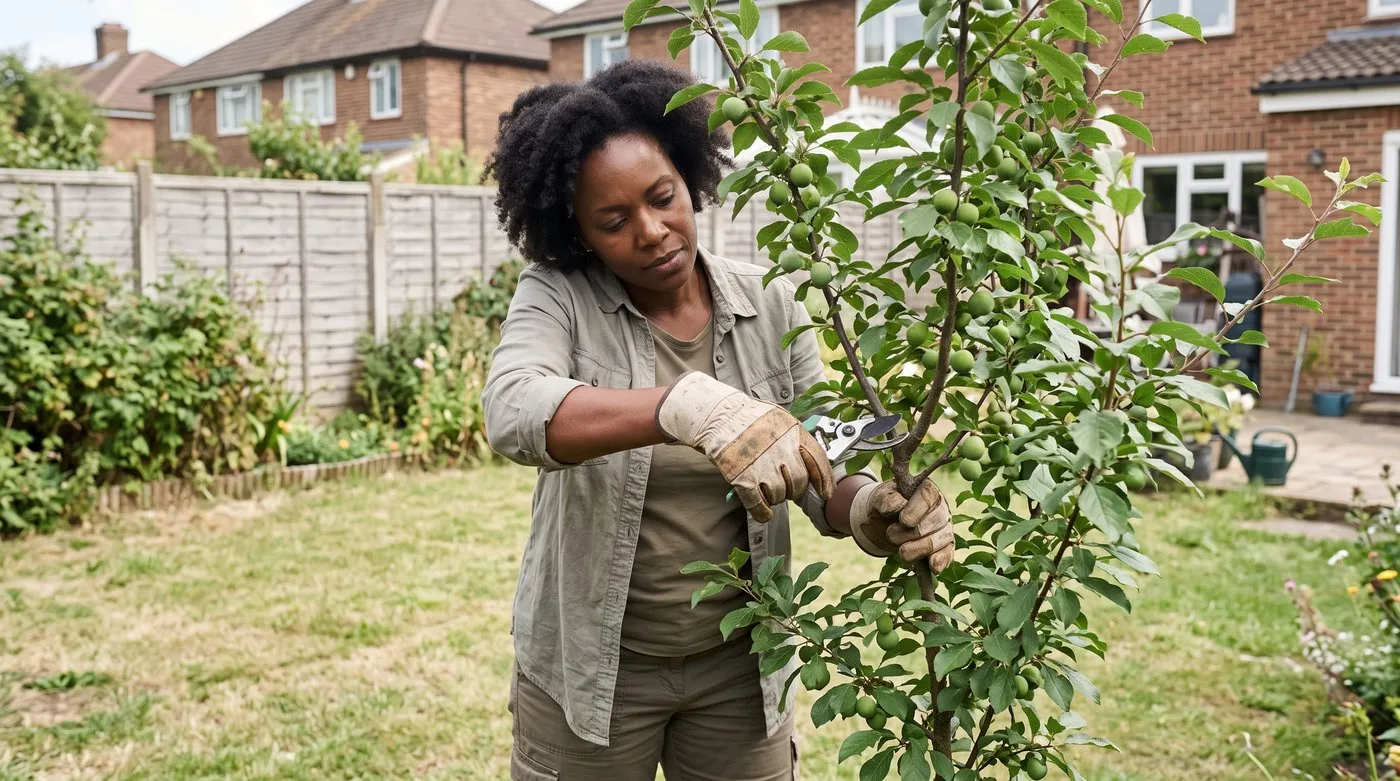
Summer is the safe time to prune gages. Pick a dry day so the cuts heal before silver leaf spores can get in.
- Young trees: shape them in spring as the buds open.
- Established trees: prune in summer, after fruiting or from June onwards.
- Remove dead, damaged, crossing or crowded branches.
- Use clean, sharp secateurs or a pruning saw, and don’t paint the cuts.
Choose a dry spell so the wounds dry quickly. Our guide to silver leaf disease shows how to spot it.
Pollination and protecting the blossom
Gages flower early, from late March into April. Bees do the pollinating, so a cold, wet spring can mean a poor crop.
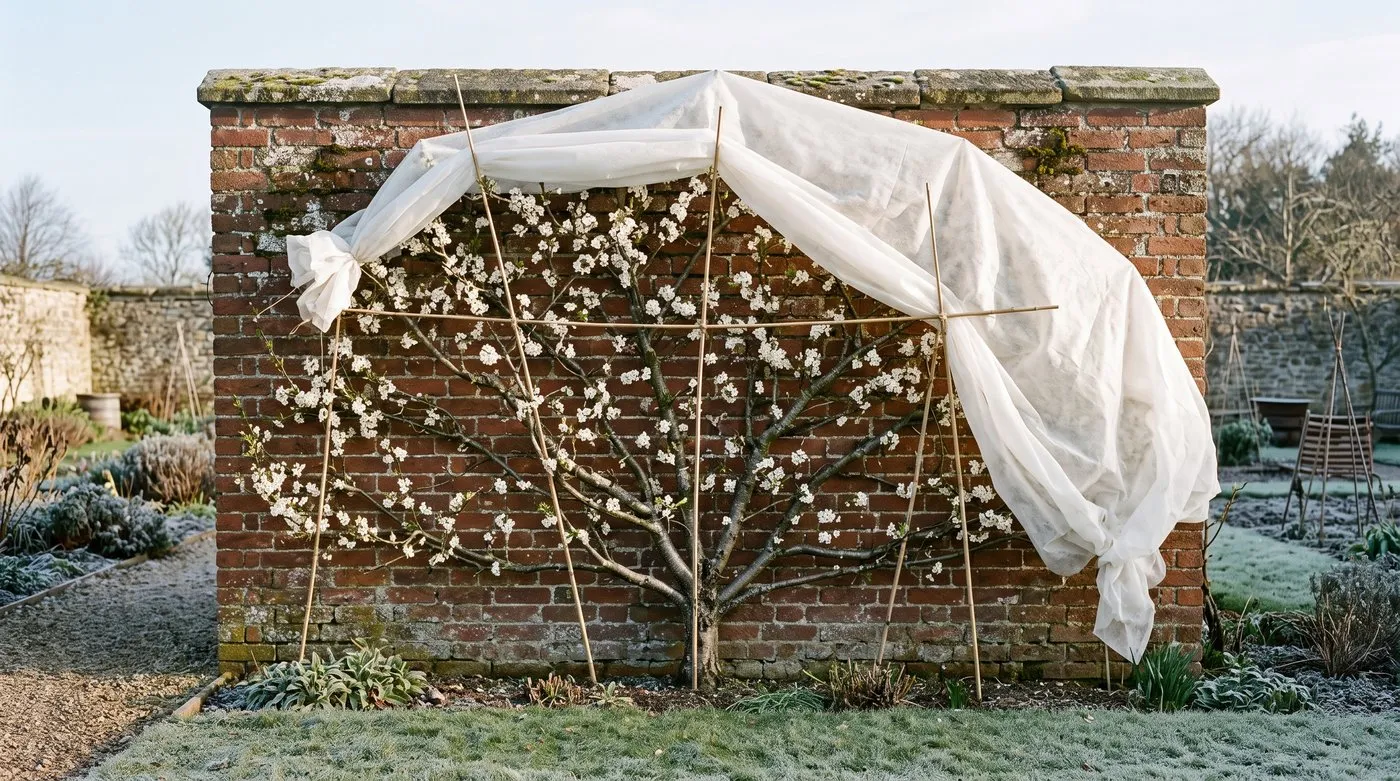
Gages flower early, so a sheet of fleece on frosty nights can save the whole crop. Pull it back in the morning for the bees.
Self-fertile varieties, such as Denniston’s Superb and Reine Claude de Bavay, crop on their own. Cambridge Gage sets some fruit alone but does better with another plum nearby. Old Greengage needs a partner. Most plums flowering at the same time will do, including a neighbour’s.
Late frost is the biggest risk. On frosty spring nights, drape fleece over a wall-trained tree, keeping it off the flowers with canes if you can. Remove it in the morning so bees can get in.
Greengage pests and diseases
Greengages get the same problems as other plums.
- Silver leaf: leaves turn silvery and branches die back. Cut out affected branches to clean wood in summer and dispose of them.
- Bacterial canker: sunken, oozing patches on branches and small holes in leaves. Our bacterial canker guide explains what to do.
- Brown rot: soft brown fruit with rings of pale fuzz, often starting at a wasp or bird peck. Pick off and bin affected fruit.
- Plum moth: pink caterpillars inside the fruit. A pheromone trap in summer helps show when they’re about.
- Aphids: curl new leaves in late spring. Squash small colonies or hose them off. Ladybirds and blue tits help too.
- Wasps and birds: both love ripe gages. Pick promptly and net wall-trained trees as the fruit ripens.
- Bullfinches: can strip flower buds in late winter. Netting is the best protection.
How to tell when greengages are ripe
Greengages are ready from mid-August to September, depending on the variety and your area. A gage picked a few days early tastes like a sharp green plum, so it pays to wait.
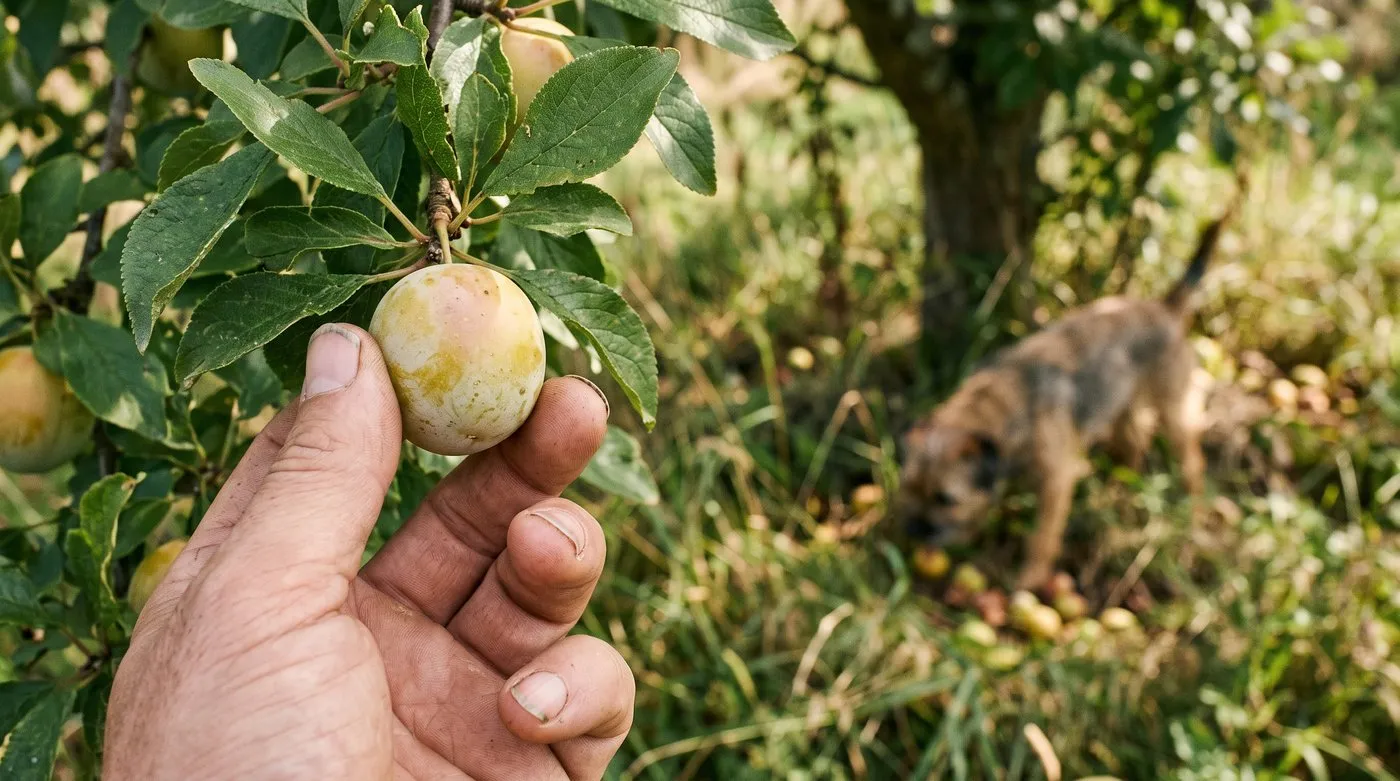
A ripe gage gives slightly near the stalk and comes away with a gentle twist. If it clings on, give it another day or two.
Look for these signs:
- Slight softness when you press gently near the stalk.
- Colour change from hard green to a softer yellow-green, often with a pink flush.
- Easy picking: ripe fruit comes away with a gentle twist.
Fruit on one tree ripens over a week or two, so check every day or two once the first ones soften. Pick in the cool of the morning if you can.
Storing and using greengages
Ripe greengages only keep a few days at room temperature and a little longer in the fridge. Eat them fresh first, as that’s the whole point of growing them.
For a glut, gages make wonderful jam, tarts, crumbles and chutney. To freeze, halve and stone them first.

Perfectly ripe gages have soft, golden flesh. Eat the best ones fresh and turn the rest into jam or tarts.
Greengage tree care calendar
| Month | What to do |
|---|---|
| November to March | Plant bare-root trees. Net against bullfinches if they’re a problem |
| March to April | Blossom. Fleece wall-trained trees on frosty nights |
| April to May | Shape young trees as buds open. Mulch and water new trees |
| June to July | Summer prune established trees. Thin heavy crops. Watch for aphids |
| August to September | Pick ripe gages. Net against birds and wasps. Remove rotten fruit |
| October | Clear fallen fruit and leaves |
Common mistakes with greengages
Pruning in winter. This is when silver leaf and canker get in. Prune only in spring and summer.
Planting in a cold, exposed spot. Gages need warmth and shelter. In cooler areas, use a wall.
Picking too early. Gages only get really sweet in their last few days on the tree. Wait until they soften.
Adding compost or fertiliser to the planting hole. It can make the soil sink and the roots sit wet. Mulch on top instead.
Forgetting about pollination. If you grow Old Greengage, make sure there’s another plum nearby.
If you like growing fruit on a sunny wall, our guide to growing fig trees is a great next step. For tougher, sharper fruit that crops in any garden, try damsons. You’ll find plenty more on our fruit growing hub.
Frequently asked questions
Why can you not buy proper greengages in UK supermarkets?
Ripe greengages are too soft to travel well. They bruise easily and spoil quickly once ripe. Gages sold in shops are usually picked early, before they reach full sweetness. Growing your own, or buying from pick-your-own farms and farmers’ markets, gets you the real thing.
What is the difference between a greengage and a plum?
A greengage is a type of plum with green skin and very sweet flesh. Gages are usually sweeter than other dessert plums, with a gentle sharpness behind the sugar. The trees grow like plums but like a warmer, more sheltered spot to ripen well.
Is Cambridge Gage self-fertile?
Cambridge Gage is partly self-fertile, so one tree can crop on its own. You’ll get better crops with another plum or gage flowering nearby. A neighbour’s plum tree may do the job.
When do greengages ripen in the UK?
Greengages ripen from mid-August to September in the UK. Denniston’s Superb is usually among the earliest, Cambridge Gage follows in late August, and Reine Claude de Bavay carries on into September. Ripe gages feel slightly soft and come away easily.
Do greengage trees need a south-facing wall?
Not always, but a warm wall helps a lot in cooler areas. In sheltered southern gardens, free-standing trees often crop well. Further north, a south or west-facing wall helps the flowers set and the fruit ripen. A fan against a wall is also easier to net.
When should I prune a greengage tree?
Prune greengages in spring or summer, never in autumn or winter. Pruning in the dormant season lets silver leaf and bacterial canker into fresh cuts. Choose a dry spell so the wounds dry quickly.
Why is my greengage tree not fruiting?
Usually frost, a cold site or a lack of pollination. Late frosts can kill the blossom, so fleece wall-trained trees on frosty spring nights. Some gages need a partner. Old Greengage in particular is known for shy, irregular crops.
Our team produces practical UK gardening guidance from source research, contributor records and established horticultural practice. Editorial standards are overseen by Matt W.


