Key takeaways
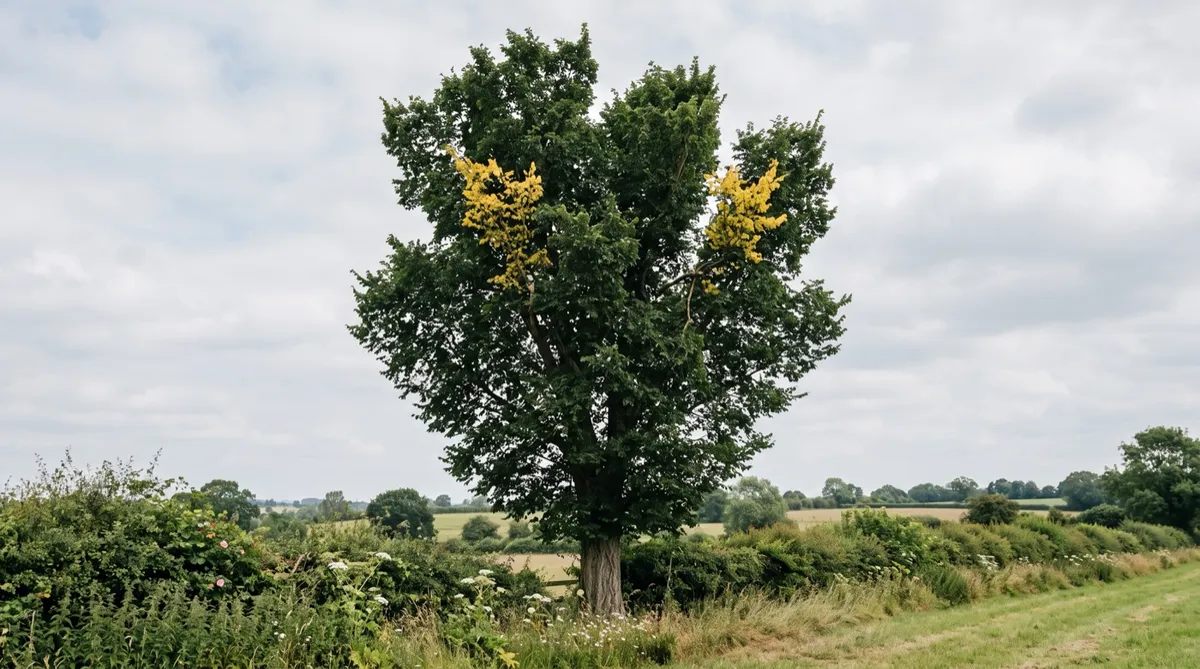
- Silver leaf gives plum and cherry leaves a dull metallic sheen, usually on one branch first
- Confirm it by cutting the branch: a brown or purple stain in the wood means silver leaf
- Silvery leaves over the whole tree with clean wood are false silver leaf, caused by stress
- There is no spray for it, so cutting out infected wood and good timing do the work
- Prune plums, cherries and other Prunus only in summer, June to August
- Cut back to at least 15cm beyond the stained wood, then burn or bin the prunings
Silver leaf is a fungal disease that turns plum and cherry leaves a dull, metallic grey. It usually starts on one branch, then spreads and kills branches back. Plums suffer worst, and Victoria is a well-known victim.
The good news: many trees recover if you act early. This guide shows how to confirm it with one simple cut, how to rule out the harmless look-alike, and how pruning at the right time keeps it out.
How to spot silver leaf on plums and cherries
Look for leaves with a dull silvery sheen on one branch while the rest of the tree stays green. That one-branch pattern is the classic early sign.
The fungus, Chondrostereum purpureum, lives inside the wood. It makes the top layer of the leaf lift slightly, so light bounces off and the leaf looks silver. Plums show it most clearly. Cherries silver more faintly.
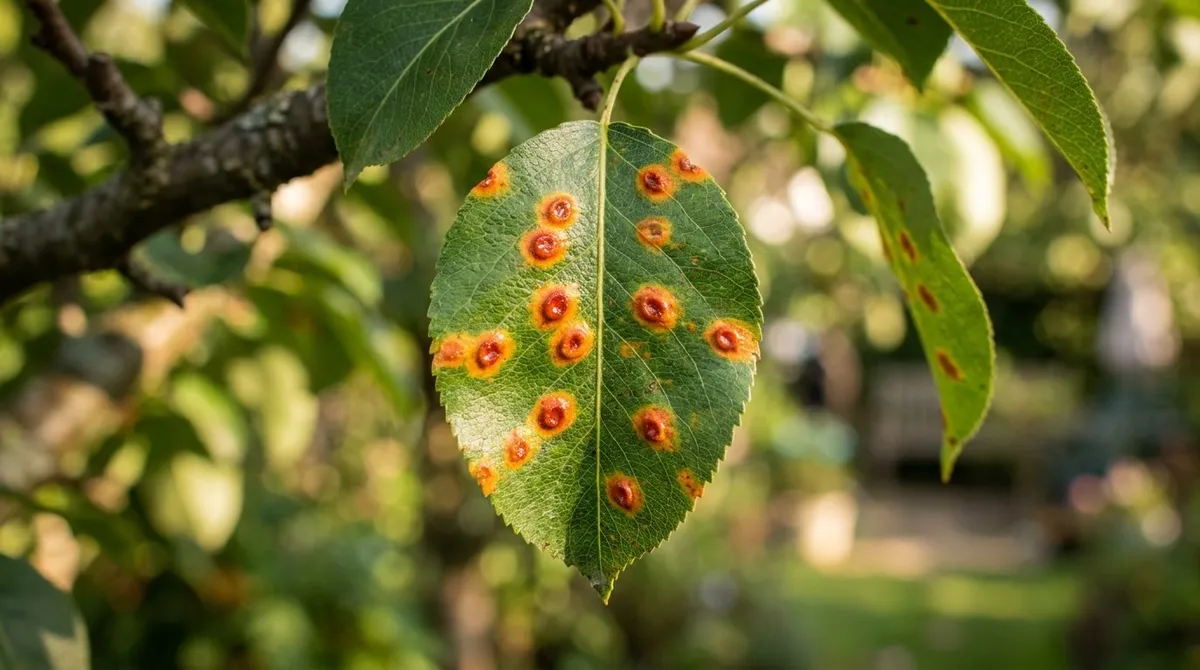
Over time more branches silver. Leaves may split and brown at the edges, and the affected branch dies back. Silvery leaves on their own don’t prove anything, though. Stress can do the same, so the next step is to look inside the wood.

One silvery branch on an otherwise green tree is the classic early warning. Check the wood before you cut anything big.
The wood stain test that confirms it
Cut through a silvered branch and look at the cut end. A dark brown or purple stain in the wood means silver leaf. Clean, pale wood means it isn’t.
Make the cut where the silvered branch is about 2.5cm thick, if you can. The stain usually runs further along the branch than the silver leaves suggest. That matters, because the stain, not the leaves, tells you where to make your final cut.
If the wood is clean but the leaves are silver, look for a stress cause instead. The next section covers that.

A dark stain in the middle of the cut wood is the proof. No stain means no silver leaf, however silver the leaves look.
Is it true or false silver leaf?
False silver leaf is silvering caused by stress, not the fungus. Drought, waterlogging, cold damage or a lack of feeding can all cause it. The difference is simple: false silver leaf leaves no stain in the wood.
False silver leaf often shows over the whole tree at once, rather than starting on one branch. It isn’t catching and won’t spread. Fix the stress, with watering, mulching or a feed, and the new leaves should come through green.
| Sign | True silver leaf | False silver leaf |
|---|---|---|
| Cause | Fungus in the wood | Stress such as drought or poor feeding |
| Stain in cut wood | Brown or purple | None, clean pale wood |
| Pattern | Starts on one branch | Often the whole tree at once |
| Branches die back | Yes | Rarely |
| Spreads to other trees | Yes | No |

A silvered leaf looks the same whatever the cause. That’s why the wood stain test is the one to trust.
How silver leaf gets into a tree
The fungus enters through fresh wounds: pruning cuts, snapped branches, frost cracks or bark bashed by a mower. It can’t get through healthy bark.
Its spores come from brackets that grow on dead wood. These are small, overlapping shelves with a hairy pale top and a purple-brown underside. They release spores mostly from autumn to spring, in damp weather. In summer there are far fewer about.
That timing is the key to prevention. A cut made in summer heals while few spores are around. A cut made in winter stays open just when spores are plentiful. Dead branches carrying brackets keep the problem going, so get them out.

These purple-brown brackets on dead wood are where the spores come from. Cut off and dispose of any branch carrying them.
How to treat silver leaf
There’s no spray or cure for gardeners. Treatment means cutting out infected wood and helping the tree stay strong.
- Do the work in summer, June to August, unless a branch is dead and carrying brackets.
- Cut back the silvered branch until the cut end shows clean, pale wood.
- Then cut again at least 15cm further back, into healthy wood.
- Clean your saw or secateurs between cuts.
- Burn the prunings or put them in the general waste. Don’t compost them or leave them lying about.
- Feed, mulch and water the tree in dry spells so it grows strongly.
Wound paint doesn’t cure silver leaf and isn’t usually needed on clean summer cuts. Trees sometimes fight off a mild infection themselves, so don’t rush to fell one. A tree with brackets on its main trunk, though, is unlikely to recover and is best taken out. The guide to pruning fruit trees covers making clean cuts that heal well.

Keep cutting back until the wood is clean, then go another 15cm. Burn or bin every piece you take off.
Why plums and cherries need summer pruning
Prune all Prunus between June and August. That means plums, gages, damsons, cherries, apricots, almonds and flowering cherries. Few spores are about then, and the tree heals cuts quickly while it is growing.
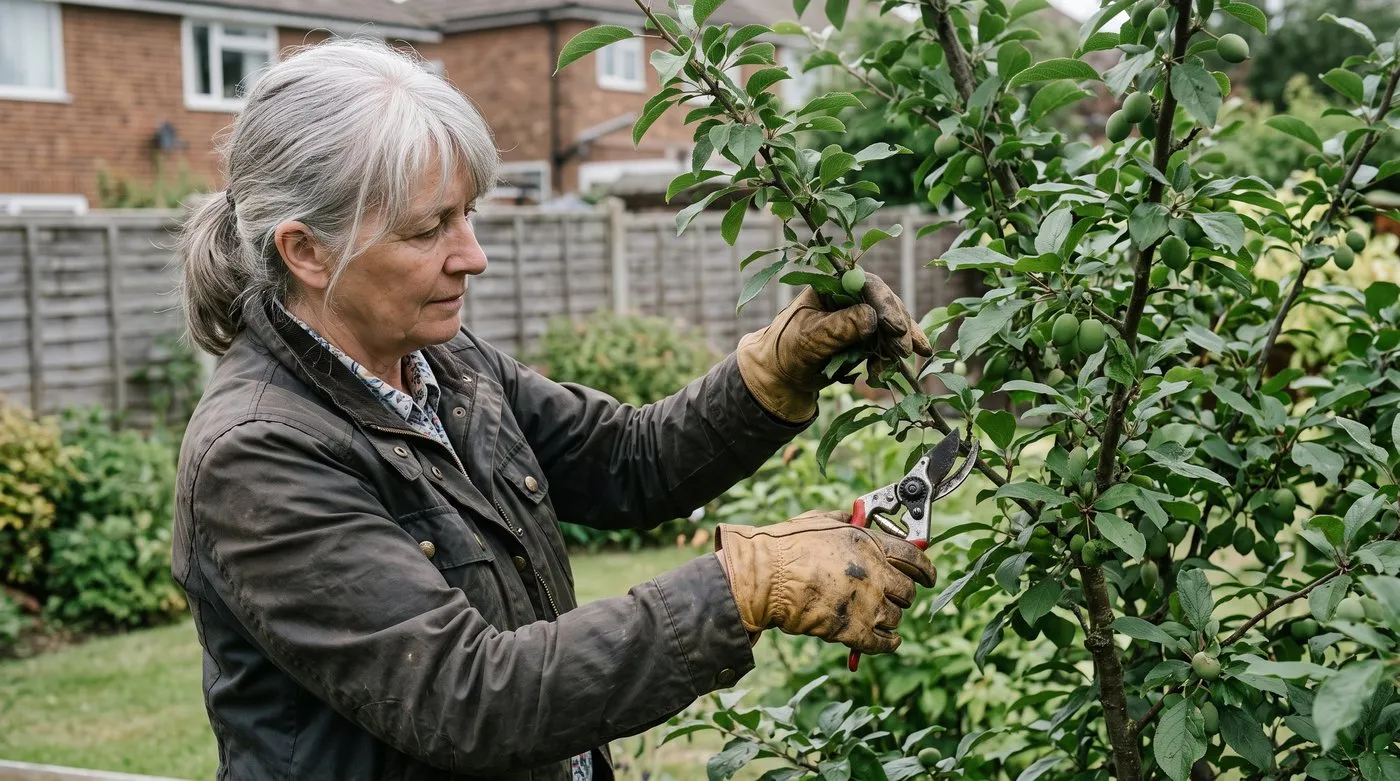
A summer cut on a plum heals while few spores are about. Save all your plum and cherry pruning for June to August.
Pruning plums and cherries in winter is the classic way gardens get silver leaf. The same timing also helps against bacterial canker on cherries and plums, which gets in through winter cuts too.
The guide to growing cherry trees sets its pruning for summer for this reason. Apples and pears are pruned in winter as normal.
Which plants get silver leaf?
Plums are hit hardest and are the most likely to lose whole branches. Cherries come next, then apricots, peaches and almonds. Ornamental Prunus such as flowering cherry can catch it too.
Some other trees and shrubs can be affected, usually less badly:
- Apples: may show silvering, but rarely suffer much
- Hawthorn and laburnum: can show silvering and dieback
- Rhododendron: usually shows dieback rather than silvery leaves
Stone fruit trees often have more than one problem at once. If the fruit is rotting on the tree, read the guide to brown rot on stone fruit. For other leaf spots and blights, the garden plant diseases ID guide helps you narrow it down. You’ll find more in the plant problems hub.
Silver leaf through the year
Plan any cutting for summer, and use the rest of the year for checking and tidying.
| Month | What to do |
|---|---|
| January to February | Don’t prune plums or cherries. Look for dead wood and brackets |
| March to May | Watch new leaves for silvering. Check the wood of any silvered branch |
| June to August | Prune all Prunus now. Cut out infected wood to 15cm beyond the stain |
| September | Remove dead wood with brackets. Avoid any other cuts |
| October to December | No pruning cuts. Mulch the tree. Guard trunks from mower damage |
Common silver leaf mistakes
Pruning plums and cherries in winter. Cuts stay open through the months when spores are about. Prune from June to August.
Cutting just past the silvery leaves. The stain runs further than the silvering. Keep going until the wood is clean, then another 15cm.
Leaving dead wood on the tree. Brackets form on dead branches and spread spores. Take dead wood out and dispose of it.
Trusting the leaves alone. Stress silvers leaves too. Always check the wood before cutting out big branches or felling a tree.
Composting the prunings. The fungus can carry on growing on the wood. Burn or bin it instead.
Frequently asked questions
Can a tree recover from silver leaf disease?
Yes, many trees recover, especially if you cut out infected wood early. Saw affected branches back to at least 15cm beyond the stained wood. Feed, mulch and water the tree so it stays vigorous. A tree with brackets on the main trunk is unlikely to recover and is best removed.
What is the difference between silver leaf and false silver leaf?
True silver leaf stains the wood inside; false silver leaf does not. Cut a silvered branch and look at the cut end. A dark brown or purple stain means the fungus. Clean, pale wood means stress, such as drought or poor feeding, and it is not catching.
When should you prune plum and cherry trees to avoid silver leaf?
Prune them in summer, between June and August. Far fewer spores are about then, and cuts heal faster while the tree is growing. Avoid pruning plums and cherries from autumn to spring, when spores are released.
Is there a cure or spray for silver leaf disease?
No, there is no spray or cure for gardeners. Wound paints do not cure an infected tree. Control means cutting out stained wood, removing dead wood with brackets and pruning only in summer.
What does the silver leaf bracket fungus look like?
Small, overlapping brackets with a hairy pale top and a purple-brown underside. They appear on dead branches, often months after the branch has died. The purple underside releases the spores, so remove any wood carrying them.
Does silver leaf disease spread to other trees?
Yes, its spores blow onto fresh wounds on other trees. Plums and cherries suffer most. Apples, apricots, hawthorn, laburnum and rhododendron can also be affected. Clearing dead wood with brackets protects the plants nearby.
Now you know how to keep silver leaf out, read the guide to growing plum trees for the rest of the year’s care. The RHS silver leaf page has more photos of the symptoms.
Our team produces practical UK gardening guidance from source research, contributor records and established horticultural practice. Editorial standards are overseen by Matt W.