Key takeaways
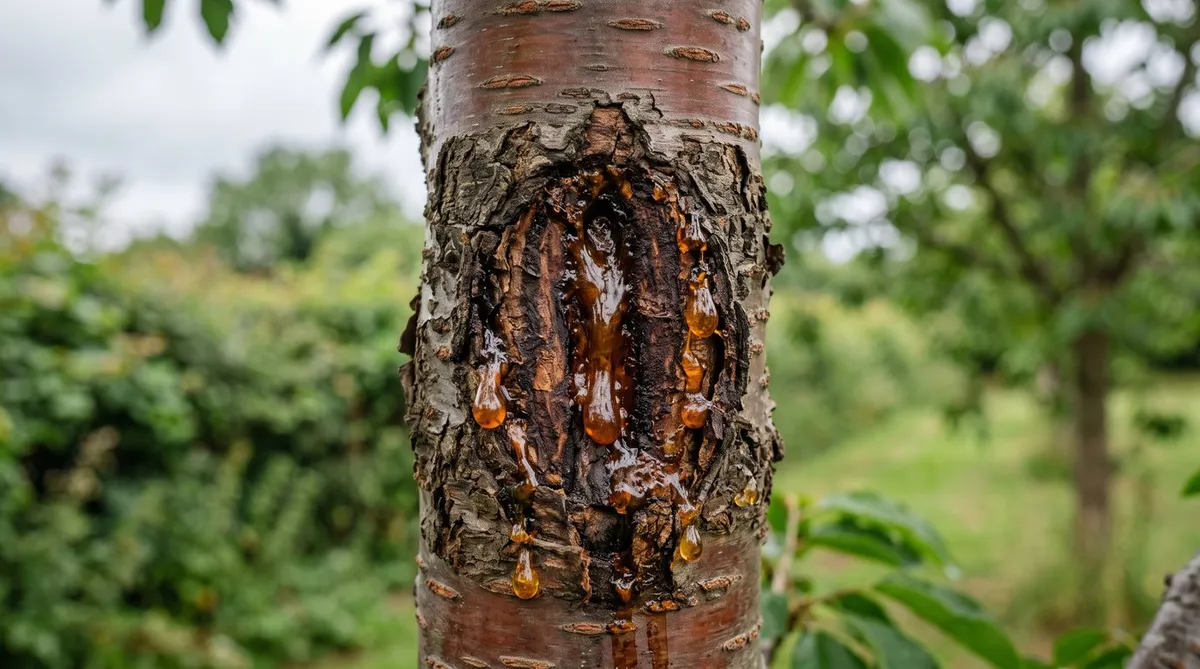
- Amber gum plus round shot-holes in leaves confirm bacterial canker on Prunus
- Caused by Pseudomonas syringae pv. morsprunorum and pv. syringae
- No fungicide cures it; management is prevention and clean pruning
- Prune cherries and plums only June to August, never in the dormant season
- Cut 10cm below any visible canker and disinfect tools between cuts
- Choose resistant rootstocks (Colt) and less susceptible varieties to reduce risk
Bacterial canker is the most damaging disease of cherry and plum trees in UK gardens. It shows as amber gum oozing from sunken patches of bark, paired with round shot-holes in the leaves. The cause is Pseudomonas syringae, a bacterium that enters through wounds and leaf scars in wet weather. Left alone, a canker can girdle and kill a whole branch in one season. This guide covers exact identification, why pruning date decides the outcome, the resistant rootstocks worth choosing, and how to manage a tree that is already infected.
Three points matter most. Pruning date matters more than any spray. Amber gum plus leaf shot-hole is the confirming pair. There is no cure, only prevention and clean cutting.
How to Identify Bacterial Canker on Prunus
Two symptoms together confirm bacterial canker: gum on the bark and shot-holes in the leaves.
Diagnostic features:
- Gummosis: amber to brown sticky gum oozing from cracks in the bark, on branches and trunk
- Sunken, flattened patches of dead bark, often on one side of a branch
- Shot-hole: brown leaf spots 2-5mm that dry and fall out, leaving clean round holes
- Buds that fail to open in spring, or shoots that wilt and die back in summer
- A sour, fermenting smell from active lesions in warm weather
- Worst on cherry (Prunus avium), plum, damson, apricot and ornamental Prunus
The gum on its own is not proof. Trees also gum in response to frost, borers and physical damage. It is the combination of gummosis on the stems and shot-hole on the leaves of the same tree that points to bacterial canker.
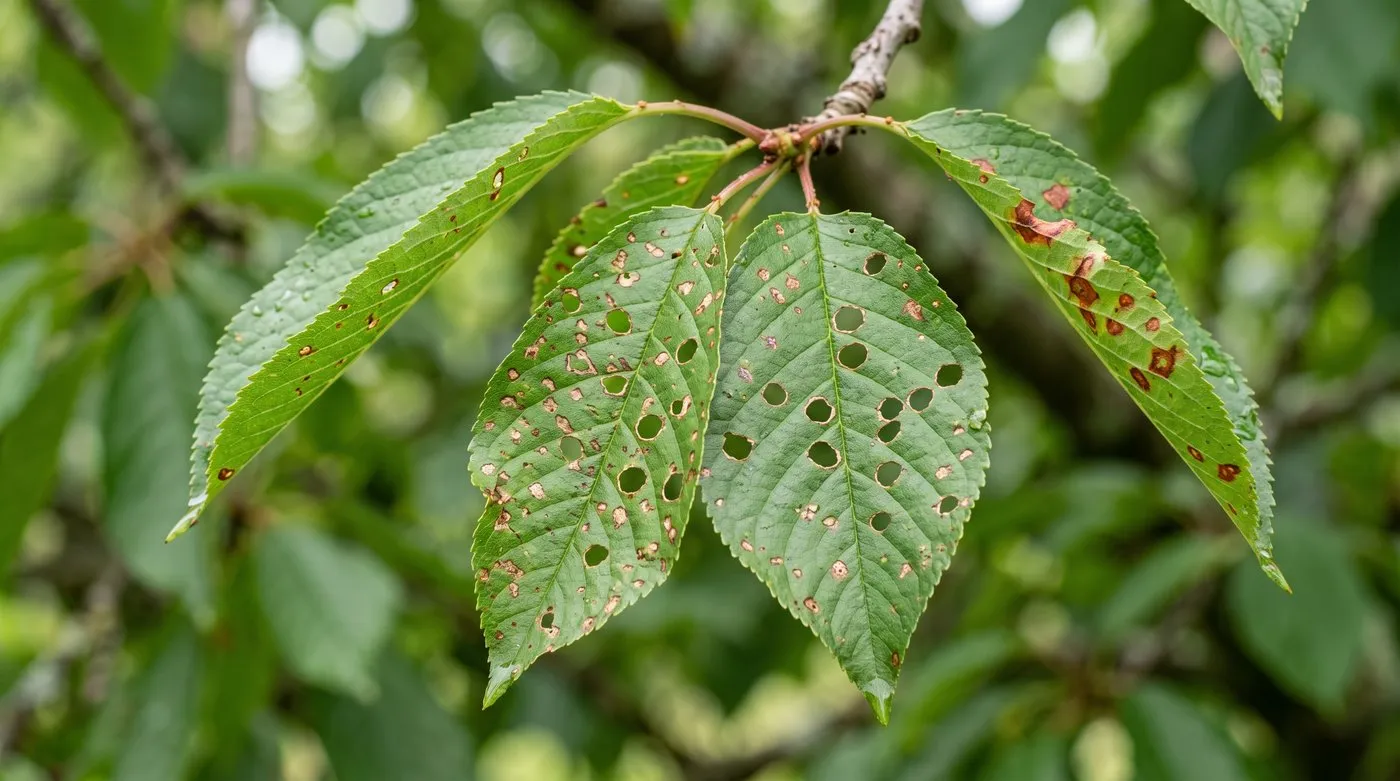 Shot-hole on a ‘Stella’ cherry in June. Infected leaf spots dry and fall out, leaving clean 2-5mm round holes. This leaf symptom paired with stem gummosis points to bacterial canker rather than frost damage.
Telling Bacterial Canker From Other Prunus Problems
Several stone-fruit problems look similar at a glance.
| Problem | Key difference from bacterial canker |
|---|---|
| Frost gummosis | Gum present, but no shot-hole leaves and no sunken lesion |
| Silver leaf | Silvery leaf sheen, purple stain in cut wood, no gum |
| Blossom wilt (brown rot) | Flowers and spurs collapse, grey spore pustules, no shot-hole |
| Peach leaf curl | Red blistered puckered leaves on peach and nectarine only |
| Apple and pear canker | Target-like sunken rings on apple or pear, a fungus, not Prunus |
The Two Bacteria Behind the Disease
Bacterial canker is caused by two closely related pathovars of Pseudomonas syringae.
Pseudomonas syringae pv. morsprunorum is the main cherry pathogen. It overwinters in cankers and infects mainly through autumn leaf scars.
Pseudomonas syringae pv. syringae has a wider host range, hits plums hard, and infects through blossom, wounds and leaf scars.
Both live harmlessly on the leaf surface for much of the year as epiphytes, in populations that can reach hundreds of thousands of cells per leaf. They only cause disease when they enter a wound or scar during wet weather. This is why the disease is a wound problem, not a spray problem. Control the wounds and their timing, and you control most of the infection.
Why Pruning Date Decides the Outcome
The single most important control is when you cut. Bacterial canker enters through fresh wounds, and the risk changes hugely across the year.
High-risk months (September to March): the bacteria are active in cool, wet conditions, wounds stay open and damp, and leaf scars from autumn leaf-fall are open doorways. Every dormant-season cut is a potential entry point.
Low-risk months (June to August): bacterial populations are lowest, warm dry weather closes wounds within days, and the tree is growing strongly enough to wall off the cut. This is the only window in which to prune Prunus.
Prune cherries and plums only during dry summer weather. The RHS advises summer pruning because canker bacteria enter fresh wounds more readily in cool, wet conditions. Disinfect tools between trees and remove infected wood back to clean tissue.
Warning: Never prune cherries, plums, damsons or apricots between September and March. Dormant-season wounds are the main route bacterial canker uses to enter a healthy tree. Save all shaping and thinning for June to August.
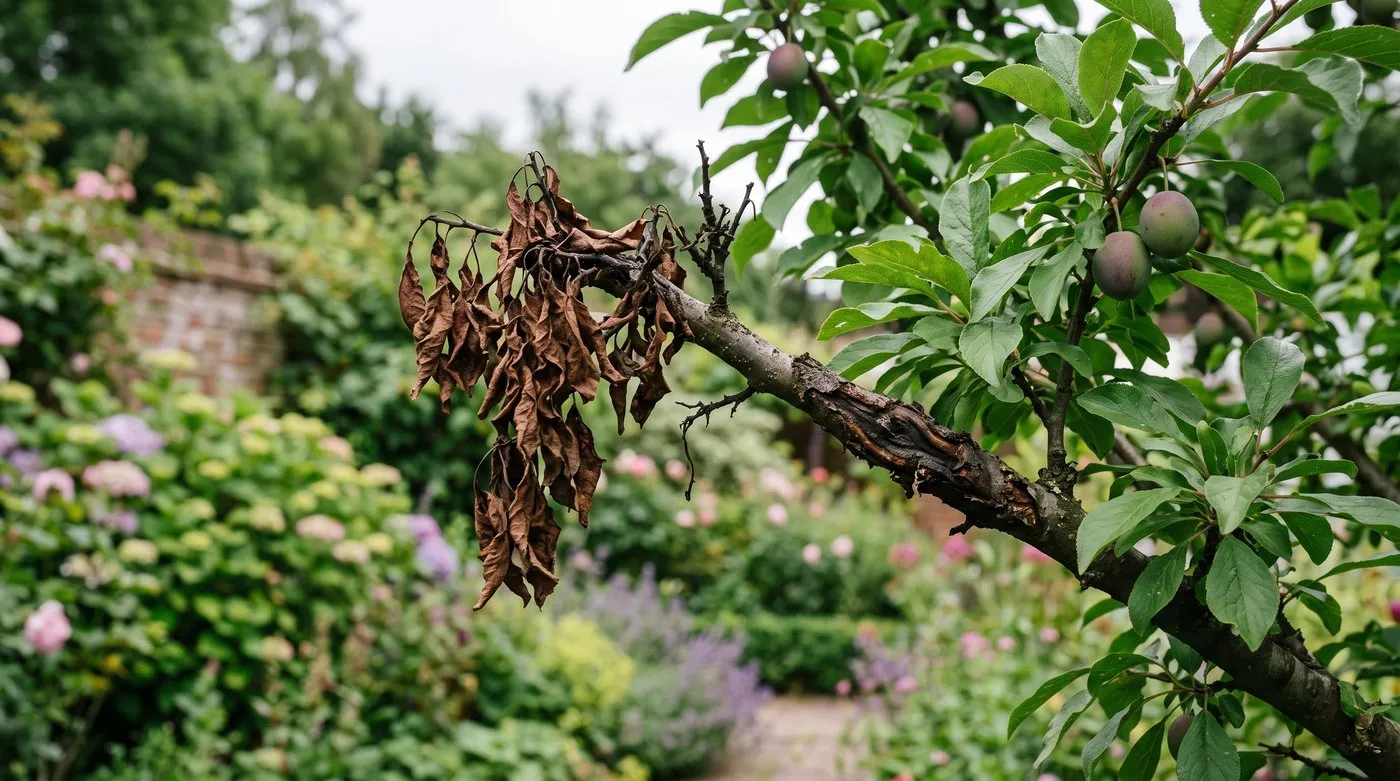 Summer dieback on a ‘Victoria’ plum. A canker has girdled the branch and everything above it is wilting in July while the rest of the tree stays green. This is the point to cut back hard into clean wood.
Treatment Options Ranked by Effectiveness
No method cures bacterial canker. These are ranked by how much they reduce disease in UK gardens.
| Method | Role | Effectiveness | What it cannot do |
|---|---|---|---|
| Summer pruning window (June-Aug) | Primary prevention | High, ~80% fewer new cankers | Save wood already girdled |
| Cut 10cm below visible canker | Primary treatment | High on small lesions | Fix a trunk canker on a young tree |
| Resistant rootstock (Colt, St Julien A) | Prevention at planting | High, lifetime effect | Help a tree already planted |
| Tool disinfection between cuts | Prevention | Moderate, stops tree-to-tree spread | Reduce a tree’s own leaf-surface load |
| Remove fallen infected leaves | Prevention | Moderate, cuts autumn spore load | Reach bacteria already inside bark |
| Copper spray at leaf-fall | Supplementary | Low to moderate, limited amateur access | Cure existing infection |
| Wound paint | Not recommended | None; can trap moisture | Anything useful |
The gold standard is prevention through timing and rootstock choice, backed by prompt summer removal of any canker that appears. Sprays sit at the bottom because the bacteria spend most of their life inside the plant, where nothing sprayed can reach them.
How to Cut Out an Established Canker
If a branch shows a defined canker, remove it in summer.
- Wait for dry weather in June, July or August
- Trace the canker to its full extent; dead bark is often larger than the gum suggests
- Cut back to healthy wood at least 10cm below the lowest sign of infection
- Make a clean cut just above a bud or at the branch collar, no stubs
- Disinfect secateurs or saw with 70% surgical spirit before moving to the next cut or tree
- Bag and bin or burn all prunings; never compost or chip them for mulch
- Leave the wound unpainted to seal naturally in the dry air
For a trunk canker on a young tree, or a canker that circles more than half the main stem, the tree will not recover. Replace it. For pruning technique across all fruit, our fruit tree pruning guide covers the cuts, and the cherry growing guide sets out the full care year.
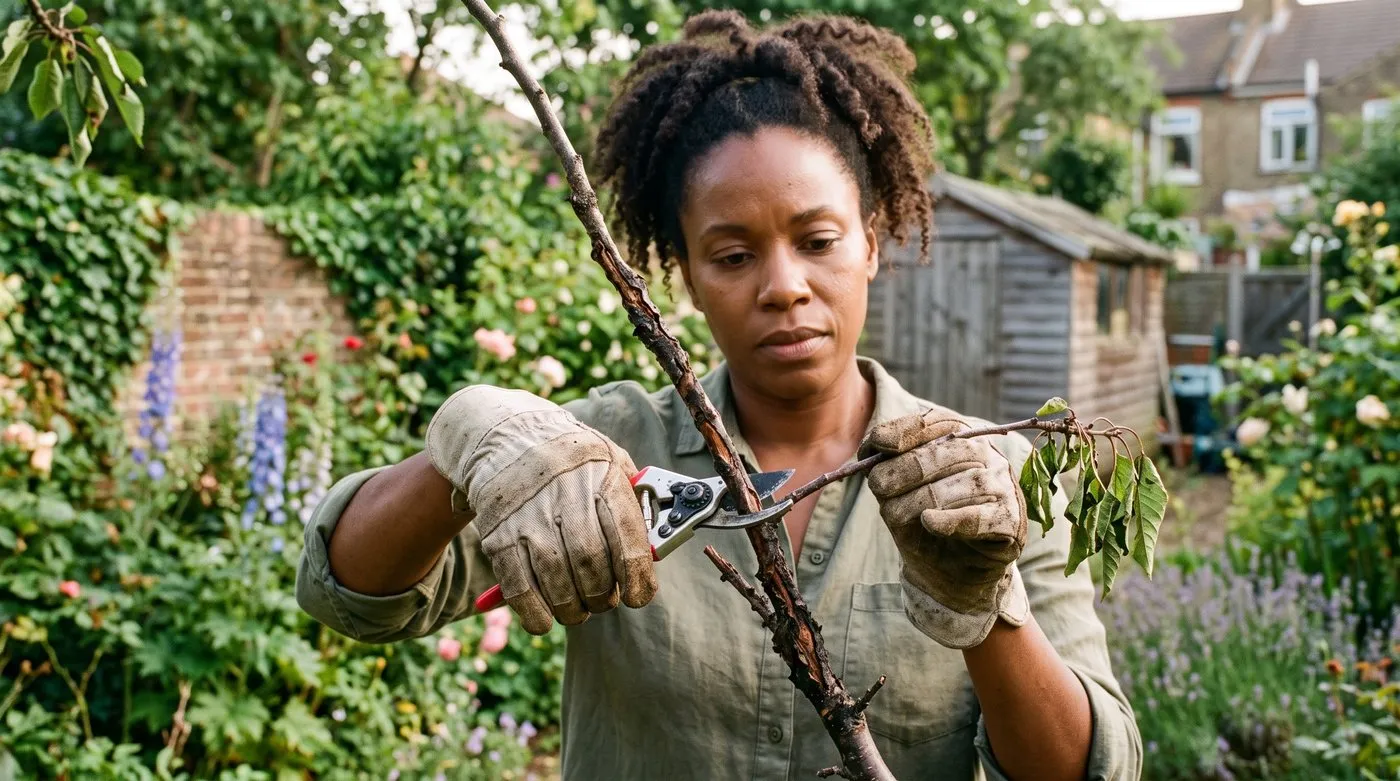 Cutting out canker in the safe window. This July prune removes the lesion with a 10cm margin of clean wood. Secateurs are wiped with surgical spirit before the next cut to avoid carrying bacteria across the tree.
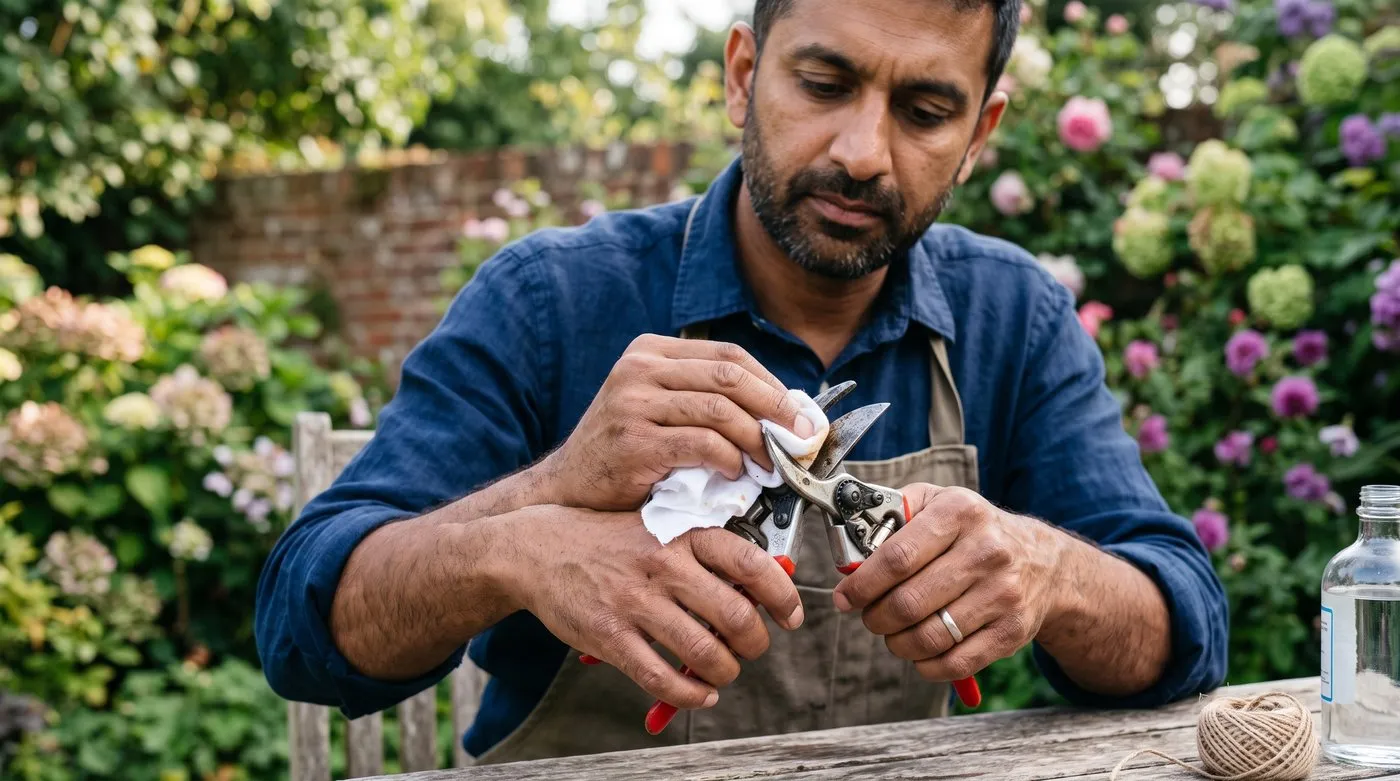 Tool hygiene between cuts. Wiping the blades with 70% surgical spirit stops bacterial canker travelling from an infected branch to healthy wood or the next tree. This simple step does more than any wound paint.
Root Cause: Wounds, Wet and the Wrong Rootstock
Most garden bacterial canker traces back to three avoidable causes, not bad luck.
Wounds at the wrong time. Winter pruning is the biggest single cause. It opens the tree exactly when the bacteria are active and wounds cannot heal. Mechanical damage from mowers and ties does the same.
Wet, poorly drained soil. Trees under stress on heavy or waterlogged ground are far more prone to infection. Improve drainage and mulch the root zone to reduce stress. Avoid planting new stone fruit in the wettest part of a garden.
A susceptible rootstock and variety. The rootstock changes a tree’s vigour and its natural resistance. Colt gives cherries good canker tolerance; the very dwarfing Gisela 5 is more vulnerable when stressed. For plums, St Julien A is a dependable choice. Our fruit tree rootstocks guide explains how each affects size and health.
Fix the cause and the tree stops getting reinfected. Treat only the symptom and it returns every season.
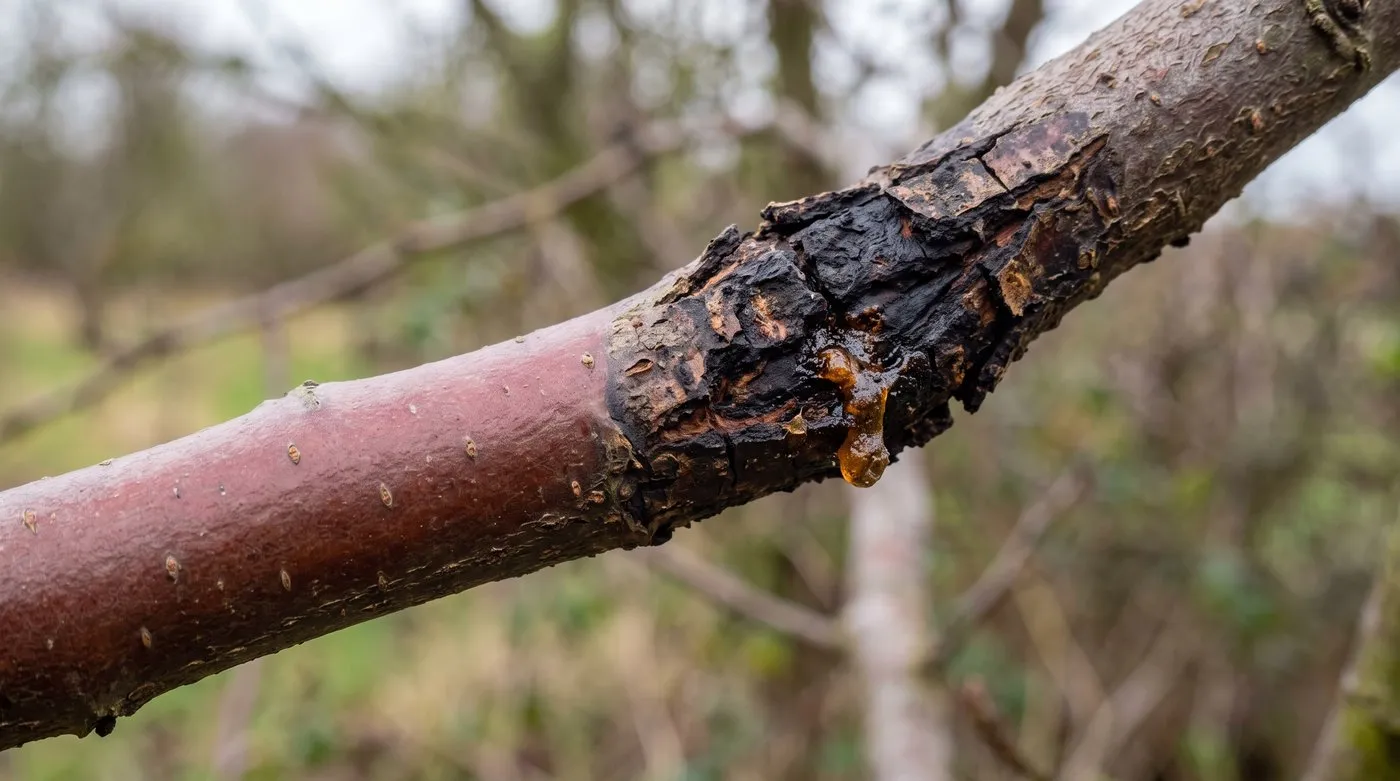 Healthy versus cankered bark on a plum. The lesion is sunken, cracked and darker than the smooth living bark. Cutting 10cm below the lowest edge of dead bark removes tissue beyond the visible gum.
Choosing Less Susceptible Cherry and Plum Varieties
Variety choice adds a second layer of resistance on top of the rootstock.
Cherries with better field tolerance: ‘Merton Glory’, ‘Merton Premier’ and the reliable culinary ‘Morello’ show more resistance than many dessert types. ‘Napoleon’ and ‘Roundel’ are among the more susceptible.
Plums with better tolerance: ‘Marjorie’s Seedling’ and ‘Warwickshire Drooper’ hold up well. ‘Victoria’, the nation’s favourite, is only moderately resistant, so give it the best-drained spot and strict summer pruning.
For the full varietal breakdown, our best cherry tree varieties and plum growing guide rank the options for UK conditions. No cherry or plum is immune, so pair a tougher variety with the right rootstock, good drainage and summer-only pruning.
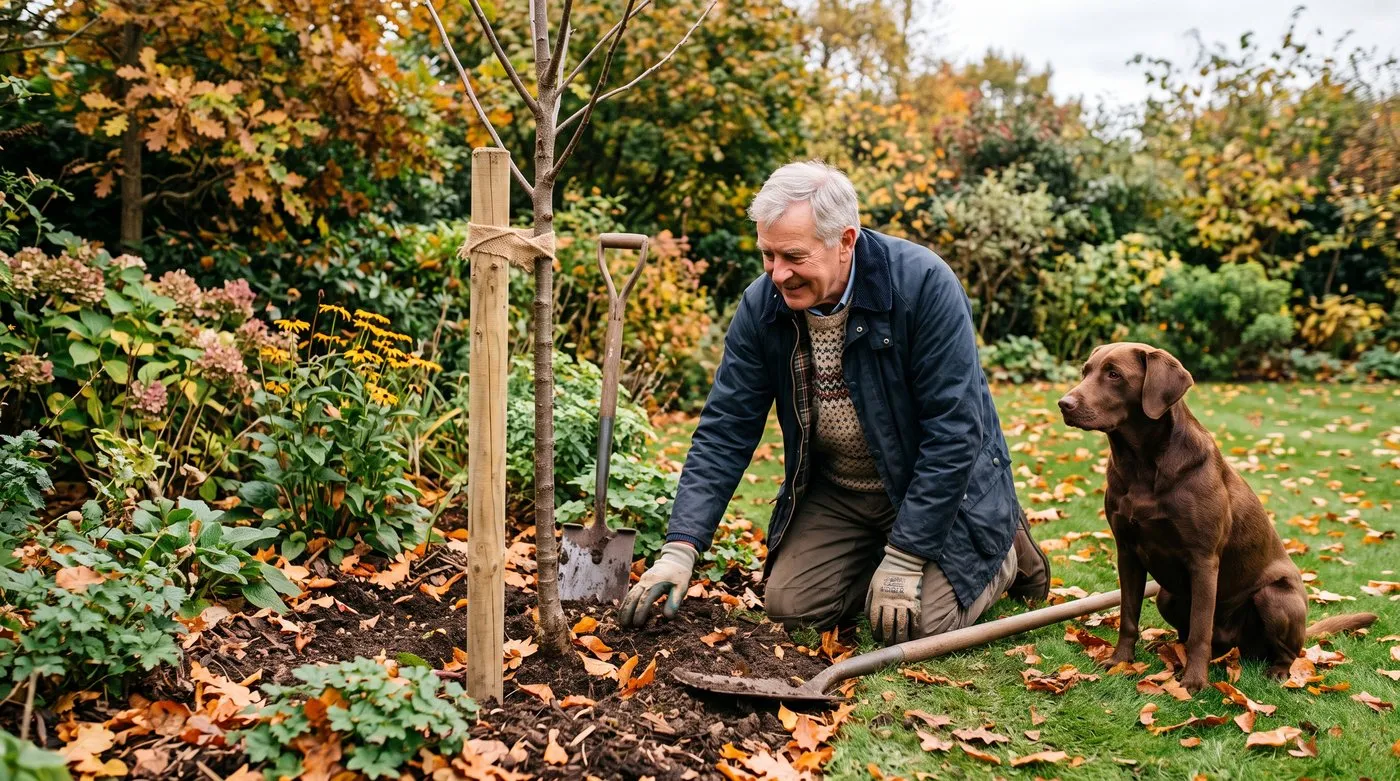 Planting a young cherry on Colt rootstock. Starting with suitable stock on free-draining ground reduces stress. The tree goes in firm and staked, ready for its first summer prune next July.
Bacterial Canker Calendar UK Month-by-Month
| Month | Bacterial canker task |
|---|---|
| January | Do not prune Prunus; inspect bark for gum and mark cankers |
| February | Plan replacements for badly cankered young trees |
| March | Still no pruning; watch for buds that fail to break |
| April | Note shoots that wilt or fail; leaf spotting may begin |
| May | Monitor shot-hole developing on new leaves |
| June | Pruning window opens; remove first visible cankers |
| July | Main summer pruning and canker removal in dry weather |
| August | Finish all pruning; disinfect tools between trees |
| September | Stop pruning; rake and bin fallen infected leaves |
| October | Leaf-fall is peak infection risk; keep tools away |
| November | Improve drainage around stressed trees |
| December | Order resistant rootstock trees for winter planting |
Common Mistakes With Bacterial Canker
Mistake 1: winter pruning. The classic error. It opens wounds when bacteria are active and wounds cannot heal. Prune only June to August.
Mistake 2: cutting too close to the canker. Bacteria spread beyond the visible gum. Cut a full 10cm into clean wood or the canker regrows.
Mistake 3: not disinfecting tools. Dirty secateurs carry Pseudomonas from tree to tree. Wipe with surgical spirit between cuts.
Mistake 4: painting the wound. Wound paints trap moisture and help the bacteria. Leave clean summer cuts to seal on their own.
Mistake 5: replanting a new cherry in the same wet spot. The tree failed partly because of the site. Improve drainage or move the position before replanting.
Frequently asked questions
What are the first signs of bacterial canker on a cherry tree?
Amber gum oozing from sunken bark, plus small round holes in the leaves. The gum (gummosis) appears in spring and summer on branches and the trunk. Leaves show brown spots that drop out to leave a shot-hole pattern. Affected shoots may wilt and die back in summer.
Can bacterial canker be cured?
No, there is no chemical cure available to home gardeners. Management relies on pruning out infected wood in summer and prevention. Copper sprays only reduce spread and are no longer widely available to amateurs. A badly cankered young tree is usually best replaced with a resistant one.
When should I prune a cherry or plum tree to avoid canker?
Prune only between June and August, never in autumn or winter. The bacteria are least active and wounds heal fastest in mid-summer. Dormant-season pruning cuts stay open and wet, letting Pseudomonas enter. This single timing rule prevents more canker than any spray.
Is bacterial canker the same as apple canker?
No, they are different diseases with different causes. Apple and pear canker is a fungus, Neonectria ditissima. Bacterial canker affects Prunus (cherry, plum, apricot) and is caused by Pseudomonas bacteria. The gummosis and shot-hole leaf symptoms are specific to bacterial canker on stone fruit.
Will bacterial canker spread to my other trees?
Yes, it spreads to nearby Prunus in wet autumn and winter weather. Rain splashes bacteria onto leaf scars and pruning wounds. It does not infect apples, pears or unrelated trees. Remove fallen infected leaves and prune in dry summer weather to limit spread between stone-fruit trees.
Can a tree recover from bacterial canker on its own?
Sometimes, if the canker is small and the tree is vigorous. A healthy tree can wall off a minor lesion, especially on well-drained soil. Cankers that girdle a branch kill everything above them. Cut back to clean wood in summer to give the tree the best chance.
Which rootstock resists bacterial canker best?
Colt rootstock shows good resistance for cherries in UK conditions. It is more tolerant than the very dwarfing Gisela 5. For plums, St Julien A is reliable and widely available. Rootstock choice at planting is one of the few genuine controls you have against this disease.
Should I paint the pruning wounds after cutting out canker?
No, wound paints are not recommended and can trap moisture. Modern advice is to make a clean cut and let the tree seal it naturally. Prune in dry summer weather so the wound dries quickly. Good tool hygiene between cuts matters far more than any sealant.
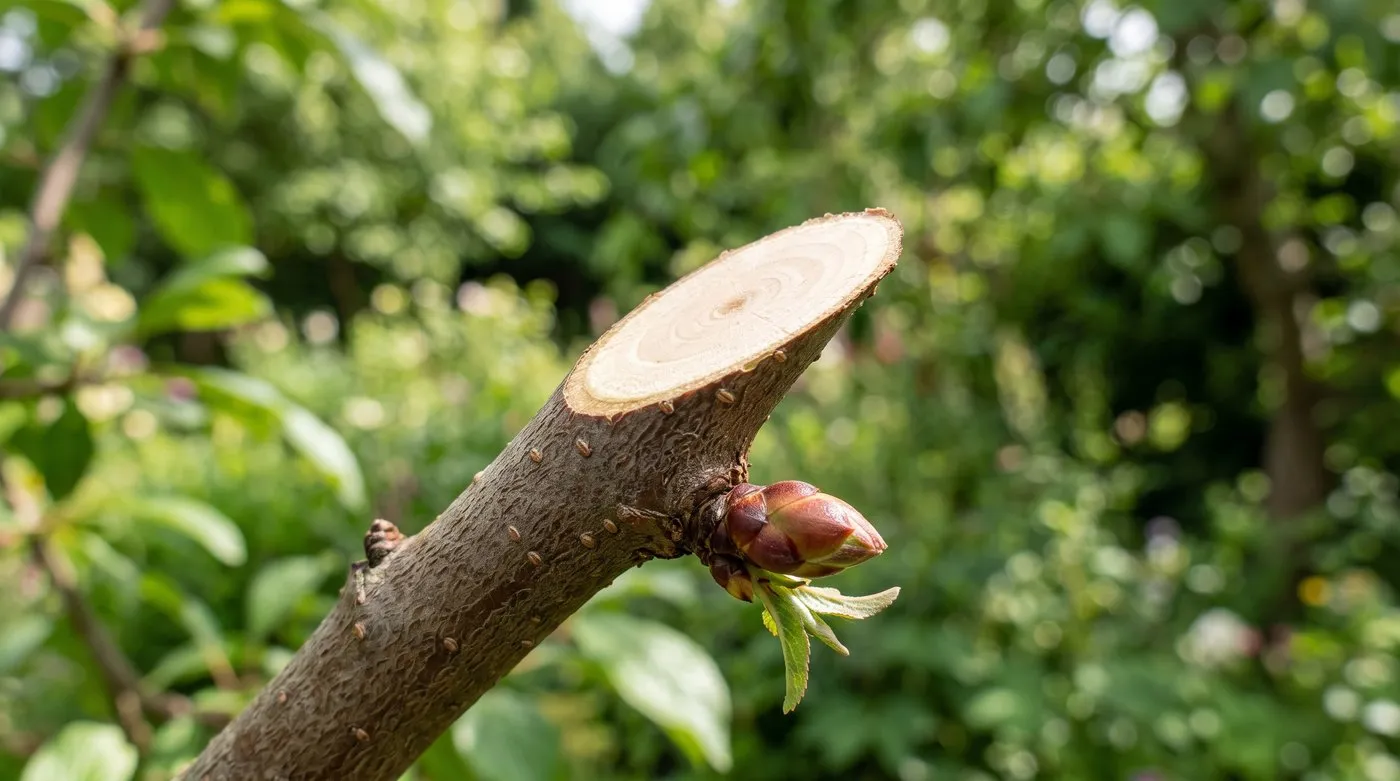 A clean July cut on a plum, left unpainted to seal in dry air. Modern practice avoids wound paints, which can trap moisture. The summer window lets the wound callus before wetter autumn conditions return.
The Royal Horticultural Society’s guidance on bacterial canker confirms the summer-pruning rule and the two Pseudomonas pathovars behind the disease.
Now protect the rest of your fruit trees
Bacterial canker is one of several problems that hit UK stone fruit. Now you know how to spot the gum and shot-hole, keep every cut in the summer window and start new trees on a resistant rootstock. For the wider picture, read our cherry growing guide and plum growing guide for full-season care, compare canker types in our fruit tree canker guide, and check apple and pear health with our apple and pear scab guide.
Our team produces practical UK gardening guidance from source research, contributor records and established horticultural practice. Editorial standards are overseen by Matt W.