Key takeaways
- Stella is the safest first cherry tree because it's self-fertile, sweet and widely sold
- Lapins and Sweetheart are self-fertile sweet cherries that ripen later in summer
- Morello is a self-fertile sour cherry that crops even on a north-facing wall
- Gisela 5 rootstock keeps a tree to about 2.5-3m, small enough for a garden or large pot
- Net sweet cherries as soon as they start to colour, or birds will take the lot
Stella is the best cherry tree for most UK gardens. It’s self-fertile, so one tree crops on its own, and its sweet, dark fruit is easy to love. If you’d rather cook with your cherries, or only have a shady wall, plant a Morello.
Picking the wrong cherry can mean years of blossom and no fruit. This guide helps you choose a variety and rootstock that suit your garden. For planting, pruning and care, see our guide on how to grow cherry trees.
Sweet or sour cherries: which should you grow?
Decide this first. The two types grow differently and suit different spots.
Sweet cherries are the ones you eat fresh. They need a warm, sunny, sheltered spot and well-drained soil. They crop in July.
Sour cherries are for pies, jam and sauces. They’re tougher, cope with a north or east-facing wall, and crop later, usually in August. They’re also self-fertile.
If you have one sunny spot, grow a sweet cherry. If you have a north-facing wall doing nothing, a fan-trained Morello turns it into a crop.

Sweet cherries are for eating fresh. Sour cherries are softer and sharper, perfect for pies and jam.
The best sweet cherry varieties
These are reliable choices for UK gardens. The first four are self-fertile, so you only need one tree.
Stella
Stella is the classic first cherry tree. It’s self-fertile, crops reliably and gives sweet, dark red fruit in July. It’s widely sold on dwarfing rootstocks. Its fruit can split after heavy rain, so pick promptly in a wet spell.

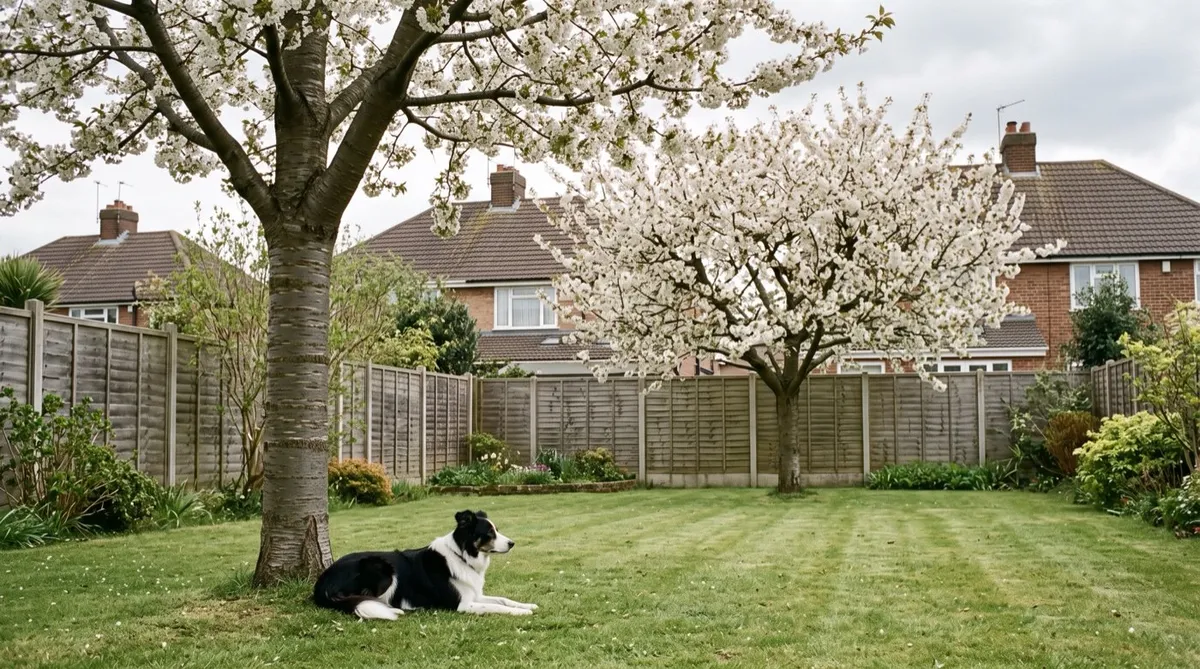
Stella is self-fertile, so a single tree like this one can crop on its own in an ordinary back garden.
Sunburst
Sunburst is self-fertile, with large, dark, sweet fruit a little later than Stella. It does best in warmer southern and central gardens.
Lapins
Lapins is self-fertile and known for resisting splitting, which helps in wet summers. It gives large, firm, dark red fruit in late July and crops heavily. It’s a good pick for wetter western and northern gardens.
Sweetheart
Sweetheart is self-fertile and one of the latest sweet cherries, with large, firm, dark red fruit. Grow it alongside Stella to stretch the sweet cherry season.
Kordia
Kordia gives large, very dark fruit with a rich flavour and good resistance to splitting. It isn’t self-fertile, so it needs a partner flowering at the same time. Only choose it if you have room for two trees, or a neighbour has a suitable one. Our guide to cherry pollination groups explains how to pick a partner.
Merton Glory
Merton Glory is an old favourite with pale yellow fruit flushed with red. It’s early and pretty, but it needs a pollination partner. Grow it for interest alongside another variety rather than as your only tree.
The best sour cherry varieties
Morello
Morello is the classic sour cherry. It’s self-fertile and crops well even on a north or east-facing wall, which few fruit trees manage. The dark red fruit ripens in August and is perfect for pies, jam and cherry brandy. Grown as a fan against a wall, it’s easy to net. Our fan-training guide shows how.
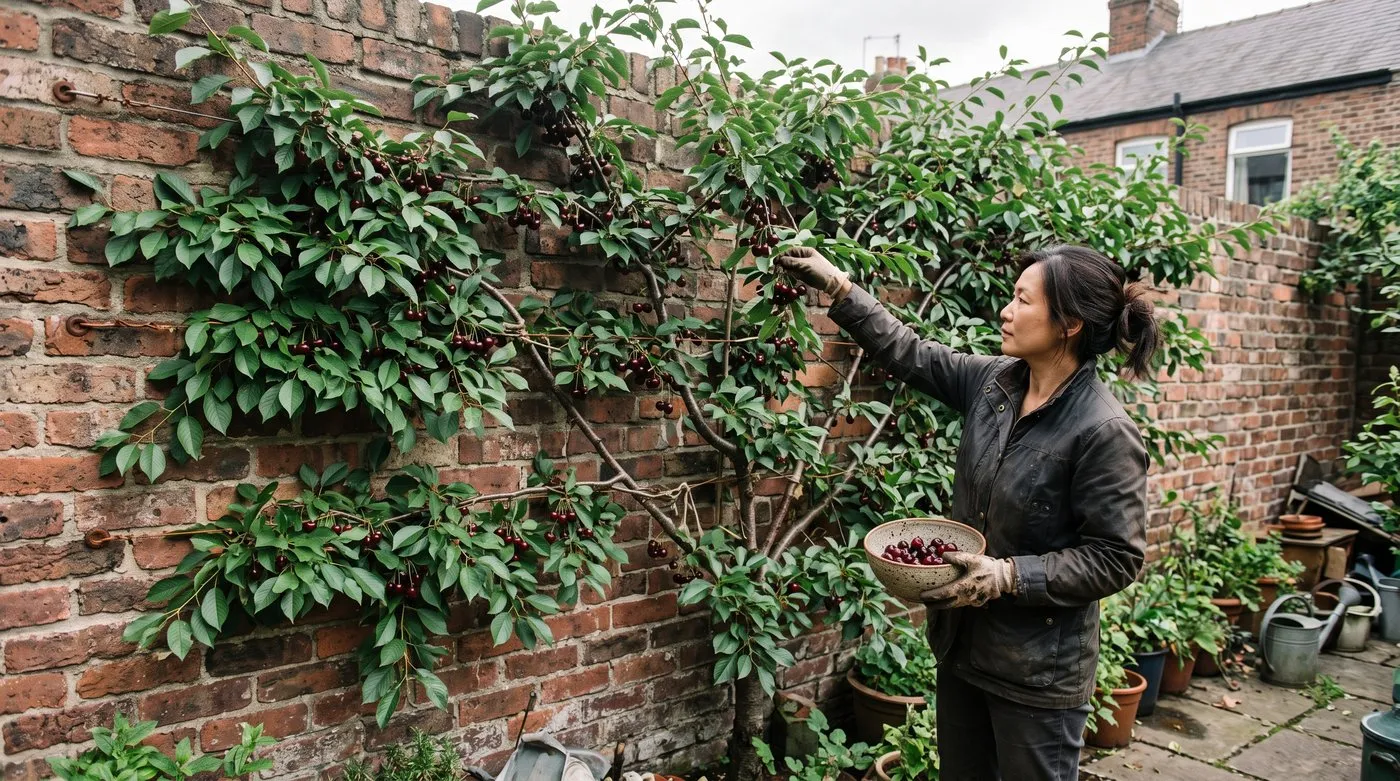
Morello is one of the few fruit trees that crops on a shady north-facing wall, and a fan is easy to net and pick.
Nabella
Nabella is a compact sour cherry that suits small gardens and pots. It’s a good choice where a Morello would be too big.
Cherry variety comparison table
| Variety | Type | Self-fertile | Ripens | Best for |
|---|---|---|---|---|
| Stella | Sweet | Yes | July | First tree, beginners |
| Sunburst | Sweet | Yes | July | Large fruit, warmer gardens |
| Lapins | Sweet | Yes | Late July | Wet summers, heavy crops |
| Sweetheart | Sweet | Yes | Late July to August | Stretching the season |
| Kordia | Sweet | No | July | Flavour, with a partner |
| Merton Glory | Sweet | No | Early July | Pale fruit, with a partner |
| Morello | Sour | Yes | August | North-facing walls, cooking |
| Nabella | Sour | Yes | August | Small gardens, pots |
Which cherry rootstock should you choose?
The rootstock controls how big your tree grows. The same Stella can be a 3m garden tree or a big orchard tree, depending on what it’s grafted onto.
| Rootstock | Rough height | Best for |
|---|---|---|
| Gisela 5 | About 2.5-3m | Small gardens, pots, fans |
| Gisela 6 | A little bigger than Gisela 5 | Medium gardens |
| Colt | About 4-6m | Bigger gardens, large wall fans |
| F12/1 or Mazzard | 6m or more | Orchards only |
For most gardens, Gisela 5 is the one to buy. It crops young and stays small enough to net, which matters a lot with cherries. Our guide to dwarf fruit trees for small gardens covers other fruit on small rootstocks too.
Growing a cherry tree in a pot
A cherry tree grows happily in a large pot if it’s a self-fertile variety on Gisela 5. Stella, Sunburst, Lapins and Morello all work.
- Use a pot at least 45cm across, with drainage holes.
- Fill it with John Innes No. 3, a loam-based compost that holds water and nutrients.
- Stand it somewhere sunny and sheltered from strong wind.
- Water regularly, especially in summer, and feed with a fruit feed from spring to late summer.
- Replace the top few centimetres of compost each spring, and repot every few years.
Our guide to growing fruit in pots has more on watering and winter care.

On Gisela 5 rootstock, a cherry stays small enough for a big pot on a sunny patio.
Protecting your cherries from birds
Blackbirds love sweet cherries and can strip a tree in days. Net the tree as soon as the fruit starts to change colour.
Drape fine bird netting over a frame of canes so it doesn’t rest on the fruit, and peg it down at the base so birds can’t walk in. A small tree on Gisela 5, or a fan on a wall, is far easier to net than a big tree. Bullfinches also eat the flower buds in late winter, which is another good reason to grow cherries in a fruit cage.

Net cherries as soon as they colour. A frame of canes keeps the net off the fruit and makes picking easier.
Cherry problems to know before you buy
- Splitting. Rain on ripe sweet cherries makes them crack. Lapins and Kordia resist it best.
- Bacterial canker and silver leaf. These enter through pruning cuts, so prune cherries in dry weather in summer, never in winter. Our guide to bacterial canker shows what to look for.
- Cherry blackfly. These aphids curl young leaves in spring. They look alarming but rarely harm an established tree, and birds and ladybirds help.
- Fruit falling early. Cold winds at blossom time and poor pollination are common causes. See our guide to cherry fruit drop.
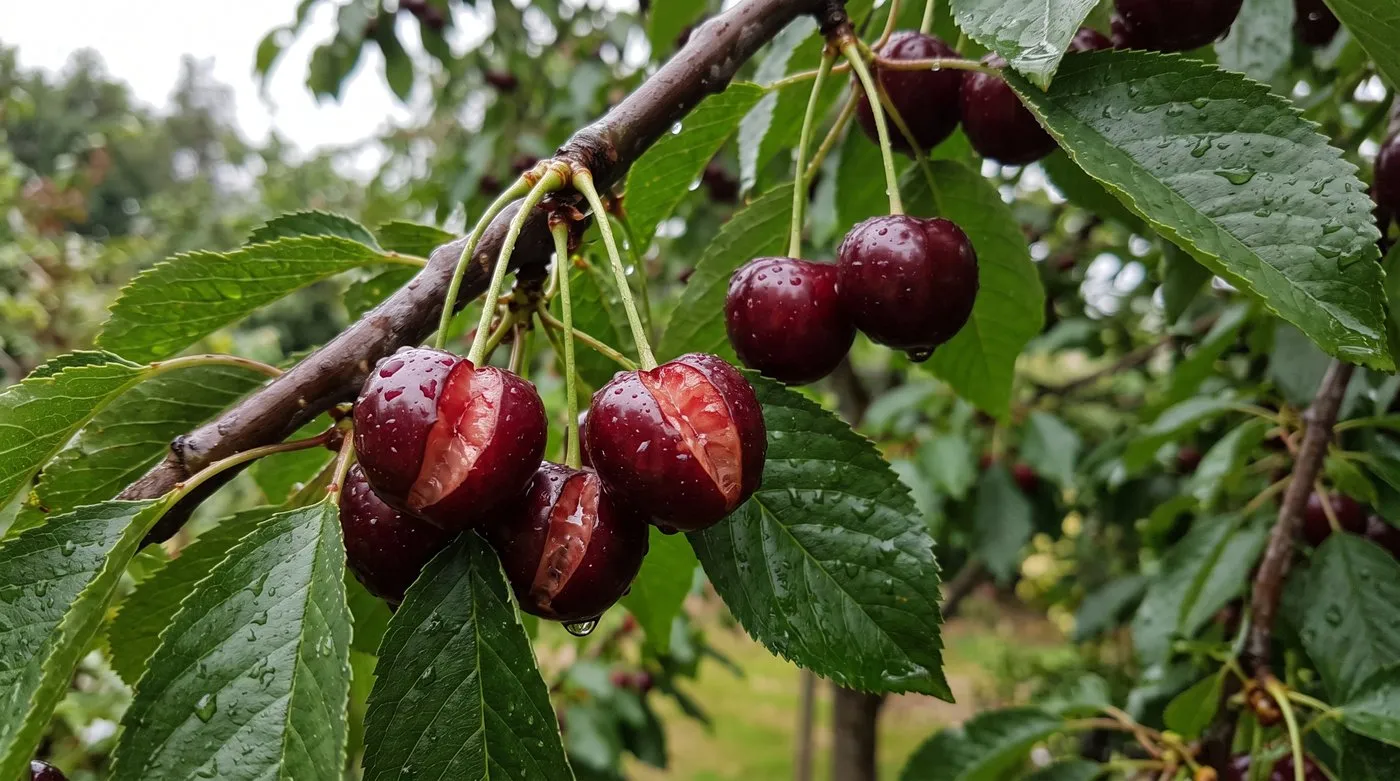
Rain on ripe sweet cherries makes them split. Lapins and Kordia resist it better than most.
Common mistakes when choosing a cherry tree
- Buying a variety that needs a partner. If you only have room for one, make sure it’s self-fertile.
- Ignoring the rootstock. A vigorous rootstock gives a tree too big to net or pick.
- Planting a sweet cherry in shade. Sweet cherries need sun. Save the shady wall for a Morello.
- Forgetting the birds. Plan where the net will go before you plant.
A two-tree plan for a typical garden
If you have room for two, plant a self-fertile sweet cherry on Gisela 5 in your sunniest spot, and a Morello fan-trained on a north or east wall. You’ll pick sweet cherries in July and cooking cherries in August, with no pollination worries.
If you only have room for one, plant a Stella. When it’s in, our guide to pruning fruit trees explains how to keep it healthy, or browse more fruit in our growing hub.
Frequently asked questions
What is the best cherry tree variety for UK gardens?
Stella is the most reliable first cherry tree. It’s self-fertile, so one tree will crop, and it gives sweet, dark red fruit. Sunburst and Lapins are good alternatives with large fruit. For a north-facing wall or a shadier spot, choose the Morello sour cherry.
Do you need two cherry trees for cross-pollination?
Not if you choose a self-fertile variety. Stella, Sunburst, Lapins and Sweetheart are self-fertile sweet cherries, and Morello is a self-fertile sour cherry. Varieties such as Kordia and Merton Glory need a compatible partner nearby. If you only have room for one tree, choose a self-fertile one.
What rootstock should I choose for a small garden cherry tree?
Gisela 5 is the best choice for small gardens. It keeps a tree to about 2.5-3m and starts cropping young. It also suits large pots. Colt makes a bigger tree, which is good for a fan on a large wall. Avoid vigorous rootstocks, which make trees too tall to net.
When do UK cherry trees crop?
Sweet cherries usually crop in July. Southern gardens pick earlier than northern England and Scotland. Sour cherries such as Morello ripen later, usually in August. Growing one of each spreads the harvest over several weeks.
Can you grow a cherry tree in a pot in the UK?
Yes, choose a self-fertile variety on Gisela 5 rootstock. Use a pot at least 45cm across filled with John Innes No. 3 compost. Stand it somewhere sunny and sheltered, water regularly and feed through the growing season.
Which cherries are best in a wet summer?
Lapins and Kordia are known for resisting splitting. Rain on ripe sweet cherries makes them crack, so these are good choices for wetter western and northern gardens. Pick promptly when heavy rain is forecast.
Our team produces practical UK gardening guidance from source research, contributor records and established horticultural practice. Editorial standards are overseen by Matt W.