Key takeaways
- When the cherries fall tells you the cause, so note the timing
- Tiny fruit dropping soon after flowering usually means poor pollination or frost
- Some drop in June is natural thinning and nothing to worry about
- Fruit falling as it colours usually means the tree is short of water
- Self-fertile varieties such as Stella, Lapins and Sweetheart crop on their own
- Water steadily and mulch through June and July, especially cherries in pots
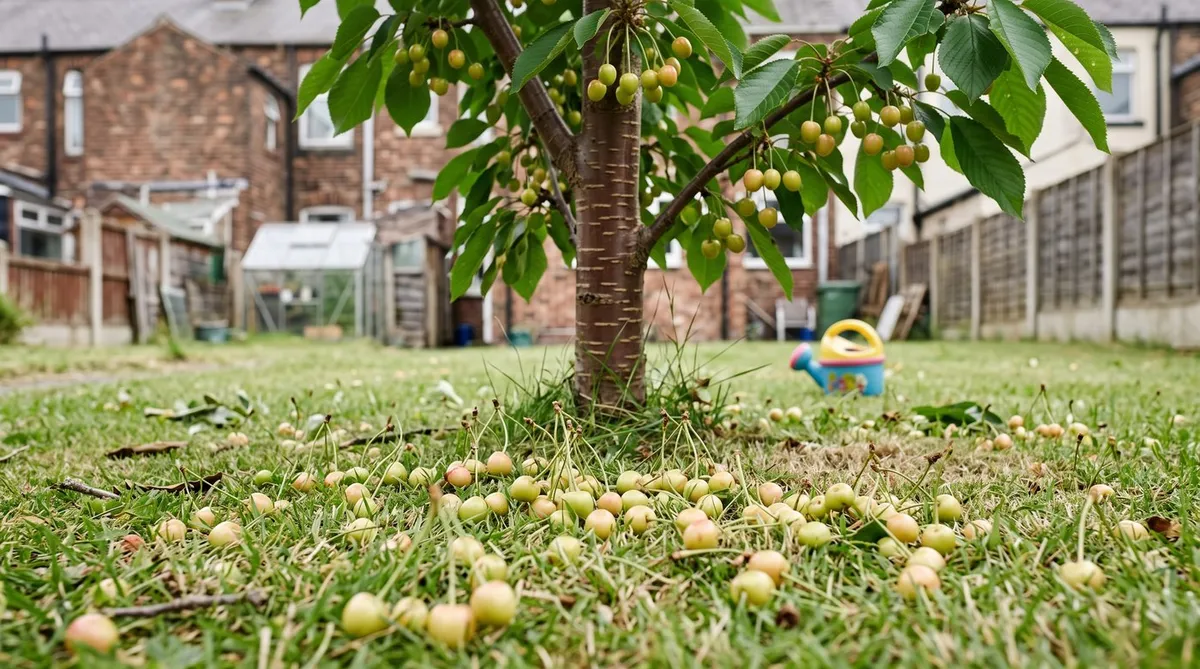
A cherry tree covered in tiny green fruit in spring, then a lawn full of them a few weeks later, is a common letdown. Some drop is normal. Heavy drop usually has a cause you can do something about, and when the cherries fall is the best clue.
This guide helps you read the timing, fix the cause and get a fuller crop next summer.
When cherries drop tells you why
Note roughly when the fruit is falling. Then use this quick guide:
| When they fall | What they look like | Likely cause |
|---|---|---|
| A few weeks after flowering | Tiny, often with the dead flower still on | Poor pollination or frost |
| June | Pea-sized and green | Natural June drop, made worse by dry weather |
| As the fruit colours | Plump, half-coloured | Short of water, or heat |
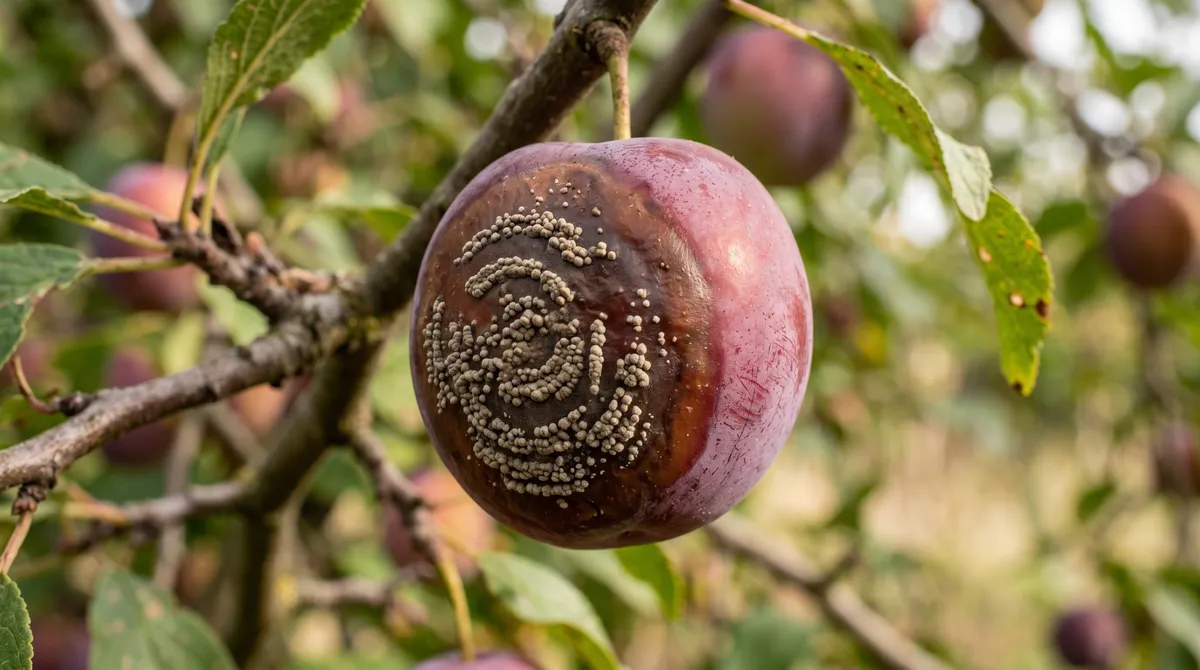
| Any time, with brown fuzzy rot | Rotting fruit | Brown rot |
| Fruit vanishes, stones left behind | Pecked or missing | Birds, not drop |
Cool, wet springs make cherry drop worse in the UK. You can’t change the weather, but you can tilt the odds at every other stage.
Drop soon after flowering: pollination and frost
Tiny cherries falling within a few weeks of blossom usually weren’t pollinated, or were hit by frost. Without pollination no seed forms, so the tree lets the fruit go.
Pollination partners matter for some varieties. Self-fertile cherries such as ‘Stella’, ‘Lapins’ and ‘Sweetheart’ crop on their own. Many older sweet cherries need another compatible cherry flowering at the same time nearby. Our guide to cherry pollination groups explains how to pair them, and the best cherry tree varieties guide flags the self-fertile ones.
Weather at blossom is the other part. Cherries flower early, in late March and April, when cold, wet and windy days keep bees at home. A sheltered, sunny spot helps. On a small or wall-trained tree you can help by brushing pollen between open flowers with a soft paintbrush on a dry day.
Frost kills open blossom and newly set fruit. Throw fleece over small or trained trees on frosty nights while they are in flower, and take it off in the morning so bees can get in. Our guide on protecting plants from frost has more ideas.
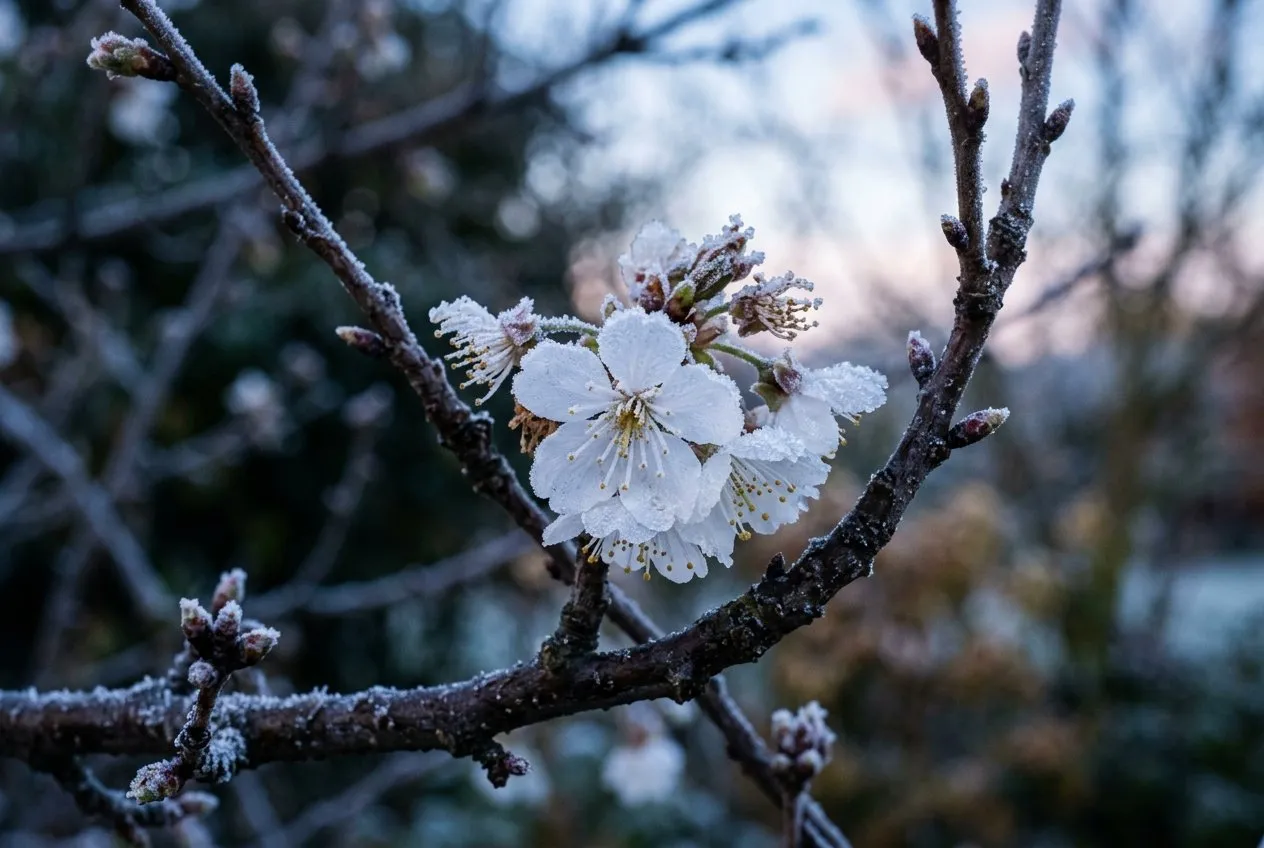
Frost on open blossom can wipe out the crop before it sets. Fleece on cold nights is the simple fix for small trees.
Is June drop normal on cherries?
Yes. Cherries, like apples, pears and plums, set more fruit than they can ripen. In early summer they shed the extra, usually the weakest or poorly pollinated fruitlets. A scatter of pea-sized green cherries under the tree is normal.
It becomes a problem when the tree is also short of water. Then it sheds far more than the surplus. Keep watering steadily through June in dry spells and the tree should only lose what it can’t use.
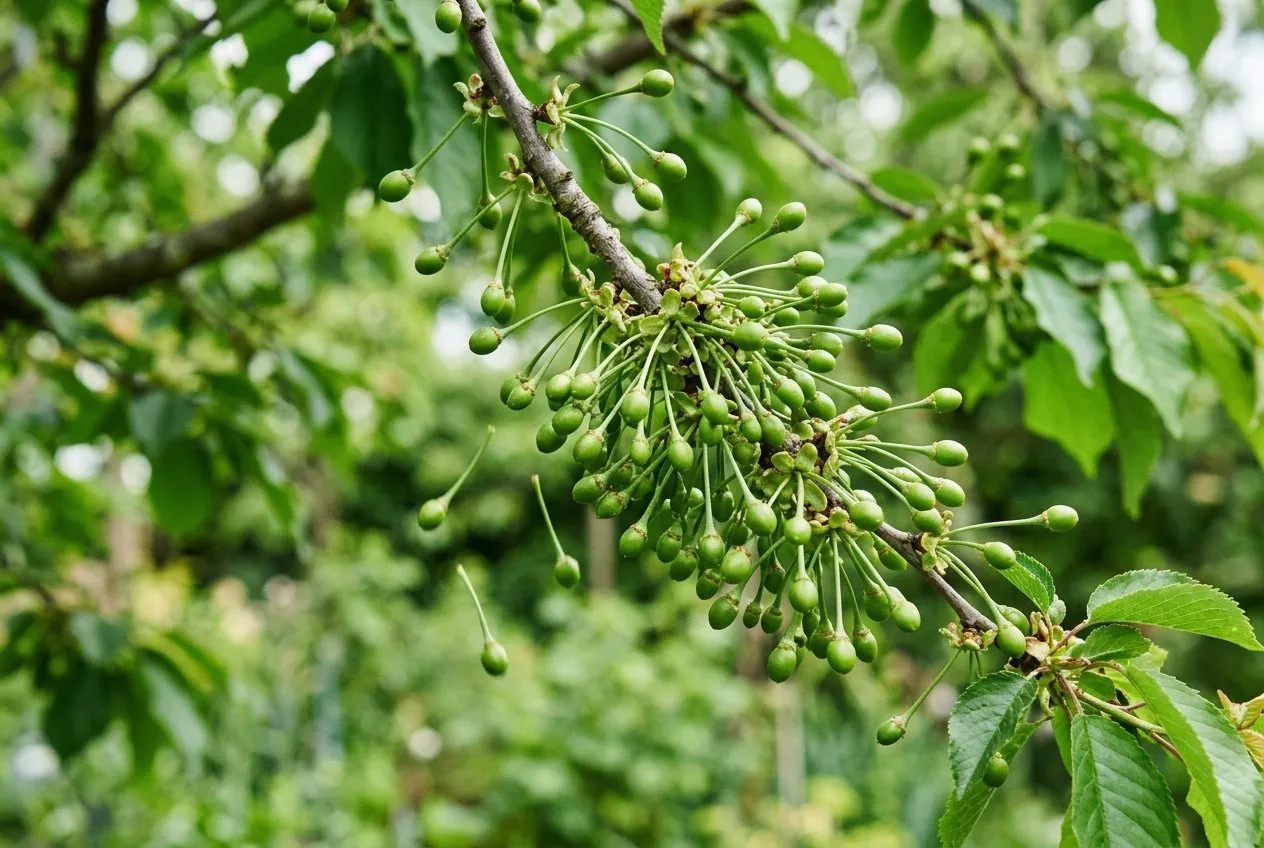
Clusters like this almost always thin themselves in June. What’s left gets more of the tree’s energy.
Drop as the fruit colours: water and heat
Plump cherries falling as they start to colour usually means the tree is short of water. Fruit swells by taking up water, so a dry spell in June or July can make the tree let some go. Swinging from bone dry to soaked also splits the fruit that stays.
- Water deeply once or twice a week in dry spells, rather than a little every day, for trees in the ground.
- Mulch the root area with bark or compost after a good soaking, keeping it clear of the trunk.
- Cherries in pots dry out fast. Check them daily in warm weather and water until it runs from the base.
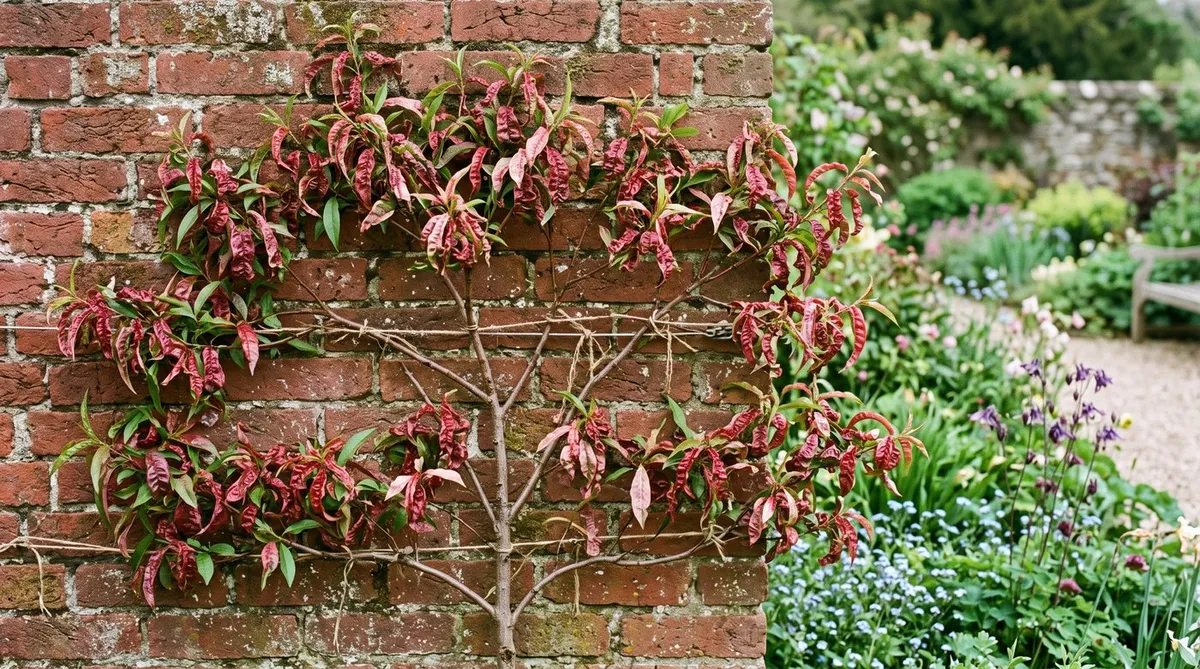
Light matters too. Cherries ripen better in an open, sunny canopy, and a warm south or west-facing wall suits a fan-trained tree.
Watering a cherry tree in a pot
Potted cherries are the most likely to drop fruit, because the compost dries out so quickly. Use a large pot, and check it every day in summer. Water until it drains from the base.
Feed with a liquid fertiliser for fruit every couple of weeks in the growing season. Mulch the surface to slow drying. Our guide to growing fruit in pots covers pot sizes and compost.
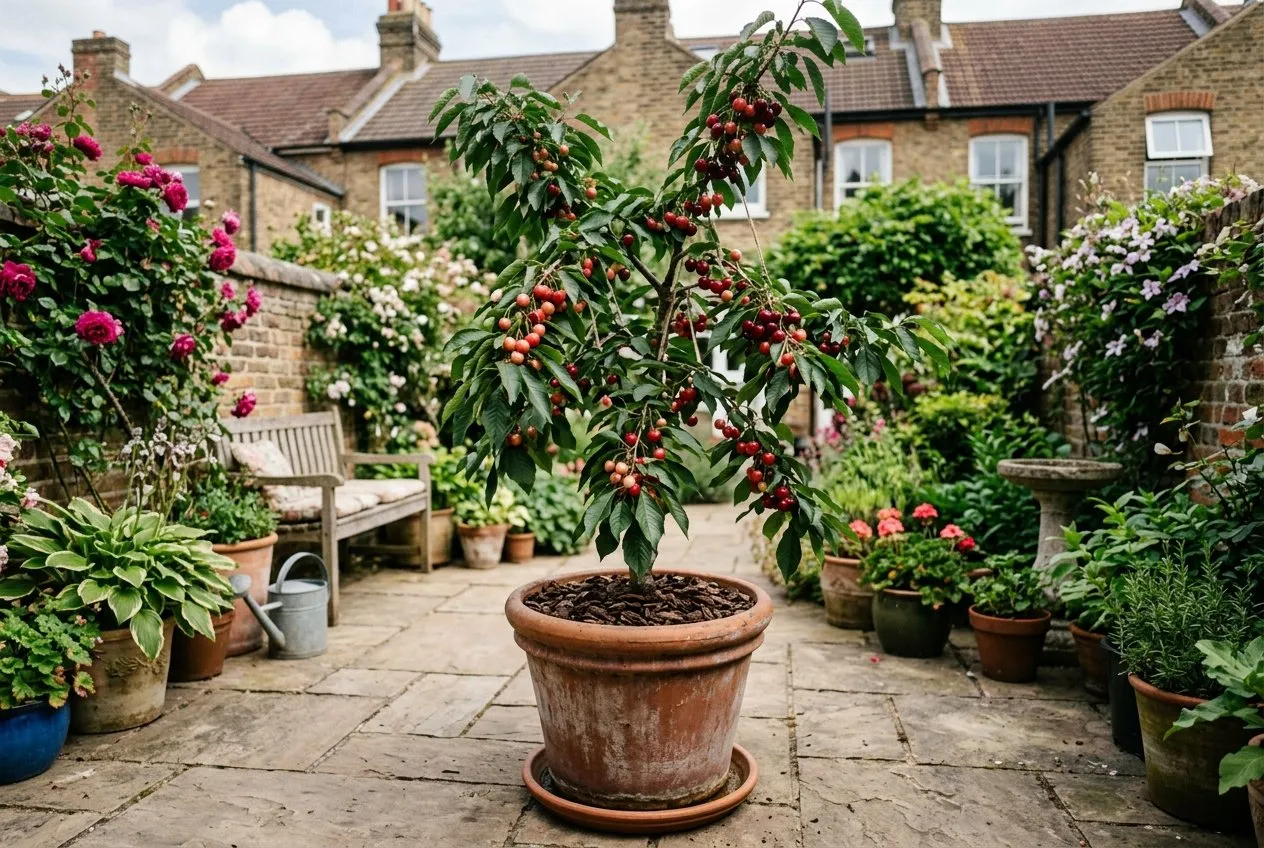
A potted cherry needs checking every day in summer. A bark mulch on top helps the compost hold water.
Blackfly and brown rot
Cherry blackfly is a black aphid that curls the shoot tips in spring and early summer. It rarely stops a tree fruiting, but a heavy attack weakens young and potted trees. Squash small colonies and let ladybirds and hoverflies do the rest. Our guide on getting rid of aphids covers safe options.
Brown rot turns cherries brown with pale, fuzzy spots, and they rot on the tree or drop. Pick off and bin rotten fruit as soon as you see it, and clear fallen fruit. See our brown rot guide for more.
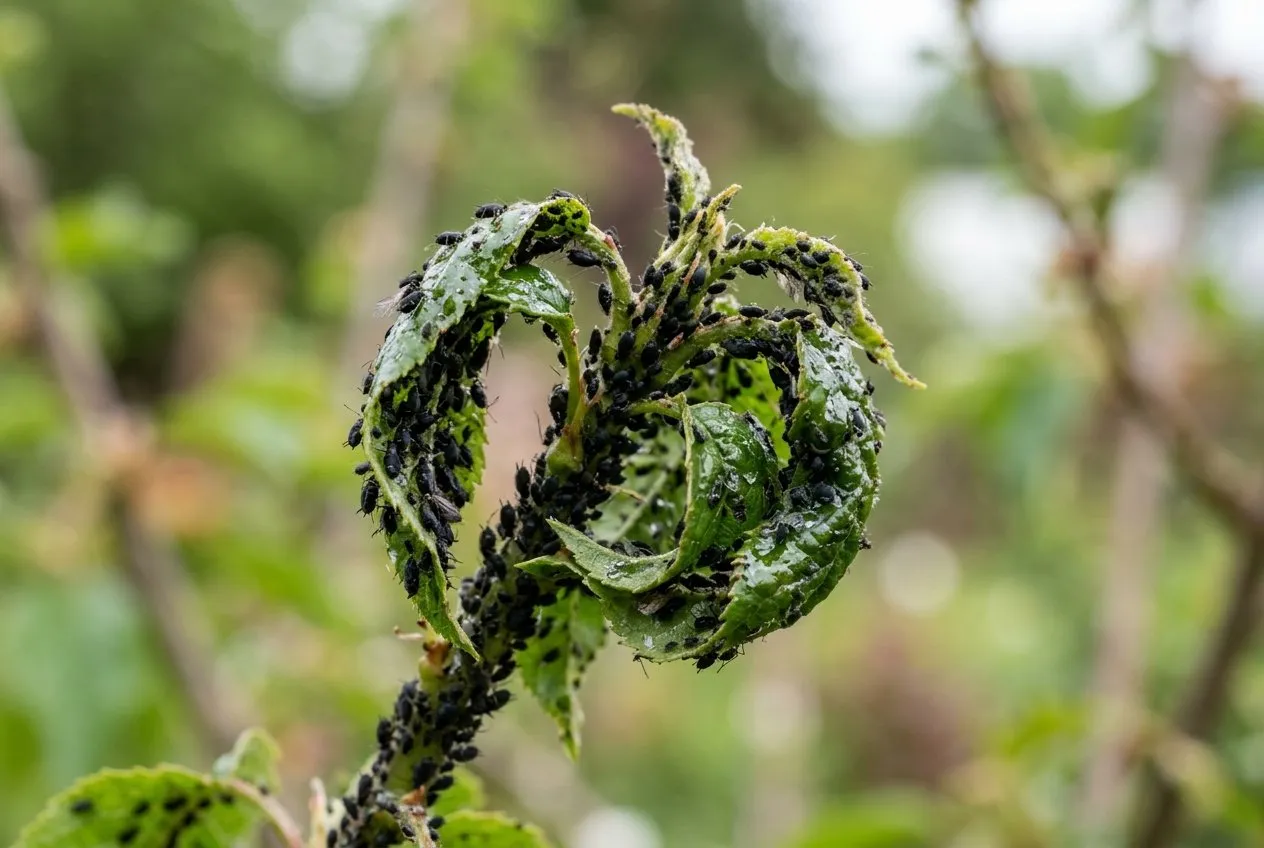
Cherry blackfly curls the shoot tips. Squash early colonies and leave the rest to ladybirds and hoverflies.
Is it birds, not fruit drop?
If cherries vanish rather than fall, and you find stones and stalks, birds are the cause. Blackbirds and starlings can clear a small tree quickly once the fruit colours.
Net the tree as the first cherries start to change colour, after flowering is over so bees can still get in. Secure the net at the base and check it daily so no birds get trapped. Small trees, fans and potted cherries are far easier to net, which is a good reason to choose a dwarfing rootstock.
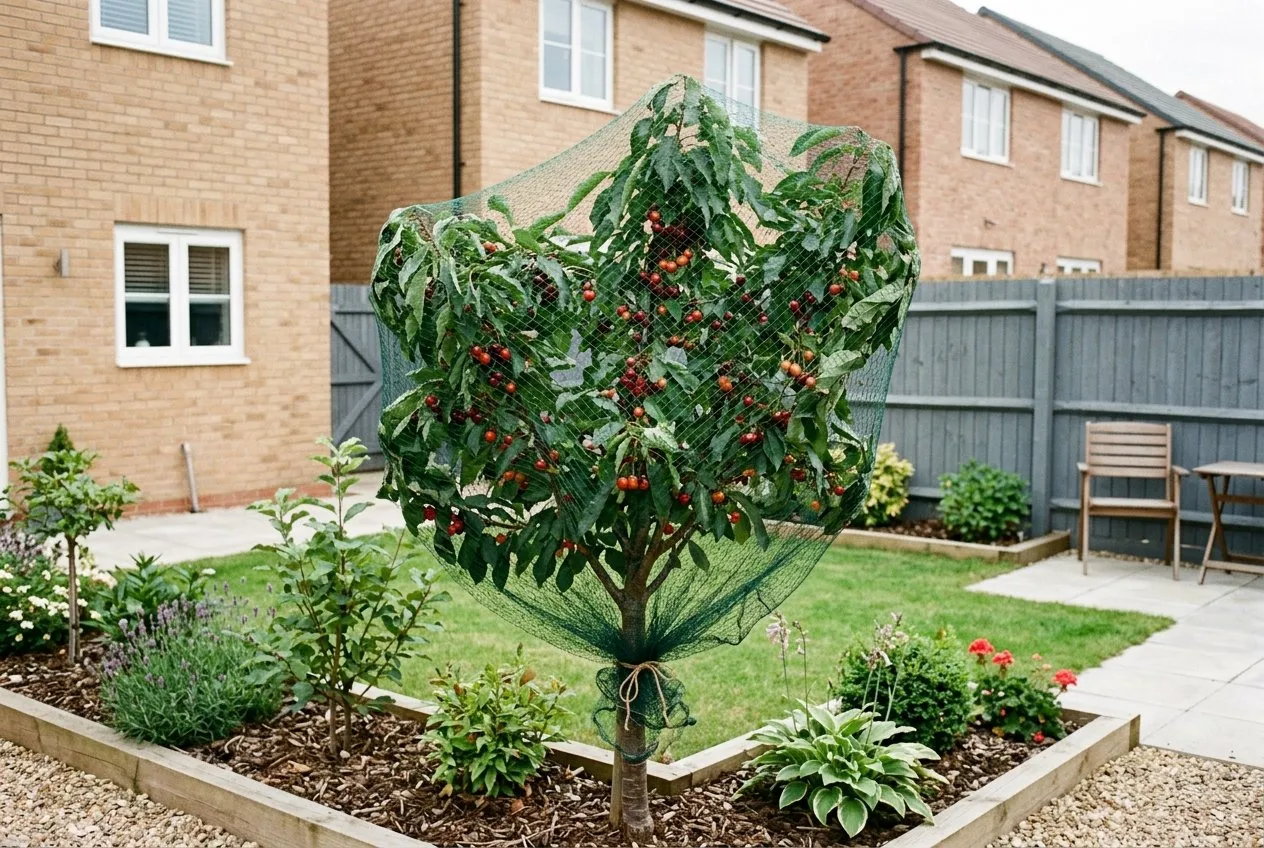
A net tied firmly at the trunk keeps birds off the ripening fruit. Check it daily so nothing gets caught.
Cherry care calendar to reduce fruit drop
| Month | Job |
|---|---|
| March | Have fleece ready as buds open |
| April | Fleece small trees on frosty nights in flower. Remove by day |
| May | Mulch after rain. Check shoot tips for blackfly |
| June | Water deeply in dry spells. Expect some June drop |
| July | Keep watering as fruit colours. Net before it ripens |
| August | Pick off rotten fruit. Prune after harvest |
| Autumn and winter | Remove any shrivelled fruit left on the tree. Don’t prune |
Prune cherries in summer, not winter. Winter cuts let in silver leaf and bacterial canker.
Common mistakes that make cherry drop worse
Panicking at the June drop. Some fallen fruitlets are normal. Keep watering steadily and leave it be.
Letting a pot dry out, then flooding it. This is the biggest cause of drop on potted cherries. Little and often keeps the compost evenly moist.
Forgetting frost at blossom time. A couple of nights under fleece can save the whole crop on a small tree.
Netting too late. Birds start on cherries before they are fully ripe. Net as soon as they begin to colour.
Pruning in winter. It risks disease. Prune after harvest in summer.
Frequently asked questions
Why are cherries falling off before they ripen?
The timing tells you why. Tiny fruit falling soon after flowering points to poor pollination or frost. Pea-sized fruit in June is the natural June drop. Fruit falling as it colours usually means the tree is short of water.
Is it normal for a cherry tree to drop fruit in June?
Yes, some June drop is normal. The tree sheds fruitlets it can’t ripen. A healthy tree still holds plenty. Only worry if nearly all the fruit falls.
Does a cherry tree need a pollination partner?
Only if it is not self-fertile. Stella, Lapins and Sweetheart crop on their own. Many older varieties need another compatible cherry flowering at the same time nearby.
Can lack of water cause cherries to drop?
Yes, dry roots are a common cause of later drop. A tree short of water while fruit swells sheds some of it. Water deeply and regularly through June and July and mulch the root area.
Does frost cause cherry fruit drop?
Yes, frost at blossom time kills flowers and tiny fruit. They then fall with no crop set. Cover small trees with fleece on frosty nights in flower and remove it by day for the bees.
How do I stop cherries dropping next year?
Fix the cause the timing points to. Grow a self-fertile variety or add a partner, fleece blossom against frost and water steadily. Net against birds and clear rotten fruit promptly.
For more fruit growing help, visit the growing fruit hub. Keep your tree healthy year-round with our guide on how to grow cherry trees.
Our team produces practical UK gardening guidance from source research, contributor records and established horticultural practice. Editorial standards are overseen by Matt W.