
Key takeaways
- Conference is the safest first pear: reliable, partly self-fertile and happy in cooler gardens
- Doyenne du Comice has the best flavour but wants a warm, sunny wall and a pollination partner
- Most pears need a second variety flowering at the same time, so check the pollination group on the label
- Conference with Concorde, or Comice with Concorde, are easy, dependable pairs
- Pick Williams' in late August, Conference in late September and late keepers like Glou Morceau in October
- Quince C rootstock or a trained espalier keeps a pear tree small enough for most gardens
The best pear tree for most UK gardens is Conference. It’s reliable, partly self-fertile and copes with our cool, damp summers. If flavour matters most, Doyenne du Comice is the treat, as long as you can give it a warm wall.
This guide helps you choose the right variety, or the right pair. Planting and pruning are covered in the pear growing guide linked at the end, and the basics for all fruit are in how to grow fruit trees.
How to choose a pear variety
Four things decide whether a pear will do well for you: pollination, flavour, picking time and tree size. Sort these out and you’re most of the way there.
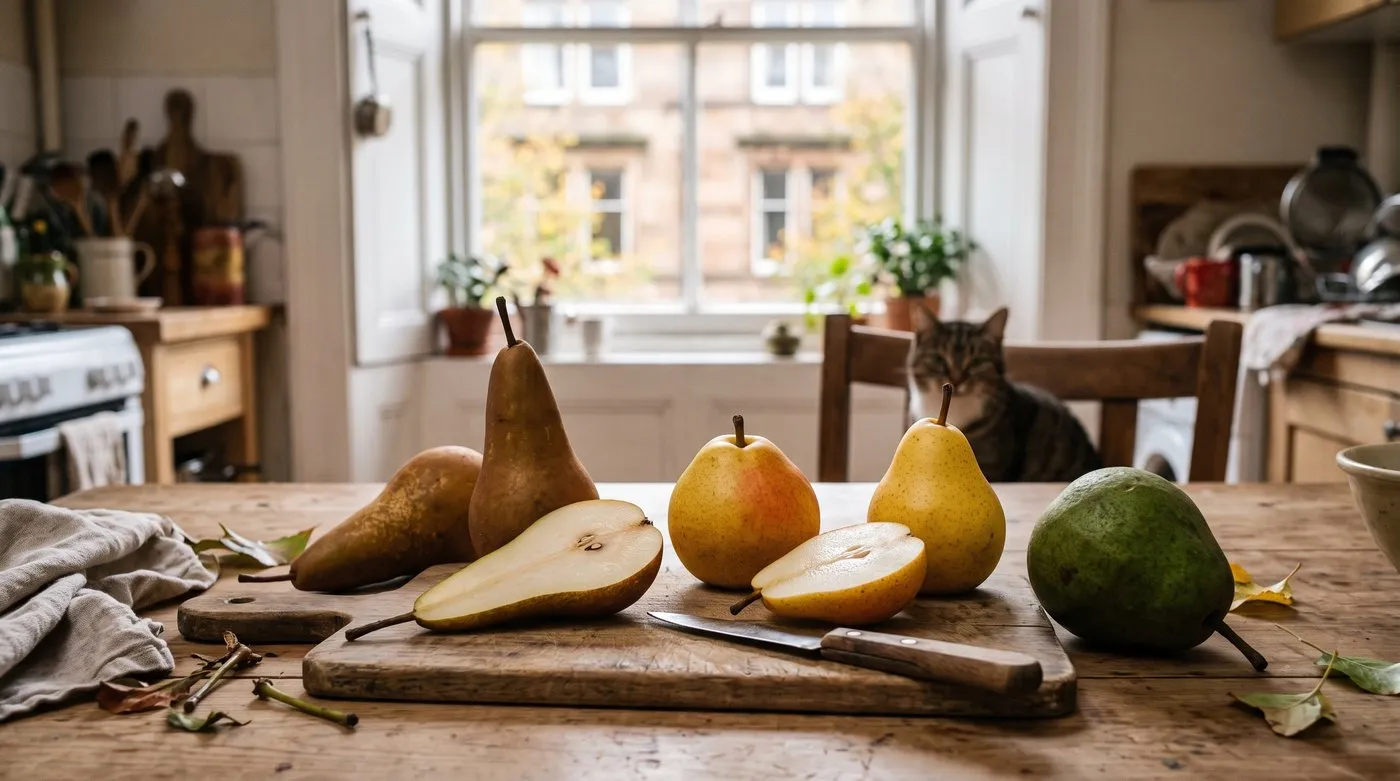
Pear varieties differ a lot in shape, skin and texture. Decide whether you want long keepers, buttery dessert pears or cooking pears.
Pollination. Most pears need a second variety flowering at the same time. Nurseries sort them into pollination groups by flowering time. Trees in the same group, or the next one along, usually pollinate each other. A pear in a neighbour’s garden can count.
Flavour and use. Most garden pears are dessert pears for eating fresh. A few, like Catillac, are cooking pears that stay hard until poached or baked.
Picking time. Early pears like Williams’ are picked in late August and don’t keep. Late pears like Glou Morceau are picked in October and ripen in store through winter.
Tree size. The rootstock, the roots the variety is grafted onto, sets the size. Quince C keeps a tree small. Quince A gives a medium tree. Quince Eline is very dwarfing and suits a large pot. The guide to fruit tree rootstocks explains the options.
The best pear varieties for UK gardens
These are reliable, widely sold pears that suit British conditions. The first four are where most people should start.
Conference
The UK’s favourite pear and the safest first tree. Long, bottle-shaped fruit with russeted, golden-brown skin and sweet, firm flesh. Pick in late September and eat from October into November. It’s partly self-fertile, crops well in cooler areas and copes with heavier soils. It can crop so heavily that thinning to one or two fruits per cluster in early summer pays off.

Conference pears are long and bottle-shaped with rough russet skin. It’s the pear to start with if you only have room for one tree.
Concorde
A cross of Conference and Doyenne du Comice, bred in Kent. It’s partly self-fertile, heavy cropping and has sweet, juicy flesh. Pick in late September or early October and eat from October onwards. Concorde is a handy partner for both its parents.
Doyenne du Comice
The flavour champion. Round, golden fruit, often with a red blush, and soft, buttery, very juicy flesh. Pick in October and eat in November. It needs warmth to ripen well, so it’s happiest as an espalier on a sunny wall in the south. It isn’t self-fertile and is prone to scab in wet years.

A warm summer brings out the golden skin and rosy blush of dessert pears like Comice. Give it your sunniest wall.
Williams’ Bon Chrétien
The classic early pear, known as Bartlett in America. Smooth, yellow-green skin and sweet, musky flesh. Pick in late August or early September, while still firm. Eat within a week or two, as it soon goes soft and mealy. It’s more prone to scab and canker than Conference.
Beth
A compact, reliable tree with small to medium, pale yellow pears. The flesh is sweet and melting. It starts cropping young, which makes it a good choice for small gardens. Pick in early September and eat straight away.
Onward
A Comice cross with similar soft, juicy flesh and a red flush. It’s an early pear, picked in early September, and doesn’t keep long. Note that Onward is a poor partner for Comice, so pair it with Conference or Concorde instead.
Beurre Hardy
A vigorous tree with russeted fruit and pink-tinged flesh with a hint of rose water. Pick in September and eat in October. It’s slow to start cropping and gets big, so it suits a larger garden.
Glou Morceau and Joséphine de Malines
Two late keepers for winter eating. Both are picked in October and ripen slowly in a cool store, often lasting into January. Glou Morceau needs a warm spot to ripen its wood and fruit. Joséphine is small but very aromatic.
Catillac
The classic cooking pear. Large, hard, green fruit that stays firm all winter and turns pink when poached. It’s a triploid, so it can’t pollinate other pears and needs two compatible partners itself. Only grow it if you have room for three trees or have neighbours with pears.
Invincible
Sold as a fully self-fertile pear for gardens with room for just one tree. It can flower a second time if late frost kills the first blossom, which gives it a better chance of a crop. It still crops better with another pear nearby.
Family pear trees
A family tree has two or three compatible varieties grafted onto one trunk, such as Conference, Williams’ and Comice. It solves pollination in one small space. Prune to keep the branches balanced, or the strongest variety can take over.
Pear varieties compared
| Variety | Pick | Eat | Self-fertile? | Best for |
|---|---|---|---|---|
| Williams’ Bon Chrétien | Late August | Within 1-2 weeks | No | An early crop |
| Beth | Early September | September | No | Small gardens |
| Onward | Early September | September | No | Comice-style flavour, earlier |
| Conference | Late September | October-November | Partly | First tree, cooler areas |
| Concorde | Late Sept-early Oct | October onwards | Partly | Partner for Conference or Comice |
| Beurre Hardy | September | October | No | Larger gardens |
| Doyenne du Comice | October | November | No | Best flavour, warm walls |
| Glou Morceau | October | December-January | No | Winter eating |
| Catillac | October | Cook through winter | No (triploid) | Poaching and baking |
Picking times are a guide for southern England. Expect fruit a week or two later in the North and Scotland. The guide to storing apples and pears covers keeping late varieties through winter.
Easy pollination pairs
The simplest way to get a good crop is to plant a proven pair. Check that both trees are in the same or neighbouring pollination groups on the nursery label.
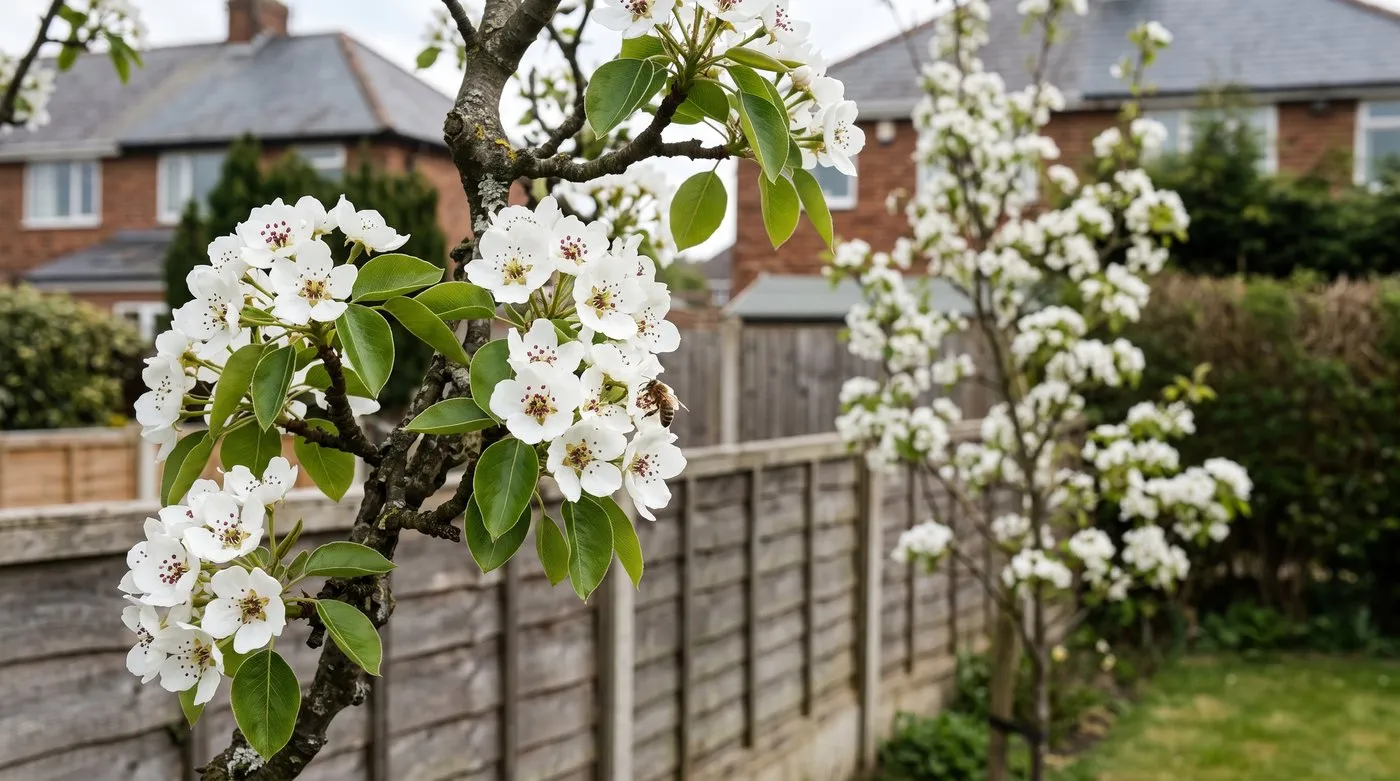
Pear blossom has dark red anthers and opens early. Two varieties flowering together means bees can carry pollen between them.
- Conference and Concorde. Both partly self-fertile, both reliable. The easiest pair for most gardens.
- Conference and Williams’. A classic pair that spreads your harvest from August to November.
- Doyenne du Comice and Concorde. Gives you the best flavour plus a dependable cropper.
- Conference and Beth. A compact pair for a smaller garden.
If you only have room for one tree, choose Conference, Concorde or Invincible, or a family tree. Pear blossom opens early, often in April, so a late frost can spoil a crop even with the right partner. A sheltered, sunny spot helps.
Best pear trees for small gardens
For a small garden, pick the rootstock and shape before the variety. Quince C keeps a free-standing tree to a manageable size. Quince Eline suits a large pot on a patio.
Pears also train beautifully flat. An espalier, with tiers of horizontal branches, fits against a sunny wall or fence and helps warmth-loving varieties like Comice ripen. Cordons, single stems planted at an angle, let you fit several varieties in a short row. A stepover, one low horizontal arm, makes a neat edge to a veg bed. The guide to training an espalier shows how, and there are more compact choices in dwarf fruit trees for small gardens.

An espalier on a sunny brick wall soaks up warmth, which helps pears ripen. It also takes up hardly any space.
Common mistakes when choosing a pear tree
- Buying one tree that needs a partner. Unless you choose Conference, Concorde or Invincible, plan for a second pear nearby.
- Pairing trees that don’t match. Onward and Comice don’t pollinate each other well, and Catillac can’t pollinate anything. Check the label.
- Growing Comice in a cold spot. It struggles in exposed northern gardens. Give it a warm wall, or grow Conference instead.
- Ignoring the rootstock. The same variety can be a compact tree or a big one. Choose Quince C for most gardens.
- Leaving pears to ripen on the tree. Tree-ripened pears often go brown and mushy in the middle. Pick them firm and ripen them indoors.

Pick pears while they’re still firm and let them finish ripening indoors. They soften from the inside, so check near the stalk.
Now you’ve chosen your variety, read the guide to growing pear trees for planting and pruning, or browse more fruit on the growing fruit hub. If your apples need a partner too, see the best apple varieties for UK gardens.
Frequently asked questions
Which is the best pear tree for a UK garden?
Conference is the most reliable pear tree for most UK gardens. It copes with cool summers and crops well. It’s partly self-fertile, so a lone tree can set some fruit, but a partner such as Concorde or Williams’ gives bigger crops.
Do I need two pear trees to get fruit?
Usually yes, because most pears need a partner flowering at the same time. Varieties in the same or a neighbouring pollination group pollinate each other. Conference and Concorde can set some fruit alone. A neighbour’s pear tree nearby may also do the job.
Which pear tastes the best?
Doyenne du Comice is widely thought the best-flavoured pear. Its flesh is soft, buttery and very juicy. It needs a warm, sheltered spot to ripen well in the UK, so grow it against a sunny wall if you can.
Which pear variety stores the longest?
Late pears like Glou Morceau and Joséphine de Malines keep longest. Pick them in October and they ripen in store through winter, often into January. Early pears such as Williams’ and Beth need eating within a week or two.
Can I grow pear trees in a small UK garden?
Yes, choose a tree on Quince C rootstock or train it flat. Espaliers, cordons and stepovers fit against a fence or along a path. A family tree, with two or three varieties grafted on one trunk, solves pollination in a small space.
Is there a self-fertile pear tree?
Yes, Invincible is sold as fully self-fertile. Conference and Concorde are partly self-fertile and set some fruit alone. All three still crop better with another pear flowering nearby.
Our team produces practical UK gardening guidance from source research, contributor records and established horticultural practice. Editorial standards are overseen by Matt W.


