Key takeaways
- Victoria is the classic self-fertile plum, picked in late August, but it's prone to silver leaf and snapped branches
- Opal and Czar give an early crop in late July or August, and Marjorie's Seedling carries on into October
- Many popular plums are self-fertile, so one tree is enough, but gages and some older plums crop better with a partner
- Cambridge Gage, Denniston's Superb and Oullins Gage give the sweet, honeyed gage flavour
- Czar and Marjorie's Seedling are good choices for colder or frost-prone gardens
- Pixy rootstock keeps a plum tree small enough to net and pick from the ground
The best plum tree for most UK gardens is Victoria. It’s self-fertile, crops heavily and ripens in late August. Add an early or late variety and you can be picking plums from late July into October.
This guide helps you choose the right variety. Planting, pruning and feeding are covered in the plum growing guide linked at the end.
How to choose a plum variety
Four questions will narrow down the choice:
- Do you have room for one tree or two? Many plums are self-fertile, which means they set fruit with their own pollen. If you only want one tree, pick one of these.
- When do you want to pick? Early plums ripen in late July and August. Late ones carry on into October.
- Eating, cooking or both? Dessert plums and gages are sweet enough to eat fresh. Cooking plums are sharper but make great crumbles and jam.
- How much space have you got? The rootstock, the roots the tree is grafted onto, decides its size. Pixy keeps a plum small. St Julien A gives a medium tree. The guide to fruit tree rootstocks explains more.
Plums flower early, often in April, so late frosts can spoil a crop. If your garden is cold or in a frost pocket, choose a later-flowering or hardier variety such as Czar or Marjorie’s Seedling.
Best plum varieties compared
| Variety | Type | Self-fertile? | Pick | Best for |
|---|---|---|---|---|
| Opal | Dessert | Yes | Late July to early August | An early crop |
| Czar | Cooking | Yes | Early August | Cold gardens, stewing |
| Denniston’s Superb | Gage | Yes | Mid-August | Easy gage flavour |
| Oullins Gage | Gage | Yes | Mid to late August | Large golden gages |
| Victoria | Dual | Yes | Late August to early September | All-round use |
| Pershore Yellow Egg | Cooking | Yes | Late August | Jam |
| Cambridge Gage | Gage | Partly | Late August to September | Best gage flavour |
| Stanley | Dual | Yes | September | Eating, cooking, drying |
| Marjorie’s Seedling | Dual | Yes | Late September to October | A late crop |
Picking times are a guide for southern England. Expect fruit a week or two later in the North and Scotland.

Ripe plums come away easily with a gentle twist. Most varieties are ready over two or three weeks, so pick in a few goes.
Victoria and other easy self-fertile plums
Victoria is the UK’s favourite plum. It’s self-fertile and crops heavily, with pinky-red, sweet, juicy fruit in late August. It’s good fresh, cooked and in jam. The downsides: it’s prone to silver leaf and bacterial canker, and heavy crops can snap branches. Thin the fruit in early summer to protect the tree.
Opal is a reliable early dessert plum with reddish-purple fruit in late July or early August. It’s self-fertile and suits small gardens.
Czar is a hardy cooking plum with dark purple fruit in early August. It copes well with colder gardens and late frosts, which makes it a good choice in the North.
Stanley is a self-fertile plum with dark blue fruit in September. It’s good fresh, cooked or dried as prunes.
Marjorie’s Seedling is the late one. Its dark purple fruit ripens from late September into October. It flowers late, so it often dodges spring frosts. It’s good cooked, and sweet enough to eat fresh when fully ripe.

A self-fertile plum like Victoria can crop very heavily on its own. Thin the fruitlets in early summer so the branches don’t snap.
Best gages for flavour
Gages are small, round plums with a rich, honeyed sweetness. They’re usually green or yellow and are many people’s favourite for eating fresh.
Cambridge Gage is the classic, with green fruit and superb flavour. It’s only partly self-fertile, so it crops better with another plum flowering nearby. Denniston’s Superb is an easier gage: self-fertile and reliable. Oullins Gage has large golden fruit, is self-fertile and flowers late, which helps in frosty spots.
Gages like a warm, sheltered spot and usually crop less heavily than plums. A sunny wall is ideal. The guide to growing greengages covers them in more detail.

Small green gages next to dark blue plums. Gages are sweeter and crop less, while late blue plums keep the harvest going into autumn.
Best plums for cooking and jam
Czar and Marjorie’s Seedling are two of the most useful cooking plums. Both are self-fertile and heavy-cropping. Pershore Yellow Egg is a traditional yellow plum that makes lovely golden jam. Belle de Louvain is another old favourite with big fruit for cooking.
If you only have room for one tree, Victoria cooks well too, so it covers both jobs. For a sharp, rich fruit for jam and gin, consider a damson. The guide to growing damsons covers Merryweather and other good choices. Surplus plums also dry well for winter.
Plums for a long picking season
A single plum tree gives fruit for two or three weeks. Two or three trees with different picking times spread the harvest out. Here’s a simple trio:
| Season | Variety | Pick |
|---|---|---|
| Early | Opal or Czar | Late July to early August |
| Mid | Victoria | Late August to early September |
| Late | Marjorie’s Seedling | Late September to October |
All three are self-fertile, so each will crop on its own. Plums that flower at the same time also help pollinate each other, which can boost crops.
Best plums for small gardens
For a small garden, pick a self-fertile variety on Pixy rootstock. It stays small enough to net against birds and to pick without a tall ladder. Victoria, Opal and Czar all do well on Pixy.
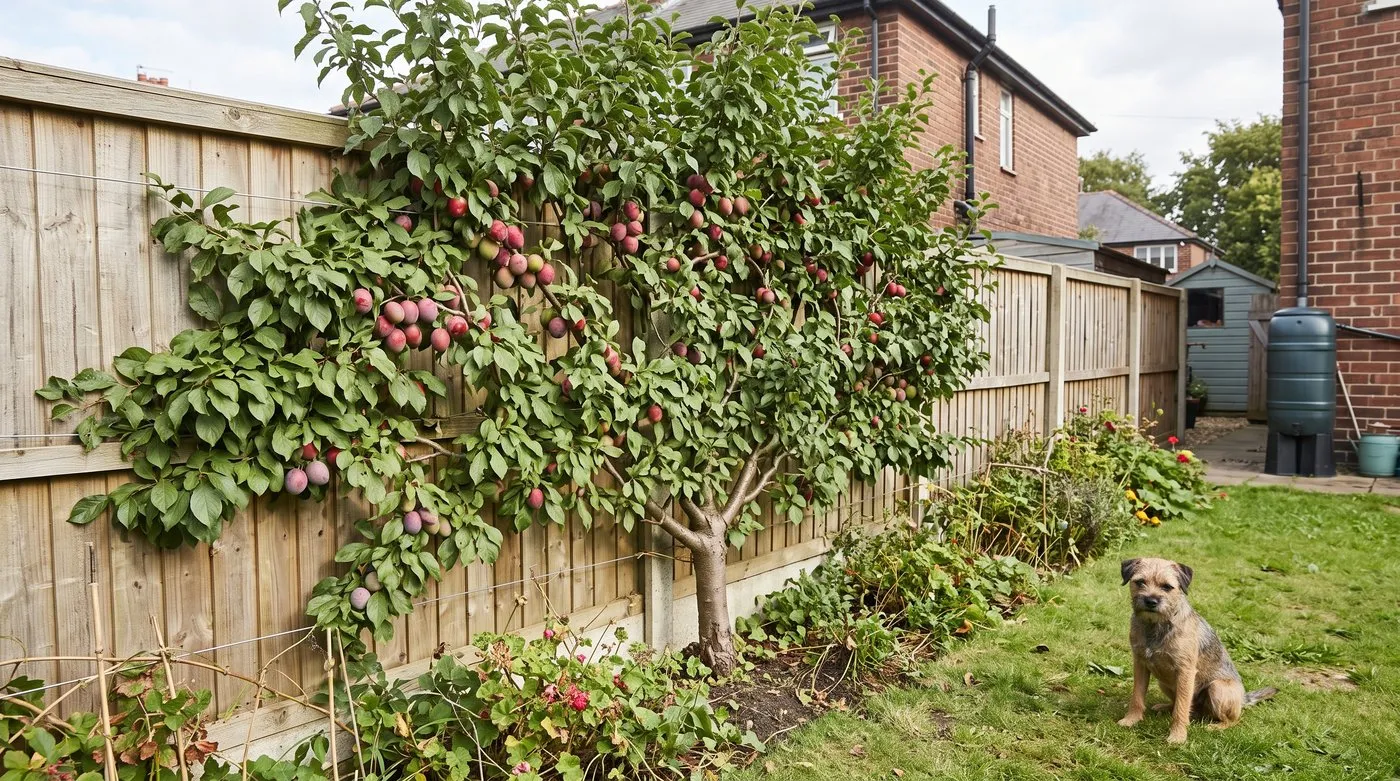
A fan-trained plum takes up hardly any border space, and the sunny fence helps the fruit ripen.
Plums can also be fan-trained flat against a sunny wall or fence. The warmth helps ripen the fruit, and it’s especially good for gages. The guide to fan training fruit trees shows how.
Common mistakes when choosing a plum tree
- Buying a gage on its own. Cambridge Gage crops better with a partner. Choose Denniston’s Superb or Oullins Gage if you only have room for one.
- Ignoring frost. In a cold garden, early-flowering plums lose their blossom to late frosts. Czar, Marjorie’s Seedling and Oullins Gage are safer bets.
- Choosing a big rootstock for a small space. A tree you can’t net or reach is a tree for the blackbirds. Choose Pixy for small gardens.
- Pruning in winter. Plums are prone to silver leaf, a disease that gets in through winter pruning cuts. Prune in summer, in dry weather. The guide to silver leaf disease shows what to look for.
- Leaving every fruit on a heavy crop. Overloaded branches snap, and the tree may skip a year of cropping. Thin fruitlets in early summer.

Prune plum trees in summer, on a dry day. Summer cuts heal quickly, which helps keep silver leaf out.
Now you’ve chosen your variety, read the full guide to growing plum trees for planting and pruning, or browse more fruit on the growing fruit hub.
Frequently asked questions
What is the best plum tree variety to grow in the UK?
Victoria is the best all-round plum tree for most UK gardens. It’s self-fertile, crops heavily and ripens in late August. The fruit is good fresh, cooked or made into jam. Thin heavy crops, as Victoria’s branches can snap.
Are plum trees self-fertile?
Many popular plums are self-fertile, so one tree will crop alone. Victoria, Opal, Czar, Marjorie’s Seedling, Stanley and Pershore Yellow Egg all are. Some gages and older varieties need a partner that flowers at the same time.
When do UK plums ripen?
UK plums ripen from late July to October, depending on the variety. Opal and Czar come first, Victoria in late August and Marjorie’s Seedling last, from late September. An early, mid and late tree gives weeks of picking.
Which plum is best for cooking?
Czar and Marjorie’s Seedling are two of the best cooking plums. Both are self-fertile and crop well. Pershore Yellow Egg is a traditional jam plum. Victoria also cooks well if you want one tree for everything.
What is the best plum tree for a small garden?
Choose a self-fertile variety on Pixy rootstock. Victoria, Opal or Czar on Pixy stays small enough to net and pick from the ground. A fan-trained plum on a sunny wall or fence takes up even less space.
What is the difference between a plum and a gage?
A gage is a type of plum with small, round, very sweet fruit. Most are green or yellow when ripe. Gages usually crop less heavily than plums and like a warm, sheltered spot.
Our team produces practical UK gardening guidance from source research, contributor records and established horticultural practice. Editorial standards are overseen by Matt W.