Key takeaways
- Choose ripe but firm, sweet fruit such as Victoria plums, gages and apricots
- Halve and stone the fruit, then dry it cut side up on a rack
- Dry at about 57°C in a dehydrator, or 60-70°C in an oven with the door ajar
- Plum halves often take 12 hours or more, so be patient
- They're done when leathery and bendy, with no juice when squeezed
- Condition in a jar for a week, then store somewhere cool and dark
Drying stone fruit turns a glut of plums, gages or apricots into sweet, chewy halves that keep for months. Halve and stone ripe but firm fruit, lay it cut side up and dry it slowly in a dehydrator or low oven. It takes longer than drying apple rings, but there’s very little hands-on work.
Apple and pear slices need slightly different treatment, covered in drying apples and pears. For a wider look at drying herbs, fruit and veg, see drying garden produce.
Which stone fruits dry best?
Sweet, ripe but firm fruit dries best. Over-ripe fruit falls apart and drips. Under-ripe fruit dries sour.
- Plums: Victoria is the classic, sweet and easy to stone. Most dessert plums dry well.
- Greengages: Cambridge Gage and other gages are very sweet and dry to rich, chewy halves. The guide to growing greengages covers the trees.
- Damsons: dry to dark, tart fruit that’s great in cooking. The stones cling, so many people dry them whole. See growing damsons for varieties.
- Apricots: home-grown varieties such as Tomcot and Goldcot dry beautifully, though darker than shop-bought.
- Peaches and nectarines: dry well in slices. Peel peaches first, as the fuzzy skin dries tough.
- Cherries: stone them first. Sour Morello cherries are especially good for baking.

Halving plums is a good job to share. Cut round the seam, twist the halves apart and flick out the stone.
How to prepare plums and apricots for drying
Wash and sort. Rinse the fruit and pat it dry. Put any bruised, split, mouldy or wasp-eaten fruit on the compost heap.
Halve and stone. Run a small knife round the natural seam, twist the halves apart and pop out the stone. Apricots and Victoria plums come apart easily. Damsons and some gages cling, so a knife tip helps.
Slice big fruit. Large peaches and nectarines dry faster in thick slices than in halves.
Dip apricots and peaches. They brown quickly once cut. A short dip in water with a good squeeze of lemon juice slows this. Plums, gages and damsons don’t need it.
Drain well. Let the fruit drain on a clean tea towel for a few minutes before it goes on the trays. Wet fruit takes longer to dry.
Should you blanch stone fruit before drying?
Halves don’t need blanching. They dry from the cut side, and the skin gives the half its shape.
Whole plums and damsons do. Their waxy skin holds the moisture in. Dip whole fruit in boiling water for 30-60 seconds, then cool it in cold water. This cracks the skin, which is known as checking, so the fruit can dry. Whole fruit still takes much longer than halves.

A quick blanch helps whole plums and damsons dry by cracking their waxy skins. Halves can go straight onto the trays.
How to dry stone fruit in a dehydrator
A dehydrator is the easiest way to dry a big batch, and it leaves your oven free.
- Set it to about 57°C.
- Lay the halves cut side up in a single layer, with gaps between them.
- Dry until done. Plum halves often take 12 hours or more, and large or juicy fruit can take a day.
- Swap the trays round now and then so they dry evenly.
- Start checking the smaller pieces first, and take them off as they finish.
Don’t turn the heat up to hurry things along. Too hot and the outside seals while the inside stays wet.

Mixed trays are fine, but smaller pieces finish first. Lift them off as they’re done and leave the rest in.
How to dry plums in the oven
A low oven works well if you don’t have a dehydrator.
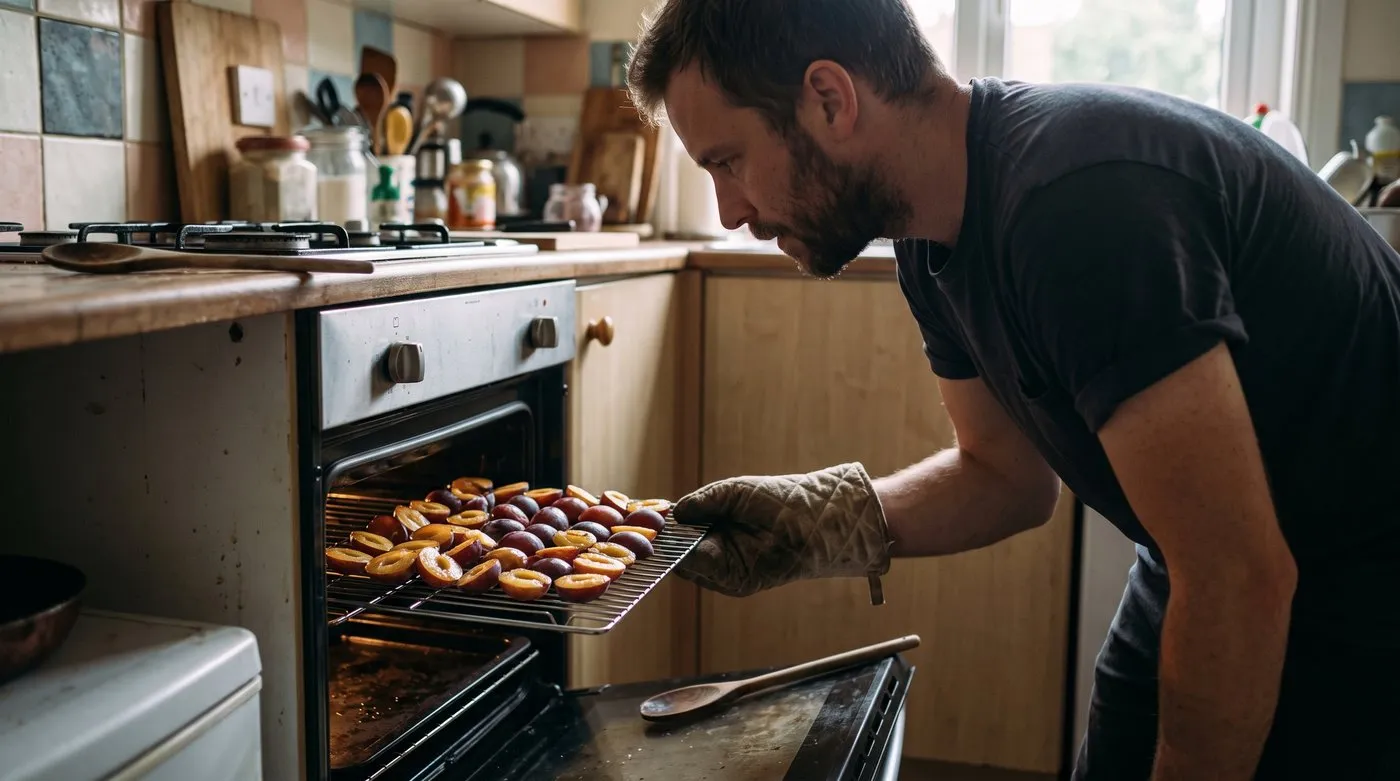
A wire rack lets air reach underneath the halves. The tray below catches any drips.
- Set the oven to 60-70°C.
- Lay the halves cut side up on a wire cooling rack, set over a baking tray to catch drips.
- Prop the door open a little with a wooden spoon so steam can escape.
- Swap the racks round every couple of hours.
- Expect it to take many hours. Big batches may need two sessions, cooled overnight in between.
The rack lets air reach the underside so the halves dry evenly. A flat tray traps moisture under the fruit.
Can you sun-dry fruit in the UK?
Not reliably. Our summers are usually too damp and cool, and fruit can go mouldy before it dries. Use a dehydrator or oven instead. A sunny windowsill can help finish fruit that’s nearly done, but it won’t do the job alone.
How to tell when dried stone fruit is ready
Let a piece cool for a few minutes, then bend and squeeze it.
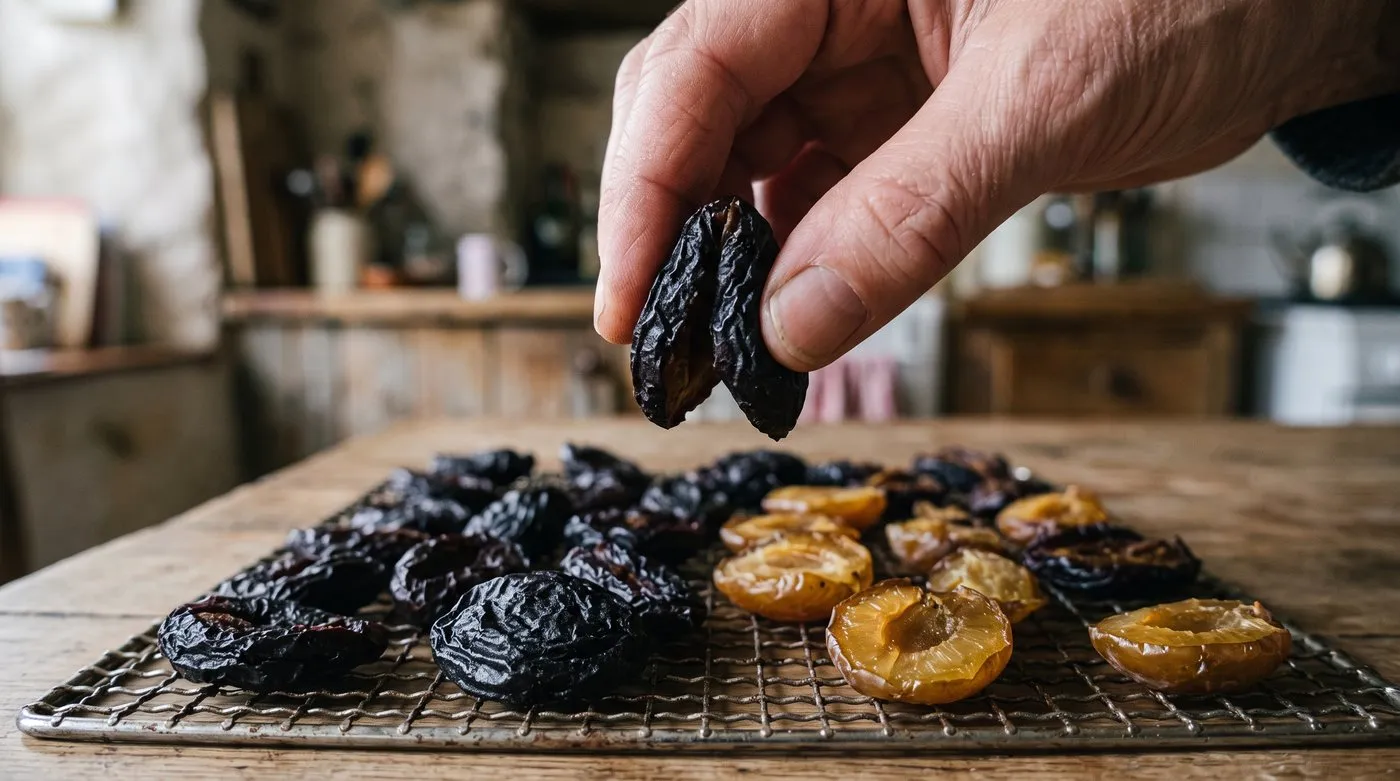
A finished half bends like soft leather and leaves your fingers dry. Sticky or juicy pieces need longer.
- Done: leathery and bendy, like a soft raisin, with no juice when squeezed
- Too dry: hard and brittle. Still fine for baking
- Not done: sticky, soft in the middle, or juice comes out. Give it longer
Test the biggest pieces from the middle of the tray. They are always the last to finish.
Conditioning and storing dried stone fruit
Some pieces always finish a little wetter than others. Conditioning evens out the moisture before you store them.
- Let the fruit cool completely.
- Pack it loosely into a clean, dry glass jar, about two-thirds full.
- Seal it and shake the jar once a day for a week.
- If you see condensation on the glass, dry the fruit for a little longer and start again.
Once conditioned, store the fruit in sealed glass jars or vacuum-sealed bags somewhere cool, dark and dry. It keeps for several months. Check the jars now and then, and throw away any batch that smells musty or shows mould.

Label jars with the fruit and the year. Damsons that won’t stone easily can always become damson cheese instead.
Ways to use dried plums, gages and apricots
- Breakfast: chop into porridge, muesli or yoghurt
- Baking: soak in warm tea or apple juice, then add to fruit cakes, scones and teabread
- Christmas: soak in a splash of brandy overnight for stollen or Christmas cake
- Savoury dishes: add dried damsons or apricots to tagines and slow-cooked stews
- Compote: simmer with apple juice and a cinnamon stick for a winter pudding
To soften dried fruit, cover it with hot water or juice and leave it for 20-30 minutes.
Common mistakes when drying stone fruit
Drying over-ripe fruit. Soft fruit collapses and drips. Use ripe but firm fruit.
Turning the heat up. The outside hardens and traps moisture inside. Stick to about 57°C in a dehydrator.
Crowding the trays. Air needs to get round every piece. Leave gaps.
Drying whole plums without blanching. The skin holds the water in, and they can take days. Halve them, or blanch them first.
Skipping conditioning. One damp piece can spoil a jar. Give every batch a week.
For other ways to deal with too many plums, the guide to freezing fruit is quicker, and how to use up a garden glut has more ideas.
Frequently asked questions
Which UK stone fruits are best for home drying?
Sweet plums, gages and apricots dry best. Victoria plums and Cambridge Gage are reliable choices from UK gardens. Damsons dry well too but are fiddly to stone, so many people dry them whole. Sour Morello cherries make lovely tangy dried cherries for baking.
Do I need a dehydrator or will a kitchen oven work?
Both work, but a dehydrator is easier for big batches. Set an oven to 60-70°C and prop the door open a little so moisture can escape. A dehydrator holds a steady, gentle heat and frees up your oven. Halved fruit takes many hours either way.
Do I need to blanch plums before drying?
Not if you halve them. Halves dry from the cut side. If you dry plums or damsons whole, dip them in boiling water for 30-60 seconds first, then cool them. This cracks the waxy skin so moisture can escape.
Will dried apricots go brown without sulphites?
Yes, home-dried apricots go darker than shop-bought ones. Commercial dried apricots are treated with sulphur dioxide to keep them bright orange. A dip in lemon water before drying helps a little. The colour is darker, but the flavour is lovely.
How long do home-dried stone fruits keep?
Several months in sealed jars somewhere cool, dark and dry. Condition them for a week before storing so the moisture evens out. Check the jars now and then. Throw away any fruit that smells musty or shows mould.
Now your plums are dried, see the best UK plum tree varieties if you’re planting for future harvests, or browse more how-to guides.
Our team produces practical UK gardening guidance from source research, contributor records and established horticultural practice. Editorial standards are overseen by Matt W.