
Key takeaways
- Damsons are tougher than dessert plums and cope with heavier, wetter soil and cooler sites
- Merryweather and Shropshire Prune are self-fertile, so one tree will crop on its own
- St Julien A rootstock gives a tree about 4m tall; Pixy keeps it nearer 2.5m
- Prune established trees in summer only, as silver leaf gets in through winter cuts
- Pick in September when the fruit is soft and fully coloured, then cook, freeze or steep in gin
Damsons are the tough little plum of the British garden. They crop in damp summers when dessert plums sulk, cope with heavier soil and give you a pile of sharp, dark fruit for jam and gin. Plant a bare-root tree in winter, prune it in summer and leave it to get on with it. This guide covers everything from picking a variety to filling the freezer.
What is a damson?
A damson is a small, oval, dark blue plum with a dusty pale bloom and sharp, greenish flesh. Its botanical name is Prunus insititia, a close cousin of the dessert plum.
Eaten raw, most damsons will make your face scrunch up. Cooked with sugar or steeped in gin, they have a rich, spicy flavour no other fruit quite matches. Bullaces are close relatives with rounder, even sharper fruit that ripens later in autumn.
If you’d rather have sweet fruit to eat straight from the tree, our guide to growing plum trees or growing greengages is a better fit. Choose a damson when you want a hardy, easy tree and fruit for the kitchen.

That pale, dusty bloom on dark blue skin is the classic damson look. It rubs off as you handle the fruit.
Best damson varieties for UK gardens
Three varieties cover almost every garden. Pick by flavour, crop size and whether you have room for one tree or two.
| Variety | Fruit | Ripens | Pollination | Best for |
|---|---|---|---|---|
| Merryweather | Large, almost plum-sized | September | Self-fertile | Single-tree gardens |
| Shropshire Prune | Small, oval, rich flavour | September to October | Self-fertile | Gin, damson cheese |
| Farleigh | Small, heavy crops | September | Partly self-fertile | Jam, chutney, a hedge or windbreak |
Merryweather is the easy choice for a small garden. One tree crops on its own, and the bigger fruit is just about sweet enough to eat raw when fully ripe.
Shropshire Prune, also sold as Prune Damson, is the one for flavour. The fruit is small, but cooked it is rich and spicy, which is why it’s a favourite for gin.
Farleigh is a reliable cropper with a compact, bushy habit, and it is often planted in hedges. It sets more fruit with another damson or plum flowering nearby.
In Cumbria you’ll also find the Westmorland damson, the traditional fruit of the Lyth Valley. Bullaces such as ‘Langley Bullace’ ripen later and stretch the season into autumn.

Damsons fruit in thick clusters along the branches. A good year can bend the branches, so prop them if they start to sag.
Which rootstock should you choose?
The rootstock decides how big the tree grows, not the variety. Check the label when you buy.
- St Julien A: the usual choice for gardens. A tree about 4m tall and wide that copes with heavy, wet soil.
- Pixy: dwarfing, for a tree around 2.5m. Good for small gardens, pots and wall-trained fans. It needs better soil and a stake for life.
- VVA-1: less vigorous than St Julien A and handy for smaller gardens, though fewer nurseries sell it.
Avoid Brompton and Myrobalan rootstocks unless you have a big space, as they make large trees. The guide to fruit tree rootstocks explains all the options in plain terms.
Where to plant a damson tree
Damsons are less fussy than most fruit trees. They grow in most soils, including heavier clay, as long as the ground doesn’t sit waterlogged in winter. A deep, moisture-holding loam is ideal.
Give the tree a sunny or partly sunny spot. A south- or west-facing site ripens fruit a little earlier and sweeter. The one place to avoid is a frost pocket, a dip where cold air settles on still nights. Damsons flower early in spring, and a hard frost on the blossom can wipe out a year’s crop.
How to plant a bare-root damson
Plant bare-root trees between November and March, when the soil isn’t frozen or waterlogged. Pot-grown trees can go in at any time if you keep them watered.
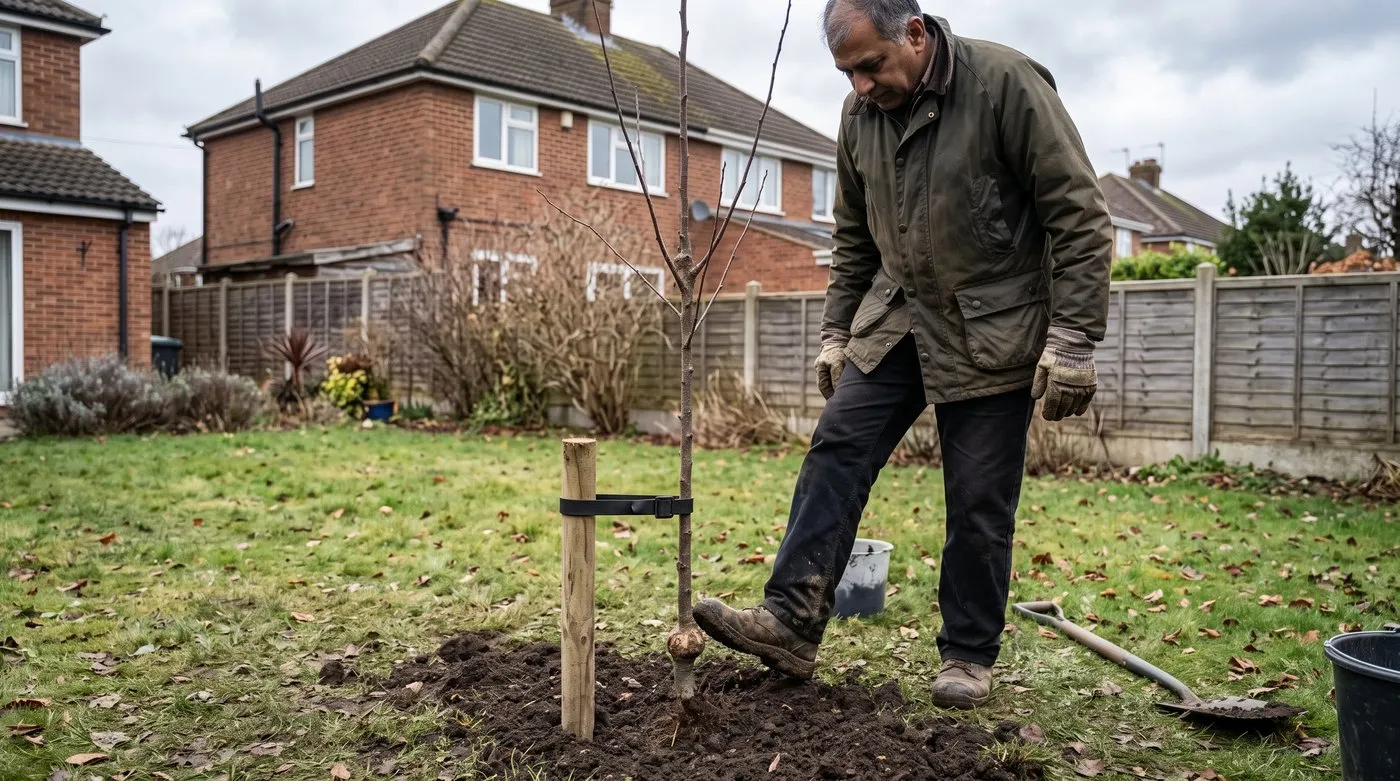
Firm the soil gently and keep the knobbly graft union well above ground. A short stake holds the tree steady while the roots settle.
- Dig a hole wider than the roots but no deeper. Loosen the soil at the base and sides.
- Knock in a short stake on the side the wind usually comes from.
- Set the tree at the same depth it grew in the nursery. Keep the graft union, the knobbly join near the base, well above soil level.
- Spread the roots out and backfill with the soil you dug out. Don’t add compost or fertiliser to the hole.
- Firm the soil gently with your heel and tie the trunk to the stake with a tree tie.
- Water well, then mulch a 1m circle with compost or bark, kept clear of the trunk.
Water in dry spells through the first two summers. Loosen the tree tie as the trunk thickens. Our step-by-step guide to planting bare-root trees has more detail.
How and when to prune damsons
Prune established damsons in summer, never in winter. Damsons, like all plums, catch silver leaf and bacterial canker. Both get into fresh cuts most easily in autumn and winter. In summer the tree is growing strongly and cuts heal fast.
Young trees are shaped in early spring as the buds open. In the first few years, pick three or four well-spaced main branches to form an open framework. Shorten them by about a third and remove any growing into the centre.
Established trees need little pruning. In June to August, cut out dead, damaged and crossing branches, and thin crowded growth. Damsons fruit best when left a bit natural, as hard pruning just triggers a mass of leafy shoots.
For thicker branches, use a pruning saw rather than secateurs. Undercut first, then cut from above further out, so the falling branch doesn’t tear the bark. Then trim the stub back to just outside the swollen collar where the branch meets the trunk.

Summer pruning while the tree is in full leaf is the safest time for damsons. Cuts heal quickly and silver leaf has less chance to get in.
Common damson pests and diseases
Damsons are generally hardy, but a few problems are worth knowing.
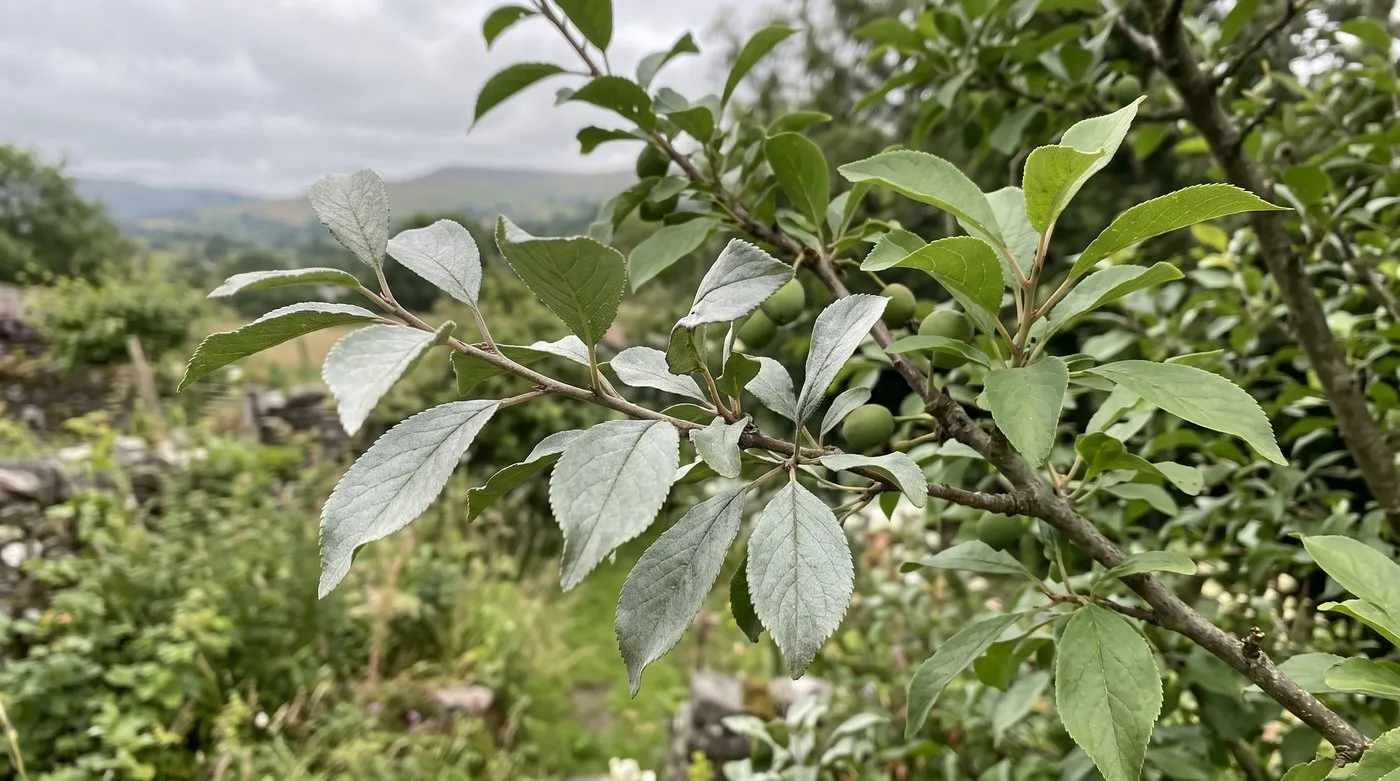
A metallic silvery sheen on the leaves is the first sign of silver leaf. Cut affected branches out in summer, back into clean wood.
- Silver leaf: leaves take on a silvery sheen and branches die back. Cut affected branches back to about 15cm below any brown staining in the wood, in summer. Our guide to spotting and stopping silver leaf shows what to look for.
- Brown rot: fruit turns brown with rings of pale fungal spots, then shrivels on the tree. Pick off rotten and shrivelled fruit as soon as you see it, so it can’t infect next year’s crop. See the guide to brown rot on stone fruit.
- Plum sawfly: grubs tunnel into young fruit, which drops early in summer. Pick up and bin fallen fruit to break the cycle.
- Aphids: curled, sticky leaves in late spring. Squash small colonies and let ladybirds and hoverflies do the rest. If you need a spray, use an approved product for that use, following the label.
- Bullfinches: they strip fruit buds in late winter, mainly near woodland. Netting a small tree over winter is the answer. Bullfinches are protected, so deter them rather than harm them.
When to harvest damsons
Damsons ripen from late August into October, depending on variety and how sunny your garden is. Pick when the fruit is fully dark, gives slightly when pressed and pulls off easily.
Taste one first. A ripe damson is still sharp, but it shouldn’t taste green. Pick into shallow trays rather than deep buckets to avoid bruising. Fruit that drops naturally is fine to use if you collect it daily.

A basket of ripe damsons, a pan and a jar or two: damson season in a nutshell.
What to do with a damson glut
Damsons are a cook’s fruit, and they’re brilliant for preserving.
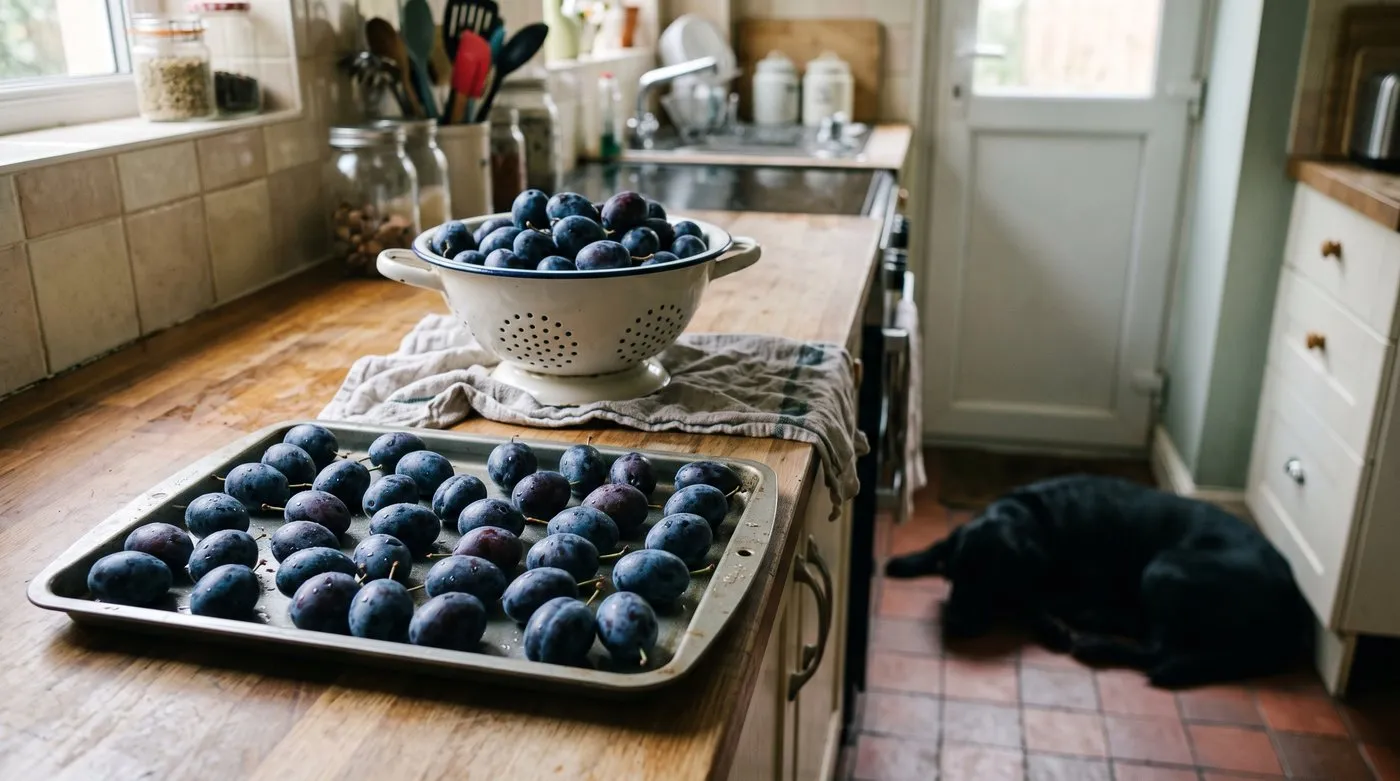
Freeze damsons whole on a tray, then bag them up. The stones are much easier to remove after cooking.
- Freeze them whole. Spread on a tray, freeze, then bag. The stones come out easily after cooking. Our guide to freezing fruit covers the method.
- Jam. Damsons set well. The stones float to the top as it cooks and lift off with a slotted spoon.
- Damson gin. Prick the fruit, add sugar and gin, and leave for at least three months, shaking now and then.
- Damson cheese. A firm, sliceable fruit paste that’s lovely with cheese or cold meat.
- Crumbles and chutneys. Damsons hold their flavour well under sugar and spice.
Damson growing calendar
| Month | What to do |
|---|---|
| November to March | Plant bare-root trees. Remove any shrivelled fruit left on the branches |
| Late winter | Net small trees if bullfinches strip the buds |
| March to April | Shape young trees as the buds open. Blossom appears |
| May to June | Watch for aphids. Water young trees in dry spells |
| June to August | Summer prune established trees. Pick up fallen fruit |
| Late August to October | Harvest. Freeze, cook or preserve the crop |
Common mistakes with damsons
- Pruning in winter. It invites silver leaf and canker. Wait for summer.
- Planting in a frost pocket. Early blossom gets frosted and the crop is lost.
- Planting too deep. Keep the graft union well above the soil.
- Leaving rotten fruit on the tree. It carries brown rot into next year.
- Over-pruning. Hard cuts give leafy shoots and fewer fruit.
Ready to plan your next fruit tree? Our guide to the best UK plum tree varieties helps you pick a sweet partner for your damson. You’ll find more fruit guides in our fruit growing hub.
Frequently asked questions
What is the difference between a damson and a plum?
Damsons are smaller, oval and much sharper than dessert plums. The skin is dark blue with a dusty bloom, and the flesh usually needs cooking with sugar. The trees are hardier too, and often crop more reliably than dessert plums in cool, wet areas.
Are damsons self-fertile?
Most damsons are self-fertile and crop well on their own. Merryweather and Shropshire Prune are both reliable as single trees. Farleigh is only partly self-fertile and crops better with another damson or plum flowering nearby.
When is the best time to prune a damson tree?
Prune established damsons in summer, while the tree is in full leaf. Shape young trees in early spring as the buds open. Avoid winter pruning, because silver leaf and bacterial canker get into fresh cuts most easily in autumn and winter.
How long until a damson tree fruits?
Expect the first fruit three or four years after planting. Pixy trees often start a little sooner than St Julien A. Crops then build steadily as the tree matures, and a healthy damson can keep cropping for decades.
Can you grow a damson in a pot?
Yes, on Pixy rootstock in a large pot of at least 45cm across. Use a loam-based compost such as John Innes No. 3 and water often in summer. Expect a smaller crop than from a tree in the ground.
What can you make with damsons?
Damsons make excellent jam, damson gin and damson cheese, a firm fruit paste. They also suit crumbles, chutneys and sharp sauces for meat. They freeze well whole, so a glut can be used through winter.
Our team produces practical UK gardening guidance from source research, contributor records and established horticultural practice. Editorial standards are overseen by Matt W.


