Key takeaways
- Biennial bearing means a heavy crop one year and very little the next
- A big crop stops the tree forming enough flower buds for the following year
- Bramley, Blenheim Orange and Laxton's Superb apples are especially prone
- In a heavy year, remove the blossom from about half the spurs in spring
- Thin fruitlets in June to one per cluster, about 10-15cm apart
- A late frost or a very dry summer often starts the cycle off
Biennial bearing is when a fruit tree crops heavily one year and barely at all the next. One autumn the branches bend under more apples than you can use. The next, there’s almost nothing. The tree isn’t ill. It has simply fallen into a two-year rhythm, and you can coax it out again by thinning in the heavy year.
What is biennial bearing?
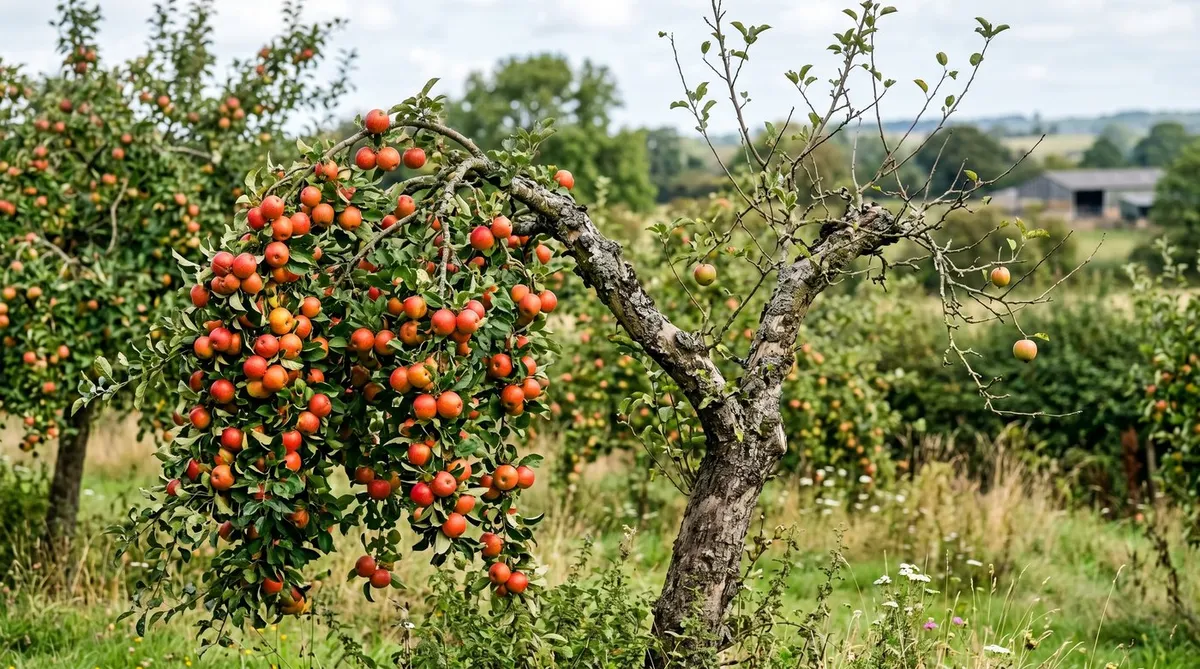
Biennial bearing, also called alternate bearing, is when a fruit tree swings between a big crop and a tiny one. The heavy year is called the on year, and the light year the off year.
It’s mostly an apple problem. Pears and plums can do it too, but less often. It’s most noticeable on older, larger trees.
Why fruit trees skip a year
A fruit tree forms next year’s flower buds in early summer, while it’s also growing this year’s fruit. The seeds in the developing fruit send out signals that hold back flower bud formation. So a tree carrying a huge crop forms very few flower buds for next year.
The next spring there’s little blossom, and so little fruit. With nothing much to ripen, the tree then forms masses of flower buds, and the following year is another glut. Round it goes.
That’s why feeding alone won’t fix it. The tree isn’t short of food. It needs fewer fruits in the on year, and it needs them removed early, while next year’s buds are still forming.
Which apples and pears are most prone?
Some apple varieties are well known for biennial bearing. Bramley’s Seedling, Blenheim Orange and Laxton’s Superb are the classic examples. Many other older varieties alternate to some extent, especially after a bad frost.
If you’re planting a new tree and want steady crops, read the nursery description, which often mentions it. The guide to the best apple varieties for UK gardens can help you choose. Plums can fall into the pattern too, which the guide to plum tree varieties touches on.
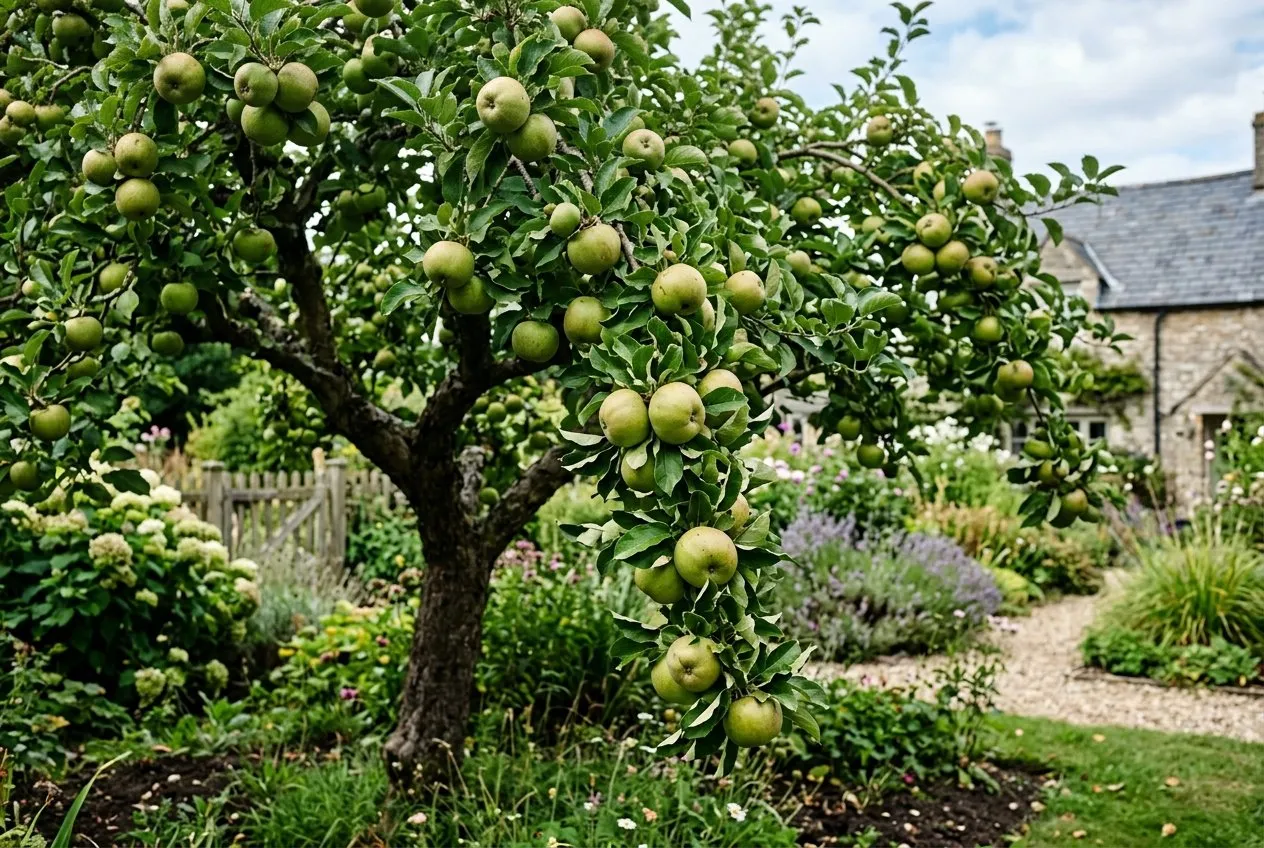
Bramley is one of the apples most prone to biennial bearing. A crop this heavy needs thinning, or next year may be almost empty.
How to break the cycle by thinning
Thinning in the on year is the way to break biennial bearing. There are two chances to do it.
Blossom thinning in spring
In an on year, the tree will be covered in blossom. As the flowers open, remove the blossom from about half the spurs, the short, stubby fruiting shoots. Rub or snip off whole flower clusters, spreading the thinning evenly across the tree. It feels brutal, but those spurs are then free to form flower buds for next year.
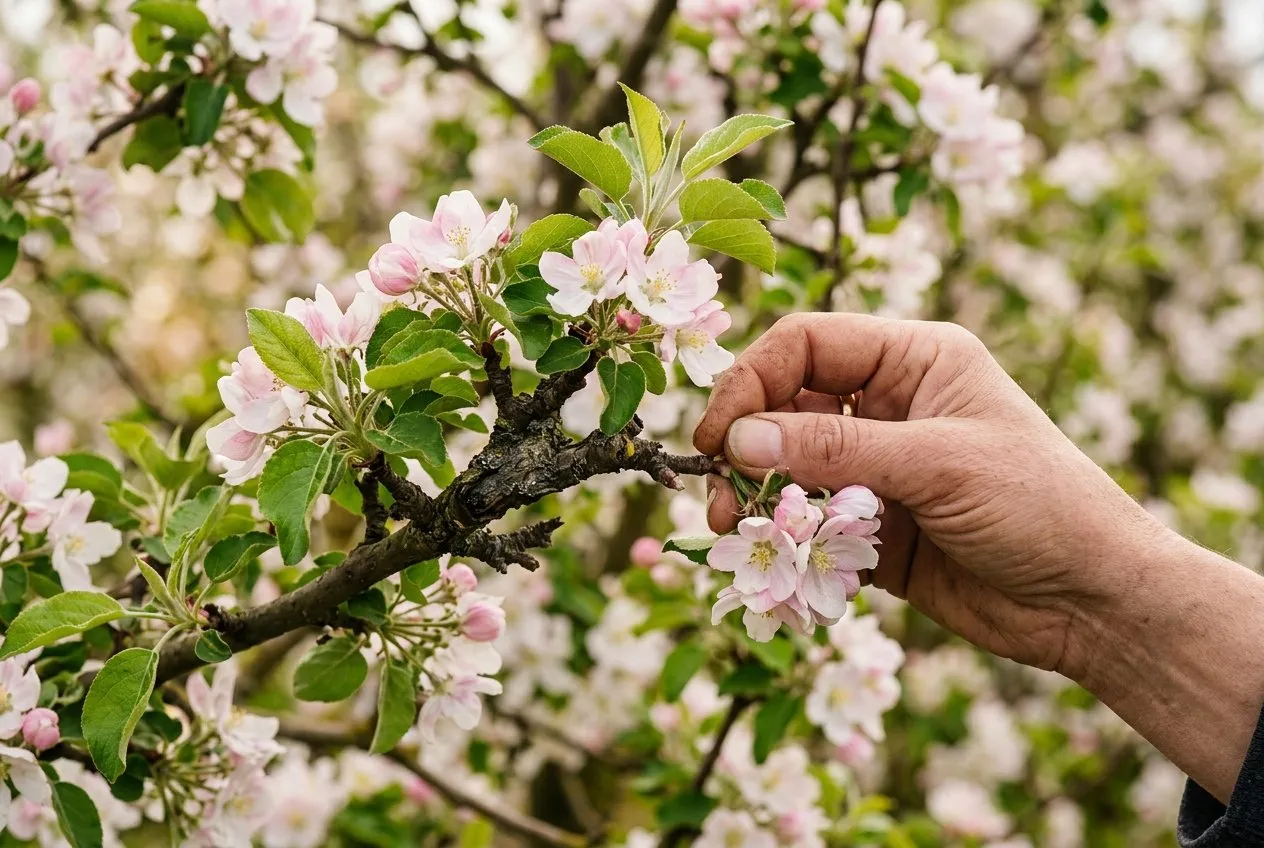
Snip or rub off whole blossom clusters from about half the spurs in a heavy year. Those spurs can then flower next spring.
Fruitlet thinning in June
Trees shed some young fruit naturally in early summer, known as the June drop. After that, thin the rest. Leave one fruit per cluster, about 10-15cm apart for eating apples and a little wider for cookers. Take out the small, damaged or misshapen ones first. Use small scissors so you don’t damage the spur.
Fruitlet thinning helps, but blossom thinning works better for biennial trees, as it acts sooner. A bonus is that the apples you leave grow bigger and better.
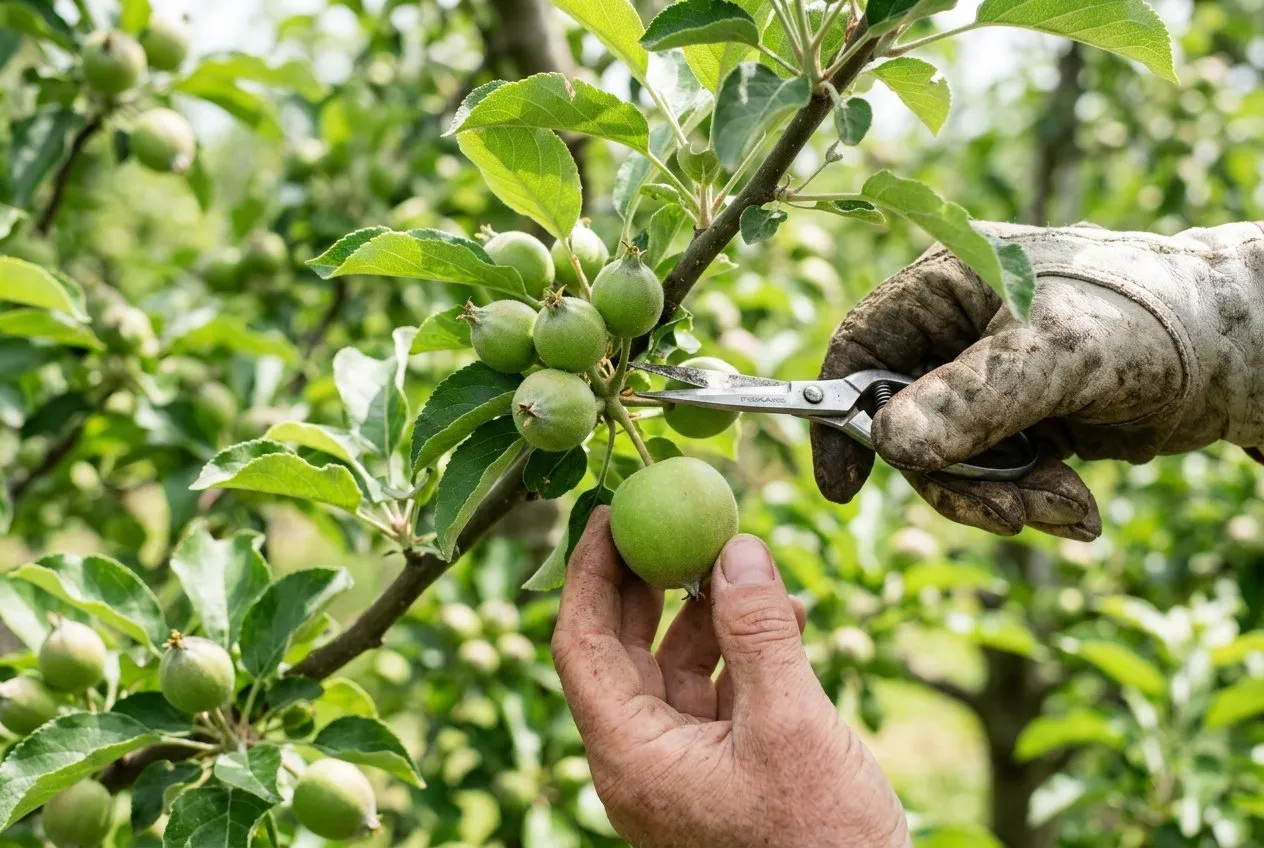
After the June drop, thin each cluster to a single apple. Snip with small scissors rather than pulling, to protect the spur.
Step by step in an on year
- Check the blossom in spring. A tree smothered in flower after a light year is in its on year.
- Thin the blossom. Remove whole clusters from about half the spurs, evenly across the tree.
- Let the June drop happen. The tree sheds some fruitlets on its own.
- Thin the fruitlets. Leave one per cluster, 10-15cm apart.
- Water, feed and mulch. Help the tree ripen fruit and form buds at the same time.
Pruning also matters. The guide to pruning fruit trees explains how to keep spurs young and productive.
Why frost and stress start the cycle
A single bad year often starts biennial bearing. The classic trigger is a late frost that kills a year’s blossom. With no fruit to grow, the tree forms masses of flower buds, then sets a huge crop the next year. That glut blocks the following year’s buds, and the pattern begins. A very dry summer or a poor pollination year can start it the same way.
To prevent it, protect blossom on frosty spring nights. Small and wall-trained trees can be covered with fleece. Water in long dry spells, mulch the root area and keep the tree well fed. A tree in steady health is much less likely to start alternating.
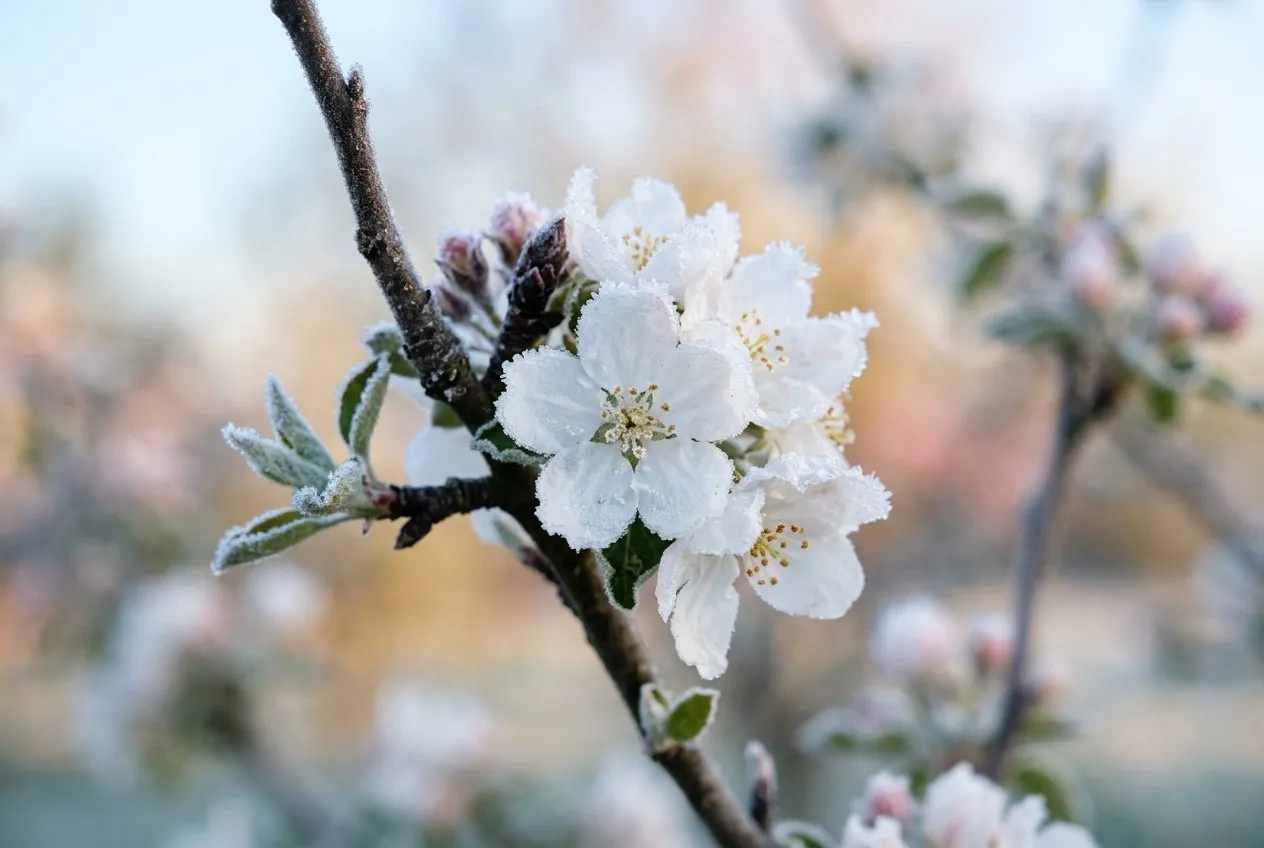
A frosty night at blossom time can wipe out a crop and kick-start the cycle. Fleece small trees when frost is forecast.
A year-round plan for steady crops
| Season | What to do |
|---|---|
| Winter | Prune to renew old spurs. Note whether the coming year is likely to be heavy |
| Early spring | Feed and mulch. Have fleece ready for frosty nights |
| Blossom time | Protect from frost. In an on year, remove blossom from about half the spurs |
| June | After the June drop, thin fruitlets to one per cluster |
| Summer | Water in dry spells. Prop up heavy branches |
| Autumn | Harvest and store. Clear fallen fruit and mulch |
In a glut year, the guide to storing apples and pears helps you keep the surplus.
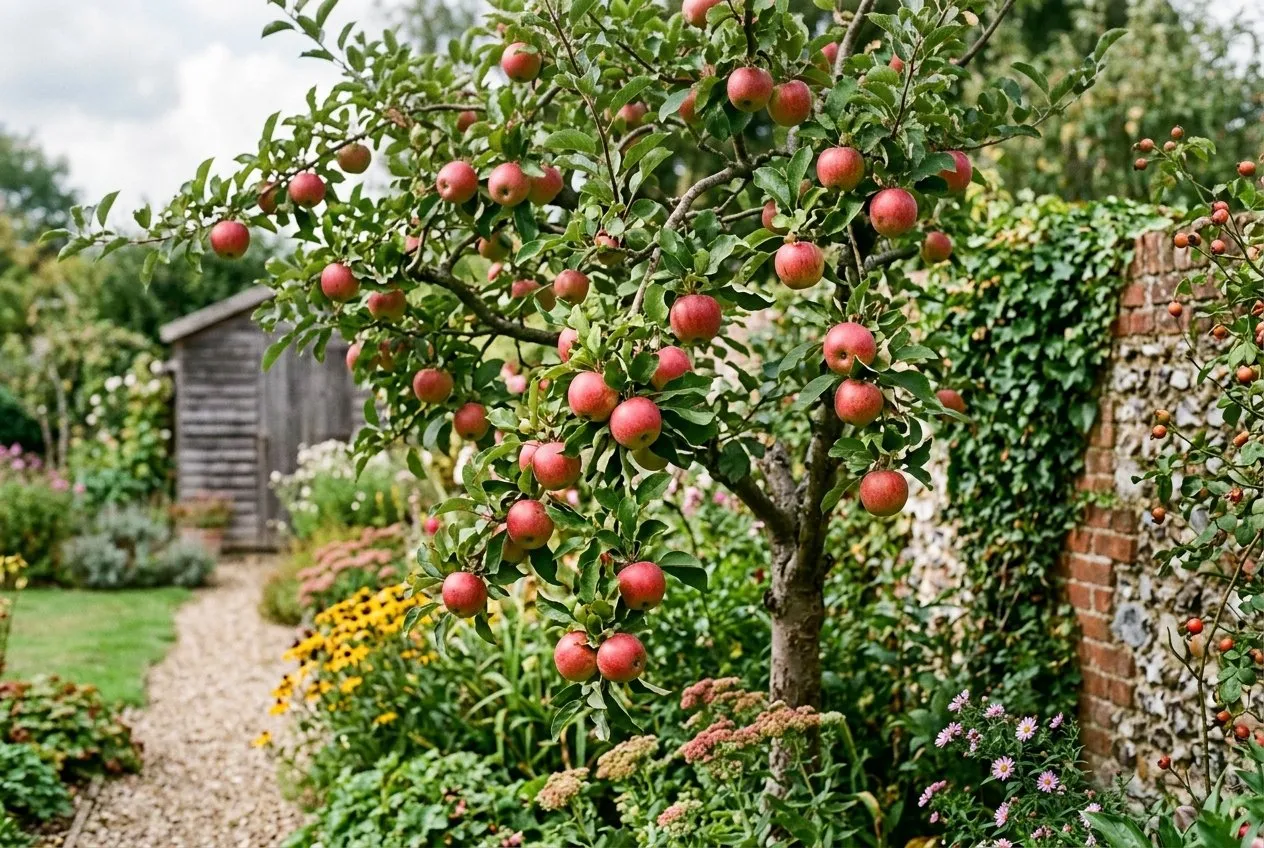
The aim is a moderate, even crop every year, rather than a glut followed by an empty season.
Common mistakes with biennial bearing
- Feeding instead of thinning. Feeding helps the tree, but only thinning breaks the cycle.
- Thinning too late. Next year’s flower buds form in early summer. Thin blossom in spring or fruitlets in June, not in late summer.
- Thinning too lightly. Taking off a few apples barely helps. On a strongly biennial tree, remove blossom from about half the spurs.
- Ignoring frost. A frosted blossom year can restart the pattern. Protect flowers on cold nights.
- Letting branches snap. An on-year crop can break limbs. Thin the crop and support heavy branches.
Now you know how to even out your crops, read the guide to growing apple trees for the rest of the year’s care, or browse more fruit on the growing fruit hub.
Frequently asked questions
What is biennial bearing in fruit trees?
It’s when a tree crops heavily one year and barely the next. The heavy crop stops the tree forming flower buds for the following year. Apples are most often affected. Thinning the crop in the heavy year breaks the pattern.
How do I stop my apple tree biennial bearing?
Thin the crop hard in the heavy year. Remove the blossom from about half the spurs in spring, or thin young fruitlets in June. This lets the tree form flower buds for next year. Feeding, watering and mulching help too.
Why does my apple tree only fruit every other year?
A heavy crop stops the tree forming next year’s flower buds. So a big year is followed by an almost empty one. A late frost that kills one year’s blossom often starts the cycle. Thinning the heavy crop resets the rhythm.
Which apple varieties are prone to biennial bearing?
Bramley, Blenheim Orange and Laxton’s Superb are well known for it. Many older varieties alternate to some extent. Thinning works on any tree that has started the cycle, whatever the variety.
When should I thin apples to prevent biennial bearing?
Thin blossom in spring, or fruitlets in June after the natural June drop. The earlier you thin, the more it helps next year’s buds. Leave one fruit per cluster, about 10-15cm apart for eating apples and a little wider for cookers.
Can frost cause biennial bearing?
Yes, a late frost that kills a year’s blossom often starts the cycle. The tree then sets a huge crop the following year, which stops the next year’s buds forming. Protecting blossom and thinning heavy crops both help.
Our team produces practical UK gardening guidance from source research, contributor records and established horticultural practice. Editorial standards are overseen by Matt W.