Key takeaways
- Aminopyralid is a grassland weedkiller that survives in manure, hay and straw
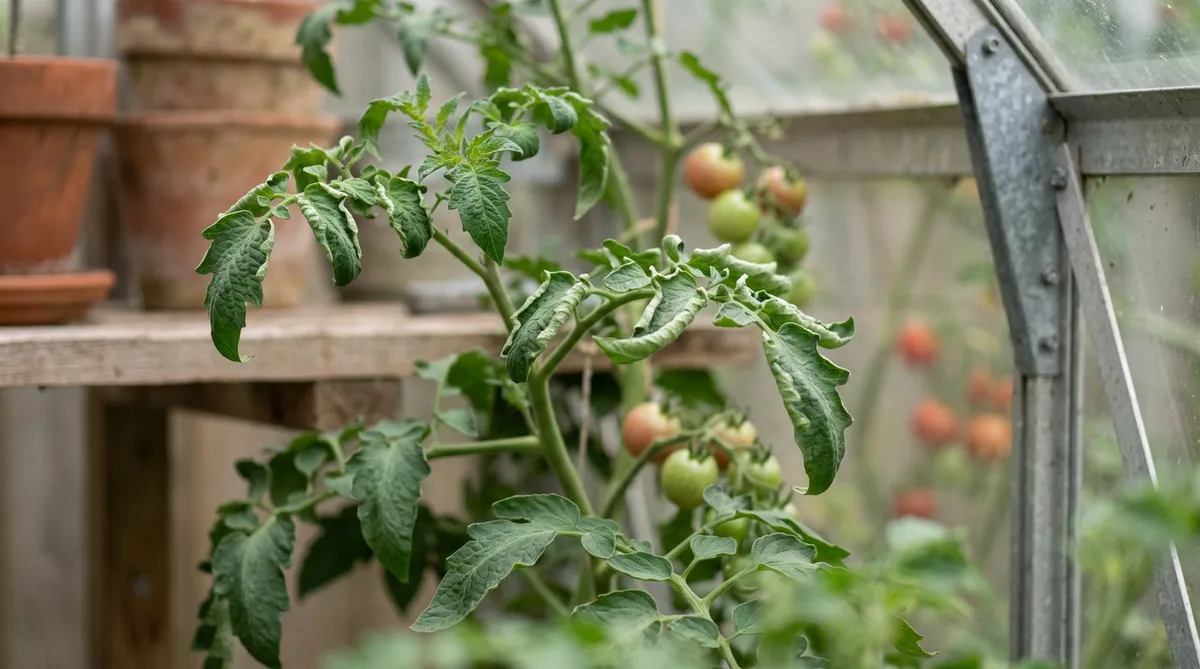
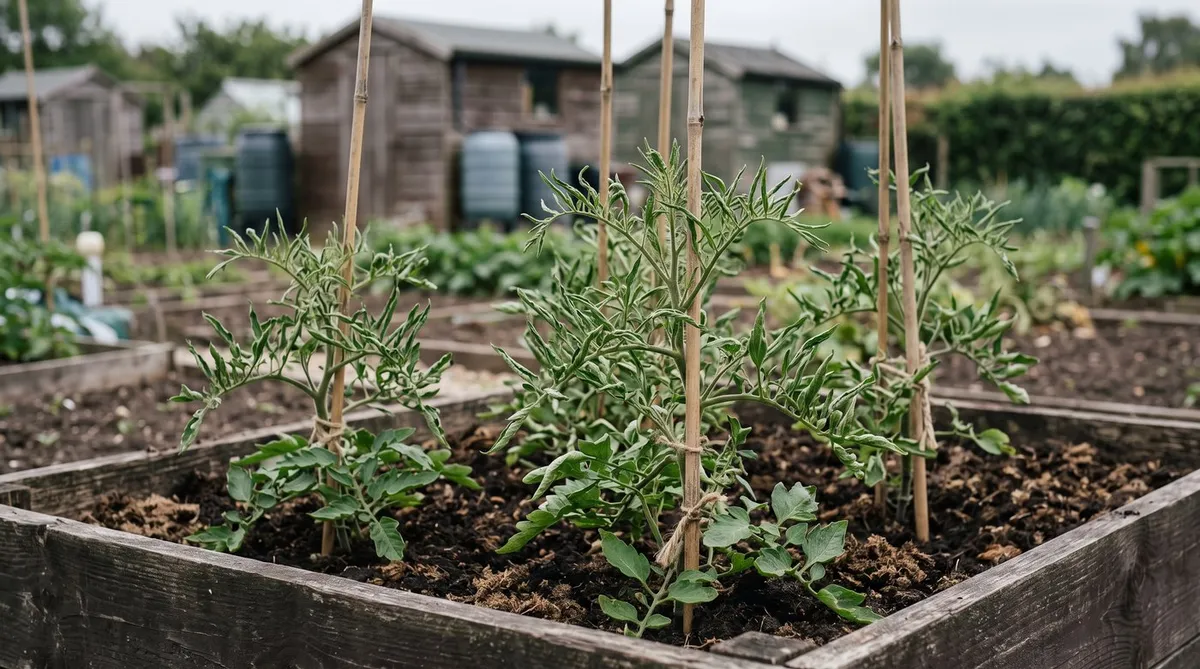
- Tomatoes, potatoes, peas and beans grow ferny, cupped and twisted at the tips
- Well-rotted manure can still carry it, so looks tell you nothing
- Sow broad beans in suspect manure and check the new leaves after two to three weeks
- Contaminated ground can take a year or more to clear, faster in warm, moist, worked soil
- Ask your supplier whether the grass, hay or straw was sprayed before you buy
Your tomatoes have come up with thin, ferny, twisted leaves, and the beans next to them look little better. If you added manure or bought-in compost this year, the likely cause is aminopyralid. It is a farm weedkiller that can survive in manure, and garden crops are very sensitive to it.
This guide shows you how to recognise the damage and test suspect manure at home. It also covers getting your beds back into use and how to avoid it next time.
How to spot aminopyralid damage on your crops
Aminopyralid damage has a look you won’t forget. The newest growth turns fern-like. Leaves grow narrow, cupped and fan-shaped, and growing tips curl and twist. Stems can flatten or twist too.
The damage is always worst on the youngest leaves at the top of the plant. Older leaves lower down often look normal. Most diseases do the opposite, starting on older leaves as spots or patches.
- Tomatoes: leaves shrink to thin, ferny strands and the plant may stop setting fruit.
- Broad beans and peas: leaves cup and curl, then growth stalls.
- Potatoes: new shoots come up crinkled and feathery.
If your plants look like this and you added manure, straw or fresh compost, suspect aminopyralid first. Our guide to why tomato leaves curl covers the other causes to rule out.
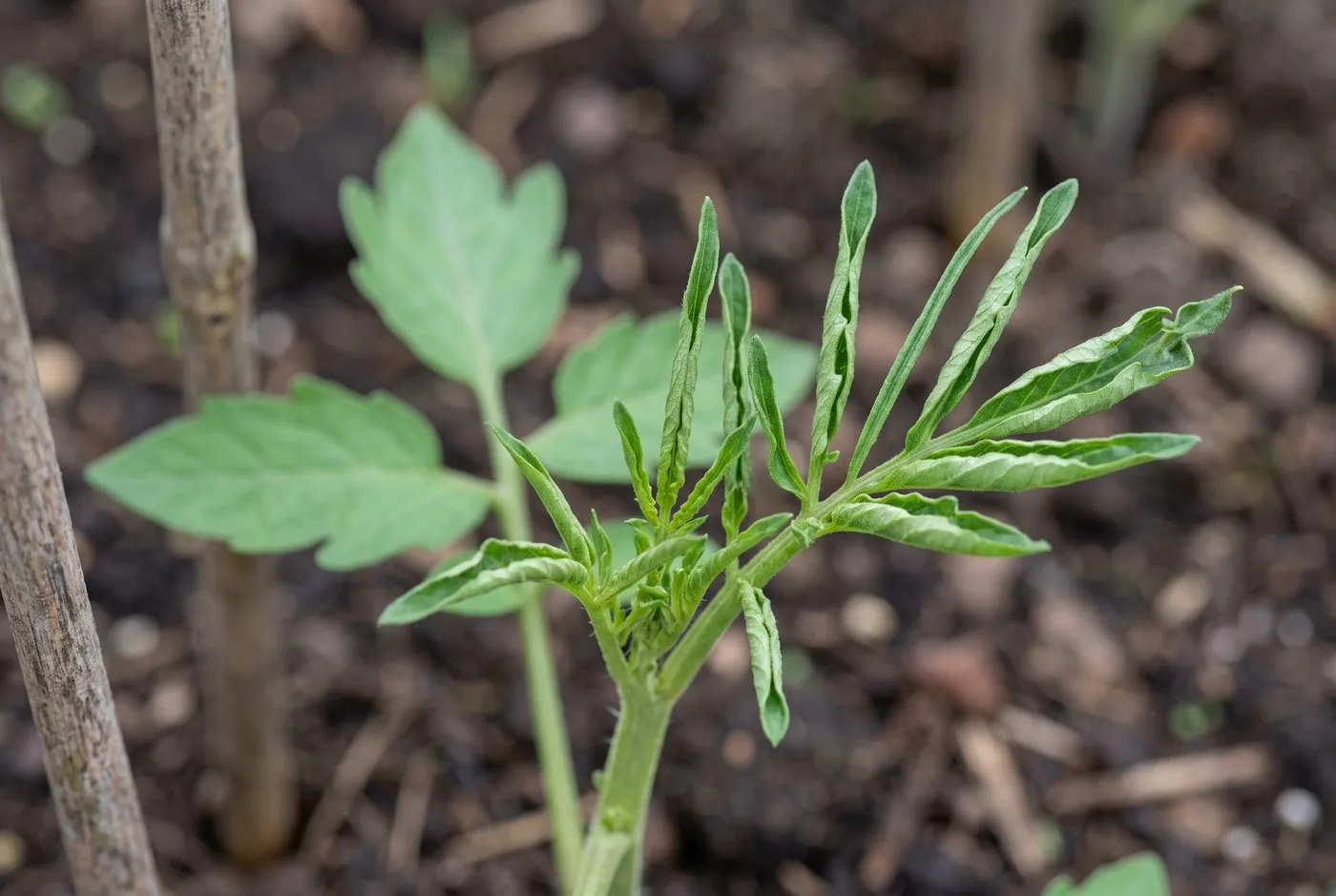
Normal leaves lower down, thin ferny ones at the tip. This top-down pattern is the giveaway for weedkiller damage.
How does weedkiller get into manure?
It starts on farm grassland. Aminopyralid, and related weedkillers such as clopyralid, are sprayed on pasture to kill docks, thistles, nettles and buttercups without harming the grass.
The weedkiller sticks tightly to the grass fibres. When a horse or cow eats treated grass, hay or silage, it passes straight through the animal. It comes out in the dung still active and survives rotting in the muck heap. Straw from treated cereal crops can carry it too, so bedding in the manure is another route in.
Bought-in compost is less often affected, but it can happen if treated grass or straw went into it.
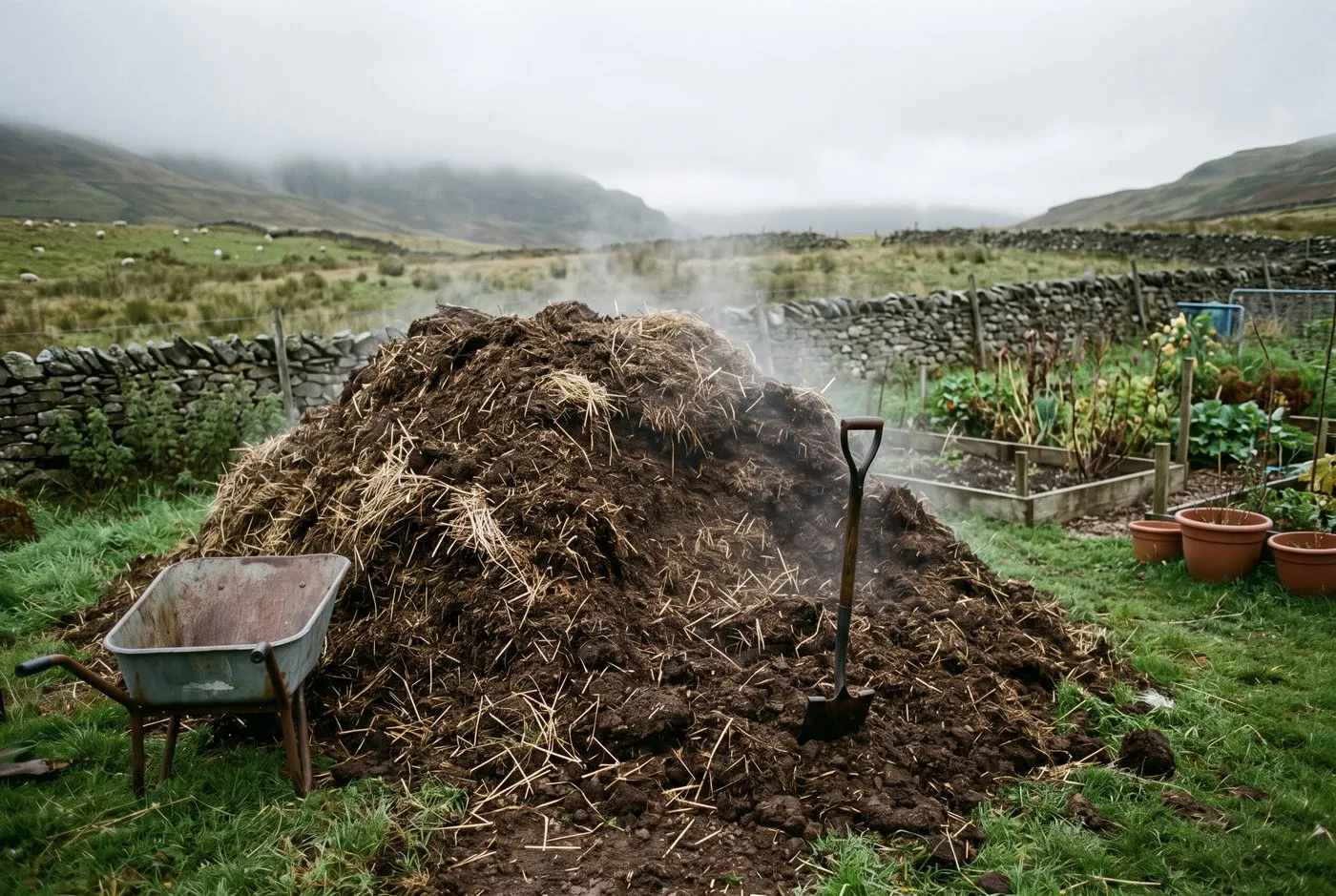
Dark, steaming and well-rotted can still mean contaminated. You can’t see or smell aminopyralid.
Which crops suffer worst?
Some plants react to tiny traces, while others grow on with no sign of harm.
| Sensitivity | Crops |
|---|---|
| Very sensitive | Tomatoes, potatoes, peas, broad beans and other beans |
| Also affected | Carrots, lettuce and many flowers |
| Usually unaffected | Grasses, including lawns and sweetcorn |
That makes broad beans and peas a handy early warning. It also means tomatoes and potatoes are the worst crops to put on manure you’re unsure about.
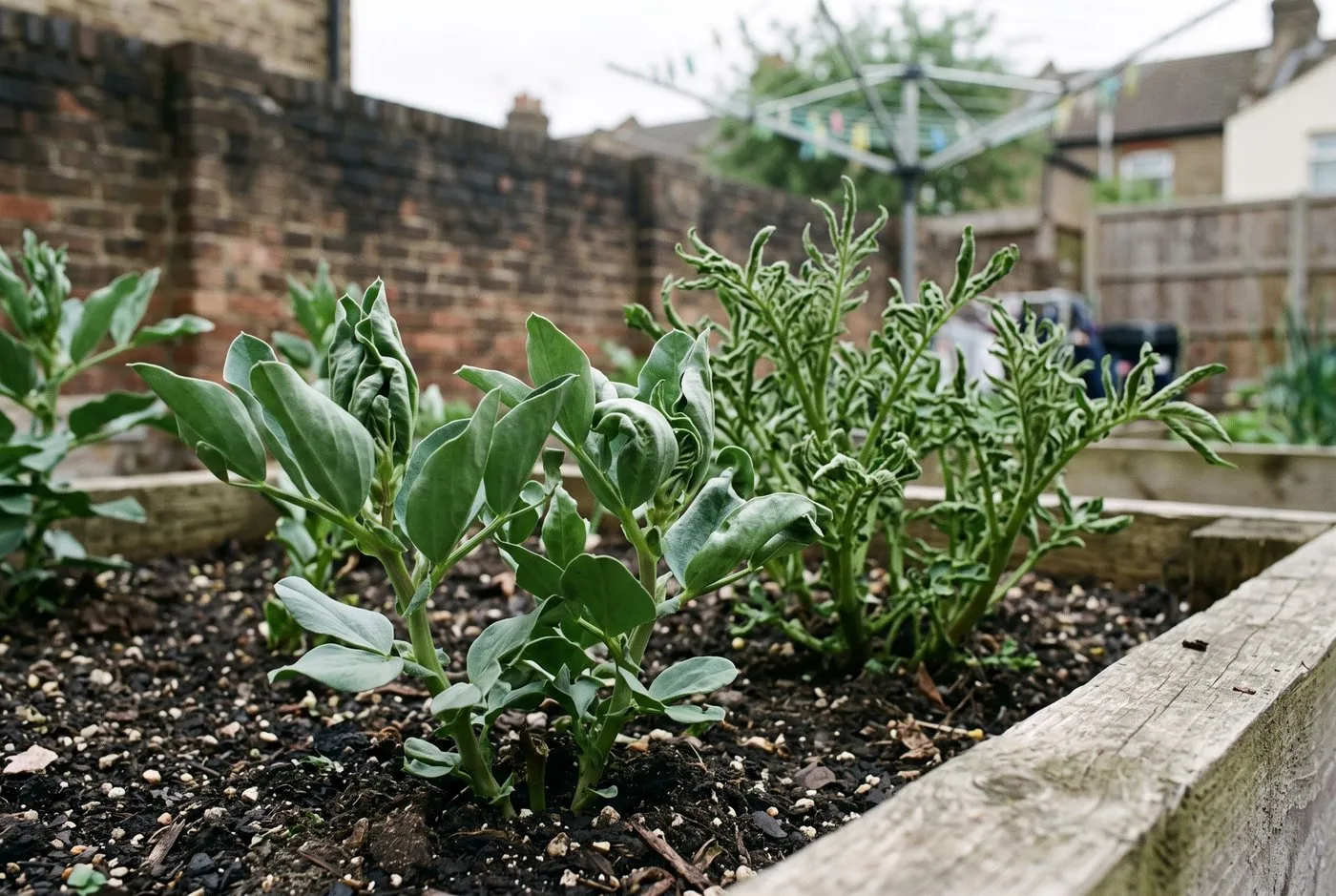
Cupped bean leaves and feathery, twisted shoots in a bed topped up with bought-in manure.
The broad bean test: check manure at home
A simple pot test tells you whether manure, compost or soil is safe before you spread it. It is often called a bioassay, a test using living plants.
- Fill three or four pots with the manure, compost or soil you suspect.
- Fill the same number of matching pots with compost you trust, such as a fresh bag or your own garden compost.
- Sow two broad beans or peas in each pot.
- Water both sets the same and stand them somewhere warm and light.
- After two to three weeks, compare the new leaves.
If the beans in the suspect pots grow ferny, cupped or twisted while the others look normal, it is contaminated. If both sets look the same and healthy, it should be safe to use.

Matching pots, the same beans and the same care. The only difference should be what’s in the pots.

A clear result after a few weeks: twisted beans in the suspect manure on the left, normal ones in clean compost on the right.
How long does aminopyralid last?
Aminopyralid doesn’t wash out of soil quickly. It breaks down as soil life rots the straw and grass fibres it is stuck to. That usually takes a year or more, and longer in cold, wet or compacted soil.
The common mistake is to think that time alone fixes it. A bed left cold, bare and compacted holds on to the weedkiller far longer. Soil that is warm, moist and full of life clears it fastest. The RHS guide to hormone weedkiller damage has more background.
How to clear contaminated manure and beds
Once you know a batch is contaminated, the job is to help soil life break it down, and keep sensitive crops away meanwhile.
Contaminated manure you haven’t used yet:
- Keep it in a heap away from your veg. Keep it moist and turn it every few weeks so it stays warm and active.
- Test it again with beans before you use it on any veg bed.
Beds that already have it dug in:
- Dig the bed over a few times to mix in air. It speeds up breakdown.
- Grow less sensitive crops meanwhile, such as sweetcorn, or sow a green manure such as grazing rye to keep the soil busy.
- Retest with beans before planting tomatoes, potatoes, peas or beans there again.
Affected plants:
- Pull them up and put them in the household rubbish. Don’t compost them, or you’ll put the weedkiller back on your beds later.
For a small raised bed or pots, replacing the contaminated compost is often the quickest fix.
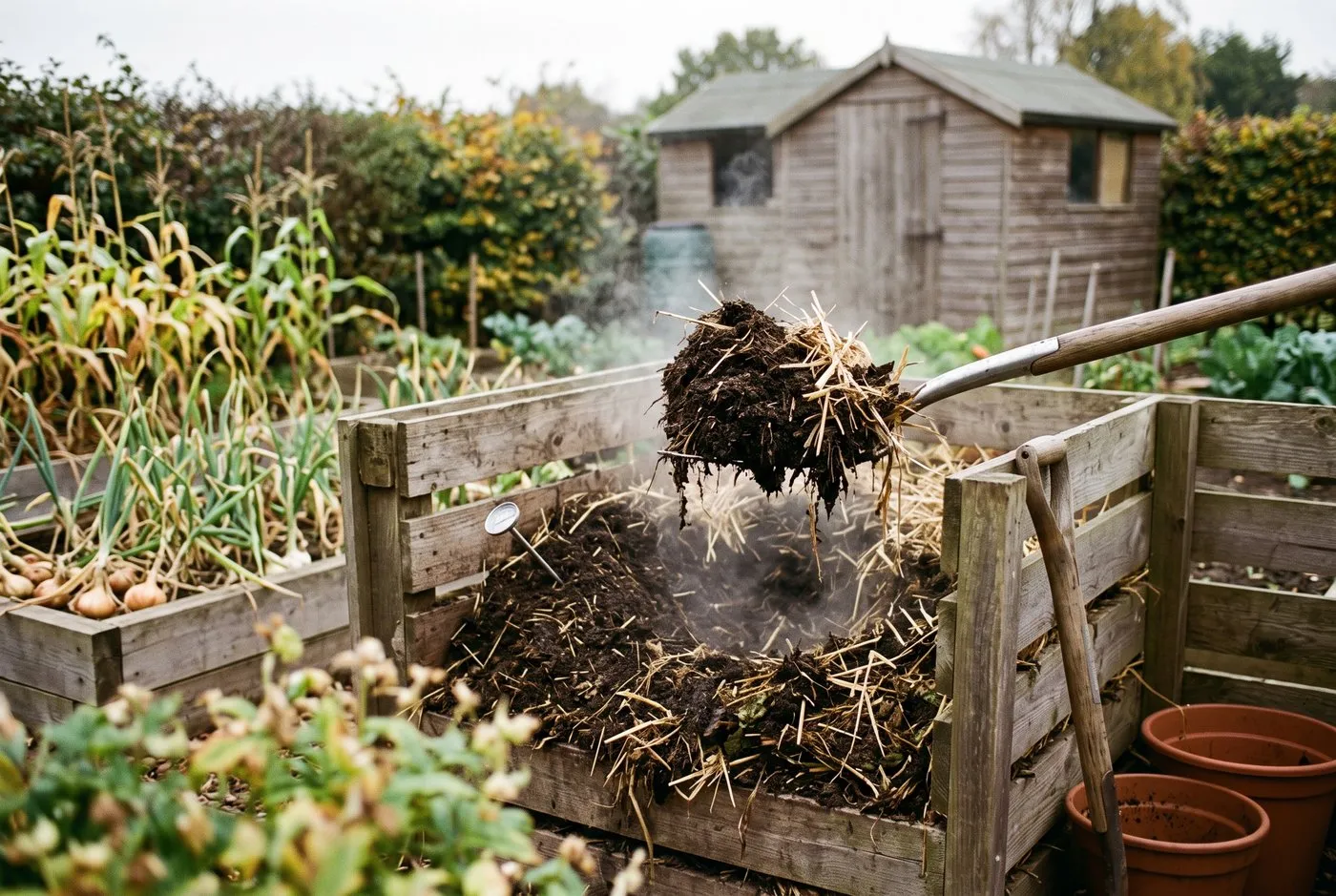
Turning a heap keeps it warm and airy, which helps soil life break the weedkiller down. Test it again before it goes on veg.
How to avoid contaminated manure
Prevention comes down to knowing your source and testing before you spread. Manure looks safe, and nothing about it warns you, which is why experienced growers get caught out.
- Ask questions. Ask your supplier whether the grass, hay, silage or straw was sprayed with a weedkiller for docks or thistles. Stable owners who buy in hay may not know, so ask them to check.
- Test anything bought in. Run a bean test before the manure goes near tomatoes, potatoes, peas or beans.
- Rely less on bought-in muck. Make more of your own compost and grow green manures. Our guide to horse vs cow manure covers other things to check before you buy.
What to do if your crops are affected
- Stop using the batch. Keep it well away from veg beds.
- Don’t eat badly affected produce. Pull up distorted plants and bin them.
- Deal with the bed and the heap using the steps above, and retest before replanting.
- Report it. Tell your supplier and the manufacturer, Corteva. Keep some of the manure, photos, dates and your bean test results.
Manure safety through the year
| Month | What to do |
|---|---|
| January to February | Line up manure suppliers and ask about weedkiller use. Start bean tests indoors on winter deliveries |
| March | Check bean test results before spreading anything on veg beds |
| April to May | Sow a few indicator beans in beds you are unsure about. Watch new growth on tomatoes and potatoes |
| June to July | Investigate any ferny or twisted growth straight away and trace it to the manure used |
| August to September | Retest recovering beds with beans. Turn contaminated heaps and keep them moist |
| October to December | Stack and label new deliveries. Test before they go on veg ground next spring |
Common mistakes with manure and compost
- Trusting manure on looks. Well-rotted, crumbly manure can still carry the weedkiller. Ask and test.
- Assuming time will fix it. A cold, bare, compacted bed holds on to it much longer. Keep the soil worked and alive.
- Composting affected plants. The weedkiller stays in the plant tissue. Bin them instead.
- Replanting tomatoes or beans straight away. You’ll just lose another crop. Wait for a clean bean test.
- Not reporting it. Without reports, the problem never gets traced back to the source.
Warning: Never use manure, straw or compost from an unknown source on beds for tomatoes, potatoes, peas or beans without testing it first. One contaminated load can put a bed out of use for these crops for a year or more.
Frequently asked questions
What does aminopyralid damage look like?
New growth turns ferny, cupped and twisted, worst at the top of the plant. Leaves grow narrow and fan-shaped, and growing tips curl and stall. Older leaves lower down often look normal. Tomatoes may stop setting fruit.
How long does aminopyralid stay in soil?
Often a year or more, and longer in cold, wet soil. It breaks down as soil life digests the plant material it is stuck to. Warm, moist, well-dug soil clears it fastest. Test with broad beans before growing sensitive crops again.
Can you still eat vegetables from contaminated soil?
Don’t eat produce from badly affected plants. Pull them up and put them in the household rubbish rather than the compost heap. Wait until a fresh bean test grows normally before growing veg in that soil again.
How do I test manure for aminopyralid?
Sow broad beans or peas in the suspect manure and in clean compost. Use matching pots and treat them the same. After two to three weeks, compare the new leaves. Ferny, cupped or twisted leaves in the suspect pots mean it is contaminated.
Does composting remove aminopyralid?
Slowly, and only in a warm, well-turned heap. Microbes release and break down the weedkiller as they rot the straw and grass fibres. A cold heap left alone does very little. Always test with beans before using the compost on veg.
Which manure is safest from aminopyralid?
Manure from a source you can question is safest. Ask whether the grass, hay, silage or straw was sprayed with a weedkiller for docks or thistles. Your own garden compost is safe if you haven’t added bought-in manure. Test any batch you are unsure about.
Should I report contaminated manure?
Yes, tell your supplier and the manufacturer. Corteva makes aminopyralid and investigates reports. Keep some of the manure, photos and your bean test results as evidence.
Find more answers to crop troubles in our problems hub. Once you’ve found a clean source, our guide to animal manures compared helps you use it well.
Our team produces practical UK gardening guidance from source research, contributor records and established horticultural practice. Editorial standards are overseen by Matt W.