Key takeaways
- Both make excellent soil improvers once well rotted, dark and crumbly
- Strawy horse manure is the traditional choice for opening up heavy clay
- Denser cow manure helps sandy soil hold water
- Horse manure usually brings more weed seeds, so let it heat up and rot fully
- Any manure can carry aminopyralid weedkiller, so ask about the hay and test a sample
- Spread about a bucketful per square metre in autumn on empty beds
Horse and cow manure are both brilliant for your soil once they’re well rotted. The best one for you mostly depends on your soil. Strawy horse manure is the traditional pick for heavy clay. Cow manure is better for light, sandy soil that dries out quickly.
The other things to weigh up are weed seeds, how long each takes to rot, and where you can get it. This guide compares the two side by side. If you’re also considering chicken, sheep or pig manure, the guide to animal manures compared covers them all, with nutrient values.
Horse vs cow manure at a glance
| Horse manure | Cow manure | |
|---|---|---|
| Texture | Coarse and strawy | Finer, denser and wetter |
| Heats up in a heap | Quickly, a “hot” manure | More slowly, a “cool” manure |
| Best soil | Heavy clay | Sandy and free-draining |
| Weed seeds | Usually more | Usually fewer |
| Where to get it | Stables and livery yards, often free | Farms with strawed cattle yards, or bagged |
Neither is a strong fertiliser. Their real value is the organic matter they add, which feeds soil life and improves the soil’s structure. Both contain modest amounts of nutrients, with horse manure often a little richer.
Which manure suits your soil?
Heavy clay: go for strawy horse manure. The straw helps open up sticky clay, so it drains better and is easier to dig. The guide to improving clay soil has more ways to help it.
Sandy soil: go for cow manure. Its finer, denser texture helps light soil hold on to water and nutrients. The guide to improving sandy soil explains how to build it up over a few years.
Loam: use whichever you can get. Well-rotted manure of either kind will do it good.
Not sure which soil you’ve got? Squeeze a handful of damp soil. Clay rolls into a sticky sausage, while sandy soil feels gritty and falls apart. The guide to UK soil types walks you through it.

Sticky clay that holds its shape likes strawy horse manure. Loose, crumbly soil does better with cow manure.
Weed seeds and how to deal with them
Horse manure usually brings more weed seeds than cow manure. Horses digest their food less thoroughly than cattle, so more seeds pass through unharmed.
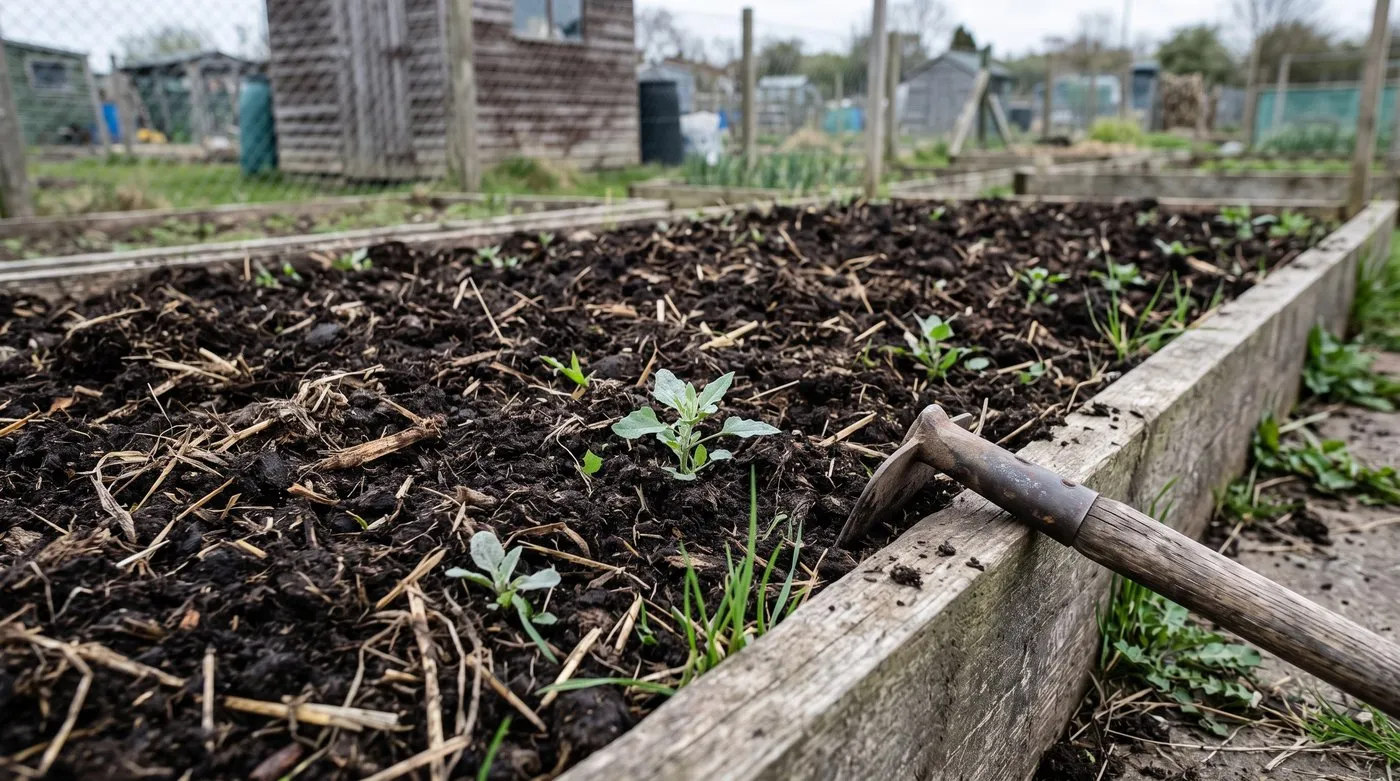
A few weeds after spreading horse manure is normal. Hoe them off while they’re tiny and they’re no trouble.
The answer is to rot it well. A good-sized heap that heats up in the middle kills many weed seeds. Build it at least about 1m across, keep it damp but not soggy and turn it once or twice so the outside gets a turn in the hot centre. Even so, expect a few weeds after spreading. Hoe them off while they’re small and they’re no bother.
Aminopyralid: check before you take a load
Aminopyralid is a weedkiller used on grassland to control weeds such as docks and thistles. It passes through animals that eat treated grass, hay or silage, and survives in their manure for a long time. It can damage sensitive crops such as tomatoes, potatoes, peas and beans.
This applies to both horse and cow manure, not just horse. Signs on plants include:
- Cupped, curled or fern-like leaves on tomatoes
- Twisted, stunted growth on potatoes, peas and beans
- Distorted new leaves on lettuce and other sensitive plants
Before you take a load, ask the supplier whether the grass, hay or silage was sprayed. If they’re not sure, do a simple test. Mix some manure with compost in a few pots, sow broad beans or peas, and compare them with seeds in plain compost. If the new leaves come up cupped or twisted, don’t use it. The guide to aminopyralid in manure explains what to do if you’ve already spread some.

Curled, cupped leaves like these on tomatoes can be a sign of weedkiller in manure. A quick pot test before spreading saves a lot of heartache.
How long does manure take to rot?
Both usually need at least six months, and often a year, to rot properly. It’s ready when it’s dark, crumbly and smells earthy rather than of ammonia. You shouldn’t be able to see straw or dung clearly any more.
Strawy horse manure heats up quickly and can be ready sooner. Cow manure is wetter and denser, so it heats more slowly. Horse manure on wood shavings takes longer to rot than manure on straw, and if it goes on half-rotted it can briefly rob the soil of nitrogen.
Cover the heap with an old tarpaulin or sheet. That stops rain washing out the nutrients and helps the heap stay warm.

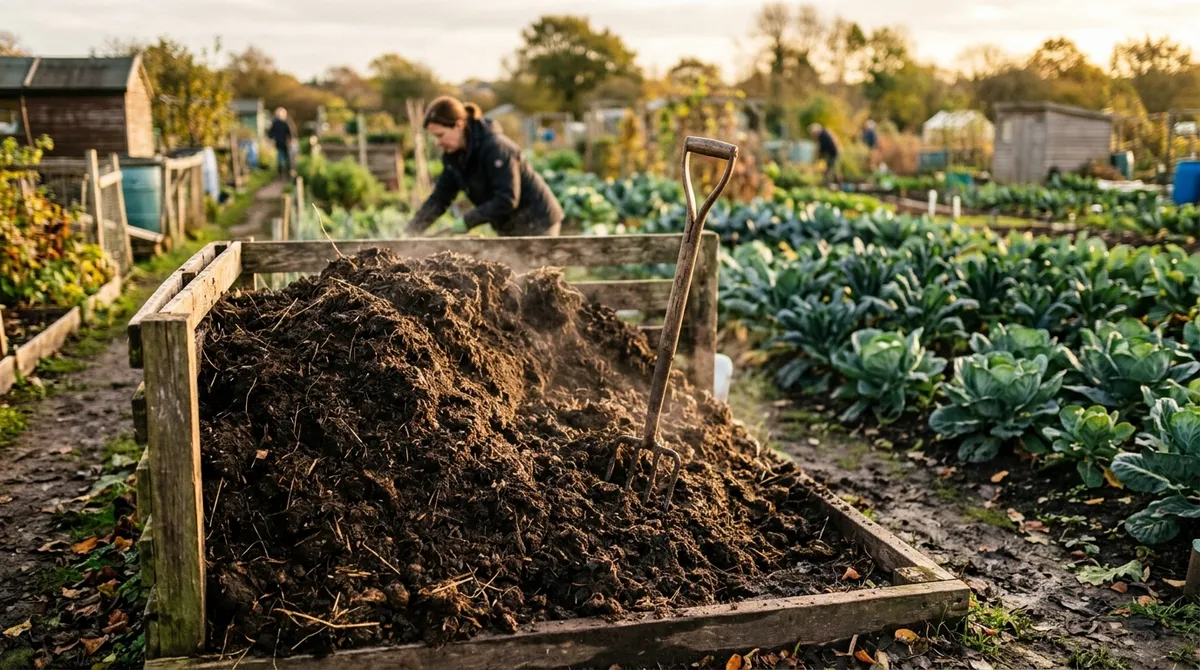
A covered heap keeps the rain out and the heat in. A little steam on a cold morning shows it’s working.
How much manure to use and when
Spread well-rotted manure in autumn or late winter on empty beds, about a bucketful per square metre, or a layer about 5cm deep. Either fork it in lightly or leave it on top for worms to pull down over winter.
- Vegetable beds: a bucketful per square metre each year, on empty ground
- Roses, shrubs and fruit bushes: a mulch about 5cm deep in late winter, kept clear of stems
- New beds: a heavier dressing once, to get them going
Root crops such as carrots and parsnips are the exception. Manure in the year you sow them tends to cause forked, hairy roots, so grow them where manure went on a year or two before. A crop rotation plan makes this easy to track.
Don’t spread lime at the same time as manure. The lime reacts with the manure and nitrogen is lost into the air. Apply them a few months apart, or on different beds.

Autumn is the time to spread. Fork it over empty beds and winter rain and worms will do the rest.
Where to get horse and cow manure
Horse manure is easy to come by. Stables and livery yards often have more than they can use and give it away. You’ll usually need to load it yourself. Allotment sites sometimes have regular deliveries, so ask the committee.
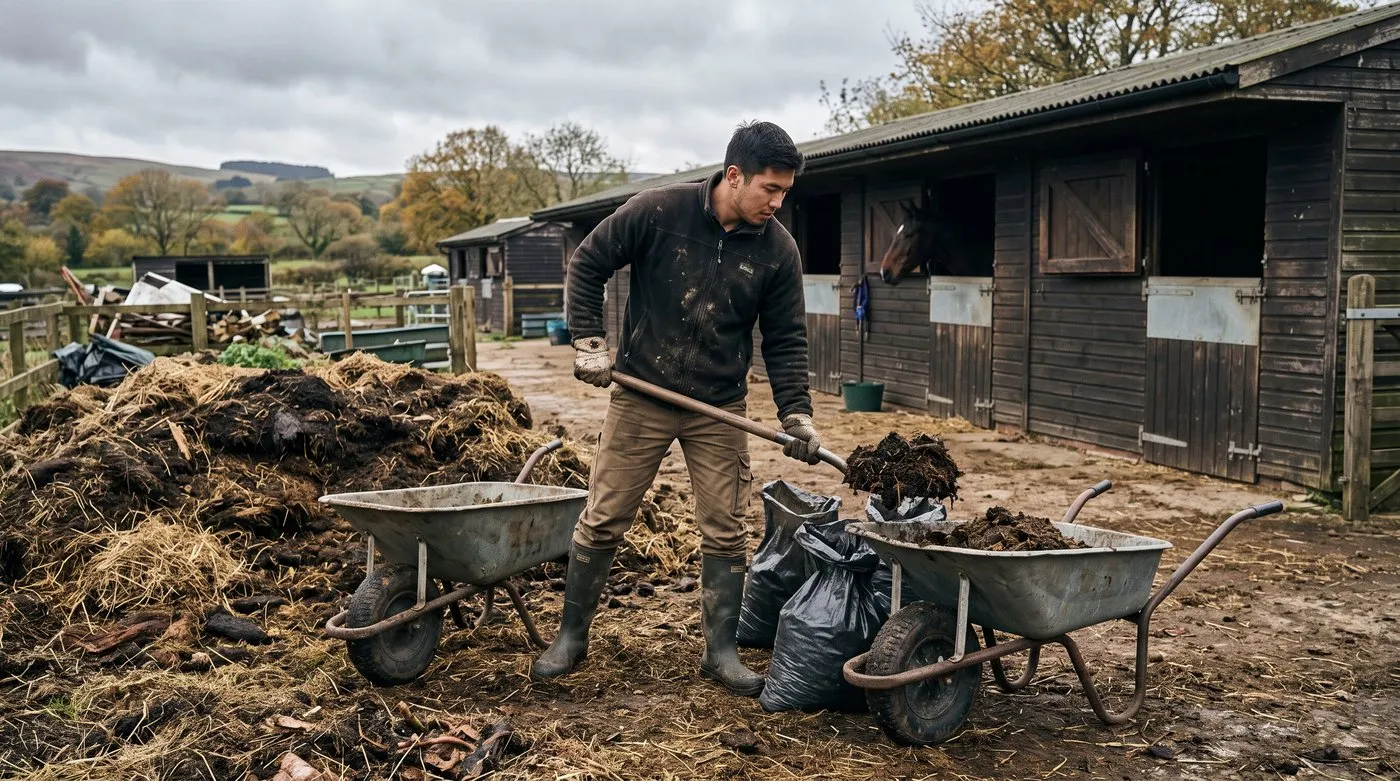
Stables are often glad to see manure go. Take it from the oldest, darkest part of the heap.
Cow manure is harder to find loose. Farms with strawed cattle yards are the best bet, and some will deliver a trailer load. Bagged, composted manure from garden centres is the easiest option for small gardens. It’s usually ready to use straight from the bag.
Whatever you pick up, check it’s well rotted, ask about the hay and avoid anything smelling strongly of ammonia. That needs longer in the heap.
Common mistakes with manure
- Using it fresh around plants. It can scorch roots. Rot it first, or spread it on empty beds in autumn.
- Skipping the weedkiller question. One contaminated load can spoil a season of tomatoes and beans. Ask, and test.
- Manuring before root crops. It causes forked carrots and parsnips. Manure the bed a year ahead instead.
- Leaving the heap uncovered. Rain washes the goodness out. Cover it.
- Spreading lime and manure together. Keep them a few months apart.
Manure calendar
| Month | What to do |
|---|---|
| January to February | Mulch roses, shrubs and fruit bushes with well-rotted manure |
| March to April | Stop spreading on beds you’re about to sow. Test new loads for weedkiller |
| May to July | Collect fresh manure and stack it in a covered heap to rot |
| August to September | Turn the heap. Check last year’s heap is ready |
| October to December | Main time to spread on empty veg beds |
For more on keeping soil healthy, browse the how-to guides. Now you know which manure to choose, read about green manures and cover crops for another free way to improve your soil.
Frequently asked questions
Is horse manure or cow manure better for vegetable gardens?
Both are good, so choose by your soil. Strawy horse manure suits heavy clay. Cow manure suits light, sandy soil that dries out fast. On ordinary loam, use whichever you can get, as long as it’s well rotted.
How long does horse manure take to rot compared with cow manure?
Both usually need at least six months, and often a year. Strawy horse manure heats up quickly in a heap. Manure on wood shavings rots more slowly. It’s ready when it’s dark, crumbly and smells earthy, not of ammonia.
Does horse manure have more weed seeds than cow manure?
Usually, yes. Horses digest seeds less thoroughly than cattle, so more pass through whole. A heap that heats up well kills many of them. Hoe off any that sprout after spreading.
Can I put fresh manure on my garden?
Not around growing plants, as it can scorch roots. Rot it in a covered heap first. Fresh manure can go on empty beds in autumn, so it breaks down over winter before you plant in spring.
Can horse or cow manure carry weedkiller?
Yes, either can carry aminopyralid. It comes from grass or hay sprayed with certain weedkillers, and it survives in the animals’ manure. Ask your supplier about the hay, and test a sample by sowing broad beans in it.
Our team produces practical UK gardening guidance from source research, contributor records and established horticultural practice. Editorial standards are overseen by Matt W.