Key takeaways
- Plant bare-root privet from November to March, about three plants per metre
- Trim an established hedge two or three times a year, from late spring to early autumn
- Always check for active nests before trimming between March and August
- Keep the base slightly wider than the top so light reaches the lower branches
- Privet regrows from old wood, so overgrown hedges can be cut back hard in February
- Privet leaves and berries are poisonous to dogs, cats, horses and people
Privet is a quick, forgiving hedge that suits almost any UK garden. Plant it bare-root in winter, trim it two or three times a year and feed it each spring, and it stays thick and green for decades. If it gets out of hand, you can cut it back hard and it grows back.
This guide covers privet from planting to renovation. If you’re still picking a hedge, the guide to fast-growing hedging plants compares privet with other quick options.
How to plant a privet hedge
Plant bare-root privet between November and March, while it’s dormant. Bare-root plants are sold without pots, so they’re much cheaper than potted ones for a long hedge.
- Clear weeds and grass along a strip about 60cm wide.
- Dig a trench a spade deep and loosen the bottom with a fork.
- Mix in some garden compost, especially on poor or sandy soil.
- Set plants 30-40cm apart, about three per metre, at the depth they grew before.
- For a thicker hedge, plant a staggered double row with about 45cm between the rows.
- Firm in with your heel and water well.
After planting, trim the whips back by about a third. It feels harsh, but it makes them branch low down and gives you a bushy hedge from the ground up. The hedge planting guide goes through trench preparation step by step.
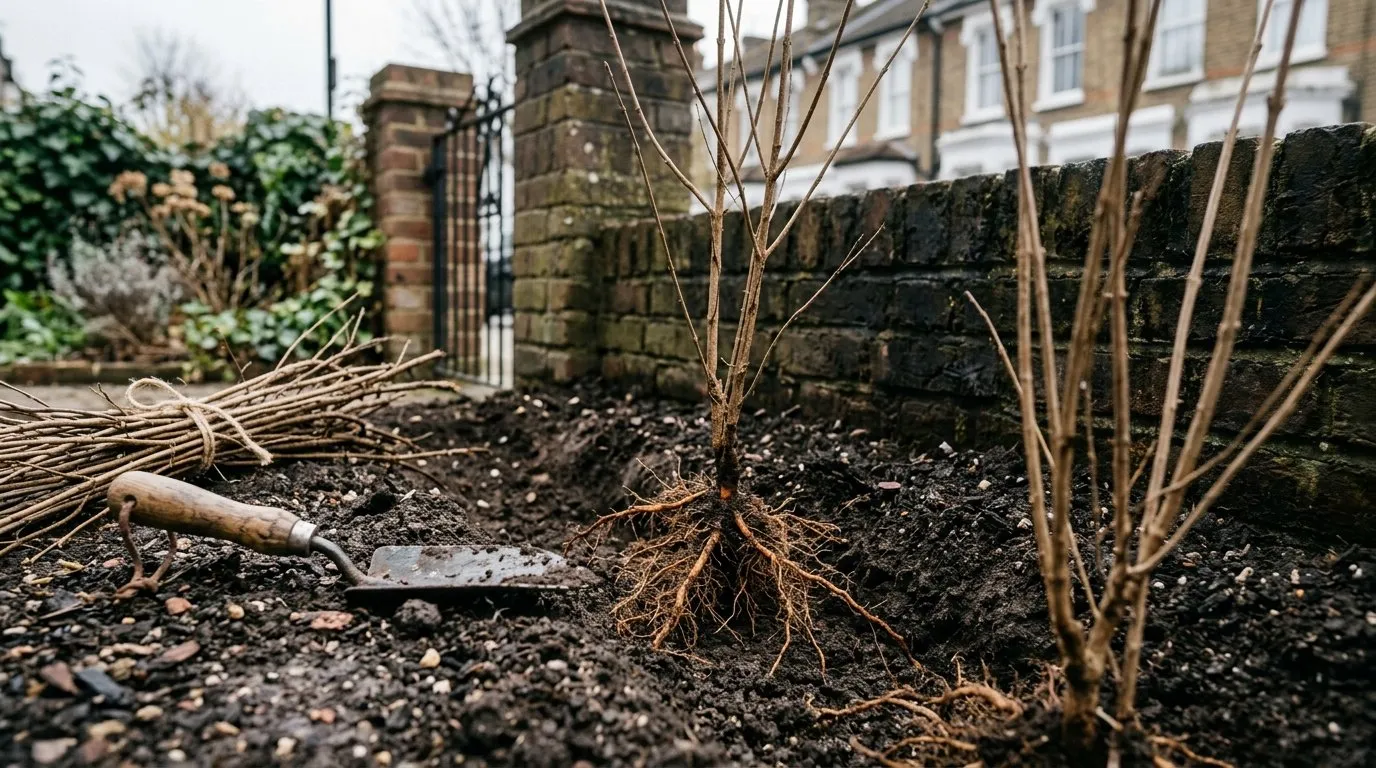
Bare-root whips go in between November and March. Plant them at the depth they grew before and firm them in well.
Privet grows in almost any soil, from clay to chalk, in sun or part shade. It only sulks in ground that stays waterlogged. Water new plants in dry spells for their first two summers.
How fast does privet grow?
Privet is one of the quicker hedges. It puts on plenty of new growth each summer, which is why it needs more than one trim a year. With good care, a newly planted hedge makes a useful screen within a few years.
It’s slower than Leyland cypress but much easier to keep in check. Unlike most conifers, it can be held at almost any height and regrows if you cut it back too far.
Gardener’s tip: Decide on your final height before you plant. Trim the top a little below it for the first couple of years so the hedge thickens up before it gets tall.
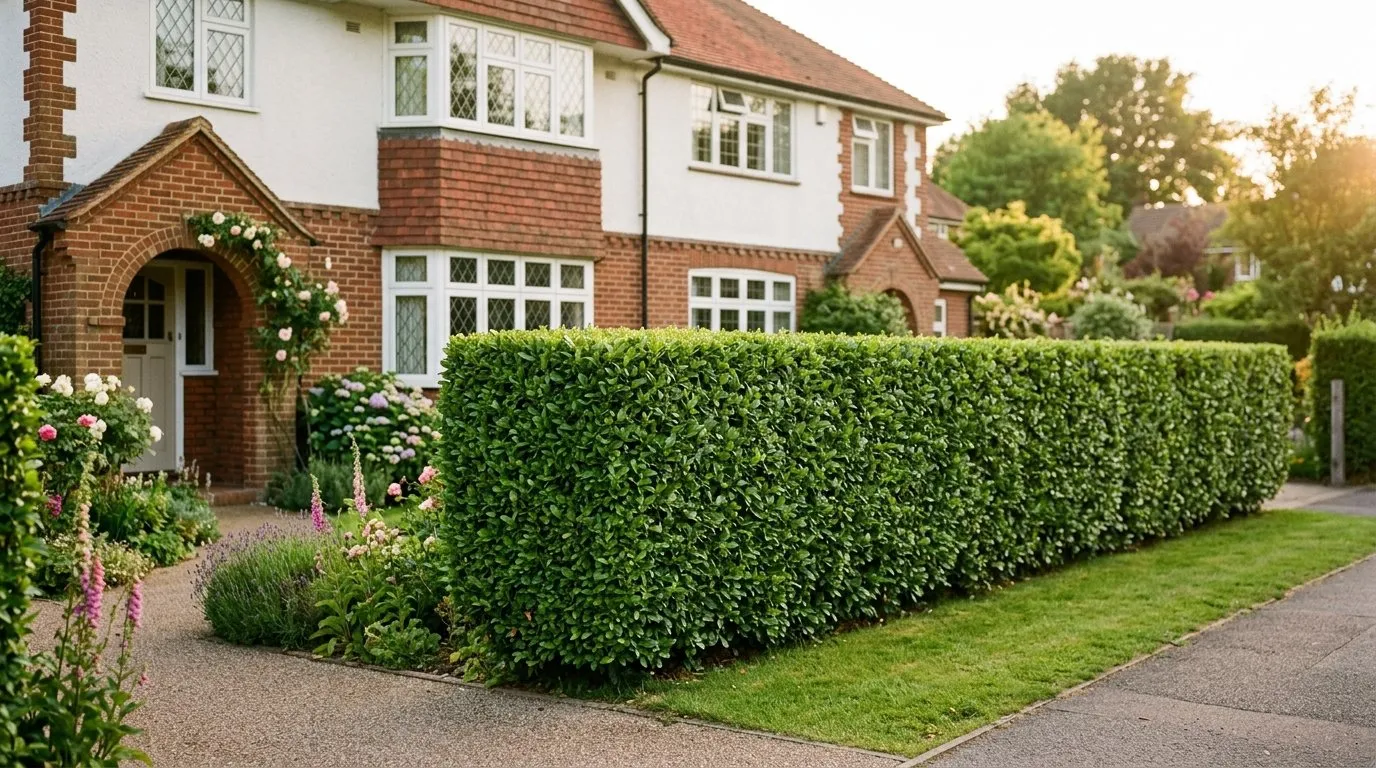
Regular trims turn privet’s quick growth into a dense, leafy screen.
When to cut a privet hedge
Trim an established privet hedge two or three times a year, from late spring to early autumn. For a crisp, formal look, trim in early summer, again in midsummer and give a final tidy in late summer or early autumn. An informal hedge can get by with one trim in late summer.
The bird nesting season runs from about March to August, right when privet grows fastest. Damaging or destroying an active nest is an offence, whatever the month. Before every cut, watch the hedge quietly for a while and gently look inside. If you find an active nest, leave that stretch until the young have flown. The guide to when to cut hedges explains the rules in full.
How to trim privet
- Use sharp shears or a hedge trimmer.
- Cut with a batter: a slight slope so the base is a little wider than the top. This lets light reach the bottom and stops it going bare.
- Run a string line between two canes to keep the top level.
- Lay a sheet along the base to catch clippings, and clear them up afterwards.
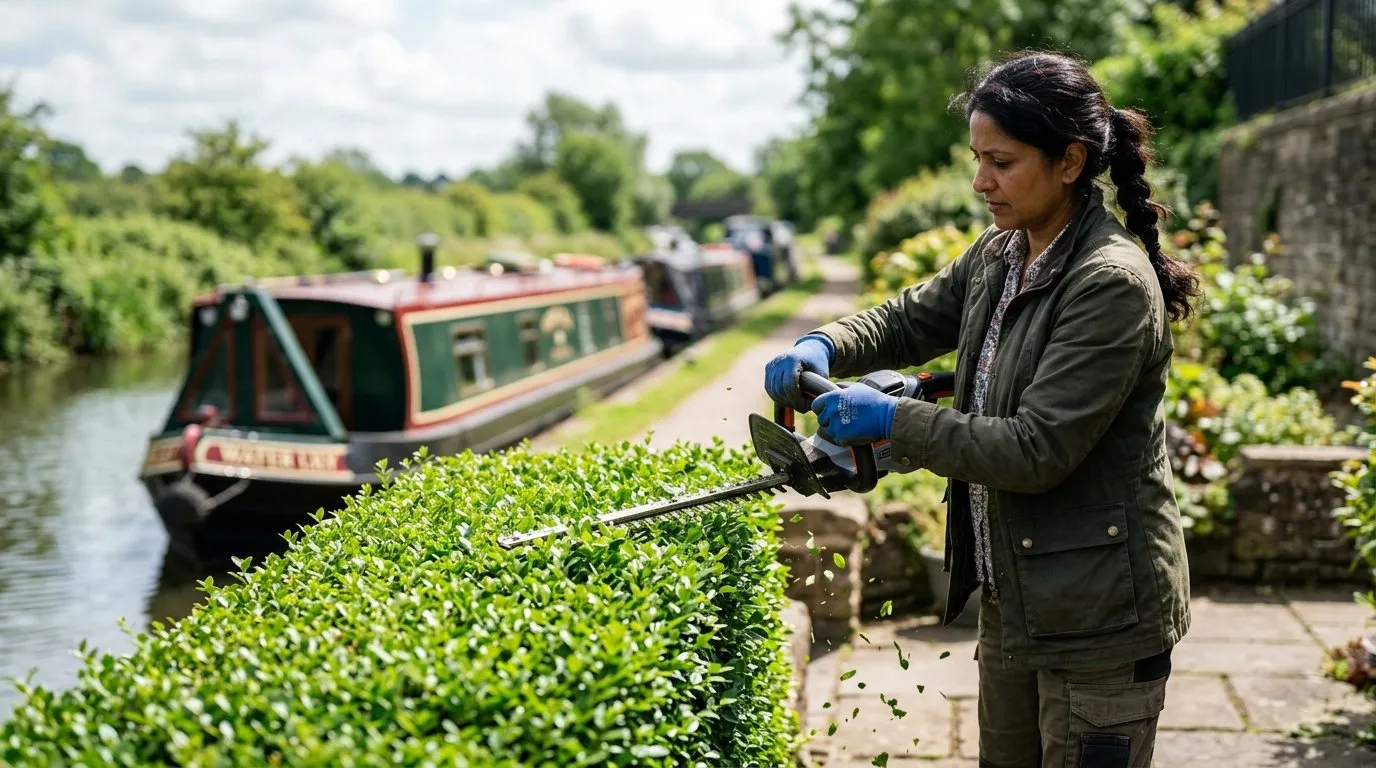
Keep the base a little wider than the top so light reaches the lower branches.
Feeding and watering privet
Feed privet once a year in spring with a general-purpose granular fertiliser, at the rate on the pack. Privet is hungry and has greedy roots, which is why plants growing right next to it often struggle.
After feeding, spread about 5cm of garden compost or well-rotted manure along the base, keeping it clear of the stems. It holds in moisture and keeps weeds down.
Established privet copes well with dry spells. Young hedges are different: in their first two summers, give them a good soak once a week in dry weather rather than a daily sprinkle. Yellowing lower leaves in summer usually mean the hedge is dry or hungry.
How to renovate an overgrown privet hedge
Privet can be cut back hard, because it sprouts new shoots from old, leafless wood. That makes it easy to rescue, unlike most conifers.
Do it in February, before growth starts and before birds start nesting.
- Cut the top down to below the height you want, using loppers and a pruning saw for thick stems.
- Cut one side back hard, close to the main stems. Leave the other side alone this year.
- Feed, mulch and water well through the following summer.
- Cut the second side back the next February, once the first has regrown.
For a total rebuild, you can cut the whole hedge down to about 30cm from the ground. It looks drastic, but healthy privet usually comes back strongly. Let the new shoots grow before you start shaping them. The guide to pruning shrubs covers clean cuts on thicker stems.
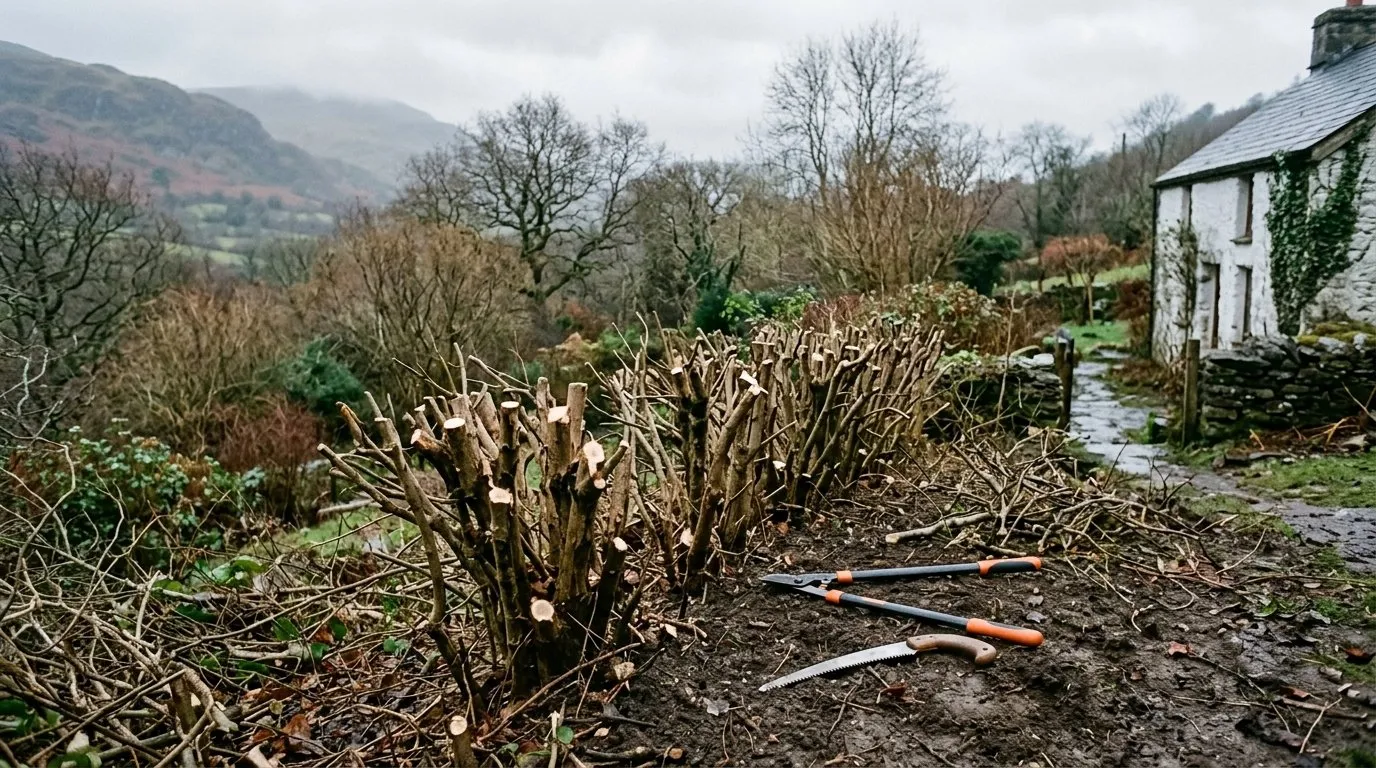
Cutting privet back to stumps looks brutal, but new shoots break from the old wood in spring.
Common privet hedge problems
Most privet problems are cosmetic. The one serious threat is honey fungus.
Honey fungus is a root disease that can kill whole plants, and privet is very prone to it. Look for sudden dieback, white fungal sheets under the bark at the base and honey-coloured toadstools in autumn. There’s no cure. Dig out affected plants with as many roots as you can, and don’t replant privet in the same spot. The guide to dealing with honey fungus explains how to limit the spread.
Privet thrips are tiny insects that cause silvery-grey mottling on the leaves in summer. They spoil the look but rarely harm the hedge. Keep it fed and watered, and the next flush of growth will be clean.
Bare bases come from trimming the top wider than the bottom. Re-shape with a batter, and cut a badly bare hedge back hard in February.
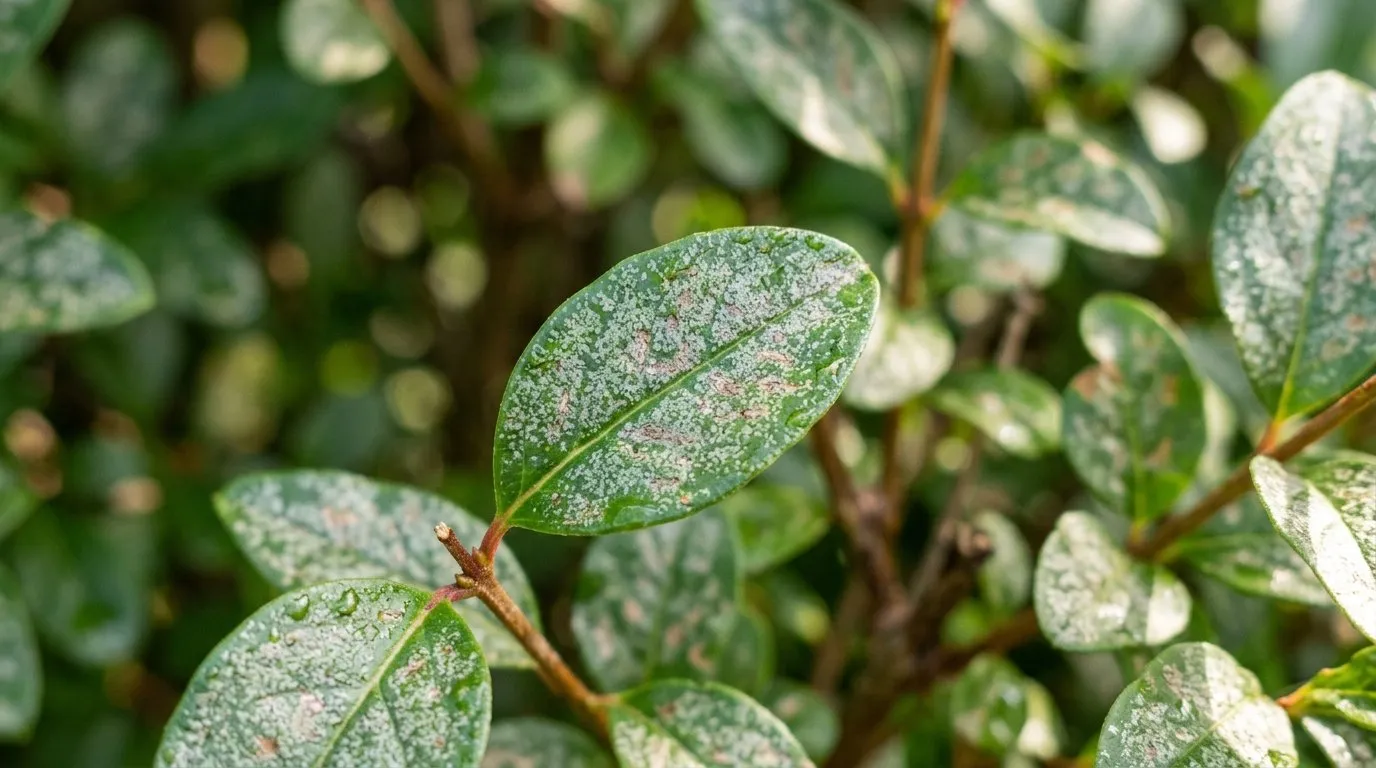
Silvery mottling like this is privet thrips. It looks worrying but the hedge grows through it.
Is privet poisonous to pets?
Yes. Privet leaves and berries are poisonous to dogs, cats and horses, and to people. Eating them can cause sickness and stomach upset. Clear up clippings and fallen berries, keep clippings well away from grazing animals, and call your vet if a pet eats some.
Which privet should you grow?
For most gardens, plain green garden privet is the best choice. It’s cheap, quick and holds most of its leaves in a mild winter.
| Privet | Leaves | Best for |
|---|---|---|
| Garden privet (Ligustrum ovalifolium) | Glossy, oval, green, semi-evergreen | Classic formal hedges |
| Golden privet (L. ovalifolium ‘Aureum’) | Green with broad yellow edges, a little slower | Brightening a boundary |
| Wild privet (Ligustrum vulgare) | Narrow, deciduous or semi-evergreen, black berries | Native and wildlife hedges |
Golden privet mixes well with green for a two-tone hedge. Wild privet is a UK native, and its flowers and berries feed insects and birds, so it suits a native mixed hedge.

Golden privet lights up a boundary and grows a little slower than the plain green kind.
Privet hedge care calendar
| Month | Task |
|---|---|
| November to March | Plant bare-root privet |
| February | Renovate overgrown hedges, one side at a time |
| April | Feed and mulch along the base |
| May to June | First trim, after checking for nests |
| July | Second trim on formal hedges, checking for nests |
| Late August to September | Final trim so the hedge looks neat all winter |
Common privet hedge mistakes
- Skipping the cut after planting. Uncut whips grow tall and thin with bare bases.
- Trimming without checking for nests. Always look first between March and August.
- Cutting the top wider than the bottom. This shades out the base. Keep a slight slope.
- Forgetting to feed. Hungry privet goes thin and yellow.
- Leaving clippings lying about. They’re poisonous to pets and livestock.
For more hedging and shrub care guides, browse the how-to hub. If you’re weighing up privet against other options for screening, read the guide to privacy screening with hedges and trees.
Frequently asked questions
How far apart do you plant a privet hedge?
Plant privet about 30-40cm apart, roughly three plants per metre. For a thicker screen, plant a staggered double row with about 45cm between the rows. Bare-root plants are the cheapest way to start a long hedge.
How often should you cut a privet hedge?
Two or three times a year for a neat, formal hedge. An informal hedge can get by with one trim in late summer. Check carefully for nesting birds before any cut between March and August.
Can you cut privet back hard?
Yes, privet regrows well from old, bare wood. Cut an overgrown hedge back hard in February, before birds start nesting. Doing one side one year and the other side the next keeps the hedge healthier while it recovers.
Why is the bottom of my privet hedge bare?
Usually because the top is shading the base. A hedge cut wider at the top than the bottom starves the lower branches of light. Trim with a slight slope so the base is wider, and cut a badly bare hedge back hard in February to force new low shoots.
Is privet poisonous to dogs?
Yes, privet is poisonous to dogs, cats and horses. The leaves and black berries can cause sickness and stomach upset. Clear up clippings and berries, keep clippings away from grazing animals, and call your vet if a pet eats some.
When is the best time to plant a privet hedge?
November to March is best, using bare-root plants. They are dormant then, cheaper than potted plants and settle in before spring growth. Pot-grown privet can go in at other times if you keep it watered.
Our team produces practical UK gardening guidance from source research, contributor records and established horticultural practice. Editorial standards are overseen by Matt W.