Key takeaways
- Pittosporum is happiest in mild southern, western and coastal gardens
- Free-draining soil is a must, as wet roots are the main cause of winter losses
- Tom Thumb and Golf Ball stay under 90cm and are perfect for pots
- Silver Queen makes a bright, cream-edged hedge
- It shrugs off salt spray, so it's great for seaside gardens
- Trim in late spring and don't cut into bare old wood
Pittosporum is one of the most useful evergreen shrubs for a UK garden. It makes a smart hedge, a soft screen, a neat pot plant or a seaside windbreak. The glossy, wavy leaves look good all year. In late spring, tiny dark red flowers give off a lovely honey scent on warm evenings.
It comes from New Zealand and has become a firm favourite in British gardens. There are lots of varieties, from small purple domes to tall silver hedges. It copes with salt spray better than most evergreens, so it’s a top pick near the coast.
Which pittosporum variety should I grow?
Pick the variety to suit the spot. The wrong one in the wrong place can mean winter losses. Here are six of the easiest to find.
| Variety | Size | Leaf colour | Best use |
|---|---|---|---|
| Tom Thumb | Small (60-90cm) | Deep bronze-purple | Pots, borders, low edging |
| Silver Queen | Tall (3-4m) | Grey-green, cream edge | Variegated hedges and screens |
| Golf Ball | Small (60-90cm) | Bright apple green | Natural ball shape, low hedge, pots |
| Irene Paterson | Medium (1.5-2m) | White marbled, pink tinge | Sheltered border |
| Tandara Gold | Medium (2-3m) | Gold with green centre | Bright hedge or focal point |
| Elizabeth | Tall (2.5-3m) | Grey-green, cream edge | Tall hedge, screening |
Silver Queen is the classic hedge choice and holds an RHS Award of Garden Merit. The cream-edged leaves brighten a shady boundary, and it clips into a dense hedge of 1.8-2.5m. It’s a little more tender than the plain green type, so fleece young plants in their first two winters if you live further north.
 Tom Thumb in a terracotta pot. It stays at 60-90cm and needs no pruning.
Where to plant pittosporum in the UK
Give it soil that drains freely and shelter from cold north-east winds. Get those two right and it pretty much looks after itself.
Soil: Sandy, loamy and chalky soils are all fine as long as water drains away. Heavy clay soil needs improving first. Dig plenty of grit or sharp sand into a wide area. Soggy roots in winter are the most common reason pittosporum dies.
Light: Full sun gives the densest growth and the best colour, especially on purple and gold types. It copes with part shade but gets thinner and leggier. Variegated types like Silver Queen lose their cream edges in deep shade.
Shelter: Young plants need protection from cold, drying east winds for their first two winters. A wall, fence or hedge on the north or east side is enough. Once it’s grown up, pittosporum becomes the shelter itself.
Aspect: South and west-facing spots are best. East-facing walls work in mild areas, but early sun on frozen leaves can scorch them. North-facing spots suit only the tougher varieties, and only in the south.
Where it does well:
- South-west England and Wales: Almost anywhere, even exposed coastal spots
- South-east England: Reliable in sheltered gardens. Protect it in long cold spells
- Midlands: Fine on well-drained soil with shelter from east winds
- Northern England: Best in coastal gardens. Most inland gardens are too cold
- Scotland: West coast gardens only
How to plant pittosporum
Plant between April and September. Spring planting gives the roots months to settle before winter.
Hedge spacing: Plant 45-60cm apart for a dense, neat hedge. For a looser screen, go to 75cm.
How to plant:
- Dig a hole twice as wide as the root ball and the same depth
- Fork over the bottom to break up hard ground
- On clay, mix grit into the soil you dug out
- Set the plant so the top of the root ball is level with the soil
- Fill in and firm gently with your foot
- Water well, about a full watering can per plant
- Mulch with 5-7cm of bark chips, keeping it clear of the stem
Bare-root hedging: Bare-root plants are much cheaper than pot-grown. They’re usually 40-60cm tall. Plant them within a couple of days of arrival, after soaking the roots in water for an hour or two.
Plants needed for a 10m hedge:
| Type | Plants at 50cm spacing | Good for |
|---|---|---|
| Bare-root 40-60cm | 20 | Cheapest, needs a few years to fill |
| 2-litre pot 40-60cm | 20 | Easy to plant through spring and summer |
| 5-litre pot 80-100cm | 20 | A quicker screen |
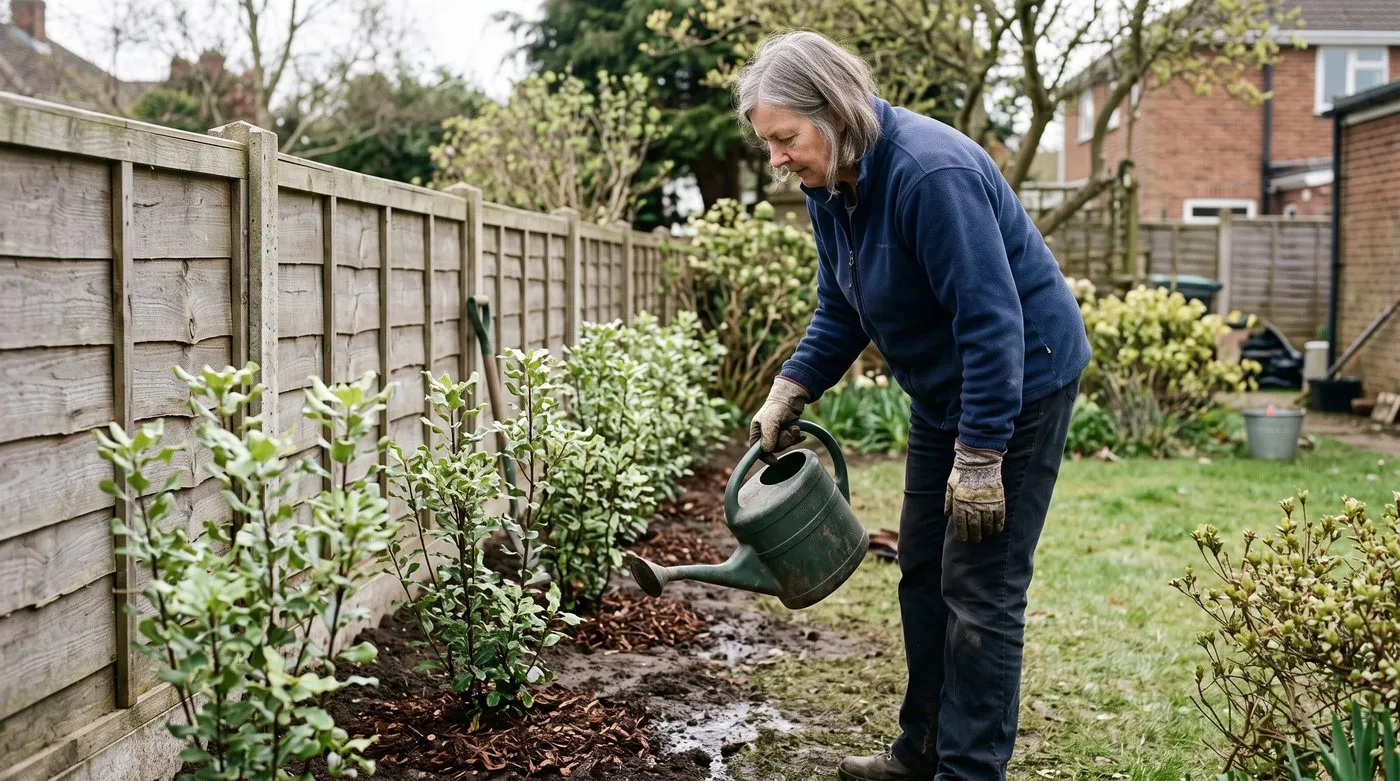
Spacing at 45-60cm gives a dense hedge in a few years. Give each plant a full can of water and keep the mulch clear of the stems.
How to grow pittosporum in pots
The compact types make brilliant pot plants. Tom Thumb and Golf Ball are the best, staying under 90cm without any pruning.
Pot size: Start with a 30-40cm pot and move up a size every 2-3 years. A grown-up Tom Thumb fills a 45cm pot nicely.
Compost: Use about two-thirds John Innes No.3 and one-third perlite. The soil-based compost adds weight so the pot doesn’t blow over, and the perlite gives the drainage pittosporum needs. Multipurpose compost on its own stays too wet in winter.
Feeding: Add slow-release fertiliser in April, then a balanced liquid feed every fortnight from May to August. Stop by September so new growth can toughen up before winter. Our guide to growing plants in pots year-round covers the basics of pot care.
Winter: In late October, move pots against a south-facing wall and stand them on pot feet. When hard frost is forecast, wrap the pot (not the plant) in bubble wrap. Roots in a pot get much colder than roots in the ground.
Pittosporum as a coastal hedge
Pittosporum is one of the best evergreen hedges for a seaside garden. It copes with salt spray, sandy soil and regular gales. The RHS pittosporum growing guide has more on care.
 A Silver Queen hedge in a coastal garden, shrugging off salt spray and screening the wind.
In coastal gardens, a pittosporum hedge takes the wind and salt on the chin. It filters a gale into a gentle breeze on the other side. More tender plants like agapanthus, osteospermum and dahlias then thrive behind it.
Coastal tips:
- Choose Silver Queen or the plain green type
- Plant 40cm apart for a tight windbreak
- Clip the hedge narrower at the top than the bottom, which filters wind best
- Stake new plants firmly for the first year
- Don’t feed in the first winter, so the roots settle before the top grows
How to prune pittosporum
Prune in late April or May, once the frosts are over. It sprouts happily from leafy shoots if you trim at the right time.
The golden rule: don’t cut into bare old wood below the leaves. Unlike yew, it may not sprout again from old stems, and you can be left with bare patches.
Yearly hedge trim:
- Use sharp shears or a hedge trimmer
- Take off the outer 10-15cm of this year’s growth
- Trim the sides first, then the top
- Keep the top slightly narrower than the base so light reaches the bottom
Taming an overgrown pittosporum:
- Lower the height by no more than 30cm a year
- Spread the work over 2-3 years
- Cut in late April, just as new growth starts
- Feed afterwards to help it recover
Topiary and shaping: Golf Ball makes a ball all by itself. Tom Thumb likes a light trim in May to keep a tidy dome. Bigger varieties clip into cones, balls and lollipops. Our guide to pruning shrubs explains how to time your cuts.
 Trimming in late spring. Always cut back to leafy growth, never into bare wood.
Common problems and how to fix them
Leaf drop after planting. New plants often drop some leaves in the first few weeks. That’s just the shock of moving. Keep watering in dry spells and new leaves will follow.
Winter browning. Brown or black tips after winter mean frost or cold wind damage. Wait until April, when you can see new growth, then cut out the damaged bits. If the whole plant looks brown, scratch a stem with your thumbnail. Green underneath means it’s alive.
Light brown apple moth. The small caterpillars curl and web together young leaves, mostly in the south-west. Pick off webbed leaves by hand. It’s rarely serious.
Scale insects. Small brown or white bumps on stems are scale, which slowly weakens the plant by sucking sap. Scrape them off or cut out badly hit shoots. For a heavy attack, use an approved plant oil insecticide in early summer, following the label. Our guide to drought-tolerant plants has tips on keeping stressed plants healthy.
Root rot. The biggest killer, caused by soggy soil, especially on clay. Prevention is the only cure, so sort out drainage before you plant. If a plant dies, replace the soil with a gritty mix before replanting.
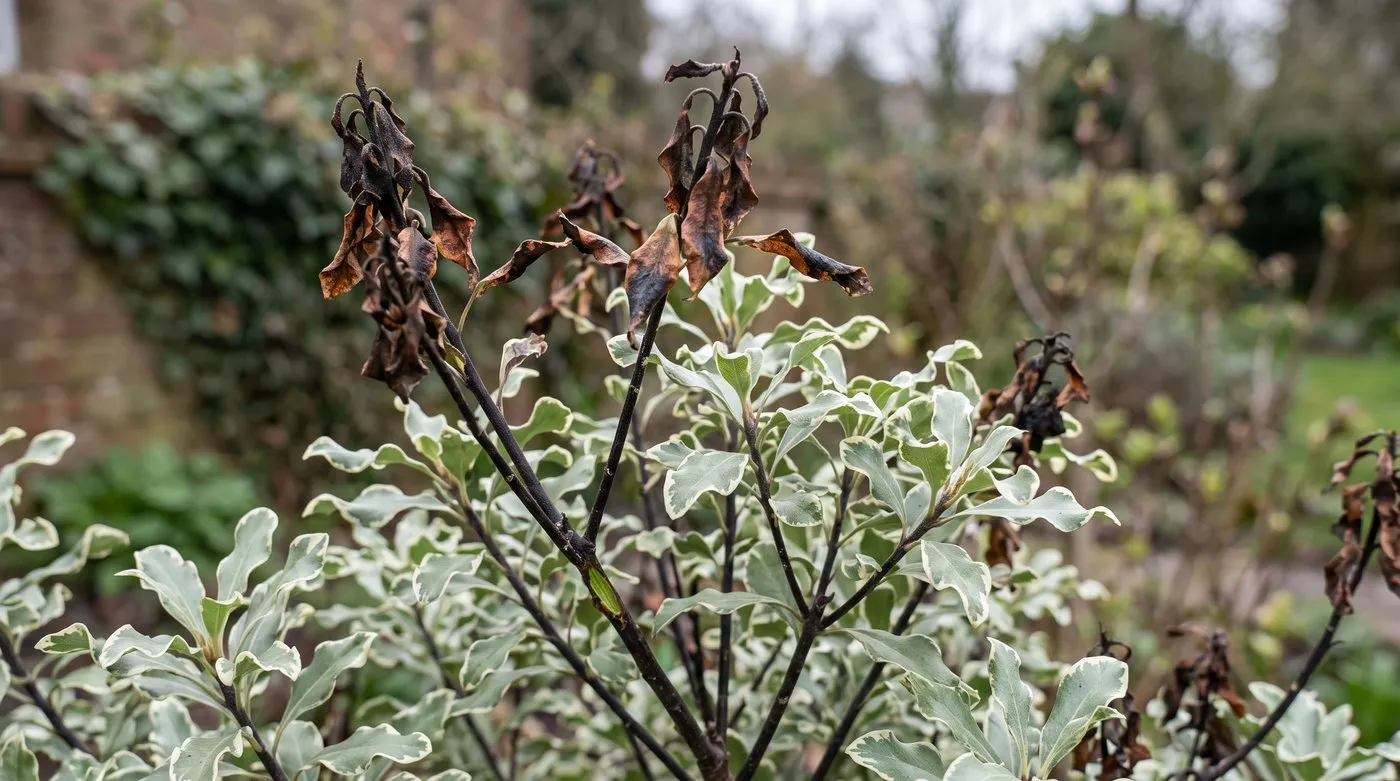
Brown tips after a cold spell are usually frost or wind damage. Wait until April, when you can see new growth, then cut back to healthy leaves.
Pittosporum versus box: which should I choose?
Box blight has spread through many UK gardens, and lots of gardeners now want something else. In mild areas, pittosporum fills that gap nicely.
| Feature | Pittosporum | Box |
|---|---|---|
| Growth | Fast | Slow |
| Cold hardiness | Mild areas | Very hardy |
| Box blight | Not affected | Often hit |
| Leaves | Larger, wavy | Small, oval |
| Clipping | Once a year | 2-3 times a year |
| Salt spray | Copes well | Copes poorly |
| Topiary | Good (Golf Ball) | Excellent |
| Evergreen | Yes | Yes |
In most of southern England, Wales and coastal areas, pittosporum is a great choice. It grows faster, doesn’t get box blight and clips into almost any shape. In exposed, windy gardens further inland and north, yew or holly are safer.
Month-by-month care calendar
| Month | Task |
|---|---|
| January | Check stakes on young plants after storms. Brush heavy snow off hedges. |
| February | Order plants. Improve drainage on clay where you’ll plant. |
| March | Plant bare-root hedging before buds break. Mulch established plants. |
| April | Main planting time begins. Add slow-release feed to pots. |
| May | Trim hedges and topiary once frosts are over. |
| June | Water new hedges weekly in dry spells. Enjoy the honey-scented flowers. |
| July | Keep watering new plants. Liquid feed pots every fortnight. |
| August | Take semi-ripe cuttings. |
| September | Stop feeding so growth toughens up. Last chance to plant. |
| October | Mulch young plants. Move pots against a south-facing wall. |
| November | Wrap pots in bubble wrap. Check frost protection on first-year plants. |
| December | Don’t prune. Check for scale insects. |
Propagation from cuttings
Pittosporum roots easily from semi-ripe cuttings taken in July and August.
How to do it:
- Choose healthy shoots from this year without flowers
- Cut 10-15cm lengths just below a leaf joint
- Strip the lower two-thirds of the leaves
- Dip the base in hormone rooting powder
- Push into a half-and-half mix of perlite and peat-free compost
- Put in a propagator or cover with a clear plastic bag
- Gentle bottom heat speeds things up. Without it, expect roots in 8-12 weeks
- Pot up separately into 9cm pots once they’ve rooted
- Keep under cover for the first winter and plant out the next spring
Named varieties must be grown from cuttings, as seedlings don’t come true.
If your garden is too cold for pittosporum, try one of the evergreen shrubs that cope anywhere in the UK, such as yew, holly and laurel. For a new hedge, our hedge planting guide covers spacing, aftercare and the best plants for every soil.
Frequently asked questions
Is pittosporum hardy enough for UK winters?
In mild areas, yes, but a hard frost can damage it. It grows well across southern England, Wales, the south-west and coastal areas. Cold inland gardens further north are riskier. Young plants are the most tender, so cover them with fleece in their first winter when a hard frost is forecast.
How fast does pittosporum grow in the UK?
Once settled, it grows about 30-40cm a year. The first year is slow while the roots establish. From the second year it picks up speed, as long as the soil drains well and it’s sheltered from cold winds.
Can I grow pittosporum in a pot?
Yes, the compact varieties are great in pots. Tom Thumb and Golf Ball are the best, staying at 60-90cm. Use John Innes No.3 mixed with some perlite for drainage. Feed monthly from April to August and repot every few years. Protect pots in cold winters.
When is the best time to plant pittosporum?
Plant between April and September. Spring planting gives the roots a whole season to settle before winter. Pot-grown plants can go in whenever the ground isn’t frozen, but avoid midwinter in cold inland gardens.
How do I prune pittosporum?
Prune in late April or May, once frosts are over. Trim this year’s growth back by about a third with shears or secateurs. It loves regular light clipping and grows dense and bushy. Don’t cut into bare old wood, as it may not regrow. To lower a tall hedge, take off no more than 30cm a year.
Is pittosporum suitable for coastal gardens?
Yes, it’s one of the best evergreen hedges for the coast. It copes with salt spray, sandy soil and wind. In Cornwall, Devon and Pembrokeshire it grows almost anywhere. Plant it as a shelter hedge to protect more tender plants behind it.
What is the difference between pittosporum and box hedging?
Pittosporum grows much faster than box and doesn’t get box blight. Its leaves are bigger, with pretty wavy edges. Box is tougher in cold weather, though. In mild and coastal areas, pittosporum makes a great box alternative. In cold inland gardens, yew or holly are safer.
Our team produces practical UK gardening guidance from source research, contributor records and established horticultural practice. Editorial standards are overseen by Matt W.